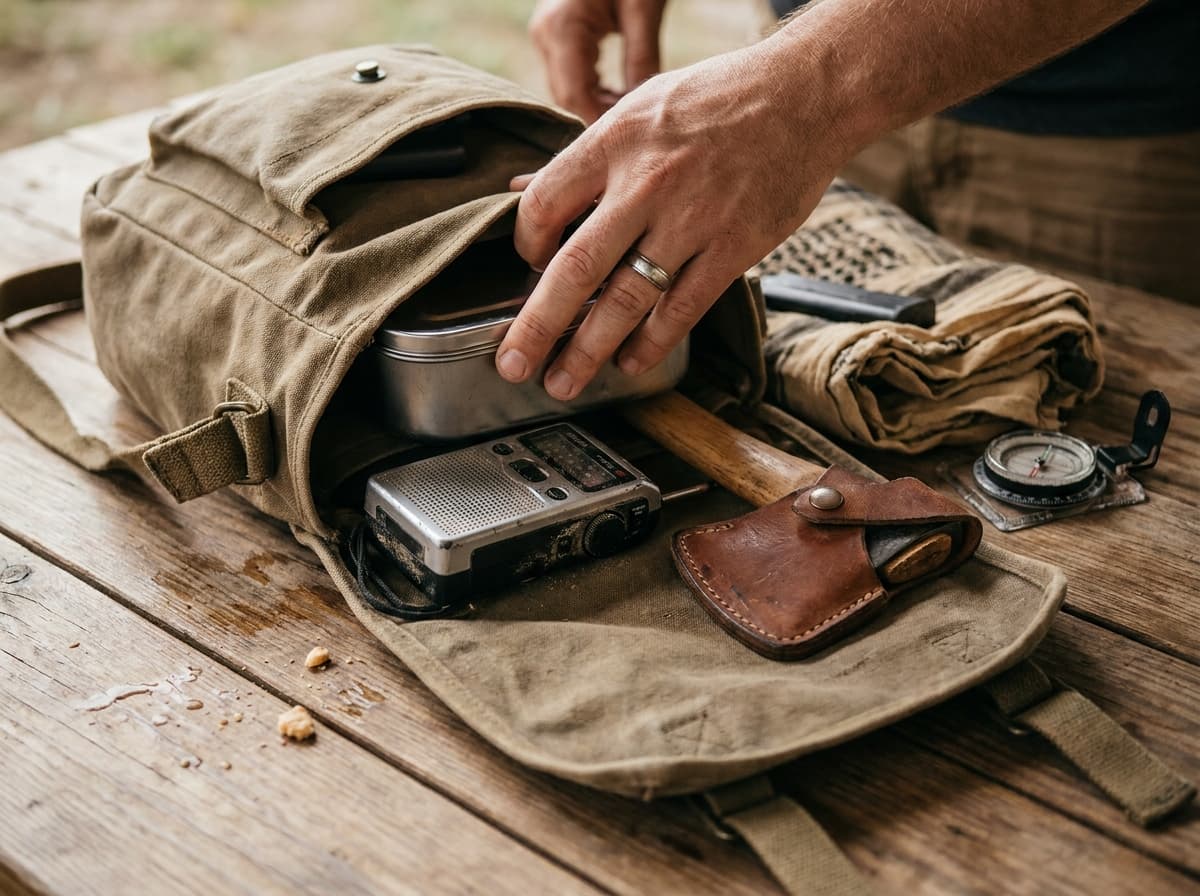
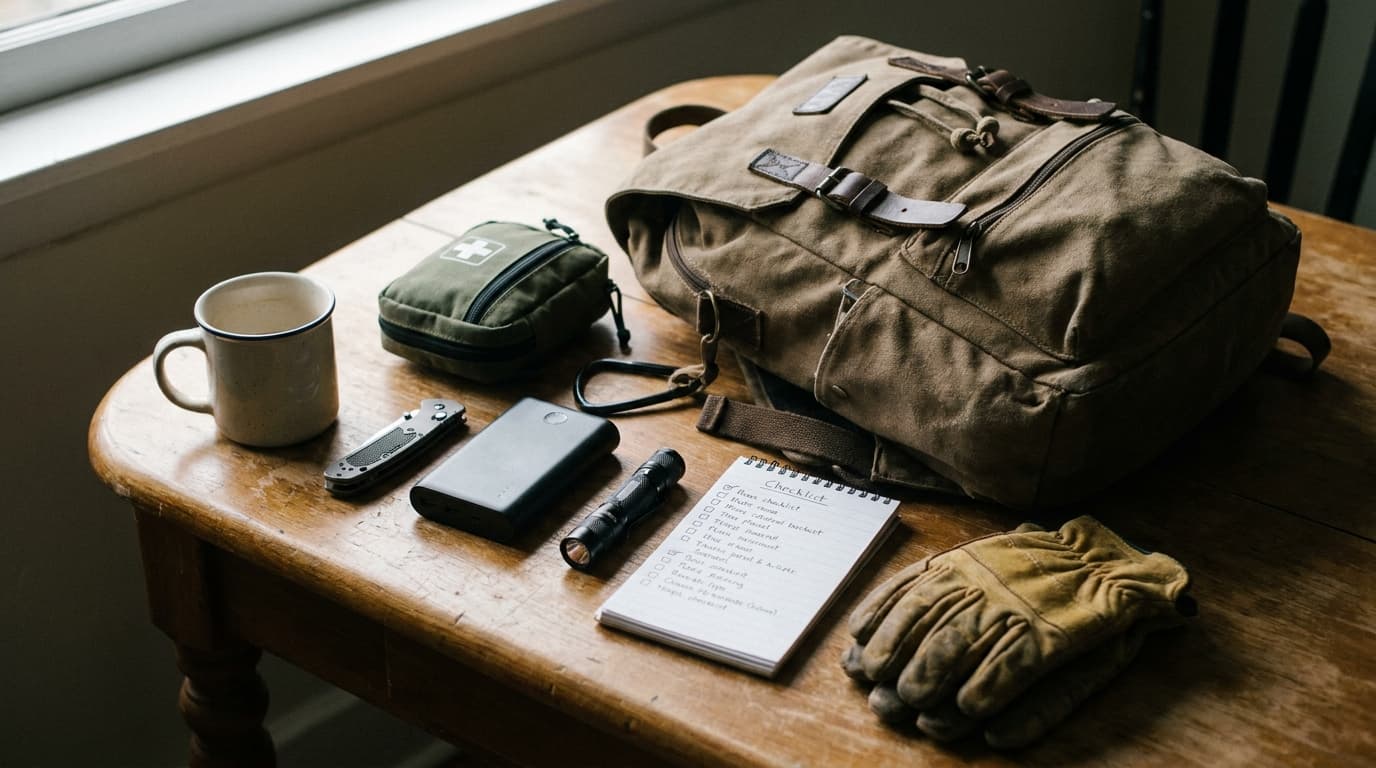
Why This Beginner Bushcraft Tool Kit Guide Is Your Key to the Wild
Building your first setup is simple with this Gear & Essentials: beginner bushcraft tool kit guide, survival shelter tarp review for backpacking, best survival gear for winter camping, emergency food...
Why This Beginner Bushcraft Tool Kit Guide Is Your Key to the Wild
Building your first setup is simple with this Gear & Essentials: beginner bushcraft tool kit guide, survival shelter tarp review for backpacking, best survival gear for winter camping, emergency food storage guide for beginners, camping essentials checklist for desert survival.
Choosing reliable tools is the first step toward true self-reliance because you don't want gear that breaks miles from home. You need a kit that's light enough to carry but tough enough for any weather.
This guide covers the best cutting tools, shelter systems, and winter gear you need to stay safe in the wild.
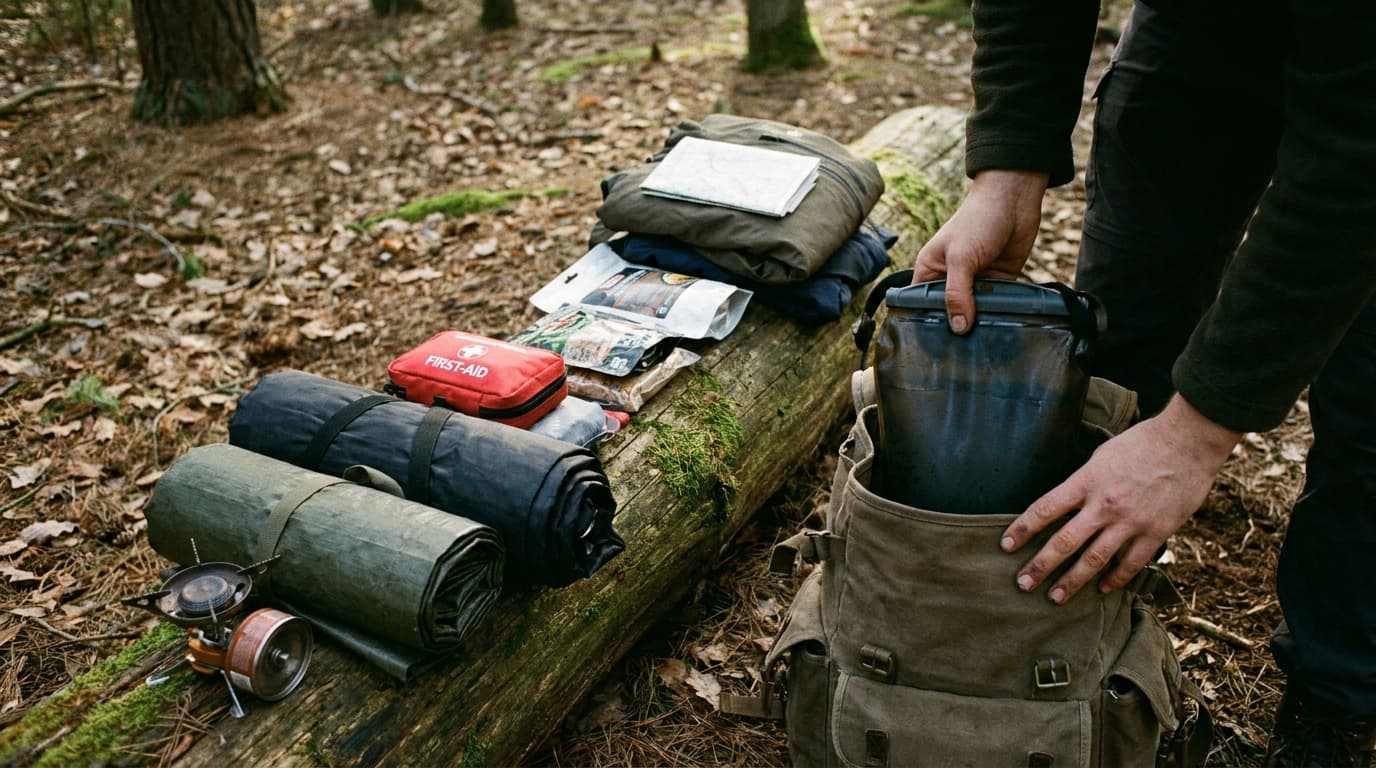
A beginner bushcraft tool kit guide is about building a mindset for self-reliance. You need gear that won't break when civilization is miles away. For comfort, keep your pack under 25% of your body weight. guide/long-term-wilderness-survival-gear/).
Imagine surviving like Ishi, who lived solo for years but eventually struggled without his full toolset. It shows that even experts need a solid bug out bag checklist for beginners to stay safe. Having the right tools means you can focus on building skills rather than just trying to stay warm.
Key insights:
Select 500 denier Cordura nylon for a bag that won't rip in the brush.
Prioritize tools that serve more than one purpose to save weight.
Pick high-carbon steel for blades that stay sharp and are easy to maintain.
What Actually Goes Into a Beginner Bushcraft Tool Kit Guide?
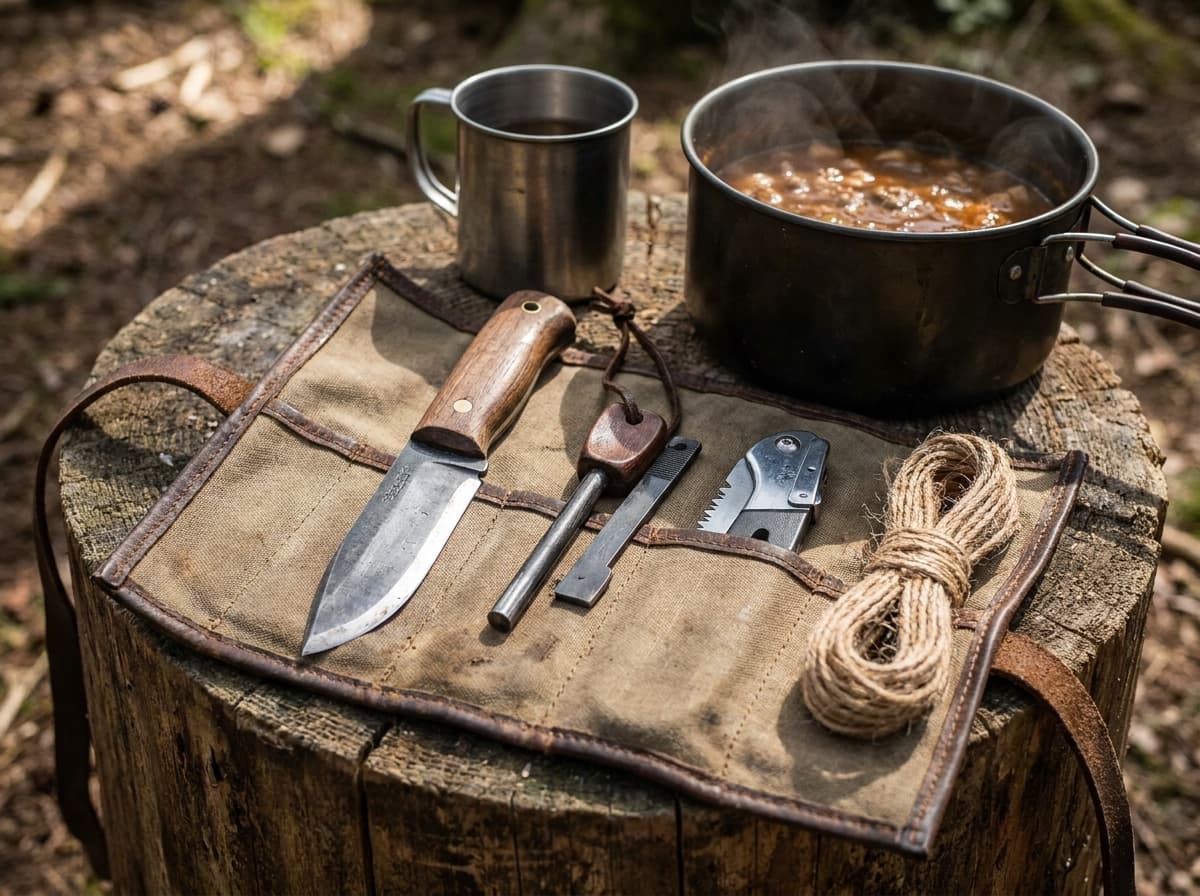
A solid beginner bushcraft tool kit guide focuses on three heavy hitters: a fixed-blade knife, a folding saw, and a small hatchet. While you might feel like a hero with just a folding pocket knife, it will likely fail you when you need to split wood or build a sturdy frame. High-carbon steel tools are your best bet because they handle most camp chores and are much easier to sharpen in the field. You can learn more about how these tools fit into a survival fire starting kit for beginners to stay prepared.
Imagine trying to build a survival shelter as the sun sets and the temperature drops. If you only have a small blade, you will spend hours hacking at branches until you are exhausted. But with a BeaverCraft BSH3, which uses 1066 carbon steel and a comfortable walnut handle, you can carve notches and prep materials in minutes. Pair that with a reliable folding saw, and you have a kit that actually works for you instead of against you.
Processing firewood for a long, freezing night requires tools that can handle the triple threat of carving, sawing, and splitting. This is vital because staying warm is a calorie game. If you do not have the right tools to process wood quickly, your body burns through its fat blanket just to stay warm. This makes you feel the cold much faster. Even historical experts like Ishi, the last of the Yahi, struggled to survive solo without a full set of tools. It proves that the idea of living in the wild with just a knife is a fantasy.
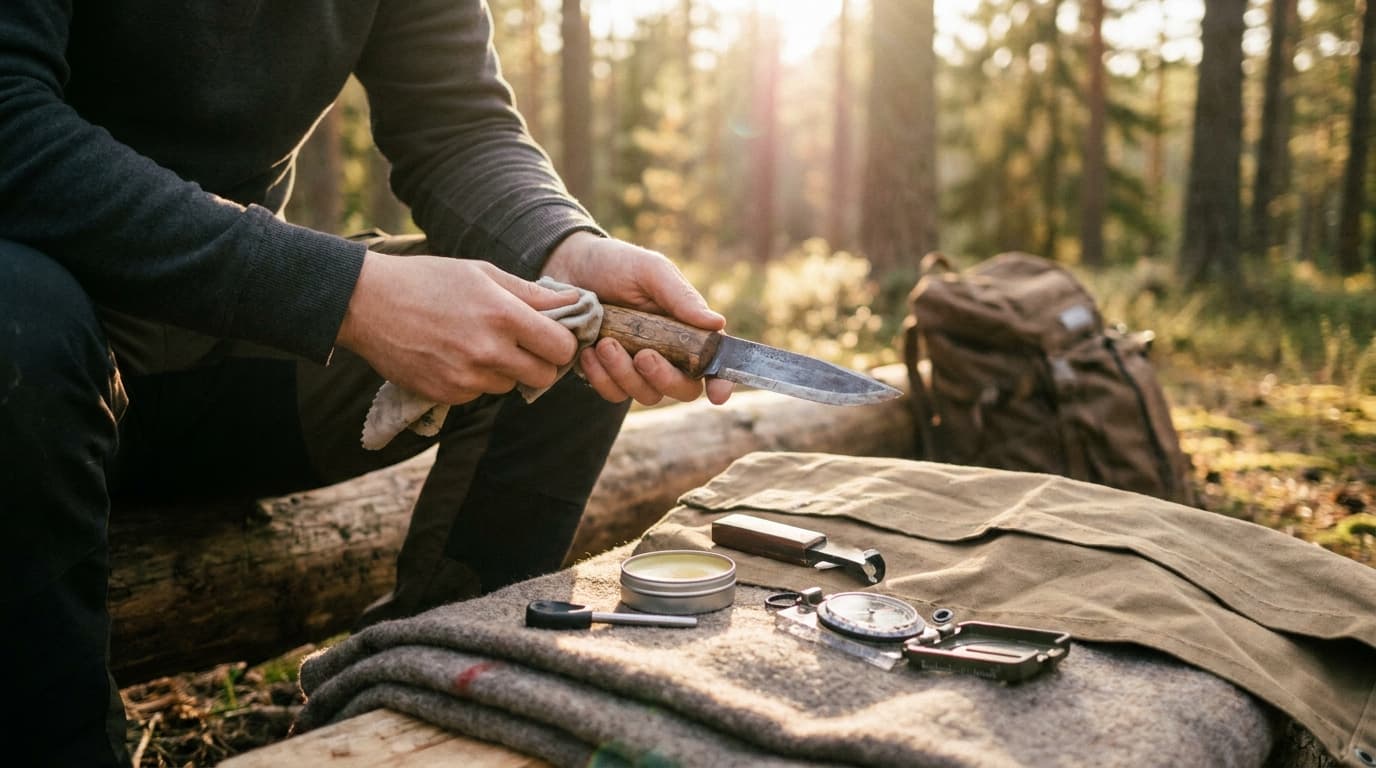
When selecting your primary blade, look for 1066 carbon steel with a blued finish. This technical spec is important because the bluing helps prevent rust in humid woods where your gear is constantly exposed to moisture. It is also a good idea to check out a bug out bag checklist for beginners to see how these cutting tools fit into your overall weight management. Remember that a heavy pack is your enemy. Keeping your total gear weight around 25% of your body weight is a smart move for any trip.
Key insights:
Choose a fixed-blade knife with a full tang for maximum durability during heavy tasks.
Look for 1066 carbon steel to ensure your blade stays sharp and is easy to maintain in the woods.
Avoid relying on a single pocket knife because it is a delusion that leads to exhaustion and tool failure.
Add a folding saw to your kit to process thick branches for firewood and shelter frames efficiently.
Keep your tools protected with a blued finish or light oil to fight off rust and corrosion.
The Triple Threat of Cutting Tools
Relying on a single blade is a risky move that often leads to broken tools and sore hands. To truly thrive, you need a triple threat approach: a fixed-blade knife, a folding saw, and a small hatchet. This trio allows you to switch between delicate carving and heavy-duty wood processing without wasting your limited energy or ruining your primary edge.
Imagine trying to process thick logs for a long, freezing night using only a knife. It is a literal calorie drain that leaves you exhausted before the sun goes down.
Incorporating these cutting tools into your bug out bag checklist for beginners helps you manage weight while staying versatile. When your kit is balanced, you spend less time fighting the environment and more time staying warm and fed.
Key insights:
Combine a fixed-blade knife, folding saw, and small hatchet for maximum versatility in any environment.
Choose 1066 carbon steel for your primary knife to ensure it stays sharp and resists the elements effectively.
Use the folding saw for cross-cutting thick branches to avoid dulling your knife on heavy wood processing.
Pick a hatchet for splitting tasks to save your hands from the vibration and impact of batoning with a knife.
A Real-World Survival Shelter Tarp Review for Backpacking
Tarps are the unsung heroes of the woods because they offer more versatility and durability than standard backpacking tents. While a tent gives you a pre-built room, it is often made of thin fabric that can snag or tear easily. This survival shelter tarp review for backpacking shows that a heavy-duty tarp allows you to adapt your shelter to the wind, rain, and terrain while saving significant pack weight.
Weight management is vital for long-term stays. Swapping a heavy tent for a lightweight tarp is an easy way to hit that goal. Check out this bug out bag checklist for beginners for more ways to keep your kit light.
Imagine you are bushwhacking through a dense thicket where every branch seems to have a claw. A flimsy tent fly would likely rip under the pressure, leaving you exposed to the elements. However, a tarp made from 500 denier Cordura nylon is built to take that abuse. It acts as a rugged shield that lets you set up camp in spots where a traditional tent simply would not fit or survive.
If you are heading into areas with heavy rain, consider a 3-layered Gore-tex Pro system. This material balances breathability with extreme water resistance to keep you dry when humidity is high. Learning why survival skills and emergency shelter building for beginners save lives starts with picking the right fabric for your specific environment.
Key insights:
Choose a 500 denier Cordura nylon tarp for maximum durability in thick brush and rocky terrain.
Look for a denier rating between 40D and 80D if you want a balance between weight and strength.
Invest in 3-layered Gore-tex Pro fabrics if you expect heavy rain or high humidity during your stay.
Practice setting up different configurations like the A-frame or Lean-to before you actually need them in a storm.
Picking the Best Survival Gear for Winter Camping
Staying warm in the freezing woods is actually a calorie game. When you run out of food, your body burns through its fat blanket to generate heat, and you will feel the cold much faster. To keep your internal furnace burning, prioritize high-calorie food storage. This is why the best survival gear for cold weather camping focuses as much on fuel as it does on fabric.
Wool is one of the best survival fabrics out there. Unlike cotton or down, which fail when damp, wool stays warm even when soaked with snow. It also resists campfire sparks better than synthetics, which can melt onto your skin. If you are pushing through frozen brush, look for outer layers made of 500 denier Cordura nylon to avoid snags.
Imagine survivalist Juan Pablo Quiñonez, who lost 30 pounds during a six-month stay in the wild. As his body fat disappeared, he reported feeling significantly colder every single day. This shows that your physical condition is your primary insulation. Without enough calories to burn, you will struggle to stay warm even in a high-end sleeping bag. Check out more survival scenarios for cold woods to see how gear choice changes your odds.
Weight management is also vital for winter safety. A heavy pack drains energy and forces you to burn more calories.
Key insights:
Prioritize wool mid-layers and blankets because they retain heat even when wet.
Stockpile calorie-dense foods like fats and grains to fuel your internal heater.
Limit your pack weight to 25% of your body weight to conserve precious energy.
Select 500 denier Cordura nylon gear to handle the abuse of frozen, thick brush.
Your First Emergency Food Storage Guide for Beginners
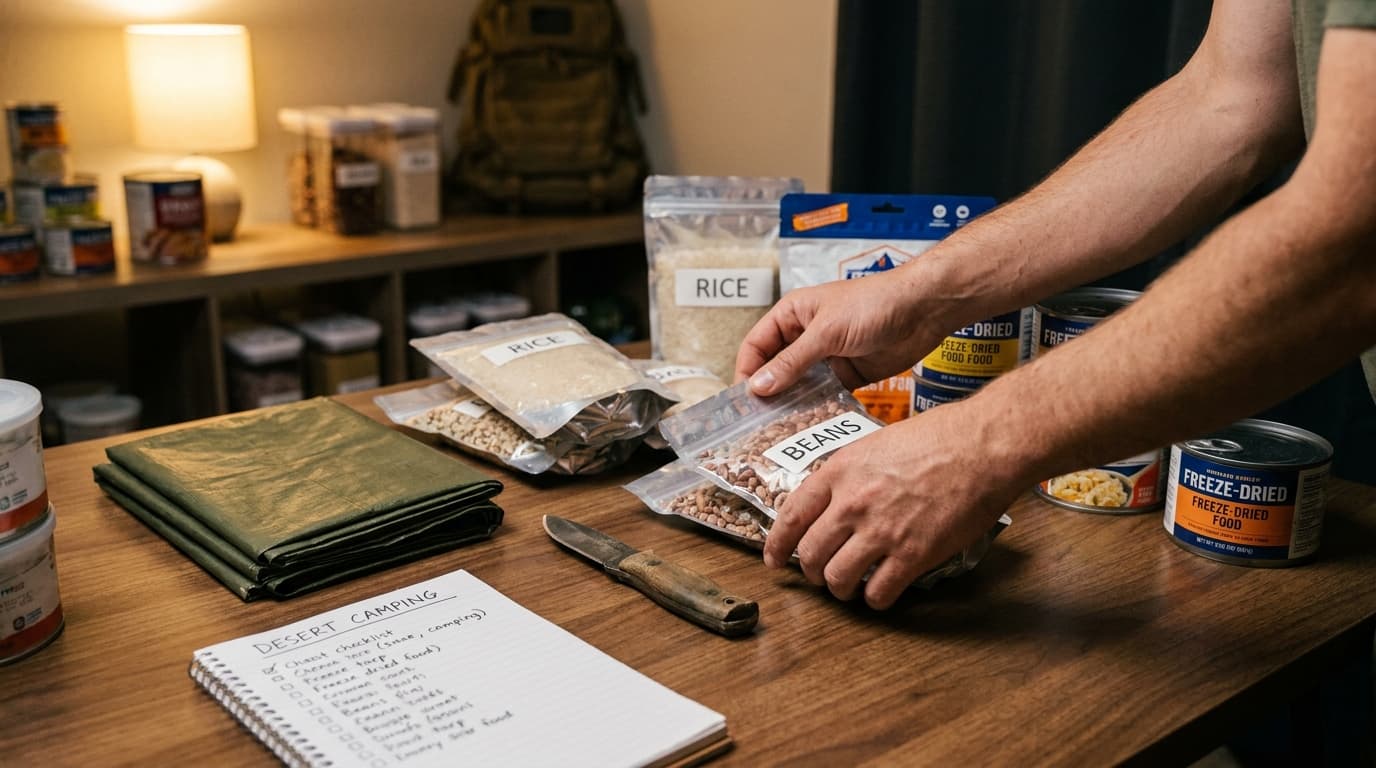
Relying solely on hunting or fishing is a risky gamble. Nature doesn't provide on a schedule, and a few days of bad luck can leave you too weak to function. You need a solid foundation of calorie-dense foods that don't rely on a lucky catch. This is the heart of any emergency food storage guide for beginners. Also, having a stash of food allows you to focus on building shelter instead of constantly chasing your next meal.
Consider Ishi, the last of the Yahi people. He was a master of traditional skills, yet after three years of living solo, starvation eventually drove him toward civilization. He couldn't maintain his caloric needs indefinitely without his full tool suite. His experience shows that even if you have learned every primitive skill in the book, you still can't always live off the land forever without a dedicated stockpile to carry you through the lean times.
Food is fuel. Your body is like a furnace, and calories are the wood. If you run out of fuel, your temperature drops and your brain gets foggy. Prioritize fats and grains because they offer the most energy for their weight. When building your bug out bag checklist for beginners, pick foods that are light to carry but heavy on energy.
Key insights:
Stockpile high-fat items like peanut butter or olive oil to maximize energy density.
Choose dry grains like white rice or oats because they are lightweight and last a long time.
Aim for at least 2,500 calories per day to keep your internal furnace burning.
Pack foods that require very little water to prepare to save your drinking supply.
Keep your total food weight in mind so your pack stays under 25% of your body weight.
The Camping Essentials Checklist for Desert Survival
In a desert, your most critical piece of tech isn't just a fancy GPS - it is a reliable way to communicate and a solid plan to keep your electronics alive. When water is scarce and the heat is draining your energy, you cannot afford to wander aimlessly. Your smartphone acts as an offline brain backup, storing thousands of pages of maps and survival guides, but it is useless if the battery dies. Since standard batteries only last about 300 to 500 charge cycles before they start losing capacity, you need a way to maintain power in the field.
Imagine you are miles from the nearest trail, the sun is dipping, and your cell signal has been dead for hours. Instead of panicking, you pull out a Baofeng GT-3WP radio. Because this device is waterproof with an IP67 rating and covers everything from VHF to NOAA weather bands, you can check for incoming storms or signal for help even when towers are out of reach. It turns a potential disaster into a manageable situation by giving you a voice when the world feels empty.
To keep this tech running, a solar charging solution is non-negotiable. Desert sun is brutal, but you can turn that heat into power for your digital library. Just remember that every ounce counts when you are trekking through sand. If you carry more, you will burn through your water supply much faster than you planned. This balance is a key part of any camping essentials checklist for desert survival.
Key insights:
Carry a Baofeng GT-3WP or similar multi-band radio to access NOAA weather reports and emergency frequencies when cell service fails.
Pack a portable solar panel to recharge your phone and keep your offline survival library accessible throughout the trip.
Limit your total gear weight to 25% of your body weight so you do not burn through your water supply too quickly.
Bring Type III nylon paracord to rig up emergency shade structures using the eight inner strands for extra lashing.
Common Questions About Survival Gear
Let's be real: the idea that you can walk into the woods with just a knife and live like a king is a total fantasy. Even the most skilled historical survivalists eventually needed a full kit to thrive. Modern bushcraft is really about finding a sweet spot between old-school skills and new-school gear. It is a hybrid game where you use a titanium pot but know how to find dry tinder in the rain.
Think about a hiker who packs every gadget they own just in case. By mile three, their legs feel like lead because they ignored the basic rules of weight management. Experts suggest a survival backpack should weigh no more than 25% of your body weight to avoid total exhaustion. If you go over that limit, you are essentially carrying a very heavy, very grumpy animal on your back. That extra weight drains your energy faster than you can replace it, making every camp chore feel like a mountain.
This matters because staying efficient is the only way to last in the wild. You want tools that act as force multipliers, like a folding saw or a solid axe, rather than struggling with a single blade for every task. When you balance modern materials with primitive knowledge, you spend less time working and more time actually enjoying the outdoors.
Key insights:
Limit your total pack weight to 25% of your body weight to stay mobile and prevent burnout.
Look for 500 denier Cordura nylon when picking a backpack so it won't rip on thick branches.
Combine modern items like lighters with primitive cordage skills to save precious time.
Prioritize tools that serve multiple purposes to keep your kit light and effective.
Taking Your First Step Into the Wilderness
Bushcraft is a fundamental shift in how you see the world. Instead of just seeing lumber, you start seeing potential cordage or shelter. You do not need a mountain of expensive gear to begin this transition from a consumer to a creator.
Imagine you are in your backyard with a simple ferro rod and some dry grass. Rather than waiting for a remote mountain trip, you practice making a spark right there on your patio. This hands-on experience builds muscle memory that no video can replace.
Starting small prevents you from feeling overwhelmed by the complexity of the wild. By focusing on one tool at a time, you ensure your gear and essentials survival fire starting kit for beginners and home prep becomes an extension of your own hands. Survival is about the skills you carry in your mind, not just the weight on your back.
Key insights:
Pick one tool from this guide today and learn how to use it in your own backyard.
Practice basic cordage or fire-starting skills in a safe environment before heading out.
Avoid waiting for the perfect kit; start building your skills with what you have now.
You'll want to keep your pack weight under 25% of your total body weight. If you go over that, you're going to tire yourself out way too fast.
According to a long-term wilderness survival guide, staying under this limit is key to avoiding exhaustion. It is not just about what you can lift in your living room, but what you can realistically carry for miles through thick brush. If your gear is too heavy, you will burn through your energy reserves before you even set up camp.
Honestly, the idea that you can just walk into the forest with nothing but a knife and live there indefinitely is a complete fantasy. Even historical experts like Ishi, the last of the Yahi people, eventually faced starvation despite having a lifetime of skills. Expert Juan Pablo Quiñonez even calls this 'knife only' idea a total delusion because of how demanding the wild really is.
Survival is actually a calorie game. When you lack the tools to get food or build proper shelter efficiently, your body burns through its fat 'blanket' and you will feel the cold much faster. You need a full kit with items like wool blankets and water filters to actually stay healthy and safe for more than a few days.
Wool is a top pick among survival fabrics because it keeps you warm even if you get soaking wet. While synthetic materials or down lose their ability to trap heat the moment they get damp, wool fibers keep doing their job and holding onto your body heat.
It is also much safer to use around a campfire. A tiny spark that would melt a hole right through a synthetic jacket won't bother wool much at all. Since staying warm is really a game of managing your calories, having gear that works even in the rain helps you stay safe without burning through your body's fat 'blanket' too quickly.
You can usually expect a standard smartphone battery to last for 300 to 500 charge cycles before it starts losing its capacity. According to data on survival gear, this is the point where the battery starts acting a bit grumpy and won't hold a charge like it used to.
If you are using your phone as a digital library for foraging tips or first aid, those cycles add up fast. It is a good idea to have a solar charging solution ready so you can keep your 'offline brain' powered up without worrying about your battery dying when you are miles away from civilization.
Conclusion
So where does this leave us? Having a beginner bushcraft tool kit guide is just the start of a much bigger adventure. Whether you are looking at a survival shelter tarp review for backpacking or checking a camping essentials checklist for desert survival, the goal is always the same.
The best survival gear for winter camping or a solid emergency food storage guide for beginners won't do much good if the tools stay tucked away in a closet. Your next move is simple. Pick just one tool, like that carbon steel knife, and practice some basic notches in your own yard this weekend. Getting comfortable with your gear at home makes the actual wilderness feel a lot more like a second home.
Bushcraft is about finding your own rhythm in the wild and trusting your hands to solve problems. Start small, stay curious, and keep your kit light. The woods are waiting for you to show up and make something great.
Every WilderReady guide is researched, written, and fact-checked in-house against trusted references such as the American Red Cross, the National Park Service, and the CDC before it goes live. We publish under this shared byline instead of invented personas, so you always know who stands behind the guidance you are reading.