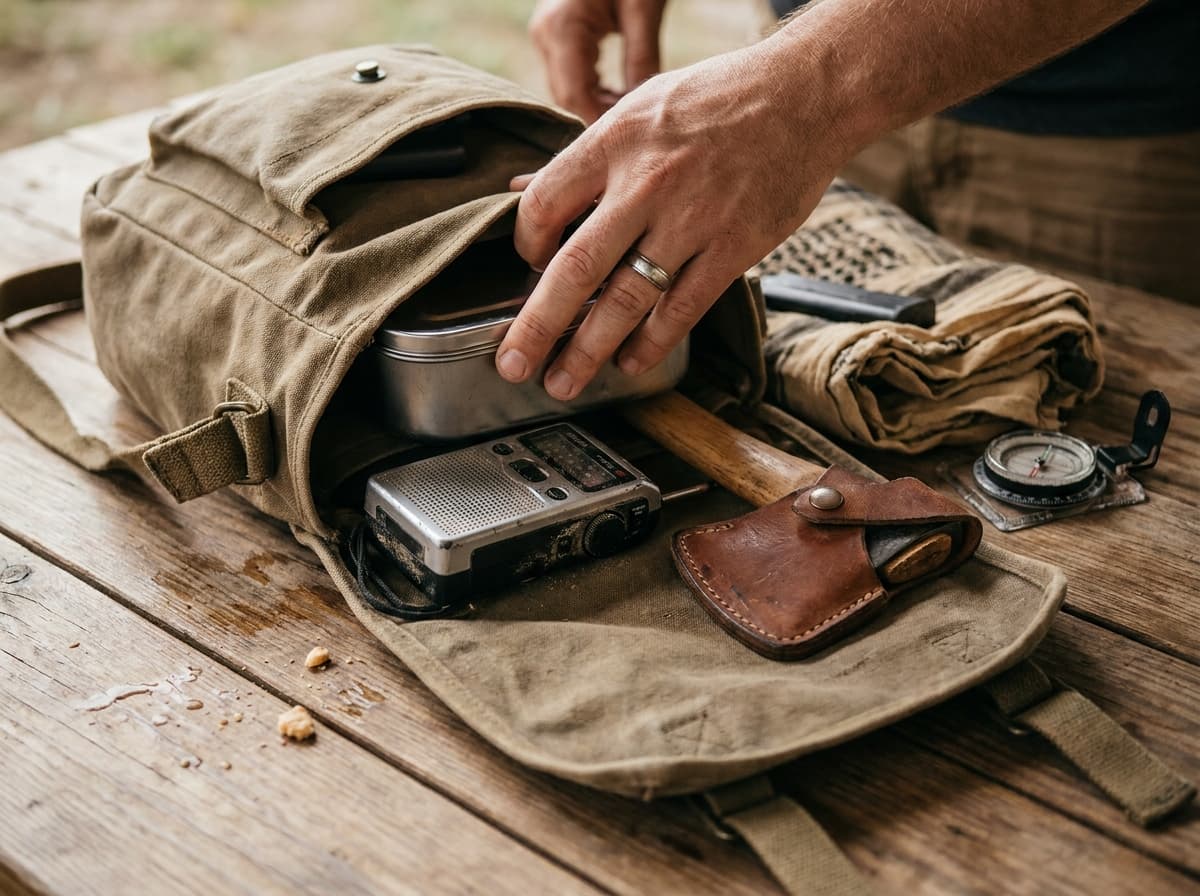
Gear & Essentials: Survival Fire Starting Kit for Beginners and Home Prep
A Gear & Essentials: survival fire starting kit for beginners is your most vital tool for staying warm and safe during an emergency. You don't need fancy gadgets, just reliable...
Gear & Essentials: Survival Fire Starting Kit for Beginners and Home Prep
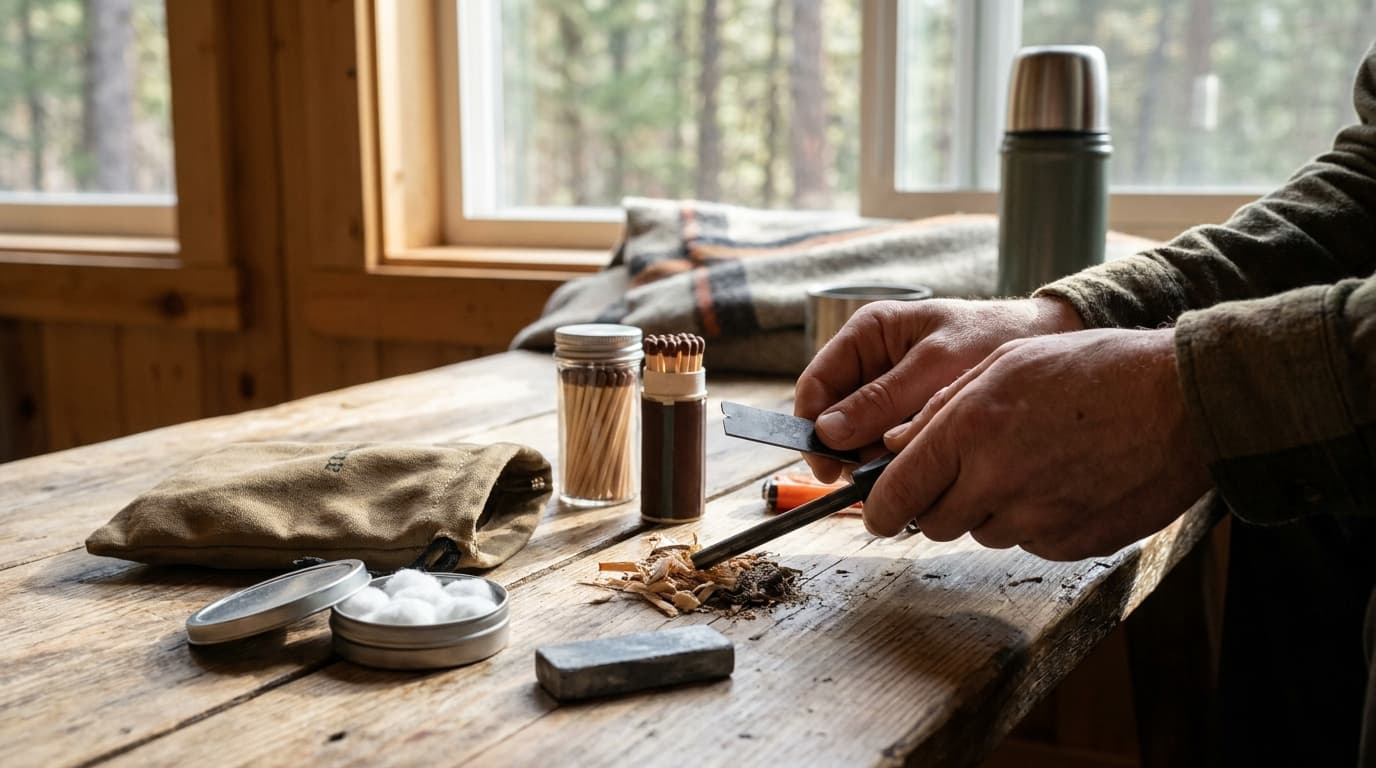
A Gear & Essentials: survival fire starting kit for beginners is your most vital tool for staying warm and safe during an emergency. You don't need fancy gadgets, just reliable items like a ferrocerium rod and stormproof matches that work in any weather.
Prepping isn't about fear. It's about being the person who knows what to do when the lights go out. Sorting your water and gear now means you and your pets stay cozy instead of stressed during a storm.
We'll walk through building your fire kit, storing water, and picking a solar generator that actually works.
Choosing a Survival Fire Starting Kit for Beginners
A beginner's fire kit needs tools that work even when everything goes wrong. You want items that light up in the wind or rain without a struggle. This isn't about being an expert; it's about having a ferrocerium rod and stormproof matches that won't fail when your hands are cold and shaking.
Fire is a top priority because of the Survival Rule of 3s, which helps you focus on what matters most during an emergency. While fire provides heat, it also lets you purify water and gives you a huge boost in morale. If you ever find yourself soaked after a winter storm, a fire is the fastest way to dry your clothes and stop hypothermia in its tracks.
Imagine trying to light a fire with a cheap plastic lighter while the wind is howling and your fingers are numb. The flame flickers out every time you get close to the wood. Now, picture using a ferrocerium rod that throws a shower of hot sparks regardless of the weather. That reliability is exactly what a beginner needs to stay safe.
Key insights:
Buy a high-quality ferrocerium rod and a pack of stormproof matches as your primary tools.
Store a small stash of fatwood or dryer lint in a waterproof bag to ensure you always have dry tinder.
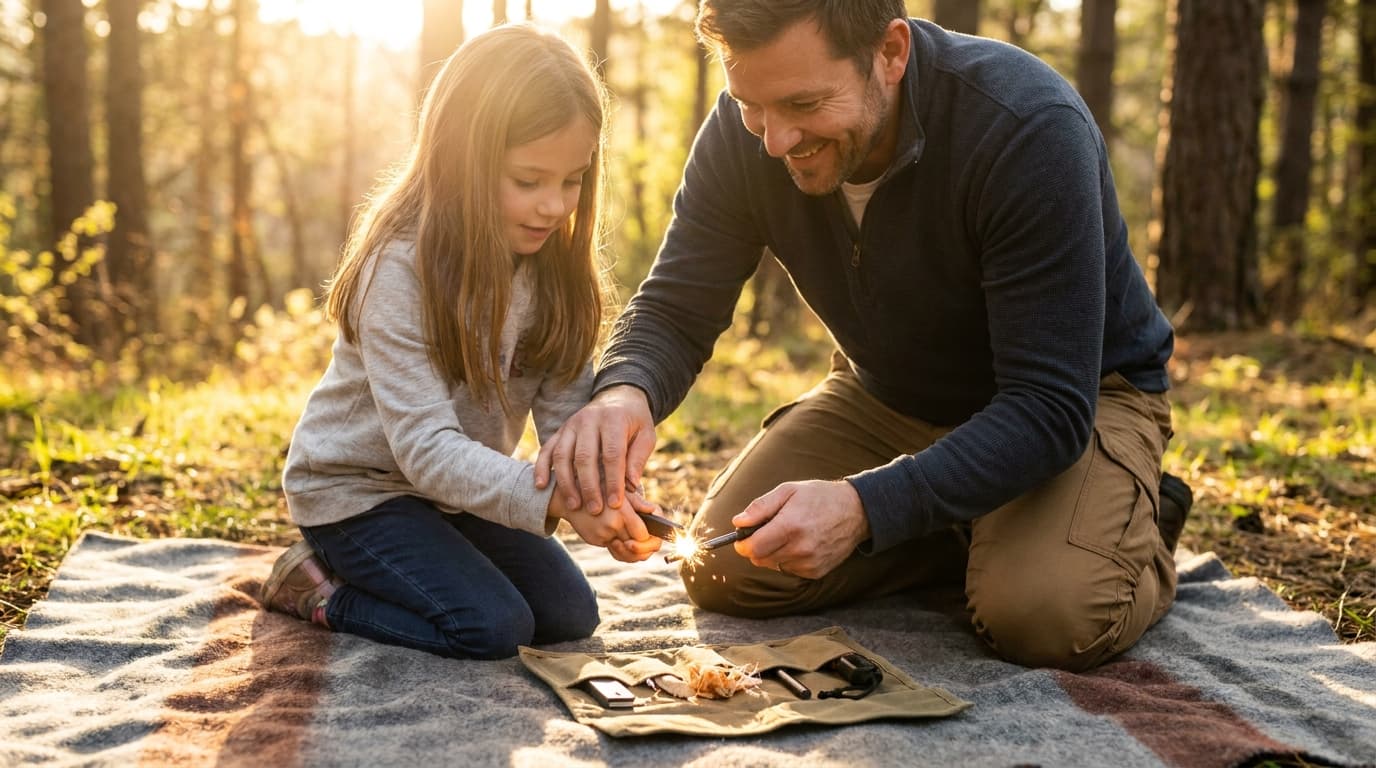
Practice starting a fire in your backyard under safe conditions before you actually need the skill in the wild.
Keep your fire-starting gear in a dedicated, bright-colored waterproof container so it is easy to find in your pack.
Why the 'Rule of 3s' Makes Fire a Priority
The Survival Rule of 3s helps you prioritize your needs during a sudden emergency. While shelter is a big deal, fire is a huge help for staying alive. It provides heat to prevent hypothermia, a way to purify water, and a big boost to your mood when things look grim. It is about more than just a flame; it is about having control.
For example, if you are stuck in a freezing power outage, fire is the fastest way to stay warm. If your gear gets damp, fire is the only way to dry out before hypothermia sets in. This framework is the cornerstone of any solid plan.
Key insights:
Practice starting a fire in your backyard before you actually need it.
Pack three different ignition sources, like a lighter and waterproof matches.
Use your fire to boil water if your filters ever fail.
How to Store Emergency Water at Home Safely
Storing water is the most important step for any home emergency plan. You should aim for at least one gallon for every person in your house for each day the water is off. This covers drinking and basic hygiene so you are not left worrying when things get tough.
While water weighs about 8.3 pounds per gallon, storing it at home is easier than carrying it because you have more space. You can stock up on larger volumes without worrying about the weight of a heavy backpack.
Think about a family of four during a multi-day utility outage. They would need four gallons of water every single day just to stay hydrated and keep everyone clean, including the family pets. Over a three-day period, that adds up to 12 gallons of water just to meet the bare minimum.
You also need a way to make more water if your stash runs out. Gravity filters and purification tablets are great tools to turn rainwater or local sources into something safe to drink if the taps stay dry for a long time.
Key insights:
Use a WaterBOB in your bathtub to store up to 100 gallons of water as soon as a storm warning is issued.
Buy stackable BPA-free five-gallon containers to keep your supply organized in a closet or garage.
Keep a pack of Potable Aqua tablets in your kitchen drawer for a lightweight backup that lasts for years.
Set up a gravity filter like a Waterdrop to handle larger amounts of water from rain barrels or local streams.
Gravity Filters and Purification Tablets
Storing water is the first step, but space is always a limit. A single gallon weighs about 8.3 pounds, making bulk storage heavy and difficult for many apartments or small homes. Having the tools to create fresh water from local sources like rain or a nearby stream is just as important as having a few jugs in the pantry.
Imagine the taps suddenly go dry after a major storm. If you have a Waterdrop gravity filter, you can simply collect rainwater and let gravity pull it through the filtration system. It turns questionable water into a safe drink without needing electricity or a manual pump, giving you one less thing to worry about during a power outage.
Key insights:
Keep a pack of Potable Aqua tablets in your kitchen drawer as a tiny, lightweight backup.
Practice setting up your gravity filter once so you know how it works before the lights go out.
Finding the Best Solar Power Generator for Off-Grid Living
When you are looking for a solar generator, the most important number to check is the watt-hour rating. This number tells you exactly how much energy the battery can store and how long it can power your electronics before it needs a recharge. If you want to keep a fridge cold and your phone charged, you need a unit that offers enough continuous power to handle the heavy energy pull of a large appliance when it first kicks on.
Imagine the lights flicker and die during a storm and you need power fast. If the grid stays down for two days, you will need to keep your phone alive for updates and maybe power a small medical device like a CPAP machine.
Being prepared is about more than just buying gadgets. It is about keeping your whole household safe and comfortable through regular maintenance and smart planning. Since half of all Americans take prescription medicine every day, a solar generator ensures that any temperature sensitive meds stay cool even when the main power fails. It is a simple way to turn a scary blackout into a manageable weekend at home with your pets.
Key insights:
Check the watt-hour rating on the unit to make sure it covers your total daily energy use for both small gadgets and larger appliances.
Look for models with Lithium Iron Phosphate batteries because they are safer for indoor use and last for thousands of charge cycles.
Test your generator with your actual fridge and medical devices before an emergency happens so you know exactly how many hours of run time you have.
Pair your power station with portable solar panels that match the unit's input capacity to speed up recharging during daylight hours.
Keep your generator in an easy to reach spot so you are not fumbling in the dark when the power suddenly cuts out.
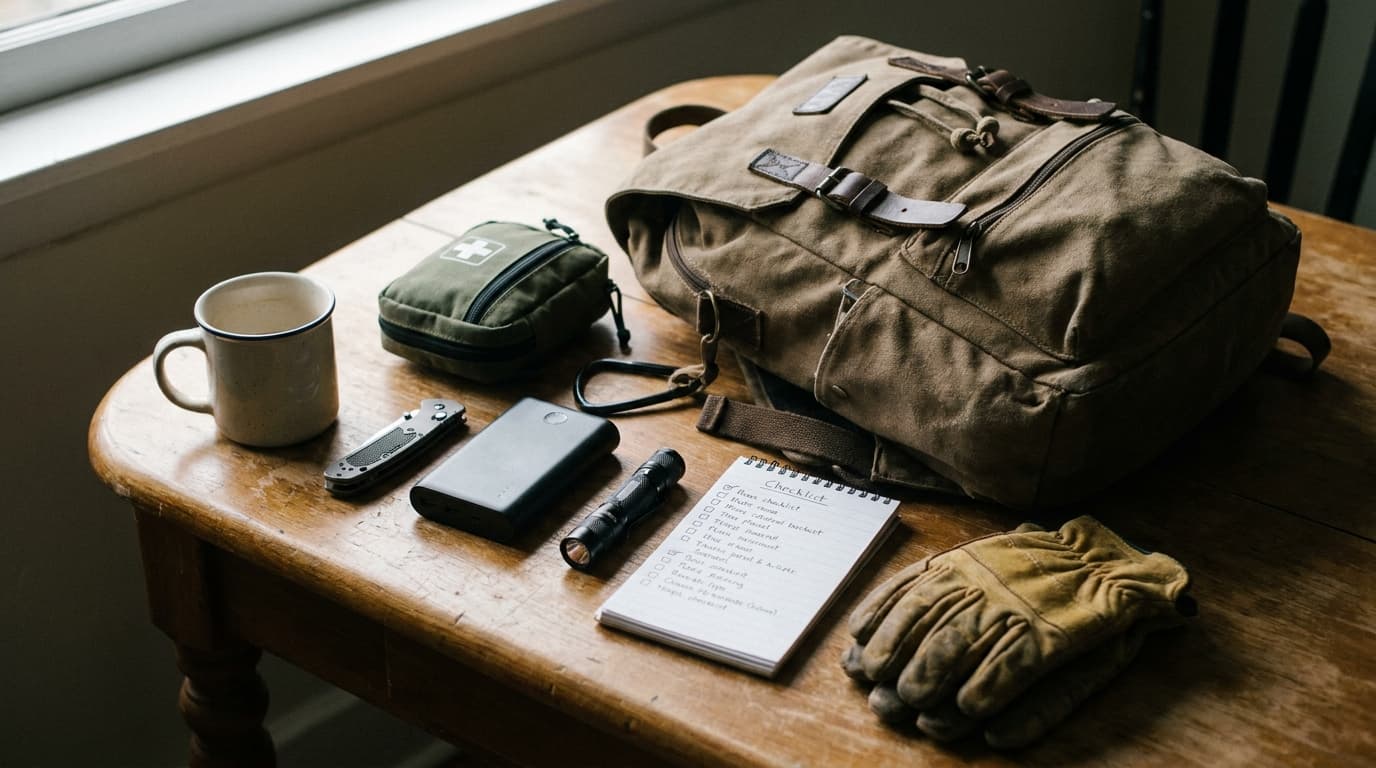
Your Essential Bug Out Bag Checklist for Beginners
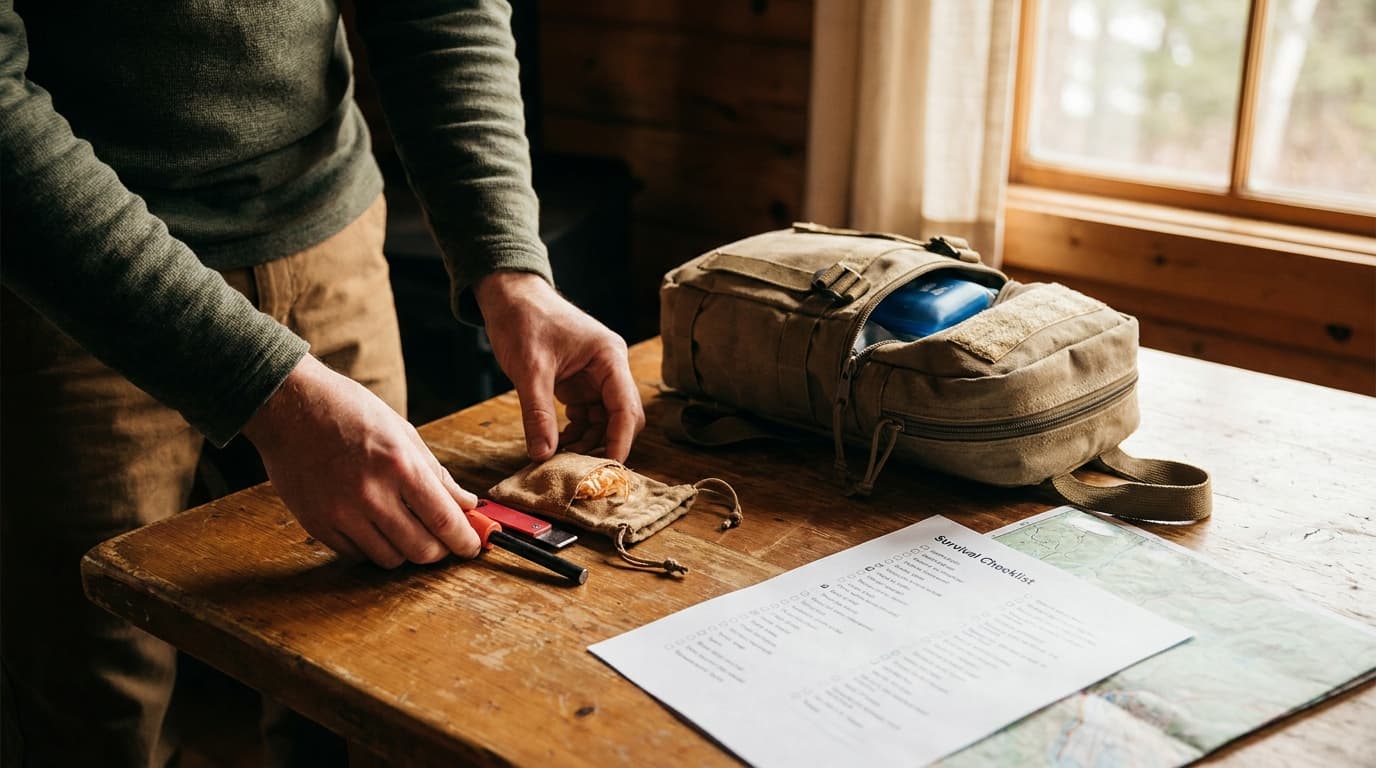
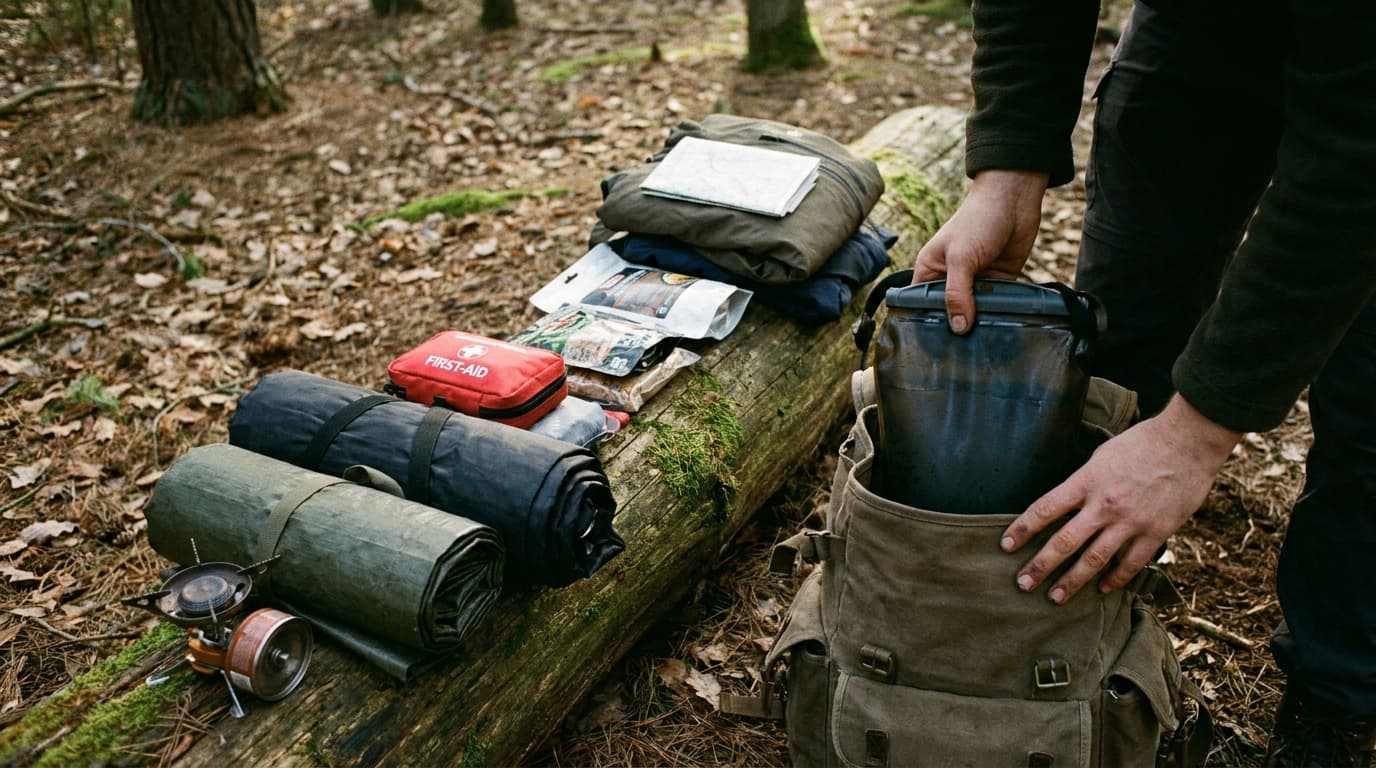
A bug out bag is your personal grab-and-go kit for when staying home simply isn't an option. While home survival kits allow for more weight and volume, a mobile bag has to be light enough to carry for miles without wearing you out. It focuses on the absolute essentials to keep you safe for at least 72 hours, usually following the Survival Rule of 3s to prioritize shelter and warmth. The goal is to have exactly what you need to move quickly to a safer spot without being weighed down by extra gear that you will never actually use.
Imagine a flash flood warning hits your neighborhood and you have ten minutes to get out before roads become impassable. You grab your bag and find your NOAA radio and your heart medication already packed and ready to go. Since about half of all Americans take daily prescriptions, forgetting these is a huge risk during a frantic exit. Having them ready means you can focus on driving to safety rather than worrying about a missed dose or a medical emergency in the middle of a disaster.
Digital preparedness is often the most overlooked part of building a survival kit. Physical gear protects your body, but digital copies of your IDs and deeds protect your life after the disaster is over. A small thumb drive or a waterproof folder weighs almost nothing but saves you from months of red tape and legal headaches. It is the easiest way to ensure your important records don't get lost in the chaos, and it takes very little effort to set up.
Think about someone whose house was caught in a major flood. They are safe at a shelter, but their physical insurance papers and birth certificates are sitting in a soaked basement. Because they scanned those files to an encrypted, waterproof USB drive on their keychain, they can start their insurance claim from a library computer the very next day. That one small step makes a world of difference when you are trying to rebuild your life from scratch.
Key insights:
Use a backpack you already own to save money, but keep the total weight under 20% of your body weight.
Pack a NOAA weather radio with a hand crank to get alerts if the power and cell towers go out.
Scan your birth certificate, deeds, and insurance papers to an encrypted, waterproof thumb drive today.
Carry a portable water filter or iodine tablets to avoid carrying too many heavy 8.3-pound water jugs.
Keep at least a 72-hour supply of all prescription medications in a clearly labeled waterproof container.
Digital Preparedness and Important Documents
When disaster hits, grabbing a heavy filing cabinet isn't an option. But losing your birth certificate or house deed makes recovery much harder. Digital preparedness means keeping copies of your life’s vital paperwork in a portable, protected format so you can prove who you are when things get chaotic.
Imagine standing in your driveway after a flood. Your home is a mess and your files are a soggy pile of pulp. Instead of panicking when the insurance agent asks for your policy number, you just pull a waterproof, encrypted thumb drive from your bag and find the file in seconds.
Key insights:
Scan birth certificates and deeds to an encrypted, waterproof thumb drive today.
Keep physical copies in a bright, waterproof folder near your emergency exit.
Update your digital folder every time you get a new prescription or insurance policy.
Must-Have Essential Winter Survival Gear for Car Emergencies
Keeping a survival kit in your trunk is a basic safety net for any driver, especially when the temperature drops. A car can quickly turn from a heater into a freezer if the engine dies or you get stuck in a snowbank. According to the Survival Rule of 3s, staying warm is your top priority in extreme weather, so your gear should focus on heat retention and visibility. This kit is the cornerstone of your winter safety plan.
Imagine you are driving home on a back road and hit a patch of black ice. Your car slides into a deep ditch, and the engine won't turn over. It is pitch black, the snow is piling up, and your phone signal is spotty. In this moment, your trunk becomes your warehouse for survival. Instead of shivering in your coat, you pull out a wool blanket and use a hand-crank radio to check for weather updates while you wait for a tow truck.
Being prepared means thinking about both your physical health and your car's ability to move. Since about 50% of Americans take at least one prescription medicine daily, don't forget to include extra doses in your glove box. Small additions like traction aids and digging tools can be the difference between a quick fix and an overnight stay on the shoulder.
Key insights:
Pack a heavy wool blanket and a collapsible shovel to help you stay warm and clear snow from your exhaust pipe.
Keep a bag of sand or gravel in the trunk to provide instant tire traction on icy or slippery surfaces.
Store at least one gallon of water per person, but keep in mind it weighs about 8.3 pounds per gallon when planning your trunk space.
Include a hand-crank or battery-powered NOAA weather radio to stay informed if your phone battery dies.
Add high-energy, non-perishable snacks and a basic first aid kit to handle minor injuries or hunger during long waits.
Frequently Asked Questions About Survival Gear
You might wonder if that five-year-old can of beans is still safe to eat. Usually, it is fine if the can is not dented or rusted, but the taste might be a bit flat. Gear is about more than just food. You need one gallon of water per person per day to stay hydrated and clean.
Water weighs about 8.3 pounds per gallon, so it gets heavy fast. This is why home kits are great because you can store more since you do not have to carry it. Since half of us take daily medicine, keep your prescriptions updated too. It is much easier to stock up when you are staying put.
Imagine a storm hits and you open your emergency bin for the first time in years. You find the batteries are dead and the crackers are stale. For example, a beginner might realize their gear is useless because they never checked it. It is a small habit that only takes a second but saves the day.
Key insights:
Set a calendar reminder to check your gear and rotate food every six months.
Store supplies in different rooms so you can always reach something if a door is blocked.
Save digital copies of your IDs and records on a waterproof USB drive.
Buy a manual can opener to ensure you can reach your food during a power outage.
Final Thoughts: Starting Your Preparedness Journey
Getting prepared feels like a huge job, but it really boils down to four main things: fire, water, power, and car safety. You do not need to build a bunker today to be safer tomorrow. Just focus on the basics so you can protect your family and your pets when the lights go out or the weather turns bad.
Think about someone who just bought their first emergency water jug. When a local water main breaks, they are not fighting crowds at the grocery store for the last plastic bottle. Instead, they are calm at home because they followed the Ready.gov recommendation to keep one gallon of water per person for several days. It turns a potential crisis into a minor hiccup.
Key insights:
Pick one item from this list - like a fire starter or a water jug - and buy it this week.
Store water in easy-to-reach places because it weighs a heavy 8.3 lbs per gallon.
Keep a backup supply of daily medications since about half of all Americans rely on them.
Spread your resources around the house rather than keeping everything in one single closet.
Frequently Asked Questions
Honestly, for someone just starting out, a reliable lighter is your best friend. While fancy tools like ferro rods look cool and last a long time, they take a lot of practice to use when you are cold or stressed. You want something that creates a flame instantly because staying warm is a huge part of the Survival Rule of 3s that experts always talk about.
Here is the thing: a fire kit is not just about the spark. You also need good tinder, like cotton balls soaked in petroleum jelly, to keep the flame going long enough to catch wood. It is all about making the process as easy as possible so you do not struggle when things get tough.
You should plan on at least 12 gallons for a basic three-day supply, but 56 gallons is much safer if you want to be ready for two weeks. The general rule is to keep one gallon of water for every person in your house for each day. This amount covers what you need to drink and basic needs like washing your hands.
Since you are storing this at home, you have a big advantage. Mobile kits are hard to pack because water weighs about 8.3 pounds per gallon, but at home, weight does not matter as much. You can use things like bathtub reservoirs or large blue drums to keep your family safe without worrying about how heavy the containers are.
It really depends on your specific needs, but solar generators are quickly becoming the favorite for long-term survival. The big draw is that they're silent and don't require you to store gallons of smelly, flammable gasoline in your garage. Since they run on sunlight, you won't run out of fuel as long as the sun is shining, which is a huge relief during extended outages.
But here's the thing: solar units usually don't pack the same raw punch as gas engines. If you need to run a massive sump pump or a central AC unit, a gas generator might still be necessary. However, for keeping your phones charged, running a laptop, or powering a small medical device, solar is much more reliable. Plus, you can use them indoors safely, whereas gas generators are strictly outdoor tools due to carbon monoxide risks.
Don't let a tight budget stop you from getting ready because you can build a solid kit with stuff you already have at home. The most important thing is water, which Ready.gov recommends should be at least one gallon per person per day. You don't need a fancy tactical bag to hold a few water bottles and some extra cans of food from your pantry.
Instead of buying everything at once, focus on the 'Survival Rule of 3s' and prioritize shelter and water first. You can grab an old backpack and fill it with basics like a spare change of clothes, a manual can opener, and any extra prescription meds you might have. Remember that a home-based kit is often better anyway because weight isn't a factor, so you can stock up on heavier essentials without spending a fortune on lightweight hiking gear.
Conclusion
So where does all this leave us? Building a survival fire starting kit for beginners is really just the first step in creating a solid safety net for your home and family. When you combine fire tools with smart water storage and a reliable power source, you are not just buying gear. You are building a plan that keeps you calm and comfortable when the lights go out or the weather turns sour.
The real secret to being ready is that it does not have to happen all at once. Whether you are researching the best solar power generator for off-grid living or packing a winter kit for your car, every small choice adds up. It is about moving from feeling worried to feeling capable because you know exactly where your supplies are and how they work.
Your next move is simple. Do not feel like you need to finish a whole bug out bag checklist for beginners by tonight. Just pick one item from this guide, like a water container or a fire starter, and get it ready this week. Preparedness is a journey that gets easier with every step you take. You have got this.
Every WilderReady guide is researched, written, and fact-checked in-house against trusted references such as the American Red Cross, the National Park Service, and the CDC before it goes live. We publish under this shared byline instead of invented personas, so you always know who stands behind the guidance you are reading.