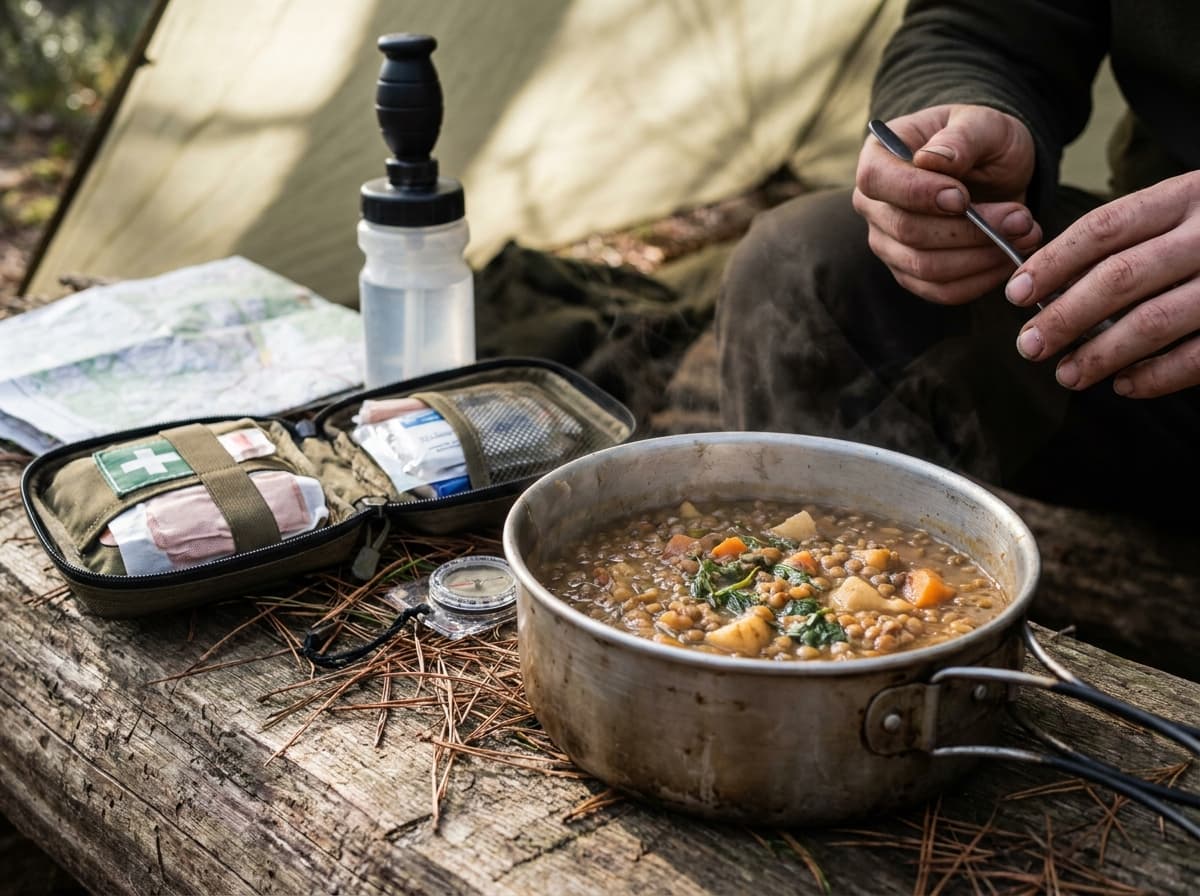
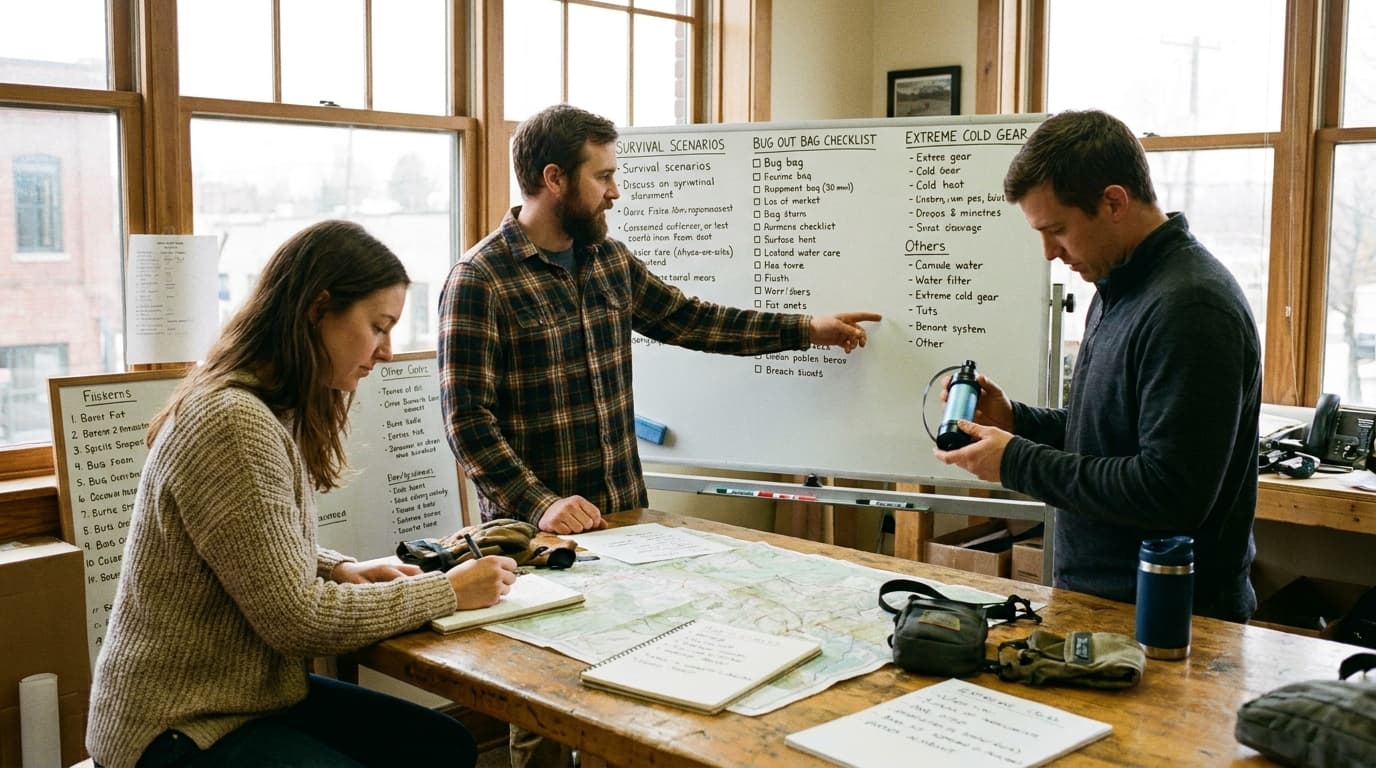
Survival Scenarios: Best Gear for Cold, Woods Mistakes, and Home Power Outage Tips
Preparation is your best tool when you're facing Survival Scenarios: best survival gear for extreme cold weather, survival mistakes to avoid when lost in woods, how to build a survival...
Survival Scenarios: Best Gear for Cold, Woods Mistakes, and Home Power Outage Tips
Preparation is your best tool when you're facing Survival Scenarios: best survival gear for extreme cold weather, survival mistakes to avoid when lost in woods, how to build a survival shelter without tools, emergency checklist for home power outages, how to signal for help in the wilderness.
Whether it's a winter storm at home or getting lost on a trail, having the right gear and avoiding common ego-driven mistakes can save your life.
This guide covers essential gear picks, quick shelter builds, and how to stay visible for rescue.
Survival isn't about being a hero; it's about preparation and the gear in your pack. Thinking you can handle the woods with just a knife is a dangerous fantasy. Real survival is a constant battle against calories and moisture.
Imagine a researcher who lost 30 pounds in six months despite being prepared. Even historical experts like Ishi struggled to stay alive without modern tools. It’s a physical grind that drains your body fat and your warmth.
Key insights:
Build your emergency shelter in 15 minutes or less to save time for gathering insulation.
Choose synthetic sleeping bags because they keep you warm even when damp.
Keep your pack weight around 25% of your body weight to prevent exhaustion.
Pick gear made of 500 denier Cordura nylon for better durability.
The Best Survival Gear for Extreme Cold Weather
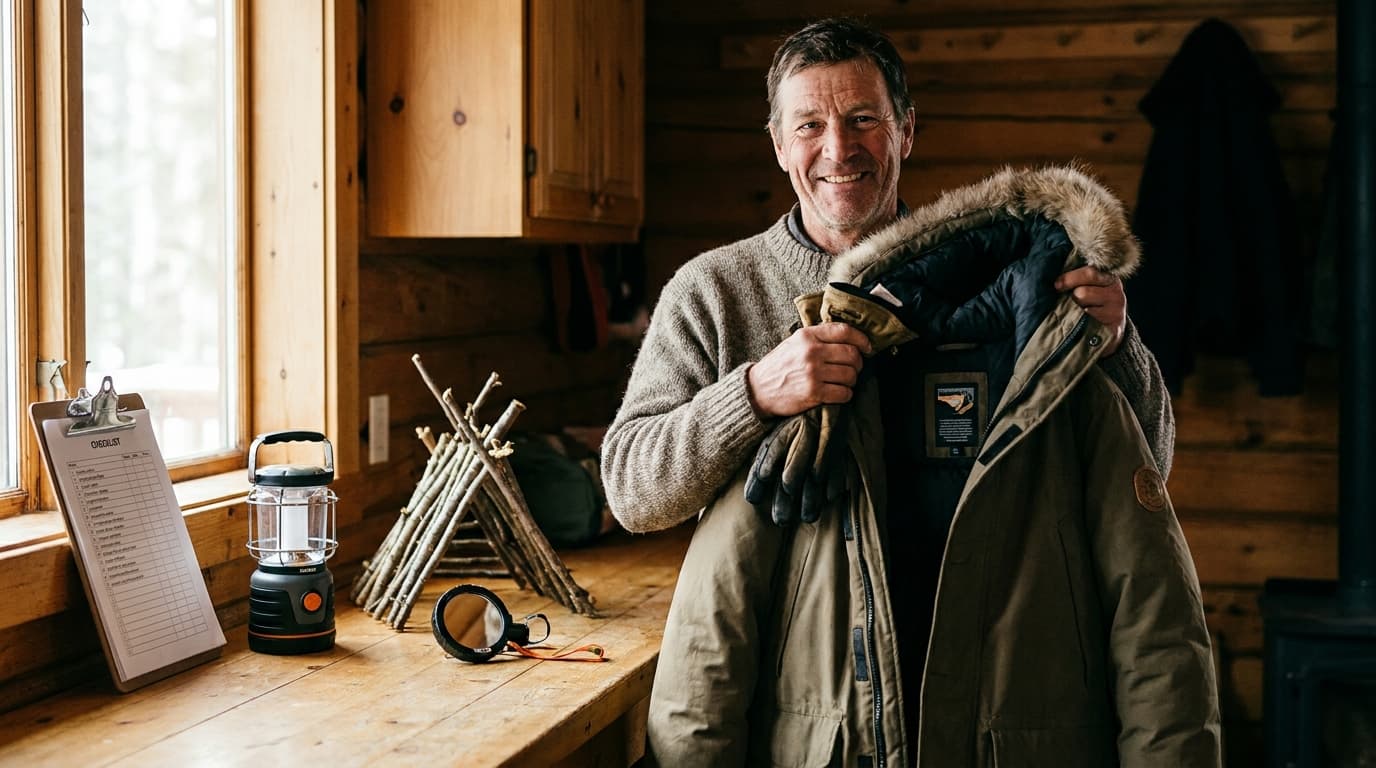
When the thermometer dips below zero, staying alive depends on gear that handles moisture as well as it handles the cold. While down is great for dry chills, synthetic or hybrid insulation is safer for survival because it keeps you warm even when it gets damp. You also need a rugged pack that carries your gear without wearing you down.
Imagine being stuck in a freezing, foggy forest where every surface is slick with condensation. Your down sleeping bag, once warm and puffy, has turned into a heavy, wet mess that offers zero protection. This is the reality of the wilderness; moisture comes from the ground, the air, and even your own breath, and once down gets wet, it stops holding heat.
Synthetic materials are better for long-term use because they do not collapse when wet and dry out much faster. For your pack, look for 500 denier Cordura nylon to ensure it survives the constant abrasion of the woods. Also, skip Gore-tex on sleeping bags because it often traps your own body moisture inside, leaving you shivering in a damp bag by morning.
Survival is really about caloric management and having the right tools. Even experts like Ishi the last Yahi found that living solo without tools is unsustainable in the long run. To stay mobile, keep your pack weight around 25 percent of your body weight. If your gear is too heavy, you will burn through your fat reserves too fast, and losing that fat makes it even harder to stay warm.
Key insights:
Choose synthetic or hybrid insulation to ensure your sleeping bag stays warm even in damp conditions.
Keep your backpack weight at roughly 25% of your body weight to prevent exhaustion and save calories.
Select a pack made from 500 denier Cordura nylon for the durability needed in long-term scenarios.
Avoid Gore-tex outer layers on sleeping bags to prevent trapping internal body moisture.
Practice your shelter building until you can set up a windproof and waterproof spot in 15 minutes or less.
Why Synthetic Beats Down for Long-Term Use
Synthetic insulation is the clear winner for long-term survival because it still works when it gets wet. Down is excellent for short trips in dry cold, but it eventually clumps up from humidity or sweat. Once those feathers lose their fluff, they stop trapping heat, leaving you shivering in the middle of the night.
Imagine you are two weeks into a deep-woods winter stay. Every time you breathe or sweat, moisture seeps into your gear. A down bag would slowly turn into a damp, heavy mat that refuses to dry. However, a synthetic bag keeps its shape and warmth even in a soggy environment. This focus on durability is why pros recommend a 500 denier Cordura nylon pack to keep your supplies safe from the elements.
Key insights:
Pick synthetic insulation to ensure you stay warm in damp conditions.
Avoid Gore-tex covers on sleeping bags so your body’s moisture can actually escape.
Aim to set up your shelter in 15 minutes or less to stay dry as night falls.
Common Survival Mistakes to Avoid When Lost in the Woods
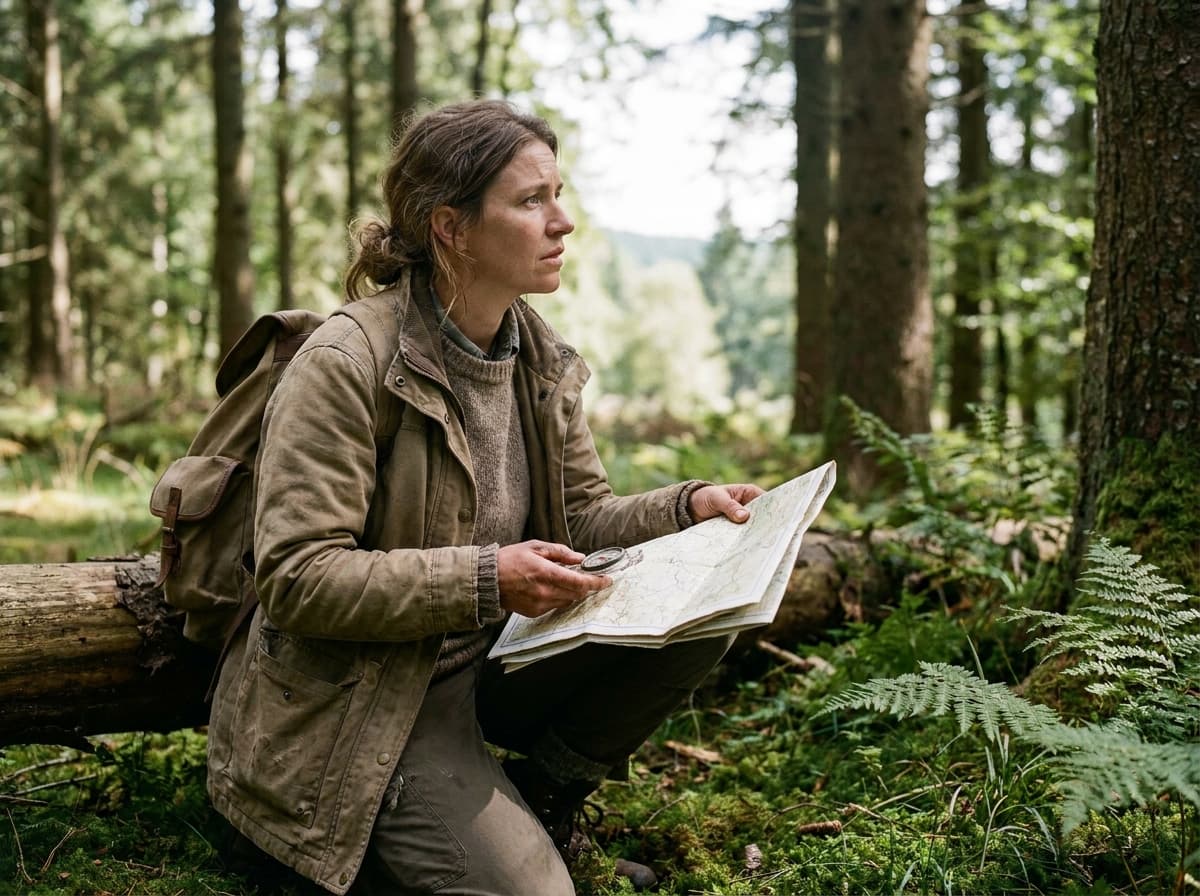
Experienced hikers often fail because they rely on their fitness and forget that nature does not care how many miles you have logged. They get caught in a trap of thinking they can power through a situation instead of stopping to think. Survival is not about being a hero. It is about managing your energy and staying dry. When you lose your way, your brain often panics and makes you follow social trails. These are paths that look official but actually lead nowhere, wasting your time and breath.
Think about the story of Ishi, the last Yahi. Even though he had incredible primitive skills, living solo in the wilderness without modern tools proved to be nearly impossible. This highlights a hard truth. The idea that you can just walk into the forest and live off the land indefinitely is a complete fantasy. Real survival is a brutal game of math. In one study, a person lost 30 pounds in six months because the caloric demands were so high. Your body is like a battery that drains much faster than you can refill it.
You also have to fight the clock and the weather. If you are lost and the sun is going down, you need a place to stay. You should be able to put up a basic shelter in 15 minutes or less so you can spend the rest of your time gathering insulation like leaves or pine boughs. It is not just about staying dry. A shelter gives you a massive psychological boost that keeps you from giving up when things get dark and cold. Also, remember to keep your gear dry. Synthetic or hybrid sleeping bags are much better than down because they still keep you warm even if the air is damp.
Key insights:
Stop moving the moment you feel confused to preserve your body fat and warmth.
Avoid following unmarked social trails that pull you further away from known points.
Build a windproof and waterproof shelter quickly to protect your mental state.
Use synthetic insulation instead of down because it still works when the environment is damp.
Limit your pack weight to 25 percent of your body weight to prevent total exhaustion.
How to Build a Survival Shelter Without Tools in 15 Minutes
You can build a life-saving shelter using only what the forest provides, but you must work fast. When the sun goes down, your priority is a wind-proof spot that traps your body heat. For example, experts at Swift | Silent | Deadly suggest aiming for a 15-minute build time. This leaves you enough daylight to gather the insulation that actually keeps you alive.
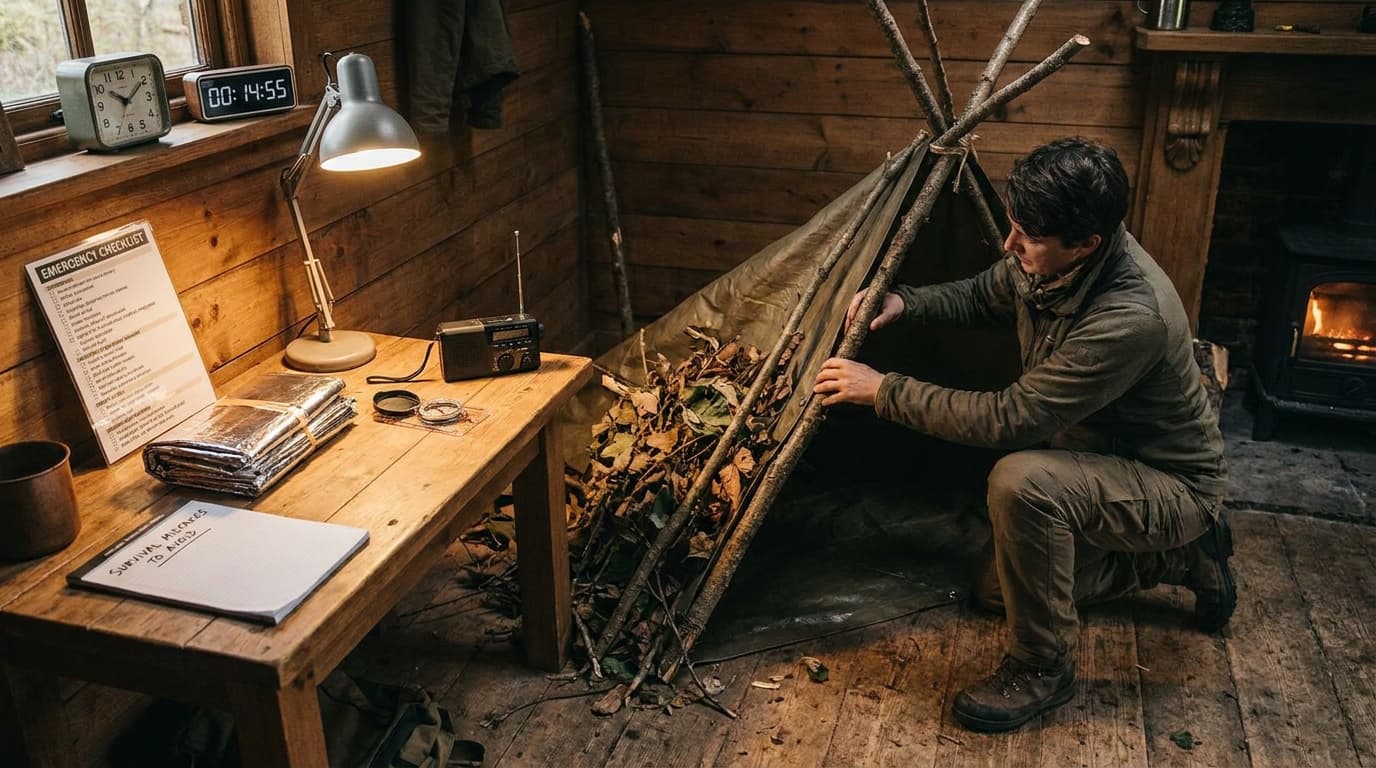
Without tools, long-term survival is almost impossible, as seen with Ishi, the last of the Yahi. But for one night, a debris hut is your best friend. Imagine you are in the woods and the light is fading fast. You find a sturdy downed log or a low-hanging branch. By leaning thick sticks against it and covering them with a heavy layer of leaves, you create a cozy micro-climate. This small space becomes a life-saver as the wind starts to bite. It is not a luxury hotel, but it keeps you from freezing before morning.
A shelter provides a huge psychological boost that is just as important as the physical protection it offers. Knowing you have a home for the night helps fight off the fear and loneliness of being lost. Just remember that every move costs calories. Since your body uses fat to keep you warm, you want to build fast so you do not burn through your energy reserves. A quick build means more time to rest and stay warm through the night.
Key insights:
Look for a natural ridgepole like a sturdy fallen log or a low-forked tree to save time.
Avoid low-lying areas or dry creek beds where cold air and water naturally settle at night.
Layer sticks closely together to create a skeleton before adding a thick blanket of leaves.
Gather twice as much insulation as you think you need to keep your body off the frozen ground.
Check for widowmakers or dead hanging branches above your site before you commit to building.
Your Emergency Checklist for Home Power Outages
Staying safe when the grid goes down comes down to three things: light, heat, and calories. Most of us take for granted how quickly a modern home becomes an icebox once the furnace stops. You need tools that work regardless of the grid, focusing on keeping your core temperature up and your stress levels down. It isn't just about surviving; it's about staying clear-headed enough to make good decisions while you wait for the repair crews.
Imagine a winter storm snaps a transformer down the street on a Tuesday night. The house goes silent, and by Wednesday morning, you can see your breath in the kitchen. Without a plan, you're shivering under four blankets, eating a cold can of soup alone, and worrying about the pipes freezing. It’s a miserable, draining experience. Even expert survivors struggle when they lack the right tools for the environment, so having a dedicated kit ready to go is your best defense against a freezing living room.
Recent survival studies show that calorie management is vital because fat keeps you warm when your body is under stress. This is why having a go-to kit is a game changer. You don't need a basement full of gear, just the right essentials to bridge the gap until the lights come back on. Think of your home as a temporary shelter that needs to be managed for maximum efficiency so you and your pets stay cozy. It is much easier to stay warm than to get warm once the chill sets in.
Key insights:
Keep a headlamp or lantern in a dedicated spot so you aren't fumbling in the dark.
Store high-calorie, shelf-stable snacks like nuts or chocolate to help your body maintain its temperature.
Use a camping stove or portable burner to heat water and food safely without electricity.
Pick synthetic blankets or sleeping bags since they retain heat even if they get damp from condensation.
Set up a warm room by sealing off one small area of the house to trap body heat effectively.
Have extra pet food and a self-warming bed ready for your furry roommates to keep them calm.
How to Signal for Help in the Wilderness Effectively
To get noticed by search and rescue teams, you have to break the natural patterns of the forest. The most reliable ways to do this are visual signals that catch the light and loud, piercing sounds that travel much further than a human voice can. You want to make yourself look and sound like something that definitely does not belong in the wild. This is vital because staying out too long is incredibly hard on the body. Even experts have found that living solo without tools is unsustainable over time.
Imagine you are deep in a valley as the sun starts to drop and the temperature falls. You hear the distant hum of a search plane, but the pilot cannot see your dark clothes against the green trees. You pull out a small signal mirror and aim a flash of sunlight directly at the cockpit. To make sure they see you from above even if you are resting, you can stomp out a giant X in a clearing or lay out bright gear to create high-contrast ground markers that scream for attention.
Now consider this: being found quickly saves you from the brutal physical toll of the wilderness. In one study, a person lost 30 pounds in just six months because the caloric demands of survival are so extreme. While you wait for help, focus on staying dry and warm. Using synthetic sleeping bags helps because they keep you warm even if they get damp. But your main job is making it easy for rescuers to spot you before you have to spend days trying to survive on your own.
Key insights:
Carry a whistle and a signal mirror in your pocket where they are easy to reach.
Create large ground signals using rocks, logs, or bright clothing to catch a pilot's eye.
Use a lensatic compass that is air-filled to ensure it stays accurate without bubbles.
Keep your survival bag weight around 25% of your body weight so you can move to clearings without getting exhausted.
Watch out for social trails or unmarked paths that look like official trails but might lead you further into the woods.
Putting It All Together: Your Survival Mindset
Survival is mostly a mind game. A fire and a dry shelter do wonders for your brain when it is dark and cold. Also, remember your body needs fuel to keep going. Calories are the engine of survival. If you stop eating, your brain and body will shut down fast.
Imagine trying to live in the woods with nothing but your bare hands. Even Ishi, a man with legendary skills, found that living solo without tools was nearly impossible. One researcher lost 30 pounds in six months of living wild. That is a massive physical toll. It proves you cannot just wing it. You need a plan to keep your energy levels high.
Key insights:
Audit your go-bag to make sure it is no more than 25% of your body weight so you do not get worn out.
Pick synthetic sleeping bags over down because they stay warm even when the woods get soggy.
Practice building your shelter until you can get it done in 15 minutes or less before the sun goes down.
Look for packs made of 500 denier Cordura nylon so your gear does not rip when things get rough.
Frequently Asked Questions
While most people think of a heavy coat, the real game-changer is actually a synthetic or hybrid sleeping bag. Unlike traditional down, these materials keep their insulation power even when things get damp, which is a constant battle in the wild.
You also have to think about your body as a heater. A 6-month wilderness study showed that survivalists can lose up to 30 pounds, and once you lose that body fat, you lose your natural insulation. That makes having a moisture-resistant sleep system even more vital for staying alive.
Trying to survive indefinitely with just a knife or your bare hands is a bit of a delusion. Even the most skilled historical examples, like Ishi the last Yahi, found that solo living without proper tools was essentially impossible to sustain.
The reality is that modern survival is all about managing calories. Without tools to build a wind-proof shelter or hunt efficiently, you'll burn more energy than you can find. It's much smarter to carry gear made from durable materials, like 500 denier Cordura, so you aren't fighting a losing battle against nature every single day.
If you're stuck without power, your first job is to find the smallest room in the house to conserve heat. You'll want to focus on trapping your body heat as efficiently as possible by setting up a tent or a small fort to keep the warmth close. When looking for the best survival gear for extreme cold weather, you'll find that synthetic sleeping bags are actually better than down because they still keep you warm even if things get a bit damp.
Also, don't forget to snack! Keeping your calorie count up is a big part of any emergency checklist for home power outages because fat is what keeps you warm. When you're well-fed, your body has the fuel it needs to keep your internal temperature steady and prevent the shivers.
A social trail is basically an unofficial path that's been worn down by people or animals over time. It looks like a path, but it doesn't really go anywhere official. The big danger here is that these trails often lead to dead ends or circle back on themselves, which can leave you totally disoriented in the woods.
This is one of those common survival mistakes to avoid when lost in woods because these paths are so easy to follow by mistake. You think you're on the right track, but suddenly the trail just vanishes. It's much better to stick to the official, marked routes so you don't end up wandering in circles.
Conclusion
Survival isn't about being a hero or living off the land with nothing but a knife. It is about understanding that the environment can change fast, whether you are miles deep in the forest or just sitting in your living room during a storm. By choosing synthetic gear that stays warm when wet and learning how to build a quick shelter, you are giving yourself a massive head start. It all comes down to managing your body heat and keeping your energy up with the right calories.
Your next move is simple: take a look at your current emergency kit. Check the weight of your pack and make sure you have a reliable way to signal for help if things go south. Even a small whistle or a mirror can make the difference between staying lost and getting home.
Being ready for these survival scenarios gives you more than just a safety net; it gives you peace of mind. Preparation beats luck every single time. So, pack smart, stay dry, and keep your head in the game.
Every WilderReady guide is researched, written, and fact-checked in-house against trusted references such as the American Red Cross, the National Park Service, and the CDC before it goes live. We publish under this shared byline instead of invented personas, so you always know who stands behind the guidance you are reading.