The Best Survival Gear for Urban Emergencies and Everyday Carry Essentials
Finding the best survival gear for urban emergencies means focusing on tools that are portable, reliable, and redundant. While many people have basic supplies, true readiness comes from choosing high-quality...
The Best Survival Gear for Urban Emergencies and Everyday Carry Essentials
Finding the best survival gear for urban emergencies means focusing on tools that are portable, reliable, and redundant. While many people have basic supplies, true readiness comes from choosing high-quality items that work when the grid goes down.
In a city, you're more likely to face a power outage than a wilderness trek, so your kit must be compact and organized. Having the right tools makes you five times more likely to take effective action during a crisis.
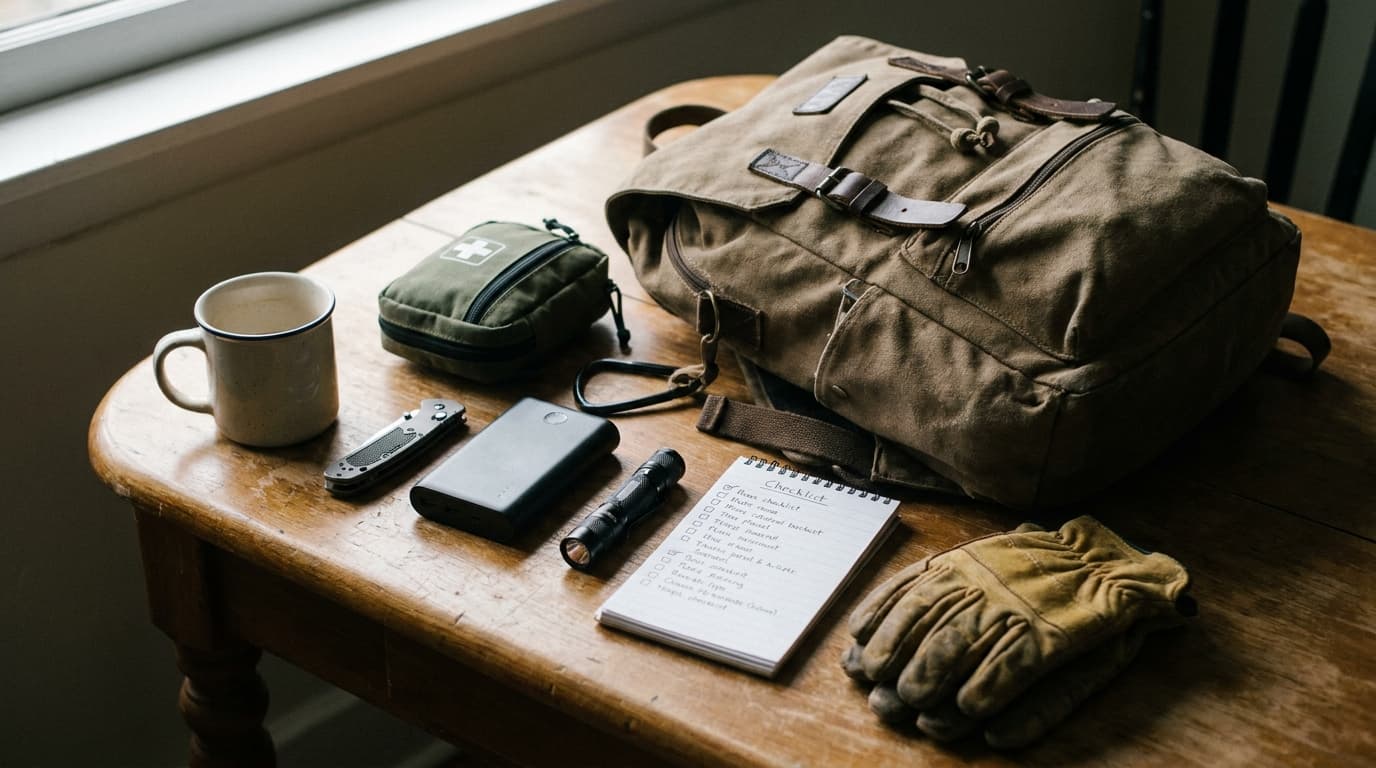
This guide breaks down the EDC knives, power banks, and backpacks you need to stay safe in any metro environment.
How to Choose the Best Pocket Knife for Everyday Carry
A reliable urban knife needs to be small enough to carry comfortably but tough enough for real work. In a city, you aren't hunting; you're more likely to be cutting seatbelts, thick zip ties, or heavy industrial plastic. Since research shows that people who learn how to prepare are five times more likely to take action in an emergency, starting with a quality blade is a smart first step. If you want to understand why smaller is often better for city life, check out our guide on why the best survival knife for 2026 isnt a Rambo blade.
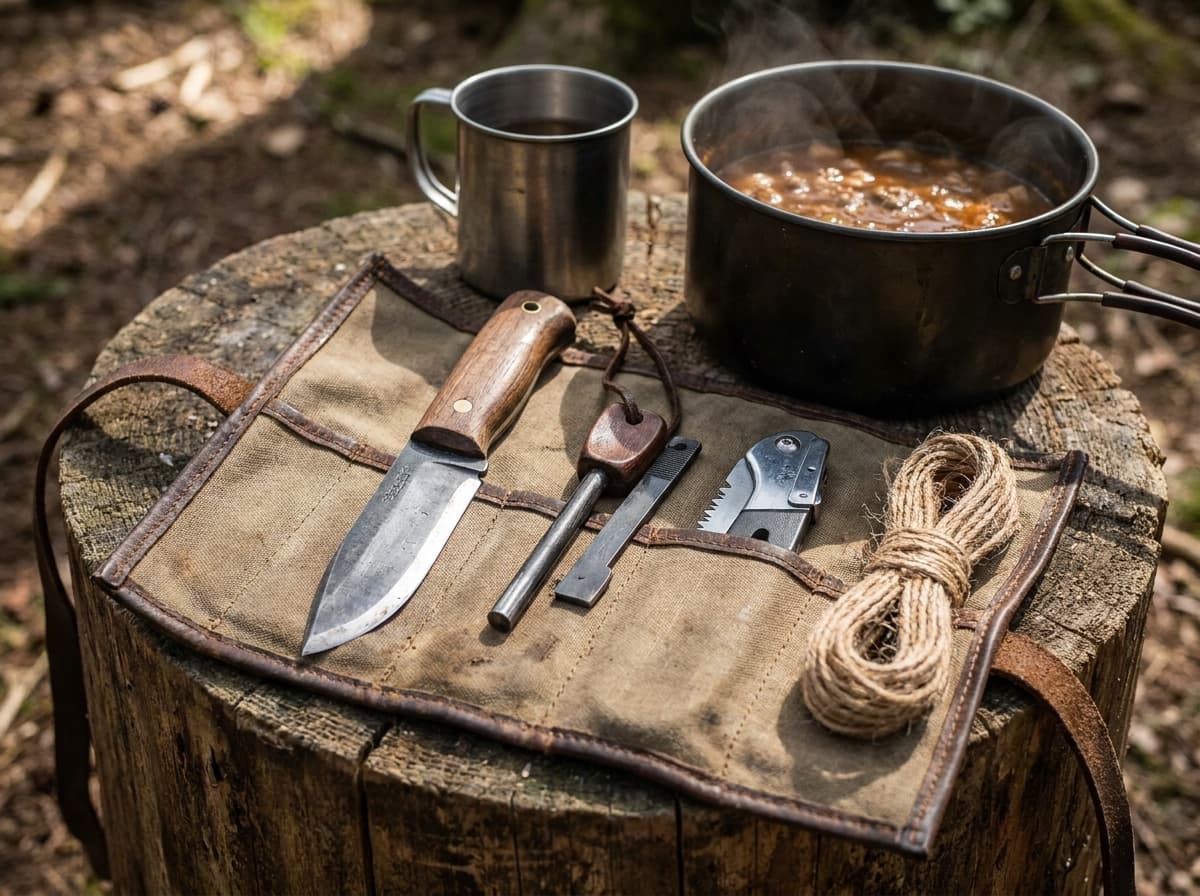
The steel you choose determines how often you will be frustrated by a dull or rusted edge. High-end options like M390, Vanax, or Magnacut are the current gold standard because they offer extreme edge retention and corrosion resistance. These 'super steels' ensure that your tool stays sharp through grueling tasks, meaning you spend less time maintaining your gear and more time trusting it when it matters most.
Imagine a scenario where a water main breaks, flooding your office basement while you are trying to evacuate. You need to cut through thick, soaked cardboard and heavy-duty nylon straps to reach a clear path. A cheaper knife might start to rust or lose its edge halfway through the job, but a Magnacut blade handles the moisture and the grit without skipping a beat. It keeps you moving when every second counts.
Having a backup is just as important as the quality of your main tool. In the survival world, we often say 'one is none, two is one' because gear can fail or get dropped when things get chaotic. Adding a secondary tool provides a safety net for when your primary blade isn't the right fit for the task. This logic is similar to why you should keep a survival fire starting kit for beginners even if you think you will have access to a lighter.
For example, if you need to signal for help in a loud, crowded area, your knife is useless. A small titanium whistle is a perfect redundant tool to carry alongside your blade. It weighs almost nothing but can produce a 120dB blast that is loud enough to be heard over heavy rain or traffic. It is a simple, lightweight addition that fills a critical gap your knife simply cannot.
Key insights:
Prioritize Magnacut or M390 steel to ensure your blade stays sharp and rust-free during emergencies.
Select a knife with a deep-carry clip to keep your tool secure and discreet in urban environments.
Carry a titanium whistle as a secondary tool for audible signaling that reaches up to 120dB.
Follow the 'one is none' rule by keeping a small multi-tool or backup blade in your kit.
Look for knives with textured grips to maintain control even when your hands are wet or cold.
Why Redundancy Matters for Blades and Tools
Relying on a single tool is a gamble you cannot afford to lose. The one is none rule reminds us that gear can break, get lost, or simply be out of reach when things go sideways. True redundancy means having a backup that performs when your primary tool fails or is not appropriate for the task at hand.
This strategy is about more than just knives; it covers your entire kit from lighting to signaling. Since prepared individuals are five times more likely to take action than those who are not, having a secondary option gives you the confidence to move forward. It ensures that a single point of failure does not end your ability to respond to a crisis.
Imagine you are using your main blade to clear debris after a storm and the lock mechanism fails or the blade snaps. If that was your only tool, your work stops immediately. But if you have a small multi-tool or a backup blade tucked into your bug out bag checklist for beginners, you can finish the job and stay safe.
Key insights:
Carry a small secondary blade or multi-tool on your keychain for immediate access when your main knife is out of reach.
Include a titanium whistle to provide a 120dB signal that works even if you are too exhausted to shout.
Keep your backup gear in a consistent, reachable spot so you can find it by touch in low-light situations.
Choose tools with different strengths, such as a dedicated folding knife for cutting and a multi-tool for prying or screw-driving.
Powering Through: Off-Grid Power Banks for Emergency Situations
When the lights go out, your phone is your lifeline for news, maps, and calling for help. For most people, a battery capacity between 5,000 and 10,000 mAh is the ideal balance for an emergency kit. This size is small enough to fit in a pocket but packs enough punch to charge a modern smartphone two or three times without weighing you down.
Imagine a 48-hour power outage where the local cell towers are still up but your home outlets are dead. For a family of four, a single 10,000 mAh bank ensures everyone can keep their primary communication devices active long enough to coordinate with neighbors or check emergency alerts. It is about staying mobile and connected when the grid fails.
Having the right gear is about more than just owning it. As expert Yong-Soo Chung explains, the difference between having supplies and having the right supplies determines how well you handle a crisis. Since a 2024 FEMA study found that 69% of Americans already have some emergency supplies, the real goal is making sure those tools actually work when things get messy.
You should also look for rugged casings that can handle a drop or a splash. If your battery breaks the moment it hits the pavement during an evacuation, its capacity does not matter anymore. Physical organization is also key, as searching for a power bank in the dark wastes valuable time and adds to the stress of an already difficult situation.
Key insights:
Look for a capacity between 5,000 and 10,000 mAh to balance weight and power.
Choose banks with a rugged, water-resistant exterior to survive drops and rain.
Test your batteries every few months to ensure they still hold a full charge.
Keep a dedicated charging cable wrapped with the battery so you do not have to hunt for one in the dark.
Best Survival Backpack Review for Beginners
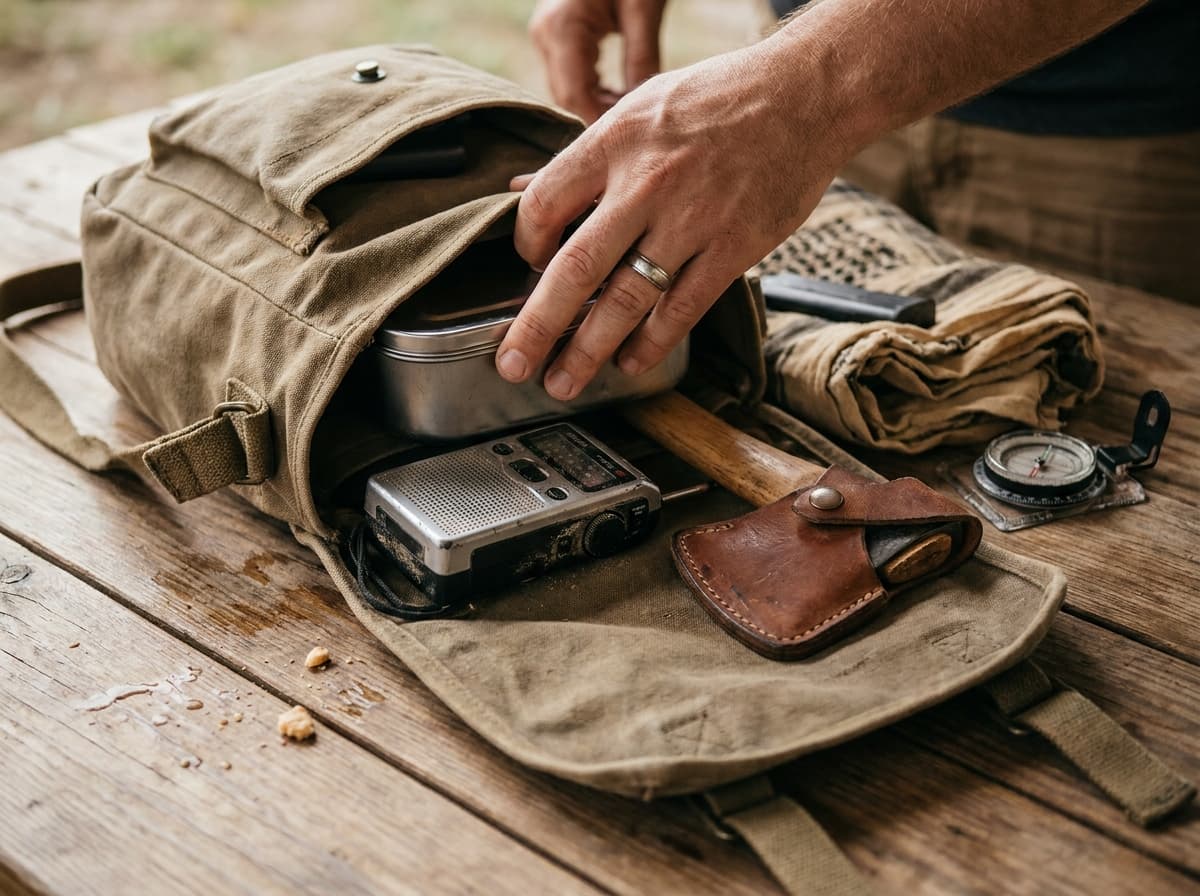
When looking for the best survival backpack review for beginners, focus on two things: discretion and organization. You want something that looks like a standard commuter bag rather than tactical military gear. This helps you blend into a crowd while keeping your essential supplies within reach. This changes everything when you need to move quickly without drawing unwanted attention.
Choosing the right pack is the first step in moving from a passive observer to someone ready for action. Research shows that people who learn how to prepare are five times more likely to take action than those who do not. Starting with a solid foundation is vital. You can find more details on what to pack in our bug out bag checklist for beginners.
Imagine you are stuck in a crowded subway station during a city-wide power outage and need to evacuate. While others are fumbling with zippers or struggling with oversized rucksacks, your low-profile pack stays tight to your body. You can move through the crowd easily because your bag isn't catching on turnstiles or bumping into people.
Because you chose a pack with dedicated internal pouches, you can reach inside and find your flashlight just by feeling the texture of the bag. You don't need a light to find your light. This tactile identification is a lifesaver when visibility is zero.
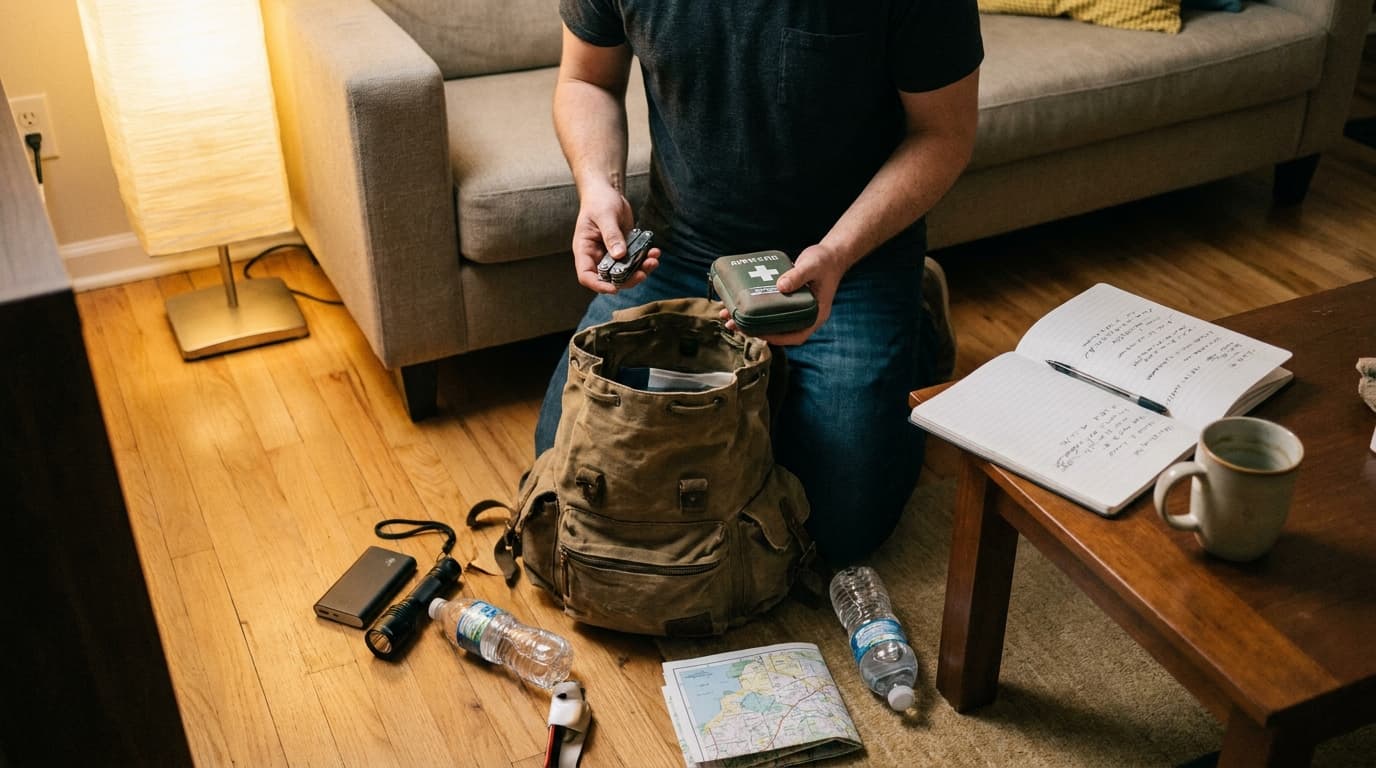
In a crisis, your fine motor skills often degrade because of stress. Having a specific place for everything means you aren't dumping the contents of your bag on the ground just to find a bandage. You can see how this applies to different survival scenarios and checklists for camping bug out bags and cold where speed is everything.
Key insights:
Pick a pack with a clamshell opening so you can see all your gear at once when you lay it flat.
Use color-coded internal pouches to separate first aid, food, and tools for faster access.
Look for padded shoulder straps and a chest buckle to help distribute weight if you have to walk for miles.
Practice finding items in your bag with your eyes closed to build muscle memory for low-light situations.
Your Essential Emergency Checklist for Power Outage Kit
FEMA and the Red Cross emphasize three pillars for any emergency: hydration, nutrition, and communication. The absolute non-negotiable is water. You need enough to cover drinking and basic hygiene without relying on a tap that might not work during a blackout. While a portable kit might only need a few days of supplies, your home base needs a much larger buffer to handle a true grid failure.
Imagine a heavy storm pulls down local lines, and suddenly the lights and the water pumps stop. If you have a family of four, that single pack of bottled water in the garage will be gone by noon the next day. Storing one gallon of water per person per day, as the American Red Cross suggests, keeps everyone hydrated and thinking clearly when stress levels are high.
Redundancy is your best friend when things go wrong. As gear expert Yong-Soo Chung notes, the difference between having supplies and having the right supplies is what actually decides your outcome. This means having a backup for your backup. If your primary flashlight dies, you need a secondary light source or a way to signal for help that does not rely on a battery or a digital signal.
Physical organization is just as vital as the gear itself. Searching for a flashlight in the dark wastes valuable time and creates unnecessary panic. By using internal pouches in your kit, you can find items by touch in low-light situations. This small step ensures that your tools are ready the moment the power fails.
Key insights:
Store at least two weeks of water for home defense to stay ahead of long-term outages.
Keep three days of non-perishable food that does not require heat or added water to prepare.
Organize your kit with pouches so you can find critical tools by touch in the dark.
Add a titanium emergency whistle to your kit because 120dB of sound travels much further than a human voice.
Keep a 10,000 mAh power bank fully charged to ensure your phone stays on for emergency updates.
Why Analog Tools Provide Security When Digital Fails
When the grid goes down, your smartphone often becomes a paperweight. Digital tools rely on a massive infrastructure of satellites, cell towers, and power lines that can fail during a storm or cyberattack. Analog tools like paper maps and hand-crank radios are different because they are self-contained. They require zero signal to function and do not need a software update to tell you where to go.
A 2024 FEMA study found that 69% of Americans have some form of emergency supplies, but many overlook the vulnerability of their tech. People who learn how to prepare are five times more likely to take action than those who do not. Part of that preparation is realizing that redundancy is a lifesaver when your primary devices lose power. This is why many are shifting toward off-grid self-reliance by incorporating manual communication tools into their kits.
Imagine you are trying to evacuate an urban center after a major flood has knocked out local cell towers. Your GPS is stuck on a loading screen and you have no idea which bridges are still open. Instead of panicking, you pull a laminated city map from your bug out bag checklist for beginners and quickly identify an alternate route through the side streets. While others are wandering aimlessly, you are moving toward safety using a tool that works without a battery.
Yong-Soo Chung noted that the difference between having supplies and having the right supplies can decide how well you handle an emergency. To stay ready, you need to build a manual backup system that supplements your high-end gear. This ensures that you can still navigate and communicate even when the digital world goes dark.
Key insights:
Keep physical maps of your local area and major evacuation routes in your vehicle and home.
Invest in a hand-crank radio to receive weather and emergency broadcasts when the internet is down.
Add a titanium whistle to your kit for audible signaling that reaches up to 120dB.
Carry a compass and learn the basics of land navigation so you are not tethered to a screen.
Frequently Asked Questions
While everyone has their own favorites, a reliable pocket knife is often the most critical tool you can carry. It handles everything from cutting cordage to preparing food and making quick repairs. Today, many people look for knives made from advanced steels like Magnacut or M390 because they stay sharp longer and will not rust easily in damp conditions.
But here is the thing that people often forget. The gear itself is only half the battle. How you organize it matters just as much. You should use pouches so you can find what you need by touch alone. Searching for a flashlight or a tool in the dark wastes time you might not have.
For a standard emergency kit, you want at least three days of water, but that is really just the starting point. The American Red Cross recommends storing one gallon of water per person every day to cover drinking and basic hygiene. If you are planning to stay at home during a longer outage, aim for a two-week supply.
Remember that water is heavy and takes up a lot of space. If you cannot store dozens of gallons, look into portable water filters. Some filter bottles can clean hundreds of gallons of water before you need to replace the parts. This gives you a backup plan if your stored supply runs low.
Titanium whistles are a top choice because they are basically indestructible and can produce sound levels up to 120dB. That is loud enough to cut through wind, rain, or heavy city traffic when you are trying to get someone's attention. Since they are made from high-end materials, they won't rust or crack even after years of hanging on your keychain or sitting in a bag.
The weight is another big factor. Titanium is incredibly light, so it doesn't add any annoying bulk to your daily carry. It works every single time without needing batteries or a signal.
It is pretty risky to rely only on your phone during a big crisis. While GPS is amazing for daily life, urban emergencies often lead to overloaded cell networks or power outages that can make your digital maps stop loading. Also, using GPS constantly will kill your phone battery faster than almost anything else, and you really want to save that power for emergency calls.
This is why having analog backups like paper maps is such a smart move. A 2024 study found that people who actively prepare are much more likely to stay safe during a crisis. Having a physical map ensures you can still find your way around even if the internet is down and your phone is out of juice.
Conclusion
Building a kit for the city is not about being a prepper in the scary sense. It is just about being a smart neighbor. When you combine a high quality pocket knife for everyday carry with a reliable off-grid power bank for emergency use, you are not just buying gear. You are buying a little bit of peace of mind for when things get weird. Whether it is a sudden power outage or a transit delay, having your essentials organized in a solid survival backpack makes the difference between feeling stuck and feeling ready.
Your next move is simple. Take ten minutes today to look at what is actually in your bag and check it against your emergency checklist for power outage kit readiness. Add that extra light or a backup fire source, and maybe print out a physical map of your area just in case. Preparation is basically a gift you give to your future self so you can stay calm when everyone else is scrambling.
The best survival gear for urban emergencies is the stuff you actually have with you when you need it. Stay safe out there, keep your gear ready, and remember that being prepared is the best way to keep your cool.
Every WilderReady guide is researched, written, and fact-checked in-house against trusted references such as the American Red Cross, the National Park Service, and the CDC before it goes live. We publish under this shared byline instead of invented personas, so you always know who stands behind the guidance you are reading.