Outdoor Hacks & Tricks for DIY Camping Gear, Shelters, and Survival
Survival is about using your mind and nature to stay safe. Learning Outdoor Hacks & Tricks: DIY camping gear hacks for beginners, how to build emergency shelter in woods, emergency...
Outdoor Hacks & Tricks for DIY Camping Gear, Shelters, and Survival
Survival is about using your mind and nature to stay safe. Learning Outdoor Hacks & Tricks: DIY camping gear hacks for beginners, how to build emergency shelter in woods, emergency navigation hacks without GPS, off-grid cooking tips for wilderness camping, beginner bushcraft skills for survival makes you self-reliant.
Since most rescues happen within 72 hours, knowing how to improvise gear or find your way without a phone is vital. It's about mental toughness and using what's around you to stay warm.
You'll learn how to build a tin can stove, find north using shadows, and forage safely.
Which DIY Camping Gear Hacks Actually Work for Beginners?
DIY camping gear isn't just about saving a few bucks at the outdoor retailer; it is about understanding the mechanics of survival. For beginners, the best hacks are those that reduce pack weight and provide a functional backup when standard equipment fails. Most search and rescue operations find missing people within a 72-hour window, so having small, functional tools can make that wait much more comfortable and safe.
The tin can stove is a classic example of a hack that actually delivers. By using a punch tool to create vents at the bottom of a recycled soup can, you create a chimney effect that concentrates heat upward. These stoves are surprisingly efficient for small tasks like boiling water or frying an egg, and they run entirely on found fuel like dry twigs and leaves rather than heavy gas canisters.
Imagine you are settling into camp and realize your primary stove's regulator is jammed. Instead of a cold dinner, you grab an empty tin and your multi-tool to craft a quick hobo stove. As Tim Siemens points out, a good survival kit is often the difference between an unexpected camping trip and a truly miserable night in the bush. Using what you have on hand turns a potential crisis into a simple DIY project that keeps your spirits high.
Building these tools yourself also builds confidence. When you know how to manipulate a simple piece of metal into a high-heat cooking surface, you stop worrying about gear failure and start focusing on the experience of being outside.
Key insights:
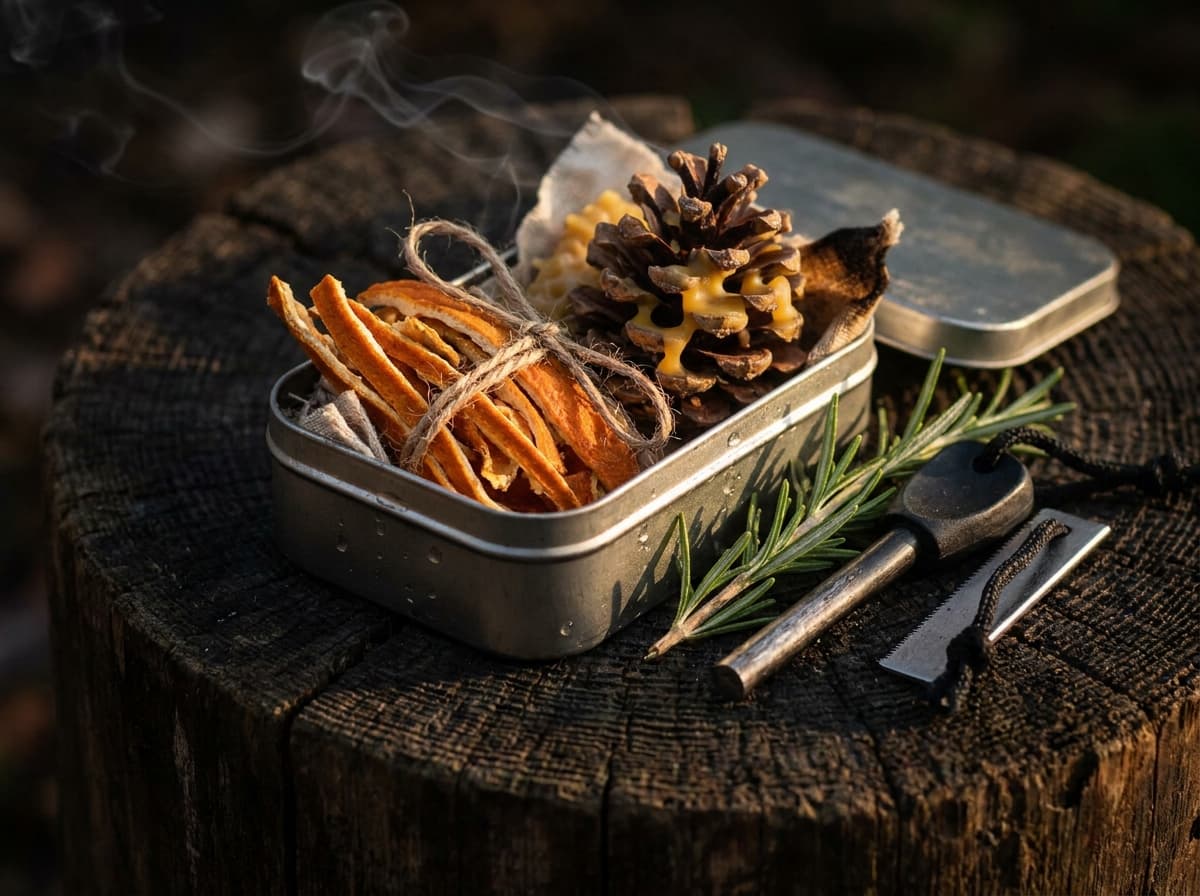
Assemble a survival tin that includes a mini DIY stove, char cloth, and a small ferro rod for emergency fire starting.
Focus on airflow when building improvised stoves by punching holes at the base to let oxygen feed the flames.
Test your homemade gear in your backyard first to ensure you can operate it correctly before you are deep in the woods.
Carry a reliable multi-tool, as it is the most important piece of equipment for making field repairs or crafting improvised gear.
The Power of the Tin Can Stove
A tin can stove works because it creates a chimney effect. By punching holes at the bottom, you draw in oxygen that feeds the fire from below, while the walls of the can reflect heat inward. This simple setup makes a handful of twigs burn much hotter and longer than a small open fire ever could.
Imagine you are out on a damp morning and need to boil water for coffee or a quick meal. Instead of struggling to keep a large fire going with wet wood, you grab a standard soup can and use the punch tool on your pocket knife to create a ring of vents around the base. You drop in a few dry pine needles and some small sticks, and within minutes, the concentrated heat is enough to fry a single egg or bring a cup of water to a rolling boil.
Key insights:
Punch holes at the very bottom of the can to maximize oxygen intake.
Use small, dry fuel like twigs or pinecones to keep the flame intense.
Set the stove on a flat rock to prevent tipping or scorching the earth.
Limit use to small tasks like boiling water or frying a single egg for the best efficiency.
How to Build an Emergency Shelter in the Woods Quickly
To stay warm and dry when you are lost, you must stop the ground from stealing your body heat. Most people instinctively focus on building a roof to block rain, but the cold earth is actually a much more efficient heat sink. By building a thick bed of pine boughs or dry leaves before you even think about a ceiling, you create a thermal barrier that keeps your core temperature stable through the night.
Speed is critical because your ability to do hard work drops as the sun goes down and the temperature falls. Statistics show that most search and rescue missions find people within a 72-hour window, so you only need to survive a few nights rather than building a permanent home. A simple lean-to against a fallen log or a large rock is often enough to break the wind and keep you safe until help arrives.
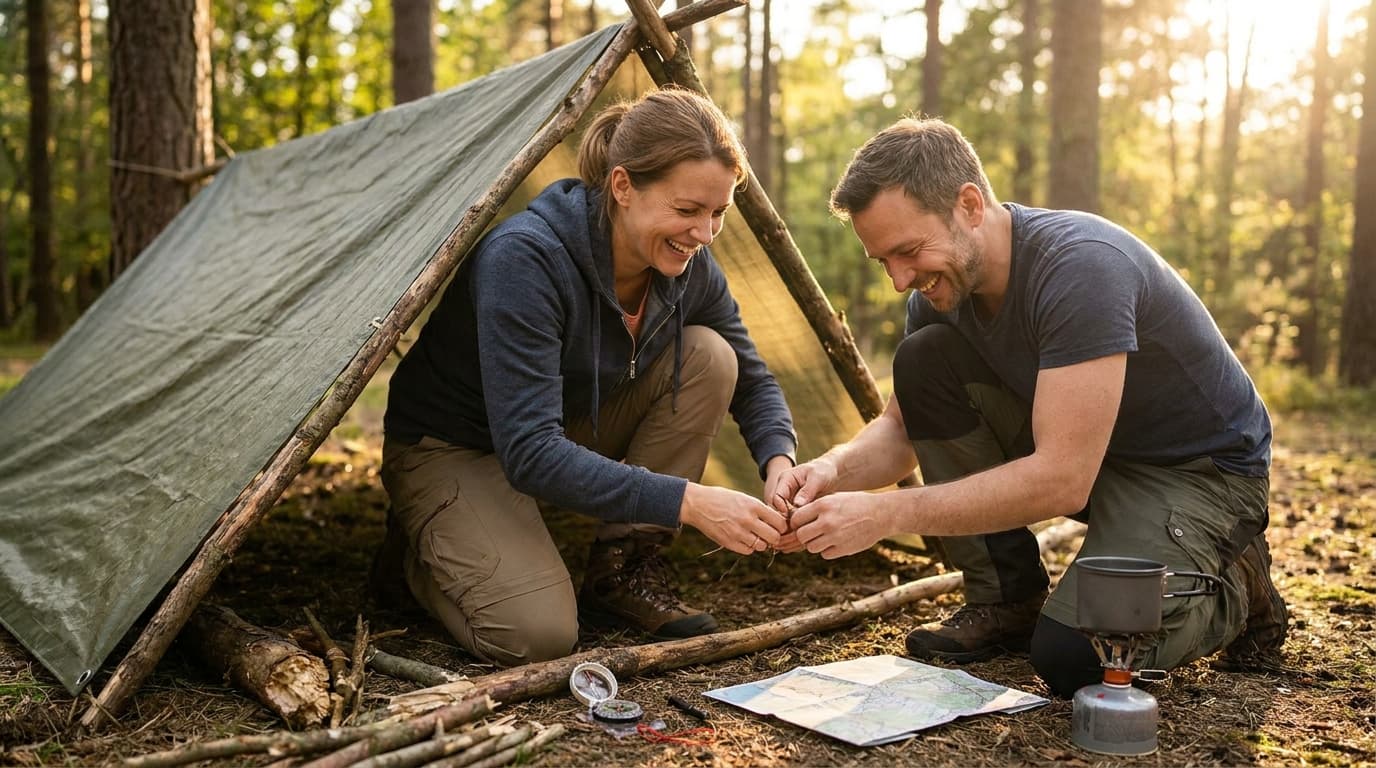
Imagine the light is fading and the wind is starting to howl through the trees. You find a sturdy fallen log that acts as a natural wall. You lean long branches against it at a forty-five-degree angle and then pile armloads of pine boughs over the frame. Inside, you stack another six inches of those same boughs to sleep on. This setup takes less than an hour but provides the insulation and wind protection you need to make it to morning.
Prioritize ground insulation by creating a bedding layer at least six inches thick using dry pine needles or leaves.
Use a large rock or fallen tree as a ready-made wall to save time and energy during construction.
Stack branches closely together on your lean-to frame to minimize gaps where heat can escape.
Keep the internal space small so your own body heat can warm up the air inside more quickly.
Avoid valleys or low spots where damp, cold air pools at night.
Smart Navigation Hacks Without GPS
Navigation is really about staying aware of your surroundings before things go wrong. If your phone dies or you lose your GPS signal, you have to look at the land for clues. It helps to remember that most search and rescue teams find people within a 72-hour window, so you just need a solid plan to keep yourself moving in the right direction until help arrives or you find your way back.
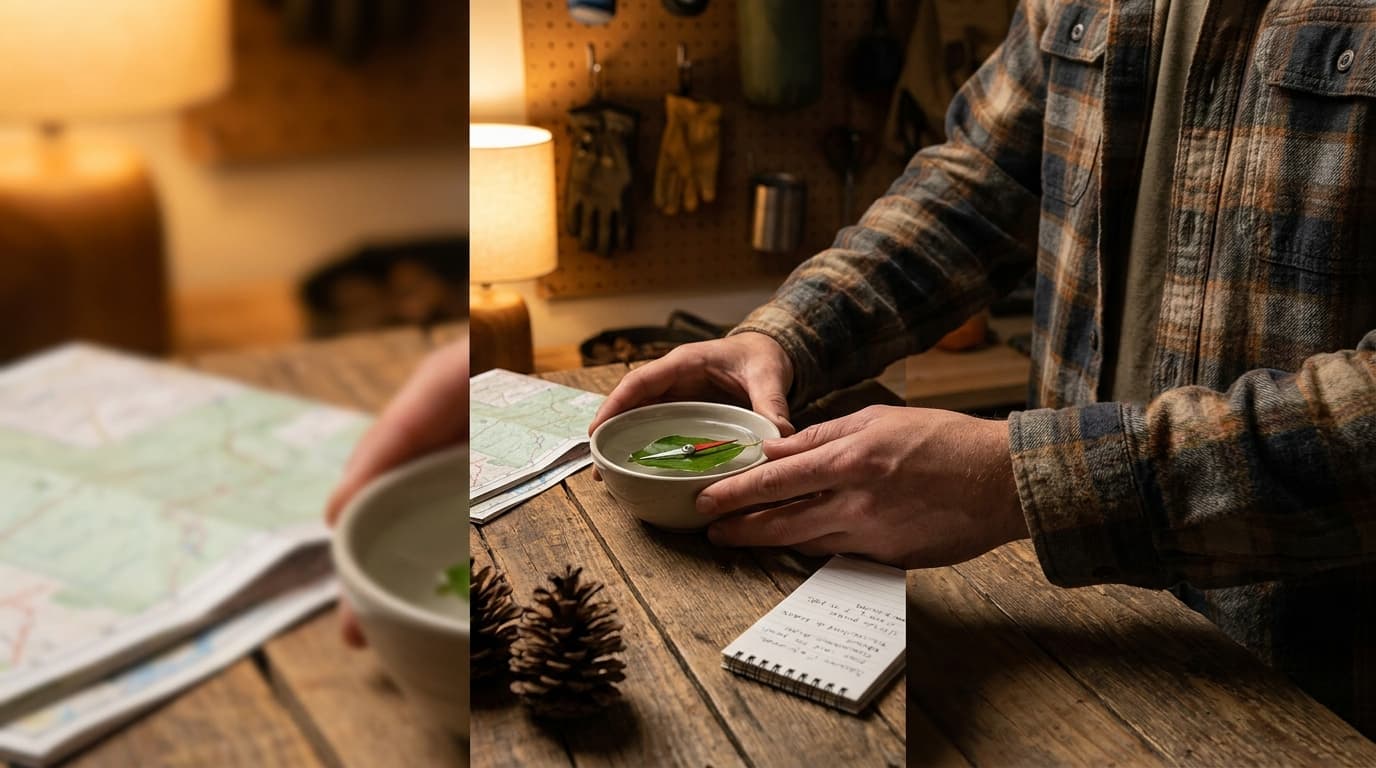
Think about a situation where you have stepped off the trail to explore and suddenly realize you can't see any markers. This is when you use the shadow tip method. Put a stick in the ground and mark the tip of the shadow with a pebble. Wait about fifteen minutes, mark the new shadow tip, and you have a line that runs West to East. It is a simple way to get your bearings when the woods start looking the same in every direction.
Use the shadow tip method to find East and West by marking a shadow's movement over fifteen minutes.
Practice hand-railing by following linear features like streams or ridges to avoid walking in circles.
Look back frequently while hiking to see what the trail looks like from the opposite direction.
Stop and stay put if you feel the mental fog of isolation starting to affect your decision-making.
Off-Grid Cooking and Foraging Without the Guesswork
Finding food in the wild is not about gathering a salad; it is about calorie management. Most search and rescue teams find missing people within a 72-hour window, so your goal is to stay energized without wasting more energy than you consume. While many beginners look for leafy greens, these often provide very little fuel and can actually lead to a starvation diet. Instead, focus on dense protein sources like beetle larvae or grasshoppers, which are easier to catch than game and much more nutritious than a handful of grass.
If you do go for plants, you have to know how to process them to avoid getting sick. Imagine you are low on calories and find Old Man's Beard lichen. It is packed with energy, but if you eat it raw, it is virtually inedible and will likely upset your stomach. You need to leach it in boiling water for about two hours to make it palatable. This same leaching process, which involves changing the boiling water at least once, is vital for removing the bitterness and toxins from wild acorns or bitter greens.
Accuracy is life or death when it comes to foraging. For instance, while fresh broadleaf maple leaves are edible in some spots, wilted maple leaves become toxic and should never be touched. Even something as common as cottonwood leaves, which are high in protein, can cause mild heart palpitations if you overdo it. It is often safer and more efficient to stick to high-energy calories like cooked insects or well-processed lichens than to risk a reaction from a plant you are not completely sure about.
Key insights:
Stick to cooked insects like grasshoppers or beetle larvae for high-protein, low-effort meals.
Leach bitter plants and lichens by boiling them and changing the water at least once to remove toxins.
Avoid all wilted leaves, especially maple, as the chemical changes during wilting can make them poisonous.
Prioritize fats and proteins over leafy greens to ensure you are not burning more energy than you are eating.
Limit consumption of cottonwood leaves to avoid potential heart palpitations despite their high protein content.
The Secret to Safe Foraging: Leaching
Leaching is essentially a deep-cleaning process that uses hot water to draw out water-soluble toxins and harsh tannins. Many wild plants use these chemicals as a natural defense mechanism to stop animals from eating them. By boiling the plant material, you force those compounds out of the cells and into the water, which you then discard to make the food safe.
Imagine you have gathered a pot of bitter greens or acorns to supplement your meal. After five minutes of boiling, the water turns a murky, dark brown color - this is exactly what you want to see because it means the bitterness is leaving the plant. Pouring that water out and starting fresh ensures that the toxins stay on the ground and not in your stomach.
Key insights:
Change the boiling water at least twice when preparing bitter acorns or greens to ensure all toxins are removed.
Watch for the boiling water to turn clear as a visual sign that the plant is finally palatable.
Discard any wilted leaves you find since the chemical shift during wilting can make even edible species poisonous.
Leach Old Man's Beard lichen for one to two hours to break down its tough, caloric fibers.
Essential Beginner Bushcraft Skills for Survival and Mindset
Survival is mostly a mental game. You can have the best gear in the world, but if your head isn't in the right place, you're in trouble. There is a real mental adjustment period that happens after being alone for 24 to 48 hours. This is when isolation starts to play tricks on your focus, making even simple tasks feel overwhelming.
Practical skills get much harder when you're cold, tired, or scared. It's easy to start a fire in your backyard on a sunny day. It's a whole different story when it's freezing and your hands are shaking. As survival expert Sergio Outdoors says, your best tools are your mind, nature, and the ability to improvise.
Imagine you've spent your first night alone in the bush. By the second afternoon, the silence feels heavy and your thoughts start to wander toward worst-case scenarios. To stay grounded, you pick up your tool and focus entirely on splitting wood into small, uniform pieces. That small, successful task keeps your mind sharp and stops panic before it starts.
While you're working, keep an eye out for high-calorie resources. Foraging for greens often burns more energy than it provides. Instead, look for Old Man's Beard lichen. It is packed with calories, but you'll need to leach it in boiling water for an hour or two to make it edible and remove the bitterness.
Key insights:
Follow the 'Rule of Threes' to keep your priorities straight: shelter and fire come long before food.
Use a lighter or ferro rod for fire-starting until you are completely confident in your basic skills.
Avoid eating wilted maple leaves because they can be poisonous, even if fresh ones are safe in your area.
Boil wild plants in at least two changes of water to leach out toxins and improve the taste.
Frequently Asked Questions
Most people think a big knife is the most important thing, but you'll find that your mind is actually your best tool. That said, you need gear that keeps you safe while you wait for help. Here's a fact to keep in mind: most search and rescue operations find missing people within a 72-hour window. Because of that, your kit should focus on staying warm and dry for those first three days.
Tim Siemens put it well when he said a good kit is the difference between a surprise camping trip and a miserable night. Instead of trying to learn a friction fire when you're cold and tired, pack a lighter and learn how to build a basic shelter. It's also a good idea to practice with a DIY tin can stove at home before you actually need to use it in the woods. It's much better to have these skills ready to go when things get stressful.
You really have to be careful here because there's a lot of guesswork involved in foraging. You might think a plant looks fine, but wilted maple leaves are poisonous even though the fresh ones are sometimes okay to eat. Also, remember that eating wild greens is basically a starvation diet. They don't give you the calories you need to keep your energy up for long.
If you find something like Old Man's Beard lichen, don't just eat it raw. It needs to be leached in boiling water for an hour or two to make it taste okay and remove toxins. Sometimes it's better to look for high-protein insects like beetle larvae instead, because they're easier to catch and provide more energy than a handful of leaves would. Always be 100 percent sure of what you're eating before you take a bite.
Yes, you can, but it is a lot harder than it looks in the movies. This is known as friction fire starting, and it usually involves a drill board and a spindle. You have to pick the right wood types and make sure they are bone dry, or you will just end up with sore hands and no heat.
Success depends on your technique and the weather. Here is the thing: building a fire when you are warm and relaxed is easy, but doing it at 25 degrees below zero while you are exhausted is a totally different skill. Most experts suggest practicing with a lighter first before you move on to these primitive methods.
The first thing you need to do is stop moving and stay calm. It is easy to panic, but your mind is actually your best survival tool. Most people who go missing are found within a 72 hour window by search and rescue teams, so staying put makes it much easier for them to find you.
There is a real mental adjustment that happens after being alone for about 24 to 48 hours. If you can get through that first day by focusing on basic needs like shelter, you will be in a much better headspace to handle the situation. Just remember that being prepared with a basic kit can turn a scary night into just an unexpected camping trip.
Conclusion
So, what does it all look like when you put these outdoor hacks and tricks together? It is really about realizing that survival is not just about what you carry in your pack, but what you carry in your head. Whether you are turning a soup can into a stove or finding your way home by watching shadows move, you are learning to work with nature instead of fighting against it.
The bottom line is that these skills only stick if you actually use them. You do not want the first time you build an emergency shelter in the woods to be during a real storm or when you are actually lost. These methods for emergency navigation hacks without GPS and primitive fire starting are tools that get sharper every time you practice them in the real world.
Your next move is simple: head into the backyard this weekend and see if you can put together a pine bough bed or try some off-grid cooking tips for wilderness camping. The more you play with these DIY camping gear hacks for beginners, the more comfortable you will feel when you are truly off the grid. Real survival is just practice turned into a habit.
Every WilderReady guide is researched, written, and fact-checked in-house against trusted references such as the American Red Cross, the National Park Service, and the CDC before it goes live. We publish under this shared byline instead of invented personas, so you always know who stands behind the guidance you are reading.