Why Most Bug Out Bag Checklists Online Are Overpacked (and What to Do)
Most online guides sell a fantasy of total self-reliance, but a 60-pound bag is a liability if you can't walk a mile. You'll quickly see Why Most Bug Out Bag...
Why Most Bug Out Bag Checklists Online Are Overpacked (and What to Do)
Most online guides sell a fantasy of total self-reliance, but a 60-pound bag is a liability if you can't walk a mile. You'll quickly see Why Most Bug Out Bag Checklists Online Are Overpacked when you realize they prioritize fear over functional gear.
These lists focus on hypothetical scenarios instead of the physical reality of moving through your local area. Overpacking is often a physical sign of uncertainty that slows you down when speed matters most.
You're about to learn how to audit your kit using ultralight principles to build a bag you can actually carry.
Why Your Survival Bag Is Probably Carrying Your Fear
Why do we feel the need to pack so much gear? Usually, it is because we are trying to buy our way out of anxiety. We see a 'what if' scenario and try to solve it with a new gadget, turning the survival bag into a heavy security blanket. This is how you end up with a pack that looks great in a closet but is impossible to carry for five miles.
Real preparedness is not about having every tool. It is about having the right tools you can actually move with. Ultralight backpacking focuses on the idea that every ounce matters over long distances. Lighter packs allow for freer movement, which is often more valuable than having a fourth backup fire starter.
Think about a first-time prepper adding three different fire-starting kits and four knives to their pack. They are nervous about being cold or unprotected, so they keep adding 'just in case' items. They are essentially packing for a lifetime in the woods rather than the most likely 72-hour window. This overpacking is a physical sign of uncertainty.
We often mistake exhaustion for importance and suffering for strength. Dane Czaplicki notes that we tend to carry fear instead of gear when we do not trust our own skills. If you are struggling under a massive load, you are not more prepared. You are just slower and more likely to get injured. Speed and agility are survival assets that a heavy bag takes away.
Choosing the best survival gear for urban emergencies means prioritizing what you will actually use. If your route takes you through suburban areas, you can likely find water or shelter easier than if you were in the deep wilderness. Tailor your weight to your environment instead of a worst-case fantasy.
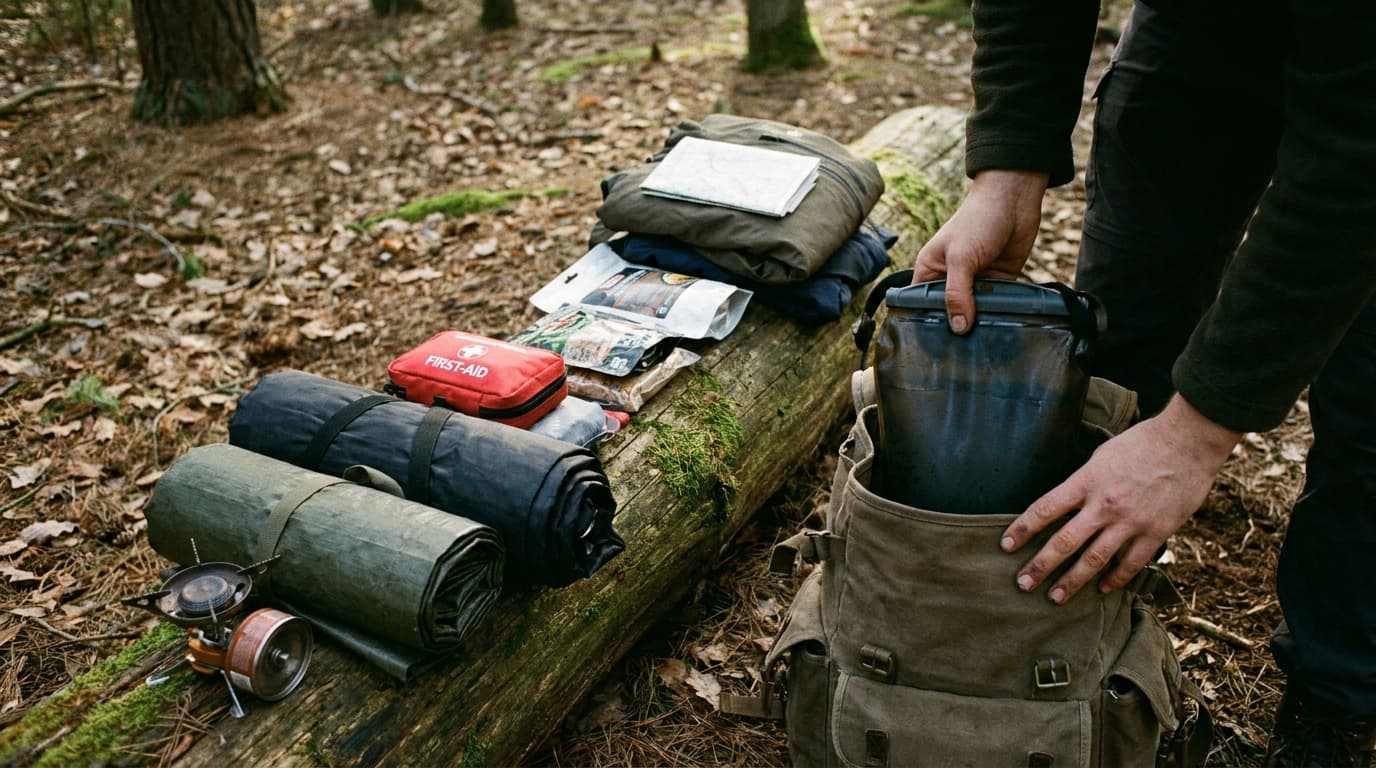
The hardest part of packing is the mental discipline to leave things behind. You have to resist the urge to throw in extra items right before you head out the door. Focus on the core essentials like shelter, water, and first aid, and leave the tactical fluff on the shelf.
Set a hard weight limit for your bag before you even look at a checklist.
Pack for the most likely 72 hours rather than a permanent survival scenario.
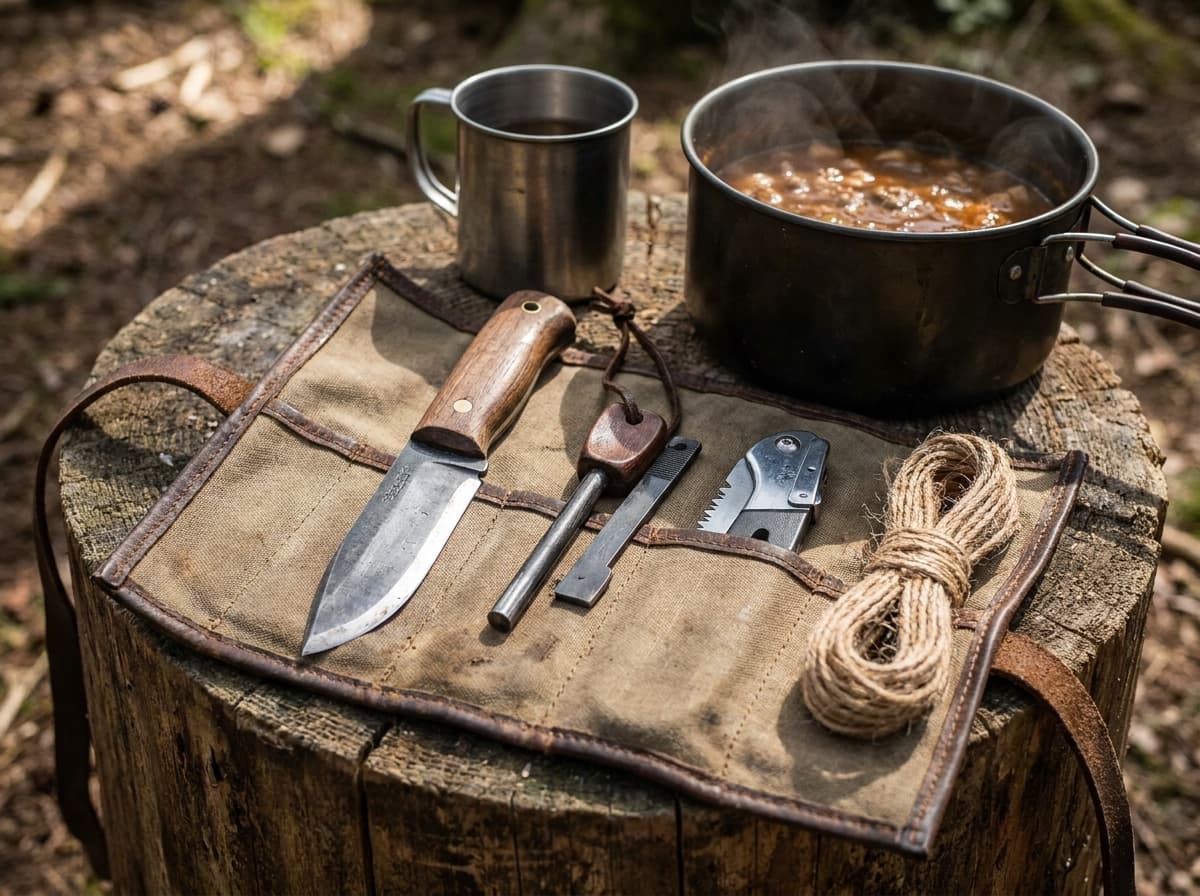
Choose multi-use tools like a reliable survival knife instead of several single-purpose blades.
Recognize that 'just in case' items are usually just weight you have not justified yet.
Mistaking Exhaustion for Preparedness
Many preppers assume a heavy bag equals better odds, which is why most bug out bag checklists online are overpacked. As Dane Czaplicki notes, we often mistake exhaustion for importance and suffering for strength.
If your bag makes movement painful, you aren't prepared. You are just anchored. Real survival relies on speed, which a heavy pack takes away.
Think about Czaplicki’s own cross-country walk. He packed 11 days of food and heavy winter clothes, only to dump it all after 24 hours. He was never more than a few miles from supplies. He wasn't carrying gear; he was carrying fear.
Set a hard weight limit for your bag before you even look at a checklist.
Prioritize items that serve multiple purposes to keep your total weight down.
The Heavy Price of Preparing for Every Single Scenario
Carrying too much weight turns a survival situation into a medical one. When your bag is overpacked, you move slower, tire faster, and risk injuries like blisters or strained knees that could stop you entirely. Most people pack for their fears instead of their reality, ending up with a bag that acts as an anchor rather than a life raft. This extra weight drains your energy and clouds your judgment when you need to be at your sharpest.
Think about the lesson learned by Dane Czaplicki on a cross-country walk. He started with a pack loaded for every possible contingency, but after just one day, he dumped 11 days of food and his heavy winter gear. He realized he was never more than a few miles from supplies, making his massive food stash a useless burden. He later noted that we often mistake exhaustion for importance and suffering for strength, when in reality, a lighter pack allows for much freer movement.
This food dump rule applies to your emergency planning too. If you are moving through a suburban area, you do not need a month of dehydrated meals. You need enough to get to your next safe point. Expert travelers, like long-distance bicycle tourists, often stay clean for weeks with just two pairs of shorts by doing laundry in a Ziploc bag every night. It is about being resourceful with what you have instead of carrying a warehouse on your back.
The hardest part is often the mental discipline required to stick to a lean list. It is tempting to throw in a third knife or a fourth fire starter just before you head out the door. But every ounce counts when you are on your feet for hours. True preparedness is about knowing how to use your environment, not just how to pack for it.
Evaluate your environment to see if you really need to be 100% self-reliant for the entire trip.
Audit your gear after every practice run and remove anything you did not actually use.
Aim for the Middle Way by carrying essentials like shelter and first aid while cutting the tactical fluff.
Keep rain gear and repair kits as the only permanent items that stay in the bag even if they were not used last time.
Use multi-purpose items and simple systems like DIY laundry to reduce the total number of things you carry.
How to Audit Your Bag After a Trial Run
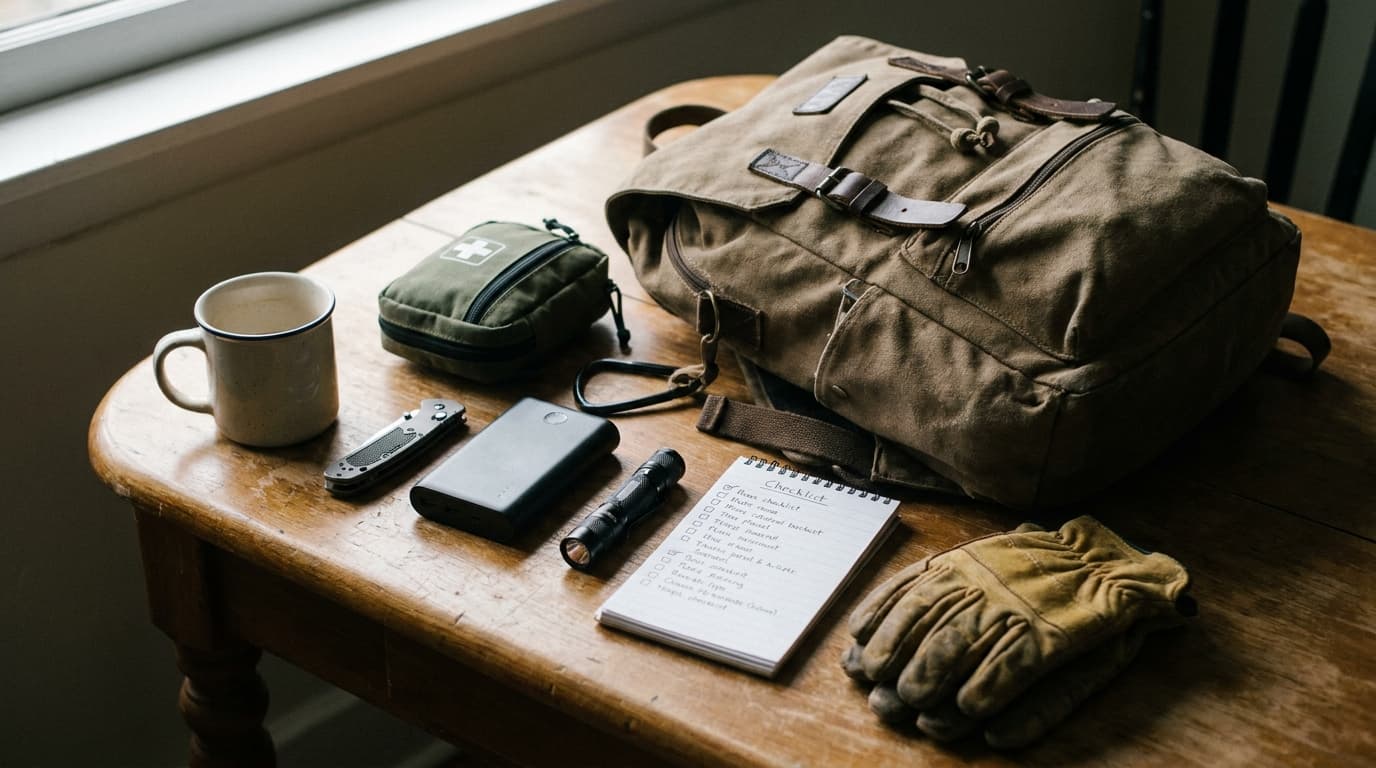
The only way to truly know what to remove from your bag is to put it on your back and move. Most people build their kits based on a fear of the unknown rather than actual necessity, leading to a pack that is heavy, bulky, and eventually a liability. A five-mile hike on a Saturday afternoon will tell you more about your actual needs than any online checklist ever could. If you finish that walk and realize you never touched half the items in your pack, you have found the perfect starting point for trimming the weight and increasing your mobility.
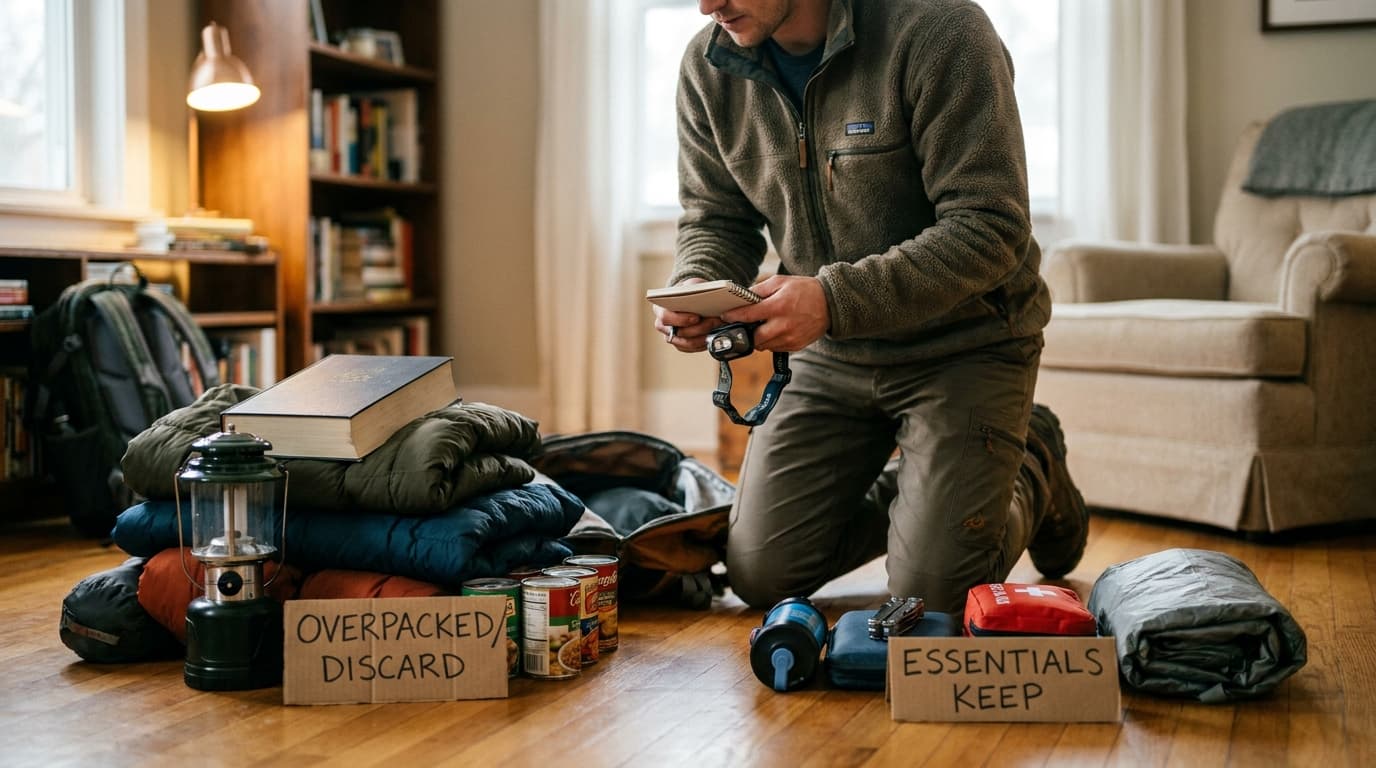
Imagine finishing a grueling trek and dumping your entire bag onto your living room floor. Following a disciplined gear auditing process, you separate every item into two piles: used and unused. You might find that while you reached for your water filter and your survival knife multiple times, the heavy magnesium fire starter and the extra three pairs of socks never left their pockets. This visual representation of your actual needs versus your imagined fears makes it much easier to leave the dead weight behind next time.
This lesson is particularly clear when you consider the traveler who carried a headlamp for four weeks through Alaska and the Yukon during June. Because it was the season of the midnight sun, it never actually got dark. He carried that extra weight every single mile for a scenario that was physically impossible given the local climate and season. Packing for the wrong conditions is just as inefficient as overpacking. You should always match your gear to the specific season and the geography you are actually in, rather than following a generic list meant for a different part of the world.
Real-world experience is the only filter that can distinguish between essential gear and just in case clutter. One cross-country walker realized this after just one day on the trail, dumping 11 days of food and most of his winter clothes because he was never more than a few miles from supplies. If you are prepping for urban emergencies, you probably do not need a month of dehydrated meals if there are stores every few blocks. While you should always keep high-impact items like rain gear and repair tools even if they were not used, almost everything else should be on the chopping block if it stayed at the bottom of your bag during your trial run.
Perform a post-hike dump by laying out all gear immediately after a practice run to see what was actually used.
Photograph your gear layout to create a visual record of what worked and what did not for future reference.
Match your kit to the current season and local environment instead of carrying winter gear in the summer.
Keep rain gear and basic repair tools even if unused, as these are critical safety items you cannot easily replace.
Question any item that was not touched during your trial; if it does not have a specific, life-saving purpose, leave it out.
The Alaska Headlamp Lesson
Packing for a "what if" scenario that cannot actually happen turns your bag into a boat anchor. Many online checklists ignore your specific environment and focus on generic gear instead. If you carry items that do not fit your local climate or current season, you are wasting energy on dead weight that serves no purpose.
For example, a traveler spent four weeks in Alaska during June while carrying a headlamp he never once used. Because of the midnight sun, it never actually got dark. He carried that extra weight for a scenario that was physically impossible. We often make the same mistake by packing cold weather gear for a summer bug-out just because a checklist suggested it.
Match your kit to the current three-month weather window rather than a generic year-round list.
Research your specific geography to avoid carrying items that are useless in your local terrain.
Swap out seasonal items like heavy insulation or bug nets as the weather changes to keep weight down.
Keep rain gear and repair tools regardless of the forecast as these are critical safety exceptions.
The Middle Way: Finding Balance Between Weight and Safety
True safety in a survival situation does not come from a 60-pound pack that leaves you exhausted and immobile. It comes from finding a middle ground where you have exactly what you need to survive without sacrificing your ability to move fast. When you carry too much, you are not just carrying gear; you are carrying your fear of being unprepared. Real wisdom lies in carrying the essentials to stay alive while staying light enough to actually reach your destination.
Imagine a bicycle tourist crossing the country for weeks at a time. Instead of packing a different outfit for every day, they often carry only two pairs of shorts. They stay clean and healthy by performing hand laundry every single night. This approach turns a heavy pile of clothing into a simple five-minute task. It is a perfect example of how resourcefulness and a system can beat raw volume every time.
You can apply this same logic to your gear by using a gallon-sized Ziploc bag as a portable washing machine. By adding a small amount of liquid detergent and water, you can keep your base layers fresh indefinitely. This one trick allows you to eliminate five or more changes of clothes, which is often the heaviest part of a beginner's kit. Using outdoor hacks and tricks like this gives you utility without the weight penalty.
The goal is not to be a minimalist just for the sake of it, but to be intentional about every ounce. You still need essential survival gear for emergencies, such as water filtration and a first aid kit. However, by choosing multi-use items and focusing on skills over stuff, you find that balance where you are both protected and agile. As Dane Czaplicki noted, we often mistake exhaustion for importance when we should be focusing on efficiency.
Replace five changes of clothes with two pairs of high-quality synthetic layers and a Ziploc laundry kit.
Choose gear that serves at least two purposes, like a sturdy poncho that works as both rain protection and an emergency shelter.
Focus on the most likely 72-hour needs rather than packing for a permanent life in the woods.
Keep your core safety items like navigation and water filters, but look for the lightest versions that still perform reliably.
Practice using your small laundry kit at home to gain confidence in your hygiene system before you hit the trail.
The Ziploc Washing Machine
You can eliminate five or more changes of clothes by using a gallon-sized Ziploc bag and liquid detergent as a portable washing machine. This simple setup keeps your base layers fresh so you can cycle through just two outfits indefinitely. It turns a heavy pile of laundry into a five-minute nightly task.
Consider long-distance travelers who maintain hygiene for months using only two pairs of shorts. By washing one pair while wearing the other, they stay mobile and light without carrying a closet. Applying outdoor hacks and tricks like this is how experts stop overpacking and maintain speed.
Swap five changes of clothes for two pairs of high-quality synthetic layers.
Use a heavy-duty freezer bag to prevent leaks during the agitation process.
Add a travel-sized bottle of concentrated liquid soap to your laundry kit.
Practice using the bag at home to find the right water-to-soap ratio before you leave.
Practical Ways to Cut Weight Without Losing Utility
Cutting weight isn't about being unprepared. It is about being smart enough to know which items actually keep you alive. Most people pack for their fears, which leads to a bag full of tactical gadgets that never see the light of day. To fix this, you need to identify your non-negotiables. These are the core essentials that stay in the bag because their absence would be catastrophic, not just inconvenient.
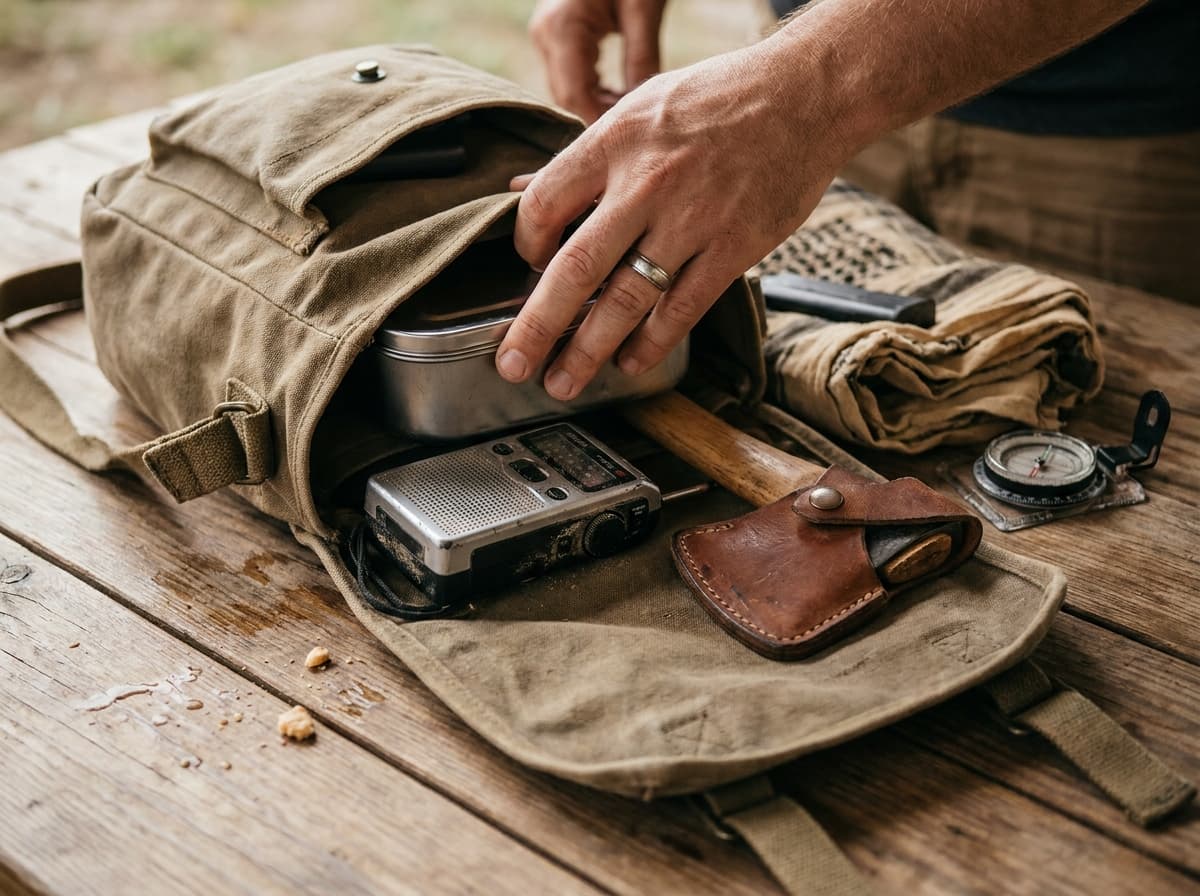
The trick is to focus on the ultralight essentials like shelter, water, and navigation while stripping away the fluff. As Dane Czaplicki points out, just because you can carry something does not mean you should. Every extra ounce is a tax on your energy and speed. If you are bugging out through a city, you do not need a heavy bushcraft axe when a small multi-tool will do.
Imagine a hiker who prepares for a long trek by packing two weeks of food and heavy winter layers. After just one day on the trail, they realize they are never more than a few miles from a town or a resupply point. All that weight becomes a burden rather than a benefit. This happened to a traveler who ended up dumping 11 days of food and most of his clothes because he realized he was packing for a wilderness that did not exist on his actual path.
Keep rain gear and repair items in the bag regardless of whether you used them last time because these are safety-critical.
Audit your gear after every practice run by making two piles for things you touched and things you did not.
Use a gallon Ziploc bag as a portable washing machine to maintain hygiene with only two sets of clothes.
Prioritize multi-use items over single-purpose tools to reduce the total item count and overall weight.
Stick to your pre-planned list and resist the urge to throw in extra items at the last minute.
Frequently Asked Questions
A good rule of thumb is to keep your pack under 20% of your body weight, but even that can be a struggle if you are not a regular hiker. If you are heading into hilly terrain or are not in peak physical shape, aiming for 10% to 15% is much safer and more realistic for long-distance travel.
Weight is not just a number on a scale; it is a constant drain on your energy and calories. Every extra pound slows your pace and increases the chance of a trip or fall. If you cannot walk five miles at a brisk pace with your bag today, it is too heavy for a real emergency.
The philosophy behind ultralight gear is that every ounce matters when you are moving long distances. Lighter gear does not just save your back; it increases your range. In a survival scenario, being able to reach a destination 30 miles away in two days instead of four can be the difference between success and failure.
There is also a mental benefit to consider. When you are not struggling under a massive load, you stay more alert to your surroundings. You are less likely to make exhaustion mistakes, like missing a trail marker or failing to notice a change in the weather. It is about being a nimble participant in your survival rather than a pack mule.
Most people pack for a wilderness scenario that doesn't match their reality. A common mistake is carrying massive amounts of food when you're actually near towns or stores. One hiker famously dumped 11 days of food after just one day because they realized supplies were only a few miles away.
Other items that often end up as dead weight include heavy headlamps in places with 24-hour daylight or specialized survival tools for environments you won't actually visit. It's about matching your gear to the specific route, not a generic checklist.
The secret is the one on, one off rule combined with a simple nightly routine. You can build a portable washing machine using just a gallon-sized Ziploc bag and travel-sized liquid detergent.
By doing hand laundry every night, you keep your pack light and your clothes fresh without needing a full wardrobe. As long as your clothes are made of quick-drying fabric, they'll be ready to go by morning, allowing you to cycle through just two pairs of shorts or shirts indefinitely.
Conclusion
The bottom line is that a survival kit should be a tool for movement, not a heavy weight that pins you down. When we look at why most bug out bag checklists online are overpacked, it usually comes down to fear. We often pack for every possible disaster instead of packing for the person who actually has to carry the bag. Real preparedness is about finding that balance between what you need to survive and what you can physically manage on the road.
Moving forward, try to view your gear as a living system. Your needs change with the seasons and your environment, so your bag should too. A lighter pack does not mean you are less safe. It often means you are more mobile and less likely to get hurt or exhausted when things get difficult. Resourcefulness and multi-use items will always serve you better than a bag full of single-purpose gadgets.
Your next move is simple: put your bag on and walk for two miles today. If it feels like a burden now, it will be a disaster in a real emergency. Be honest about what you actually used during your trial runs and leave the "just in case" items at home. A bag you can actually carry is always better than a perfect kit you have to leave behind on the side of the road.
Every WilderReady guide is researched, written, and fact-checked in-house against trusted references such as the American Red Cross, the National Park Service, and the CDC before it goes live. We publish under this shared byline instead of invented personas, so you always know who stands behind the guidance you are reading.