Why the Best Survival Knife for 2026 Isn't a Rambo Blade
Most people think a survival knife needs to be a massive, jagged piece of steel that looks like it belongs in a movie. But if you're actually stuck in the...
Why the Best Survival Knife for 2026 Isn't a Rambo Blade
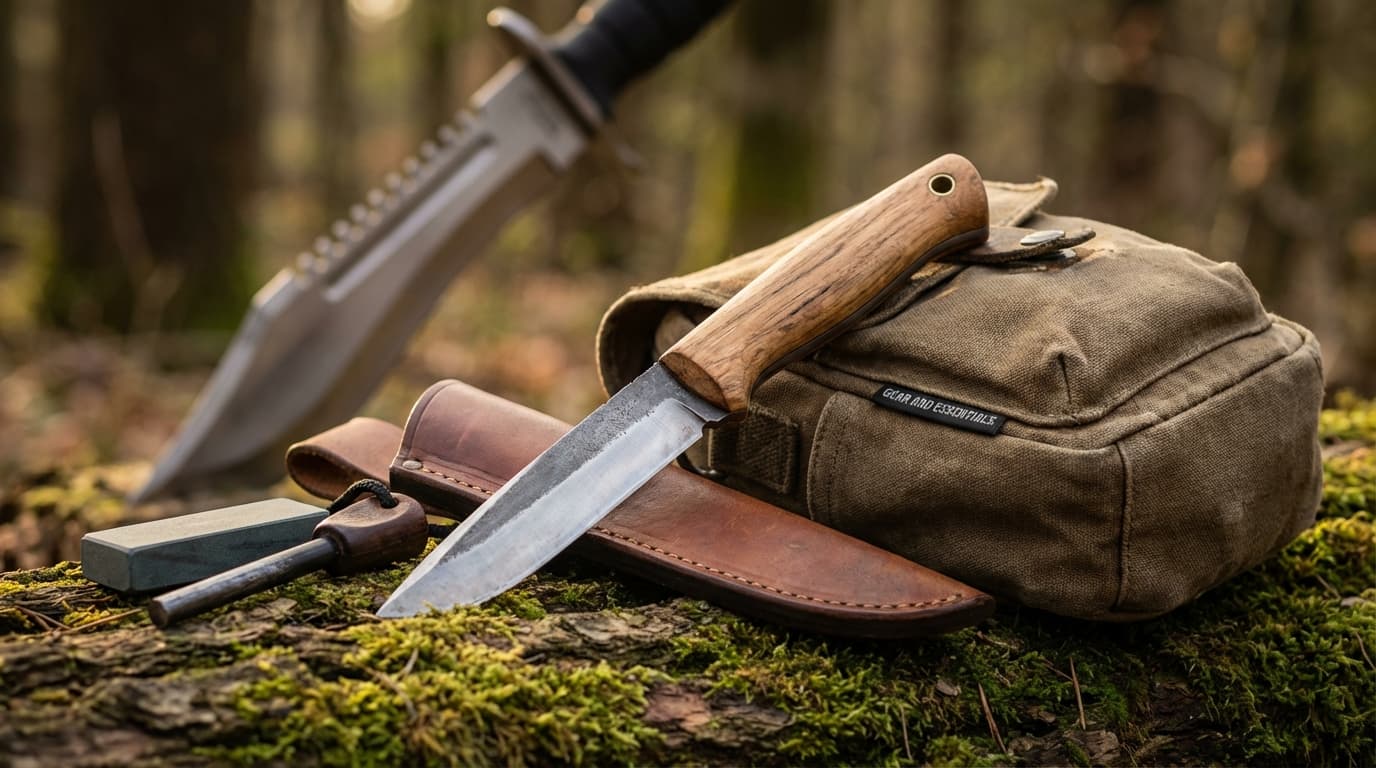
Most people think a survival knife needs to be a massive, jagged piece of steel that looks like it belongs in a movie. But if you're actually stuck in the woods, that heavy blade is often more of a burden than a help. They just need the right tools and a bit of agility to get the job done.
Finding the best survival knife 2026 is about choosing a tool that is lean and reliable. We are seeing a big shift away from oversized blades toward smaller designs that act like a backcountry skeleton key. This guide explains the fixed blade vs folding knife for survival debate and why a full tang survival knife is basically a requirement for any kit, whether you're out in the woods or just curious about gear.
We will look at a survival knife steel guide to see why 1095 carbon steel is still a top pick for toughness. You will also learn how to test your gear like the pros do with the try stick challenge. This breakdown will help you find a blade that is as dependable as a loyal companion, making sure you're ready for anything the wilderness throws your way.
The One Tool You Can't Afford to Get Wrong
Think about the last time something went wrong in the woods. When gear fails, one tool stands between you and a very bad night. Experts call the survival knife a backcountry skeleton key because it has to do everything from carving wood to starting fires. As Doug Ritter famously noted, the right knife can turn a crisis into a prolonged camping trip. But if your blade snaps because it isn't a full tang, where the steel runs the entire length of the tool, you are left with a piece of useless metal.
We are seeing a major shift as we head toward 2026. The era of the massive, oversized Rambo blade is over. Modern users now prefer short and stout tools like the TOPS Wilderness Guide ‘23. With its 4.38-inch carbon steel blade, it is over $100 cheaper than larger tracker-style knives and much easier to handle. High carbon steel is the gold standard here because it is tougher than stainless and holds a sharp edge through serious abuse.
Why the change? It is all about versatility. A survival knife must be specialized at not specializing. While folding knives are fine for daily tasks, they have a weak pivot point that fails under pressure. A fixed blade is ready immediately. It is the difference between struggling with a heavy, clumsy tool and having a nimble partner that handles fine carving and wood processing with ease.
Key insights:
Fixed blades are structurally superior to folding knives for emergency prying and wood splitting.
Modern trends favor 4-5 inch blades that offer better control and less fatigue than heavy survival blades.
Full tang construction is a non-negotiable requirement for tool integrity in the field.
The Great Debate: Why Fixed Blades Still Rule the Woods
Most people carry a folding knife in their pocket every day because it is convenient for opening boxes or cutting string. But when you step off the trail and into the deep woods, that convenience quickly turns into a liability. Rick Spicer from Outdoor Life famously described survival knives as backcountry skeleton keys because they have to do everything from carving wood to processing game. A skeleton key with a hinge is a key that is waiting to snap. The pivot point on any folding knife is its fatal flaw. If you try to pry a stubborn piece of fatwood or pound the blade through a log, that tiny pin is the first thing that will fail, leaving you with two useless pieces of metal.
Reliability also comes down to how fast you can get the tool working. In a survival situation, you might be dealing with cold, numb fingers or a high-stress environment where fine motor skills disappear. A fixed blade is ready the second it clears the sheath. There are no locks to fumble with and no thumb studs to miss. While a folder is perfectly fine for a light day hike, it becomes a dangerous weak link when the stakes are high. Think of it this way: you would never trust a folding hammer to build a house, so why trust a folding knife to save your life?
This brings us to the importance of how that knife is actually built. You will often hear experts talk about full tang construction as the gold standard. Simply put, this means the steel of the blade runs the entire length of the knife, from the tip all the way to the end of the handle. It creates a solid, unbreakable spine. This matters for your safety because it prevents the blade from loosening or developing play during heavy use. If you are batoning - using a heavy branch to drive your knife through a piece of wood - a hidden tang can easily snap inside the handle, which is a recipe for a trip to the emergency room.
There is also a hidden benefit to this design that many people overlook. If your handle scales ever crack or fall off in the field, a full tang knife is still a tool. You can wrap the exposed steel in paracord to create a makeshift grip and keep working. Consider the TOPS Wilderness Guide ‘23 as a prime example. For about $260, you get a 4.38-inch blade of 1095 high carbon steel that is built to take a beating. Because high carbon steel is tougher than most stainless options and holds an edge better under abuse, having that steel run the full length of the handle ensures the knife can handle the most brutal bushcraft tasks without flinching.
Key insights:
The pivot point of a folding knife is an inherent structural weakness that cannot withstand the prying forces required in survival scenarios.
Full tang construction allows the knife to remain functional through cord wrapping even if the handle scales are lost or destroyed.
High carbon steel, like the 1095 used in the TOPS Wilderness Guide, is preferred over stainless steel for its superior toughness and edge retention during heavy wood processing.
The Truth About Full Tang Construction
Why do we obsess over a piece of steel you can't even see? Because in a survival situation, the tang is the backbone of your tool. A full tang knife means the steel runs from the tip all the way to the butt of the handle. It isn't just a design choice. It is a safety insurance policy that keeps the blade from snapping off in your hand when you need it most.
When you're batoning, which means driving your blade through a thick log using another branch, hidden tangs often fail. They tend to snap right where the blade meets the handle. That is a disaster when you're miles from help. If you lose your handle scales on a full tang blade like the TOPS Wilderness Guide ‘23, you still have a functional tool. You can simply wrap that exposed metal in paracord and keep working.
High carbon steel like 1095 is the gold standard here because it is tougher than stainless and holds an edge under heavy abuse. Think of a full tang as your fail-safe. Even if the handle breaks or the scales fall off, the soul of the knife remains. It stays ready to serve as your backcountry skeleton key for carving, fire starting, or emergency processing.
Key insights:
Full tang construction ensures the knife remains usable even if the handle scales are destroyed.
Hidden tangs are prone to snapping during heavy tasks like wood batoning.
High carbon steel provides the necessary toughness for survival knives to withstand structural stress.
Steel Secrets: Choosing Your Blade Material
Think about the last time you were miles from a workbench with a dull blade. That is where your choice of steel actually matters. For 2026, the debate usually boils down to high carbon versus stainless steel. While stainless is great for kitchen knives, survival experts almost always lean toward high carbon. Why? Because it is fundamentally tougher. When you are batoning through a thick piece of oak or prying at a stubborn root, you want a blade that bends slightly rather than one that snaps like a cracker. High carbon steel is the preferred choice because it holds an edge better under that kind of abuse.
Take the 1095 High Carbon steel found in the TOPS Wilderness Guide ‘23. It is a classic for a reason. Even with newer alloys hitting the market, 1095 remains a favorite because it strikes a perfect balance. It holds a respectable edge through heavy wood processing, but more importantly, you can actually sharpen it in the dirt using a smooth river stone if you have to. High-end stainless steels might stay sharp longer, but once they go dull, you often need a diamond hone and a lot of patience to bring them back to life. In the field, ease of sharpening is often more valuable than raw edge retention.
But there is a catch when you go with carbon steel: rust. Manufacturers often solve this with a Tungsten Cerakote finish, like the one on the 4.38-inch blade of the Wilderness Guide. It looks great and stops corrosion in its tracks, but it creates a bit of a problem for fire craft. This is what we call the Cerakote Catch-22. That thick coating rounds off the spine, making it almost impossible to strike a shower of sparks from a ferro rod. Rick Spicer from Outdoor Life calls survival knives backcountry skeleton keys, but a key that cannot start a fire is missing a major tooth.
Here is the thing: you can easily fix this with a simple modification. By filing away a small section of the Cerakote on the spine to reveal the 1095 steel underneath, you create a sharp 90-degree edge. This allows the knife to scrape tinder and throw sparks while the rest of the blade stays protected from the elements. It is a small trade-off for a tool that costs around $260 - significantly less than the famous Tom Brown Tracker - yet offers better maneuverability for fine carving and power cuts. This trend toward mid-sized, stout blades is exactly what we are seeing for 2026.
Ultimately, choosing your material is about knowing your own limits. If you hate maintenance, maybe stainless is for you. But if you want a tool that can handle the Try Stick testing protocols or be lashed to a pole as a spear without failing, high carbon is the way to go. As Doug Ritter says, the right knife can turn a survival situation into a prolonged camping trip. Picking a full tang 1095 blade is usually the first step toward making that happen. It stays ready for anything, provided you know how to handle the coating.
Key insights:
High carbon 1095 steel remains the 2026 industry standard for its balance of toughness and field-sharpening ease.
Protective coatings like Tungsten Cerakote prevent rust but require manual filing on the spine to remain compatible with ferro rods.
Mid-sized blades around 4 to 5 inches are replacing oversized 'Rambo' knives for better control and reduced user fatigue.
Full tang construction is non-negotiable for survival, ensuring the knife stays functional even if the handle scales fail.
The Cerakote Catch-22
High carbon steel is the go-to choice for survival because it is tougher than stainless and holds a great edge. But 1095 steel rusts easily without protection. That is why the TOPS Wilderness Guide ‘23 uses a Tungsten Cerakote finish. It acts like armor, keeping the blade clean even in wet woods.
But here is the problem: that same coating makes the knife spine almost useless for starting fires. To get sparks from a ferro rod, you need a sharp, 90-degree metal edge, and Cerakote is just too slick. It is a trade-off between keeping your tool rust-free and making it work when you are cold.
The fix is simple. Most people just take a file or some sandpaper to a small section of the spine. By stripping away a bit of that coating to reveal the bare steel, you get the best of both worlds. You keep the rust resistance on the blade but gain a reliable fire starter.
Key insights:
Cerakote provides excellent rust protection for 1095 carbon steel.
Coated spines cannot create the friction needed for ferro rod sparks.
Sanding a small strike window on the spine restores fire-starting utility.
Size Matters: Why 'Short and Stout' Is the New Standard
Remember those massive, ten-inch "Tracker" blades that looked like they belonged in a 1980s action movie? They are quickly becoming relics of a different era. For years, the survival community thought bigger meant better, but real-world field testing tells a different story. When you are actually out in the woods, a giant slab of heavy steel is often more of a burden than a blessing. It is heavy, clunky, and drains your energy faster than you might think. Rick Spicer from Outdoor Life hits the nail on the head when he calls survival knives "backcountry skeleton keys." They have to be good at everything, and an oversized blade is just too specialized - and too heavy - to be truly versatile.
This is why the "short and stout" trend is taking over. The sweet spot for a modern survival blade has landed right in the 4 to 5-inch range. Here is why: control is king. Think about the TOPS Wilderness Guide ‘23. It features a 4.38-inch blade that makes delicate tasks, like carving a "Try Stick" or shaving fine kindling, feel natural rather than like a chore. It is also a win for your wallet. At $260, it costs over $100 less than the famous Tom Brown Tracker. You are essentially paying less for a tool that is easier to use and won't leave your forearm burning after ten minutes of wood processing.
The magic is really in the build and the metallurgy. Using 1095 high carbon steel with a Tungsten Cerakote makes the blade tough enough to handle prying and pounding while staying rust-proof. Because it is a full tang design - where the steel runs the entire length from the tip to the end of the handle - you do not have to worry about the blade snapping or developing play like a folding knife would. It is about having a tool that is small enough for fine cuts but strong enough to baton through a log. In the end, a smaller, more maneuverable knife is what actually turns a survival crisis into a manageable situation.
Key insights:
A 4 to 5-inch blade offers the best balance between fine carving control and heavy-duty durability.
The TOPS Wilderness Guide '23 provides high-end performance for $100 less than bulkier tracker-style rivals.
Full tang 1095 carbon steel is the industry standard for knives that need to survive prying, pounding, and wood splitting.
How the Pros Test a Blade (And How You Should Too)
How do you actually know if a knife will save your life or just fail when you really need it? Real-world testing isn't about looking cool or hacking through vines like a movie star. It is about seeing if a blade can handle the boring, repetitive tasks that keep you safe. Experts often use a scoring system from one to five to track things like control and power cuts. If a knife can't handle a heavy split and then immediately carve a fine notch, it's just extra weight in your pack. Think of your survival knife as a backcountry skeleton key. It needs to be good at everything rather than just specializing in one flashy task.
One of the best ways to test a blade is the Mors Kochanski Try Stick challenge. You take a single branch and try to make several specific cuts like notches and peelings to see how much control you actually have. This is where you find out if the handle shape works for you. If you start feeling hot spots or painful rubbing on your palm after ten minutes, that knife is a liability. You want a tool that feels like a natural part of your hand and not a piece of metal trying to give you blisters.
Then there is the heavy work like batoning. This involves driving your knife through thick wood by hitting the top of the blade with a second branch. It sounds like you are being mean to the tool, but it is the best way to reach dry wood inside a wet log to get a fire going. This is why a full tang knife is a must. Since the steel runs the entire length of the knife from the tip to the end of the handle, it won't snap under pressure. High carbon steel is the favorite for this because it is tougher than stainless and can take a lot of abuse without the edge falling apart or the blade cracking.
Blade geometry is where the real magic happens for wood processing. A Scandi grind is a beast because of how it bites into timber, while a Drop Point is a classic all-rounder for general tasks. Take the TOPS Knives Wilderness Guide 23 as a great example. It features a 4.38-inch blade made of Tungsten Cerakoted 1095 High Carbon Steel. At $260, it is much more affordable than some of the massive tracker-style blades out there. This short and stout design is a major trend for 2026 because it offers better balance and less hand fatigue. Plus, an oversized choil lets you choke up on the blade for the kind of precision you usually only get from a tiny carving knife.
Key insights:
Fixed blades are fundamentally superior to folding knives for survival because they lack a weak pivot point.
The 2026 trend favors mid-sized blades around 4 to 5 inches for better balance and less fatigue.
Full tang construction is essential to prevent the blade from loosening or snapping during heavy tasks like batoning.
High carbon steel is preferred over stainless for its toughness and ability to hold an edge under abuse.
Geometry That Works
Survival knives are moving away from giant blades toward short and stout designs. For 2026, the sweet spot is a four to five-inch blade like the TOPS Wilderness Guide '23. This knife uses a Scandi or drop point grind to make wood processing easy. But the real magic is the oversized choil. It lets you choke up on the blade for fine carving tasks.
Rick Spicer calls these versatile tools a backcountry skeleton key because they handle everything from batoning wood to skinning game. Because it is a full tang knife, the steel runs from tip to handle for maximum strength. You get a tough tool that holds an edge better than stainless steel but costs way less than older, bulkier models.
Key insights:
Oversized choils allow for precision work by letting you grip closer to the blade edge.
Mid-sized blades offer better balance and less fatigue than traditional heavy survival knives.
Full tang construction ensures the tool remains functional even if the handle scales are damaged.
Budget vs. Performance: What Should You Actually Pay?
How much should you really drop on a piece of steel? It is easy to think a higher price tag means a better chance of survival, but that is not always the case. Take the TOPS Wilderness Guide 23 for example. At about 260 dollars, it sits over 100 dollars below the famous Tom Brown Tracker. Is the Tracker a bad knife? Not at all. But for most of us, that extra cash is better spent elsewhere. You are paying for a tool that needs to work, not a status symbol for your belt.
When you look at the specs, the Wilderness Guide 23 brings some serious heat for the price. It features a 4.38 inch blade made of Tungsten Cerakoted 1095 high carbon steel. This matters because high carbon steel is tougher than your average stainless blade and holds an edge much better when you are actually using it hard. By 2026, the market has shifted. Production brands are now packing in features like Cerakote and Micarta handles that used to be reserved for custom shops. You can get a professional grade tool without the custom price tag if you know where to look.
The real secret is focusing on the skeleton key approach. Experts argue that survival knives are specialized at not specializing. You want a blade that can carve wood, start a fire, and process game without feeling like a boat anchor. A full tang construction is non-negotiable here. Since the steel runs from the tip all the way through the handle, it will not snap when you are prying or batoning wood. Think of it this way: would you rather have a flashy handle or a blade that stays in one piece when things get rough?
Key insights:
The 100 dollar price difference between the Wilderness Guide and the Tracker shows that more expensive does not always mean more useful.
Prioritize 1095 high carbon steel and full tang construction over aesthetic handle scales for better durability.
The 2026 market allows buyers to get custom level features like Cerakote in standard production models.
Final Thoughts: Your Knife, Your Life
We have moved past the era of massive blades that look good on screen but fail in the woods. By 2026, the best survival tools have become hybrids that bridge the gap between heavy-duty prying and the fine carving needed for bushcraft. Think of your knife as a backcountry skeleton key. To work, it must be a fixed blade with full tang construction. This means the steel runs the entire length from the tip through the handle, ensuring the tool won't snap when you are batoning wood or building a shelter.
Specs like the 4.38-inch high carbon steel blade on the TOPS Wilderness Guide ‘23 matter, but gear is only half the story. High carbon steel is tougher than stainless and holds a better edge under abuse, yet it requires you to actually know your tool. The real secret is that even a $260 blade won't save you if you haven't practiced your feather sticking or fire starting. Tools are just potential energy until you apply your own skill.
For your 2026 kit, choose a mid-sized blade that feels like an extension of your hand rather than a heavy burden. Prioritize ergonomics and edge durability over flashy, oversized designs. The right knife can turn a survival situation into a prolonged camping trip, but only if you have the experience to back it up. Buy a quality blade, then get outside and use it until the movements become second nature.
Key insights:
Prioritize full tang fixed blades over folding knives for structural integrity.
Mid-sized 4-5 inch blades offer the best balance of control and power.
High carbon steel is the preferred choice for edge retention in survival scenarios.
Skill and practice are more critical to survival than the price tag of your gear.
Frequently Asked Questions
In most cases, yes. 1095 high carbon steel is a top pick for survival because it is much tougher than your average stainless steel and it stays sharp even after you put it through some serious work. When you are out in the woods, you want a tool that can handle being pushed to its limit without chipping or failing on you.
The only real trade-off is that carbon steel can rust if you do not take care of it. Many modern knives like the TOPS Wilderness Guide use a special coating to help with this. But keep in mind that these coatings can sometimes make it hard to start a fire with a ferro rod unless the knife has a bare, sharp spine.
You can use one for light tasks, but it is not the best tool for heavy bushcraft work. Even the strongest folding knife has a weak point at the hinge. If you start pounding on the knife to split wood or use it to pry something heavy, that pivot can snap or get loose, and that is the last thing you want in a survival spot.
A fixed blade is always the safer bet because it is one solid piece of steel from the tip to the end of the handle. It is ready to go the moment you pull it out of the sheath and it will not fold on your fingers when you are working hard. Think of a folder as a great everyday helper but a fixed blade as your true survival insurance.
You'll find that the trend for 2026 is moving away from massive, heavy blades in favor of what experts call short and stout knives. The ideal length right now is between 4 and 5 inches. This size gives you the best balance because it is big enough to split wood but small enough to handle fine tasks like carving or prepping food without wearing out your hand.
A great example is the TOPS Wilderness Guide ‘23, which uses a 4.38-inch blade. It proves that you don't need a huge tracker-style knife to get the job done. These mid-sized blades are basically the skeleton keys of the woods because they can do a bit of everything quite well.
The most common reason is actually the protective coating on the blade. Many high-quality survival knives use things like Tungsten Cerakote to keep the carbon steel from rusting, but that layer of protection also stops the spine from creating the friction needed for sparks. If the spine of your knife is coated or has rounded edges, it just won't bite into the ferro rod.
To fix this, you really need a sharp, 90-degree angle on the spine of the knife. Some modern knives come with a small section of the coating already ground away for this exact reason. If yours doesn't, you might have to carefully file a small flat spot on the spine to get those sparks flying.
Conclusion
Finding the best survival knife 2026 has to offer is less about looking like an action hero and more about finding a tool that actually works when you are tired and cold. We have moved past the era of massive serrated blades toward shorter, stout fixed blades that can handle everything from fine carving to heavy batoning wood without breaking. A full tang survival knife is not just a piece of gear; it is your insurance policy in the woods.
If you are ready to upgrade, look for high carbon steel that holds an edge but stays easy to fix in the field. Your next move should be to take that new blade outside and practice a few basic bushcraft tasks like the try stick challenge. No gear can replace the muscle memory gained from actually using it. Think about your knife as a partner rather than just a purchase.
The bottom line is that the best tool is the one you know how to use. Skip the flashy gadgets and invest in a reliable blade that feels good in your hand. In a survival situation, your skills and a sharp edge are the only things that truly count.
Every WilderReady guide is researched, written, and fact-checked in-house against trusted references such as the American Red Cross, the National Park Service, and the CDC before it goes live. We publish under this shared byline instead of invented personas, so you always know who stands behind the guidance you are reading.