Survival Scenarios and Checklists for Camping, Bug Out Bags, and Cold
Staying safe outdoors starts with preparing for Survival Scenarios: emergency checklist for remote camping, bug out bag checklist for beginners, best survival gear for extreme cold, beginner wilderness first aid...
Survival Scenarios and Checklists for Camping, Bug Out Bags, and Cold
Staying safe outdoors starts with preparing for Survival Scenarios: emergency checklist for remote camping, bug out bag checklist for beginners, best survival gear for extreme cold, beginner wilderness first aid guide, wilderness water purification techniques. You need more than just gear because skills keep you alive when help is far away.
Whether you face a sudden evacuation or a cold night, your equipment must work perfectly. True readiness comes from testing your tools early and knowing how your body uses food to stay warm.
This guide covers essential checklists and the skills you'll need to stay ready.
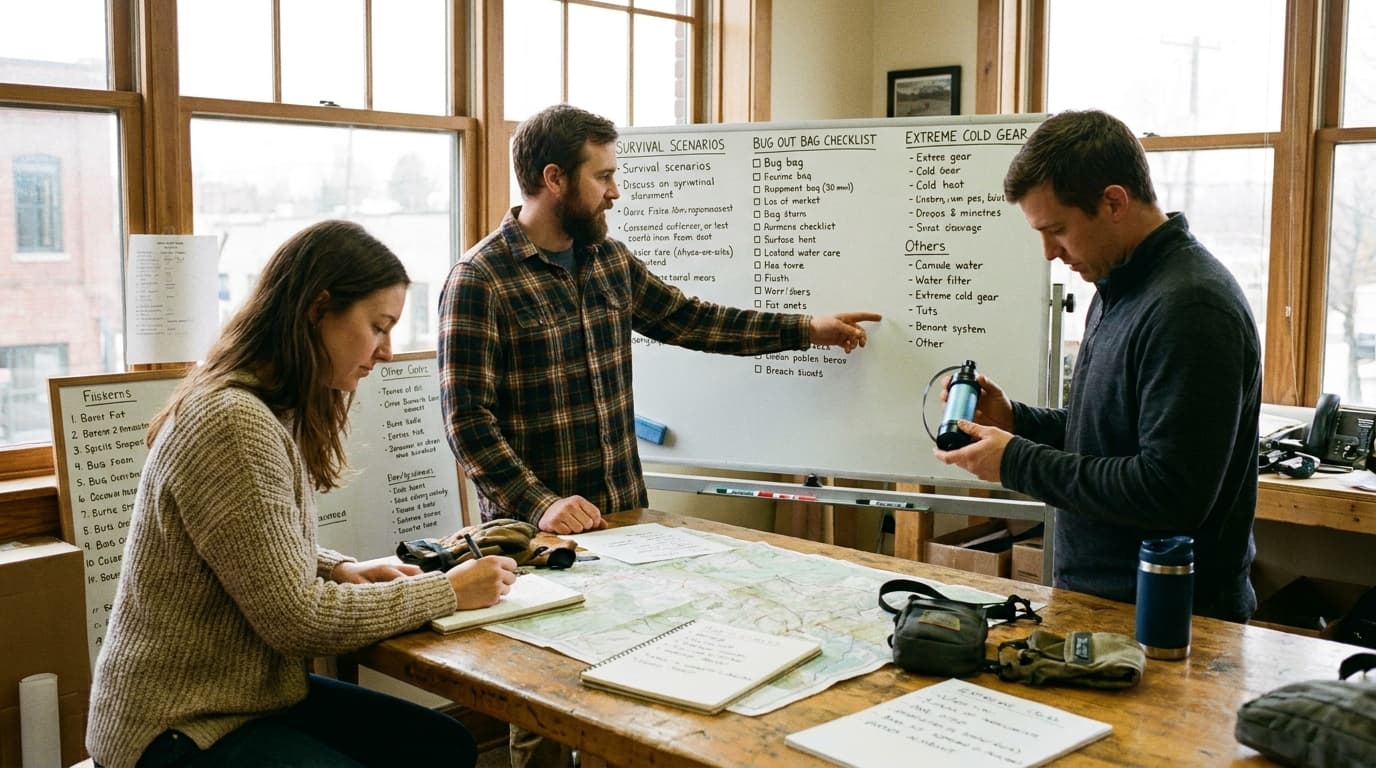
Survival is the intersection of your gear, your skills, and your mindset. It is the difference between a scary story and a successful adventure. Using essential survival skills and our checklists for camping or bug out bags ensures you stay ready for any environment.
Imagine being like Ishi, who survived solo for three years but was eventually found starving because he lacked his basic tools. Even the best skills can fail if you do not have the right equipment, which is why experts in wilderness survival remind us that living without tools is rarely sustainable.
Key insights:
Aim for a backpack weight of about 25% of your body weight to avoid exhaustion.
Use hand sanitizer with at least 60% alcohol to prevent infections.
Pack high-fat foods to fuel your body’s internal furnace in the cold.
Field-test all gear before an emergency to ensure it actually works.
A Bug Out Bag Checklist for Beginners and Early Preppers
The primary goal of a 72-hour bug out bag is to provide a reliable bridge between a disaster zone and safety. It is not meant for permanent wilderness living, but rather to sustain you for three days of self-sufficiency during an evacuation. To stay mobile, you should aim for a pack weight that is roughly 25% of your total body weight to prevent exhaustion and injury. Using a bug out bag checklist for beginners helps you prioritize durability, starting with a 500D Cordura nylon bag that can withstand the friction of heavy outdoor use.
Imagine you are forced to leave your home on foot because of a sudden local emergency. You grab a pack filled with everything you think you might need, but two miles down the road, your shoulders are bruising and your pace has slowed to a crawl. Because the bag is too heavy, you are forced to stop and dump out supplies, potentially losing the very tools you need to stay warm or hydrated. By sticking to the weight rule and choosing rugged materials, you ensure that your gear supports your movement instead of hindering it.
But even the best gear is useless if you do not know how to use it when the rain starts falling. Many people buy a 1/2 inch thick ferrocerium rod because it can start thousands of fires, yet they never actually strike it until they are cold and shivering. Real-world conditions are messy, and theoretical preparedness often disappears the moment your hands get cold or your equipment gets wet. This is why the survival community emphasizes that you must prove your gear works before you are in a life-or-death situation.
Think about the difference between reading a manual and actually sleeping in the woods. For example, you might find that your high-end survival shell is great at blocking wind but makes you sweat so much that you end up colder than before. Or perhaps your essential survival skills are rusty, and you realize you cannot actually get a spark from your rod while wearing gloves. Testing your bag in a controlled environment like your own backyard reveals these flaws while you still have a warm house to retreat to if things go wrong.
Key insights:
Start with a 500D Cordura nylon backpack to ensure your kit does not rip or fail under the weight of three days of supplies.
Keep your total pack weight between 20% and 30% of your body weight to maintain your stamina during long treks.
Pack hand sanitizer with at least 60% alcohol for hygiene and as a secondary fire-starting accelerant.
Spend one full night in your backyard using only the contents of your bag to identify any missing items or gear failures.
Practice using your ferrocerium rod until you can consistently start a fire in damp conditions without relying on matches.
Why You Must Field-Test Your Gear Before an Emergency
Buying gear is only half the battle. If you have not used your equipment in the wind or rain, you are not truly prepared. Theoretical knowledge often disappears the moment you are shivering, and testing reveals whether your essential survival skills are actually ready for a real crisis.
Take the story of Ishi, who survived solo for three years but was found starving because he lacked his primary tools. Modern preppers often have the tools but lack the experience. For example, many carry a ferrocerium rod but never practice striking it. Also, verify your pack weighs about 25% of your body weight so you can actually carry it without collapsing.
Key insights:
Spend one night in your backyard using only your bag contents to find gear gaps.
Strike your ferrocerium rod until you can start a fire in damp conditions.
Check that your hand sanitizer contains at least 60% alcohol for hygiene and fire-starting.
Your Emergency Checklist for Remote Camping Safety
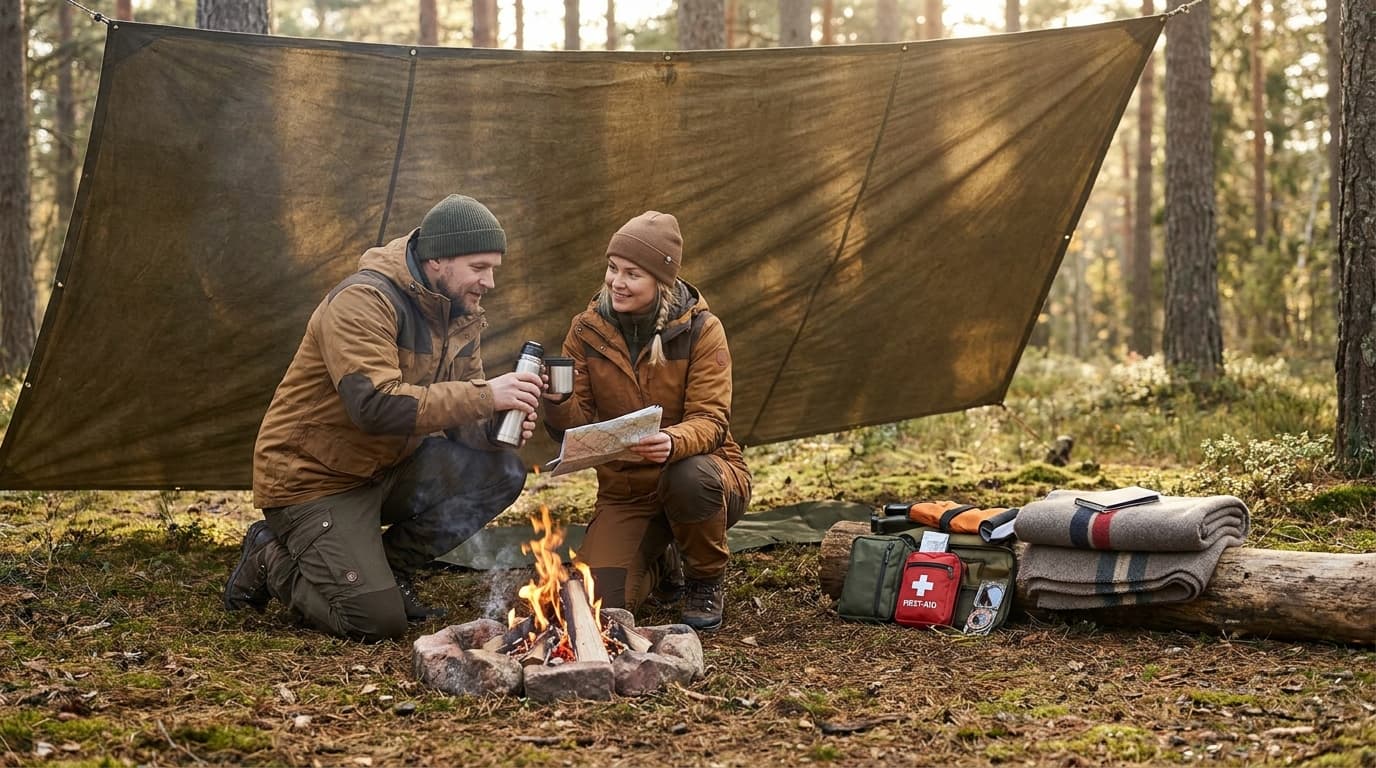
When you head into the deep woods, you are your own first responder. Staying safe when help is days away means preparing for the "what if" moments before they happen. You need to think about redundancy - having a backup for your backup - because a single gear failure should not turn a weekend trip into a life-threatening situation.
A solid emergency checklist for remote camping begins with managing your energy. Keeping your pack weight between 20% and 30% of your body weight helps you avoid the kind of fatigue that leads to accidents. Beyond weight, you need redundant systems for fire, navigation, and shelter. If your primary stove breaks or your phone battery dies after its limited charge cycles, your backup tools are what will actually get you home.
Think about Ishi, the last of the Yahi people. He was a master of the land who lived solo for three years, yet he was eventually found in a state of starvation. The reason was not a lack of knowledge, but a lack of tools. When you are miles from the nearest road, your gear is your lifeline, and losing a single primary tool can quickly compromise your ability to stay warm or find food. Having the right essential survival skills is vital, but those skills require the right equipment to function.
Key insights:
Pack three different ways to start a fire, such as a lighter, waterproof matches, and a thick ferrocerium rod for longevity.
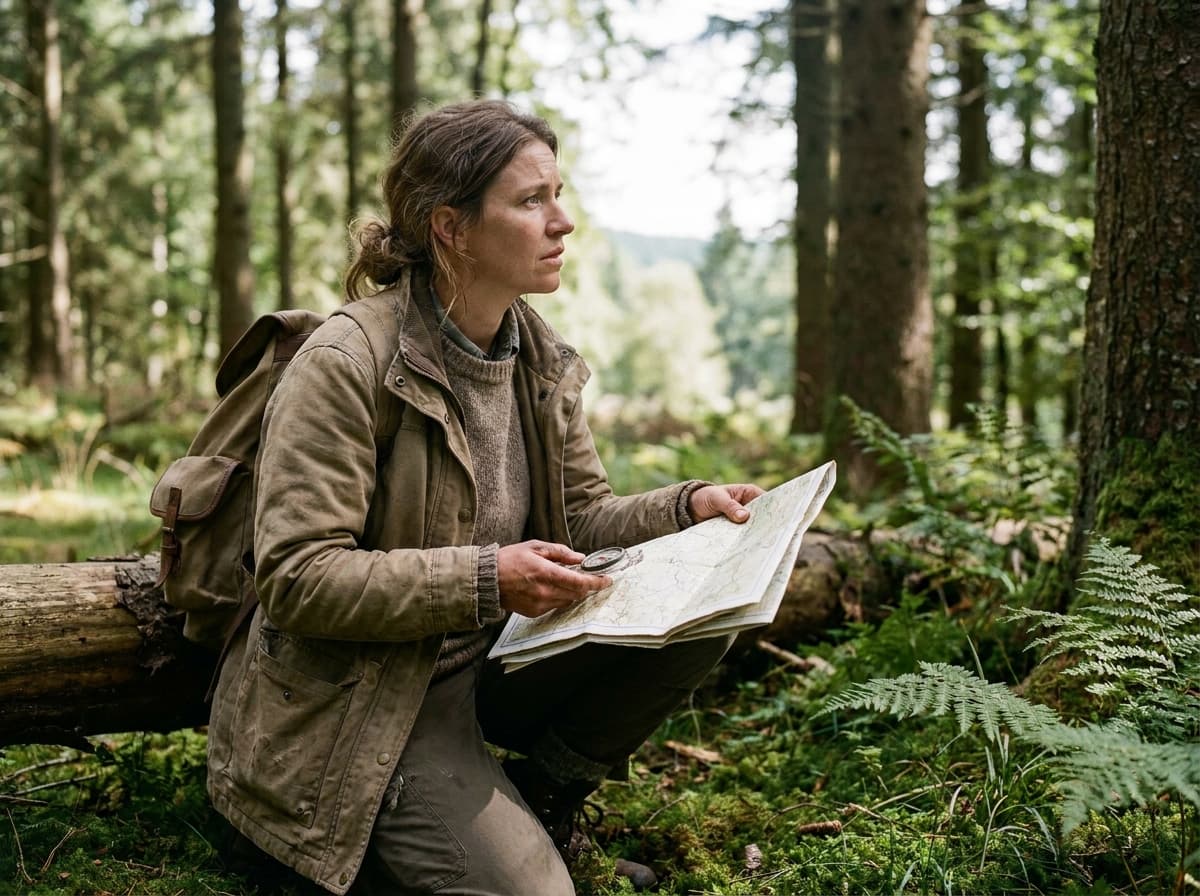
Carry a physical map and compass instead of relying solely on a smartphone that might run out of its 300 to 500 charge cycles.
Keep high-fat snacks handy since staying warm is a biological process fueled by calories rather than just your jacket layers.
Include hand sanitizer with at least 60% alcohol to keep wounds clean and help catch a spark for your fire in damp conditions.
Choosing the Best Survival Gear for Extreme Cold Environments
Staying warm in sub-zero temperatures is a biological process rather than just a choice of clothing. Your body acts like a furnace, burning calories to maintain a steady internal temperature. If you do not feed that fire, even the most expensive parka will not keep you from shivering for long.
When picking the best survival gear for extreme cold, moisture management is your top priority. High-end survival shells often utilize 3-layered Gore-tex Pro fabric, ranging from 40D to 80D for a balance of weight and durability. This setup blocks biting winds while allowing sweat to escape, which is vital since damp skin loses heat significantly faster than dry skin.
Imagine you are hunkered down in a snow trench after a long day of trekking. You have your layers on, but you are still shaking. This is where your internal furnace is hitting a wall. Instead of just reaching for another blanket, you need to eat. Survival expert Juan Pablo Quiñonez points out that solo survival is unsustainable without the right tools, and that includes the fuel in your stomach. Check out why the best survival gear for cold weather camping keeps you alive and cozy to see how gear and biology work together.
It is also a matter of testing your gear before you are in a crisis. A stove that will not light or a shell that leaks can turn a cold night into a survival situation. Remember that as your body depletes its fat stores, you become much more susceptible to the elements, making calorie management just as important as your tent.
Key insights:
Pack high-fat foods like nuts, tallow, or peanut butter to provide long-lasting fuel for your body's heat production.
Stick to a three-layer system consisting of a wicking base, an insulating mid-layer, and a durable Gore-tex outer shell.
Vent your layers before you start to sweat to ensure your insulation stays dry and effective.
Keep your water bottle and extra socks inside your sleeping bag or jacket to prevent freezing and keep them warm.
A Beginner Wilderness First Aid Guide for Trail Mishaps
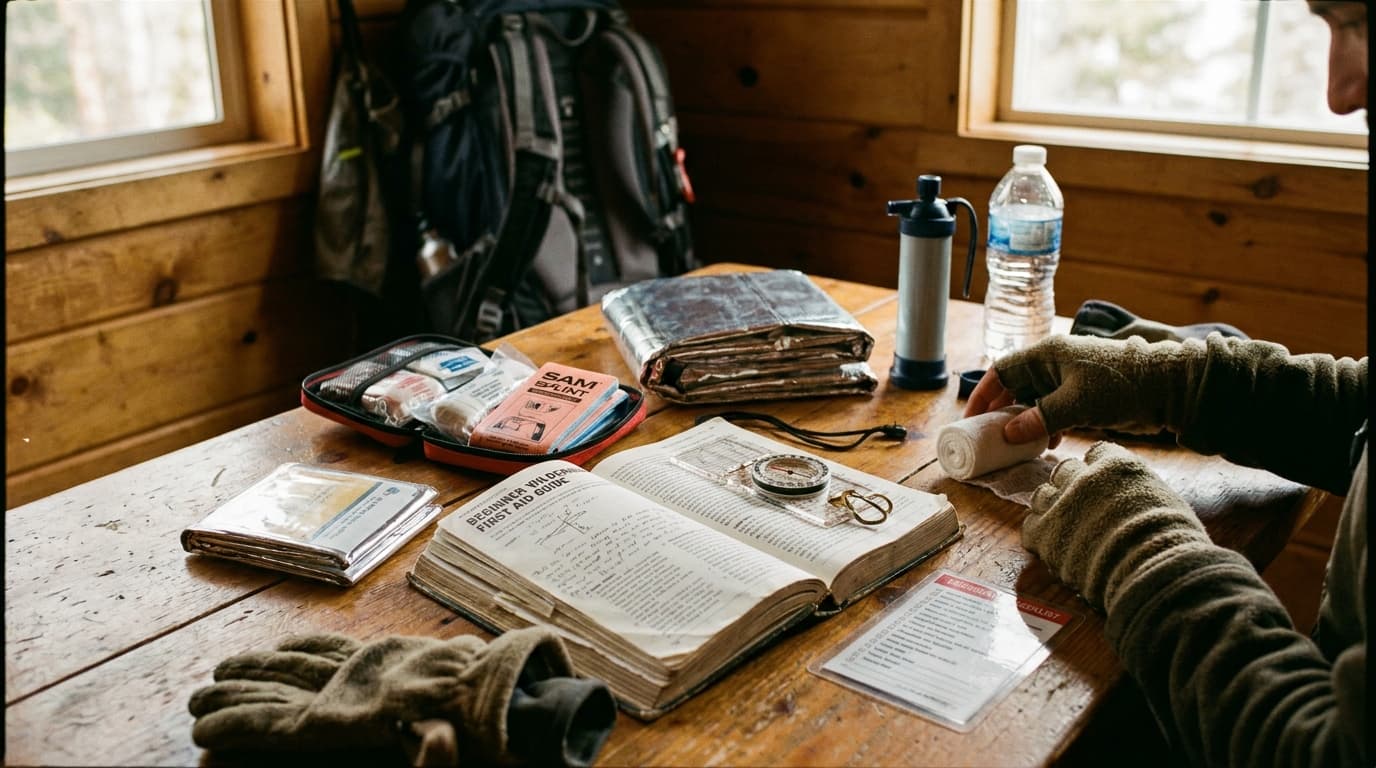
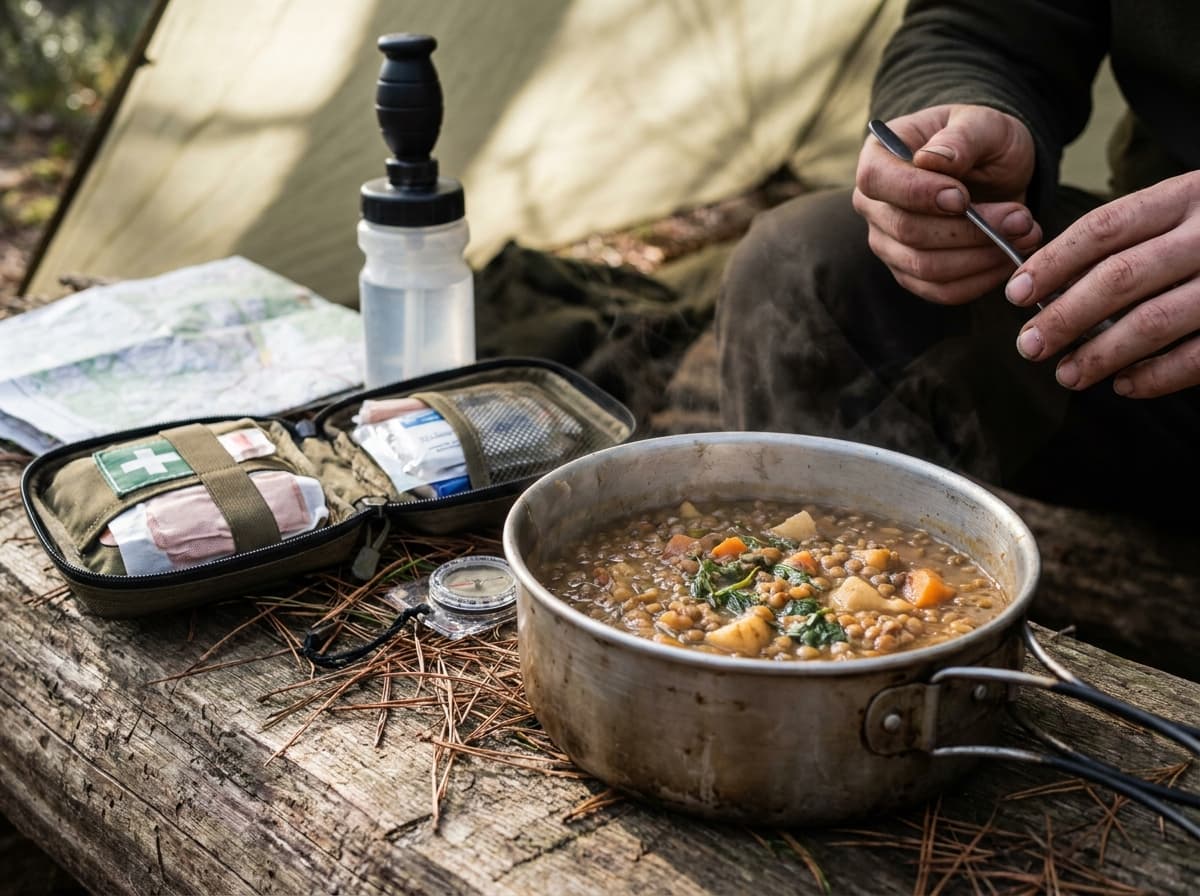
When you are miles from the nearest trailhead, a small cut can turn into a big problem if you are not prepared. Most people pack too much medicine they will never use and forget the basics that actually save lives. You really only need to focus on two things: stopping heavy bleeding and preventing infection. Reading a wilderness first aid kit checklist and safety guide can help you narrow down the essentials without overfilling your pack.
Hygiene is often overlooked in the wild, but it is your first line of defense against illness. For instance, hand sanitizer should contain at least 60% alcohol to effectively kill the bacteria that cause infections. This is not just for cleaning your hands before a meal. It is a vital tool for wound care when clean water is scarce.
Imagine you are scrambling over a granite ridge and your hand slips, leaving a jagged, deep scratch across your palm. The wound is caked in dirt and grit. Without a way to sanitize it, you are looking at a potential infection that could end your trip early. In this moment, you would reach for that 60% alcohol sanitizer to flush the area before applying a clean dressing. It might sting, but it keeps the trail crud from entering your bloodstream.
Building a kit does not mean buying a pre-made bag from a big-box store. Most of those are filled with 50 plastic bandages and not much else. You want a kit that handles real-world trail mishaps, like a twisted ankle or a nasty scrape from a fallen branch. Keeping things simple makes it easier to find what you need when you are stressed or hurt.
Key insights:
Focus on trauma by packing pressure bandages and gauze to stop bleeding fast.
Include antiseptic wipes and 60% alcohol sanitizer to keep wounds and hands clean.
Pack a small roll of medical tape or duct tape for securing dressings in rough terrain.
Add a pair of nitrile gloves to protect yourself while treating others.
Carry a few doses of ibuprofen or antihistamines for minor pain and allergic reactions.
Wilderness Water Purification Techniques That Actually Work
Finding water in the wild is easy, but finding safe water is the real challenge. You can't rely on a clear stream because invisible pathogens like Giardia or bacteria are often lurking just beneath the surface. To stay healthy, you must master specific wilderness water purification techniques and treat every natural source as if it is contaminated. This is one of the most essential survival skills for staying safe in the wilderness you can learn.
While many hikers carry a portable squeeze filter, these devices have limits and can eventually clog or even freeze in the cold. A multi-stage approach is much more reliable for long-term safety. By filtering out the heavy sediment first with a cloth or bandana, you preserve the life of your equipment and make the final purification step much more effective.
Imagine you are out on a trail and your primary pump filter suddenly cracks after a hard drop on a rock. Without a backup, you are stuck looking at a murky pond with no way to drink. This is why a standard bug out bag is built for 72 hours of self-sufficiency with redundant tools. Having a thick ferrocerium rod allows you to spark a fire and boil your water, which remains the most reliable way to kill all pathogens when gadgets fail.
Key insights:
Strain water through a bandana first to remove large debris and save your filter's life.
Boil water for a full minute to kill all pathogens; increase this to three minutes at high altitudes.
Carry a ferro rod as a backup fire starter because it works when wet and lasts for thousands of strikes.
Keep your water filter in your sleeping bag at night to prevent the internal elements from freezing and breaking.
Don't Forget the Four-Legged Survivors
Pets are family, but they can't pack for themselves. When an emergency hits, their stress levels skyrocket just like ours do. This shift toward holistic family preparedness ensures that no one gets left behind when every second counts.
Imagine a sudden evacuation order where you only have minutes to leave. You grab your shoes and the dog, but in the chaos, you forget his food and his daily heart medication. Now you're at a crowded rest stop with a hungry, anxious pet and no way to soothe him. Having a pet bug out bag tucked by the door prevents this panic and keeps your furry friend grounded while you focus on the road ahead.
This level of preparation is just as vital as knowing essential survival skills for staying safe in the wilderness. When you have a plan, your pets can sense your confidence, which helps them stay quiet and manageable during high-stress transitions. If you are ready, they are ready too.
Key insights:
Keep a week's worth of pet meds and a sturdy leash in your emergency kit.
Pack collapsible bowls and a comfort blanket to make strange environments feel familiar.
Include a recent photo of your pet and their medical records in a waterproof bag.
Rotate their food every few months to ensure it stays fresh and nutritious.
Consider the story of Ishi, who survived solo for three years but eventually faced starvation without his tools. Juan Pablo Quiñonez points out that long-term solo survival is rarely sustainable. Real-world survival scenarios require testing your gear in the field rather than relying on a lone wolf myth.
Key insights:
Field-test every piece of equipment before you actually need it.
Carry a 1/2 inch thick Ferrocerium rod for a fire source that lasts years.
Keep a paper map as a backup to your digital survival library.
Final Thoughts on Staying Ready
True readiness is about what you know, not just what you carry. While high-quality tools are great, your essential survival skills for staying safe in the wilderness are what actually keep you alive when things go south. Preparation is a mental habit, not just a shopping list.
Imagine a camper who buys a top-tier stove but cannot get it to light in a damp, windy forest. They have the right stuff, but they skipped the field-testing phase. Testing your equipment in your backyard first ensures you are not learning hard lessons during actual survival scenarios.
Key insights:
Download a digital survival library to your smartphone for offline reference.
Focus on building manual skills that do not rely on batteries or fuel.
Frequently Asked Questions
You'll want to keep your bag at about 25% of your own body weight. While some experts say you can go as low as 20% or as high as 30%, that 25% sweet spot is usually best to keep you from getting exhausted too quickly on the trail.
It is also a good idea to test your gear before an actual emergency hits. Members of the Off Grid Living and Survival community often remind people that a bag that feels fine in your living room might feel like a ton of bricks after five miles of hiking. If you weigh 160 pounds, aim for a 40-pound pack, but try to go even lighter if you can.
Remember that every extra pound you carry burns more calories. Since staying warm and moving effectively depends on your energy levels, keeping your pack around 25% of your weight helps you stay mobile and safe.
You can use it as a tool, but don't make it your only plan. Smartphones are great for holding digital libraries of first aid and foraging tips, but they have some big weaknesses in the wild. For one, most phone batteries only last for 300 to 500 charge cycles before they start losing power much faster.
High-tech gadgets also depend on satellites and battery power, which can fail when you're in a remote area or during bad weather. A traditional map and compass are much more reliable because they don't need a charge and won't stop working if you drop them.
If you do plan on using your phone, make sure you have a solar charger and have all your maps downloaded for offline use. But always keep a physical backup in your kit just in case the tech gives out.
Starting a fire when everything is soaked and freezing is a real test of your gear. Honestly, your best bet is a half inch thick Ferrocerium rod. It works even when it is wet and can start thousands of fires, which is way better than standard matches that might fail you in the cold.
But here is the thing most people miss: staying warm is actually a biological process fueled by food. You need to eat because your body uses those calories to generate heat while you are working on that fire. If you are starving, you will feel the cold much faster no matter how big your fire gets.
It is a lot harder than the movies make it look. While some people have managed to last a long time, like Ishi who survived solo for three years before being found, it usually does not end well without the right tools. Expert Juan Pablo Quiñonez points out that living solo is basically unsustainable in the long run because you eventually run out of resources or your gear breaks down.
Most beginner setups, like a standard bug out bag, are only meant to keep you going for about 72 hours. If you have your pets with you, that timeline gets even trickier because they need their own specialized gear to stay safe and calm. It is hard enough to keep yourself fed, so keeping a furry friend happy in a crisis is a full time job!
Conclusion
So what does all this preparation really mean? Whether you are building a bug out bag checklist for beginners or picking out the best survival gear for extreme cold, the goal is always the same: peace of mind. True safety happens when your emergency checklist for remote camping is backed up by actual practice. Having a beginner wilderness first aid guide or knowing wilderness water purification techniques is a great start, but these tools only work if you know how to use them when things get messy.
The biggest takeaway here is that survival is less about the stuff in your pack and more about the skills in your head. You can buy the most expensive gear, but if you have never struck a fire rod or filtered water in the rain, that gear is just dead weight. Your next move should be to take your kit into the backyard or a local park and actually use it. Testing your limits in a safe spot makes a huge difference when a real scenario hits.
Do not feel like you have to get everything perfect today. Start by packing a few essentials for yourself and your pets, then build your skills from there. Readiness is a journey rather than a destination. The best time to prepare was yesterday, but the second best time is right now.
Every WilderReady guide is researched, written, and fact-checked in-house against trusted references such as the American Red Cross, the National Park Service, and the CDC before it goes live. We publish under this shared byline instead of invented personas, so you always know who stands behind the guidance you are reading.