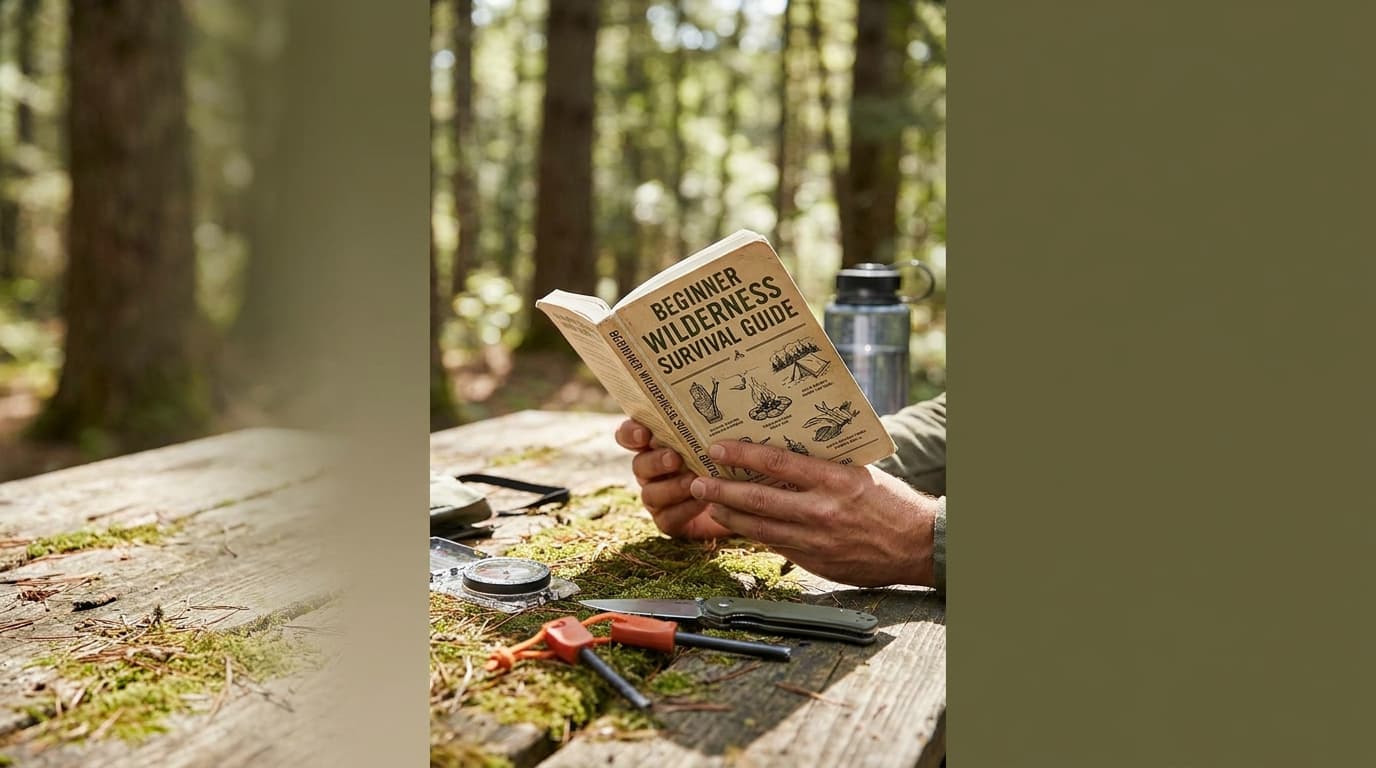
Why This Beginner Wilderness Survival Guide Makes Survival Skills Simple
Survival isn't about luck or having fancy gadgets; it's about your mindset and following the Rule of 3s. This Beginner Wilderness Survival Guide breaks down the essential steps to stay...
Why This Beginner Wilderness Survival Guide Makes Survival Skills Simple
Survival isn't about luck or having fancy gadgets; it's about your mindset and following the Rule of 3s. This Beginner Wilderness Survival Guide breaks down the essential steps to stay alive by prioritizing air, shelter, water, and food in that order.
Most people panic when they get lost, but staying calm is your best tool for making smart choices in the woods. Understanding these basics helps you manage risks before they turn into life-threatening emergencies.
We'll cover how to find water, build a simple shelter, and choose the right gear to keep you safe on any adventure.
What Is the First Thing You Should Do if You Get Lost?
The absolute first thing you should do if you realize you are lost is stop moving. It sounds simple, but your brain's natural fight or flight response will try to trick you into running. Using the S.T.O.P. method - Stop, Think, Observe, and Plan - is your most important mental tool to prevent panic from taking over. Sitting down immediately prevents you from walking further into danger or getting deeper into the woods where rescuers cannot find you.
While you sit, remember the Rule of 3s. You can survive three hours without shelter in harsh weather but three weeks without food. This perspective helps you focus on what actually matters right now, like staying warm and dry, rather than worrying about your next meal. Your brain is your best survival tool, and keeping it calm is the priority. Knowing these 5 essential survival skills will give you the confidence to handle the situation logically instead of emotionally.
Imagine walking off-trail to photograph a bird and suddenly realizing the path has vanished. Your stomach drops, and you feel the urge to sprint in any direction just to find a clearing. Instead, you force yourself to sit on a nearby rock and blow a pea-less whistle. Because a pea-less whistle has no moving parts, it works even if it is freezing or wet. It signals for help without you having to scream and exhaust yourself, which is vital because a person can become unconscious once they reach 7% dehydration.
Before you make any big decisions, take five deep breaths to find your calm center and lower your heart rate. Once you are thinking clearly, you can start looking for landmarks or follow our guide on finding north when your phone dies. Survival is not about gear or luck, but about mindset and awareness.
Key insights:
Sit down the moment you feel confused to avoid wandering further away from your last known location.
Take five slow, deep breaths to clear the fog of panic from your mind before making a plan.
Use a signal whistle instead of shouting to save your energy and prevent over-exertion.
Observe your surroundings for familiar landmarks or hazards before you decide to move.
Plan your next move based on the Rule of 3s, prioritizing shelter and warmth over finding food.
Why Your Brain Is the Best Survival Tool
Your brain is your most critical piece of equipment, even more than a survival knife. Experts like Tim Corcoran argue that maintaining a calm center is the top priority in any crisis. When you panic, your body wastes energy and sheds metabolic heat, which is dangerous when you are facing exposure.
Imagine you realize your water bottle is empty deep in the woods. Instead of rushing to find a stream, you remember that water weighs 8.3 pounds per gallon and you are already exhausted. If you panic and sprint, you reach 7% dehydration faster, risking unconsciousness.
Taking a moment to breathe allows you to use the S.T.O.P. method effectively. It turns a disaster into a manageable situation. These wilderness survival hacks only work if you keep your logic centers online when things go wrong.
Key insights:
Take five deep breaths before making any decision to lower your heart rate.
Focus on your calm center to prevent metabolic heat loss from panic.
Use logic to address Rule of 3s priorities like shelter and warmth first.
Basic Shelter Building Techniques to Stay Warm Tonight
If you are lost or stuck outdoors, shelter is your most urgent physical priority. Most people worry about finding food first, but the Rule of 3s proves that you can only survive about three hours in extreme weather without protection. Exposure is actually the leading cause of death in the woods because your body quickly loses its ability to regulate temperature when hit by wind or rain.
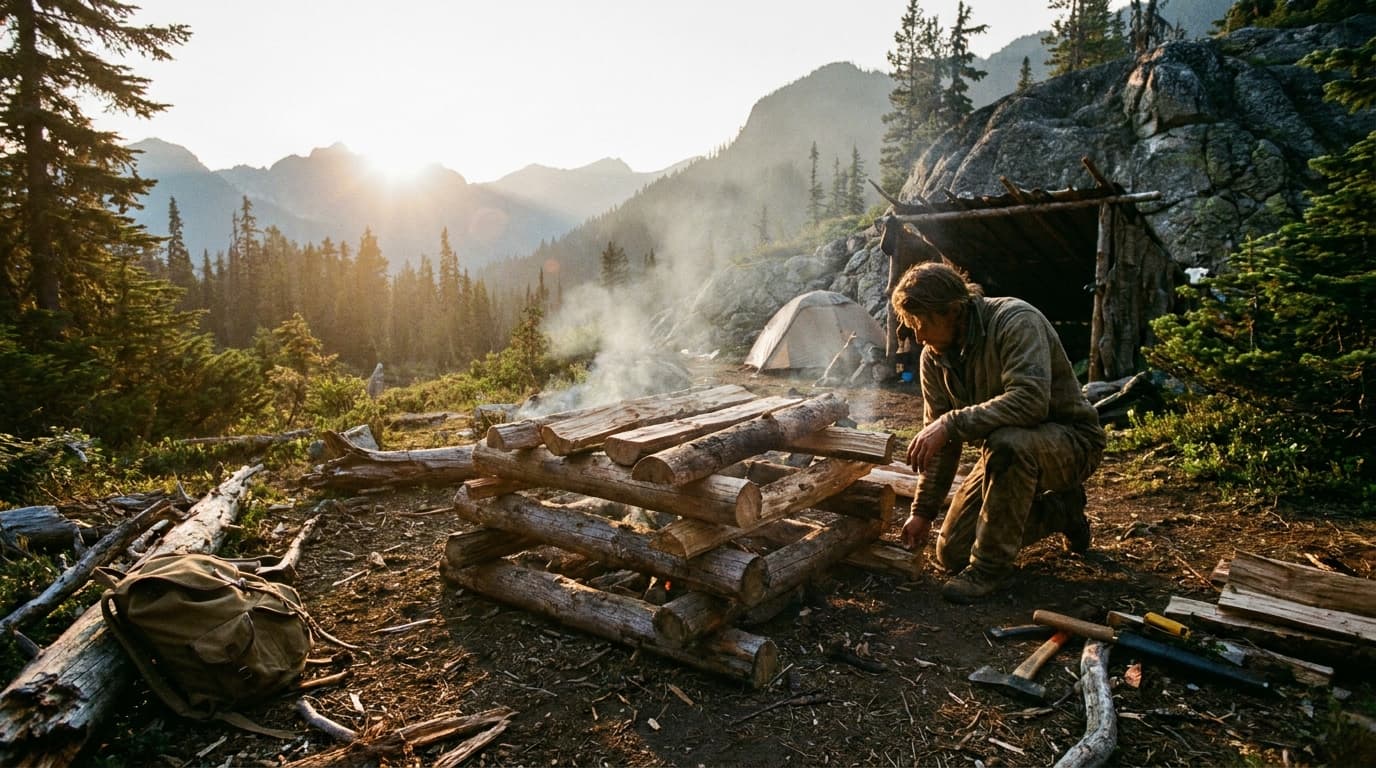
Think of a debris hut as a natural, oversized sleeping bag. It is a simple structure made from a ridgepole and rib branches, but the magic is in the insulation. By piling a massive amount of leaves, needles, and grasses over the frame, you create a thick barrier that traps your body heat. This is a critical part of the MARCH acronym used in first aid, where the H stands for preventing hypothermia.
Imagine the sun is beginning to drop and the forest shadows are stretching out. You know that working in the dark is a recipe for injury, so you stop moving immediately to find a site. You locate a sturdy downed log to serve as your main support and begin leaning branches against it to form a narrow A-frame. You spend the next hour gathering every dry leaf and pine bough you can find, piling them on until the structure looks like a giant, fuzzy mound. It might not look pretty, but once you crawl inside, that thick layer of forest floor debris keeps the cold air out and your warmth in.
Using wilderness survival hacks like this can turn a terrifying night into a survivable one. The key is to stop moving and start building while you still have the energy and light to do it right. If you wait until you are already shivering, your brain will struggle to make the logical decisions needed to stay safe.
Key insights:
Start building at least two hours before sunset so you do not have to finish the roof in total darkness.
Pile on enough debris so the walls are at least three feet thick to provide real insulation against the wind.
Keep the interior space as small as possible because a large room takes too much body heat to warm up.
Avoid building in low-lying areas where cold air and moisture settle during the night.
How to Find Water in the Wilderness Without Getting Sick
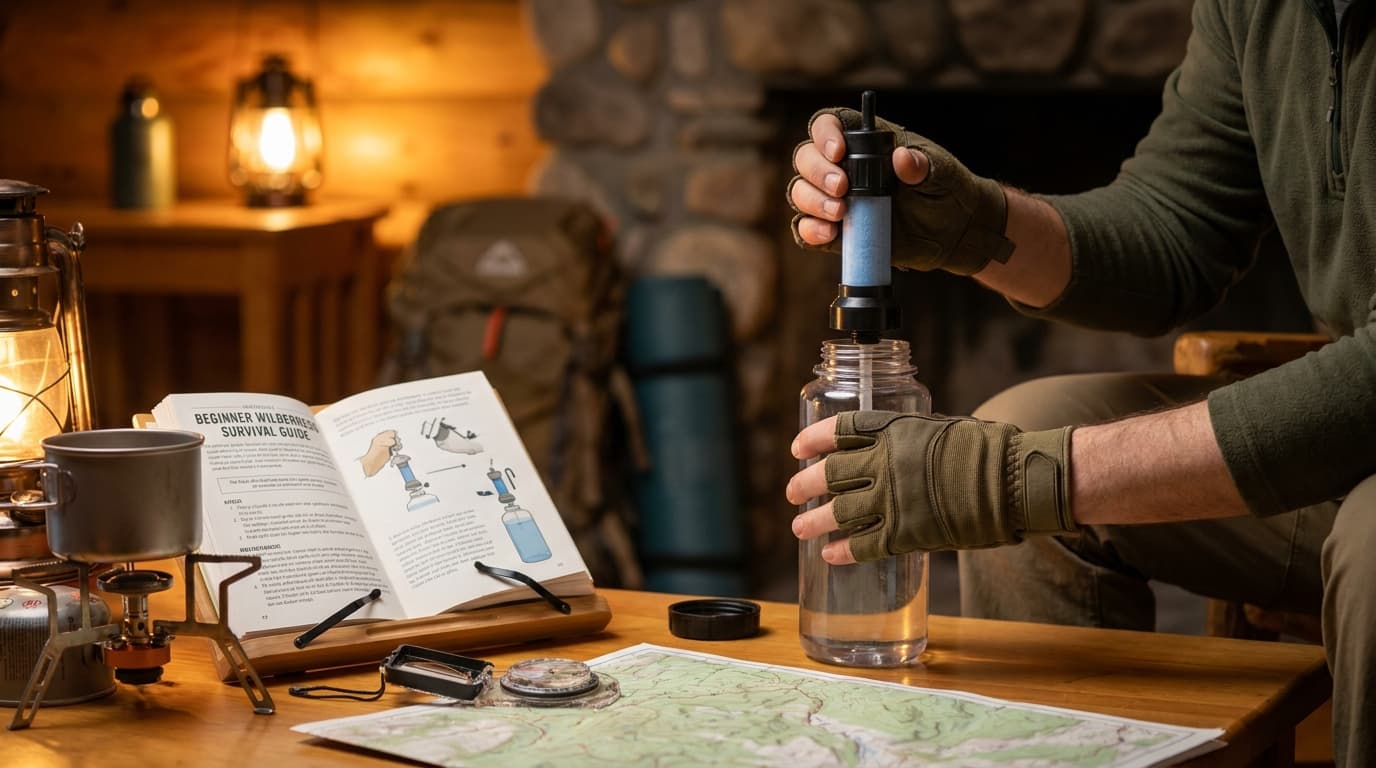
Finding water is a race against the clock. Most survival experts point to the Rule of 3s, which reminds us that while we can last weeks without food, we only have about three days without water. The trick is finding a source that won't make you sick. Drinking untreated water is a massive gamble because a single parasite can cause enough stomach trouble to dehydrate you faster than if you had drank nothing at all.
To find a source, let gravity be your guide. Water naturally settles in low-lying areas, so head downhill toward valleys or the base of rock formations. Keep an eye out for signs like swarms of insects, patches of unusually green vegetation, or animal tracks that seem to converge in one direction. Even a dry creek bed can be a goldmine if you dig a few inches down in a bend where water used to flow.
Picture a hiker who realizes they are lost just as the afternoon heat peaks. Instead of wandering aimlessly, they remember that nature hides water in specific spots. They spot a flight of birds circling a grove of trees half a mile away. When they arrive, the ground is damp. They dig a small pit, wait for muddy water to seep in, and boil it over a fire before taking a sip.
Key insights:
Boil your water for at least sixty seconds to ensure all pathogens are neutralized.
Tie clean rags around your shins and walk through tall grass at dawn to soak up dew for a drink.
Look for damp soil in dry river bends and dig a seep well to let groundwater filter through the sand.
Use a piece of plastic or a tarp to create a solar still if you are in a sunny, arid environment.
Avoid any water sources near heavy industry or farm runoff, as boiling won't remove chemical contaminants.
What Essential Survival Gear for Beginners Is Actually Worth Carrying?
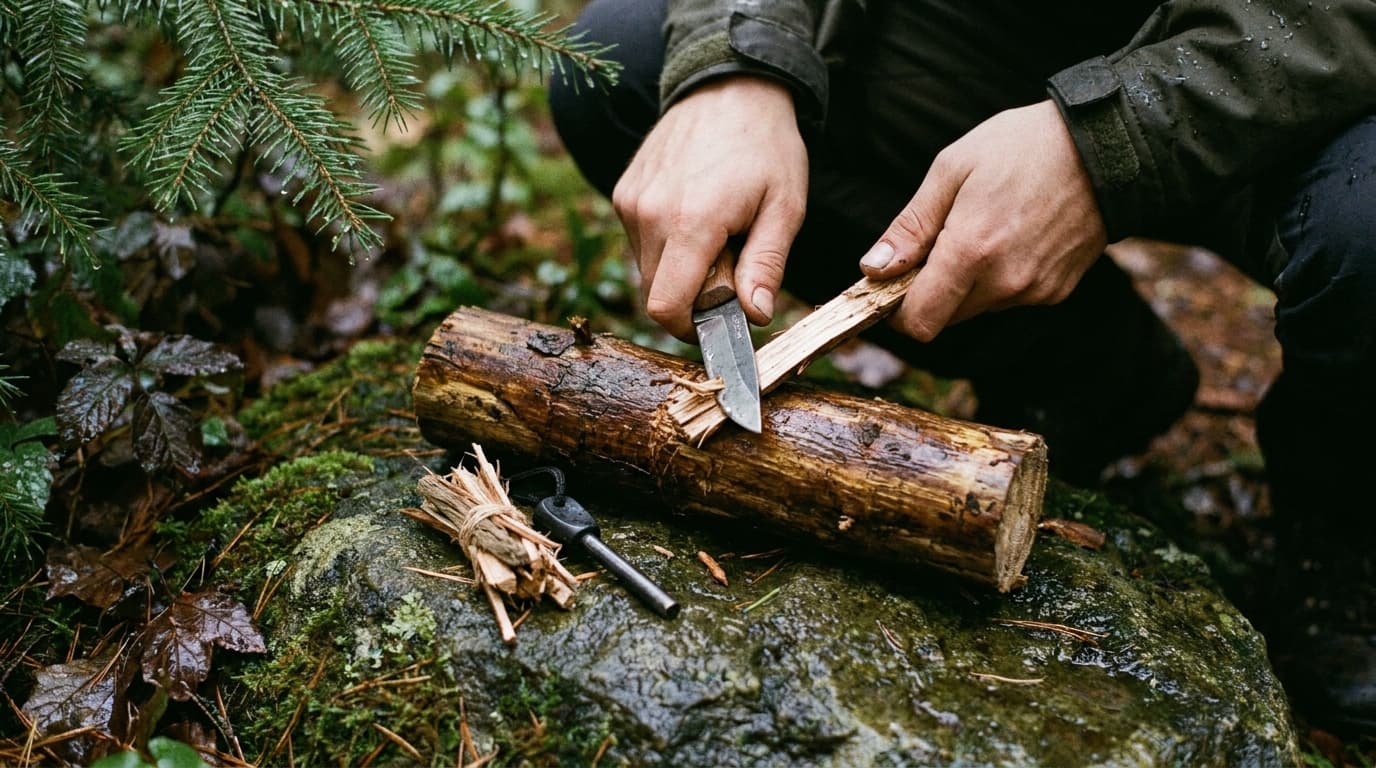
You do not need a massive rucksack to survive; you just need a few high-quality tools that will not fail when things get ugly. The best gear focuses on durability and redundancy, especially when it comes to cutting and fire. A full-tang fixed-blade knife is non-negotiable because the steel runs through the entire handle, allowing you to split wood for a fire without the tool snapping in half under pressure.
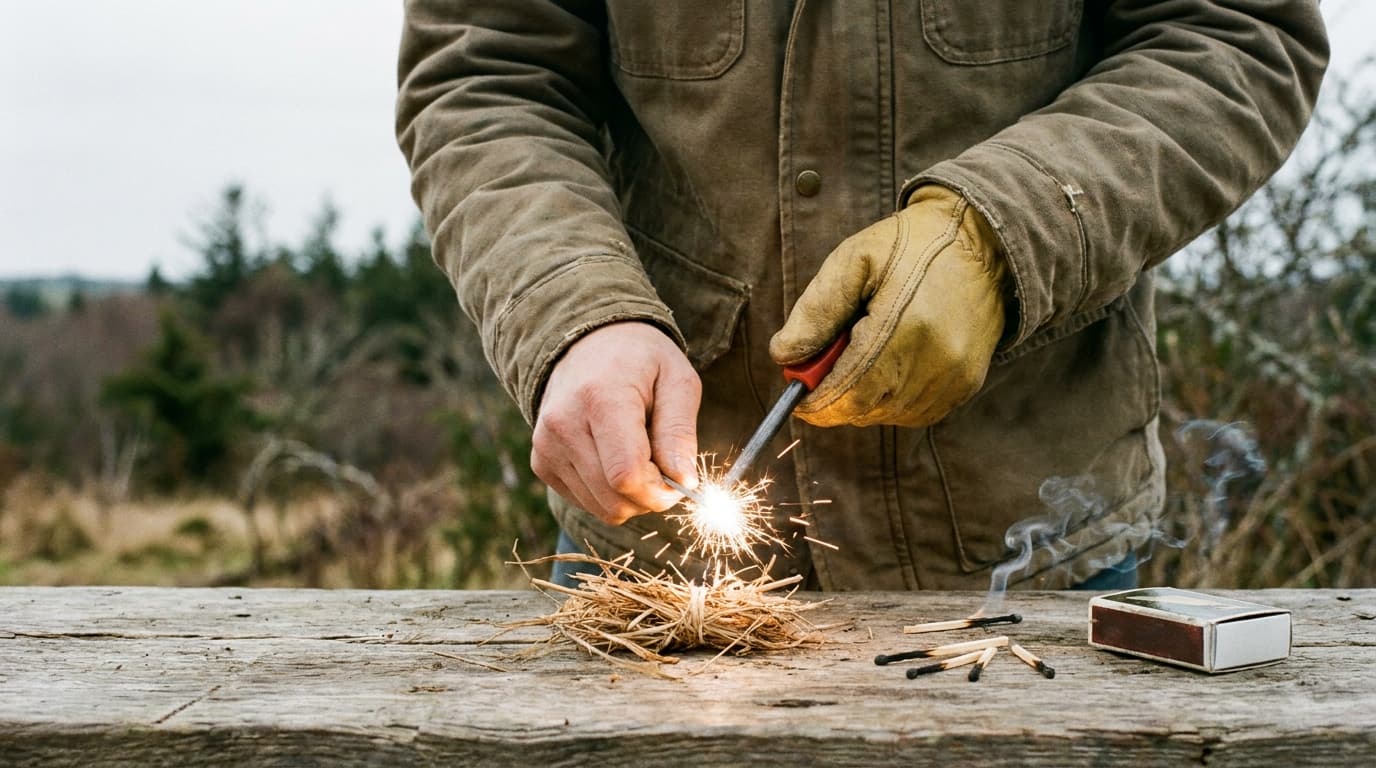
Fire is your next priority, and relying on a single cheap lighter is a gamble that rarely pays off in the rain. Smart beginners carry at least three ways to start a flame, including a ferrocerium rod that works even when soaking wet. While shouting for help exhausts you quickly and carries poorly in the wind, a small signal mirror is a lightweight powerhouse that can be seen from over five miles away on a clear day.
Imagine you are caught in a sudden downpour and your matches are damp. If you only brought a folding pocket knife, trying to process heavy wood to reach the dry center might bend the hinge or break the lock entirely. However, if you have a solid fixed blade and a ferro rod, you can shave off dry tinder and strike a spark that burns at thousands of degrees, turning a potential hypothermia situation into a manageable night by the fire.
Key insights:
Choose a full-tang knife for heavy-duty tasks like batoning wood and building shelters.
Pack a signal mirror to stay visible to rescue teams from miles away without wasting your voice.
Carry a single-walled metal container so you can boil water directly over a flame to kill bacteria.
Use a lightweight tarp and the rock button method to create a fast, secure emergency shelter.
Always carry three different fire-starting methods, like a lighter, waterproof matches, and a ferro rod, for true redundancy.
Common Survival Mistakes to Avoid in the Wilderness
Most people think survival is about fighting off wild animals or building fire from nothing. In reality, it is a mental game. The biggest mistake beginners make is focusing on the wrong priorities. You might feel a rumbly stomach and spend hours foraging for berries, but if the temperature drops and the wind picks up, that hunger will be the least of your worries.
It is also tempting to ignore small physical issues like a hot spot on your heel or damp socks. But in the woods, these minor annoyances snowball into life-threatening emergencies. If a blister gets infected or your feet get too cold to move, you lose your mobility. Once you cannot walk, your options for getting home safely disappear almost instantly.
Imagine a hiker who gets turned around just as the sun starts to set. Instead of stopping to build a simple windbreak, they start running to find the trail or hunting for a snack. By the time they realize they are stuck for the night, they are sweating and exhausted. That sweat cools down fast, and without a shelter, they are at high risk for hypothermia before dawn. They chose a handful of berries over a warm place to sleep.
Your brain is your best tool, and keeping it calm is your first priority. Expert Tim Corcoran explains that survival is about maintaining a positive mental attitude and keeping your head on your shoulders. If you can stay cool, you can avoid the panic that leads to these common traps and focus on what actually keeps you alive.
Key insights:
Keep your feet dry by checking your socks regularly and swapping them out if they get damp.
Address small injuries like blisters or scratches immediately to maintain your mobility.
Drink your water rather than just carrying it because your body is the most efficient container.
Carry a signal mirror for rescue because it can be seen from 5 miles away on a clear day.
Follow the MARCH acronym for first aid to check for bleeding, airway issues, and cold.
Frequently Asked Questions
In a typical survival scenario, you can usually last about three days without water. But don't treat that like a hard deadline because it depends heavily on your environment and how much you're moving. Here's the thing: you don't just suddenly stop at the 72-hour mark. You'll likely become unconscious once you reach 7% dehydration, which happens much faster if you're hiking in the heat.
A good tip to remember is that the best container for your water is actually your body. Instead of rationing every sip while you're getting dizzy, drink what you have to keep your head clear. If you start ignoring thirst, it snowballs into poor decision-making and exhaustion before you even realize you're in trouble.
The Rule of 3s is basically a priority list that tells you what will kill you first. It states you can survive three minutes without air, three hours without shelter in extreme weather, three days without water, and three weeks without food. It's a great way to keep from panicking because it tells you exactly what to focus on.
You'll notice that shelter is way higher on the list than food. That's because exposure is the most common cause of death in the woods. While many beginners worry about what they're going to eat, you've actually got weeks to figure that out. Your first priority should always be staying dry and warm.
You can, but it's not always the safest bet. While rain is usually cleaner than a muddy stream, it can pick up dust or bacteria as it falls through the sky or hits your shelter. If you're in a real bind, it's better than staying thirsty, but treating it is always the smarter move to avoid a nasty stomach bug.
Here's the thing: water is surprisingly heavy, weighing 8.3 pounds per gallon, so catching rain saves you a lot of energy. Just keep in mind that staying hydrated is vital because a person will likely become unconscious at 7% dehydration. If you catch rain, try to get it directly from the sky with a clean tarp rather than letting it run off a mossy tree first.
It's okay for small tasks, but it shouldn't be your primary tool. Folding knives are handy because they fit right in your pocket, but that hinge is a major weak spot. If you try to split wood or do heavy prying, the hinge can snap, and a broken knife is a huge problem when you're out in the woods.
For your first kit, you'll want a full-tang fixed-blade knife instead. This means the metal of the blade runs all the way through the handle, making it much tougher for building shelters or processing firewood. Keep the folding knife for light work, but trust a fixed blade for the heavy-duty survival stuff.
Conclusion
What is the big takeaway for your next adventure? Survival is less about being a tough expert and more about keeping your cool when things get weird. Whether you use the S.T.O.P. method to stay grounded or try basic shelter building techniques before sunset, success is about priorities. The Rule of 3s keeps you focused on the basics like warmth and water, which matters way more than a fancy gear list.
These skills are best built while you are having fun. You do not need a giant bag of gadgets, but you should feel comfortable with essential survival gear for beginners like a sturdy knife or a signal mirror. Once you know how to find water in the wilderness safely and keep your body temperature stable, the great outdoors starts to feel a lot more like a playground.
Try testing these moves on your next sunny hike. Learning how to avoid common survival mistakes to avoid wilderness mishaps is much easier when you are relaxed and the sun is still up. Real preparedness is about having the quiet confidence to enjoy every trail, knowing you have exactly what it takes to get home safely.
Every WilderReady guide is researched, written, and fact-checked in-house against trusted references such as the American Red Cross, the National Park Service, and the CDC before it goes live. We publish under this shared byline instead of invented personas, so you always know who stands behind the guidance you are reading.