Wilderness Survival Hacks That Actually Work When Things Go Wrong
Ever wonder if you could handle it if a simple day hike took a turn for the worse? Most outdoor emergencies are not about fighting off bears but dealing with...
Wilderness Survival Hacks That Actually Work When Things Go Wrong
Ever wonder if you could handle it if a simple day hike took a turn for the worse? Most outdoor emergencies are not about fighting off bears but dealing with a nasty blister or a broken pack strap miles from the car. Knowing a few clever Outdoor Hacks & Tricks can be the difference between a ruined weekend and a great story. It is all about using your gear in ways you never expected to get yourself back home safely.
We are skipping the flashy survival show stunts for field tested improvised medical hacks and gear repair tricks that actually work. Whether you need beginner bushcraft knot tricks for your camp setup or fire making shortcuts for damp wood and rainy weather, these skills keep you safe when nature gets moody. You do not need a massive trauma kit if you know how to repurpose the items you are already carrying in your pack.
This guide covers everything from fixing your body to using natural navigation hacks when your compass is gone. You will see how to turn trekking poles into splints and how to stay warm in a crisis. Let us get you ready for your next adventure with some practical skills that prioritize safety and keep you moving forward when things go wrong.
Nature is unpredictable. Even a quick afternoon trail run can turn sideways the moment a simple trip leads to a sprained ankle. Slips and falls are the top reason people get hurt outdoors, followed closely by the slow burn of a nasty blister.
The secret to staying safe isn't some flashy TV stunt. It is about using what you already have. Think of your gear as a modular kit. Those trekking poles? They are your new leg splints. But be careful - some hacks are dangerous. Never use a belt as a tourniquet because the uneven pressure causes tissue damage.
Real survival is about catching the small stuff early. If you feel a hot spot on your heel, stop immediately. Most hikers keep walking to avoid a delay, but that is how you get a raw wound. Tincture of Benzoin and KT tape will keep you moving. Safety is about stabilization, not heroics.
Key insights:
Stop and fix hot spots immediately rather than walking further to prevent severe blisters.
Use trekking poles and ground pads as improvised leg splints for stabilization during emergencies.
Avoid improvised tourniquets made from belts or ropes to prevent permanent tissue damage.
Trail Medicine: Fixing Your Body with What's in Your Pack
Most hikers spend time worrying about rare disasters, but the real threats are usually much smaller. Slips, trips, and falls are actually the most common causes of outdoor injuries. These usually end in a sprained ankle or a bruised knee rather than something cinematic. You really do not need a massive, heavy trauma kit for these situations. In the wild, your main job is stabilization and insulation. If you can stop an injury from moving and keep the person warm, you are doing your job. Most of what you need is already sitting in your backpack right now.
Blisters are the second most common issue on the trail, and most people handle them the wrong way. The rule is simple: if you feel a hot spot, stop immediately. Ginny Galbreth, a Wilderness First Responder, says the biggest problem is that people just do not want to take their boots off. Do not wait until it is a raw wound. When you stop, use KT Tape instead of duct tape. It stretches with your foot and stays on much longer. If you apply Tincture of Benzoin first, it acts like a medical glue that keeps the tape from slipping even when your skin gets sweaty.
If a fall leads to a possible break, your trekking poles are no longer just for balance. You can use rigid gear like poles or even a foam sleeping pad to immobilize a limb. Always remember to pad the leg or arm with extra clothes or a jacket before you strap the poles down. This keeps the pressure even and prevents skin damage. You can also make your own compresses easily. Fill a Ziploc bag with cool water or snow, slide it into a spare sock, and you have a perfect way to manage swelling without carrying a heavy medical kit.
You have probably seen a movie hero use a belt as a tourniquet, but you should never try this. Expert Bailey Batchelor explains that belts and ropes create unequal pressure that causes severe tissue damage. In many cases, these improvised belts even lead to unnecessary amputations. A belt is too stiff and narrow to work safely. Instead of trying a risky trick from a film, focus on applying firm, direct pressure to the wound. Staying calm and using proper pressure is always better than a hack that might cause more harm than the original injury.
Key insights:
Prevention of hot spots is much more effective than trying to treat a fully developed blister later in the day.
Standard hiking gear like poles and pads can be repurposed for medical emergencies with very little extra equipment.
Wilderness medical standards prioritize keeping a patient stable and warm over performing complex procedures in the field.
Improvised tourniquets from belts are dangerous movie myths that often cause more tissue damage than they prevent.
The Blister Strategy Most People Get Wrong
Ever felt that slight rubbing on your heel and thought you would just make it to the next mile? That is the biggest mistake you can make. Blisters are the second most common injury hikers face, right after slips and falls. The Hot Spot rule is simple: if you feel even a tiny bit of friction, stop immediately. As Wilderness First Responder Ginny Galbreth points out, the real barrier to treatment is that most of us just do not want to take the time to pull our boots off.
Once you stop, skip the duct tape. While it is a classic trail hack, KT Tape is officially winning the battle for foot care because it stretches with your skin and stays put. To make it bulletproof, apply Tincture of Benzoin first. This medical-grade adhesive acts like a primer, ensuring your blister pads and tape will not slip off even when your feet get sweaty. Round the corners of your tape so they do not snag on your socks, and you have a fix that actually lasts the whole day.
Key insights:
Stop at the first sign of friction to prevent a hot spot from becoming a full blister.
Use Tincture of Benzoin as a primer to keep bandages attached to sweaty skin.
Switch from duct tape to KT Tape for better flexibility and less skin irritation.
Turning Your Trekking Poles into a Leg Splint
You are miles from the trailhead when a simple slip turns into a possible fracture. It happens often since trips and falls are the top cause of outdoor injuries. When you cannot walk out, your trekking poles stop being walking aids and become tools for immobilization. These improvised medical hacks for wilderness first aid turn your gear into a frame that keeps the injury still and prevents further damage.
But wait, do not just strap the poles directly to the skin. Padding is your best friend here. Use extra clothing or a rolled-up sleeping pad to cushion the leg so the hard poles do not cause more pain. You can also use socks stuffed into Ziploc bags as improvised warm or cold compresses to help with the discomfort while you work on the splint.
While it is tempting to use a belt as a tight tie, experts warn against improvised tourniquets because they cause tissue damage. Instead, focus on stability. If you have Tincture of Benzoin, use it to help bandages stick to sweaty skin. The goal is to keep everything steady and cushioned until you can get professional help.
Key insights:
Padding is essential to prevent further pain and skin damage when using rigid gear like poles.
Avoid using belts or ropes as tourniquets because they create dangerous, uneven pressure on the limb.
Common items like socks and Ziploc bags can be turned into effective medical compresses in a pinch.
Why You Should Never Use a Belt as a Tourniquet
We have all seen the movie scene where the hero rips off their belt to stop a massive bleed. It looks brave, but in the real world, this is a dangerous mistake. Leather belts and ropes are terrible at stopping blood because they cannot provide equal pressure all the way around a limb. Instead, they create localized pinch points. This leads to severe tissue damage and even unnecessary amputations.
As instructor Bailey Batchelor notes, the unequal pressure from these items is often more damaging than the wound itself. A narrow belt acts more like a saw than a medical tool when tightened. It crushes skin and nerves rather than compressing the artery safely. This matters because you might turn a treatable leg injury into a permanent disability just by trying to help.
So, what should you do instead? Focus on applying firm, direct pressure with your hands and your full body weight. If you are worried about major bleeds, carry a real tourniquet designed for the job. Relying on your wardrobe for a medical emergency is just not worth the risk. Proper training always beats a movie hack.
Key insights:
Improvised tourniquets often cause more harm than the original injury.
Direct pressure is the safest and most effective way to manage heavy bleeding without professional gear.
Belts lack the flexibility and width to provide the circumferential pressure needed for safety.
Camp Setup: Knots and Fire Making When the Weather Turns
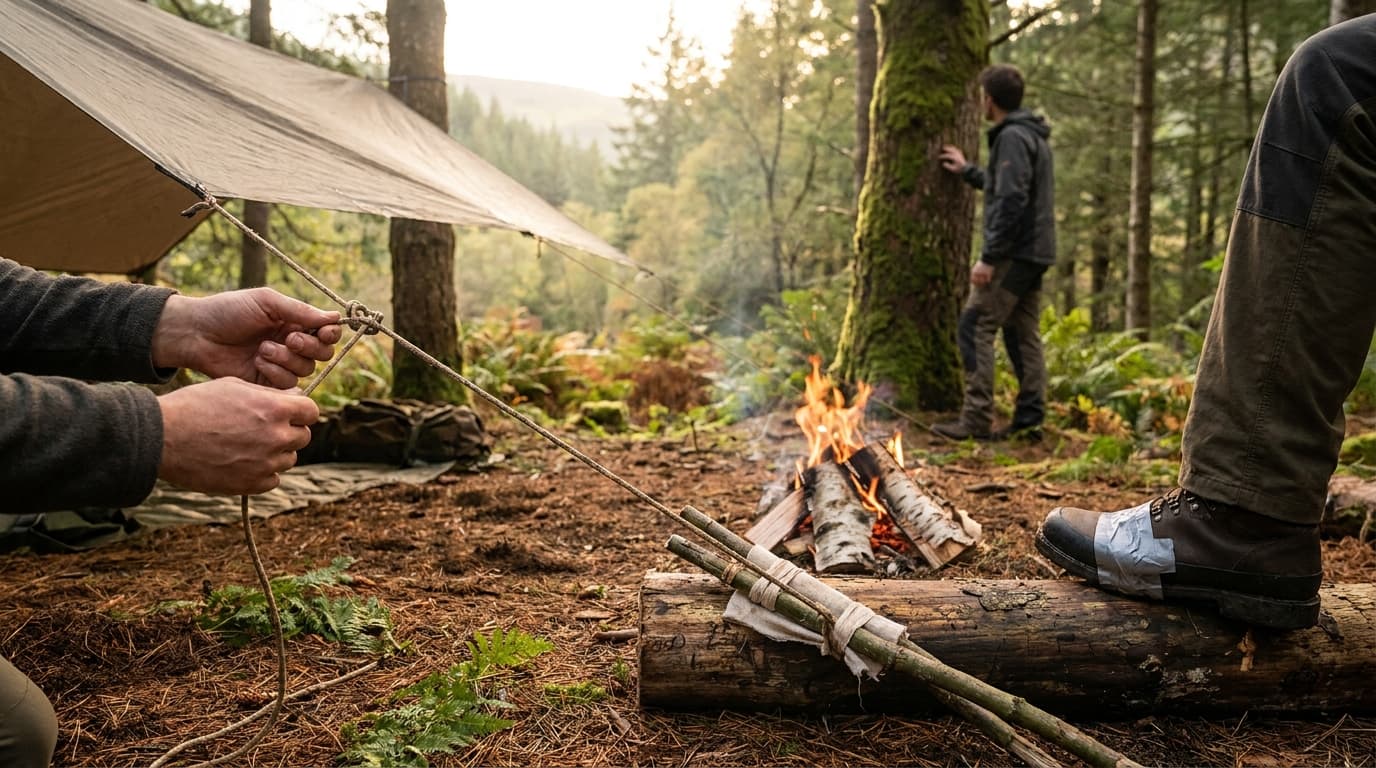
You have probably seen survival shows where someone starts a fire with two sticks during a monsoon. In real life, it is usually just cold, wet, and frustrating. When the rain starts pouring, your priority is getting under cover and getting warm as fast as possible. This is where those fancy, complicated knots you learned online usually let you down. When your hands are freezing and wet, your motor skills vanish. You need simple, reliable hitches that you can tie even when your fingers feel like frozen sausages. If a knot is too hard to tie with gloves on, it is probably too complex for a rainy night.
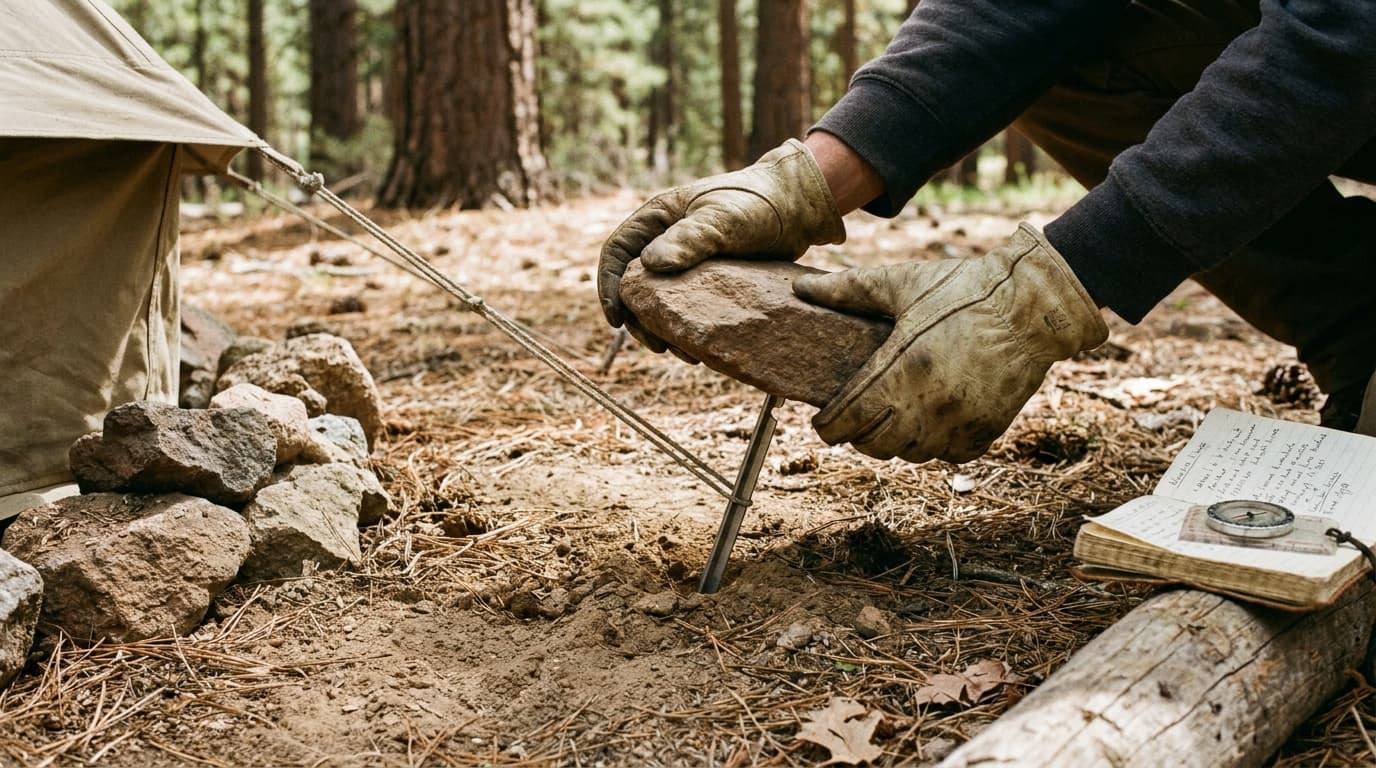
Think of your camp setup as your first line of defense against a bad night. A loose tarp or a messy gear pile is more than just annoying; it is how accidents happen. Most outdoor injuries actually come from simple slips and trips, often caused by stumbling over loose lines in the dark. Keeping your knots basic and your gear tight means you spend less time fumbling and more time staying dry. It is much better to use a simple bowline you can tie in your sleep than a complex friction hitch that jams up when the rope gets soaked.
When everything in the woods looks like a soggy sponge, you have to get creative to find a dry flame. Look for 'fatwood' inside old pine stumps or peel back the outer bark of cedar trees to find the dry, resin-heavy fibers hiding underneath. If the natural stuff is too wet, look in your pack for a shortcut. A single greasy potato chip or a cotton ball rubbed with a bit of lip balm acts as a tiny torch that burns long enough to dry out damp twigs. It is not cheating; it is a smart way to get a fire going before the cold really sets in.
For the best results in wet weather, try the 'upside down' fire method. Instead of building a classic teepee that can collapse into the mud, stack your biggest logs on the bottom and build your small fire on top. As the fire burns, the heat travels down and dries out the bigger wood before it needs to catch. This keeps your flame away from the damp ground and gives you a much steadier burn without having to constantly poke at it in the rain. What does this mean for you? It means less time blowing on smoke and more time actually getting warm.
Key insights:
Simple knots are safer than complex ones because they remain functional when cold hands lose dexterity.
Common items like snack chips or lip balm can jumpstart a fire when natural tinder is too damp to catch a spark.
The upside-down fire method is more effective in the rain because it protects the flame from ground moisture and pre-dries the fuel.
Fire Making Shortcuts for Damp Wood
Ever tried starting a fire when the sky is dumping rain and every stick feels like a soggy sponge? It is frustrating. But even in a downpour, dry fuel is usually hiding nearby. Seek out fatwood, which are those resin-soaked knots found in old pine stumps. If you cannot find any, try peeling back the wet outer layer of a dead branch to reach the dry inner bark. It is like peeling an orange to get to the good stuff inside.
Sometimes you just need a quick jumpstart. A greasy snack chip or a cotton ball from your kit can save the day. These items burn long enough to dry out your smaller twigs. Also, consider the upside down fire method. Instead of a teepee, stack your largest logs on the bottom and build the fire on top. This creates a dry platform that protects flames from the damp ground and improves airflow. It is a smart way to manage heat, especially since wilderness safety relies on staying warm and dry to avoid hypothermia.
Key insights:
Fatwood and inner bark are reliable dry fuel sources in wet weather.
Small gear items like snack chips or cotton balls provide a necessary heat boost.
The upside down fire method improves airflow and keeps fuel away from wet ground.
Finding Your Way When the Compass Is Gone
Ever had that sinking feeling when you realize the trail doesn't look familiar anymore? It happens to the best of us. Instead of panicking, start listening to what the land is telling you. This is called terrain association. It is basically using big features like ridgelines, valleys, or rivers to figure out where you are. If you know there is a river to your west and you are walking toward rising ground, you can piece together your position without ever touching a compass. It is about matching the map in your head to the physical world around you. Think of the landscape as a giant, 3D map that never runs out of batteries.
One of the simplest natural navigation hacks is also the most overlooked: just turn around. Every ten minutes or so, stop and look behind you. The trail looks completely different when you are heading the other way. By memorizing the backwards view of a weirdly shaped tree or a specific rock pile, you are essentially bread-crumbing your way home. It is a lot harder to get lost when you actually recognize the path you just walked. Most people only see the trail from one angle, but seeing it from both directions doubles your chances of staying on track.
If the landmarks get blurry, you can fall back on dead reckoning. This sounds intense, but it is just a way of estimating where you are based on your last known spot, your direction, and how fast you are moving. If you know you walk about three miles an hour on flat ground and you have been hiking for twenty minutes, you have gone a mile. You can track your pace by counting steps or just checking your watch. Combine that with a rough sense of direction, and you have got a solid guess at your location. It is not perfect, but in a pinch, it keeps you moving with purpose instead of wandering in circles. It is all about using time and distance to fill in the blanks when your eyes cannot find a landmark.
When the sun goes down, the sky becomes your most reliable map. In the Northern Hemisphere, finding the North Star, or Polaris, is the gold standard for night-time direction. You do not need to be an astronomer to find it. Just look for the Big Dipper and follow the two stars at the edge of its cup straight out. They point directly to Polaris. Since it stays fixed while other stars appear to move, it is a constant you can trust. It is the most reliable trick for staying oriented after dark.
If it is daytime and you are feeling turned around, try the shadow-stick method. Poke a stick into the ground and mark where the tip of the shadow falls. Wait fifteen minutes and mark the new spot. The line between those two marks runs east to west. It is a low-tech way to get your bearings when the sun is high and shadows are short. These little tricks turn a scary situation into a manageable one, letting you find your way back to camp safely without needing a single piece of electronic gear.
Key insights:
Terrain association uses permanent natural features like ridgelines and rivers to orient yourself without tools.
Looking behind you frequently helps you recognize the return path, which often looks different than the way in.
Dead reckoning relies on your last known location, travel time, and pace to estimate your current position.
Polaris remains the most stable navigational point in the night sky for those in the Northern Hemisphere.
A simple stick and its shadow can establish an east-west line during the day to help you regain your bearings.
Using the Stars to Find North
What happens when the sun dips below the ridgeline and you realize your phone is dead? Without a compass, the woods feel a lot bigger. But the sky has your back. In the Northern Hemisphere, finding Polaris, or the North Star, is the most reliable way to get your bearings at night. You just need to spot the Big Dipper first. Look for the two stars at the edge of the cup and follow their line straight out. They point right to Polaris. It stays fixed while everything else spins, giving you a constant, honest north.
Natural navigation hacks when hiking without a compass work during the day, too. Try the shadow-stick method. Poke a stick into the ground and mark the shadow's tip. Wait fifteen minutes and mark the new spot. That line runs east to west. It is a simple trick.
The 'Hypothermia Burrito' and Other Warmth Hacks
Imagine you are stuck on a trail as the sun dips and the temperature drops. Hypothermia is a silent threat, and when it hits, standard blankets often are not enough to stop the chill. You need to build what experts call a hypothermia burrito. This is not just about wrapping someone up in a random cloth. It is a specific layering process designed to trap every bit of remaining body heat. You start by laying down a waterproof tarp and a thick ground pad to block the cold from the frozen earth below you.
Next comes the vapor barrier. You use an emergency space blanket or a plastic tarp to stop moisture from escaping and taking heat with it. Inside this layer, you place the person in a sleeping bag. Here is the trick that actually saves lives: place a heat source, like a warm water bottle tucked inside a sock, directly against their chest. It is tempting to try and warm up frozen fingers or toes first, but that is a mistake. In a crisis, your core is the priority. Keeping the chest warm ensures blood keeps flowing to vital organs, which is the only way to actually stabilize someone in the field.
This kind of improvised gear repurposing is essential because most trail injuries come from simple slips and falls that leave you stuck in one spot. If you cannot walk, you cannot stay warm through movement. While some people try to use belts as tourniquets, instructors warn against it because the uneven pressure causes tissue damage. Instead, focus on insulation and stabilization. You can even use Ziploc bags and extra socks to create small heat packs. The goal is simple: stop the heat loss immediately and keep the core stable until help arrives.
Key insights:
Prioritize warming the chest over the limbs to keep vital organs functioning.
A ground pad is just as important as a blanket because it stops the earth from sucking away body heat.
Avoid improvised tourniquets from belts and use that energy on insulation instead.
Keeping Your Gear Alive: Field-Tested Repair Tricks
Ever had a pack strap snap miles from the trailhead? It is a sinking feeling that can ruin a good trip. When your gear fails, your focus shifts from the trail to the problem, and that is often when accidents happen. Statistics show that simple slips and trips are the most common causes of outdoor injuries. A broken pack or a leaking boot can easily lead to a stumble if you are distracted or off-balance. This is why knowing a few field tested gear repair tricks for long distance hikers is about more than just convenience. It is about staying safe and steady on your feet.
If you have a major fabric tear, reach for your dental floss instead of regular thread. It is much stronger and can handle the heavy tension of a loaded pack without snapping. For a broken zipper that refuses to stay shut, a safety pin and a strip of duct tape can create a temporary closure that holds until you get home. While some hikers are moving toward KT Tape for things like blister care because it sticks better to sweaty skin, traditional duct tape is still the best choice for patching up your equipment in a pinch.
Sometimes the best tools are already around you in the woods. If your tent or rain shell develops a small pinhole leak, look for a pine tree. You can use a bit of sticky tree resin as an improvised sealant to keep the water out. It is a classic bushcraft move that works surprisingly well. Just remember that while you can repurpose gear for repairs, some medical hacks are dangerous. For instance, experts warn against making improvised tourniquets from belts or ropes because they cause tissue damage. Focus on fixing your gear and leave the serious medical work to the right tools.
The biggest barrier to fixing these issues is often just the reluctance to stop and deal with them. Much like how people ignore hot spots until they become full blisters, we often ignore gear issues until they become gear failures. Take the time to apply that resin or stitch that strap as soon as you notice the problem. A few minutes of repair work can prevent a much larger headache later in the day.
Key insights:
Dental floss is a superior alternative to thread for heavy-duty repairs on the trail.
Tree resin acts as a natural, waterproof sealant for small holes in tents or clothing.
Repairing gear quickly prevents distractions that could lead to common injuries like slips and falls.
Duct tape remains the gold standard for gear repair even as specialized tapes gain popularity for first aid.
Common Questions About Trail Hacks
Why do so many hikers end up with raw, painful feet by the middle of a trip? It is usually because they ignore that tiny rubbing sensation until it is too late. Blisters are the second most common problem people face on outdoor adventures, but they are almost entirely preventable. The real issue is that most of us are just too stubborn to stop. As Wilderness First Responder Ginny Galbreth points out, the biggest barrier to treating hot spots is simply that people do not want to take the time to pull their boots off. If you feel even a tiny bit of friction, stop immediately. You can use Tincture of Benzoin as a medical grade adhesive to make sure your blister pads actually stay put on sweaty skin. Lately, many hikers are switching to KT Tape instead of old school duct tape because it stretches better and stays sticky longer.
You might be tempted to use your belt as a tourniquet if someone is bleeding heavily. Here is the thing: do not do it. It might look cool in a movie, but Wilderness First Aid instructor Bailey Batchelor warns that improvised tourniquets made from belts or ropes are dangerous. They create unequal pressure around the limb, which can lead to permanent tissue damage or even amputation. Instead of trying to be a hero with a leather strap, focus on firm and direct pressure with the cleanest fabric you have. Wilderness medical standards prioritize stabilization and keeping the person warm over these kinds of risky procedures.
Most injuries in the woods actually come from simple slips, trips, and falls. These lead to sprained ankles, twisted knees, and plenty of bruises. When this happens, you can repurpose the gear you are already carrying to help. Your trekking poles and foam ground pads make excellent improvised splints for stabilizing a leg. If you need a warm compress for a muscle strain, you can put a warm cloth inside a Ziploc bag and wrap it in a sock. It is all about looking at your pack and seeing tools instead of just gear. Even flexible bush roots can be wrapped in gauze to help splint a smaller joint like a finger.
If the weather turns and someone gets dangerously cold, you need to know the hypothermia burrito method. This is the gold standard for keeping someone safe when they cannot move. You start by laying out a tarp and a ground pad to get them off the cold earth. Wrap the person in an emergency blanket to create a vapor barrier, then place a heat source like a warm water bottle against their chest. Wrap them in a sleeping bag and seal the outer tarp like a big foil wrap. This setup traps every bit of body heat and protects them from the wind while you wait for help.
What happens if you lose your way and your phone dies? Navigation can feel scary without a compass, but you can still find your way. In the northern hemisphere, the North Star is your best friend for finding north at night. During the day, you can use terrain association. This just means looking at big landmarks like ridgelines and rivers to orient yourself. Some people also use dead reckoning, which is just a fancy way of saying you estimate where you are based on your last known spot and how far you think you have walked. It is not perfect, but it is better than wandering aimlessly.
Is it worth getting formal training? While these hacks are great in a pinch, more hikers are now seeking real certifications. Trends for 2024 show a big push toward getting a Wilderness First Aid or First Responder card. It is always better to have the skills and not need them than to rely on a trick you saw online when things actually go sideways. Think of it this way: your gear is just a collection of objects, but your knowledge is what actually gets you home safely when the trail gets tough.
Key insights:
Stop and treat hot spots the moment you feel them to prevent full blisters.
Never use belts or ropes as tourniquets because they cause severe tissue damage.
Trekking poles and sleeping pads can be easily converted into emergency limb splints.
The North Star and terrain association are reliable ways to navigate without a compass.
The hypothermia burrito method is the most effective way to stabilize a cold patient in the field.
Why a Little Knowledge Goes a Long Way
You can have all the gear in the world, but your brain is your most important tool. While these hacks help in a pinch, more hikers are now getting formal Wilderness First Aid or First Responder certifications. This is such a smart move. Knowing the logic behind a fix prevents dangerous mistakes. For instance, many people think a belt makes a good tourniquet, but experts warn that uneven pressure can cause tissue damage or even amputation.
Before you try a hypothermia burrito or use trekking poles as splints in a real emergency, practice them in your backyard. It is much easier to learn how to stick a blister pad with Tincture of Benzoin when you are not shivering or losing light.
In the end, the best survival tool is a calm head and a bit of prep. Most outdoor injuries come from simple trips or falls. Staying focused and prepared usually keeps a small mistake from becoming a really big disaster.
Key insights:
Formal training helps you understand the 'why' so you avoid dangerous errors like improvised tourniquets.
Always test your gear and medical hacks in a safe environment before heading into the wild.
Preparation and a calm attitude are your best defenses against common trail injuries like slips and blisters.
Frequently Asked Questions
It is usually not as dramatic as a bear encounter or a cliff fall. Most hikers get sidelined by simple slips, trips, and falls. These everyday accidents lead to things like sprained ankles, twisted knees, and plenty of bruises. Right behind those are blisters, which are the second most common issue you will run into on your adventures.
Here is the thing that most people miss: the biggest problem is often just being stubborn. As Ginny Galbreth, a wilderness first responder, says, people often refuse to stop and pull their boots off when they feel a hot spot starting. But catching those small problems early is the best way to keep a minor rub from turning into a trip-ending injury.
You definitely can, and it is a smart way to use what you already have. Trekking poles are rigid and strong, making them perfect for stabilizing a leg or arm injury when you are far from help. You can also use your foam ground pad to wrap the limb first for padding and then secure the poles on the sides to keep everything still.
But while you can get creative with splints, you have to be careful with other hacks. For example, never try to make a tourniquet out of a belt or a piece of rope. Experts like Bailey Batchelor warn that these can cause serious tissue damage or even lead to amputation because they do not apply pressure evenly. It is always better to stick to stabilizing the injury and keeping the person warm rather than trying risky procedures.
It is usually better to leave a blister alone if you can, but sometimes you just have to deal with it so you can keep moving safely. If it is small, try to pad it and leave it alone because the skin acts as a natural bandage. If it is huge and painful, you might need to drain it carefully to stop it from tearing on its own and getting dirty.
The biggest mistake most hikers make is waiting too long to stop. The second you feel a hot spot, pull your boots off and fix it right then. If you use a blister pad, try applying Tincture of Benzoin first. It acts like a medical glue that keeps the bandage from sliding off your foot when you start sweating again.
When the clouds hide the North Star, you have to shift your focus from the sky to the ground. You can use a method called dead reckoning, where you estimate your current spot based on where you started, which way you have been walking, and how long you have been moving. It takes a bit of focus, but it is a solid backup when the stars are gone.
You can also use terrain association to find your way. This just means looking for big landmarks like rivers, valleys, or ridgelines to figure out where you are. Even without a compass or the stars, these natural features can guide you if you know the general layout of the land you are hiking in.
Conclusion
So where does this leave us? Survival is less about being a movie hero and more about being clever with what you have. Whether you are turning a trekking pole into a leg splint or using a snack chip to get a fire going, these outdoor hacks and tricks are all about staying safe when the trail gets unpredictable. It is about seeing your gear as a toolkit rather than just a list of items.
You do not need to be a bushcraft expert to handle a rough weekend. Often, the difference between a bad story and a dangerous situation is just a bit of prep and a calm mind. Knowing how to find the North Star or build a warmth-trapping burrito gives you the confidence to enjoy the wild without the constant worry.
Consider trying out a few of these tricks on your next easy hike. Practice your knots or fire-making shortcuts when the stakes are low so they feel like second nature later on. The best tool in your pack is always a prepared mind and the willingness to get a little creative.
Every WilderReady guide is researched, written, and fact-checked in-house against trusted references such as the American Red Cross, the National Park Service, and the CDC before it goes live. We publish under this shared byline instead of invented personas, so you always know who stands behind the guidance you are reading.