Why Staying Put Is Usually Smarter Than Trying to Find Your Way Back
Search and rescue data shows why staying put is usually smarter than trying to find your way back. When you wander, you expand the search area exponentially, making it much...
Why Staying Put Is Usually Smarter Than Trying to Find Your Way Back
Search and rescue data shows why staying put is usually smarter than trying to find your way back. When you wander, you expand the search area exponentially, making it much harder for teams to find you.
This matters because your brain often creates a powerful urge to solve the situation by moving, especially if you are used to being a high-achiever.
You will learn the statistical reality of self-rescue and the psychological traits that make doing nothing a difficult skill to learn.
Search and rescue (SAR) data is clear: the moment you stop moving, your chances of being found skyrocket. When you stay at your Point of Last Seen (PLS), you remain a stationary target within a manageable, predictable search grid. If you keep walking, you are not just changing your location; you are creating an expanding search area that grows exponentially with every mile. Professionals at organizations like the Davidson Institute note that highly intelligent people often feel a deep urge to solve problems through action, but in the wilderness, your intuition can be your worst enemy.
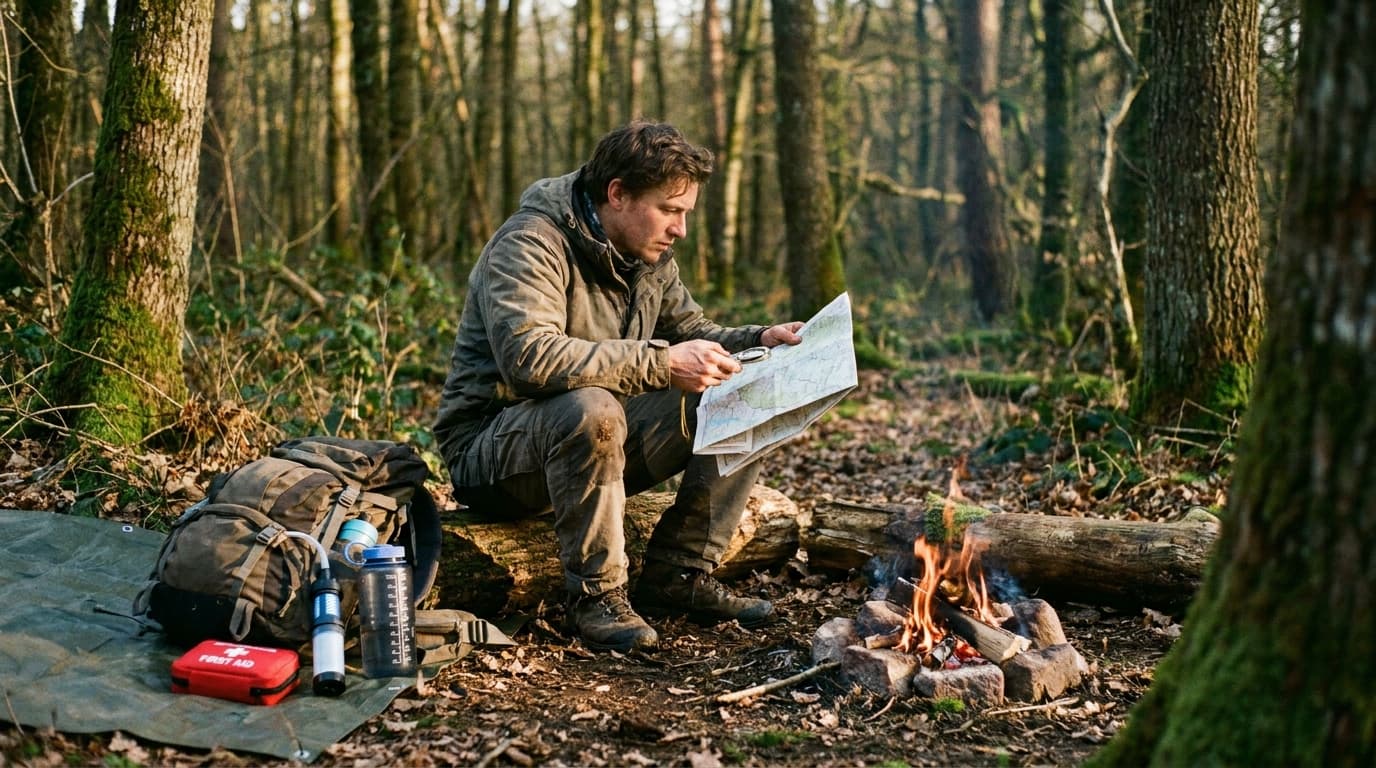
Imagine a hiker who realizes the trail has vanished. Instead of stopping, they decide to self-rescue by walking toward what they think is a nearby ridge. By moving just two miles in the wrong direction, they have effectively quadrupled the area rescuers must cover. This follows the lost person behavior models used by SAR teams, where the search radius expands from a small, focused circle into a massive territory. For a systemic thinker who sees the forest as a complex grid to be decoded, the simple act of sitting down feels like failure, yet it is the most statistically sound decision they can make.
Staying put is actually a test of the skill of trying, a concept Samuel Kohlenberg, LPC, describes as something high-achievers often fail to develop because they usually intuit their way through challenges. In a survival situation, trying does not mean walking; it means the high-effort task of managing your panic and remaining visible. You have to fight the urge to find your way back and instead focus on wilderness survival fundamentals like building a signal or shelter. Reframing your situation from lost to stationary is an active choice that keeps the search area small and your location predictable.
The math of the expanding search grid is unforgiving for those who wander. When you stay at your PLS, you are the center of a small bullseye. As you move, that bullseye stretches and shifts, forcing rescuers to reset their calculations and deploy more resources over a wider, less certain terrain. This is why committing to a tiny radius is the most effective way to help the people trying to save you.
Identify your Point of Last Seen (PLS) the very second you feel turned around and commit to a 50-foot radius.
Stay put to ensure you remain within the initial search grid calculated by SAR professionals.
Reframe waiting as an active survival task that requires more discipline and effort than wandering.
Use grounding techniques to manage the intensity of survival panic and the urge to run.
Focus on immediate physical needs like shelter rather than trying to decode the entire landscape's geography.
The Expanding Search Grid Problem
Rescuers rely on specific lost person behavior models to predict where you might go when you are turned around. The math behind these models is unforgiving because distance does not scale linearly. If you move just two miles from your last known spot, you do not just double the work for search teams; you quadruple the total area they have to cover. This geometric expansion turns a focused rescue into a massive logistical hurdle.
Take a hiker who uses systemic processing to try and decode the landscape like a map. Instead of seeing a single trail, they see an interconnected grid and feel compelled to keep moving to find a landmark they recognize. This is a common trap for high-achievers who want to solve the problem. By trying to outthink the forest, they expand the search radius so much that even a bushcraft guide would struggle to locate them in time.
The urge to find your way back usually results in moving further from the initial search grid. Professionals at organizations like the Davidson Institute observe that highly intelligent individuals often struggle with the skill of trying to be patient. In the woods, that lack of patience leads to movement, and movement leads to an exponentially larger search zone.
Commit to a 50-foot radius the moment you feel turned around to keep the search area small.
Trust the SAR statistics that prove stationary subjects are found faster than those who wander.
Avoid the urge to self-rescue by walking toward what looks like a familiar ridge or landmark.
Use essential survival skills to make your current spot more visible rather than looking for a new one.
The Skill of Trying to Do Nothing
Staying put is surprisingly difficult for high-achievers because their brains are optimized for solving problems through immediate action. If you have spent your life using intuition to breeze through school or complex work, you might never have developed what Samuel Kohlenberg calls the skill of trying. For gifted individuals, who can experience existential crises as early as age six, the sudden realization of being lost triggers an intense mental response. When your usual intuition fails to provide a path home, the lack of a practiced patience muscle makes staying still feel like an admission of defeat rather than a survival tactic.
This drive to "do something" is often fueled by systemic processing, which is the tendency to see the world as a web of interconnected parts rather than isolated facts. While this is a superpower in the office, it is a liability in the woods. For those with IQ scores ranging from 145 to 179, the brain doesn't just see a single tree; it sees the entire ecosystem's manufacturing and logistical history. This mental intensity makes the urge to move feel like a logical necessity, even though movement is exactly what expands the search grid and makes rescue harder.
Imagine a researcher who has always been the smartest person in the room, someone who "just knows" the answer to complex equations. When they get turned around on a hike, they don't feel fear so much as a compulsive need to solve the "puzzle" of the trail. They might spend hours trying to decode the geography, walking faster and faster to find a landmark that fits their mental map. By the time they realize they are truly lost, they have wandered miles from their last known spot, making the job of a bushcraft guide or rescue team nearly impossible.
Reframe "staying put" as an active, high-effort survival task that requires more discipline than walking.
Commit to a 50-foot radius the moment you feel "turned around" to keep the search area small and predictable.
Engage your brain in low-stakes tasks, like identifying local plants or building a survival shelter, to burn off mental intensity.
Acknowledge that your urge to move is a biological "over-excitability" rather than a logical solution to your problem.
Systemic Processing and the 'Lamppost' Trap
When you have a highly efficient brain, you don't just see a single trail marker. You see a node in a complex system. This is systemic processing, and while it helps you excel in a boardroom, it can be a death trap in the wilderness. Your brain naturally wants to connect dots, leading you to analyze the manufacturing history of the trail or the logistics of the local park service.
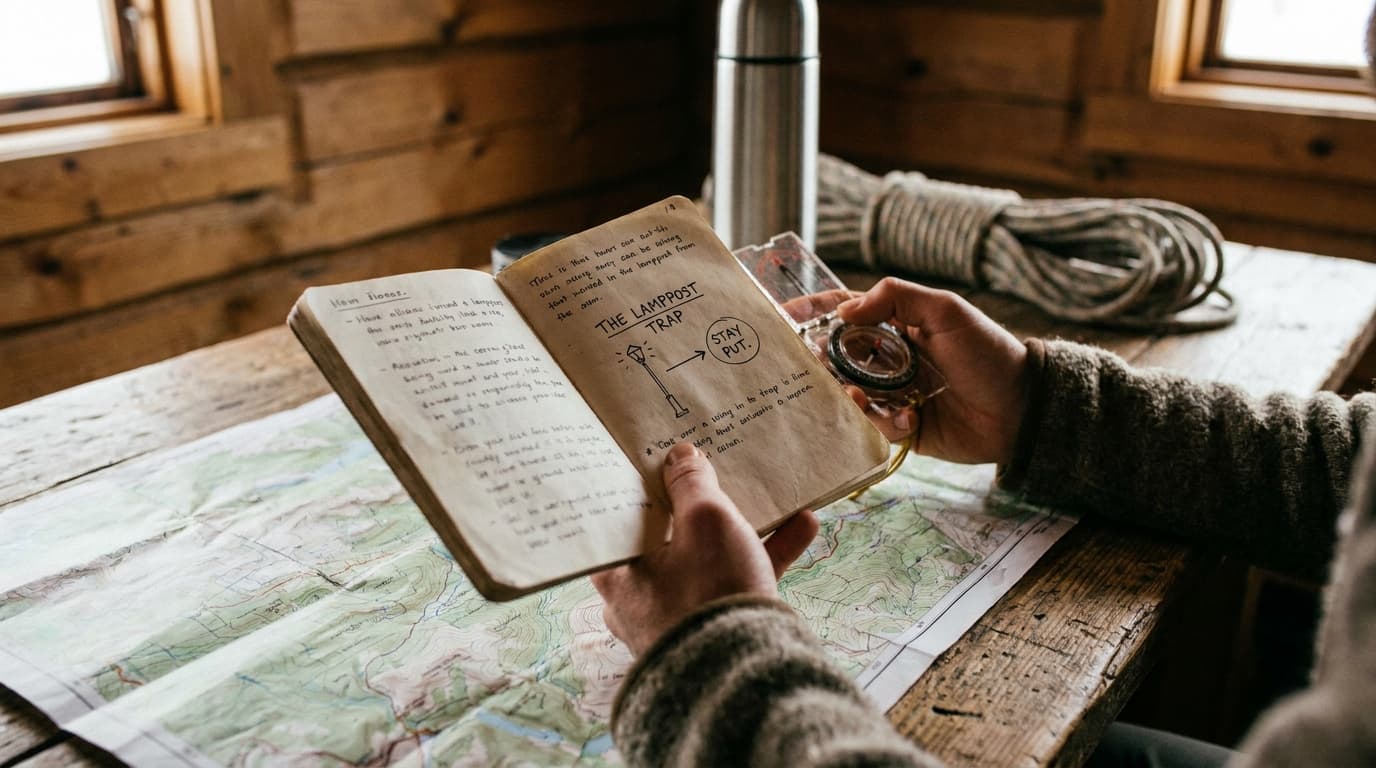
This 'lamppost analogy' describes the tendency to see the history and power grid behind an object rather than the object itself. For individuals with IQ scores between 145 and 179, the urge to solve the 'puzzle' of the forest becomes an overwhelming physical drive to keep moving. This intensity often masks a critical weakness: the lack of the 'skill of trying.'
As Samuel Kohlenberg, LPC, points out, people who intuit their way through life often haven't cultivated the patience to struggle through a problem that doesn't have an immediate answer. When intuition fails in the woods, the systemic thinker tries to force a solution by walking faster and looking further. This mental over-analysis is exactly what expands the search area and makes it harder for a bushcraft guide to find you.
Imagine a brilliant engineer who finds themselves turned around at dusk. Instead of stopping, they begin calculating the angle of the sun and the likely placement of the nearest access road based on the topography they remember from a map ten miles back. They feel a 'logical' necessity to reach a specific ridge, convinced that their systemic understanding will lead them out. Three hours later, they are five miles deeper into the brush, exhausted and far beyond the initial search perimeter because they prioritized their mental map over the physical reality of being lost.
To survive, you have to shut down the systemic engine and embrace linear thinking. Focus on the 'boring' basics of a survival shelter instead of the geography of the mountain range. By narrowing your focus to a 50-foot circle, you prevent your mind from wandering into the 'lamppost trap' that leads to aimless movement. It feels like an admission of defeat, but doing nothing is often the highest level of problem-solving you can achieve.
Practice linear thinking by focusing only on your next physical breath or immediate physical need.
Limit your world to a 50-foot radius to prevent your brain from trying to 'solve' the entire forest ecosystem.
Identify immediate needs like shelter or water rather than trying to decode the trail’s manufacturing history.
Acknowledge that your urge to move is a result of mental over-excitability, not a logical survival strategy.
Managing the Intensity of Survival Panic
Survival panic is not just a racing heart. For some, it is an overwhelming surge of over-excitability that demands immediate action. This intensity often mirrors the deep existential crises that highly intelligent children face as early as age six, according to research from the Davidson Institute. When you are lost, your brain does not just see a trail.
Your mind sees a massive, failing system. This creates a desperate urge to run until the problem is solved. This mental state is a form of cognitive flooding where your mind is used to processing complex systems, so being lost feels like a total systemic collapse.
You are not just worried about a cold night. You are experiencing a level of intensity that mirrors a forty year old person having a midlife crisis. This is why the instinct to self-rescue is so powerful. Your brain is trying to outrun a feeling of failure rather than a physical forest.
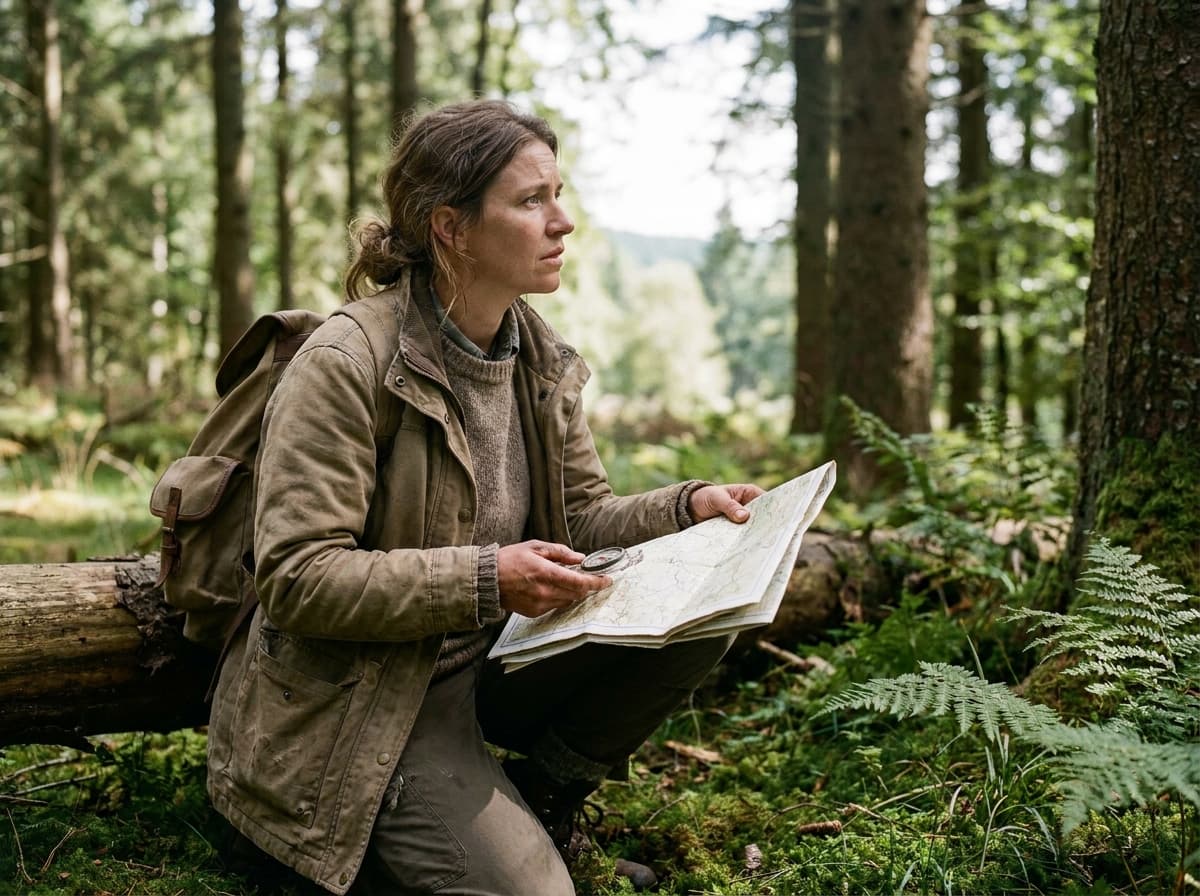
Imagine a hiker who has always been a top performer. When they realize the trail has vanished, they do not just feel afraid. They feel a crushing weight of incompetence. This mental intensity makes the quiet act of sitting still feel like physical torture.
They feel they must move to fix the crisis, even though movement is exactly what makes the situation worse. They might start jogging or even sprinting, convinced that the next ridge will provide the answer their brain craves. This hiker might have a genius-level IQ, yet in the woods, that intelligence becomes a liability because it fuels the speed of their panic.
To stay safe, you have to treat your brain like a high-performance engine that is overheating. Understanding why staying put is usually smarter than trying to find your way back often comes down to managing this mental intensity. You need to downshift into low-stakes mental tasks that burn off that excess energy without moving your feet.
By focusing on tiny details, you can stop the systemic panic before it forces you to walk deeper into the brush. These essential survival skills are as much about psychology as they are about shelter or water. Use a bushcraft guide mindset to focus on small, manageable tasks like clearing a small patch of ground for a seat.
Identify three local plants or rocks in your immediate area to force your brain into a granular, non-threatening task.
Narrate your actions out loud to break the cycle of internal panic and keep your thoughts linear.
Acknowledge that the urge to run is a biological over-reaction to your high-intensity processing style.
Focus on the physical sensation of your feet on the ground to tether your mind to the present moment.
Commit to staying within a fifty foot radius for at least one hour to allow your adrenaline levels to stabilize.
Frequently Asked Questions
When you move, you are essentially outrunning your own rescue. Most people assume they can just retrace their steps, but the math is against you. Every mile you walk away from your last known location increases the search area for rescuers exponentially. If you stay still, the search team only has to clear one specific spot. If you keep walking, you might move into an area they already checked, making you invisible to their efforts.
There is also the physical cost to consider. Moving burns through your water and energy reserves much faster than sitting still. Staying put allows you to focus all your mental energy on making yourself big and visible with signals rather than exhausting yourself by wandering deeper into the unknown.
Survival is often a test of patience rather than a test of raw intelligence. For many people who are used to figuring things out instantly, the skill of trying is actually a weak muscle because they rarely had to struggle to find answers in everyday life. In the woods, your first few attempts at a fire or a shelter will probably fail, and that can lead to a quick mental breakdown if you aren't used to persistence.
Developing this skill means you are comfortable with the idea that the solution won't be immediate. Instead of panicking when your intuition fails, you lean into the repetitive, trial and error work required to stay alive. It is about building the grit to keep working through a problem even when the answer isn't obvious right away.
It is a way to explain why some people see an entire network where others just see a single object. Instead of seeing a lamppost as a simple light source, a systemic thinker sees the power grid, the manufacturing logistics, and the history of urban planning all at once. It is like your brain automatically zooms out to see the whole machine instead of just the part in front of you.
This can actually be a trap in survival situations. While most people might just see a trail, a systemic thinker might get paralyzed by analyzing the geological history of the terrain or the complex weather patterns of the region. This 'zoom out' effect makes it hard to focus on the immediate, boring task of just staying put and waiting for help.
It can, mainly because many highly intelligent people haven't had to practice the 'skill of trying.' Because they often intuit their way through life's early challenges without much effort, they might lack the mental callouses needed for the repetitive, grueling work of survival. When things do not have a clever solution and just require grit, they can struggle more than someone used to working hard for every win.
There is also a psychological component where very smart individuals may face existential crises much earlier or more intensely than others. In a survival scenario, this can lead to a 'why bother' mindset or a deep sense of isolation that makes it harder to maintain the will to live compared to someone focused strictly on physical needs.
Conclusion
So what does all this mean when you are lost in the woods? It means your biggest challenge isn't the terrain or the weather, but your own mind. While your instincts scream at you to keep moving and fix the problem, the data shows that staying right where you are is the most effective thing you can do. By staying put, you keep the search area small and predictable, giving rescuers a much better chance of finding you quickly.
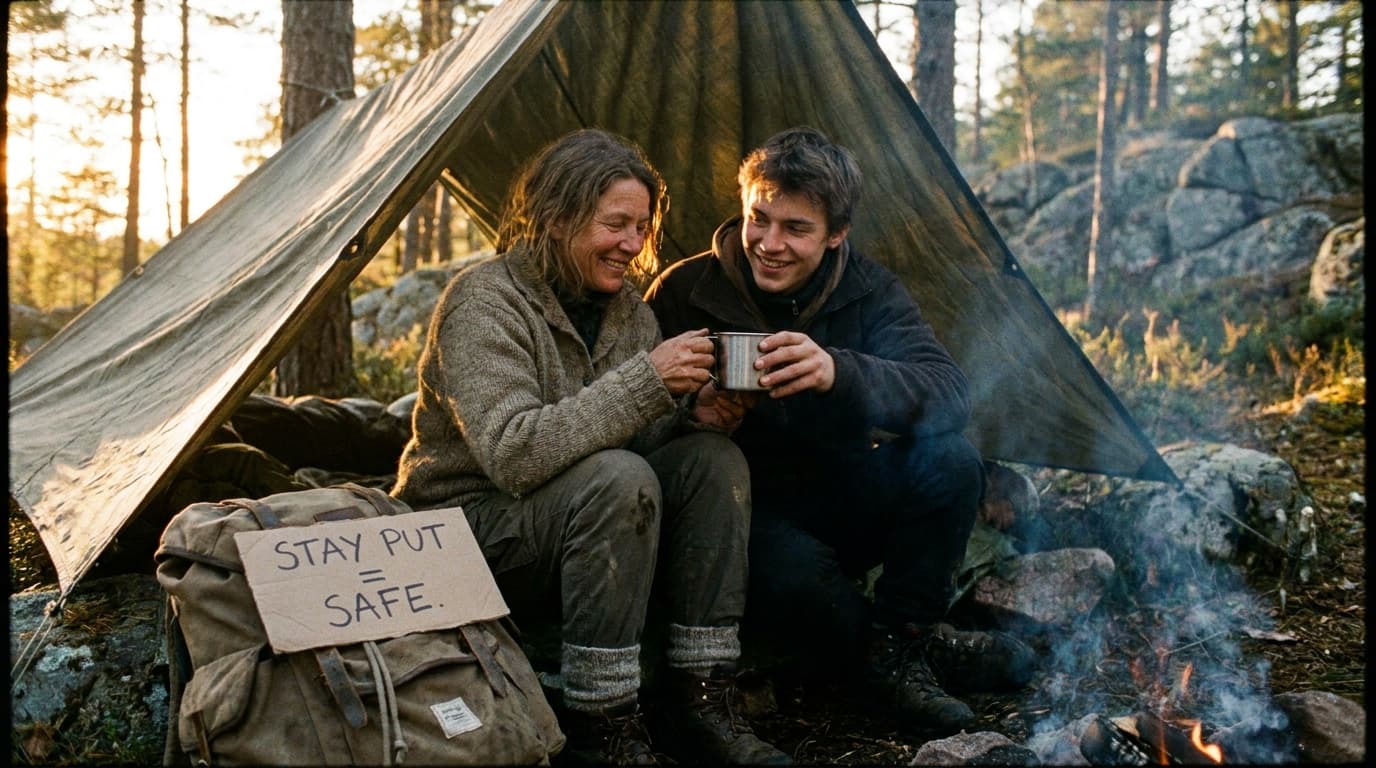
Think of staying in one place as an active survival skill rather than just waiting around. It takes real effort to manage the intensity of your thoughts and resist the urge to wander. Your next move should be to make yourself as visible as possible. If you carry a simple whistle or a mirror, you turn a passive wait into an active rescue mission without ever leaving your fifty foot radius.
The bottom line is that your brain is your most powerful tool, but it can also be your worst enemy when panic sets in. Learning to trust the numbers over your gut feeling might just save your life. Sometimes, the hardest work you will ever do is simply staying still.
Every WilderReady guide is researched, written, and fact-checked in-house against trusted references such as the American Red Cross, the National Park Service, and the CDC before it goes live. We publish under this shared byline instead of invented personas, so you always know who stands behind the guidance you are reading.