Survival Scenarios for Emergency Food First Aid Water and Shelter
Survival depends on putting shelter and water before food by following the rule of threes. You should prepare for Survival Scenarios: emergency food preparation for unexpected wilderness stay, wilderness first...
Survival Scenarios for Emergency Food First Aid Water and Shelter
Survival depends on putting shelter and water before food by following the rule of threes. You should prepare for Survival Scenarios: emergency food preparation for unexpected wilderness stay, wilderness first aid for common hiking injuries, emergency water purification methods for camping, how to build temporary shelter in forest, survival mistakes to avoid getting lost hiking to stay safe.
Most people panic when things go wrong, but staying calm stops small errors from becoming major trouble.
This guide covers how to treat injuries, purify water, and build a shelter to keep you alive.
What to Do First: The S.T.O.P. Method for Getting Lost
The moment you realize the trail has vanished, your first move should be no move at all. Sit down immediately. Most people feel a surge of panic that tells them to run, but wandering aimlessly is the fastest way to turn a minor mistake into a life-threatening emergency. By sitting down, you break the cycle of anxiety and stop yourself from walking even further away from help.
This is where you use the S.T.O.P. method, which stands for Sit, Think, Observe, and Plan. Forcing yourself to stay put keeps your heart rate down and your mind clear for better decision-making. It also ensures you do not burn through your body's resources, which is vital since humans generally survive only about three days without water.
Staying stationary is your best strategy because search and rescue teams find fixed targets much faster than moving ones. Think of yourself as a beacon. If you stay in a visible clearing, you become a predictable point on a map rather than a shifting needle in a haystack. Moving around only makes the search area larger and more difficult for rescuers to manage.
Imagine you are deep in the woods and the trail markers suddenly vanish as dusk settles in. You hear a distant shouting sound and start hiking toward it, hoping it is a ranger. But in the backcountry, sounds often bounce off rock walls, creating echoes that can lure you deeper into a canyon and away from the ridge where you were last seen.
Find a safe, visible clearing and stay there unless you face an immediate threat like a rockfall or rising water.
Mark your location with bright gear or a large ground signal made of rocks and branches to attract aerial searchers.
Blow a whistle in bursts of three to signal for help, as this is the universal sign of distress and carries further than a human voice.
Check your supplies immediately to prioritize staying dry and warm before the temperature drops at night.
Why Staying Stationary is Your Best Strategy
When you realize you are lost, your first instinct is to keep walking to find the trail. But wandering usually makes things worse. Search and rescue teams have a much easier time spotting a stationary person than someone constantly changing locations. Staying put also helps you conserve energy, which is critical since humans can generally survive for about three days without water.
Imagine you hear a faint shout and start running toward it. In the backcountry, sounds often bounce off rock walls, creating echoes that lure you deeper into a canyon and away from the ridge where you were last seen. By chasing these sounds, you make the search area much larger and harder for rescuers to manage.
Key insights:
Find a safe, visible clearing and stay there unless immediate danger forces a move.
Mark your location with bright gear or a ground signal to attract aerial searchers.
When you are deep in the woods, you are the first responder for your group. You treat injuries by following the ABCs: Airway, Breathing, and Circulation. For most joint issues, you can manage pain by using the R.I.C.E. method to stabilize the person before you even consider building your wilderness survival first aid kit into a full evacuation plan.
Imagine you are hiking a slick trail after a rainstorm and your partner loses their footing on a wet granite slab. They tumble, resulting in a deep gash on their forearm and an ankle that starts swelling immediately. This is where your training kicks in to prevent a bad situation from becoming a tragedy.
Dealing with trauma requires you to identify the type of bleeding quickly. Arterial bleeding is bright red and spurts with the rhythm of the heart, while venous bleeding is dark red and flows steadily. You must apply direct pressure with a clean cloth and keep the limb elevated to slow the flow.
If the bandage soaks through, do not pull it off to look at the wound. Just add another layer on top and keep pressing down firmly. This helps the blood clot and protects the area while you focus on other essential survival skills for staying safe in the wilderness.
Since ankle sprains are among the most common wilderness medical emergencies, knowing how to stabilize a joint is vital. Once any bleeding is controlled, follow the R.I.C.E. steps - Rest, Ice, Compression, and Elevation - to keep the injury from getting worse during the long walk out.
Key insights:
Apply firm, direct pressure to any deep gash using the cleanest cloth available.
Check the ABCs first to ensure the person is breathing and has a pulse before treating minor cuts.
Use cold stream water or snow as a substitute for ice when following the R.I.C.E. method in the wild.
Keep the injured limb raised above the level of the heart to reduce swelling and blood loss.
Leave the initial bandage in place even if it gets bloody to avoid breaking any clots that have started to form.
Managing Severe Bleeding and Trauma
When trauma occurs, your first priority is stopping the clock on blood loss. Arterial bleeding requires instant action because bright red blood spurting in time with a heartbeat indicates a severed artery. Dark red, steady-flowing blood suggests venous bleeding, which usually responds well to firm, continuous pressure.
Keep the pressure steady and never lift the cloth to check if the bleeding has stopped. Removing that first layer can tear away the early clots your body is trying to form, making the situation worse. If the first cloth gets soaked, just pile more material on top and keep pushing.
Key insights:
Apply direct, heavy pressure with both hands until the flow slows.
Elevate the injured limb above the heart to use gravity as an ally.
Add new layers of bandages over the old ones instead of replacing them.
Monitor the person's airway and breathing while you work to control the bleeding.
How to Build a Temporary Shelter in the Forest
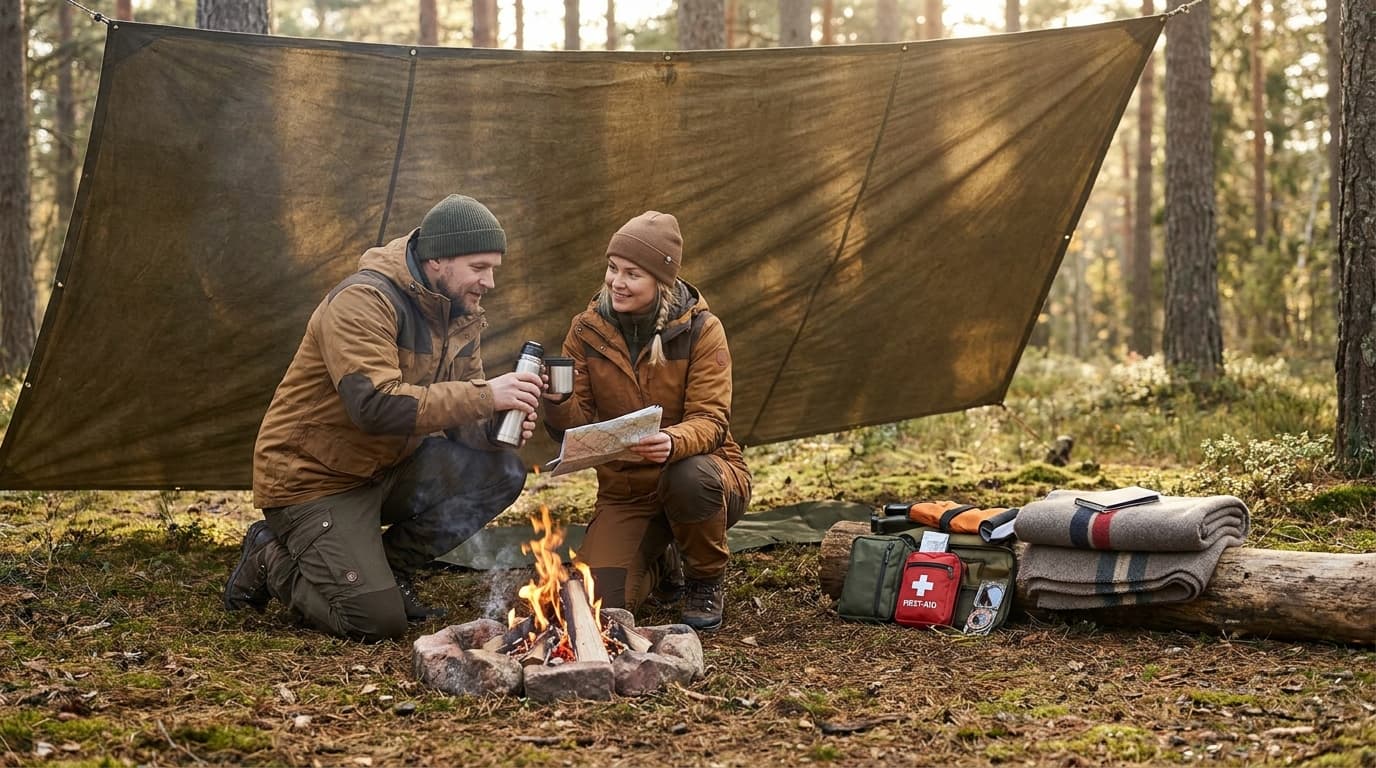
When the weather turns and you are stranded, your primary goal is maintaining your core body temperature. The fastest way to do this is by building a debris shelter, which uses natural materials to create a pocket of dead air around you. This acts like a giant sleeping bag, trapping your heat and keeping the wind and rain at bay. Speed is critical because wet clothes lose their insulating value quickly, and staying dry is your best defense against hypothermia.
You do not need to be an architect to survive; you just need a sturdy frame and a lot of forest floor trash. The more layers of leaves, bark, and pine needles you pile on, the better the shelter will perform. According to survival experts, staying stationary is significantly safer than moving when lost because it allows you to focus your energy on these life-saving tasks rather than wandering further from help.
Imagine you are deep in the woods when a heavy downpour starts, and you know you will not make it back to your car before dark. You find a large, fallen hemlock log that is slightly elevated off the ground at one end. Using the S.T.O.P. method - Sit, Think, Observe, and Plan - you decide to stay put. You start leaning smaller branches against the log to create a rib-like lean-to shape, frantically piling wet leaves on the outside while keeping the underside as dry as possible.
The ground will suck the heat right out of your body faster than the air will. Building a mattress of dry debris inside your shelter is just as important as the roof itself. This barrier prevents conductive heat loss, which is a major factor in wilderness emergencies. If you cannot find a fallen log, you can prop a long, sturdy branch into the crook of a tree to create a ridgepole for an A-frame, which encloses you on both sides for even better heat retention.
This simple structure can be the difference between a cold night and a life-threatening emergency. Having a plan for shelter prevents the panic that often leads to poor decision-making in the backcountry.
Key insights:
Find a ridgepole like a fallen log or a sturdy branch wedged into a tree fork to serve as the main support.
Lean smaller branches against the ridgepole at a 45-degree angle to create a rib structure for the walls.
Layer debris like leaves, moss, and pine needles at least two feet thick to provide insulation and shed water.
Create a thick bed of dry materials inside to separate your body from the cold, damp ground.
Keep the entrance as small as possible to trap your body heat inside the sleeping area.
Emergency Water Purification Methods for Camping
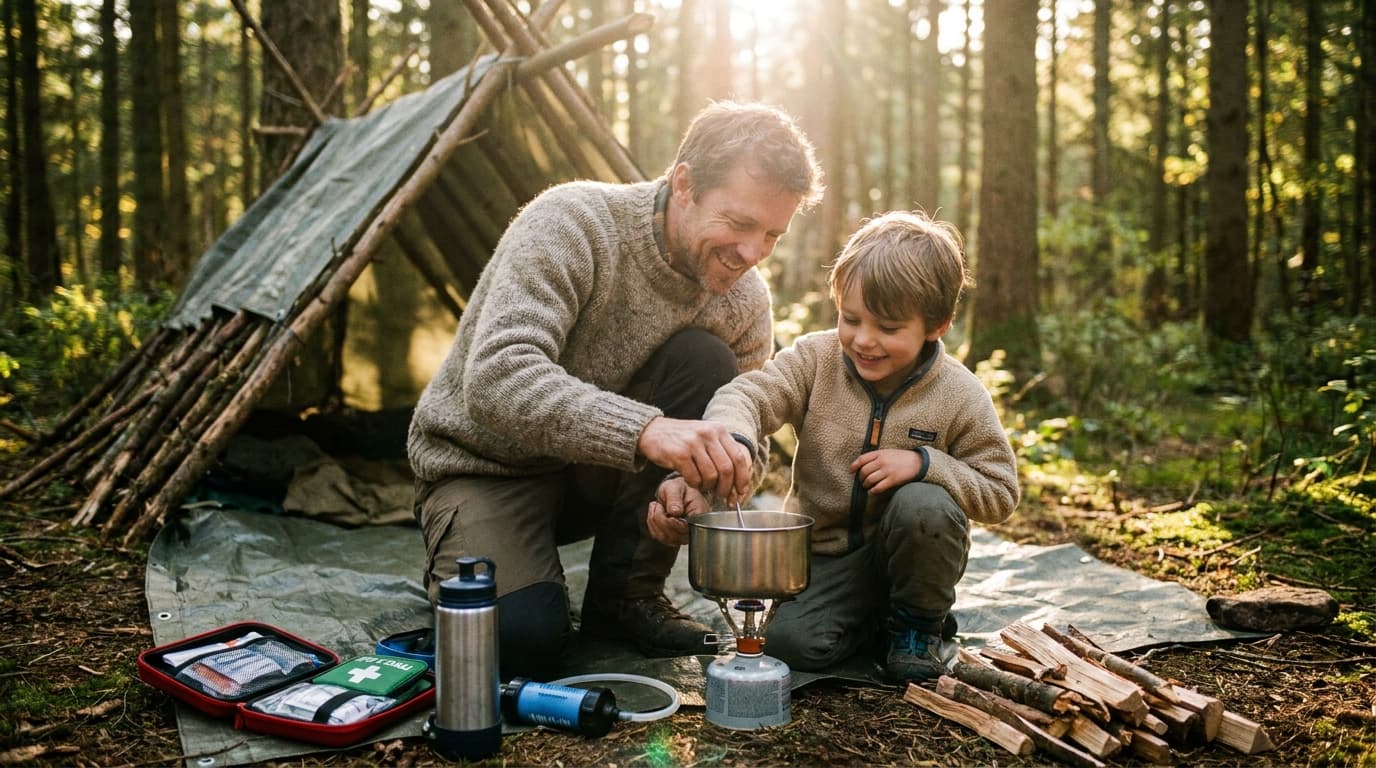
When your water runs out in the backcountry, you need a way to kill invisible threats like Giardia and Cryptosporidium. Humans can generally survive for about three days without water, but drinking from an untreated source can lead to gastroenteritis, which causes severe dehydration and ruins your chances of a safe exit. The gold standard for purification is heat. Bringing water to a rolling boil for at least one full minute is the simplest way to ensure it is safe to drink.
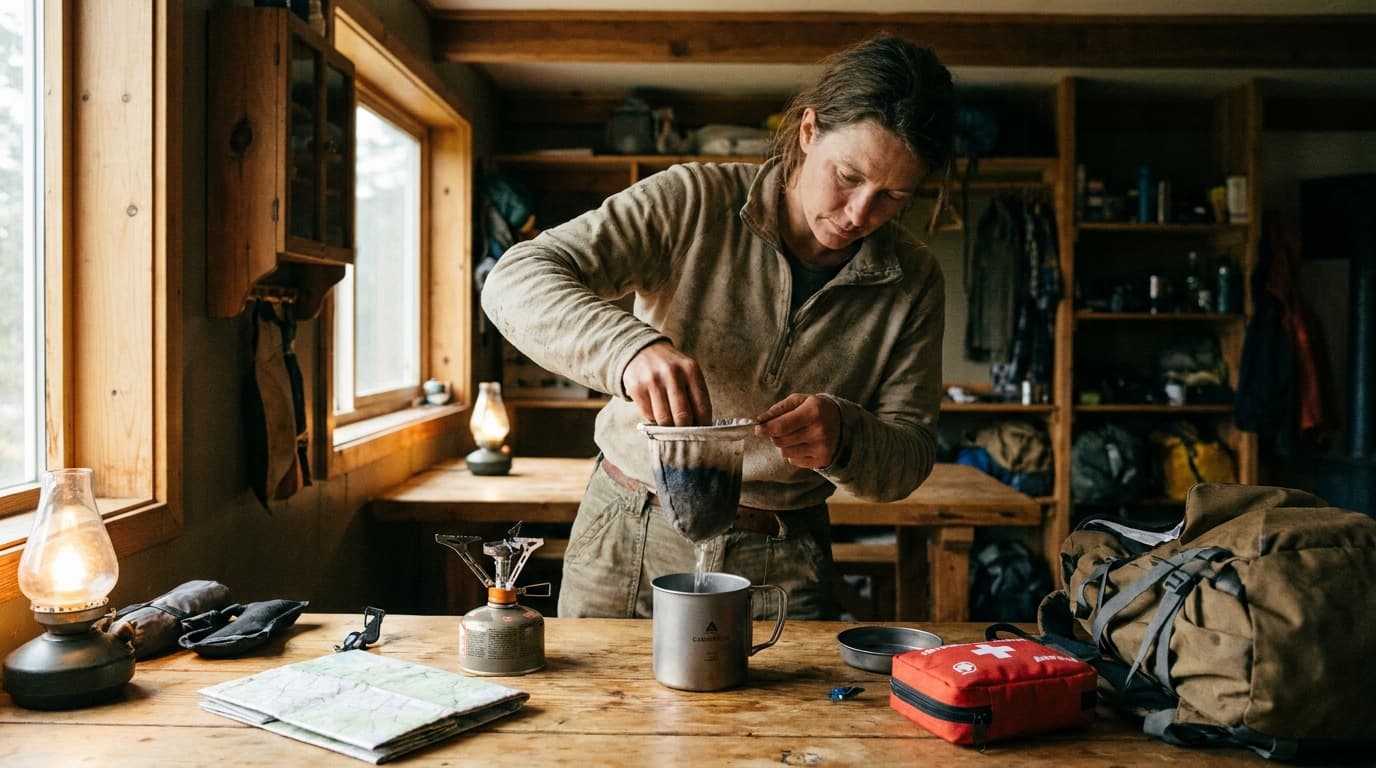
Imagine you have been hiking for hours and realize your hydration bladder is empty. The only water source nearby is a small, stagnant pond tucked away in a clearing. It looks murky and still, which is exactly where dangerous bacteria thrive. Instead of panicking, you use a piece of clothing to strain out the visible debris before heating the liquid. This process turns a potential health hazard into the life-saving hydration you need to keep moving.
While boiling is highly effective, it requires a heat source and time for the water to cool. If you are on the move or in an area where fires are restricted, portable filtration straws or chemical tablets are excellent alternatives. These tools are lightweight and can be used almost instantly. Knowing how to store emergency water long term before you even leave home is part of a smart survival strategy.
Key insights:
Bring water to a rolling boil for at least one minute to kill pathogens.
Use a bandana or coffee filter to strain out sediment before purifying murky water.
Carry a portable filtration straw for quick access to water without needing a fire.
Pack iodine or chlorine dioxide tablets as a lightweight backup for your main filter.
Let boiled water cool completely in a covered container to prevent re-contamination.
Emergency Food Preparation for an Unexpected Wilderness Stay
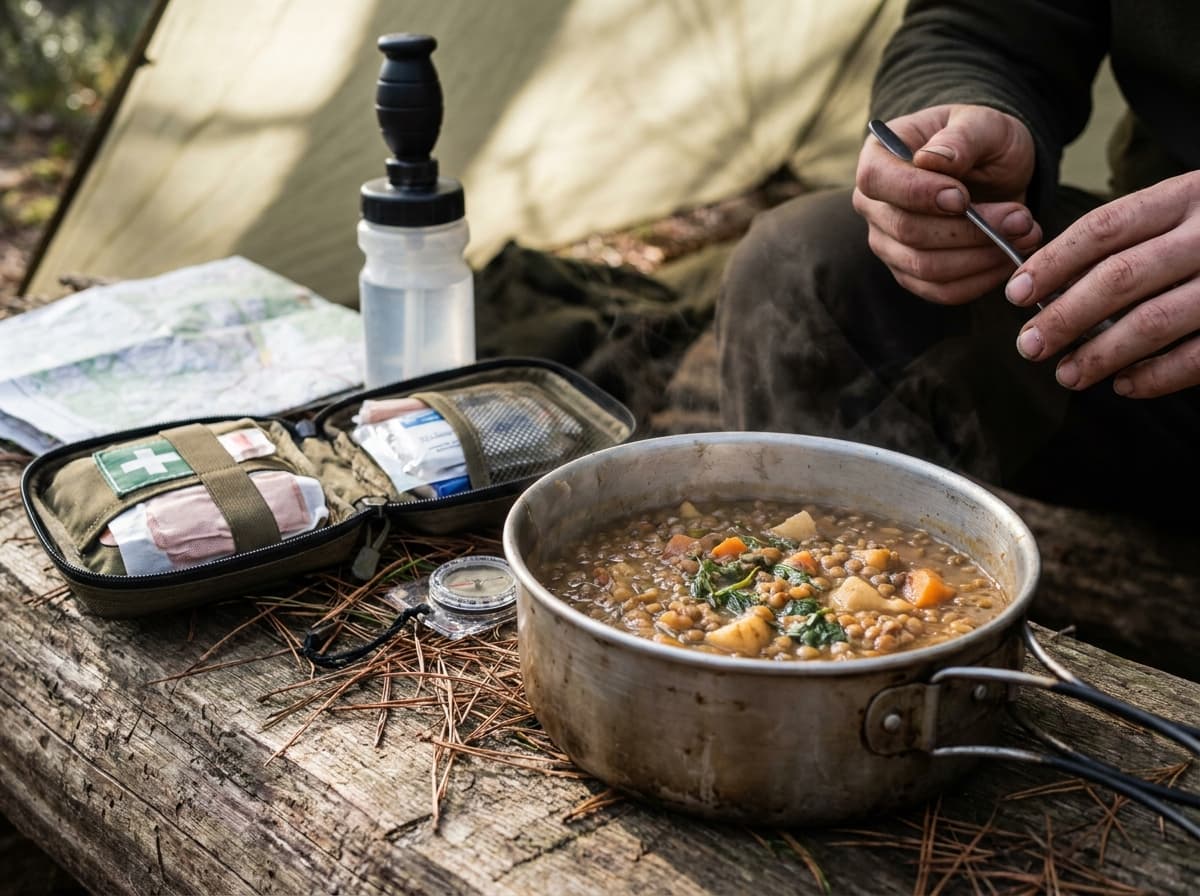
When you are stranded, your main goal for food is maintaining energy without wasting it. While humans can generally survive for about three weeks without food, your cognitive function and physical strength will start to fail much sooner. Focus on high-calorie, no-cook rations that provide immediate fuel because your brain needs those calories to make smart decisions.
Searching for food often burns more calories than you actually find. Also, unless you are an expert botanist, you should avoid eating wild plants. Many berries and mushrooms look identical to safe varieties but are actually toxic. Sticking to essential survival skills for staying safe in the wilderness means prioritizing the supplies you brought with you rather than gambling on nature.
Imagine you have been stuck in a remote canyon for 48 hours. Your energy levels are plummeting, and your hands are starting to shake from the cold and lack of calories. You see some bright red berries nearby and feel tempted to forage. Instead of risking a toxic reaction that could lead to vomiting and further dehydration, you reach into your bag for a dense energy bar. This simple choice keeps your mind clear so you can continue using the S.T.O.P. method to plan your rescue.
Modern trends show a shift toward lightweight emergency rations like MREs and high-density bars for a reason. They provide the most bang for your buck without the need for a stove or extra water. Keeping these in your pack ensures you are ready for survival scenarios and checklists that involve staying put for several days.
Key insights:
Pack high-calorie, no-cook options like energy bars or peanut butter packets to save energy and water.
Avoid eating unknown wild plants or mushrooms because the risk of poisoning is far greater than the caloric benefit.
Ration your supplies by eating small amounts throughout the day to keep your blood sugar stable.
Stay stationary to conserve your body's energy reserves instead of wandering around looking for food.
Keep a few extra emergency rations at the bottom of your pack that you never touch unless it is a true emergency.
Survival Mistakes to Avoid Getting Lost Hiking
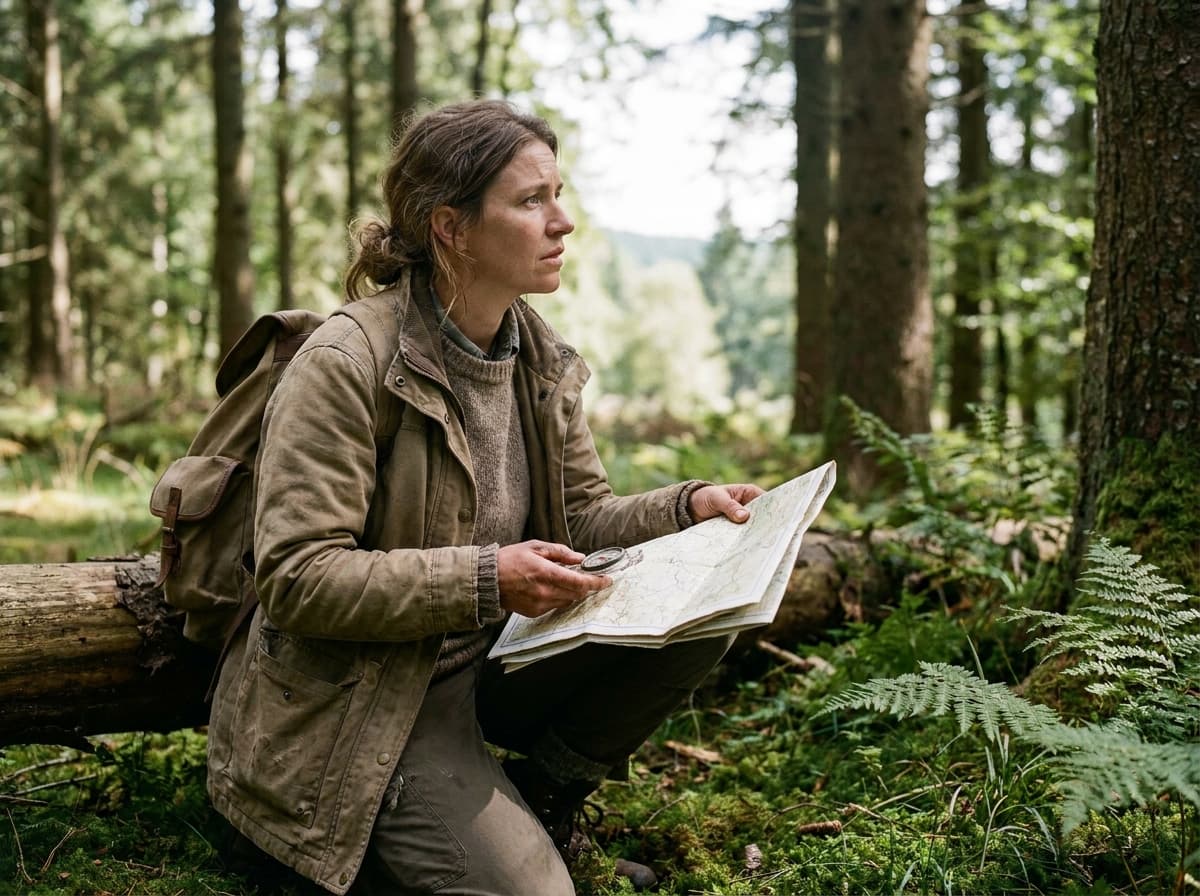
The biggest error hikers make isn't a lack of fitness; it's overconfidence in technology. Many people treat a trail like a guided tour, assuming their phone will always show the way. But when you lose a signal or your battery drains, that digital tether snaps. Over-reliance on GPS has created a gap in traditional skills like reading a landscape or using a compass.
Imagine a hiker named Sarah who heads out on a crisp October afternoon. She relies entirely on a hiking app to follow a new loop. As the temperature drops, her phone's battery life plummets - a common chemical reaction to the cold. Suddenly, the screen goes black.
With no physical map and the sun dipping below the ridgeline, she realizes she can't remember which fork she took twenty minutes ago. Since she didn't tell anyone her specific route, no one knows she's missing. This is where the S.T.O.P. method mentioned earlier becomes a literal lifesaver to prevent wandering further into the brush.
These errors often snowball. A simple mistake like forgetting a paper map leads to panic, which then leads to moving around and getting more lost. Understanding that your brain is your best survival tool helps you avoid the trap of 'just one more mile' before the sun sets and the temperature drops.
Key insights:
Pack a paper map and a baseplate compass to bridge the gap if your electronics fail.
Leave a detailed trip plan with a friend who knows exactly when to call for help if you aren't back.
Stay stationary once you realize you are lost, as a moving target is significantly harder for search and rescue teams to spot.
Keep your phone in an inside pocket against your skin to keep the battery warm and functional.
The biggest mistake people make isn't actually getting lost - it's the 'panic walk' that follows. When your adrenaline spikes, your brain screams at you to keep moving to find the trail, but this usually pushes you deeper into the brush. In reality, staying stationary is much safer because a moving target is significantly harder for search teams to track.
Instead of wandering, you should use the S.T.O.P. acronym, which stands for Sit, Think, Observe, and Plan. It forces you to calm down before you make a decision that could turn a one-night stay into a multi-day search operation.
General survival wisdom suggests humans can survive for about three days without water, but that number is a bit of a gamble. If you are hiking in high heat or losing fluids through sweat and heavy breathing, that window can shut much faster. Dehydration doesn't just make you thirsty; it messes with your ability to think clearly, which leads to poor choices.
Also, keep in mind that drinking contaminated water is sometimes a better 'bad' choice than dying of thirst. While gastroenteritis is a common wilderness emergency, it usually takes a few days to set in, which might give you enough time to be rescued before the illness becomes a serious problem.
Drinking untreated river water is a massive gamble, but if you are truly stranded, it becomes a choice between two bad options. Since humans can generally only survive for about three days without water, severe dehydration will kill you much faster than a waterborne illness like Giardia will.
If you have no way to purify it, look for the fastest-moving water you can find, ideally over a rocky bed, as it is less likely to hold the heavy sediment or bacteria found in stagnant pools. It is not about being safe; it is about staying alive long enough for rescue to arrive, even if you have to deal with a stomach infection later.
Your first move is to stop and assess the damage using the R.I.C.E. protocol - Rest, Ice, Compression, and Elevation. If you cannot put weight on the foot, do not try to hike out and risk a permanent break. Instead, remember that staying stationary is significantly safer than moving when you are in trouble because a moving person is much harder for search teams to track.
Here is the thing: if you are alone, use your whistle or a signal mirror instead of trying to crawl. If you have a pack, unbuckle the waist strap if you have to cross any water on the way to a better signaling spot so you do not get pinned down if you slip.
Conclusion
Survival is less about extreme heroics and more about keeping a cool head when things go wrong. By focusing on basics like how to build temporary shelter in forest and emergency water purification methods for camping, you manage the immediate risks that matter most. The real secret is the psychology of the first hour, where staying calm prevents a simple wrong turn from becoming a life-threatening situation.
When you understand wilderness first aid for common hiking injuries or emergency food preparation for unexpected wilderness stay, you gain the confidence to stay put. This is vital because stationary hikers are much easier to find than those who keep moving. Using the S.T.O.P. method to gather your thoughts helps you avoid common survival mistakes to avoid getting lost hiking while you wait for help to arrive.
Before your next trip, check your gear for a physical map and a way to signal for help. Survival starts at the trailhead, so carry the basics every time you go out. Being ready for the unexpected is the best way to make sure every hike ends with a good story instead of a rescue call.
Every WilderReady guide is researched, written, and fact-checked in-house against trusted references such as the American Red Cross, the National Park Service, and the CDC before it goes live. We publish under this shared byline instead of invented personas, so you always know who stands behind the guidance you are reading.