Exactly What to Do the Moment You Realize You're Lost in the Woods
What to do the moment you realize you're lost in the woods is simple: stop moving immediately. Your brain will scream at you to run, but that panic-driven flight response...
Exactly What to Do the Moment You Realize You're Lost in the Woods
What to do the moment you realize you're lost in the woods is simple: stop moving immediately. Your brain will scream at you to run, but that panic-driven flight response only makes you harder to find. By sitting down, you break the cycle of fear and stay in a smaller search area.
Most hikers get in trouble because they wait too long to admit they're off-track. Realizing you're lost often happens at dusk, which adds huge pressure to keep walking into the dark.
This guide covers the S.T.O.P. method and a five-minute checklist to keep you safe.
Why the S.T.O.P. Framework Is Your Best Survival Tool
The S.T.O.P. protocol is the industry-standard response for a reason. When you realize you are lost, your brain triggers a physical flight response that forces you to move faster. This instinct is a major survival threat because it pushes you further from your last known location and burns precious energy. By following this framework, you actively counter the biological urge to run and keep yourself in a smaller, more manageable search area.
Most hikers hit this wall right as the sun starts to dip. There is a specific psychological weight to realizing you are lost at dusk, a moment Meanwhile in York describes as the point where the reality of your situation truly sinks in. This dusk pressure makes you want to rush, but essential survival skills dictate that you must do the exact opposite to stay safe.
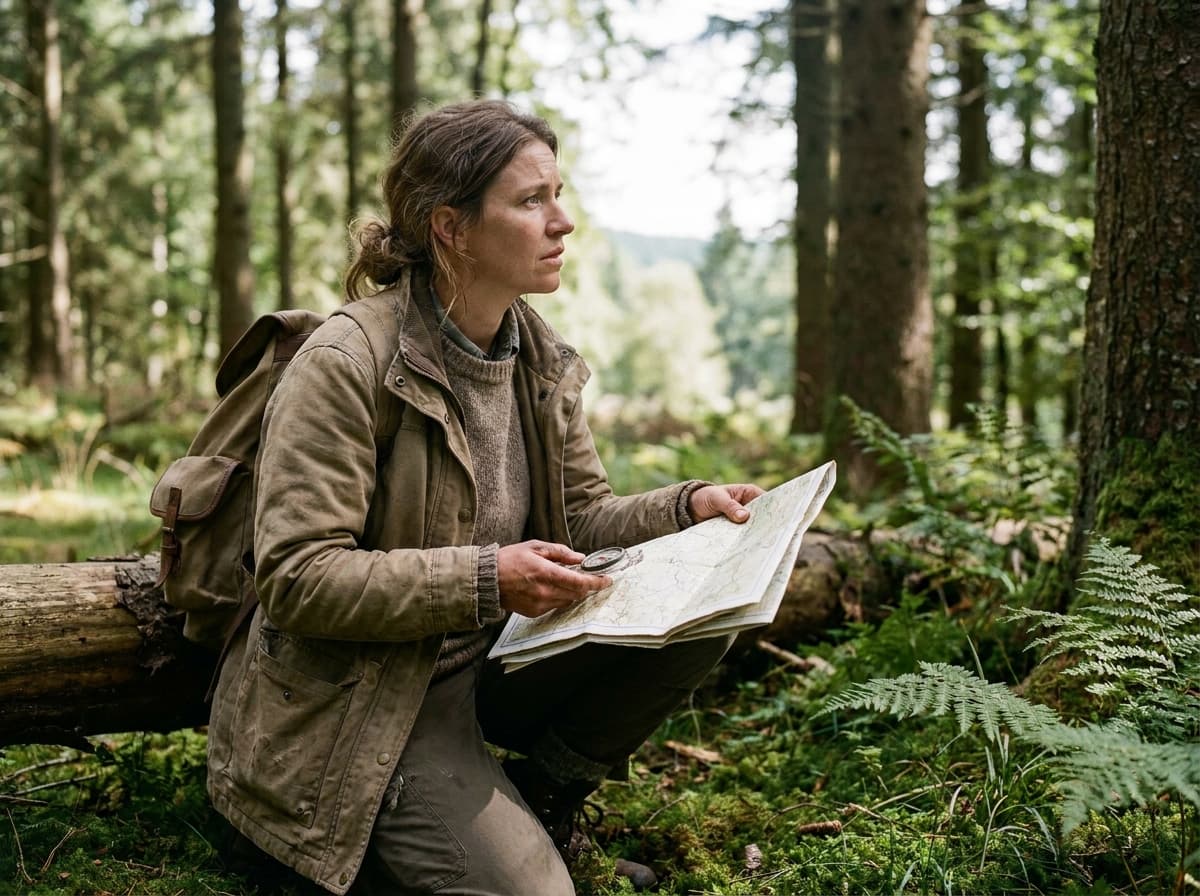
Imagine a solo hiker who suddenly notices the trail markers have vanished just as the shadows grow long. Their heart hammers against their ribs, and every nerve tells them to bolt toward what they think is the path. Instead of running into denser brush, they find a flat rock and sit down. By physically sitting, they break the panic loop and regain the mental clarity needed to make logical decisions rather than fear-based ones.
Sitting is the most difficult part because it feels like you are wasting time. However, it is the only way to lower your heart rate and stop the adrenaline from clouding your judgment. Once you are calm, you can Think clearly about where you went wrong. Try to visualize the last recognizable landmark, such as a specific rock formation or a stream crossing, to orient yourself without moving your feet.
Observing your surroundings is about more than just looking for the trail. You need to check for natural windbreaks, dry wood, or potential hazards before the light fails completely. This leads to the Planning phase, where you decide whether to stay put or move to a safer spot nearby. Wilderness survival fundamentals suggest that staying put is almost always the better choice for being found quickly.
Sit down immediately to break the cycle of fear and keep your search area small for rescue teams.
Inventory your gear and water levels to see exactly what resources you have available for the night.
Recall your last known landmark to help orient your thoughts without physically wandering further away.
Prepare three of anything, such as whistle blasts or mirror flashes, to signal for help using the international distress call.
Stay put unless you are in immediate physical danger from your environment or weather changes.
Breaking Down the S.T.O.P. Steps
The S.T.O.P. protocol is the industry-standard initial response for a reason: it works by interrupting the body's natural flight response. When you realize you are lost, your heart rate spikes and your brain tries to force you to move faster. This sudden panic often pushes people further from their last known location, making the search area much larger for rescue teams.
Take a hiker who notices the trail has vanished just as the shadows grow long. This moment often coincides with dusk, and the failing light creates intense psychological pressure to keep moving at all costs. Instead of rushing deeper into the woods, they find a flat rock and sit. By physically sitting, they use the Think phase to recall their last landmark, like a specific rock formation, which helps them stay grounded while they use their essential survival skills to stay safe.
Moving without a strategy is a survival threat that you must actively counter. You should never leave your current spot until you have a concrete plan that does not involve guessing the way back. Following these wilderness survival fundamentals ensures that your decisions are based on logic rather than fear.
Sit down immediately to break the cycle of fear and keep your search area small for rescue teams.
Think about your last recognizable landmark, such as a stream crossing, to orient yourself without moving your feet.
Observe your surroundings for natural windbreaks or dry wood before the light fails completely.
Plan your next move carefully and stay put unless you are in immediate physical danger from your environment.
Your First Five Minutes Checklist to Stay Safe
The first five minutes after you realize you are lost are the most dangerous because your brain is screaming at you to run. This is a survival threat called the flight response. It forces you to move faster and further away from safety. To stay safe, you need a strict sequence that overrides your panic.
Many people today rely too heavily on their phones for navigation. Recent reports on the timing of getting lost suggest that hikers often realize they are in trouble only after a battery dies. By following a checklist immediately, you turn a potential disaster into a manageable situation by focusing on logic. This is where your wilderness survival fundamentals really matter.
Imagine you are a backpacker deep in the pines. You reach for your phone, but the screen is black because the battery is dead. You look around and realize you have not seen a trail marker in twenty minutes, and the sun is starting to dip below the ridge. This dusk pressure makes you want to hike faster to find the trail before dark, but that is exactly how people get truly lost. Instead of rushing, you find a sturdy log, sit down, and take a deep breath to settle your heart rate.
Once you are sitting, your goal is to transition from a victim of the woods to an active participant in your own rescue. You use your essential survival skills to audit what you have on hand. This mental shift is more valuable than any knife or fire starter. It keeps you from making the one mistake that rescue teams fear most, which is wandering miles away from your last known point.
Sit down immediately to break the panic loop and stop yourself from walking further into the brush.
Inventory your current gear and water levels to see exactly what resources you have for the night.
Prepare a signaling device like a whistle or a mirror so you are ready to alert rescuers at a moment's notice.
Follow the Rule of Three by preparing three of any signal, such as three whistle blasts, which is the international call for distress.
Fighting the Physical Urge to Keep Moving
Your body reacts to being lost the same way it reacts to a predator. The brain triggers a flight response that floods your system with adrenaline, making you feel an overwhelming need to move. This instinct is dangerous because it overrides logic and forces you to act without a plan. Moving while disoriented quickly drains your physical energy and water, while also making the search area for rescuers much larger.
This urge peaks during what experts call dusk pressure. As the light fails, the psychological weight of the coming night makes every shadow look like a path and every minute feel like an hour. You might feel a desperate need to reach a high point or a clearing before dark. However, applying your wilderness survival fundamentals means recognizing that staying put is almost always the safer choice. According to reports on the timing of getting lost, the realization often hits just as the sun drops, which is when your decision-making is most vulnerable.
Imagine a hiker who realizes the trail has vanished just as the sun dips below the ridge. Their heart rate spikes, and they start walking faster, convinced the main path is just over the next hill. In their rush, they push through thickets they would normally avoid, losing their hat and scratching their arms on low branches. Ten minutes of panicked walking can put a mile of difficult terrain between a lost person and the search party, turning a simple afternoon rescue into a dangerous multi-day operation.
Sit down on a log or rock the second you feel the urge to run to break the panic loop.
Halt all movement to prevent yourself from wandering further away from your last known location.
Acknowledge the dusk pressure and consciously slow your breathing to lower your heart rate.
Trust your essential survival skills and stay stationary unless there is an immediate environmental threat.
How to Signal for Help When Your Tech Fails
If your phone dies or the signal vanishes, you need to switch from digital to analog communication immediately. The international standard for distress is the Rule of Three. This means any signal you make should be repeated three times in a row to tell rescuers you are in trouble. This simple pattern stands out from the random noises and sights of the forest.
Before you start signaling, use the S.T.O.P. protocol to calm down. Sitting down stops the physical flight response that makes you want to run further into the brush. Once you are calm, you can effectively use your gear to catch someone's attention. This is a core part of wilderness survival fundamentals that keeps you visible to search teams.
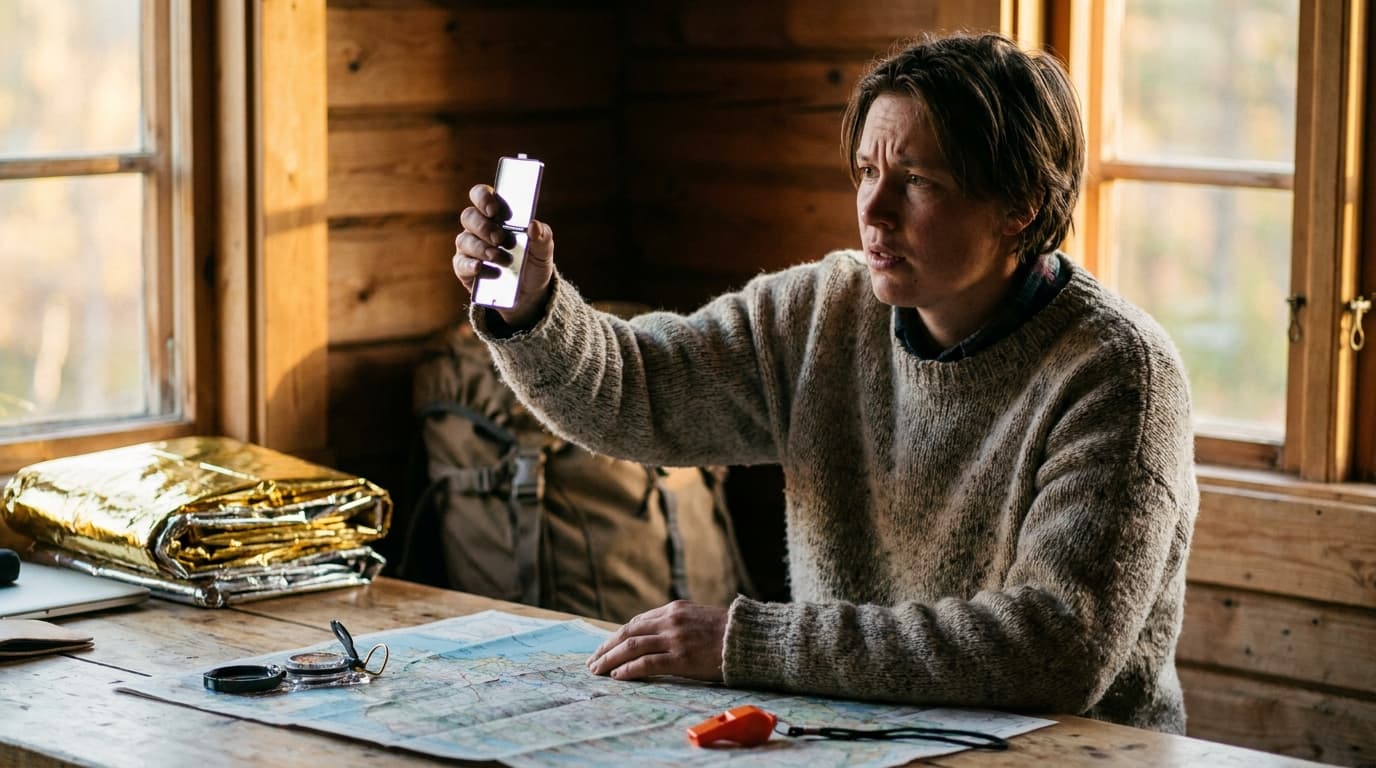
Imagine a solo traveler who realizes their GPS is stuck on a loading screen as the sun starts to set. Instead of walking faster, they pull out a small signal mirror. They catch the fading sunlight and flash it toward a distant ridge three times. They follow this with three sharp blasts on a whistle, knowing that sound travels much better than a voice in the woods.
Many hikers wait way too long to admit they are lost because they trust their phones too much. They follow a digital map until the battery reaches zero in the cold air. By that point, they have no sense of direction and the light is failing. This realization often hits right at dusk, which adds heavy psychological pressure to an already scary situation.
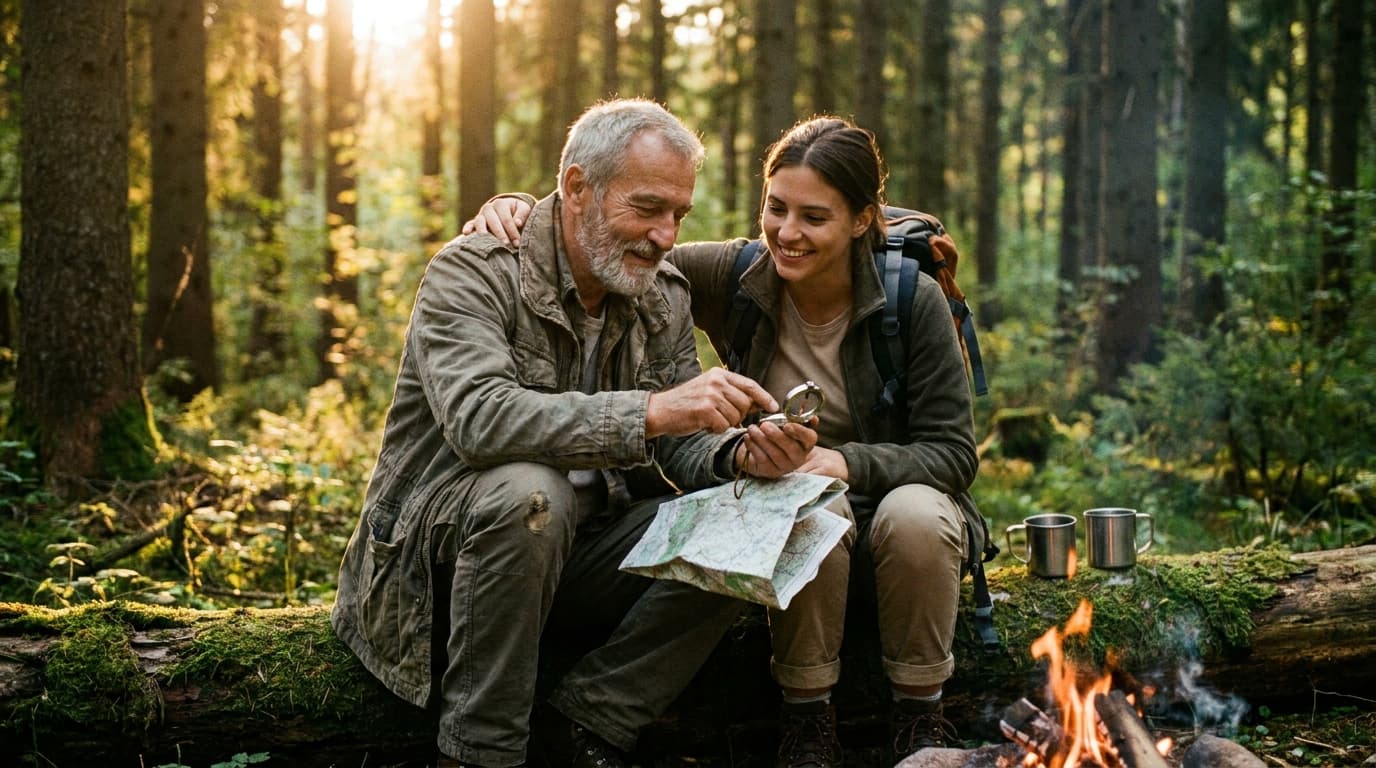
You should always carry a physical map and compass as a backup. You need to learn these essential survival skills before an emergency happens. A paper map never runs out of battery and works perfectly even under a thick canopy of trees where GPS signals often fail.
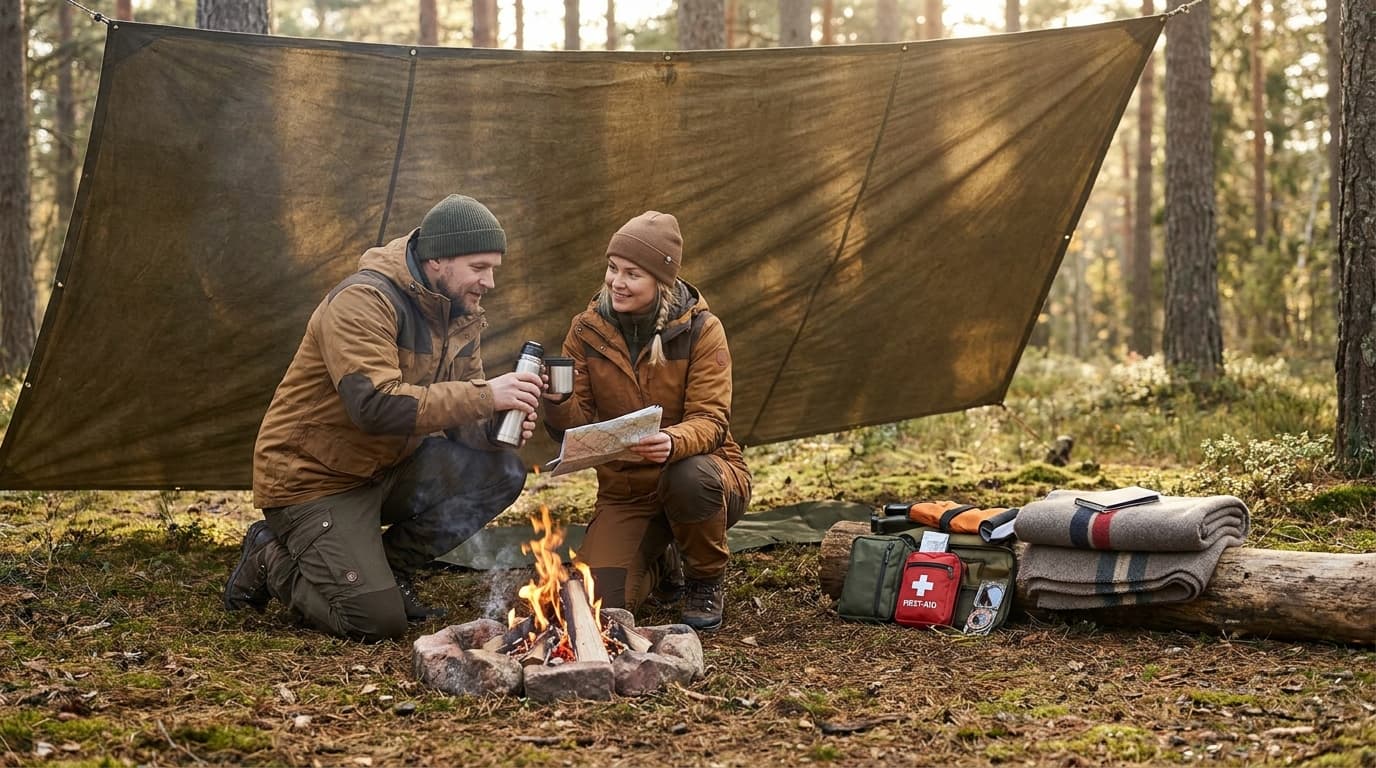
Use three of anything like three whistle blasts, three flashes of light, or three smoky fires.
Carry a whistle because it is louder than your voice and takes much less energy to use.
Practice with a signal mirror during the day so you know how to aim the reflection properly.
Stay in an open area if you are signaling so you are visible from the air or distant ridges.
Pack a physical map and compass in your bag and learn to orient them before you leave the trailhead.
The Danger of Digital Over-Reliance
Digital over-reliance creates a dangerous psychological delay in admitting you are in trouble. Relying on a screen often means ignoring landmarks until the device fails, usually as failing light increases the pressure. This delay triggers a flight response, which is an instinctual urge to move faster that pushes you deeper into danger.
Imagine a hiker whose phone dies in the cold. Instead of using essential survival skills to stay put, they panic and jog toward where they think the trail is. Without a compass, they lose all orientation as the woods grow dark, moving further from help.
Sit down immediately to halt the physical urge to run.
Inventory your gear and water to regain mental control.
Prepare three of any signal, like whistle blasts, to show distress.
Carry a paper map and compass as a mandatory backup.
Assessing Environmental Risks Before Dark
Once you have followed the S.T.O.P. protocol and regained your composure, you must evaluate the ground you are standing on. Many people experience the realization of being lost at dusk, which creates immense psychological pressure to move quickly. Your first priority is to find a spot that offers protection from the elements before the woods go completely dark.
Focus entirely on shelter and warmth rather than worrying about your next meal. You can survive for weeks without food, but exposure to wind and rain can become life-threatening in just a few hours. This is why emergency shelter building is one of the most critical skills you can learn before heading out.
Evaluating your surroundings also means checking for resources that help with signaling. If you are in a dense thicket, you might need to move a short distance to a clearing where a signal fire or mirror would be more effective. Just remember that every step you take in the dark is a risk, so make these moves while you can still see the ground clearly. Learning these essential survival skills now will help you make better decisions when the pressure is on.
Imagine a backpacker who notices the trail markers have disappeared just as the woods turn grey. Their heart starts to race, but they force themselves to stay put. They spot a large, uprooted tree that provides a natural barrier against the rising wind. By staying in this one spot and using the remaining twilight to gather dry leaves for insulation, they turn a potential disaster into a manageable situation.
Identify a natural windbreak such as a rock ledge or thick cluster of evergreens to block the wind.
Select a dry area on higher ground to avoid dampness and cold air that settles in valleys.
Clear away rocks and damp debris to create a flat space for your body.
Scan the trees above you for dead branches that might fall during the night.
Stay put once you find a safe spot to make it easier for rescuers to locate you.
Common Questions About Getting Lost in the Woods
Most people wonder what the very first step is when the trail suddenly vanishes. The answer is always to stop moving immediately. Panic often hits right as the sun dips, creating a psychological weight known as dusk pressure that makes you feel like you need to run. This is a natural flight response, but it usually leads you further away from help and drains your energy when you need it most.
Imagine a hiker who realizes their phone is dead and they haven't seen a trail marker in twenty minutes. As the woods turn grey, their heart starts pounding. Instead of rushing blindly through the brush to find the path before dark, they force themselves to sit on a nearby rock. This simple act breaks the panic cycle and allows them to transition from a victim of the woods to someone managing a survival scenario.
Many hikers today rely too much on GPS, only realizing they are lost once their tech fails. If this happens to you, remember that your brain is your best tool. Staying put makes the search area smaller for rescue teams and keeps you from making exhausted, poor decisions in the dark. You can learn more about these basics in our bushcraft guide.
Sit down physically to halt the flight response and regain mental clarity.
Think about your last known location and any landmarks you passed recently to reorient your mind.
Observe your gear, water levels, and the weather to see what you really need for the next hour.
Plan to stay stationary unless you face an immediate threat like rising water or falling branches.
Signal for help using the Rule of Three—three whistle blasts or mirror flashes are international distress calls.
Frequently Asked Questions
The very first thing you need to do is physically sit down on the ground. It sounds almost too simple, but sitting down acts as a biological circuit breaker that helps stop the 'flight' response triggered by panic. When you're standing or walking, your body is primed to keep moving, which usually leads to making poor decisions or walking deeper into the brush.
Here's the thing: many people realize they're lost right around dusk, which adds a massive amount of psychological pressure. By forcing yourself to sit, you're telling your brain that you're in control, not the situation. This pause is the only way to shift from a state of panic back into a state where you can actually use a survival protocol effectively.
Continuing to walk when you're disoriented is dangerous because it exponentially increases the size of the search area for rescue teams. If you stay put, you're a stationary point in a small area. If you keep moving, you're a moving target, and every mile you walk adds dozens of square miles to the territory rescuers have to cover to find you.
Also, there is a modern trap where hikers keep walking because they're trying to find a cell signal or a GPS lock. Often, they only stop once their phone battery dies or they've completely run out of water. Moving while lost burns through your physical energy and your resources much faster than staying in one spot. Unless you're in immediate danger from something like a flash flood, staying still is almost always your safest bet.
You can use the 'rule of three' with whatever nature provides. Try creating three large, smoky fires in a triangle or clearing three distinct patches of ground to form big 'X' shapes using rocks or bright-colored branches. The key is to make shapes that don't look like they happened naturally.
If you're under a thick canopy, find a clearing where a pilot or drone might see your work. Since search teams often use heat-sensing tech now, even a small, controlled fire can act as a beacon long before a human eye spots you.
It stands for Sit, Think, Observe, and Plan, but it's really a tool to stop your brain from panicking. Most people realize they're lost right around dusk, which is exactly when the urge to run is strongest. Sitting down physically breaks that 'flight' response.
Think of it as a circuit breaker. By forcing yourself to stay put and look for landmarks or trail signs you might have missed, you prevent the common mistake of walking miles in the wrong direction just because you're scared of the dark.
Conclusion
Knowing exactly what to do the moment you realize you're lost in the woods can be the difference between a cold night out and a safe return home. The first five minutes are the most important because they set the tone for everything that follows. By choosing to stop moving and using the S.T.O.P. method, you take control of the situation before panic has a chance to lead you further away from safety.
It is helpful to remember that your biggest challenge is often your own instinct to keep walking. That urge to find the trail by running or guessing usually makes things worse. Instead, focus on staying put and using the tools you have, like a whistle or a mirror, to make yourself visible. This approach keeps your search area small and gives rescue teams the best chance to reach you quickly.
Before you head out on your next trip, take a moment to tell someone your specific route and when you expect to be back. Your next move should be to double check your pack for a map and a signaling device. The most powerful tool you have in the wilderness is your ability to stay calm. If you can just sit down and wait, you have already done the hardest part of surviving.
Every WilderReady guide is researched, written, and fact-checked in-house against trusted references such as the American Red Cross, the National Park Service, and the CDC before it goes live. We publish under this shared byline instead of invented personas, so you always know who stands behind the guidance you are reading.