Why a Ferro Rod Works Better Than Matches in Wind is simple. It throws molten metal sparks at 3,000°C instead of a fragile gas flame. While a gust easily kills...
Why a Ferro Rod Works Better Than Matches in Wind is simple. It throws molten metal sparks at 3,000°C instead of a fragile gas flame. While a gust easily kills a match, these high-heat sparks have the physical mass to stay lit and land on your tinder.
Relying on tools that fail in air currents is a risk you don't want to take during a storm. It's a reliable backup for when lighters break or matches get wet.
You'll learn the science behind these windproof sparks and the best striking method for reliable ignition.
The Science of 3,000 Degrees: Why Spark Heat Matters
A match flame is a fragile gas reaction that flickers out with even a light breeze. In contrast, a ferrocerium rod produces sparks that reach approximately 3,000 degrees Celsius. This isn't just a slightly hotter flame; it is a shower of molten metal. Because these sparks are physical fragments of a burning alloy, they carry significant thermal energy that doesn't just vanish when the air moves.
These rods are made from a synthetic blend of metals like iron, cerium, and magnesium. When you scrape the rod with a sharp 90-degree edge, the friction creates enough heat to shave off tiny particles that ignite instantly. The magnesium in the mix adds extra brilliance and intense heat, turning a simple scrape into a concentrated burst of fire-starting power. This is a core part of any survival fire starting kit.
Think about trying to light a birthday candle with a hair dryer blowing on it. The flame will never catch because the moving air disperses the heat before it can do its job. Now imagine dropping a tiny bead of white-hot, molten steel onto that same wick. The air movement doesn't matter because the bead has enough internal heat and mass to ignite the fuel the moment it touches down. That is the difference between a match and a ferro rod in a storm.
Since you are dealing with such high temperatures, the goal is not just to make a spark but to direct that thermal mass exactly where it is needed. This allows you to ignore the wind and focus entirely on your tinder. By choosing tools that create high-temperature mass rather than just open flames, you gain a massive advantage in stormy conditions.
Select a high-quality rod like the Light My Fire Army model for better longevity and spark yield.
Use a striker with a sharp, 90-degree spine to ensure you are shaving off enough metal to create high-heat mass.
Prioritize tools that create high-temperature molten fragments instead of open flames when you expect stormy weather.
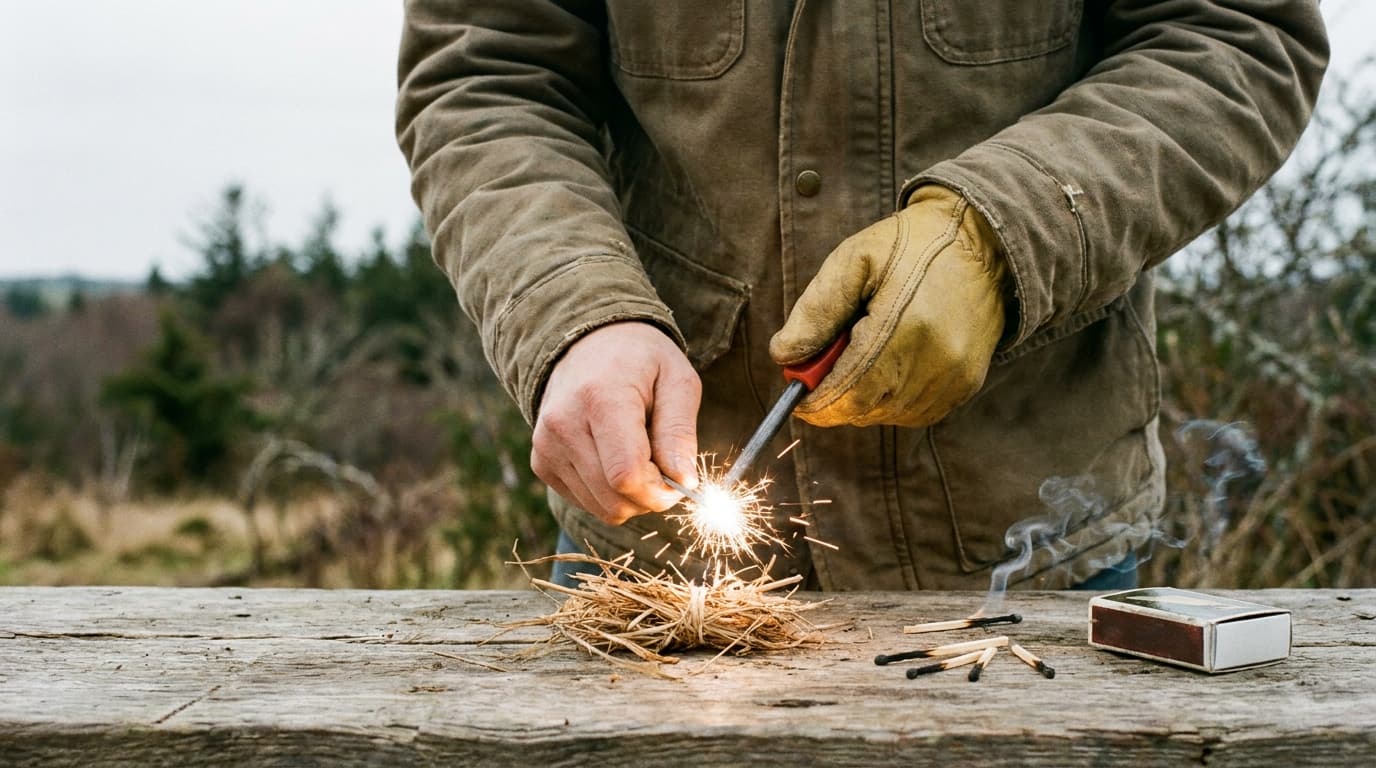
Hold your tinder down directly with the tip of the rod to ensure the 3,000°C sparks land exactly on the driest part of your fuel.
Alloy Composition and Pyrophoric Action
This synthetic alloy works through a process called pyrophoricity. When you scrape the rod, the friction creates localized heat that exceeds the ignition point of the metal shavings. These tiny fragments of cerium and iron oxidize so fast they turn into white-hot liquid. Because these sparks are molten metal rather than just hot gas, they maintain their 3,000-degree temperature even as they fly through freezing air.
The addition of magnesium is what gives the spark its extra punch. Magnesium burns at an incredibly high temperature, providing the thermal mass needed to ignite stubborn tinder in damp conditions. This reliability makes the tool a vital part of your essential survival skills for when matches or lighters fail.
Think of a match as a small candle and a ferro spark as a piece of welding slag. If you throw a bucket of air at a candle, it goes out instantly. But that drop of molten slag will keep burning until it hits its target. That physical mass is why these tools work in storms that would leave you shivering with a box of dead matches.
Use a striker with a sharp, square spine to shave off thick metal particles.
Apply firm pressure during the stroke to generate the friction needed for oxidation.
Position the rod tip directly against your fuel to catch every molten fragment.
Look for rods with visible magnesium flecks for hotter, longer-lasting sparks.
Wind Resistance and Momentum: Why Sparks Don't Blow Out
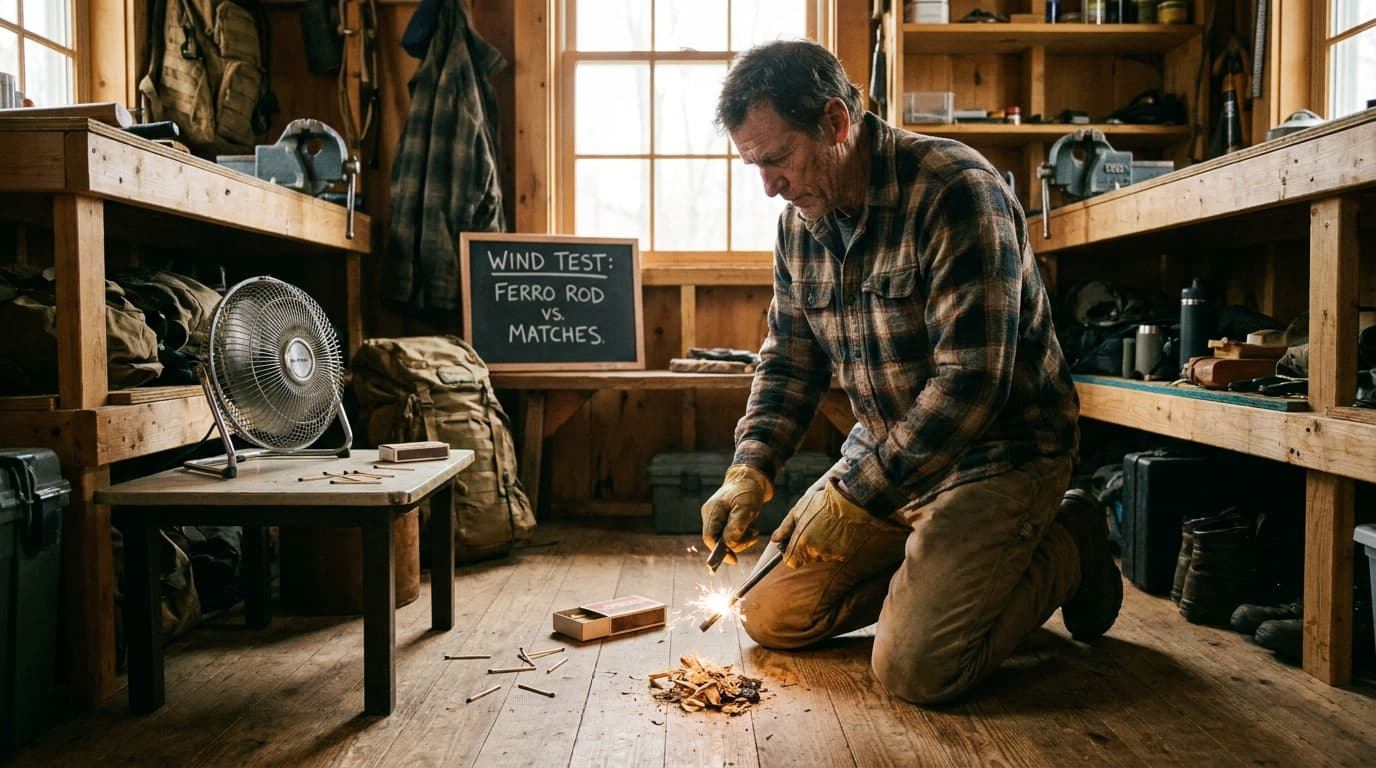
A match flame is a fragile gas reaction that depends on a very specific air-to-fuel ratio. When a gust of wind hits it, the air displaces the gas and the fire vanishes instantly. Sparks from a ferro rod are different because they are physical objects rather than just hot air. These molten metal fragments have mass and momentum. They do not just flicker in the breeze; they travel like tiny projectiles. Because they reach temperatures of 3,000 degrees Celsius, they have the thermal density to stay hot while moving through cold, moving air.
This physical difference is why using a rod is one of the most essential survival skills for staying safe in the wilderness. Most fire starters create a flame that is lighter than air, making it vulnerable to every breeze. A ferro rod creates a shower of heavy, pyrophoric alloy bits. These bits are dense enough to resist being blown off course. When you strike the rod, you are launching high-heat energy that lands exactly where you aim it, regardless of the weather.
Imagine standing on a ridge with a 20mph gust hitting you while you try to start a fire. You might try to shield a Bic lighter with your hands, but the wind finds every gap and snuffs the flame before it can even touch your kindling. It is frustrating and dangerous when you are cold and wet. But when you use a ferro rod, the wind becomes less of an obstacle. You can see the sparks fly straight through the wind and land deep in your tinder. They have enough weight to punch through the air currents and stay hot long enough to ignite fine fibers like fatwood dust or dried grass.
Using a rod also helps you keep your gear reliable in high-stress situations. Since these rods have no moving parts or fuel to leak, they are often included in a bug out bag checklist for beginners as a primary backup fire source. Even if your hands are shaking from the cold, the simple motion of throwing sparks is often more effective than trying to keep a tiny match head burning long enough to catch.
Use your body or a backpack as a windbreak to create a pocket of calm air for your tinder bundle.
Press the tip of the rod firmly into the tinder to minimize the distance the sparks have to travel through the air.
Focus on creating a long and firm scrape to produce larger molten fragments that hold their heat longer than small sparks.
Angle your strike so the sparks are injected directly into the center of your fuel source where it is most protected from the wind.
Durability and Reliability: The Survivalist's Insurance Policy
A lighter is great for convenience, but it is a mechanical tool with several points of failure. Fuel can leak, flint wheels can jam, and gas pressure often fails in extreme cold or high altitudes. A ferrocerium rod is different because it is essentially a solid piece of insurance. It is a synthetic alloy that stays functional regardless of how hard the wind blows or how low the mercury drops. It acts as the heavy-duty backup that ensures you can always generate heat when your primary tools fail.
The secret to its durability is the intense heat it produces. While a match flame is easily snuffed by a breeze, ferrocerium sparks reach 3,000 degrees Celsius. These are molten metal fragments with physical mass and momentum. This physical advantage is a major reason why a ferro rod works better than matches in wind, as the sparks simply refuse to blow out. High-quality rods like the Light My Fire Army model are rated for up to 12,000 strikes, making them far more sustainable than matches for essential survival skills.
Consider a backpacker who takes a spill while crossing a stream. Their gear is soaked, their matches are a soggy mess, and the wheel on their lighter is too wet to catch. In this high-stress moment, they pull out their ferro rod, give it a quick wipe, and start striking. It is a reliable addition to any bug out bag checklist for beginners because it delivers a shower of sparks that can ignite processed tinder even in damp conditions where other tools fail.
Think about the longevity of your tools compared to disposable options. A standard mini lighter might provide 530 flames, but a single rod can last for years of frequent use. This makes it a staple for anyone following a wilderness survival fundamentals approach. You are carrying a reusable heat source that ignores the limitations of modern gear and works every single time you scrape it.
Treat the ferro rod as your secondary fail-safe tool that lives in your kit specifically for emergencies and bad weather.
Adopt the pulling method by keeping your striker still and pulling the rod toward you to protect your delicate tinder bundle from being knocked over.
Check that your striker has a sharp, 90-degree edge; a rounded spine on a knife will fail to shave the metal effectively.
Press the tip of the rod firmly into the center of your fuel to minimize the distance sparks have to travel through the air.
Mastering the Pull Method: The Right Way to Strike in a Storm
The biggest mistake people make with a ferro rod is pushing the striker toward their tinder. When you do this, your hand often follows through, smashing into your carefully prepared nest and scattering your fuel everywhere. Instead, you should use the pulling method. By keeping your striker hand stationary and pulling the rod back toward your body, you create a shower of sparks that drops exactly where you want them without the risk of physical impact.
This technique is a cornerstone of essential survival skills because it accounts for human error under stress. Ferrocerium is a synthetic alloy that produces sparks reaching roughly 3,000 degrees Celsius. That is hot enough to ignite even damp materials, but only if the sparks actually land on the target. Keeping the striker fixed allows you to aim that heat with much higher precision than a wild pushing motion.
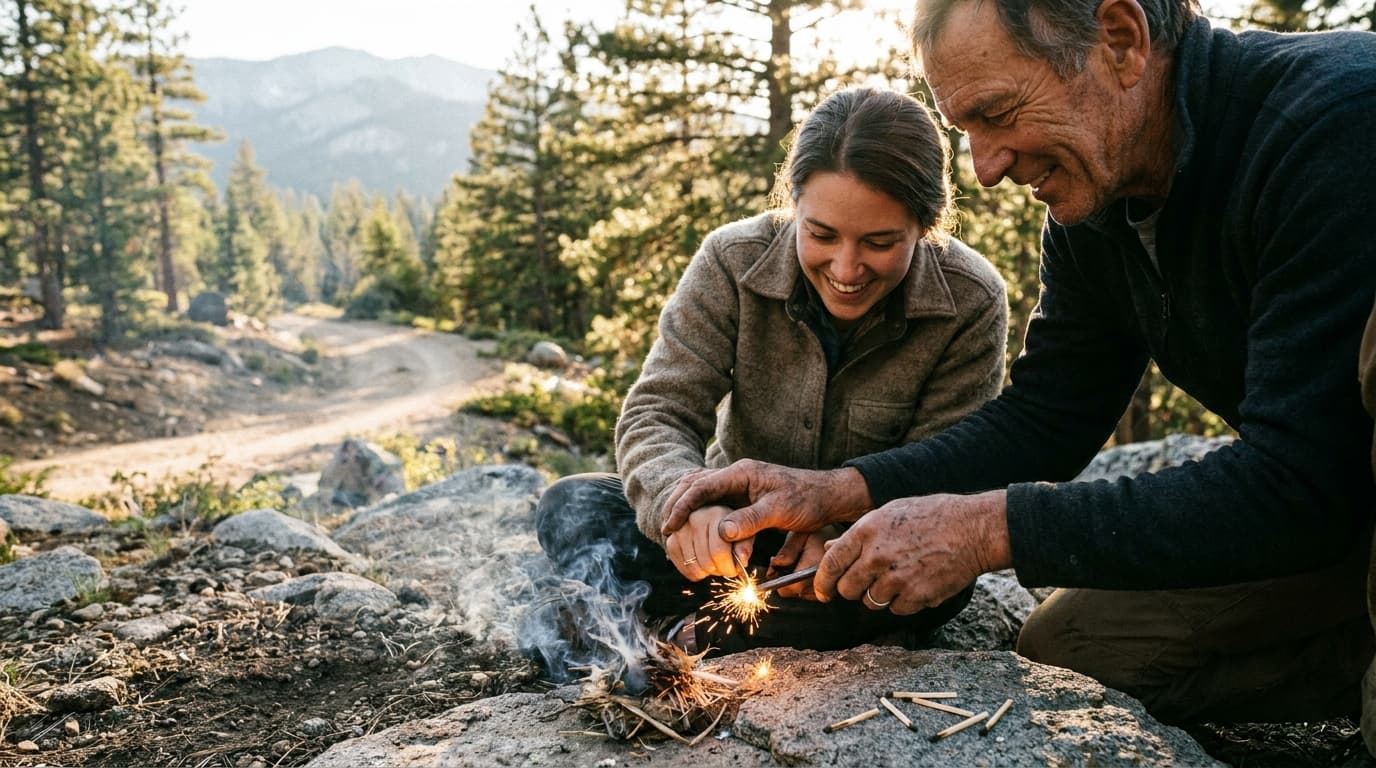
Imagine you are out on a trail and a storm rolls in, leaving you shivering and damp. You have managed to scrape together some dry shavings for a survival fire starting kit. Your fingers are numb, your coordination is fading, and the wind is howling. If you try to strike down into the pile, one clumsy slip ruins your prep by knocking it into the wet mud. With the pull method, you tuck the rod right into the tinder, lock your striker hand against your knee or a nearby rock, and pull. The sparks fall like heavy rain into the fuel while your hands stay safely away from the delicate pile.
You also need to ensure your striker has a sharp, 90-degree edge. A rounded spine on a knife will just slide across the surface without biting into the metal. When you pull the rod back against a sharp edge, you are effectively shaving off tiny, molten fragments of iron and cerium. These fragments have enough mass to resist being blown away by the wind, unlike the fragile gas flame of a lighter. This physical momentum is what makes the rod so reliable when the weather turns ugly.
Also, remember that wind resistance is a result of the physical mass and extreme temperature of the sparks compared to a gas flame. While a flame is a gas reaction easily disrupted by air currents, ferro sparks are molten metal fragments with enough momentum to land on tinder even in heavy gusts. This is why the pull method is so effective; it maximizes the amount of material you shave off in a single, controlled motion.
Brace your striker hand against a solid object like your shin or a rock for maximum stability.
Position the tip of the ferro rod so it is touching the tinder before you start the pull.
Angle the striker at about 45 degrees to bite into the rod rather than just scraping the surface.
Practice the pulling motion in your backyard until it becomes muscle memory for high-stress situations.
Use long, smooth strokes to shave off more material, which creates a larger and longer-lasting spark.
Tinder Strategy: Giving Your Sparks a Fighting Chance
Even a spark reaching 3,000 degrees Celsius needs a place to live, or it will flicker out in milliseconds. While a match relies on a fragile gas reaction that a light breeze can kill, a ferro rod produces molten metal fragments. These sparks have actual physical mass and momentum. This allows them to punch through wind and land on your fuel with enough thermal energy to start a fire in a storm.
To catch these high-heat projectiles, you must prepare your tinder to be as fine as possible. This is a core part of essential survival skills for staying safe in the wilderness. By scraping your wood into hair-like fibers or fatwood dust, you increase the surface area. This allows the 5,432-degree Fahrenheit heat to transfer instantly to the fuel before the metal fragment cools down.
Imagine you are trying to light a fire with numb fingers while the wind tries to snatch every bit of warmth away. If you try to light a whole leaf, the spark just bounces off. But if you take a moment to buff that leaf into a fuzzy nest of fibers, those heavy sparks settle into the hair of the plant and glow like embers. It is like the difference between throwing a hot coal onto a marble floor versus dropping it into a pile of dry lint.
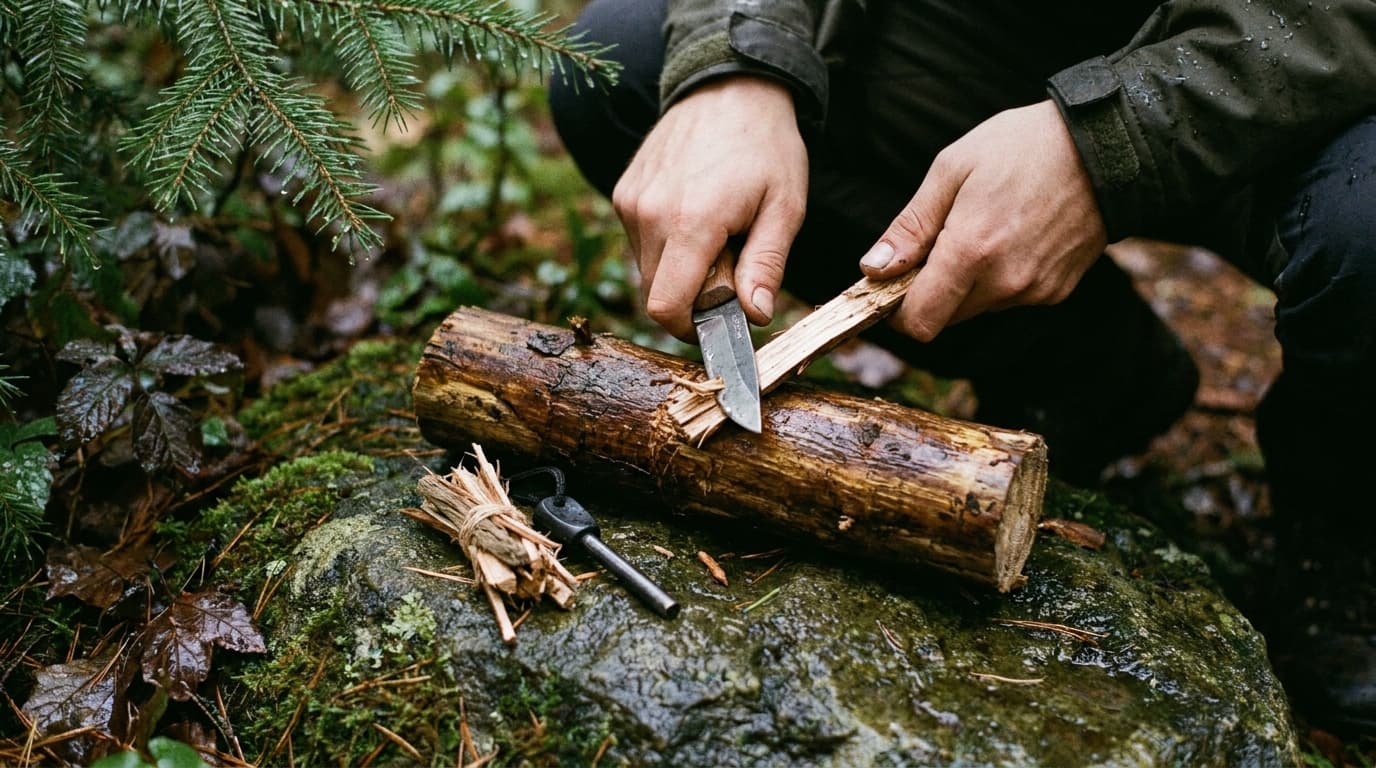
High-quality rods are built to last, with models like the Light My Fire Army rated for up to 12,000 strikes. This durability is great, but your goal should be to get it right on the first try by processing your tinder into the finest possible fibers for your survival fire starting kit. Using the 90-degree spine of a carbon steel knife to create feather sticks ensures you have plenty of thin edges for the spark to grab onto.
Scrape your tinder into a pile of fine dust or fluff to maximize the surface area for the spark.
Create a nest shape with your tinder to trap the molten sparks and protect them from the wind.
Use the pull method to drop sparks directly into the center of your prepared tinder without knocking the pile over.
Shave off the outer layer of damp wood with the spine of your knife until you reach the dry, resinous center.
Process enough fine tinder to fill a handful before you even reach for your fire starter.
Frequently Asked Questions
Absolutely. Unlike matches that become useless when damp, a ferro rod is basically a solid piece of metal. If you drop it in a puddle, you just need to wipe it off and it is ready to go.
Here is the part most people miss: if you leave a wet rod in your pack for weeks, it can develop a white, powdery oxidation. This is especially true with saltwater. If that happens, just scrape away the surface layer with your striker until you see shiny metal again. It is also worth noting that ferrocerium is a synthetic alloy containing magnesium and iron, so it will not absorb water like wood or paper.
To give you some context, a Bic mini lighter only provides about 530 three-second flames before it is empty. Even if you are a bit messy with your technique and take ten strikes to get a fire going, a single large rod can still start over a thousand fires. It is the kind of tool you buy once and rarely have to replace.
If you're seeing weak sparks, it's usually because of the striker's edge. You need a sharp 90-degree angle to shave off enough material to ignite. If your knife spine is rounded or has a coating, it won't bite into the rod. Also, new rods have a black protective coating you have to scrape off before the real sparks show up.
You might also be using a striker made of metal that's too soft. If the striker is softer than the rod, it will just wear down without creating the friction needed for those 3,000 degree sparks to form.
It depends on your patience. A magnesium bar gives you a built-in tinder source, but you have to spend time scraping a pile of shavings before you even try to spark it. A standalone ferro rod is much faster for quick fires if you already have good tinder.
Also, a high quality ferro rod like the Army model can last for 12,000 strikes. Many magnesium blocks use a much thinner sparking insert that wears out long before the magnesium block itself is even half gone.
Conclusion
Understanding why a ferro rod works better than matches in wind comes down to the difference between a fragile flame and raw heat. A match produces a gas reaction that a light breeze can snuff out in a second. In contrast, a ferro rod throws off molten metal sparks at 3,000 degrees. These sparks have the physical weight and temperature to ignore the wind and land right in your tinder.
This reliability makes the tool more than just a backup. It is a way to ensure you can stay warm even when things go wrong. Since it does not rely on chemicals or fragile wooden sticks, it stays functional after getting dropped in a puddle or facing a storm. It is simply a more durable way to carry fire in your pack.
If you have one in your kit, take it out soon and practice the pull method. Learning how to keep the striker still while pulling the rod back makes a huge difference in how much control you have. Getting comfortable with this tool now means you will be ready when the weather turns. Fire is a survival essential, so carry the tool that actually works.
Every WilderReady guide is researched, written, and fact-checked in-house against trusted references such as the American Red Cross, the National Park Service, and the CDC before it goes live. We publish under this shared byline instead of invented personas, so you always know who stands behind the guidance you are reading.