The Quick Trick for Keeping Tent Stakes From Pulling Out in Soft Ground
The Quick Trick for Keeping Tent Stakes From Pulling Out in Soft Ground is using a deadman anchor, which involves burying a horizontal stick or rock rather than relying on...
The Quick Trick for Keeping Tent Stakes From Pulling Out in Soft Ground
The Quick Trick for Keeping Tent Stakes From Pulling Out in Soft Ground is using a deadman anchor, which involves burying a horizontal stick or rock rather than relying on surface friction. Standard stakes often pop out of loose soil because they need at least 24 pounds of resistance to stay secure.
It's a vital skill because soft soil or high winds can easily pull your stakes like corks and ruin your night.
You'll learn how to build reliable anchors and which stake shapes offer the most holding power for your next trip.
Imagine pitching on a beach where stakes slide in easily. A thin wire hook will pop out like a cork during the first heavy gust. By burying a horizontal object instead, you use the weight of the earth to keep your tent grounded.
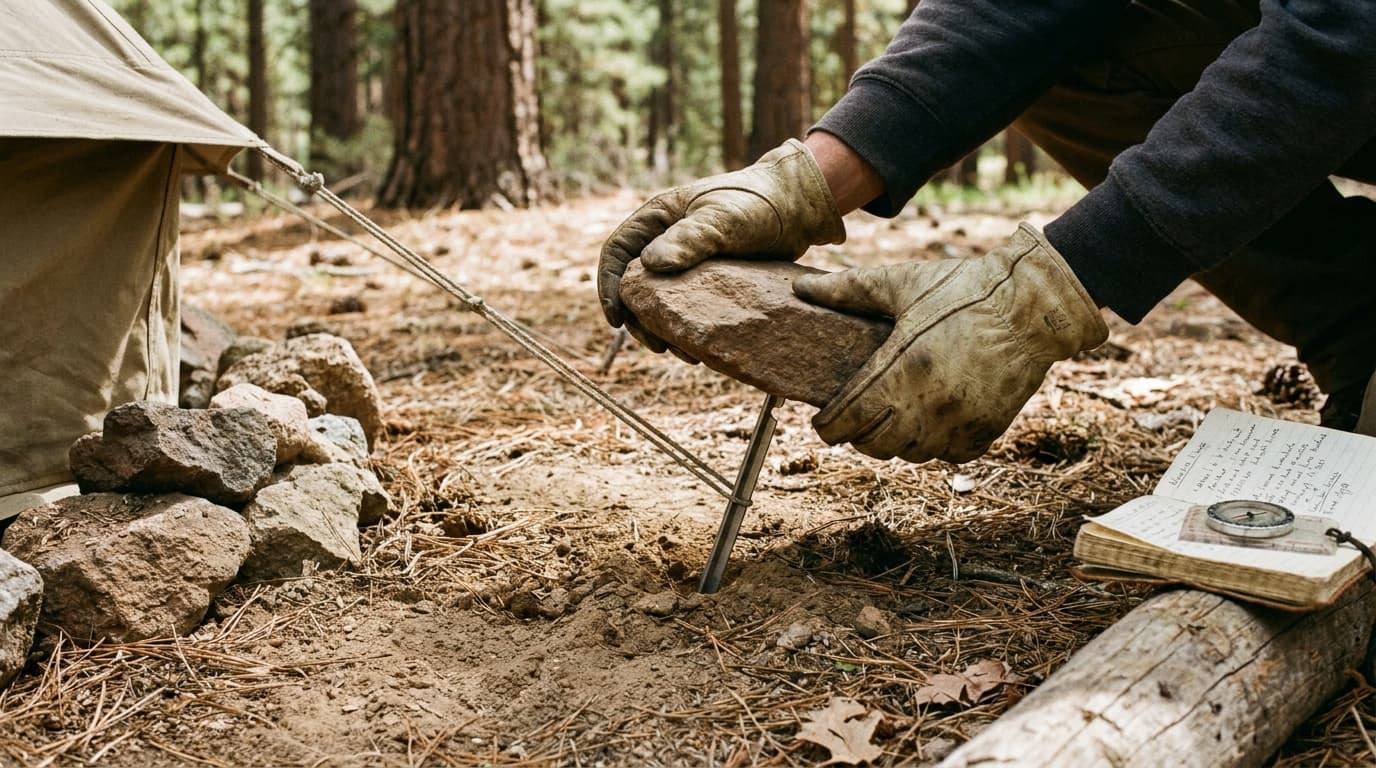
Bury a thick branch or rock 6 to 12 inches deep as a deadman anchor.
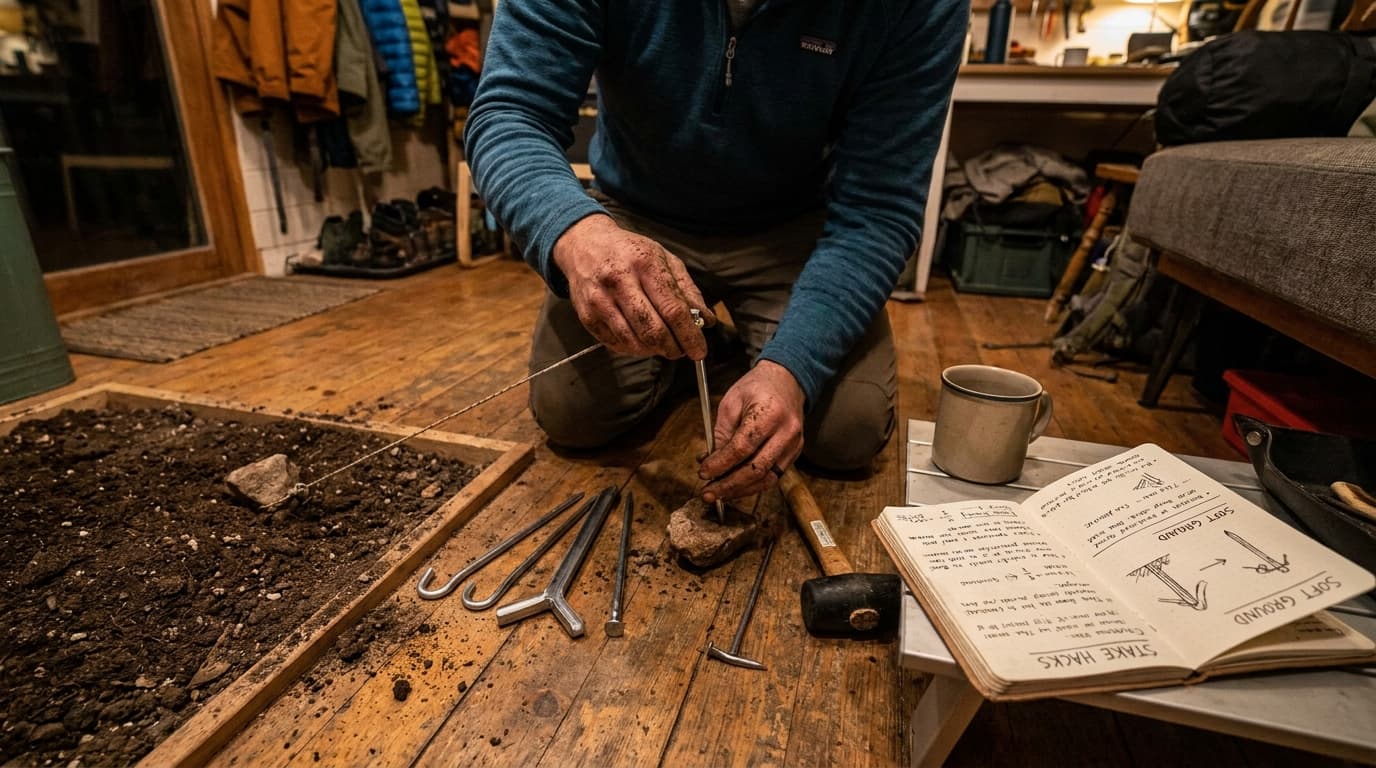
Use Y-shaped aluminum stakes for better holding power in loose loam.
Drive stakes at a 45-degree angle away from the tent for maximum leverage.
Why Standard Stakes Fail When the Ground Gets Mushy
When you are camping on a beach or in a soggy forest, the ground often lacks the structural integrity to hold a standard tent stake. It comes down to soil density. If you can push a stake into the earth with just one finger, it simply will not hold when the wind picks up. In these conditions, the ground acts more like a liquid than a solid, allowing the stake to slice through the mud rather than gripping it. Wind gusts are the primary culprit, putting sudden, high-tension loads on your guylines that soft soil cannot resist.
Imagine you are pitched on a windswept dune in Iceland. The sea breeze starts as a gentle hum but quickly turns into sudden, high-tension gusts. Because the sand is loose, every pull on the guyline acts like a lever. Without enough resistance, those stakes will pop out of the ground like corks from a champagne bottle, leaving your tent flapping uselessly in the storm. This is exactly why checking your soil before you pitch is the most important step in your setup.
Even the lightest setups need a baseline level of security. Comparative testing shows that the weakest stakes need at least 24 pounds of resistance to be effective under normal conditions. In forest duff or soft loam, a lightweight titanium shepherd hook often fails because it lacks surface area. These thin wires are also prone to spinning in the ground, which lets the guyline slip right off the hook. This is why many experienced hikers carry a mixed bag of stakes, using sturdy Y-shaped aluminum options for the primary ridge lines where tension is highest.
Geometry often matters more than the material itself. A 7-inch Kelty No-bendium stake or a 5.5-inch Big Sky Y-Not stake provides significantly more holding power than a simple nail stake because the Y-shape creates more friction against the soil. If the ground is so mushy that even these fail, you may need to switch tactics entirely. For the softest sand or mud, the deadman anchor technique is your best bet, using a buried rock or stick to create a broad surface of resistance that the wind cannot easily budge.
Assess soil density before you pitch by trying to push a stake in with one finger; if it goes in easily, it will not hold a storm.
Carry a mix of stakes, including at least four Y-shaped aluminum stakes for your primary guylines to ensure you hit that 24-pound resistance threshold.
Avoid using thin titanium shepherd hooks in soft loam or forest duff, as they are prone to spinning and releasing the line.
Drive your stakes at a 45-degree angle away from the tent and ensure the head is flush with the ground to maximize leverage.
Look for high-visibility modifications like orange paint or reflective cord loops so you do not lose your stakes in the brush when packing up.
The 24-Pound Rule for Tent Security
Getting a tent to stay down isn't just about pushing metal into the dirt. There is a specific threshold for safety: even the weakest stakes need to provide at least 24 pounds of pull-out resistance to be effective. If your stake cannot fight back with that much force, a sudden gust will pluck it right out of the ground like a cork from a bottle.
Imagine using ultralight titanium hooks in soft forest duff. Because these stakes are so thin, they often spin like a needle in a cushion, letting the guyline slip off entirely. In loose soil, these hooks fail to grab enough earth to meet that 24-pound mark, leaving your tent vulnerable to collapsing during the first real wind gust of the night.
When the ground is too mushy for any stake to hold, you have to get creative with your anchors. This is where carrying a mixed bag of gear or using alternative anchoring techniques saves your pitch.
Pack at least four Y-shaped aluminum stakes for your primary ridge lines to ensure you hit the necessary resistance threshold.
Test soil density by trying to push a stake in with one finger; if it slides in without effort, it will not hold a storm.
Use a deadman anchor by tying your line to a thick stick or large rock and burying it 6 to 12 inches deep in soft sand.
Avoid using thin wire stakes in soft loam where they are prone to rotating and releasing the tension on your tent.
The Deadman Anchor: Your Secret Weapon for Soft Soil
When the ground is too soft for a stake to bite, you are essentially trying to anchor your home into a liquid. In loose sand or mushy loam, a vertical stake acts like a knife through butter because there is simply not enough friction to hold back the pull of a wind-whipped tent. This is where the deadman anchor becomes your best friend. Instead of relying on a thin piece of metal, you use a horizontal object buried deep enough that the weight of the earth above it does the heavy lifting for you.
The physics are simple but incredibly effective. A standard stake relies on the friction of its sides against the dirt, but a deadman anchor relies on the overburden—the actual weight and volume of the soil sitting on top of the buried object. By burying a branch or rock 6 to 12 inches deep, you are forcing the wind to move several pounds of earth before the anchor can even budge. This creates a bombproof hold that can withstand the same high-tension loads that would pop a titanium hook right out of the ground.
Imagine you are pitching your tent on a beach where the sand is so loose you can push a stake all the way in with your pinky finger. If you use a standard setup, the first midnight gust will yank that stake out like a loose tooth. But if you find a sturdy stick about a foot long, tie your guyline to its center, and bury it a foot deep, that stick isn't going anywhere. It is like trying to pull a buried 12-inch horizontal log through the sand versus a vertical nail; the broad surface area of the stick creates a deadman that refuses to budge.
You also do not need fancy gear to make this work. A thick branch, a flat rock, or even a stuff sack filled with sand can serve as the anchor. If you are using a stick, make sure it is strong enough not to snap under tension, as the forces during a storm can be surprisingly high. While Y-shaped aluminum stakes are usually the gold standard for versatility, they cannot compete with the sheer surface area of a buried 10-inch log. This trick is a fundamental part of outdoor hacks and tricks for DIY camping gear shelters and survival because it turns the environment itself into your most reliable piece of equipment.
Find a horizontal anchor like a thick branch or a heavy, flat rock that is at least 8 to 12 inches long.
Tie your guyline securely around the middle of the object using a clove hitch or a similar non-slip knot.
Dig a trench 6 to 12 inches deep, perpendicular to the direction of the tent, and place your anchor inside.
Pack the soil or sand back down firmly on top of the buried anchor to increase the weight and resistance.
Adjust the tension on your guyline once the deadman is buried to ensure the line is taut and the anchor is set.
Which Stake Shape Actually Holds the Most?
When you are standing in a gear shop, it is easy to get lured in by the shiny finish of titanium. But if you want to stay dry during a midnight storm, the geometry of your stake matters much more than the material. Y-shaped aluminum stakes are widely considered the gold standard because they offer the best holding-power-to-weight ratio. While even the weakest tent stakes in comparative testing require at least 24 pounds of force to pull out under normal conditions, Y-stakes provide a much higher ceiling of safety by gripping the soil with three distinct surfaces.
Take a hiker choosing between a 7-inch Kelty No-bendium nail stake and a 5.5-inch Big Sky Y-Not stake in loose, forest loam. You might assume the longer Kelty stake would win, but the Y-shape of the shorter Big Sky stake often provides a more reliable anchor. The nail stake can slice through soft dirt like a hot wire through butter, whereas the Y-stake acts like a mini-plow that refuses to move. This is why many experienced backpackers carry a mixed set, using sturdy Y-stakes for the primary ridge lines and saving lighter options for secondary tie-outs.
This brings us to the common frustration with titanium shepherd hooks. These thin wire stakes are incredibly light, but they have a major design flaw because they love to spin in the ground. Imagine waking up at 2 AM to a collapsed tent wall because a Ti hook rotated 180 degrees overnight, letting the guyline slip right off the head. Donna C, an experienced camper, mentioned she hates how these stakes tend to pop out or get lost in the brush. To minimize this, you have to push them all the way into the ground until the hook is flush with the soil, which reduces the prying force that causes them to rotate.
Beyond just holding power, you have to think about visibility. Both aluminum and titanium stakes have a habit of disappearing into the dirt and leaf litter the moment you set them down. Improving your essential survival skills for staying safe in the wilderness includes knowing how to keep track of your gear in the field. Many hikers use orange spray paint, reflective cord loops, or even a bit of bright nail polish on the stake heads to ensure they do not leave half their kit behind when they break camp in the morning.
Also, keep in mind that Y-stakes come with a small maintenance trade-off. Their grooves are excellent at catching and holding onto mud and dirt. If you do not give them a quick wipe or a tap against a rock before packing them away, you will end up with a mess inside your tent bag. It is a small price to pay for a secure pitch, but it is one of those outdoor hacks and tricks for DIY camping gear shelters and survival that keeps your gear in top shape for years.
Switch to Y-stakes for your primary ridge lines to ensure the most critical points of your tent stay anchored in high winds.
Push wire shepherd hooks completely flush with the ground to prevent them from rotating and releasing your lines during the night.
Carry a mixed bag of stakes to balance total pack weight with the specific security needed for high-tension tie-outs.
Apply bright orange paint or reflective cord to your stakes to make them easier to spot in the dirt and prevent accidental gear loss.
Clean the grooves of your Y-stakes before packing them to prevent dried mud from transferring to your tent fabric.
The Problem with Titanium Shepherd Hooks
Titanium shepherd hooks are popular for ultralight backpacking, but their thin, round profile creates a major stability issue. These wire stakes are notoriously prone to spinning in the soil when the wind pulls on the line. Research shows a basic stake can hold 24 pounds of force, but that rating is useless if the hook rotates away from the tension and lets the guyline slip right off.
Imagine waking up at 2:00 AM to a cold tent wall draped over your face because a single hook rotated 180 degrees while you slept. This allows the line to slide off the top, leaving your shelter vulnerable to the next gust. Learning essential survival skills for staying safe in the wilderness means recognizing these gear limitations before a midnight collapse occurs.
Push shepherd hooks all the way into the ground until the head is flush with the soil to minimize the turning force that causes spinning.
Switch to Y-shaped stakes for your primary ridge lines because their geometry provides a more secure anchor that cannot rotate in the dirt.
Bury a horizontal branch or heavy rock as a deadman anchor if the ground is too soft or sandy for wire stakes to bite.
Setting Your Stakes for Maximum Grip
Getting a solid grip starts with the angle and how deep you go. You want to drive your stakes at a 45-degree angle pointing away from the tent. This positioning creates the most resistance against the tension of the guyline. If you drive it straight down, the wind can pull it out like a loose tooth because there is no counter-pressure from the soil. Pushing the stake all the way in until the head is flush with the dirt is the only way to ensure the ground is doing the heavy lifting.
Think of the stake like a lever. The deeper the pivot point stays in the earth, the harder it is for a gust of wind to move it. Even the weakest tent stakes usually require at least 24 pounds of force to pull out when they are set correctly. If you leave the head of the stake sticking up, you are giving the wind a long handle to pry it right out of the soil. This is why longer options like the 7-inch Kelty No-bendium stakes often outperform shorter 5.5-inch stakes when you are dealing with loose loam or forest duff.
It really comes down to simple physics. If you leave a few inches of metal sticking out of the ground, you are making it easy for the wind to win. Pushing the stake all the way in until the head touches the dirt removes that leverage. Also, remember that your guyline should be at the very bottom of the hook or notch to keep the tension as close to the ground as possible. This prevents the stake from rotating, which is a common failure point for thin titanium wire hooks that tend to spin and release the line. If the soil is so soft that even a deep stake won't bite, you may need to look for outdoor hacks and tricks for diy camping gear like the deadman anchor technique.
Imagine you are setting up camp on a ridgeline where the wind never seems to stop. You watch your tent fabric snap and shudder with every gust. If your stakes are just barely in the ground, each tug of the line acts like a hammer claw pulling a nail. But when you drive those stakes flush with the soil at a sharp angle, the force is distributed across the entire length of the shaft. Understanding these essential survival skills for staying safe in the wilderness is what keeps your shelter standing when the weather turns ugly.
Drive stakes at a 45-degree angle away from your shelter to maximize the ground's holding power.
Ensure the head of the stake is flush with the soil to prevent the guyline from having leverage to pull it out.
Check your stakes periodically during a storm to make sure the tension has not caused them to wiggle or loosen in the mud.
Clear any rocks or debris before driving the stake to ensure you can reach the full depth required for a secure hold.
Use a deadman anchor by burying a horizontal branch or rock 6 to 12 inches deep if the ground is too sandy for a standard vertical stake.
Simple Field Mods to Stop Losing Your Gear
Titanium and aluminum stakes are light and strong, but their metallic grey color makes them nearly invisible against dirt and leaves. It is incredibly easy to leave a few behind when you are rushing to pack up camp in the morning. This gear loss isn't just annoying; it can compromise your shelter's stability at your next site. High-performance gear is often designed for strength rather than visibility, so you have to bridge that gap yourself.
Imagine you are breaking camp in a dim, drizzly forest. You pull your stakes, but one slips into the tall grass. Because it blends perfectly with the shadows, you walk away without it. This is a common frustration for hikers, which is why many use outdoor hacks and tricks your survival essentials and bug out checklist to make their gear stand out. A small modification can save you the cost of replacing expensive titanium gear and the headache of a sagging tent.
While you are modifying your stakes for visibility, don't forget about maintenance, especially for Y-shaped aluminum stakes. These offer the best holding-power-to-weight ratio, but their deep grooves collect mud like a shovel. If you pack them away dirty, that dried grit can abrade your lightweight sil-nylon tent floor during transport. Learning these essential survival skills for staying safe in the wilderness includes protecting your gear from unnecessary wear and tear.
Think about a scenario where you have spent the night in thick, wet clay. When you pull your Y-stakes, the center channel is packed solid. If you don't clean that out, you are essentially putting a muddy file inside your tent bag. Keeping a tiny piece of a green scrubby pad in your stake kit allows you to wipe those grooves clean in seconds, ensuring your tent fabric stays pristine for your next trip.
Spray the top two inches of your stakes with bright orange spray paint to make them pop against the ground.
Tie a small loop of reflective cord through the head of the stake to help you find them with a headlamp at night.
Apply a small amount of brightly colored nail polish or Plasti-dip to the heads for a durable, high-visibility finish.
Keep a small piece of a green scrubby pad in your stake bag to quickly clear mud from Y-stake grooves before packing.
Check your stake count every time you pack up to ensure no metallic gear was left camouflaged in the dirt.
Cleaning and Maintenance for Y-Stakes
Y-shaped aluminum stakes are popular for their high holding-power-to-weight ratio. They grip well in most soils, though you should use a deadman anchor with a buried rock if the ground is pure sand. However, the same design that holds the ground also traps it in deep grooves that act like tiny shovels.
Packing these stakes while they are caked in mud is a mistake. When that mud dries, it turns into an abrasive grit that can ruin your tent. This rough material rubs against your sil-nylon floor during transport, wearing down the waterproof coating. Learning essential survival skills for staying safe in the wilderness includes knowing how to protect your shelter from this kind of wear.
Imagine a morning after a rainy night in thick, sticky clay where the stake channels are packed solid. Taking a few seconds to wipe them with a green scrubby pad keeps your gear in top shape and prevents the mud from acting like a file against your tent fabric.
Keep a small piece of a green scrubby pad in your stake bag for quick field cleaning.
Wipe the grooves of Y-stakes clean before they go into the storage sack.
Check the stake channels for dried mud that could abrade your tent floor during transport.
Rinse stakes thoroughly once you get home to prevent long-term grime buildup.
Final Takeaways for a Secure Pitch
Pitching a secure tent requires matching your gear to the soil density. Y-stakes are the gold standard for versatility because their shape provides a high holding-power-to-weight ratio in most conditions. However, when you encounter sand or loose loam, the deadman technique is the only way to keep guylines taut. Using outdoor hacks and tricks for DIY camping gear shelters and survival helps you adapt when standard stakes fail to bite.
Imagine a hiker caught in coastal gusts where the soil is like dust. Standard stakes might pop out under as little as 24 pounds of force, but a deadman anchor with a buried stone creates a bombproof point that the wind cannot budge. This shift to horizontal anchoring keeps the shelter standing through the night, and we address more specific gear questions in the FAQ below.
Carry a mix of Y-stakes for main lines and lighter hooks for secondary points.
Bury a rock or stick 6 to 12 inches deep for a reliable deadman anchor.
Drive stakes at a 45-degree angle away from the tent to maximize grip.
Clean mud from stake grooves before packing to prevent tent fabric damage.
Frequently Asked Questions
If you're dealing with pure sand, standard stakes usually won't cut it. You want something with a lot of surface area like a wide U-shaped sand stake. If you're trying to keep weight down, Y-shaped aluminum stakes are the way to go because they offer the highest holding-power-to-weight ratio for most hikers.
Here's the thing. In really soft sand, even the best stake might fail. That's when you should switch to a deadman anchor by burying a heavy stick or a rock about 12 inches deep to let the weight of the sand do the heavy lifting.
It's a common headache with thin titanium shepherd hooks. Because they're smooth and round, they don't have any bite to keep them from twisting when the wind picks up. Titanium shepherd hook stakes are prone to spinning, which basically dumps your guyline on the ground.
To fix this, you have to push the stake all the way in until the hook is pressed firmly against the soil. This creates enough friction to keep the head from turning. If the ground is too rocky to get them flush, try placing a heavy stone directly over the stake head to pin it down.
You should aim to bury a deadman anchor about 6 to 12 inches deep to get a solid hold. The exact depth depends on how dense the soil is. In dry sand, you might need to go even deeper to reach the heavier, moist sand that provides real resistance.
If you are dealing with snow, you have to bury the anchor and then wait about twenty minutes for the snow to freeze back together. This creates a solid block that is much harder to pull out than fresh, loose powder. Packing the area down with your boots helps speed up the process and makes the anchor much more stable.
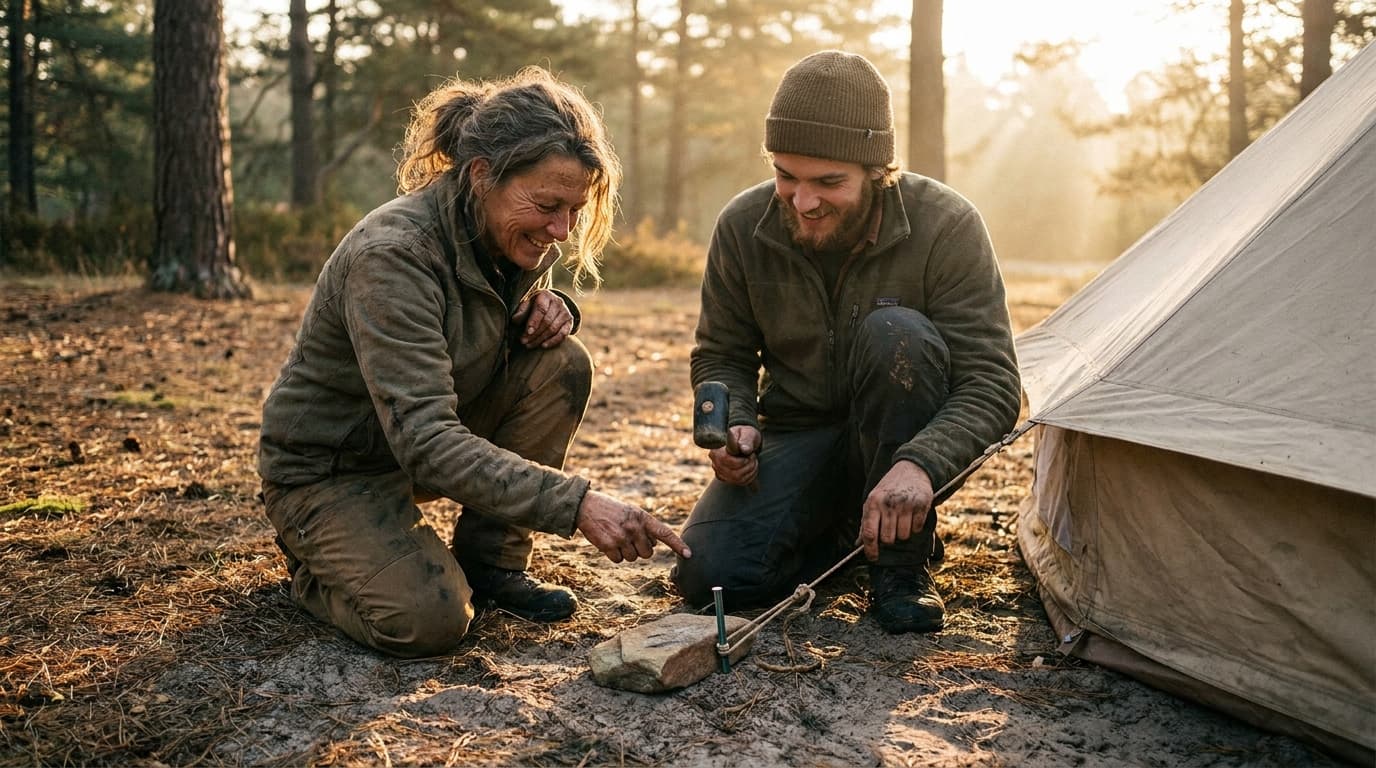
You can use rocks as anchors, but simply placing one on top of a stake is a common mistake that rarely works in a storm. A better trick is to use the big rock, little rock method where you tie your guyline to a small stone and then pin it down with a much larger one.
This creates a mechanical lock that prevents the cord from slipping out. Just be aware that the weakest tent stakes require about 24 pounds of force to pull out, so your rock pile needs to be significantly heavier than that to handle strong wind gusts. Also, keep an eye on sharp edges because they can fray your lines over time.
Conclusion
Keeping your tent secure when the ground is soft comes down to physics rather than luck. While standard stakes often fail in mushy soil, the quick trick for keeping tent stakes from pulling out in soft ground is the deadman anchor. This method uses buried weight instead of surface friction to hold your lines tight. Combining this technique with Y-shaped aluminum stakes gives you the holding power needed to survive a windy night without your shelter collapsing.
Understanding these mechanics means you can stop worrying about the weather and start focusing on the scenery. You now know that a simple branch or a heavy rock buried deep can be more effective than the most expensive titanium hook. It is all about being resourceful with what the environment provides and knowing when to ditch the vertical stake for a horizontal anchor.
Before your next trip, check your gear bag and consider adding a few Y-stakes for your main lines. Also, a quick splash of bright paint on the stake heads will keep you from losing them in the brush. A stable tent is the difference between a restless night and a great morning in the wild.
Every WilderReady guide is researched, written, and fact-checked in-house against trusted references such as the American Red Cross, the National Park Service, and the CDC before it goes live. We publish under this shared byline instead of invented personas, so you always know who stands behind the guidance you are reading.