Outdoor Hacks & Tricks: How to Purify Water, Start Fires, and Build Shelters
Outdoor Hacks & Tricks: how to purify water with DIY hacks, beginner wilderness survival hacks guide, easy fire starting hacks for wet wood, DIY emergency shelter hacks for camping, off-grid...
Outdoor Hacks & Tricks: How to Purify Water, Start Fires, and Build Shelters
Outdoor Hacks & Tricks: how to purify water with DIY hacks, beginner wilderness survival hacks guide, easy fire starting hacks for wet wood, DIY emergency shelter hacks for camping, off-grid cooking hacks for camping are simple ways to solve survival problems with everyday items. These methods make any trip safer by using what you have on hand.
Many casual campers now use these 'Survivalist Lite' skills to stay self-reliant and prepared for gear failures. It's a smart way to feel confident while exploring.
You'll learn how to clean water, build shelters, start fires in the rain, and cook without a stove.
How to Purify Water With DIY Hacks When Your Filter Fails
If your fancy filter snaps mid-hike, you aren't out of luck. You can make water safe using solar disinfection (SODIS) or a layered gravity filter made from a plastic bottle and campfire remains. These outdoor hacks and tricks are part of a larger set of 10 specific survival camping tricks designed to keep you safe when gear fails.
Imagine you are five miles into a steep trail when your pump filter cracks against a rock. You have a half-empty water bottle and the embers of last night's fire nearby. Instead of panicking, you can use that bottle to trap the sun's UV rays or turn it into a makeshift filtration system that clears out the grit.
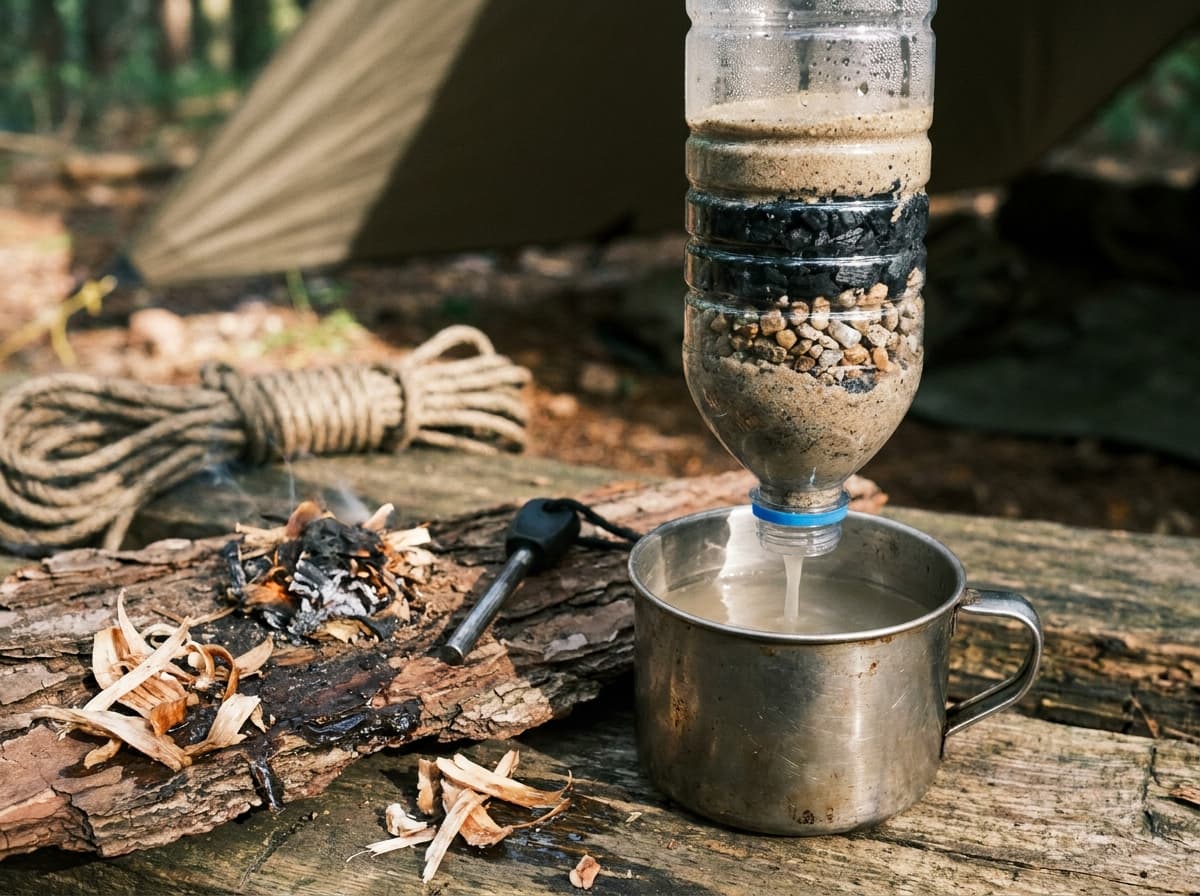
The charcoal filter trick is a classic survival move for a reason. By crushing up cold charcoal from your fire, you create a powerful layer that pulls out toxins and improves the swampy taste of pond water. While charcoal is great for chemicals, it won't kill the tiny bugs that make you sick, so you still need to boil the water after it drips through.
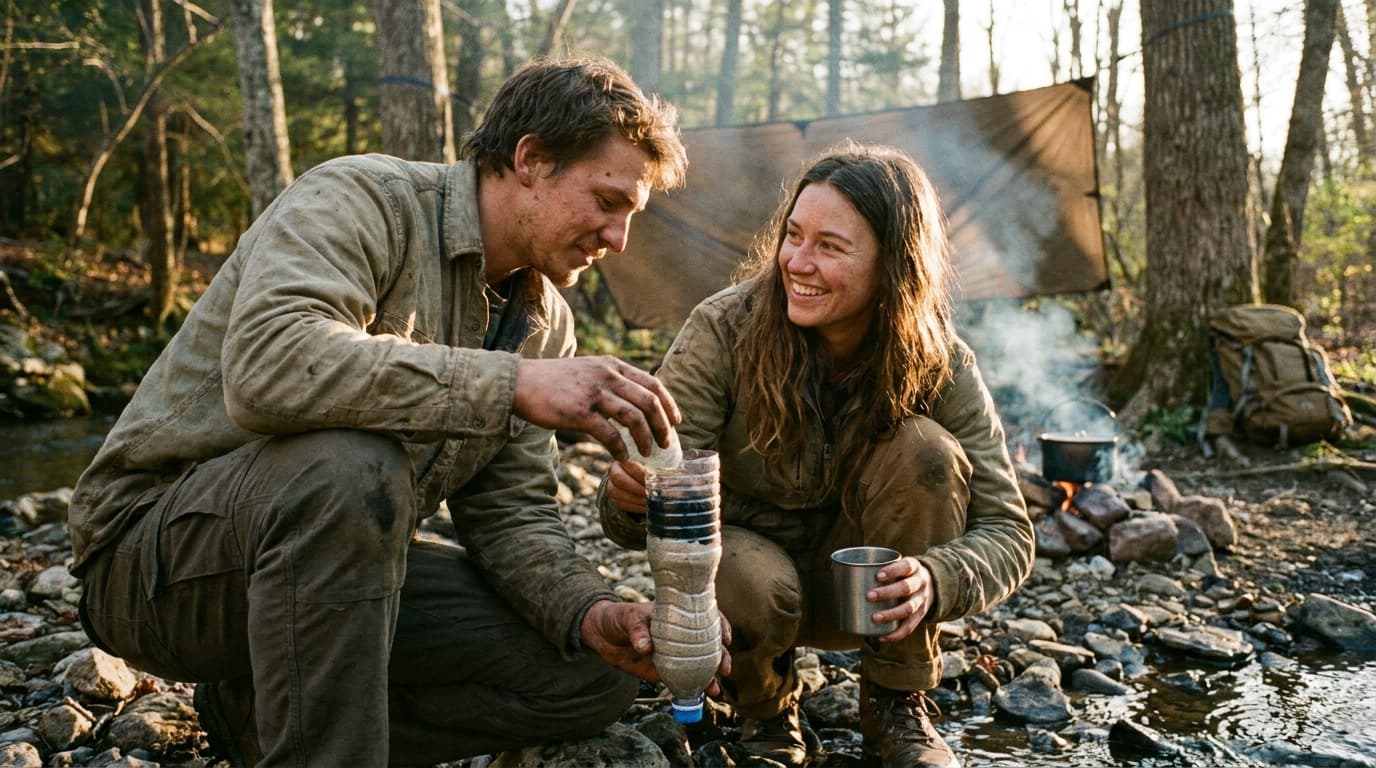
To build this, cut the bottom off a plastic bottle and puncture the cap. Layer in clean grass, then sand, then a thick middle layer of crushed charcoal, and top it off with more sand and pebbles. This process mimics how the earth naturally filters groundwater, providing a clear result even from murky sources.
Key insights:
Use the SODIS method by placing clear plastic bottles in direct sunlight for at least six hours to kill pathogens.
Build a gravity filter using layers of sand, grass, and crushed charcoal to remove sediment and bad tastes.
Boil all filtered water for at least one minute to ensure it is free of bacteria and viruses.
Look for clear, moving water sources rather than stagnant puddles to start your purification process.
Store your charcoal from campfires in a dry bag so you always have a filtration medium ready for emergencies.
Imagine you are deep in the woods and your pump filter clogs with silt. You find a plastic bottle, cut off the bottom, and poke a hole in the cap. By layering grass, sand, and crushed charcoal from your fire, you create a gravity filter. As the water slowly drips through, the charcoal removes the swampy flavor and sediment, leaving you with much clearer liquid.
While this trick cleans the water, it is not a complete solution. Charcoal is great for removing toxins and debris, but it does not kill the tiny bugs that cause illness. You still need to heat your water until it reaches a rolling boil to ensure it is safe to drink.
Key insights:
Crush charcoal into small bits to increase its ability to trap toxins.
Layer sand and grass around the charcoal to keep black dust out of your drinking water.
Boil your filtered water for at least one minute since charcoal cannot kill bacteria.
A Beginner Wilderness Survival Hacks Guide for Staying Safe
Surviving an unexpected night in the woods starts with your mindset, not just your gear. The most important tool you have is the ability to stay calm and follow the "Rule of Threes," which reminds you that shelter and warmth are your immediate priorities. Beginners often panic and try to hike out in the dark, but the smartest move is usually to stay put and focus on staying dry.
Imagine you are on a late afternoon hike and realize the trail markers have vanished just as the sky turns orange. Your instinct might be to run faster to find the path before dark, but that is how people get truly lost or injured. Instead, a prepared hiker stops immediately. They find a flat spot away from the wind, pull out a space blanket, and start gathering dry wood while they can still see. This shift from hiker to survivor happens the moment you accept you are not moving until sunrise.
Key insights:
Follow the S.T.O.P. rule: Sit, Think, Observe, and Plan before taking any action.
Prioritize shelter and fire over food, as you can last much longer without a meal than you can without warmth.
Stay in one place to make it easier for search teams to find you.
Easy Fire Starting Hacks for Wet Wood and Rainy Days
When the sky opens up and everything in the woods turns into a soggy sponge, you have to look past the surface. Standard kindling like dry leaves won't work because they're the first things to get soaked. The secret is getting to the dry wood hiding inside wet branches and using high-energy DIY starters that resist moisture.
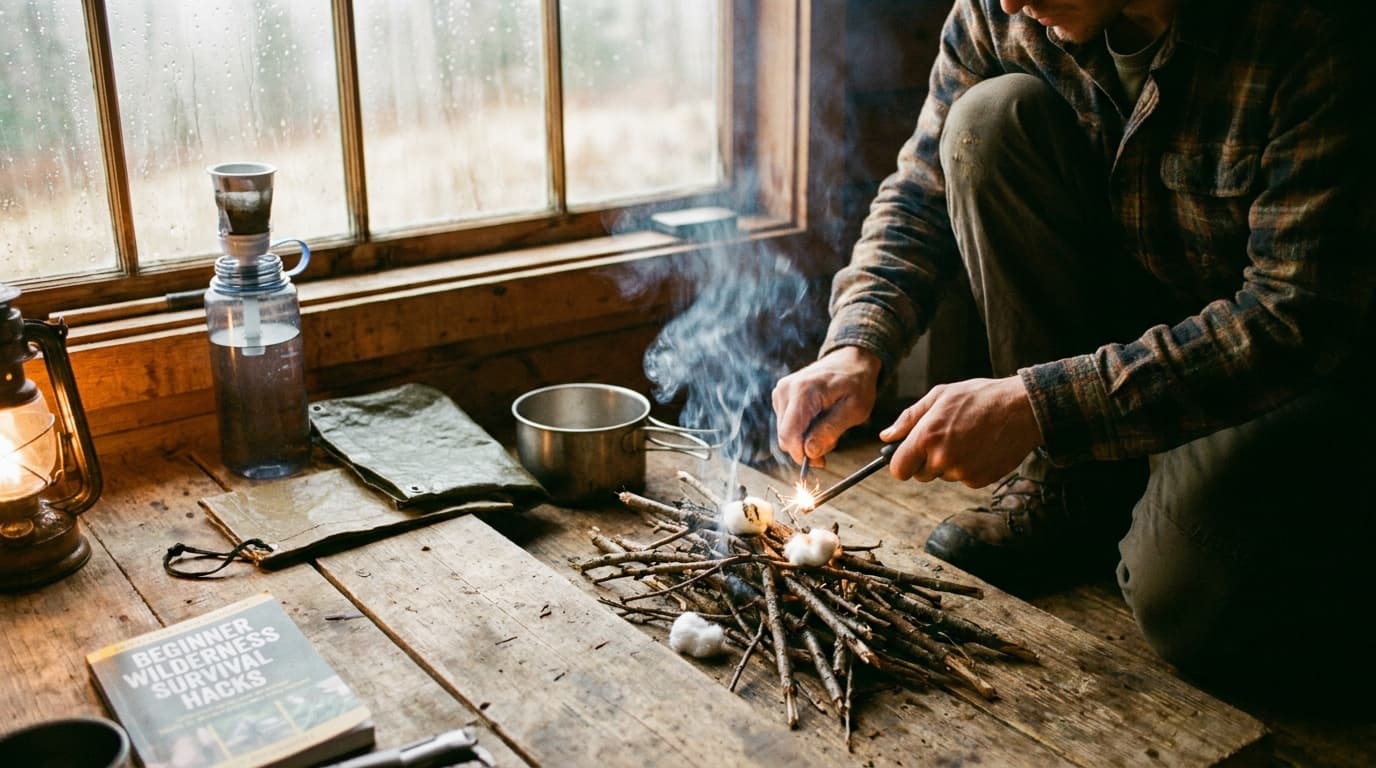
Imagine you're out in the woods after a sudden summer thunderstorm. Everything is dripping, and the pine needles you usually rely on are a matted, wet mess. You’re shivering, your gear is damp, and you need warmth fast. This is where most people give up, but a seasoned camper knows that even a soaked log is often bone-dry once you shave away the outer layers.
Shave feather sticks by slicing thin curls into a dry stick without cutting them off to create a high surface area for catching sparks.
Pack cotton balls soaked in melted wax or petroleum jelly into a small container for a waterproof tinder that burns for several minutes.
Split larger logs using a sturdy knife or axe to reach the heartwood, which remains dry even after heavy rain.
Build a small platform of sticks or bark to keep your fledgling flame off the cold, wet ground so it doesn't get extinguished immediately.
DIY Emergency Shelter Hacks for Camping in a Pinch
When your main gear fails, you need to turn your pack's contents into a life-saving barrier. Building a dry place to sleep isn't about luxury; it's about stopping the wind and shedding rain so your body heat stays where it belongs. You can create a surprisingly effective shelter using just a few lightweight items like a space blanket, some cord, and a little bit of creativity.
This DIY approach is a big part of the Survivalist Lite movement, where casual campers learn essential survival skills to stay self-reliant. It is about being prepared for the what-if scenarios without needing a military-grade kit. Knowing how to rig a basic shelter is just as important as knowing how to stay fresh in the wild or how to find clean water.
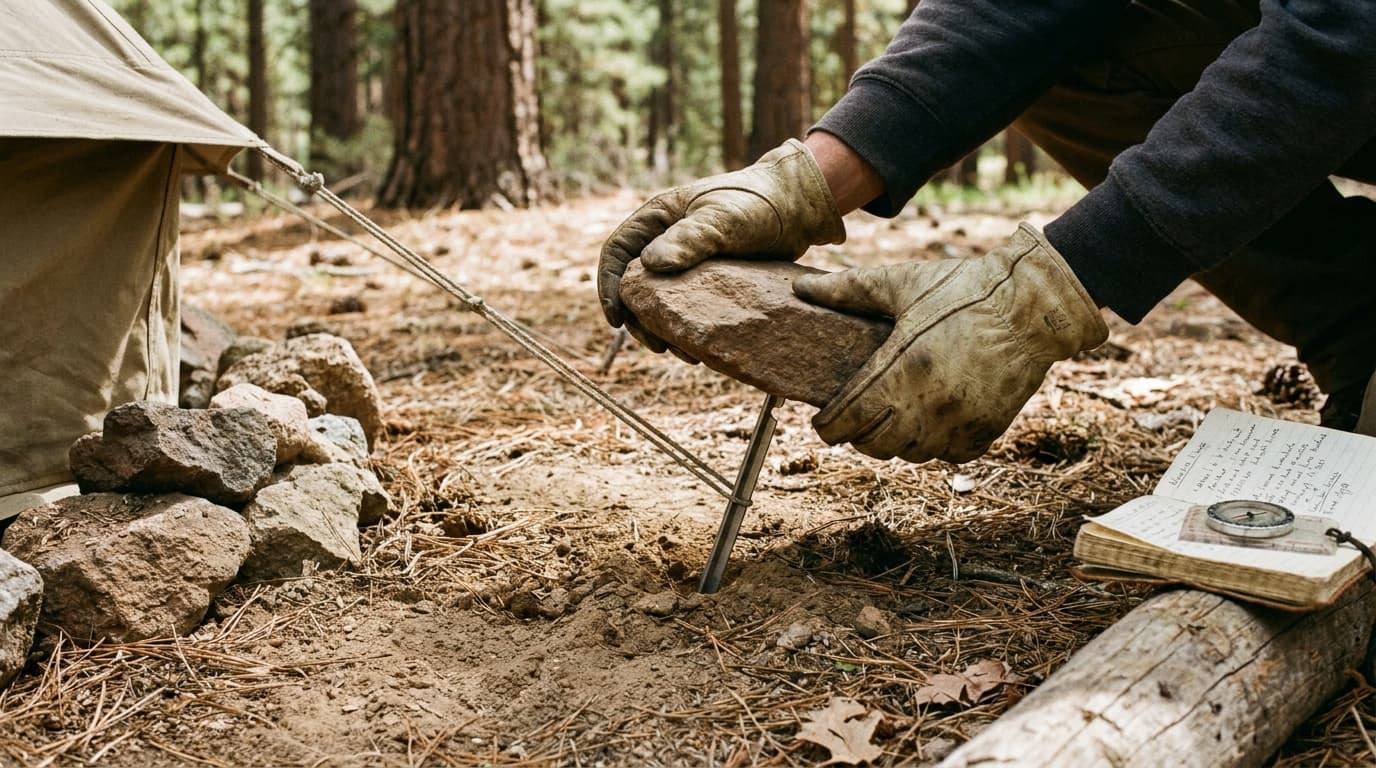
Picture this: you are deep in the woods when a heavy branch falls and snaps your main tent pole. The clouds are darkening, and you know a downpour is only minutes away. Instead of shivering in a soaked sleeping bag, you pull out a simple tarp and some paracord. You quickly find two trees, string a ridgeline, and stake down the corners to create a tight A-frame. Within ten minutes, you have a dry, wind-resistant home that saves your night.
Rig an A-frame lean-to by draping a tarp or space blanket over a taut line of paracord tied between two sturdy trees.
Angle the back of your shelter into the wind so the breeze blows over the top rather than into your sleeping area.
Stack a thick layer of dry debris like pine needles or ferns on the ground to create a thermal barrier between you and the cold earth.
Use heavy rocks or logs to weigh down the edges of your tarp if the ground is too rocky or frozen for tent stakes.
Keep your backpack and boots tucked under the highest point of the shelter to ensure your gear stays dry during the storm.
Off-Grid Cooking Hacks for Camping Without a Stove
Cooking a hot meal without a stove is all about controlling airflow and fuel. If you forget your propane or your burner breaks, you can still get a steady flame by using a Dakota fire pit or a DIY buddy burner. These off-grid cooking hacks turn basic materials into efficient heat sources that will not leave your pots covered in thick soot like a standard campfire might.
These methods are part of the 10 essential survival camping tricks that help outdoor enthusiasts stay prepared. This shift toward self-reliance is part of the survivalist lite movement. More campers are realizing that outdoor hacks and tricks for staying safe and warm in the wild are just as important as having the right tent. It is about being ready for the what-if moments without needing a massive survival kit.
Imagine you just finished a long day of hiking and you are ready for dinner. You reach into your pack only to find your fuel canister is empty or sitting on your kitchen counter at home. Instead of eating a cold energy bar, you find a small tin and some cardboard. By creating a concentrated heat source, you can have boiling water for your meal in minutes without needing a single drop of gas.
Key insights:
Dig a Dakota fire pit by making two holes in the ground connected by a tunnel to create a natural chimney effect for high heat.
Make a buddy burner by coiling strips of cardboard into an empty tuna can and soaking them in melted wax for a waterproof stove.
Place a flat and clean rock over your coals to act as a natural frying pan for cooking meat or toasting bread.
Staying safe in the woods often comes down to a few core skills rather than a heavy backpack. These 10 essential survival camping tricks focus on purifying water, building quick shelters, and starting fires in the rain. Using everyday items makes these solutions accessible for anyone joining the growing survivalist lite movement.
Imagine you are spending a Saturday afternoon in your backyard with the kids, turning a simple tarp and some paracord into a sturdy A-frame shelter. You are not just playing. You are building the muscle memory needed to handle a snapped tent pole or an unexpected night on the trail. Testing these DIY hacks in a low-stakes environment is the best way to ensure they work when the weather gets grumpy.
While modern gear is helpful, self-reliance is about what you can do when that gear fails. By practicing these methods now, you turn abstract survival knowledge into practical skills that stick with you.
Key insights:
Practice your A-frame shelter and fire-starting techniques at home first.
Keep a stash of homemade tinder, like wax-covered cotton, in your emergency kit.
Focus on the Rule of Threes to prioritize shelter and fire when you are in a pinch.
Frequently Asked Questions
You can, but you should treat them as your emergency backup plan rather than your first choice. These hacks are designed for those moments when your main filter breaks or you find yourself without your usual gear.
The guide identifies 10 specific survival camping tricks that include these kinds of DIY fixes. While a homemade filter using sand or charcoal can do a lot of the heavy lifting, it is always a good idea to boil the water afterward if you have the means. It adds an extra layer of safety to ensure you are not picking up anything that could make you sick.
Remember that these methods are about making do with what you have. They are great skills to know, but they require a bit more care and attention than just pumping a store-bought filter.
The absolute easiest one to put together is cotton balls soaked in petroleum jelly. You likely have both in your cabinet right now, and they work better than many expensive options you would find at an outdoor store.
Since DIY fire starters are essential survival skills for camping, this is a perfect project for beginners. These little starters catch a spark instantly and burn for several minutes, which gives you plenty of time to get larger sticks to catch even if the wood is a bit damp.
Just keep a few in a small waterproof container like a pill bottle or a zip-top bag. When you are ready to use one, pull it apart slightly to expose the dry fibers inside, and it will take a spark from a ferro rod or a match almost immediately.
A well-built DIY shelter can keep you safe and relatively warm through the night, but it really depends on your insulation. If you use natural materials like leaves and pine needles to create a thick bed and walls, you'll find that it traps your body heat much better than a thin tent would.
Here's the thing: the goal is to create a small space that minimizes the air your body has to heat up. According to guides on essential survival skills, building these structures is a core skill for any camper. Just remember that the thicker the walls, the longer you'll stay cozy when the temperature drops.
It is totally safe as long as you start with the basics and don't overcomplicate things. Most beginners find that using simple fire starting hacks makes the whole process much easier. You don't need a fancy stove to make a great meal, but you do need to be careful about where you set up your fire.
Also, it's smart to practice with DIY fire starters at home before you head out. This helps you get comfortable with how flames behave. Since more casual campers are joining the 'Survivalist Lite' movement, there are plenty of easy ways to cook safely without feeling like you're in a high-stakes survival situation.
Conclusion
So what does all this mean for your next trip? Learning a few Outdoor Hacks & Tricks like how to purify water with DIY hacks or getting a fire going in the rain isn't just about being a survivalist. It is about feeling a bit more at home in the woods. When you can turn a plastic bottle into a filter or a few wet sticks into a warm blaze, the wilderness starts to feel less like a challenge and more like a place where you belong.
Your next move should be to try these out before you actually need them. This beginner wilderness survival hacks guide works best if you have already built that emergency shelter in your yard or tested out off-grid cooking hacks for camping on a weekend afternoon. It is much easier to learn when you are not cold, wet, or hungry.
Staying safe outdoors is mostly about preparation and keeping a cool head. Grab some paracord, find a few dry cotton balls, and get out there. The best adventures are the ones where you know exactly how to handle whatever the trail throws your way. Now go show the woods who is boss.
Every WilderReady guide is researched, written, and fact-checked in-house against trusted references such as the American Red Cross, the National Park Service, and the CDC before it goes live. We publish under this shared byline instead of invented personas, so you always know who stands behind the guidance you are reading.