How to Stay Fresh in the Wild: Clever Hacks for a Better Camping Shower
Let’s be honest: we all love the smell of pine needles and woodsmoke, but nobody loves the 'hiker funk' that sets in after a few days on the trail. It...
How to Stay Fresh in the Wild: Clever Hacks for a Better Camping Shower
Let’s be honest: we all love the smell of pine needles and woodsmoke, but nobody loves the 'hiker funk' that sets in after a few days on the trail. It is that awkward moment when you realize you might actually smell worse than the local wildlife. Finding clever Outdoor Hacks and Tricks to stay clean isn't just about vanity; it's about feeling human again when you're miles from a real bathroom and a hot water heater.
Staying fresh in the wild can feel like a losing battle, but it's easier than you think. Whether you want a portable shower hack for a warm rinse or just need some practical wilderness bathing tips to avoid skin irritation, there are ways to scrub up without hauling a heavy bathtub. From managing your 'funky zones' to building a DIY camping shower for pennies, a little bit of hygiene goes a long way in keeping you comfortable and healthy.
This guide covers how to stay clean backpacking while respecting the environment and following Leave No Trace principles. We will look at the 200-foot rule for soap, why your hands are your most important tools, and how a simple clothing rotation can save your sanity. Let's see how you can embrace the dirt without letting the grime take over your next outdoor adventure.
The Art of Not Smelling Like a Bear: Your Guide to Trail Hygiene
Let’s be honest. Backpacking is amazing, but staying clean without a shower is a challenge. We all love the outdoors, but nobody enjoys the hiker funk that settles in after a few miles. It is not just about vanity. Strong scents from body odor can actually attract bears and other wildlife, so keeping fresh is a smart safety move too.
The secret is focusing on the funky zones: your armpits, groin, and feet. Keeping these areas dry prevents skin irritation and issues like athlete’s foot. You do not need a full tub to get the job done. A quick wash with a compressed wipe does wonders. Some wipes expand from the size of a quarter to a full 12 inch towel with just a splash of water. Just remember the golden rule. Even biodegradable soap must stay at least 200 feet away from lakes or streams to protect aquatic life.
Do not forget your hands, either. Your hands are basically your eating utensils in the backcountry, so use sanitizer before every meal to avoid gambling with bacteria. If you are out for a while, rotating two sets of base layers helps immensely. You might not get a 20 minute hot shower, but you can definitely avoid walking around with monkey butt for days. It only takes a few minutes to feel like a person again.
Key insights:
Prioritizing the funky zones prevents medical issues like infections and chafing.
Hand hygiene is the primary defense against trail illness because hands act as eating utensils.
Biodegradable soap and toilet paper must be used 200 feet away from water sources.
Rotating two sets of base layers is recommended for multi-day trips to manage odors.
The 'Funky Zone' Strategy: Why Spot Cleaning is a Game Changer
Let’s be honest. Backpacking is amazing, but staying clean without a shower is a real challenge. When you're miles from a bathroom, trying to scrub your whole body is usually a waste of water and energy. Instead, savvy hikers use the 'funky zone' strategy. This means you stop worrying about your dusty shins and focus entirely on the 'critical three': your armpits, groin, and feet. These are the spots where sweat and bacteria love to hang out. If you ignore them, things get uncomfortable fast.
Why prioritize these specific areas? It’s not just about the smell, though keeping scents down helps avoid attracting bears or other wildlife. It’s actually a medical move. Keeping your 'funky zones' clean and dry prevents painful chafing and infections like athlete’s foot or jock itch. Nobody wants to walk ten miles with 'monkey-butt.' That raw, stinging skin irritation is caused by salt and moisture. A quick wipe-down with a compressed towel, like those PACT Outdoors wipes that expand from a quarter-sized disc to a 12-inch towel, makes a world of difference.
Just remember that even biodegradable soap must stay 200 feet away from lakes or streams to protect aquatic life. If you’re doing a spot clean, a little water and a dedicated rag go a long way. Many hikers also rotate two sets of base layers and socks, letting one set dry while wearing the other. It’s a simple system that keeps you hiking longer without the itch.
Your Hands Are Your Utensils In the backcountry, your hands are basically your eating utensils. You use them to grab trail mix, roll up tortillas, and pitch your tent. Because of this, hand hygiene is your primary defense against 'trail tummy.' It’s easy to get lazy when you’re tired, but skipping this step is a gamble with bacteria that you’ll probably lose. What does this mean for you? It means hygiene isn't just about comfort. It is about staying healthy enough to finish the loop.
The golden rule is simple: wash before you eat and always after using the 'cat hole.' While hand sanitizer is great for a quick fix, it doesn't actually remove dirt or certain hardy germs. If your hands are visibly filthy, use a little soap and water to scrub the grime away. Think of it as the most important part of your kitchen setup. Keeping your 'utensils' clean ensures your trip stays focused on the views rather than a dash to the woods.
Key insights:
Prioritizing the 'critical three' (armpits, groin, and feet) prevents medical issues like jock itch and athlete's foot.
Always use biodegradable soap at least 200 feet away from water sources to protect the ecosystem.
Hand hygiene is the most important factor in preventing 'trail tummy' and other backcountry illnesses.
Rotating two sets of base layers helps keep skin dry and reduces the risk of 'monkey-butt' irritation.
Your Hands Are Your Utensils
Think about how often you touch your face or grab a handful of trail mix while hiking. In the backcountry, your hands are basically your eating utensils. If they are dirty, you are essentially eating off a floor covered in bacteria. This is how 'trail tummy' starts. It is not just about visible dirt; it is about the microscopic bugs that can turn a great trip into a miserable trek for a bathroom in hours.
You might think a quick squirt of hand sanitizer fixes everything. While it is great for a fast refresh, it does not actually remove physical grime or certain hardy pathogens. For the heavy lifting - especially after using a 'cat hole' - real soap is king. But there is a catch. Even biodegradable soap can harm aquatic life if it gets into the water. To keep the wilderness healthy, you must use soap at least 200 feet away from any stream or lake.
For a better cleaning experience, try compressed wipes that expand with a splash of water. They are thick enough to actually scrub off the day's grime. The golden rule is simple: wash before you touch food and every single time you finish your business in the woods. Staying clean is not about being picky. It is your primary defense against getting sick when you are miles from a real bathroom.
Key insights:
Hand hygiene is the number one way to prevent illness on the trail.
Always use biodegradable soap at least 200 feet away from water sources.
Sanitizer is a backup, but soap and water are necessary for real safety.
Outdoor Hacks and Tricks for the Perfect DIY Camping Shower
Let’s be honest. Backpacking and camping are amazing, but staying clean without a bathroom is a real challenge. You do not need a tiled shower to feel human again, though. Sometimes a simple hack is all you need to wash off the day’s grime and keep your spirits high. Focus your energy on the funky zones like your armpits, groin, and feet. Keeping these specific areas clean and dry stops odor and prevents painful issues like chafing or infections. It also helps to rotate two sets of base layers. While you wear one pair of socks and underwear, the other set can air out or get a quick cleaning to stay fresh.
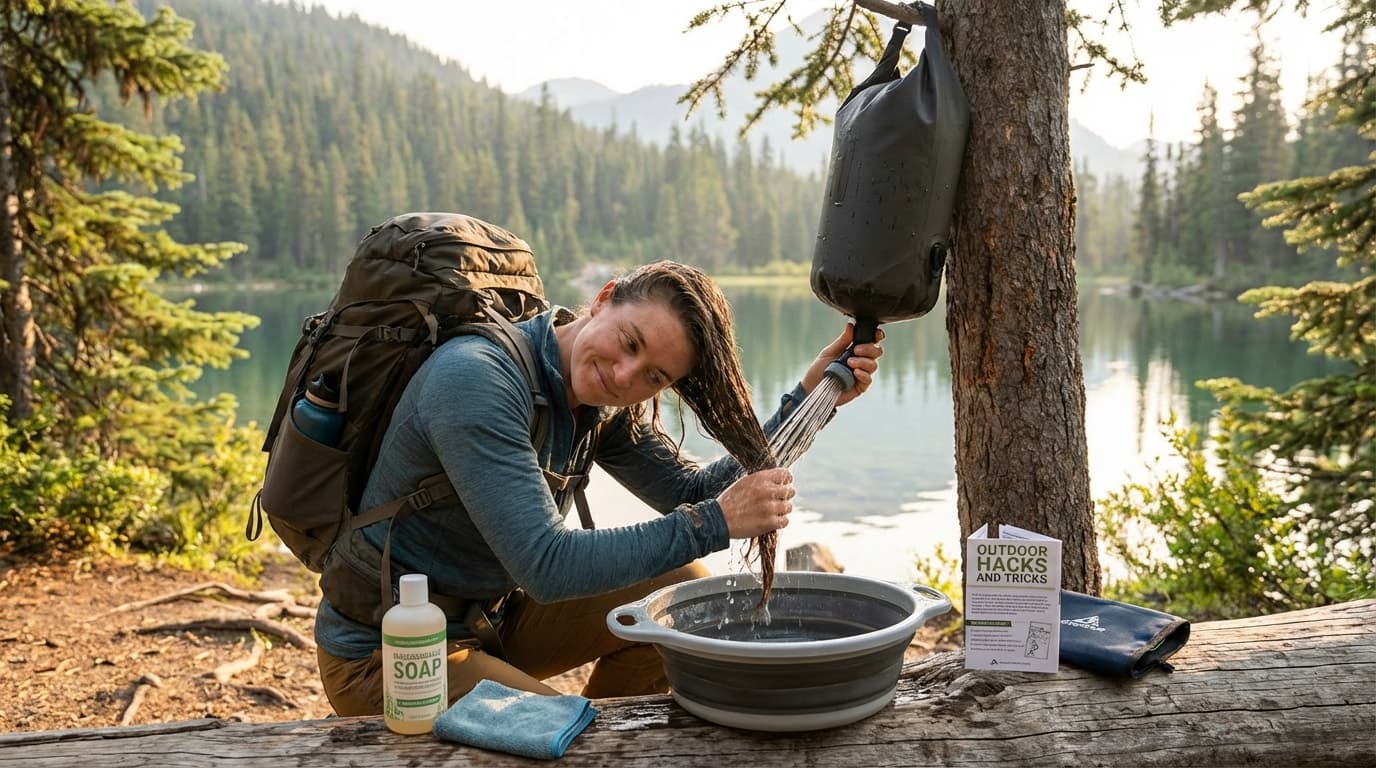
If you want that luxury feel, a solar shower is a great choice for your camp setup. These are basically large black bags that soak up the sun’s heat during the day. Just hang it from a tree and let physics do the work for you. But remember that they have limits. The water takes time to heat up depending on the elevation and the temperature outside. Also, the hoses are often short, so you might find yourself squatting while you wash. If the sun is not out, you can still use the bag for a cold rinse, which is much better than nothing when the trail gets dusty.
For a simpler approach, try the bucket bath. All you need is a water bottle, a small towel, and some biodegradable soap. Here is the catch: even if your soap is biodegradable, you must stay at least 200 feet away from any lakes or streams. This protects the fish and aquatic life from chemicals that do not belong in their home. If you want to skip the liquid soap altogether, compressed wipes are a smart move. Some brands make wipes that start the size of a quarter but expand into a thick twelve inch towel with just a little water. Warming the water first makes the experience feel much more like a real bath.
You do not have to spend a fortune on gear to stay fresh in the wild. You can build a portable shower for pennies using a dry bag or a simple 2-liter bottle. For the bottle version, just poke small holes in the cap. When you flip it over, you get a gentle stream that acts like a shower head. If you use a dry bag, you can attach a small nozzle to the bottom corner. The most important part is hanging your DIY setup from a sturdy branch that can support the weight. A gallon of water weighs about eight pounds, so a flimsy twig will just snap and leave you covered in mud.
Managing your water supply is everything when you are cleaning up. There is nothing worse than running dry while you still have soap in your hair. Wet yourself down, turn the water off, lather up, and then do a quick final rinse to save every drop. Also, keep an eye on your scents. Strong smells from body odor or even scented soaps can attract bears and other wildlife to your campsite. Keeping clean is not just about comfort. It is about staying safe. Remember that your hands are basically your eating utensils in the woods. Using hand sanitizer or a quick soap scrub before you touch your food is your best defense against getting sick on the trail.
Key insights:
Focusing on the groin, armpits, and feet prevents medical issues like athlete's foot and painful chafing.
Always use biodegradable soap at least 200 feet from water sources to protect the local environment.
Hand hygiene is the most important part of wilderness health because your hands act as your primary eating utensils.
Strong scents from hygiene products or body odor can attract curious wildlife like bears to your camp.
The Portable Shower Hack You Can Build for Pennies
Ever feel like you would trade your best boots for a quick rinse? You do not need a fancy rig to feel human again. A 2-liter soda bottle or a spare dry bag can become a gravity shower for pennies. Just poke small holes in the cap or add a simple nozzle. The big secret is finding a branch that will not snap. Water is surprisingly heavy and a fall mid-lather is a cold, muddy mess you do not need.
Once you are set up, focus on the funky zones like your armpits, groin, and feet. Keeping these areas clean prevents painful chafing and infections that can ruin a trip. Use your water slowly so you are not left soapy when the bottle runs dry. Also, stay at least 200 feet from any stream or lake. Even biodegradable soap can hurt fish and aquatic life if it drains directly into the water.
Watch out for scents, too. While scrubbing off the grime feels great, strong smells from soaps or body odor can attract curious bears. If a full rinse is not happening, a compressed wipe is a lifesaver. Some grow from the size of a coin to a full towel with just a tiny splash of water. It is a simple way to stay fresh and keep skin irritation at bay without the heavy lifting.
Key insights:
Gravity showers made from bottles or dry bags are effective, low-cost alternatives to heavy portable systems.
Prioritize cleaning high-friction areas to prevent medical issues like chafing and fungal infections.
Always follow the 200-foot rule for soap use to protect local water sources and wildlife.
The 200-Foot Rule: Why Your Soap Choice Matters
Let’s be honest - backpacking and camping are amazing, but staying clean without a shower? That’s a challenge. Most of us head into the woods with a bottle of biodegradable soap, thinking it is a magic solution that disappears instantly. But here is the reality: biodegradable soap is not a free pass to wash in the lake. If you suds up directly in a stream, you are introducing chemicals that can harm fish and disrupt the delicate balance of the water.
To protect the places we love, you must stay at least 200 feet away from any water source before you start scrubbing. That is roughly 70 big steps. This distance matters because soil acts as a natural filter. When you use soap on land, the bacteria in the dirt have a chance to break down the ingredients before they ever reach the water table. When you are finished, do not just dump your bucket in one spot. Scatter your gray water across the ground to follow Leave No Trace principles. Think of it this way: the wilderness is a shared home, and you would not pour soapy water on a friend's carpet.
Sometimes, even a bucket bath feels like too much work after a long day on the trail. This is where wipes become your best friend. If you have only ever used standard baby wipes, you are in for a surprise. Compressed wipes, like those from PACT, start out the size of a quarter but expand into a 12-by-12-inch thick towel with just a little water. It feels significantly more like a real washcloth and less like a flimsy piece of wet plastic.
Want a quick trick to make a wipe feel like a luxury spa treatment? Use a little warm water to expand it. It is a small move that makes you feel human again. Focus your attention on the 'funky zones' - your armpits, groin, and feet. Prioritizing these areas prevents painful medical issues like 'monkey butt,' chafing, or fungal infections. But remember, no matter what the packaging says, even 'flushable' wipes must be packed out in your trash bag. They do not break down fast enough for the backcountry, so keep the trails clean by taking them home.
The interesting part is how much a little effort changes your mood. You might not be able to take a full twenty-minute hot shower, but managing your scent and keeping your skin dry makes a world of difference. It also keeps wildlife away, as strong scents from body odor or flavored products can attract curious bears. Staying fresh is not just about comfort; it is about staying safe and being a good guest in the outdoors.
Key insights:
Biodegradable soap needs soil bacteria to break down, so keep it 200 feet from water.
Warm water transforms a compressed wipe into a much more refreshing experience.
Focusing on 'funky zones' is the best way to prevent skin infections and chafing.
Always pack out used wipes, even if they are labeled as biodegradable or flushable.
Wipes: The Waterless Way to Feel Human
Let’s be honest, backpacking and camping are amazing, but staying clean without a shower is a real challenge. When a real scrub isn't an option, you need a strategy that actually works. Compressed wipes are the secret weapon here. Take PACT wipes, for instance. They look like a stray quarter in your pocket, but add a little water and they grow into a thick 12-inch square towel.
Here’s a trick to make it feel like a spa day: use warm water. That tiny bit of heat makes a massive difference when you're scrubbing down your funky zones. Focusing on your armpits, groin, and feet isn't just about being polite. It is the best way to prevent painful skin irritation, monkey-butt, and infections. Think of it as a quick mental and physical reset.
But here is the catch. Even if the label says biodegradable or flushable, you can't just leave them behind. Those wipes must go in your trash bag and head home with you. It keeps the trails pristine and prevents wildlife from digging them up. It is a small effort for a huge environmental win.
Key insights:
Prioritizing the funky zones like armpits, groin, and feet prevents medical issues like chafing and infections.
Always pack out used wipes regardless of labels to protect wildlife and maintain Leave No Trace principles.
Managing Your Scent: Hygiene as a Safety Tool
Have you ever wondered why a bear might find your lavender-scented soap more interesting than a berry bush? It sounds strange, but your morning routine can actually turn you into a curious target. In the backcountry, strong smells are basically a dinner bell for wildlife. Bears have an incredibly powerful sense of smell, and they will follow a scent for miles just to see what it is. Whether it is the pungent scent of body odor or the artificial fragrance of a floral deodorant, animals associate these smells with something new and potentially edible. This is why switching to unscented products is not just about being polite to your hiking partners. It is a fundamental safety move.
The trick to staying fresh without becoming bear bait is to focus on what we call the funky zones. You do not actually need a full-blown bath every night to stay healthy. Instead, prioritize your armpits, groin, and feet. Keeping these vital areas clean and dry prevents chafing and nasty infections like athlete's foot. But here is the catch: even biodegradable soap can hurt the environment if you use it wrong. You must scrub up at least 200 feet away from any water source to protect the fish and plants. Think of it as a 70-pace rule. If you are too close to the creek, you are doing it wrong.
Your hygiene kit can quickly become a problem if you leave it laying around. PACT Outdoors makes these clever body wipes that start the size of a quarter and expand into a 12-inch towel with just a little water. They are great for a quick refresh, but they still need to be stored like food. Keep your wipes, toothpaste, and even your toothbrush in a bear-resistant container far from where you sleep. It is also smart to rotate two sets of base layers like underwear and socks. This lets one set dry out and air out while you wear the other, which keeps odors down and your skin happy.
Finally, think about how you handle waste. Even biodegradable toilet paper needs to be buried at least six inches deep and 200 feet from water. It seems like a lot of rules, but they exist for a reason. Your hands are basically your eating utensils out here, so keeping them clean is your main defense against trail illness. Use hand sanitizer before you touch your snacks to avoid gambling with bacteria. When you manage your scent and your waste correctly, you are not just staying fresh. You are making sure the only thing you leave behind is a few footprints.
Key insights:
Prioritizing the groin, armpits, and feet prevents medical issues like infections and chafing.
Hand hygiene is the most important defense against getting sick in the backcountry.
Scented products should be treated exactly like food and stored in bear-proof containers.
The Secret to Clean Clothes: The Two-Set Rotation
Let’s be real. Backpacking is amazing, but staying clean without a shower is a huge challenge. You might feel tempted to pack a fresh shirt for every single day, but that just adds weight you do not need. The real secret to staying fresh is the two-set rotation. You only need two sets of base layers, specifically your underwear and socks. By keeping it simple, you save space and keep your pack light. It is all about the "wear one, wash one" method. While you wear one set on the trail, the other set is getting cleaned or dried in the breeze.
So, how do you actually pull this off? When you reach camp or a good water source, it is time for a little laundry. You should use biodegradable soap, but remember to stay at least 200 feet away from any water source. This protects the fish and plants in the area. Scrub your dirty set, rinse it well, and then wring it out. If the sun is still up, you can lay them on a rock. If not, just strap them to the back of your pack the next morning. They will dry as you hike, and the sun helps kill some of those odor-causing bacteria.
But there is a catch you need to remember. Strong scents from body odor or even scented soaps can attract bears and other curious wildlife. This is why keeping your clothes clean is about more than just comfort. It is about safety too. Also, do not forget your "funky zones." Focusing on your armpits, groin, and feet prevents things like chafing or infections. Think of it this way: your hands are basically your eating utensils out there. Keep them clean, rotate your clothes, and you will feel a lot better on day four than you ever thought possible.
Key insights:
Focus on your armpits, groin, and feet to prevent skin irritation and infections.
Keep soap and waste at least 200 feet from water to protect the ecosystem.
Drying clothes on the back of your pack uses the sun to kill bacteria naturally.
Frequently Asked Questions
Actually, you shouldn't. Even if the bottle says it is biodegradable, that soap needs soil to break down safely. When you use it directly in a river or lake, it can really mess with the local fish and aquatic life because the soap doesn't have a chance to filter through the earth first.
The best move is to stay at least 200 feet away from any water source. Just grab a bucket or a water bottle, head inland, and do your washing there. This lets the ground act as a natural filter, which keeps the wilderness healthy and follows Leave No Trace principles.
It is all about strategic cleaning. You do not need to wash your whole body every single day, but you should definitely focus on the 'funky zones' like your armpits, groin, and feet. Keeping these spots dry and clean is the secret to preventing odors and avoiding painful issues like chafing or infections.
Using compressed body wipes is a total game changer. They are tiny in your pack but grow into a full-sized towel with just a splash of water. If you want a little luxury, warming the water first makes it feel much more like a real bath. Also, try to rotate two sets of socks and underwear so you always have a relatively fresh pair to swap into while the other set airs out.
Most importantly, keep your hands clean. Since you are often eating with your fingers in the woods, using sanitizer before and after meals is your best defense against getting sick. It is a simple habit that keeps the adventure going without any unwanted stomach bugs.
Yes, they really do. Bears have an amazing sense of smell and they are naturally curious about anything that smells like food or even just something unusual.
Strong scents from body odor or scented wipes can definitely attract bears and other wildlife to your camp. If you decide to bring scented wipes, you should treat them just like your food and store them in a bear resistant container. To stay on the safe side, many hikers prefer using unscented wipes or just sticking to a bit of water and biodegradable soap.
You can bury it, but there are some important rules to follow so you do not mess up the trail. You should bury biodegradable toilet paper at least six inches deep and always make sure you are at least 200 feet away from any water sources.
Even though it is made to break down, it does not happen overnight. Some hikers find it is actually easier to just pack it out in a sealed plastic bag to keep the area pristine for the next person. If you do bury it, make sure the hole is deep enough so critters do not get curious and dig it up.
Conclusion
Staying clean in the woods is about more than just looking good for a trail photo. It is about keeping your skin healthy, avoiding that dreaded hiker funk, and making sure you do not accidentally invite a bear to dinner with scented soaps. When you combine smart spot cleaning with a simple portable shower hack, you turn a gritty backpacking trip into a much more comfortable adventure.
The real secret is that you do not need a fancy setup to feel human again. Whether you are using a DIY camping shower made from an old bottle or just a few warm wipes, these outdoor hacks and tricks prove that hygiene in the wild is mostly about consistency and respecting the 200-foot rule to protect our water sources.
On your next trip, try out just one of these wilderness bathing tips, like the two-set clothing rotation or a quick solar soak. You might find that a little bit of effort goes a long way toward keeping you on the trail longer. After all, the best part of the wild is the fresh air, so you might as well smell like it.
Every WilderReady guide is researched, written, and fact-checked in-house against trusted references such as the American Red Cross, the National Park Service, and the CDC before it goes live. We publish under this shared byline instead of invented personas, so you always know who stands behind the guidance you are reading.