Smart Outdoor Hacks: How to Stay Safe and Dry Without Fancy Gear
Have you ever stood in the rain, staring at a pile of expensive gear that just won't work, wishing you had a simpler way to stay dry? It's a common frustration for hikers, but the truth is that your brain is your most valuable tool in the woods. Learning a few clever Outdoor Hacks & Tricks can mean the difference between a miserable night and a cozy camp, all without adding a single ounce to your pack.
This isn't about buying the newest gadgets. It's about knowing how to use what you already have, like turning a bit of paracord into a sturdy shelter or finding ways to purify water without a filter. When you shift your focus from gear to skills, you gain the confidence to handle gear failures and surprise storms with ease.
We are going to look at the essential knots every camper needs, how to fix broken equipment with a multi-tool, and even how to make survival gear from items in your pockets. By the time you finish reading, you will see why resourcefulness is the best survival tool you can carry.
Why Resourcefulness Is Your Best Survival Tool
Why do some people carry forty-pound packs while others stay light and agile? It usually comes down to skill over gear. A simple piece of rope is just a string until you know how to use it. Once you have the right knowledge, that string becomes a shelter or a way to haul gear. Shifting your focus from buying gadgets to building skills is the heart of true preparedness. It is the best tool you have because it weighs nothing and never breaks.
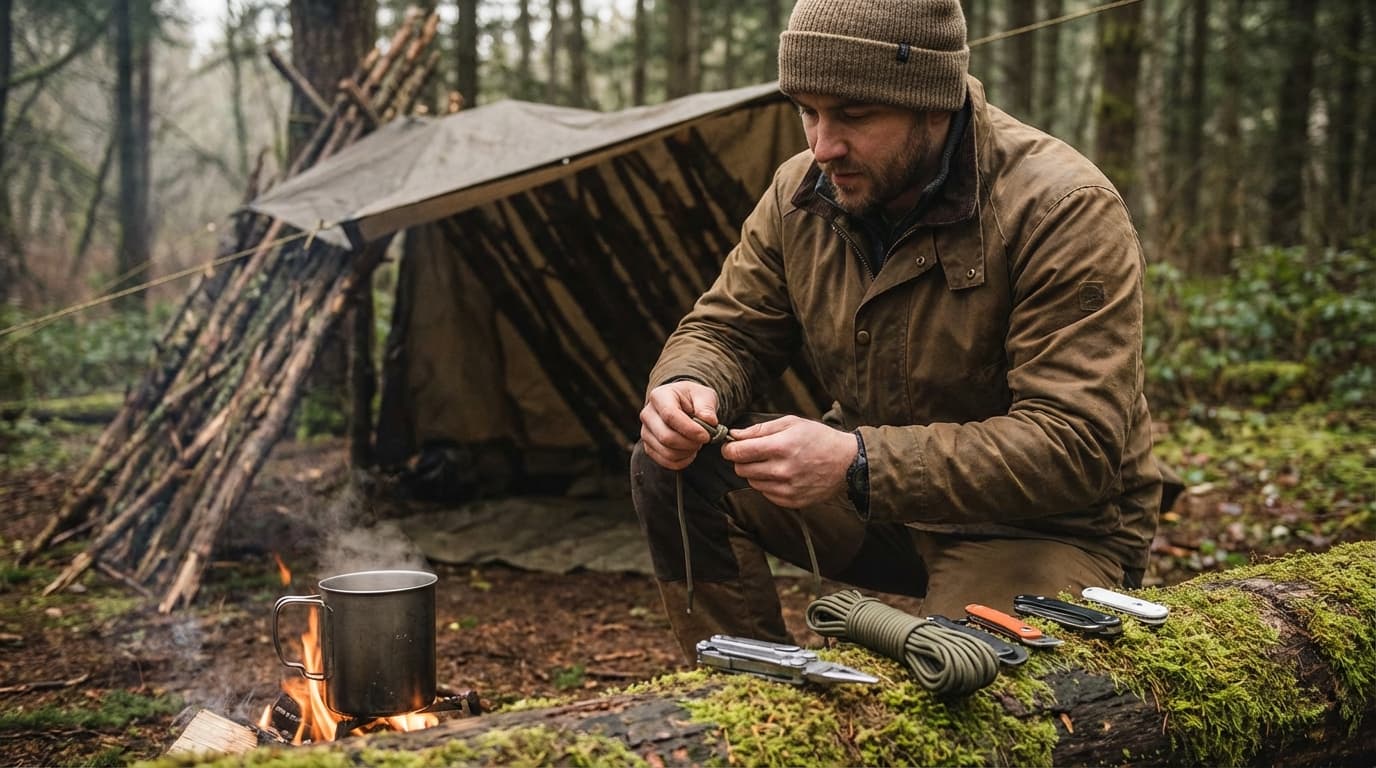
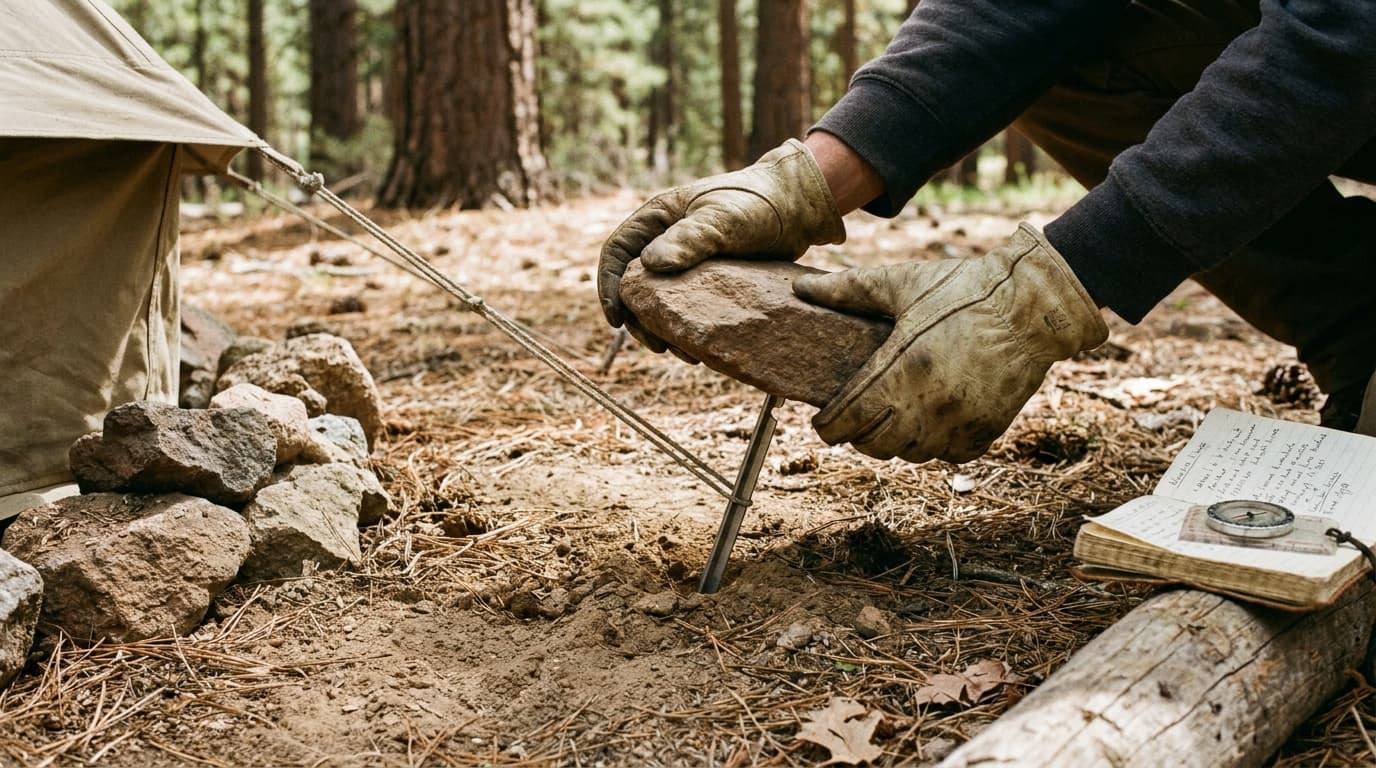
Take the Clove Hitch as a prime example. It is one of the most useful outdoor survival knots because it is so versatile. You can use it to stake a tent or secure guylines in seconds. When you combine it with a Square Knot for Square Lashing, you can build a sturdy bushcraft shelter using just fallen branches. These clever paracord hacks replace pounds of heavy hardware you would otherwise lug around on your back.
The real trick is knowing the limits. A Clove Hitch is great for quick tasks but can slip under shifting loads. That is why specific knot knowledge is required for Scout ranks like Tenderfoot and First Class. It is about seeing solutions in your surroundings rather than relying on a store-bought fix. A few smart outdoor hacks and tricks are worth more than a trunk of expensive gear when you are deep in the backcountry.
Key insights:
Knowledge weighs nothing and replaces heavy, expensive equipment.
A small set of versatile knots can handle almost any wilderness scenario.
Visual learning and practice are better than just reading about survival skills.
The Core Knots That Hold Everything Together
You do not need to memorize a thick manual of rope work to stay safe in the woods. Most outdoor experts agree that knowing just six core knots will get you through about 90% of the situations you will ever run into. This is why knot-tying is such a big deal for Scouts as they move through the ranks from Tenderfoot to First Class. As Mountain House points out, a simple piece of rope becomes far more useful when you know how to tie the right knot. If you are just starting out, skip the text-heavy guides. Visual learning usually wins because seeing the loops move in real time makes the muscle memory stick much faster.
One of the first tools you should have in your kit is the Clove Hitch, which many people also call the Double Half Hitch. It is essentially your best friend for quickly securing a rope to a post, a stake, or a tree. Because it is technically a hitch - designed to attach a rope to an object rather than joining two ropes together - it is very easy to tie and adjust on the fly. However, you have to be careful. The Clove Hitch can slip if the load shifts or if the pressure is not constant. It is great for temporary guylines, but it is not the right choice for permanent, safety-critical loads.
When you are ready to build something more substantial, like a bench or a sturdy shelter frame, you will need to use a Square Lashing. This method is the secret to building furniture from nothing but sticks and cord. By combining Clove Hitches with Square Knots, you can join two poles together so tightly they feel like a single unit. It is a classic bushcraft hack that proves you do not need a toolbox full of nails to create a secure camp. Knowing how to lash things together turns a pile of fallen branches into a functional home base.
Knot-tying is one of those skills that never goes out of style because it makes you more resourceful in any environment. Instead of carrying heavy hardware, you can carry a small bundle of paracord and accomplish the same goals. This kind of knowledge is a huge part of modern preparedness. When you understand the mechanics of a few basic knots, you stop worrying about having the perfect gear and start focusing on how to use what you already have around you.
Key insights:
A small core set of knots is enough for almost every emergency or camping scenario.
Visual aids and videos are far more effective than books for learning manual skills like knot-tying.
The Clove Hitch is versatile for posts and guylines but can be unreliable under shifting loads.
Square lashings use a mix of hitches and square knots to create rigid structures without hardware.
The Clove Hitch: Your Temporary Best Friend
Ever need to secure a rope to a post in seconds without overthinking it? That is where the Clove Hitch, also known as the Double Half Hitch, becomes your best friend. It is one of the most useful knots for any outdoor setup. Whether you are building a bushcraft shelter or pinning down guylines for a tent, this knot is a go-to because it is fast to tie and easy to adjust on the fly.
But here is the catch. You have to use it for the right job. In the world of rope work, this is a hitch because it attaches a rope to an object, unlike a bend which joins two ropes together. It works great for temporary tasks, but watch out. If the load shifts or pressure changes direction, it might slip. It is a reliable tool for quick hacks, but not something you should trust for permanent or safety-critical loads.
It also shines in bigger projects. When you pair it with a Square Knot, you can use Square Lashing to bind poles together for a solid frame. Knowing this knot makes you far more resourceful in the wild. As the experts say, a simple piece of rope becomes much more useful when you know how to tie the right knot for the situation.
Key insights:
The Clove Hitch is ideal for temporary tasks but can slip if the tension shifts or the load is not constant.
It is technically categorized as a hitch because its primary purpose is securing a rope to a fixed object like a post or stake.
This knot is a fundamental skill for progression through Scout ranks, including Tenderfoot and Second Class.
Square Lashing: Building Furniture from Sticks
Ever look at a pile of fallen branches and see a potential chair or a sturdy frame for your tarp? That is the magic of bushcraft. To make it happen, you really only need to master one core technique: the square lashing. It is the secret to building a secure shelter frame without carrying a single nail or screw into the woods. By combining a few simple clove hitches with square knots, you can join two poles so tightly they feel like a single piece of timber.
Mountain House notes that a simple piece of rope becomes far more useful when you know how to tie the right knot. For a square lashing, you usually start with a clove hitch - sometimes called a double half hitch - to anchor your line. While the clove hitch is great for securing guylines, it can slip under shifting pressure if used alone. That is why we use the wrapping and frapping process to lock the poles together. This skill is so fundamental to outdoor life that it is required for Scouts to progress through their early ranks.
What does this mean for your next trip? Beyond just shelter, these lashings let you build camp tables, washstands, or even a rack to keep your gear off the damp ground. It is all about being resourceful with the materials around you. Just remember that while these are perfect for campsite furniture, they are temporary fixes. Always double check your work if the wind picks up or if you are supporting a heavy load.
Key insights:
A small core set of knots is usually enough to handle most campsite and emergency needs.
The clove hitch is highly versatile for hitches but requires the support of a lashing for heavy, shifting loads.
Visual guides are often better than text for learning the specific wrapping and frapping movements of a lashing.
Clean Water When Your Filter Quits
Imagine you are miles from the nearest road and your fancy pump filter suddenly snaps. The stream nearby looks clear, but you cannot just eye it and hope for the best. Tiny parasites like Giardia do not care how pretty the scenery is. Staying safe in the wild is all about being resourceful.
One clever trick is building a solar still. This uses the sun and basic physics to create clean water from thin air or damp soil. You dig a hole, put a cup in the middle, and cover the whole thing with a plastic sheet. A small rock in the center of the plastic creates a dip right over your cup. As the sun warms the ground, moisture evaporates, hits the plastic, and drips down as pure, distilled water. Think of it this way: the earth is constantly breathing out moisture, and you are just catching it. It is a slow game of patience, but it is one of the cleanest ways to survive without gear.
If you need a faster flow, you can build a rock and charcoal filter. This is where your survival knots really shine because you will need a sturdy tripod to hold your filter layers. You can use a Clove Hitch, which some people call a Double Half Hitch, to secure your rope to the first pole. By using a Square Lashing, which combines those hitches with Square Knots, you can lock three branches together into a frame that is genuinely sturdy. Inside a bark cone or an old bottle, layer grass, sand, and crushed charcoal from your campfire. The charcoal is the secret ingredient because it helps remove bad tastes and certain toxins that sand alone would miss.
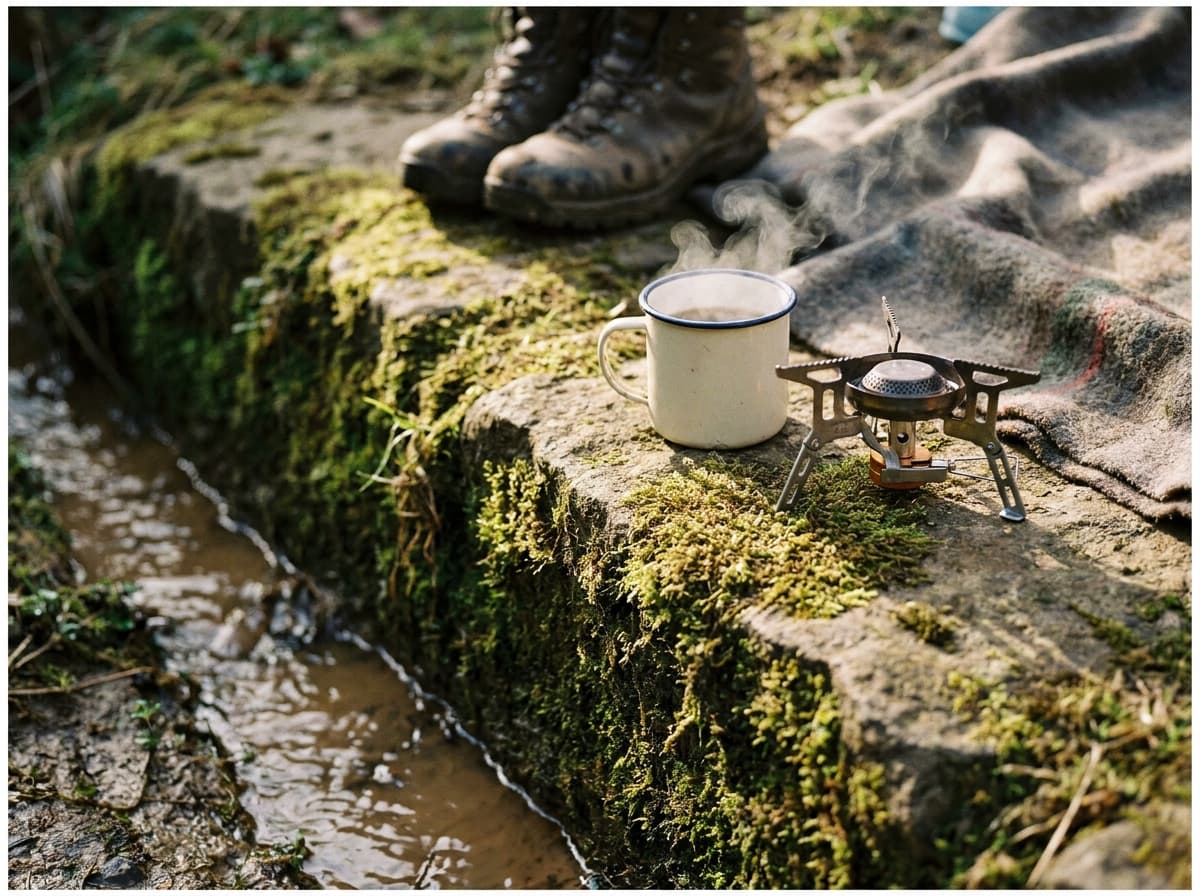
Boiling is still the old school gold standard for safety. You do not need to boil water for half an hour to make it drinkable. A rolling boil for just one minute is usually enough to kill the bad stuff, but you should aim for three minutes if you are high in the mountains. If you do not have a metal pot, do not panic. You can drop fire-heated stones into a hollowed out log or a container of water to bring it to a boil. Just be careful not to use wet stones from the river because they can crack or pop when they get too hot. It is a bit of a process, but keeping yourself hydrated and healthy is worth the extra effort to keep you moving along the trail.
Key insights:
Visual learning is often better than reading for manual skills like tying hitches and building filters.
A small set of knots like the Clove Hitch and Square Knot can handle almost any bushcraft construction task.
Charcoal from a campfire is essential for DIY filters to improve water taste and remove toxins.
Boiling remains the most reliable purification method even when you lack a traditional metal pot.
Boiling: The Old-School Gold Standard
So, your filter breaks in the middle of the woods. What now? Boiling remains the old-school gold standard because it is completely foolproof. You do not need a manual to know it is working once you see those big bubbles. For most situations, a rolling boil for just sixty seconds kills off the nasties that cause stomach issues. If you have hiked way up into thin air, let it go for three minutes to be safe. It is simple, reliable, and works every time.
But what if you are stuck without a metal pot? This is where the hot stone trick saves the day. Find some dry rocks and get them red-hot in your fire, then drop them into your water container to transfer the heat. Just avoid wet river stones, as the trapped moisture can make them explode. It is a bit messy, but it keeps you hydrated when your gear fails. This kind of resourcefulness is what separates a prepared hiker from a lucky one.
Key insights:
A rolling boil for sixty seconds is enough for most altitudes.
Avoid river stones for boiling as they can explode when heated.
Hot stones allow you to boil water in wooden or bark containers.
Is Your Multi-Tool Reaching Its Full Potential?
Most of us carry a multi-tool because it feels like a safety net, but it often stays tucked away in a pocket until we need to open a package or tighten a loose screw. The reality is that your multi-tool is a miniature repair shop if you know how to push its limits. Think about the last time a gear failure threatened to ruin your trip. Maybe a strap snapped or a buckle shattered. Instead of heading back to the car, you can use those pliers for more than just gripping objects. They are perfect for emergency gear repair, like crimping a zipper back into alignment or bending a wire into a temporary replacement for a lost pin.
Then there is the awl, that sharp, pointy tool most people ignore. It is not just for punching holes in leather belts. You can use it to clear debris from a clogged stove nozzle or to bore a clean hole through heavy canvas when you need to lash a shelter together. This is where your tool meets your survival skills. Mountain House notes that a simple piece of rope becomes far more useful when you know how to tie the right knot. The same logic applies here. Your tool is only as good as your resourcefulness.
Suppose you are miles from the trailhead and your backpack buckle snaps. It is a common disaster that makes carrying a heavy load nearly impossible. You can fix this by using your multi-tool to create a bypass. Use the pliers to remove the broken plastic bits. Then, take some paracord and use a Clove Hitch, also called a Double Half Hitch, to secure the cord to the remaining webbing. If you need to join two pieces of gear together firmly, you might even use a Square Lashing, which combines Clove Hitches and Square Knots. This kind of DIY survival gear hack keeps you moving when others would be stuck.
Learning these skills is part of a bigger picture. Whether you are aiming for Scout ranks like Tenderfoot or just want to be prepared, knowing how to use your gear is essential. Visual learning is often better for these manual skills, so it helps to practice these fixes at home before you are actually in the woods. Resourcefulness is a skill that never goes out of fashion. It turns a basic metal tool into a lifeline.
Key insights:
Multi-tool pliers can repair zippers and replace pins in a pinch.
The awl is a versatile tool for clearing clogs and boring holes in tough materials.
Combining tool use with knots like the Clove Hitch allows for complex field repairs.
Resourcefulness and practice are more important than the price of your gear.
Paracord: The Swiss Army Knife of Strings
Think about the last time you were in the woods and needed to tie something down. You probably reached for a bundle of paracord. There is a reason 550 cord is the gold standard for backcountry camping. It is not just about the 550-pound break strength, though that is impressive. It is about the sheer utility. A simple piece of rope becomes far more useful when you know how to tie the right knot. You are not just carrying a string; you are carrying a toolkit that fits in your pocket. This matters because resourcefulness is the best gear you can own when you are miles from the nearest store.
The real magic of paracord lives inside the outer sheath. If you strip away that nylon skin, you find several inner strands that are secret lifesavers. Need to stitch up a tear in your backpack or a pair of pants? Use a strand. Running low on fishing line? One of these inner cores can help you land a meal. This is why knot-tying and cordage skills never go out of style for outdoorspeople. It turns a single item into a multi-purpose survival asset that covers everything from gear repair to food procurement. It is like having a sewing kit and a tackle box hidden inside your rope.
We have all dealt with a tangled mess of cord at the bottom of a pack. It is frustrating and, in an emergency, it is actually a safety risk. Creating a quick-release bundle means you can pull one end and have the full length ready to go in seconds without a single knot to pick apart. This fits into a broader trend of holistic preparedness. You want your gear to work for you, not against you, when the weather turns sour. While many people look for fancy gadgets, the smart move is learning how to manage basic materials effectively so you are never left fumbling when the sun starts to set.
Knowing which knot to use is just as important as the cord itself. For example, the Clove Hitch - sometimes called the Double Half Hitch - is a classic for securing guylines to a post. It is incredibly easy to tie and adjust on the fly. But here is the thing: it can slip if the pressure shifts or the load is too heavy. It is a temporary fix, not a permanent safety solution. For something more solid, like building a camp chair or a frame, you might combine it with a Square Knot to create a Square Lashing. This is the kind of skill required for Scout ranks because it is fundamental to wilderness survival.
The ridge line is the backbone of any solid bushcraft shelter. If you cannot get your tarp up in under two minutes, you are going to have a rough time when the rain starts. The secret to a professional setup lies in using Prusik loops. These are small loops of cord that act as friction hitches. They slide easily along your main ridge line when you want to move them, but they lock tight the moment you apply tension. This gives you an adjustable, sag-free roof every single time. You do not need expensive tensioners or heavy hardware to stay dry; you just need to understand how these simple loops work to keep your roof taut and your gear dry.
Key insights:
A small core set of knots is sufficient for most everyday and emergency applications.
Visual aids and hands-on practice are far more effective for learning knots than reading text descriptions alone.
The Clove Hitch is versatile for quick tasks but requires caution as it can slip under shifting loads.
The Ridge Line Secret
Ever found yourself racing against a sudden downpour? You can get a tarp shelter up in under two minutes if you know the ridge line secret. It starts with a single line between two trees. The trick isn't just the rope; it's how you tension the tarp without constantly redoing your knots. This matters because when the weather turns, every second counts.
This is where Prusik loops come in. These friction hitches slide along your main line when loose but lock tight under tension. They give you an adjustable, sag-free roof that stays taut in the wind. Experts note that while many knots exist, learning just a handful of survival knots is enough for most outdoor scenarios. Think of it as a small toolkit that solves big problems.
A simple piece of rope becomes a high-performance tool once you know where to apply the pressure. Using a Clove Hitch, also known as a Double Half Hitch, to anchor your line is a solid start. It is a skill required for progression through Scout ranks, proving that a few clever paracord hacks are all you need to stay dry without carrying heavy gear.
Key insights:
Prusik loops allow for micro-adjustments to your shelter roof without untying main anchor points.
A small core set of knots, like the Clove Hitch, can handle almost any emergency shelter need.
Visual learning is often more effective than text for mastering these manual survival skills.
DIY Survival Gear from Your Pockets
You do not need a heavy pack full of expensive gadgets to stay safe in the woods. Most people overlook the survival potential sitting right in their pockets or at the bottom of a backpack. Take a simple soda can, for example. To most, it is just trash, but with a few clever cuts, it becomes a pressurized stove or a polished signal mirror to call for help. It is all about seeing a tool where others see litter.
Then there is the duct tape trick. Instead of carrying a bulky roll that takes up space, wrap a few yards around an old gift card or fold it into a flat wallet shape. This keeps emergency repair material thin enough to slide into your pocket without any bulk. Whether you are patching a torn tent or fixing a boot sole in the middle of a trail, that small strip of tape is a lifesaver. It is the perfect example of being prepared without feeling weighed down by gear.
Your keychain is likely the most underrated part of your kit. A small length of paracord or a tiny multi-tool turns a set of keys into a survival hub. This is where knowing your knots really pays off. You do not need to be an expert in dozens of ties; Mountain House suggests that just six specific knots can handle almost any outdoor scenario. For instance, the Clove Hitch, also known as a Double Half Hitch, is perfect for securing gear to a post or starting a shelter frame.
The real secret is not just having the gear, but knowing how to use it. When you combine a Clove Hitch with a Square Knot to perform a Square Lashing, you can suddenly build sturdy structures from fallen branches. Just keep in mind that while the Clove Hitch is versatile, it can slip if the pressure shifts, so it is best for temporary tasks. Practice these movements until they are muscle memory, because a simple piece of rope or a keychain tool only becomes truly useful when you have the skills to back it up.
Key insights:
A small set of six essential knots is enough to handle most emergency situations.
Visual learning is often better than reading descriptions for manual skills like knot-tying.
The Clove Hitch is highly versatile for shelters but should be monitored as it can slip under shifting loads.
Common Questions About Survival Hacks
Ever find yourself staring at the tent ceiling, wondering what you would actually do if your gear failed? It is a common worry for anyone heading into the woods. You do not need to be an expert in everything, but knowing how to handle a simple piece of rope can change the whole situation. As the folks at Mountain House put it, a simple piece of rope becomes far more useful when you know how to tie the right knot. That kind of resourcefulness is what keeps a small problem from becoming a survival situation.
One of the biggest myths is that you need to memorize dozens of complex ties to stay safe. In reality, a small core set of knots is enough for almost any emergency. Mountain House identifies six specific knots as the most useful for outdoor scenarios. Take the Clove Hitch, which is also called the Double Half Hitch. It is great for securing a line to a post or starting a square lashing to build a shelter. But here is the catch: it can slip if the pressure shifts or the load is permanent. Knowing these details is what actually keeps you dry when the wind picks up.
To get good at these Outdoor Hacks & Tricks, do not wait until you are shivering in the backcountry. You can practice right in your backyard or a local park. Scouting groups have used this tiered approach for years, requiring specific skills to move through ranks like Tenderfoot and First Class. Also, look at pictures or videos instead of just reading descriptions. Since a picture is worth a thousand words for manual skills, use visual guides to see exactly where that loop goes before you try it with cold fingers in the rain.
What does this mean for you? It means you can stop worrying about the "what if" scenarios and start building real confidence. Whether you are attaching a climber to an anchor or just trying to keep a tarp from flapping, the goal is to be prepared without overthinking it. Start small, learn the limits of your gear, and you will find that those survival scenarios start feeling a lot less scary.
Key insights:
Learning a core set of just six knots is sufficient for most everyday and emergency applications.
Visual aids are far superior to text-only descriptions when learning manual survival skills like knot-tying.
The Clove Hitch is highly versatile for temporary tasks but can be unreliable for permanent, safety-critical loads.
Final Thoughts: Skills Weigh Nothing
Ever had a tent pole snap or a guyline fray right as the sun was setting? It is a gut-check moment that tests your patience. But when you know how to fix it yourself, that panic disappears. This is the real secret to enjoying the wild. You aren't just relying on expensive gear; you're relying on your own hands. As the old saying goes, skills weigh nothing in your pack. Whether you are aiming for Scout ranks like First Class or just want to stay dry during a storm, knowing a few tricks changes how you see the outdoors.
You do not need to memorize a hundred different hitches to be prepared. Experts point out that a small core set of knots is usually enough for almost any emergency. Take the Clove Hitch, for example. It is a simple way to secure a rope to a post, and when you combine it with a square knot for lashing, you can basically build a sturdy shelter from scratch. Start small this weekend. Pick just one knot or one gear hack and practice it until it feels like muscle memory. A simple piece of rope becomes a powerful tool once you know what to do with it.
Resourcefulness is really about seeing possibilities where others see problems. When you realize that basic skills can replace a trunk full of gadgets, the wilderness feels less like a challenge to survive and more like a place to relax. After all, knot-tying is a skill that never goes out of fashion. It is about becoming the kind of person who can handle whatever the trail throws your way. What is one small hack you can try before your next trip?
Key insights:
A small core set of knots is sufficient for most everyday and emergency applications.
The Clove Hitch is highly versatile but works best for temporary, non-safety-critical loads.
Visual aids are often better than text for learning manual skills like tying knots.
Frequently Asked Questions
You really only need a handful of reliable knots to handle most things the wilderness throws at you. Mountain House highlights six specific knots as the most useful for outdoor survival and emergency prep. These are the basics that help you stay resourceful when you are out in the woods or facing an unexpected situation.
Think of these knots as a small but powerful toolkit. They are usually grouped into hitches for attaching rope to objects, bends for tying two ropes together, and loops. Learning these is a big part of moving up in Scout ranks too, like becoming a First Class Scout. It is one of those skills that never goes out of style because a simple piece of rope becomes way more helpful when you know how to use it right.
The Clove Hitch is super versatile, but you have to know its limits. While climbers often use it to attach themselves to anchored carabiners, it is not always the best choice for a permanent or life-critical load. The big issue is that it can slip if the rope is under a lot of pressure or if the weight shifts around.
Also known as the Double Half Hitch, this knot is great for temporary things like securing guylines or starting a square lashing to build a shelter. But since it can be a bit unreliable under shifting loads, it is best to treat it as a temporary option. If you are doing something where safety is everything, just remember that this one might need a backup or a more permanent alternative.
You can actually use a clear plastic bottle or even a hole in the ground lined with a tarp. If you have a clear bottle, the solar method is a lifesaver. You just fill it up and leave it in direct sunlight for about six hours so the UV rays can kill off the bacteria. It takes some time, but it works well when you are in a pinch.
Another trick is called rock boiling. You find some clean, solid rocks, heat them up in your fire, and then use sticks to drop them into your water container. This gets the water hot enough to boil even if your container would melt over an open flame. Just be careful not to use wet rocks from a riverbed because they can explode when they get too hot.
The short answer is yes, but with a big warning. Standard 550 paracord is rated to hold 550 pounds of static weight, which is way more than most people weigh. However, that rating is for a steady load, not for someone jumping or falling. If you use it to climb, a sudden jerk can easily snap the cord because the force is much higher than the weight itself.
Also, keep in mind that knots change how the cord works. For example, the Clove Hitch is super useful for tying things to posts, but it can slip if the pressure shifts. Using knots also weakens the overall strength of any rope. So while paracord is great for bushcraft or hanging gear, it is not meant for life saving safety tasks like rappelling.
Conclusion
So what is the real secret to staying safe and dry in the woods? It is not about how much money you spend on the latest titanium gear but how you use what you already have. When you know a few outdoor hacks and tricks, a simple length of rope or a standard multi-tool becomes a lifesaver. You start seeing the world differently, looking at a soda can or a pile of sticks as a set of tools instead of just trash or scenery.
The best part is that these skills weigh absolutely nothing. You can take them on every hike without adding an ounce to your pack. If your water filter breaks or your tent strap snaps, you will not panic because you have the knowledge to fix it right there on the trail. Building that confidence is the first step toward truly enjoying the backcountry.
Your next move is simple: grab a piece of cord and try one of those knots while you are sitting on the couch tonight. Once you get it down, head outside and see what else you can build. The wild is a lot more fun when you know you can handle whatever it throws at you. Stay safe and have a great time out there.
Every WilderReady guide is researched, written, and fact-checked in-house against trusted references such as the American Red Cross, the National Park Service, and the CDC before it goes live. We publish under this shared byline instead of invented personas, so you always know who stands behind the guidance you are reading.