Outdoor Hacks & Tricks: DIY Water Filters, Mosquito Repellents, and Survival Skills
You can stay safe in the wild using simple Outdoor Hacks & Tricks: DIY water filter for camping emergencies, Natural mosquito repellent hacks for campers, Best survival knots for securing...
Outdoor Hacks & Tricks: DIY Water Filters, Mosquito Repellents, and Survival Skills
You can stay safe in the wild using simple Outdoor Hacks & Tricks: DIY water filter for camping emergencies, Natural mosquito repellent hacks for campers, Best survival knots for securing a tarp, How to treat a blister while hiking, DIY fire starters for wet conditions. These methods use everyday items to solve common trail problems fast.
Nature is great for your health, but being unprepared is risky. Knowing how to use what's in your pack or around your site makes any trip smoother and safer.
We'll show you how to filter water, stop bugs, and set up a storm-proof shelter in minutes.
Getting outside lowers stress and blood pressure, but being prepared makes the trip much safer. Mosquitoes are the deadliest animals on earth, and they track the 300 different chemicals your skin releases. Using simple household items for water, bugs, and blisters can save your camping trip.
Imagine you are deep in the woods and the bugs are biting despite your spray. Since mosquitoes are weak fliers that only travel about one mile per hour, you set up a portable fan. This creates a no-fly zone that physically keeps them away while you relax.
Key insights:
Burn sage or rosemary to naturally deter insects.
Position your campfire and grill away from sleeping areas to redirect CO2.
Pick sunny clearings for your tent to avoid damp, bug-heavy shade.
Use fabric softener dryer sheets as a simple way to mask your scent.
How Can I Make a DIY Water Filter for Camping Emergencies?
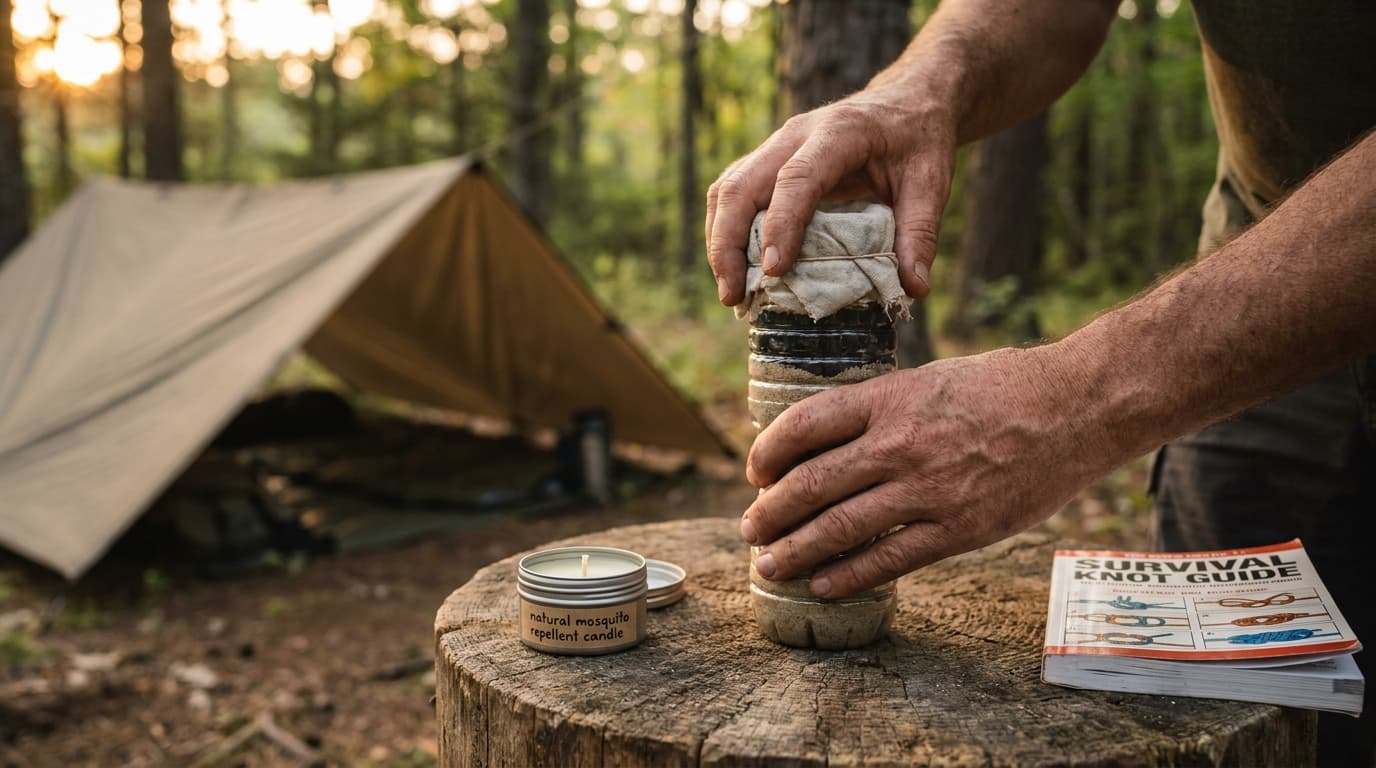
When you run out of clean water in the wild, your first goal is getting the visible gunk out. The most effective way to do this with limited gear is by building a layered gravity filter. This simple setup uses sand and charcoal to trap debris, but remember that filtering is only the first step toward making the water truly safe to drink.
Imagine you are stuck near a stream with no purification tablets and only a plastic bottle in your pack. The water looks like a muddy puddle. By cutting that bottle in half and filling it with natural layers, you can turn that murky mess into something clear and drinkable in just a few minutes.
The layering order is what makes this work. Charcoal pulls out the tiny bits that sand misses, while a piece of cloth at the neck acts as a final screen to keep the water clear. Since mosquitoes are relatively slow fliers, staying in a breezy spot while you build your filter can keep the pests away while you work.
Filtering is not the same as making the water safe from bacteria. A DIY filter removes silt and some chemicals, but it won't kill tiny germs. You always need to boil the water after it passes through your layers so you can enjoy the stress-reducing benefits of the outdoors without getting sick.
Key insights:
Cut a plastic bottle in half and nest the top half upside down into the bottom.
Pack the bottle neck with a piece of cloth to stop the filter materials from falling out.
Layer crushed charcoal first, followed by sand and then gravel to catch different sizes of debris.
Boil every drop of filtered water for at least one minute before drinking.
Position your filtration station in a breezy area to disorient slow-flying insects.
Why Layering Materials Matters for Clarity
Layering materials in a DIY filter creates a series of hurdles that catch debris of all sizes. Charcoal is the heavy hitter here because it pulls out chemical impurities and bad tastes that sand or gravel simply miss. But here is the thing: filtration only makes water clear. It is not the same as purification, which actually kills the germs that make you sick.
Imagine you are stuck at a campsite with nothing but murky creek water. If you just poured that water through a basic sieve, it would still look like tea and taste like dirt. By layering crushed charcoal from an old campfire and finishing with a tight piece of cloth, the water comes out looking crisp and clear. This is a perfect example of how common items can be repurposed as survival tools.
Even though clear water looks much better, it can still carry hidden risks that a physical filter cannot catch on its own.
Key insights:
Pack the charcoal tightly to maximize its ability to remove toxins and odors from the water.
Use a clean piece of cotton cloth as your final stage to catch fine sediment and stray charcoal dust.
Always boil your filtered water or use treatment tablets to ensure it is actually safe from bacteria and parasites.
Which Natural Mosquito Repellent Hacks for Campers Actually Work?
You do not need harsh chemicals to keep the bugs away while you are out in the woods. Most repellents do not actually chase mosquitoes off; instead, they create a vapor barrier that masks the 300 different chemicals your skin naturally releases. By scrambling these signals, you basically become invisible to them without soaking in DEET. It is a simple way to stay safe since these insects are technically the deadliest animals on earth.
Imagine you are relaxing at your campsite and a swarm starts to move in. Because mosquitoes are weak fliers that only travel at about one mile per hour, a small portable fan is a total game-changer. For example, by placing a fan on your picnic table, you create a no-fly zone that the bugs simply cannot push through. It is a low-tech fix that works better than most sprays because it physically keeps them from landing on you.
Your campsite choice and your fire also play a big role in staying bite-free. Mosquitoes love damp, shady areas, so picking a sunny clearing with a natural breeze helps keep them at bay. Also, remember that the carbon dioxide from your campfire or grill attracts them, so it is a smart move to keep your sleeping area a good distance away from where you do your cooking.
Key insights:
Burn dried sage or rosemary in your campfire to create a natural scent that bugs hate.
Tuck a fabric softener dryer sheet into your pocket or under your hat for a quick, portable deterrent.
Choose a sunny, breezy campsite instead of a shady spot near standing water or tall grass.
Use a battery-powered fan to exploit the fact that mosquitoes are incredibly slow fliers.
Apply permethrin to your gear and boots rather than your skin for heavy-duty protection that lasts.
Mastering the Best Survival Knots for Securing a Tarp
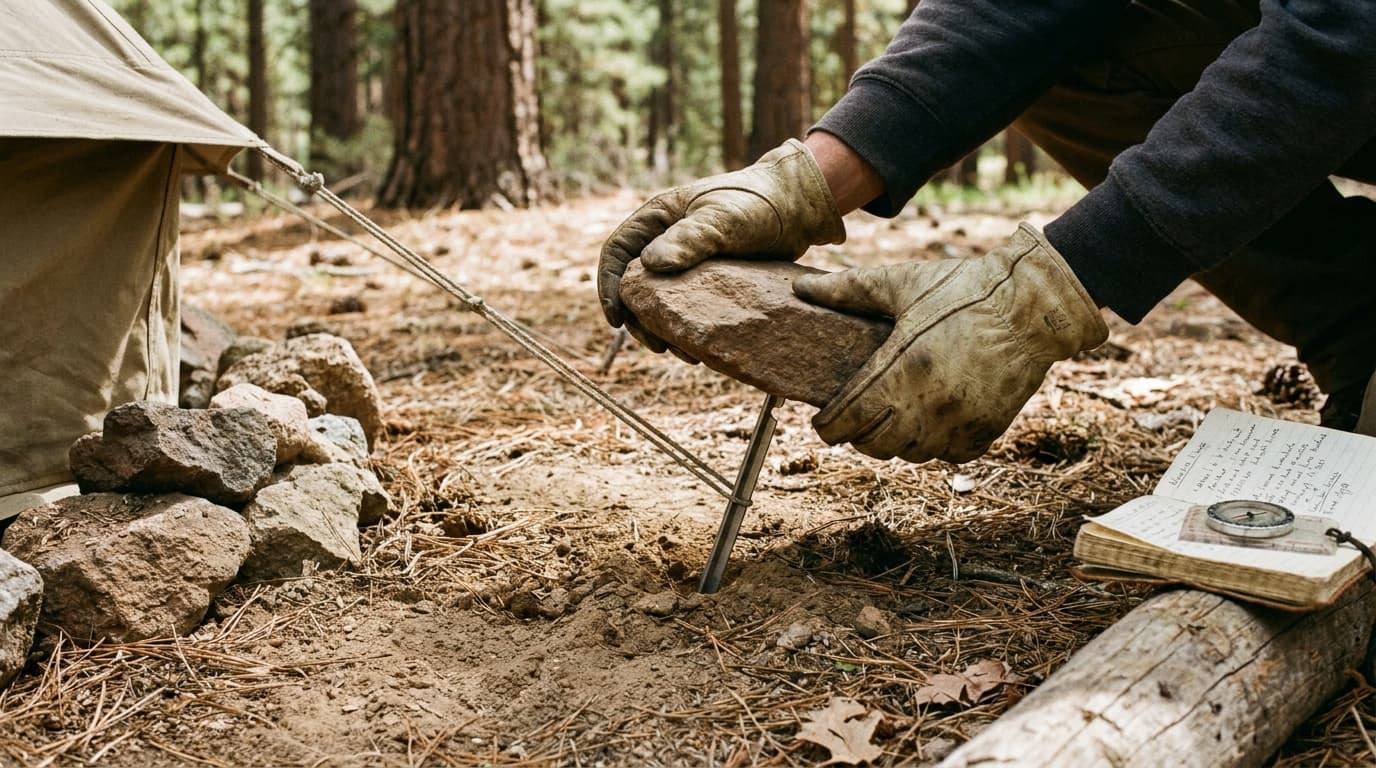
If you want your shelter to survive a heavy storm, you need knots that provide both stability and adjustability. The Bowline and the Taut-Line Hitch are the two most important tools in your gear kit. The Bowline creates a loop that won't slip, which is perfect for securing your rope to a tree or a tarp grommet. On the other end, the Taut-Line Hitch acts like a sliding tensioner. This lets you tighten or loosen the line without untying everything. It keeps your roof from sagging when the fabric gets wet and heavy.
Spending time in nature is one of the best ways to reduce the risk of cardiovascular disease and lower your stress levels. But a failed shelter ruins that peace quickly. A tight tarp doesn't just keep you dry; it also helps with pest control. Mosquitoes are the deadliest animal on earth, but they are slow, flying at only about one mile per hour. A properly angled tarp that catches the natural breeze creates a no-fly zone. By learning these knots, you keep your campsite comfortable and safe.
Imagine you’re out in the woods when a sudden afternoon downpour hits. You’ve got a basic tarp and some paracord, but the wind is starting to howl. You quickly loop the cord around a trunk using a Bowline and then stake out the corners. By using a Taut-Line Hitch, you can pull the tarp tight enough to shed water instantly. Instead of a sagging mess that collects puddles, you have a solid lean-to. You stay dry while watching the rain roll off the edges.
Key insights:
Practice the Bowline and Taut-Line Hitch in your backyard before you actually need them in the woods.
Use the Taut-Line Hitch for guy lines so you can easily adjust the tension as the wind changes.
Apply a Bowline whenever you need a fixed loop that stays open even when there is a lot of weight on the line.
Pick a campsite in a clear, breezy spot to help the wind blow away mosquitoes, which are poor fliers.
Check your lines periodically during a storm, as wet ropes can stretch or slip slightly.
The Fast Way to Treat a Blister While Hiking
Stopping a hot spot means acting the second you feel that slight burning sensation. If you ignore it for even a mile, it will likely turn into a full-blown blister that makes every step painful. The goal is to create a barrier between your skin and your sock to stop the friction before the skin layers actually separate. This is the most important trail skill you can have because it keeps you mobile and happy.
Hiking is one of the best ways to stay healthy and active. Research shows that spending time in nature helps reduce the risk of cardiovascular disease and high blood pressure. But you cannot reap these rewards if you are limping back to the trailhead in pain. Taking care of your feet is just as vital as staying hydrated or managing pests like mosquitoes while you are out in the woods.
Imagine you are five miles into a beautiful ten-mile trek when you notice a nagging rub on your left heel. For many hikers, the instinct is to just keep going until the next scheduled break. But a hiker who stops immediately to apply moleskin or even a bit of smooth duct tape will finish the day much better than someone who waits. Taking five minutes to fix the problem early saves your entire afternoon.
Key insights:
Clean the skin around the hot spot with a quick wipe to make sure your bandage stays put.
Cut a donut-shaped pad out of moleskin to protect the area without putting pressure on the center.
Apply a layer of duct tape over the padding so your sock slides against the tape instead of your skin.
Switch to a fresh pair of socks or add a thin liner to manage moisture and reduce direct friction.
Creating DIY Fire Starters for Wet Conditions
How do you get a fire going when every stick in the forest is soaked? It is one of the toughest challenges for any camper. When moisture levels are high, traditional kindling fails because it cannot reach a high enough temperature to ignite. You need a fuel source that creates a persistent, intense flame to dry out damp wood before the fire can actually take hold.
Getting outside is great for your health, as spending time in nature can help reduce stress and lower blood pressure, but a cold night in the rain can ruin the experience quickly. Using common household items as survival tools is a smart way to stay prepared without spending a fortune on specialized gear.
Imagine you are deep in the woods and the sky opens up. Your matches are dry, but the ground is a sponge. You pull out a small plastic bag containing cotton balls saturated in petroleum jelly. You pull one apart to expose the inner fibers, strike a spark, and it flares up instantly. Because the jelly acts as a slow-burning fuel, that tiny cotton ball stays lit for several minutes, giving you plenty of time to stack wet twigs over it until they finally hiss, dry out, and catch fire.
Now consider this: you can make even more effective starters at home for your next emergency kit using items you would normally throw away. It is a simple hack that makes life in a tent much easier when the weather turns sour.
Key insights:
Pack 'dryer lint eggs' by stuffing lint into cardboard egg cartons and pouring a little melted wax over them.
Store these DIY starters in a waterproof container like an old pill bottle or a heavy-duty zip-top bag.
Look for 'fatwood' from dead pine stumps, as the natural resin helps it burn even in damp conditions.
Use a small pocket knife to shave off the wet outer layer of sticks to reach the drier wood inside.
Summary: Smart Preparation for Better Adventures
DIY hacks bridge the gap between high-end gear and real-world survival. While getting outside helps lower stress and blood pressure, it also brings challenges like mosquitoes. Since these pests are the deadliest animals on earth, using simple tricks to mask the chemicals your skin produces can make the difference between a relaxing trip and a miserable one.
Imagine you are heading out for your first solo weekend trip. Instead of testing a DIY water filter in a rainstorm, you set it up in your backyard on a Tuesday evening. You realize which tricks work best for you and get your gear organized before you are miles from a store. This small practice run turns a potentially stressful outing into a smooth adventure.
Key insights:
Build an emergency 'hack kit' with items like sage, dryer sheets, and basic cordage today.
Practice your knots and fire-starting techniques in a controlled environment before you hit the trail.
Set up your cooking station away from your tent to keep carbon dioxide-seeking bugs at a distance.
Use household items to double as survival gear to keep your pack light and your budget intact.
Frequently Asked Questions
Honestly, you shouldn't rely on a DIY filter alone for pond water. While a homemade setup using sand and charcoal can clear out the gunk and make the water look better, it won't catch the tiny bacteria or viruses that make you sick. Think of it as a pre-filter rather than a complete solution.
To be safe, you always need to boil that water or use a purification tablet afterward. It's a bit like cleaning a messy room - the filter picks up the big toys off the floor, but you still need to disinfect the surfaces to get rid of the germs. Always play it safe when you're out in the wild.
It's all about the scent. When you toss sage into your campfire, it releases a smoke that masks the smells mosquitoes love, like the mix of 300 chemicals that human skin naturally produces. By scrambling these signals, you essentially become invisible to their tracking systems.
This works so well because mosquitoes are actually pretty poor fliers, moving at only about one mile per hour. A bit of fragrant smoke from sage or rosemary creates a natural barrier that makes them look for an easier target elsewhere. It's a great, eco-friendly hack if you want to skip the heavy chemical sprays for a night.
The Taut-Line Hitch is the best one to start with because it is incredibly forgiving. It is an adjustable loop that stays tight under tension but slides easily when you want to change the length of your cord.
When you are setting up a tarp, the fabric often stretches or shifts as the wind blows. Instead of untying everything to fix a saggy roof, you just slide this knot to tighten it back up. It is one of those simple tricks that makes life in a tent much easier for anyone just starting out.
You should try your best to keep it intact. That bubble of skin is a natural barrier that keeps bacteria out and protects the sensitive area underneath while it heals. If you pop it, you are basically opening a door for an infection while you are still out in the dirt.
If the pain is too much to keep walking, you might have to drain it, but always keep it covered afterward. This is important because our skin produces about 300 chemicals that can attract pests like mosquitoes, so keeping your skin protected is about more than just avoiding germs.
Conclusion
So what does all this mean for your next trip? It shows that staying safe in the woods does not always require a backpack full of expensive gadgets. Whether you are using a DIY water filter for camping emergencies or trying natural mosquito repellent hacks for campers, these outdoor hacks and tricks prove that a little bit of creativity goes a long way. It is all about using what you have to stay happy and safe on the trail.
The bottom line is that knowing how to treat a blister while hiking or making DIY fire starters for wet conditions turns a potential mess into just another part of the story. These skills are a backup plan that lives in your head rather than taking up heavy space in your bag. Consider practicing the best survival knots for securing a tarp in your backyard this weekend so you are ready for your next big adventure.
Nature is unpredictable, but your preparation does not have to be. Pack your homemade kit, trust your new skills, and head out with the confidence that you can handle whatever the trail throws your way. Now go get some fresh air and enjoy the woods.
Every WilderReady guide is researched, written, and fact-checked in-house against trusted references such as the American Red Cross, the National Park Service, and the CDC before it goes live. We publish under this shared byline instead of invented personas, so you always know who stands behind the guidance you are reading.