Mindset and Preparedness for Calm Decision Making and Mental Toughness
Your brain is your most valuable survival tool, far outweighing any fancy gadget. To stay safe, you need a Mindset & Preparedness: beginner guide to calm decision making, practical steps...
Mindset and Preparedness for Calm Decision Making and Mental Toughness
Your brain is your most valuable survival tool, far outweighing any fancy gadget. To stay safe, you need a Mindset & Preparedness: beginner guide to calm decision making, practical steps for mental preparedness, overcoming fear and panic in emergencies, building mental toughness for outdoor survival, how to make critical decisions in survival.
With emergency response times averaging 15 minutes, you're the true first responder during a crisis.
Learn how to regulate stress, build a PACE plan, and practice skills that work when panic hits.
Why Your Brain Is Actually Your Best Survival Gear
Survival isn't about how much money you spend on a 72-hour survival guide or a fancy bag. If you have a thousand-dollar kit but panic the moment things go wrong, that gear is basically dead weight. Your brain is your primary tool because it dictates how you use everything else. Prioritizing knowledge and mental resilience ensures you can stay calm and solve problems with whatever is around you.
Imagine two people caught in a sudden storm. One has a high-end tent but has never set it up in the wind and starts hyperventilating as the fabric rips. The other has nothing but a beginner wilderness survival guide and the presence of mind to find natural shelter. The person with the right mindset survives because they can think clearly under pressure.
You have to accept the role of first responder for your own life. According to data from Premier Body Armor, the average emergency response time in the U.S. is about 15 minutes. In a crisis, those 15 minutes are entirely up to you. Jody, a preparedness expert, points out that help isn't always immediate, so you must shift from a passive 'wait for help' attitude to an active 'problem solver' mindset.
This shift is vital because stress triggers cortisol and adrenaline, which can cause tunnel vision and mess with your motor skills. You won't suddenly become a hero during a disaster. Instead, you'll fall back on the skills you have actually practiced. Building mental toughness means training your brain to stay functional even when your heart is racing.
Key insights:
Audit your current supplies and identify one piece of gear you don't know how to use by heart.
Practice a basic skill like fire-starting or first aid in uncomfortable conditions to build confidence.
Check your pantry to ensure you have at least 30 days of food and a three-day water supply.
Start asking yourself 'What is my next move?' during small daily stresses to build the habit of active problem-solving.
The Reality: No One Is Coming to Save You
Realizing you are the only one on the scene for those first critical minutes is a heavy shift. It means moving past the shock of wondering why something is happening and jumping straight into how to fix it. When you stop waiting for a siren, you start looking for tools and solutions in your immediate environment.
Imagine a sudden power outage during a freezing winter storm. Instead of sitting in the dark hoping the grid comes back online, a prepared person is already checking their 3-day water supply and layering up. They do not wait for an official update to start surviving; they act as their own rescue team.
This transition from a passive observer to an active leader is what keeps people safe in unpredictable moments. You can find more practical ways to handle these situations in our survival scenarios and checklists.
Key insights:
Own the first minutes of any emergency as your personal responsibility.
Ask 'What is my next move?' during small daily stresses to build the habit of active problem-solving.
Identify your home's main utility shut-offs so you can act without hesitation during a crisis.
Audit your surroundings regularly to find objects that can serve as improvised tools or shelter.
How to Stop Panic Before It Starts
The fastest way to start overcoming fear and panic in emergencies is to control your breath. When you feel that surge of panic, your heart rate spikes and your logic shuts down. Tactical breathing is the tool that flips the switch back to rational mode by physically signaling your nervous system to slow down.
Under high stress, your body releases a massive dose of cortisol and adrenaline. While this helps in a sprint, it often causes tunnel vision and a physiological dump that ruins your fine motor skills. You might find it impossible to dial a phone or tie a simple knot because your fingers feel like wooden blocks.
These are practical steps for mental preparedness that let you intervene before your brain's alarm system overwhelms your logic. You can read more about staying grounded in our beginner wilderness survival guide. This awareness allows you to act before you lose the ability to think clearly.
Imagine you are driving on a rainy highway and a car suddenly swerves into your lane. Your heart hammers against your ribs, your palms go slick, and for a second, the world feels like it is moving in slow motion. Instead of letting that adrenaline turn into a lingering panic, you use that moment to practice. You take a four-second breath in, hold for four, exhale for four, and hold again to regain focus immediately.
This process of stress inoculation helps you build confidence. If you can manage your nerves during a near-miss on the road, you are much more likely to keep your cool when using a survival fire starting kit in a real emergency. Training your brain to stay active while your body is screaming for a fight or flight response is what separates survivors from victims.
Key insights:
Practice tactical breathing for two minutes every morning so it becomes a reflex.
Watch for physical tells like a tight chest or sweaty palms during minor daily stresses.
Use low-stakes moments, like a tough work call, to test your ability to lower your heart rate.
When danger hits, your brain floods your system with cortisol and adrenaline. This creates a physiological dump that narrows your focus into tunnel vision and makes your fingers feel like heavy blocks. Simple tasks like dialing a phone or tying a knot suddenly become incredibly difficult because your body prioritizes raw power over precision.
Imagine trying to use a survival fire starting kit during a sudden storm. Even if you have the gear, your shaking hands might fail you because your nervous system has hijacked your motor skills. Spotting these physical tells early is the first step in mental preparedness to keep your logic sharp.
Key insights:
Watch for a tight chest or sweaty palms during minor daily stresses to recognize your alarm system.
Use tactical breathing to lower your heart rate before panic takes over your thoughts.
Building Mental Toughness: Why Training Beats Luck
Can you actually get ready for the sheer terror of a real emergency? The answer is yes, but it does not happen by reading a book in a cozy chair. You build mental toughness through a process called stress inoculation. This means you gradually expose yourself to small, controlled challenges so that when a real crisis hits, your brain recognizes the pressure. It turns a panicked moment into a been-there-done-that reaction.
This matters because your body has a built-in alarm system. When things go sideways, your brain dumps cortisol and adrenaline into your system. While this gives you a burst of energy, it also causes tunnel vision and kills your fine motor skills. Since emergency response times average 15 minutes, you are the only person who can help yourself in those first critical moments.
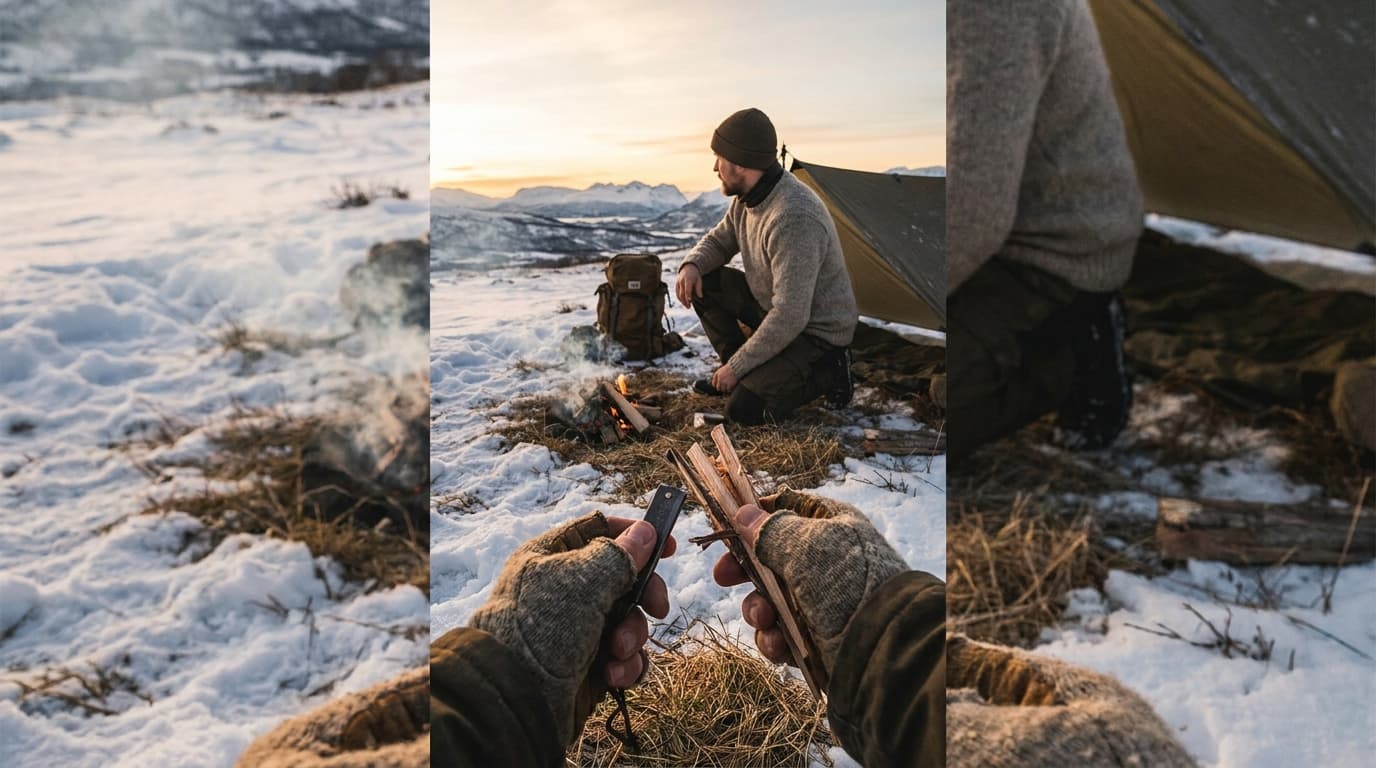
Imagine trying to use a fire starter for the first time while you are shivering in a cold downpour. If you only practiced in your sunny backyard with a cold drink nearby, your hands will likely fail you. But if you have spent a few rainy Saturday afternoons struggling to get a flame going in the mud, you have already built the mental calluses needed to stay calm. This kind of mental preparedness is what keeps your logic sharp when the environment is working against you.
There is a dangerous idea that when things get tough, humans rise to the occasion. In reality, the opposite is true. As preparedness expert Jody points out, we do not rise to the challenge; we fall to the level of our training. Your brain stops thinking creatively in survival mode and starts looking for habits. If you have not turned a skill into muscle memory, you simply will not be able to do it when your heart is racing.
Take the simple act of finding an emergency exit or applying a tourniquet. In a calm room, it is easy. But when the room is full of smoke or someone is screaming, you will not have the mental bandwidth to figure it out on the fly. You need to have done it so many times that your hands move on their own. This is how you stay calm in survival situations without having to overthink every move while your body is in fight-or-flight mode.
Key insights:
Practice your skills in bad weather or when you are tired to simulate real-world stress.
Repeat life-saving tasks like opening your medical kit until you can do it with your eyes closed.
Set a timer for two minutes to see how much you can accomplish under a strict deadline.
Use stress inoculation by adding one difficult element, like cold or darkness, to your next practice session.
Build habits for basic needs like water and fire so they become automatic reflexes.
The Myth of Rising to the Occasion
We often hope to be heroes in a crisis, but biology usually says otherwise. Stress triggers a flood of cortisol and adrenaline, which often leads to tunnel vision and impaired motor skills. You won't magically rise to the challenge; you will simply fall back on the habits you have already practiced.
Imagine smoke filling a hallway while you scramble to find a way out. If you have never located the emergency exit, your brain might freeze under the pressure of a ticking clock. But if you have walked that route before, your body moves on instinct. This muscle memory is what helps you stay calm in survival situations when you can't think straight.
Key insights:
Practice medical tasks or opening your 72-hour survival guide until the motions are automatic.
Spot two exits every time you enter an unfamiliar building to build situational awareness.
Drill your emergency responses to fit within the 15-minute average window it takes for professional help to arrive.
Focus on perfecting simple, repetitive tasks that don't require complex decision-making during a panic.
PACE Yourself: How to Make Critical Decisions Under Pressure
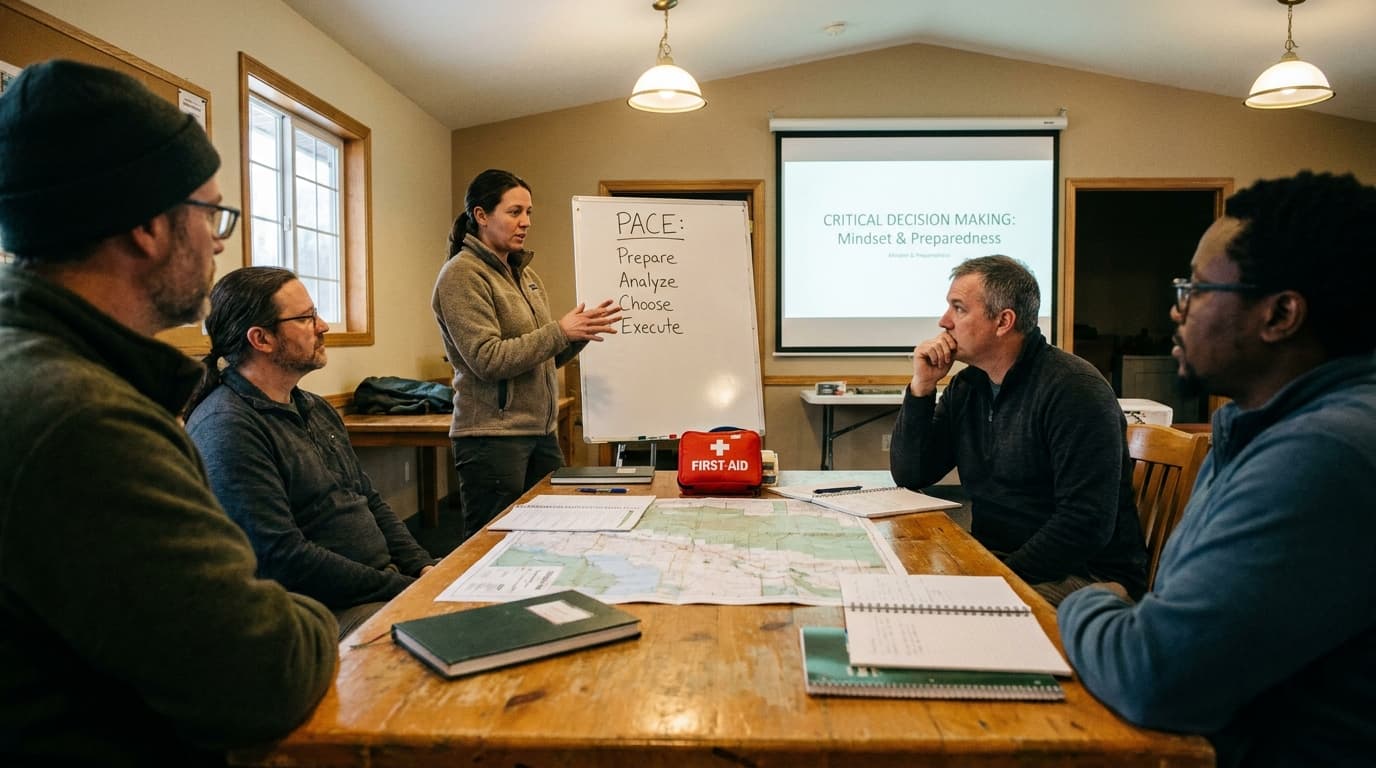
When seconds count, you don't want to be weighing pros and cons. Stress floods your system with cortisol and adrenaline, which clouds your judgment and makes it harder to focus on the task at hand. The PACE method - Primary, Alternate, Contingent, and Emergency - gives you a ready-made script to follow so you can make critical decisions in survival without the mental fatigue of starting from scratch.
Imagine you are driving home and a sudden storm washes out the main bridge. If you only have one plan, you might sit in your car wasting precious time. But since the average emergency response time in the US is about 15 minutes, those first few moments are entirely up to you. With a PACE plan, you don't hesitate. You immediately pivot to your alternate backroad. If that is flooded, you move to your contingent plan of parking at a nearby store. If all else fails, your emergency plan is the walking gear you keep in your trunk. This prevents the analysis paralysis that often leads to panic.
This framework works for every basic need, from staying warm to finding clean drinking water. Since a person can typically only survive three days without water, having four layers of backup isn't overkill. As expert Jody says, no one is coming to save you, so you need to be your own first responder. By mapping out your options before the lights go out, you ensure that you always have a path forward.
Key insights:
Map out your PACE plan for fire: start with a lighter (Primary), then a ferro rod (Alternate), then waterproof matches (Contingent), and finally a friction fire (Emergency).
Apply the system to communication by having a cell phone, a battery-powered radio, a whistle, and a signal mirror ready to go.
Practice switching between your plans during low-stress times so the transition feels like a reflex when things get difficult.
Keep your emergency supplies for the E part of your plan in a dedicated bug out bag that is always accessible.
Practical First Steps for the Prepared Beginner
You do not need a bunker or a year of freeze-dried meals to start being ready for a crisis. It is actually about checking what is in your kitchen. Your goal for this weekend is simple: make sure your family can handle a sudden gap in services without feeling the urge to panic.
Imagine a heavy winter storm knocks out your power and blocks the roads for two days. Instead of rushing to a crowded grocery store in a panic, you simply walk to your pantry. You have a month of rations and enough water to keep everyone hydrated. Because you are not worried about basic survival, you stay calm and can focus on keeping the house warm or checking on neighbors.
Key insights:
Audit your pantry to confirm you have at least 30 days of food rations stored away.
Store one gallon of water per person per day for at least a three-day window.
Join a local skill-sharing group to learn from others and build a community network.
Frequently Asked Questions About Survival Mindset
Can you actually train your brain to stay calm during a disaster? Yes, but it starts with understanding that your brain is your most valuable asset. High stress triggers a flood of cortisol and adrenaline, which causes tunnel vision and kills fine motor skills. Knowing the rule of threes, such as surviving only three days without water, helps you prioritize your actions instead of reacting out of fear.
Imagine you are hiking and lose the trail just as the sun sets. Most people feel a surge of panic and want to run, but a prepared hiker remembers that average emergency response times in the US are about 15 minutes once help is reached. They use tactical breathing to lower their heart rate and focus on what they have mastered because, as expert Jody says, we do not rise to the occasion but instead fall to our level of training.
Survival is also more effective as a community effort. Neighbors who share skills and pool resources handle long-term crises much better than those attempting to survive in isolation.
Key insights:
Start small by auditing your pantry to ensure you have a 30-day supply of food.
Practice basic skills like water purification in your backyard before trying them in the wild.
Build a local network to share resources and accountability with your neighbors.
Think of your mind as the engine for your survival gear. If stress triggers a rush of cortisol that causes tunnel vision, your physical tools become useless because your brain can no longer process how to use them. Training your mindset ensures you stay steady enough to act when every second counts.
Imagine a storm cuts off your street for several days. You know you can only last three days without clean water, and while emergency response times often average 15 minutes, a major crisis means you are your own first responder. You will not magically rise to the occasion; you will simply fall back on the skills you have actually practiced until they are muscle memory.
Do not try to survive in total isolation. While a bug out bag checklist for beginners is vital for the first 72 hours, a strong community of neighbors is your real long-term safety net for sharing resources and skills.
Key insights:
Pick one skill, like using a survival fire starting kit, and practice it while you are tired or it is raining to simulate real-world stress.
Introduce yourself to a neighbor this week to start building a local support and skill-sharing network for emergencies.
Run a dry drill of your emergency plan this weekend to identify any gaps in your knowledge or gear.
Frequently Asked Questions
Most people can only survive for about three days without access to clean drinking water. It is a pretty strict limit because your body needs hydration for almost every basic function, from thinking clearly to keeping your organs running.
If you are in a hot area or moving around a lot, that window gets even smaller. That is why prepping water is always a top priority. You can actually go much longer without food, but water is something your body needs almost immediately to stay functional.
It is a simple way to hack your nervous system so you can stay calm when things get intense. When you are in a scary situation, your heart starts racing and your brain can get foggy because of stress hormones like adrenaline. This can cause tunnel vision and mess with your ability to do simple things with your hands.
Tactical breathing uses a specific rhythm of breaths to lower your heart rate and stop that panic response. It helps you keep your focus and fine motor skills sharp. It is basically a quick way to reset your brain so you can make smart decisions instead of just reacting to fear. Remember that you do not usually rise to the occasion, but instead you fall to the level of what you have mastered. This technique helps you stay calm enough to use that training.
When you are scared, your body releases chemicals that can cause tunnel vision and make it hard to use your hands for simple tasks. Because of this, your brain defaults to habits you have practiced until they are automatic. If you have not built that muscle memory ahead of time, you might freeze up instead of taking action. Training makes those life saving steps feel like second nature.
It also helps a lot with the mental side of things. Having friends and neighbors to lean on keeps everyone calm and provides a real sense of security. Plus, it is way easier to learn new skills when you have a network of people to share tips with. It is all about looking out for each other so no one has to face a scary situation by themselves.
Conclusion
The bottom line is that your gear only works if your head is in the game. Real mental toughness for outdoor survival isn't about being fearless; it's about knowing how to handle that fear when it shows up. By connecting your physical training with practical steps for mental preparedness, you create a foundation that doesn't crumble when things get difficult.
Think about this differently: every time you practice tactical breathing or walk through a PACE plan, you are building a reflex. This beginner guide to calm decision making is just the start. The goal is to move from worrying about what might happen to knowing how to make critical decisions in survival because you have already done the mental work.
Consider trying one small stress test this weekend, like practicing a skill in bad weather or auditing your supplies. You don't need to be an expert today, but you do need to be a little more ready than you were yesterday. In any emergency, you are the first person on the scene. Make sure you are the one who stays calm.
Every WilderReady guide is researched, written, and fact-checked in-house against trusted references such as the American Red Cross, the National Park Service, and the CDC before it goes live. We publish under this shared byline instead of invented personas, so you always know who stands behind the guidance you are reading.