Surviving the Wild with Just Your Wits and a Few Clever Hacks
Picture yourself deep in the woods with a dead phone and soaked matches. It is a situation that makes most people panic, but you do not need a bag full...
Surviving the Wild with Just Your Wits and a Few Clever Hacks
Picture yourself deep in the woods with a dead phone and soaked matches. It is a situation that makes most people panic, but you do not need a bag full of expensive gear to stay safe. The truth is that your best tool is your own brain and a few smart Outdoor Hacks & Tricks that turn everyday junk into lifesavers.
Survival is more about being resourceful than having the newest equipment. Whether you need emergency fire starter ideas using greasy snack chips or a DIY water filtration system made from a simple plastic bottle, knowing how to improvise keeps you calm when things go wrong. We are going to look at how items like dryer lint or old candle wax can become your most valuable assets in the wilderness.
This guide covers everything from finding north without a compass to tying the bushcraft knots for shelter that actually hold up in a storm. You will also learn how to fix your gear with a multi-tool and why your mindset matters more than what is in your backpack. Let's get into the skills that make any emergency much easier to handle.
Survival Secrets: Why Your Best Tool Isn't in Your Backpack
Imagine being stuck in the woods as the sun dips below the trees. Most people reach for expensive gear, but your brain is actually your most powerful tool. Sergio Outdoors notes that a solid mindset beats specialized equipment every time. As they say, your best survival tools are your mind, nature, and the ability to improvise. It is not about what you own, but how you think.
You can turn everyday items into life-saving gear without any fuss. Think about DIY fire starters or building a heater from household scraps. Simple tasks like tying Balıkçı düğümleri (fisherman's knots) for shelter or setting up a water filtration system make a huge difference. These skills turn a scary situation into a manageable one, whether you are in the wilderness or facing a power outage at home.
This shift toward improvisation is changing how we look at survival. It is no longer about hoarding stuff, but about learning how to repurpose what you already have. Nature provides the materials and you provide the creativity. What does this mean for you? It means you are already carrying everything you need to stay safe.
Key insights:
Mindset and creativity are more valuable than expensive specialized gear.
Everyday household items can be repurposed for fire, heat, and water filtration.
Essential skills like knot tying and shelter building are vital for both wilderness and urban emergencies.
Turning Junk into Fire: DIY Starters That Actually Work
Think about the last time you cleaned out your dryer. Most of us toss that lint without a second thought, but in a survival situation, it is basically gold. If you are looking for emergency fire starter ideas using everyday items, lint mixed with old candle wax is a top-tier choice. It creates a slow-burning fuel source that can withstand a light drizzle. The science is simple. Those tiny, frayed fibers offer a massive surface area. This lets oxygen reach the heat immediately, which is why small, high-surface-area materials catch sparks better than a thick log.
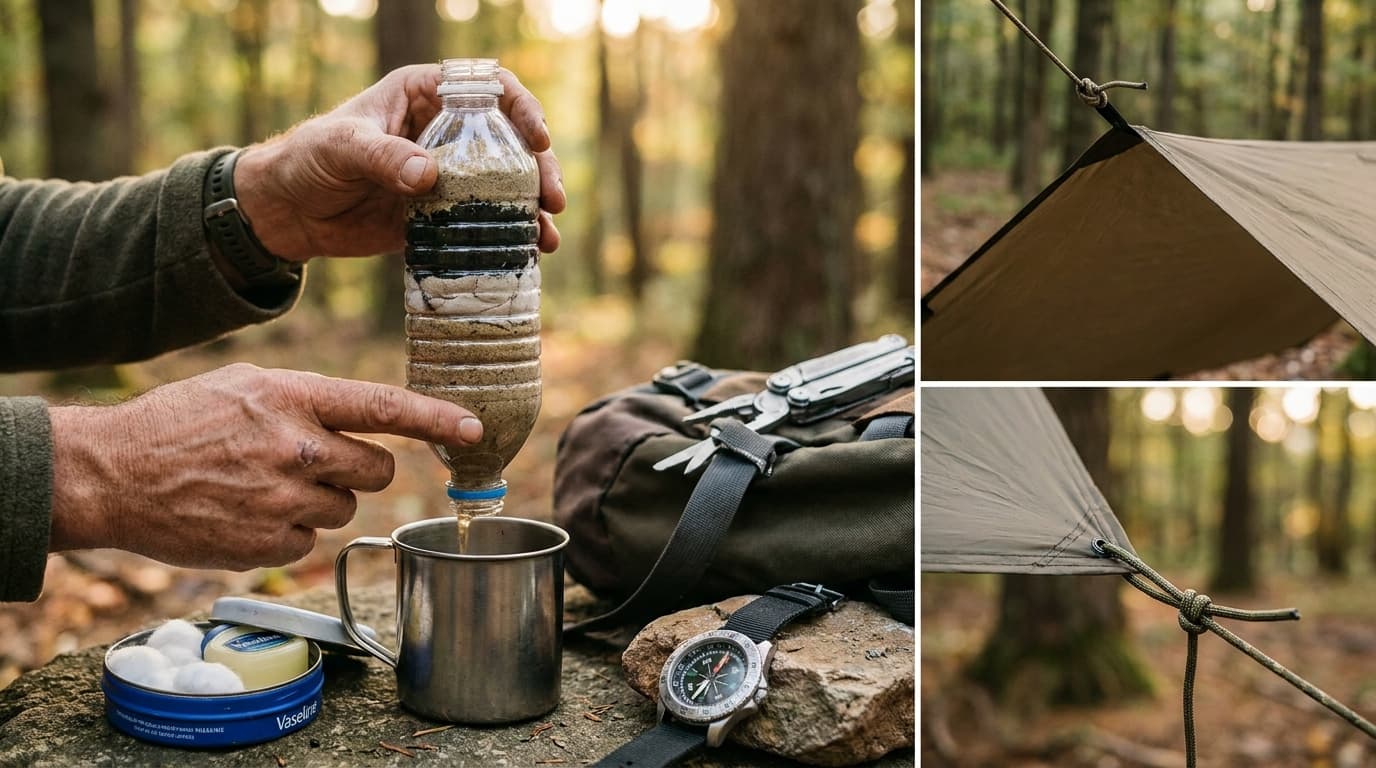
One of the most famous tricks involves petroleum jelly and cotton balls. By kneading the jelly into the cotton, you make a waterproof wick that can burn for several minutes, giving you plenty of time to get your kindling to take. For storage, skip the bulky containers and use old pill bottles or film canisters. They are airtight, tiny, and fit perfectly in the corner of a backpack. It is a low-cost way to ensure you are never stuck in the cold without a way to get a flame going.
Sometimes the best tools are the most unexpected ones, like a bag of greasy chips. Because they are packed with oil and starch, certain snacks act like mini-logs. If you light a corn chip, it will burn with a steady flame for a surprisingly long time. Just keep safety in mind because the oil can sputter, so do not hold them in your hand while they burn. While it feels weird to use food as fuel, it is a perfect example of why improvisation is often your best survival tool.
Survival experts from groups like Sergio Outdoors often emphasize that your mind and your ability to improvise are more important than expensive gear. Whether you are dealing with a power outage or a night in the woods, these DIY hacks prove that you do not need a professional kit to stay safe. It is all about looking at the junk around you and seeing the potential for heat and light. After all, the best tools are the ones you actually have with you when things go wrong.
Key insights:
High surface area in materials like dryer lint allows for better oxygen flow and faster ignition.
Petroleum jelly acts as a long-lasting fuel source when paired with a cotton wick.
Common household items like snack chips can serve as emergency fuel due to their high oil content.
Improvisation and mindset are more critical for survival than high-end specialized equipment.
The Cotton Ball Trick Every Camper Needs to Know
Ever tried lighting a fire with damp wood and a weak lighter? It is tough. Here is a secret hikers use to get a flame going fast. You just need cotton balls and petroleum jelly. Rubbing a little jelly into the cotton creates a DIY fire starter that burns much longer than a plain wick. It is a simple trick that proves you do not need expensive gear to stay warm. Think of it as a little fluff with a lot of power.
These are also easy to carry. Stuff a few into an old pill bottle or film canister to keep them dry. This improvisation is what experts like Sergio Outdoors highlight in their survival guides. They believe your mind and your ability to use everyday items are your best tools. Instead of buying a fancy kit, you are just repurposing what you already own. It is clever, practical, and saves you money for more adventure gear later.
The reality is that survival skills are for more than just the deep woods. Whether you are facing a power outage or a rainy campsite, a reliable fire starter changes everything. It is a core part of basic training, right alongside learning a good fisherman’s knot. So, next time you pack your bag, skip the gadgets and grab the cotton balls instead.
Key insights:
Petroleum jelly acts as a fuel source that helps cotton balls burn for several minutes even in damp conditions.
Recycled containers like pill bottles or film canisters keep your DIY fire starters dry and easy to pack.
True survival is about using your mind and everyday items rather than relying on expensive, specialized equipment.
Snack Food Fire? The Surprising Power of Greasy Chips
Ever looked at a bag of potato chips and saw a candle? It sounds like a joke, but greasy snacks are actually incredible fire starters. Because they are packed with oils, chips like Doritos or corn chips burn slow and hot. They act like mini logs when you are struggling to get a flame going.
This shows why your mind is your best tool. Instead of carrying heavy gear, you can use what is already in your pack. Experts often say survival is about repurposing everyday items. When you light one chip, the oil acts as fuel while the starch keeps it burning long enough to catch twigs.
Just be careful. Use them one by one to build a base instead of tossing a whole handful into the wind. It is a simple trick that works for emergencies or even power outages. It is all about being creative with what you have on hand.
Key insights:
High fat and oil content in snacks like chips makes them excellent improvised fire starters.
Creativity and improvisation are often more valuable than carrying expensive survival gear.
Survival hacks apply to both wilderness situations and home emergencies like power outages.
Clean Water Anywhere: Building a Simple DIY Filter
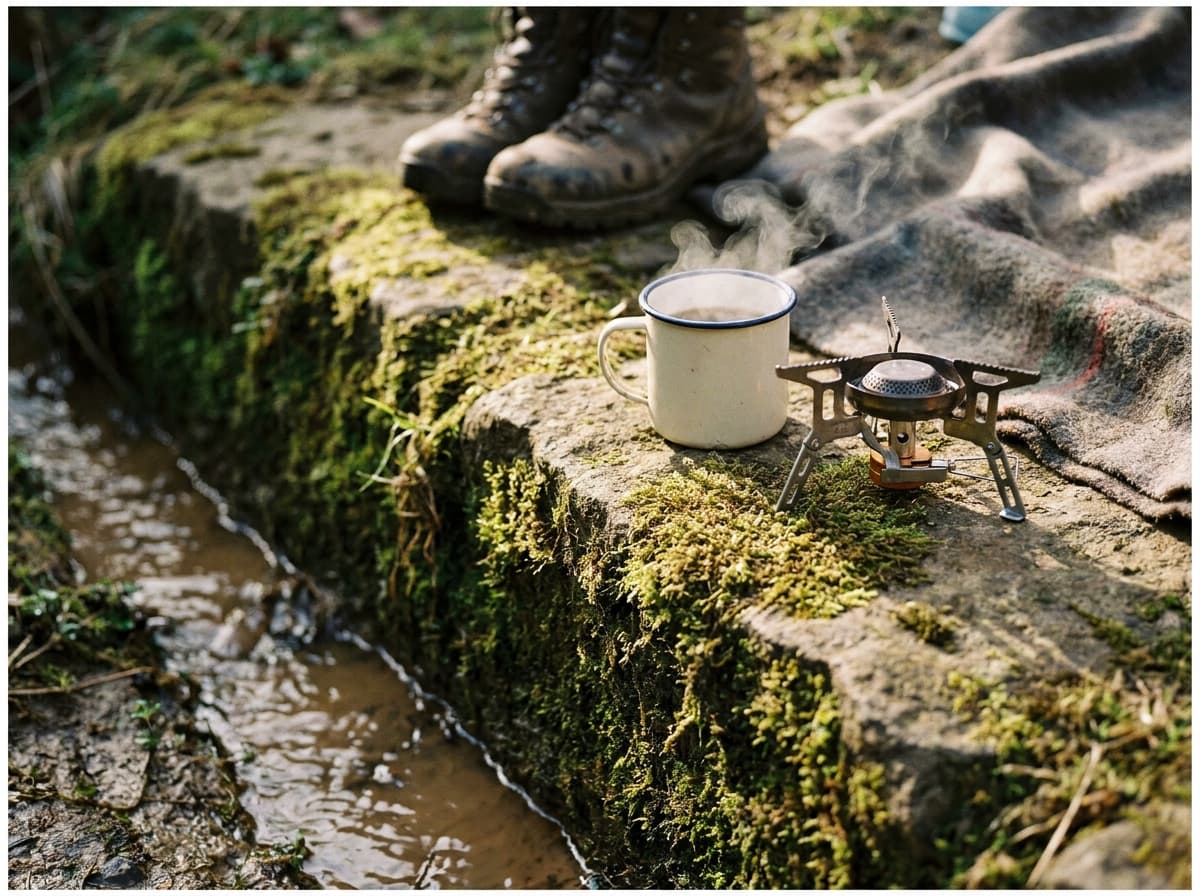
Imagine you are out in the woods or stuck at home during a long power outage. Your water bottle is bone dry, and the only source nearby looks more like chocolate milk than something you would actually want to drink. What now? Most people think they need a bag full of expensive gadgets to survive, but Sergio Outdoors points out that your best tools are actually your mind and your ability to improvise. You can turn that murky mess into clear water using nothing more than a plastic bottle or even a spare piece of clothing. It is a fundamental skill that every beginner should learn because, in a real emergency, your gear might fail, but your knowledge stays with you.
To build a basic filter, you need to create layers that act like a sieve. Think of it as a multi-stage obstacle course for dirt. You start with gravel at the top to catch big debris like sticks and pebbles, followed by a thick layer of sand to trap smaller particles. The real secret is the crushed charcoal. This layer does the heavy lifting by pulling out impurities that sand simply misses. But here is the thing: filtration is only half the battle. It makes the water look clear and appetizing, but it does not kill the invisible bacteria or parasites hiding inside. You still have to boil that water before taking a sip. Never skip that step.
Finding the Right Materials in Nature. You do not need to carry a bag of charcoal with you to make this work. If you are near an old campsite or the site of a forest fire, just look for the remains of a fire. Those blackened bits of wood are gold for a DIY filter once you crush them down into a coarse powder. Once you have packed your layers into your container, you have to test the flow. If the water rushes through too fast, it isn't getting cleaned properly. If it barely drips, you have packed the layers like concrete. It is a balancing act, and testing your filter flow is the only way to get the best results in the field.
This type of DIY approach is a growing trend, shifting the focus from buying specialized gear to repurposing everyday objects. Whether you are lost in the wilderness or facing a city-wide emergency, these survival hacks apply to almost any situation. It is about looking at a piece of trash or a handful of dirt and seeing a life-saving solution. As the experts say, nature provides the materials and you just provide the creativity to make them work. It is a mindset that turns a scary crisis into a manageable problem you can solve with your own two hands.
Key insights:
Filtration removes sediment and improves clarity, but boiling is still required to eliminate biological pathogens.
Natural charcoal from old fire pits is an excellent substitute for store-bought activated carbon in a survival situation.
Survival skills are equally valuable for urban emergencies like power outages as they are for wilderness excursions.
A successful filter requires a balance of materials to ensure water flows slow enough to be cleaned but fast enough to be useful.
Finding the Right Materials in Nature
You do not need a fancy store-bought filter if you know where to look. Start by searching for an old campfire site. Look for chunks of natural charcoal left behind in the soot and ash. This charred wood is a powerhouse for a DIY water filtration system because it helps scrub out impurities naturally. As the experts at Sergio Outdoors often say, your best survival tools are your mind and the ability to improvise.
Once you have gathered your charcoal, you must test the flow of your filter. If the water runs through too fast, it is not getting cleaned properly. If it barely drips, you will be waiting all night for a single drink. You want a steady, slow stream to ensure the water is actually spending time in contact with the charcoal. This kind of hands-on testing is a fundamental part of beginner survival training.
These skills work just as well during a power outage at home as they do in the deep forest. By repurposing what is already on the ground, you turn a stressful situation into a manageable one. It is all about using what nature provides to stay safe.
Key insights:
Old campfire sites are the best source for natural charcoal in the wilderness.
Testing flow rate is the only way to ensure your DIY filter is actually working.
Improvisation is more valuable than expensive specialized gear in an emergency.
Knots You’ll Actually Remember When It Matters
Ever found yourself staring at a tangled mess of cord while the wind picks up? We've all been there - it is often harder than it looks. The reality is that you do not need to be a knot-tying wizard to stay safe in the woods. Experts like those at Sergio Outdoors often point out that your best tool isn't a piece of expensive gear, but your own ability to improvise with what is around you. When things get tough, whether you are dealing with a sudden power outage at home or a wrong turn on a hiking trail, knowing just a few reliable knots makes all the difference between staying dry and getting soaked.
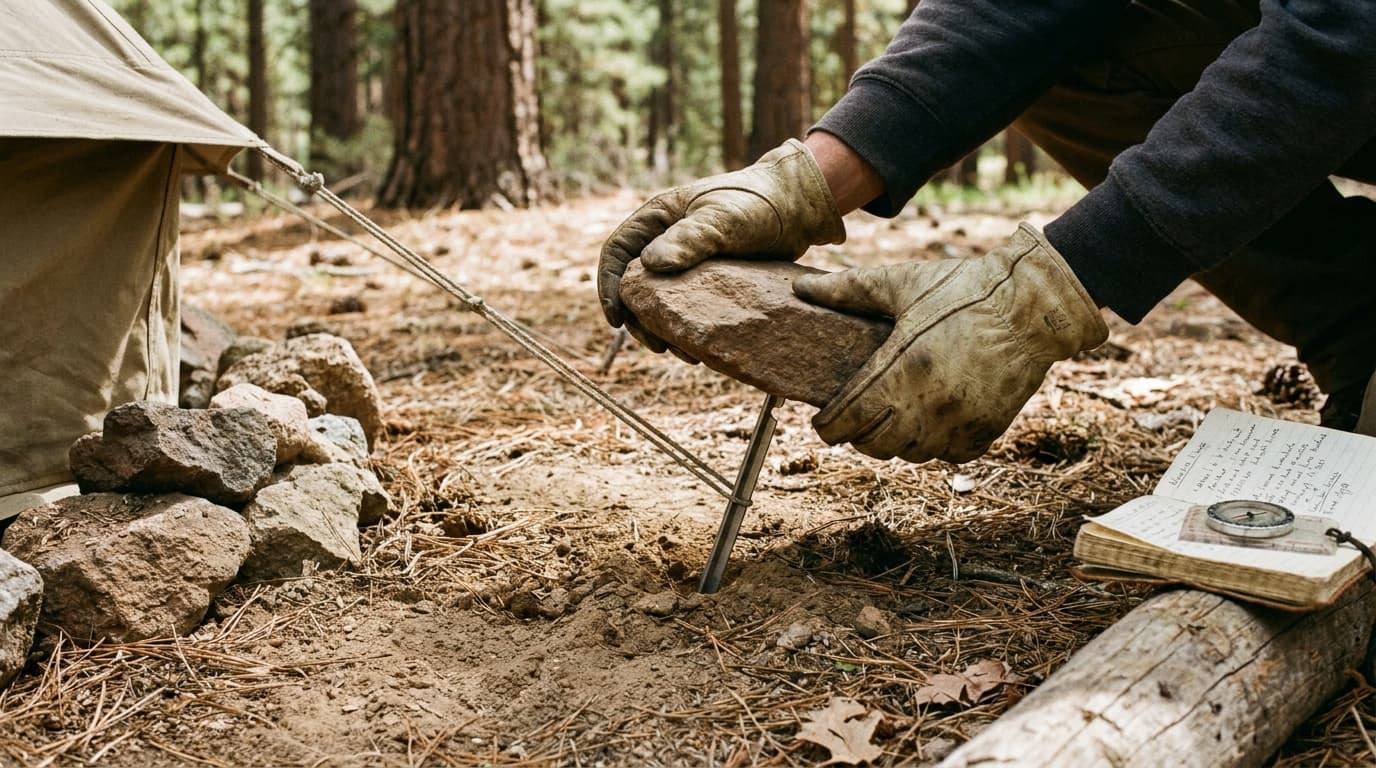
Take the Fisherman’s Knot, often referred to as Balıkçı düğümleri in traditional survival training. It is considered the gold standard for gear repair because it is incredibly strong when joining two lines together. If a strap on your pack snaps or you need to extend a line to reach a sturdy anchor, this is your go-to move. It is simple, effective, and holds fast under heavy tension. For securing a tarp, you can actually get a rock-solid setup using just two simple loops. The real secret is using a knot that stays tight while the storm rages but pulls apart easily when you are ready to head home. No one wants to spend twenty minutes picking at a frozen knot with their fingernails when they could be warming up by a fire.
Building a shelter should not feel like a massive construction project. If you are out in the wild without nails or screws, lashing is your new best friend. By tightly wrapping your cordage - whether it is high-test paracord or even braided long grass in a real pinch - around overlapping branches, you can create a sturdy frame for a lean-to in minutes. This DIY approach is one of the top survival tricks highlighted by Brave Wilderness Life. They focus on the idea that shelter building is more about the technique in your hands than the fancy tools in your bag. It is about using what nature provides to create a safe space.
Why does this matter? Because a few branches and some clever wrapping can turn a pile of debris into a life-saving structure. It is about working with nature rather than trying to fight it. Once you get the hang of basic lashing, you will realize you can build almost anything you need. This kind of resourcefulness is what separates a stressful situation from a manageable one. It is not just about the knots themselves; it is about the confidence that comes from knowing you can fix what breaks and build what you lack using only your wits and the materials at your feet.
Key insights:
Mindset and improvisation are more valuable than expensive specialized equipment.
The Fisherman's Knot is the essential choice for joining lines and repairing broken gear.
Simple lashing techniques allow you to build sturdy shelters using only cordage and branches.
A good survival knot must hold under tension but remain easy to untie when the job is done.
Building a Sturdy Shelter Without Nails
Imagine you're stuck in the woods as the sun dips below the tree line. You don't have any nails or a hammer, but you need a roof over your head before the temperature drops. This is where your creativity kicks in. Sergio Outdoors suggests that survival is really about hacks you can use anywhere, whether you are deep in the wilderness or just dealing with a backyard power outage.
To build a quick lean-to, you'll need to lash sturdy branches together. If you have paracord in your pack, you're in luck. If not, you can actually braid long grass into a makeshift rope. It's all about using what is around you. Learning basic bushcraft knots, like the fisherman’s knot, keeps your structure from collapsing when the wind picks up. These small skills are the foundation of beginner survival training.
It might feel intimidating at first, but your mind is truly your best tool. Nature and improvisation matter much more than expensive gear. By focusing on simple fastenings and natural materials, you turn a scary situation into a manageable one. Think of it this way: survival isn't about what you own, it's about how you use what you find.
Key insights:
Improvisation and mindset are more critical than having expensive specialized equipment.
Braided grass can serve as a functional emergency substitute for paracord or rope.
Basic knots like the fisherman’s knot provide the structural integrity needed for DIY shelters.
Lost? How to Find Your Way Without a Compass
You are walking through the woods, the trail disappears, and suddenly every tree looks identical. It is a heavy feeling, but you do not need a fancy GPS to fix it. Nature leaves clues everywhere if you know where to look. One of the most reliable tricks is the shadow-stick method. Just poke a stick into the ground and mark where the tip of the shadow lands with a pebble. Wait about fifteen minutes, mark the new spot, and draw a line between them. That line points east-west, giving you a baseline to figure out your next move.
You have probably heard that moss only grows on the north side of trees. While it sounds like a handy rule, it is actually a bit of a myth that can lead you in circles. Moss likes moisture and shade, which often happens on the north side in the northern hemisphere, but it can grow anywhere damp. Instead of looking at one tree, look at the whole forest. If most trees have thick growth on one side, that is a better hint, but do not bet your life on a single patch of green.
If you are wearing an analog watch, you are carrying a hidden tool. Hold the watch flat and point the hour hand at the sun. Halfway between that hour hand and the twelve o'clock mark is your south line. It is a quick way to get your bearings without overthinking things. As Sergio Outdoors says, your best survival tools are your mind, nature, and the ability to improvise. You do not need expensive gear when you can turn a simple timepiece into a directional tool.
Once the sun goes down, the rules change, but the sky offers even better directions. Finding the North Star is the gold standard for finding your way at night. First, look for the Big Dipper, which looks like a giant ladle in the sky. Follow the two stars at the edge of the cup straight out, and they will point you right to Polaris. Unlike other stars that seem to move as the earth rotates, the North Star stays put, giving you a fixed point to follow through the night.
Moving in the dark or when fog rolls in is risky, so sometimes the smartest move is to stay put. If you must move, pick a distant silhouette or a specific star to walk toward so you do not end up walking in loops. Recent survival guides emphasize that mindset is everything here. Staying calm and using what you have around you is what separates a bad afternoon from a dangerous emergency. Whether it is a power outage at home or a deep woods trek, these basic skills keep you in control and moving in the right direction.
Key insights:
The shadow-stick method provides a reliable east-west baseline using only a stick and pebbles.
Moss growth is a moisture indicator rather than a strict compass, so look for forest-wide patterns rather than single trees.
An analog watch can act as a compass by bisecting the angle between the hour hand and twelve o'clock when pointed at the sun.
The North Star remains fixed, making it the most reliable night-time guide when found via the pointer stars of the Big Dipper.
Navigating by the Stars After Dark
Imagine the sun has set and your phone is dead. It feels scary, but you do not need a GPS to find your way. Recent guides, like the 18 hacks from Sergio Outdoors, show that your mind and nature are your best tools. Instead of worrying about gear, just look up. The sky has been a map for thousands of years, and it still works today.
To find north without a compass in the woods, spot the Big Dipper. It looks like a large ladle in the sky. Find the two stars at the end of the cup and follow their line straight out. They point right to the North Star, which stays fixed all night while other stars move. This gives you a permanent anchor in the dark.
Once you have North, you can find any direction. This matters because survival is about using your head. Even in low visibility, that one star keeps you on track. It is a simple way to stay safe using only what nature provides, just like the core survival tips experts recommend for any emergency situation.
Multi-Tool Magic: Fixing Your Gear on the Fly
Ever found yourself miles from nowhere with a broken strap or a stuck zipper? It happens to the best of us, and it can feel incredibly frustrating. While some folks think you need a massive kit to stay safe, the reality is that your mind and a simple multi-tool are your best assets. Sergio Outdoors notes that survival is really about a few clever hacks that work whether you are lost in the woods or just dealing with a home power outage. It is all about being creative with what is already in your pocket.
Take your pliers for example. Most people only use them to pull things, but they are great for grabbing a hot metal pot off a DIY stove or bending a wire into a temporary gear pin. If your knife gets dull, you do not need a professional kit. You can actually find a smooth, flat river stone to hone the edge. It takes some patience and a steady hand, but it works when you are in a pinch. This kind of improvisation is exactly what separates a prepared hiker from a frustrated one.
What about those annoying equipment failures like a split zipper? You can use the small screwdrivers or the awl on your tool to gently pry the slider back into place or guide a cord through. If a strap snaps, use your tool to poke a hole and tie a solid fisherman’s knot to keep your pack together. These small fixes keep you moving. The current trend in survival is moving away from buying expensive gear and toward learning how to use everyday objects. After all, the best tool you own is the one you actually have with you.
Key insights:
Improvisation and a sharp mind are more valuable than expensive specialized survival gear.
A multi-tool can handle complex repairs like fixing zippers and sharpening blades using only natural materials.
Modern survival trends focus on repurposing everyday carry items for both wilderness and urban emergencies.
What Most People Get Wrong About Wilderness Survival
We often think survival is about having the most expensive knife or a GPS that never loses signal. But that's a dangerous trap. When you're out there, your best survival tools are actually your mind, nature, and the ability to improvise. Sergio Outdoors reminds us that real survival hacks are just as useful during a home power outage as they are in the deep woods. If you rely too much on gadgets, you're one dead battery away from a real problem.
Another big mistake? Moving too much. It sounds weird, but staying put is usually the smartest thing you can do. Every step you take in a random direction burns through your energy and makes it harder for rescuers to find you. You have to manage your energy like a bank account. Instead of wandering, focus on basics like building a shelter or practicing those essential fisherman’s knots, also known as Balıkçı düğümleri, for gear repair. It's about working smarter.
Think of it this way: survival isn't a gear competition. Groups like Brave Wilderness Life show that you can make fire with DIY starters from items you already have. Whether it's learning water filtration or tying a solid knot, these skills are about using what’s around you. It’s not about being a hero. It is about being smart enough to use a little creativity when things get tough. After all, your best tool is your own brain, not a piece of plastic in your pocket.
Key insights:
Mindset and improvisation are more critical than expensive specialized equipment.
Staying put is often the smartest move you can make to save energy and be found.
Survival skills are universal and apply to both wilderness and home emergency scenarios.
Common Questions About Staying Safe Outdoors
Ever feel like you need a garage full of gear just to stay safe in the woods? It is a common worry. But here is the thing: your best survival tools are not found in a store. As Sergio Outdoors points out, your mind and your ability to improvise are what really matter most. Whether you are staring at a power outage at home or a literal wilderness emergency, the goal is to use what you have around you. Experts have identified about 18 specific hacks that cover everything from basic safety to keeping the lights on when the grid goes down.
One big question people always ask is how to handle fire and water without fancy tools. You do not need a high-tech kit to get by. You can actually make emergency fire starter ideas work using everyday items from your kitchen or junk drawer. For hydration, a DIY water filtration system helps you purify what you find in the wild using simple layers of natural materials. It is all about being clever. Even something as small as learning essential bushcraft knots, like the Balıkçı düğümleri or fisherman's knots, can help you fix gear or build a sturdy shelter when things get rough.
What about finding your way if you are lost? While many look for a compass, you can actually figure out how to find north without a compass in the woods just by watching the sun or using a simple watch face. These skills are showing up everywhere on social media lately because they work just as well during a city-wide blackout as they do on a trail. Think of it as repurposing your daily life. You might not have a professional multi tool, but you probably have a few clever tricks up your sleeve that can save the day.
Key insights:
Mindset and improvisation are more critical than expensive specialized equipment.
Survival skills are increasingly useful for both wilderness and urban emergencies like power outages.
Common household items can be repurposed into DIY heaters, fire starters, and water filters.
Wrapping Up: The Art of Improvisation
At the end of the day, fancy gear won't save you if you do not know how to use what is already around you. Sergio Outdoors says it best: your best survival tools are your mind, nature, and the ability to improvise. Whether you are dealing with a power outage at home or a mishap on the trail, resourcefulness is what keeps you safe. It is about shifting your focus from what you own to what you can actually do with your hands.
Consider the eighteen survival hacks or essential knots like the Balıkçı düğümleri. These are not just tricks for a weekend trip; they are skills that turn everyday objects into life-saving tools. From DIY fire starters to basic water filtration, these methods prove that creativity often beats a heavy backpack. By learning these, you are training your brain to see solutions where others only see problems.
But here is the catch: do not wait for a real emergency to try these for the first time. Practice building a shelter or testing a DIY heater in your backyard when the stakes are low. When you master these skills in a safe environment, they become second nature. Keep experimenting and stay curious. Your wits are your greatest asset, so make sure they stay sharp.
Key insights:
Mindset and creativity are more valuable than expensive specialized equipment.
Survival skills like knot tying and water filtration apply to both wilderness and home emergencies.
Practicing DIY hacks in a safe environment ensures you can perform them under pressure.
Frequently Asked Questions
You can, but there is a big catch you should know about. While sand and charcoal are great at catching dirt, debris, and some chemicals, they are not a magic fix for everything. They do not always stop tiny bacteria or viruses that can make you sick.
Think of this DIY filter as your first step. It gets the water looking clear, but for real safety, you should always boil that filtered water afterward. It is all about using what nature gives you to stay hydrated without the risk of a stomach ache.
If you are just starting out, you should look into the Fisherman knot, also known as Balıkçı düğümleri. It is one of those fundamental bushcraft knots because it is easy to tie and stays very secure even when you pull on it hard.
It is perfect for joining two pieces of cord together or fixing your gear when you are setting up a lean-to. Once you get the hang of it, you will see how much easier it makes building a sturdy shelter with just a few simple materials and your own two hands.
Yes, you can definitely get a fire going even after a heavy rain. The secret is that while the bark might be soaked, the wood inside the log stays dry. You just need to split it open to find the dry heartwood.
Using your own DIY fire starters made from household items helps a lot here too. It's less about having fancy gear and more about being creative with what you have on hand. Once you get those dry inner shavings caught, the heat will eventually dry out the damp wood you put on top.
If the sun is hiding behind clouds, you have to look for other natural signs. While the old saying about moss always growing on the north side isn't always perfect, moss does usually grow thicker on the side that stays damp and shaded.
You can also look at the shape of the trees. Often, branches on the south side are bigger and reach out further because they get more sunlight. It takes a little practice to spot these patterns, but your mind is your best tool when you're out in the woods without a compass.
Conclusion
So what is the real secret to staying safe in the woods? It is not about how much money you spent on a fancy survival kit. It is about how you look at the world around you. When you can see a bag of greasy chips as a fire starter or a simple shadow as a way home, you are never truly helpless. These outdoor hacks and tricks prove that being resourceful is way more valuable than any piece of gear you can buy.
The best part is that these skills stick with you long after the batteries in a GPS die. Once you know how to tie a solid knot or find north using just a stick, you carry that confidence everywhere. It changes the way you hike because you know you can handle whatever the trail throws your way.
Before your next big trip, take a few minutes to practice one of these ideas in your own yard. Try making that DIY filter or lighting a small fire with dryer lint. Getting it right now means you will be ready if things ever get a bit wild. Remember that your brain is your best piece of gear, so keep it sharp and stay curious.
Every WilderReady guide is researched, written, and fact-checked in-house against trusted references such as the American Red Cross, the National Park Service, and the CDC before it goes live. We publish under this shared byline instead of invented personas, so you always know who stands behind the guidance you are reading.