Why Your Emergency Blanket is the Best $5 You Will Ever Spend Outdoors
Did you know that a thin sheet of silver plastic originally designed by NASA for spacecraft could actually save your life for the price of a cup of coffee? It...
Why Your Emergency Blanket is the Best $5 You Will Ever Spend Outdoors
Did you know that a thin sheet of silver plastic originally designed by NASA for spacecraft could actually save your life for the price of a cup of coffee? It sounds wild, but according to the survival rule of 3s, you can only last three hours in extreme cold without shelter. That makes that crinkly blanket the most vital item in your pack.
When you're looking for smart outdoor hacks and tricks, most people focus on expensive sleeping bags. But learning how to insulate a tent with a simple space blanket is the real secret to staying warm. It's not just for emergencies either. Whether you're planning a winter tent setup or just want to stay cozy, these survival blanket uses are total game changers.
We're going to show you why one layer under your body is worth five on top and how to use space blanket hacks to boost your emergency shelter warmth. From protecting your phone battery to making DIY cordage, you'll see exactly why this $5 tool belongs in every hiker's kit. Let's look at the science and the skills you need for your next trip.
The Science of Space Blankets: Why NASA Tech Matters in Your Tent
Have you ever wondered why a piece of crinkly silver plastic is a staple in every survival kit? It actually started with NASA. They needed a way to protect spacecraft from extreme temperatures, so they developed Mylar. In your tent, this same technology acts as a radiant barrier. Instead of letting your body heat escape into the night air, the blanket reflects up to 95% of that warmth right back at you. It is a simple concept that makes a massive difference when the temperature drops.
Most people are surprised by how thin these blankets actually are. A standard sheet is only about 12 microns thick. To put that in perspective, it is thinner than a strand of hair, yet it is incredibly tough for its weight. For hikers, this is the gold standard because you get an unbeatable warmth-to-weight ratio without taking up any real space in your pack. If you want something more durable for a permanent kit, you can find heavy-duty versions at 24 microns, but for a quick emergency fix, that original thin layer is plenty.
Staying warm is really a fight on two fronts: radiation and convection. Your body naturally radiates heat, and the Mylar stops that process cold. But there is more. Because the material is totally windproof and waterproof, it also blocks convection, which is the process where cold wind or rain strips heat away from your skin. Here is a pro tip: do not just wrap it around your shoulders. First aid experts often say one layer underneath you is worth five on top. Using the blanket as a ground barrier under your sleeping pad can be a total game-changer for a cold night.
Think about the survival Rule of 3s. You can survive weeks without food, but only about three hours without shelter in extreme conditions. That $5 piece of plastic is essentially your portable shelter. It is not just a blanket. It is a tool that can be twisted into cordage, used to line a cooler, or even fashioned into a makeshift poncho. When you understand the science behind it, you realize it is not just a gimmick. It is a piece of space-age engineering that keeps you alive.
Key insights:
Ground insulation is actually more important than top covering because one layer below is worth five above.
Standard 12-micron Mylar is preferred by hikers for its weight, while 24-micron versions offer better durability.
The material works by reflecting 95% of radiated heat and providing a waterproof barrier against wind.
12 Microns of Pure Magic
Have you ever looked at a space blanket and wondered how something as thin as a human hair can keep you from freezing? It sounds like a gimmick, but there is real science behind those 12 microns of material. This NASA-born technology reflects up to 95% of your body heat back to you. When you are out in the wild, that thin silver sheet becomes a literal lifesaver. It is windproof and waterproof, which is vital because you might only last three hours in extreme cold without shelter.
The magic really happens in the weight-to-warmth ratio. It weighs next to nothing, yet the thermal efficiency is hard to beat. But here is a pro tip: do not just wrap it around your shoulders. One layer of insulation beneath your body is actually worth five layers on top when you are sleeping on the cold ground.
While a flat sheet can puncture, Mylar gains incredible strength if you twist it into a cord. This makes it a versatile tool for building shelters or protecting electronics from the cold. It is a tiny package that offers a massive safety net for any hiker.
Key insights:
One layer underneath you provides as much warmth as five layers on top.
Mylar becomes significantly stronger when twisted or braided into cordage.
Radiation vs. Convection: Fighting the Cold on Two Fronts
Ever heard of the survival rule of threes? You can last weeks without food, but in the freezing cold, you might only have three hours without shelter. This is where mylar helps. Originally made by NASA, this material reflects about 95% of your body heat back to you. It is like wrapping yourself in a giant thermal mirror that keeps your energy where it belongs.
The cold attacks in different ways. Wind and rain steal your heat through convection, which is just as dangerous as radiation. Luckily, mylar is windproof and waterproof. It creates a solid barrier that stops the weather from stripping away your warmth. This dual protection is exactly why these tiny packs are so powerful and worth every penny.
One last trick. Ground insulation is often more important than what you put on top of your body. Experts say one layer beneath you is worth five layers on top. If you are on the cold earth, use your blanket as a base layer. It keeps the ground from sucking the heat right out of you when you need it most.
Key insights:
Mylar reflects 95% of radiated heat back to the source.
The material stops convective heat loss by acting as a windproof and waterproof shield.
One layer of insulation underneath the body is as effective as five layers on top.
The Golden Rule: Why the Ground is Stealing Your Heat
Ever notice how you can pile on five heavy blankets and still feel a chill creeping up from below? It is a common mistake to think warmth is all about what is on top of you. In reality, the frozen earth is a literal heat thief. While you are focused on the air temperature, the ground is busy pulling warmth directly out of your body through a process called conduction. Think of it like a cold soda can on a granite countertop where the heat moves from the warmer object to the cooler one until they match. What does this mean for you? It means your expensive sleeping bag might be failing you before you even zip it up.
The problem gets worse because of how sleeping bags actually work. They rely on loft, which is that fluffy air space between fibers, to trap your body heat. But the moment you lie down, your body weight crushes that loft into a thin, useless pancake. Now, there is almost nothing between you and the dirt. This is where the survival Rule of 3s becomes a sobering reality. You can last three weeks without food, but in extreme cold, you might only have three hours without proper shelter and insulation. This is exactly why NASA originally developed Mylar for spacecraft. They needed a way to manage thermal energy in the harshest environments possible without adding bulk.
During first aid training, instructors often share a piece of wisdom that sounds like an exaggeration until you try it. They say that one layer beneath you is worth five on top. It sounds wild, but the math checks out when you consider how much heat you lose to the ground. If you are shivering despite having several blankets, the ground is likely winning the tug-of-war for your body heat. This matters because no amount of top-side insulation can compensate for a cold floor. It is the essential first aid wisdom for staying warm in a tent or emergency shelter.
So, how do you fix it? The most effective trick circulating on social media right now is actually backed by solid science. Instead of just wrapping yourself in a space blanket like a burrito, try sliding a Mylar sheet under your foam or inflatable sleeping mat. Because Mylar reflects up to 95% of radiated heat, it acts as a thermal mirror. It catches the heat your body is pushing downward and bounces it right back to you before the ground can steal it. This simple base layer can keep you warm in cold weather and, interestingly, can even be used to stay cool in hot weather by reflecting the sun.
Standard Mylar is only about 12 microns thick, which is thinner than a strand of hair, but it is surprisingly tough. Some campers even twist it into cordage for extra strength when they need a quick fix. Whether you use the standard version or the thicker 24-micron HeatFlex variety, the goal is the same. You want to create a waterproof, windproof barrier that stops heat loss in its tracks. It is easily the best five dollars you will ever spend to turn a miserable, shivering night into a cozy one. Think of it as a bedding upgrade that weighs almost nothing but provides a massive boost in comfort.
Key insights:
Ground insulation is more critical for warmth than top covering when camping because of conductive heat loss.
Mylar reflects up to 95% of radiated heat and was originally designed by NASA for spacecraft thermal control.
A single layer of insulation beneath the body is equivalent to five layers on top for maintaining sleep warmth.
The survival Rule of 3s highlights that shelter and warmth are more urgent than food or water in extreme conditions.
One Layer Under is Worth Five on Top
Did you know that the ground beneath your tent acts like a giant heat sink? It is true. While most campers focus on heavy sleeping bags, survival experts and first aid trainers often share a surprising secret. They say one layer of insulation under your body is worth five layers on top. This happens because the cold ground pulls heat away from you much faster than the air does.
This is where a cheap Mylar blanket becomes your best friend. Originally developed by NASA for spacecraft, these thin sheets reflect up to 95% of your radiated heat back at you. Instead of just wrapping yourself in it, try sliding it under your foam or inflatable sleeping mat. It creates a radiant barrier that stops the ground from stealing your warmth.
Even though standard Mylar is only 12 microns thick, it is a total game changer for winter tent setups. You might see people on social media doing this, and for once, the science actually backs up the viral hacks. Keeping that heat trapped where you sleep can be the difference between a miserable night and a cozy one. It is a simple trick that keeps you safe when the temperature drops.
Key insights:
Ground insulation is more important than top layers for staying warm.
Mylar blankets reflect 95% of body heat back to the source.
Placing a space blanket under your sleeping pad is a proven survival technique.
Winter Tent Setup: Turning Your Shelter into a Toasty Oasis
Did you know that in extreme cold, you might only have three hours to find or build a shelter before things get dangerous? It is a core survival rule for a reason. When you are out in the woods during winter, your tent should feel like a sanctuary, not a refrigerator. The secret to making that happen for just a few dollars involves a material originally designed by NASA for spacecraft. By using a standard mylar blanket, you can reflect up to 95% of your body heat back at you instead of letting it vanish into the night air. This effectively turns your tent into a thermal envelope that keeps you safe and cozy.
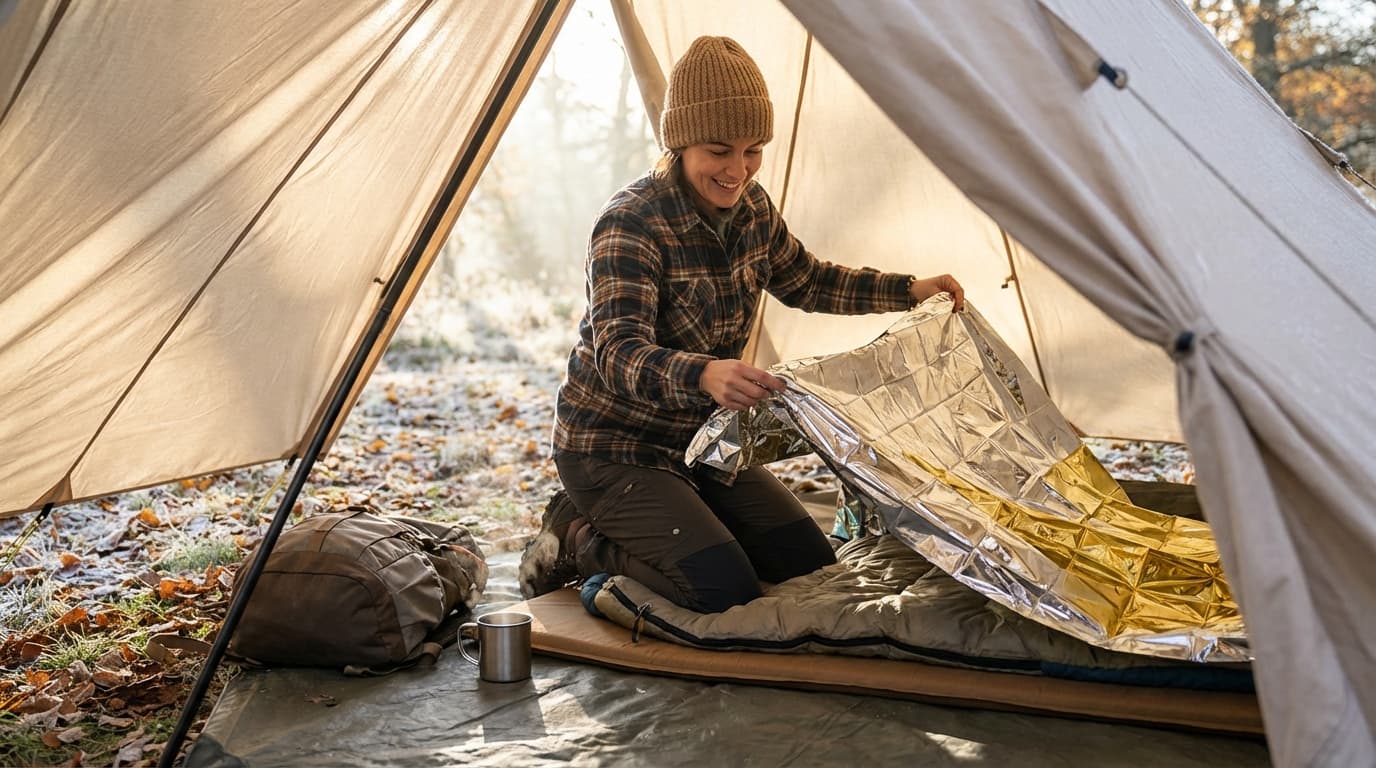
One of the biggest mistakes campers make is focusing only on what is covering them. Here is a tip that changes everything: one layer of insulation underneath your body is actually worth five layers on top. Because the cold ground sucks heat away from you through conduction, laying a space blanket under your sleeping pad is a total game changer. It acts as a radiant barrier that prevents your warmth from escaping into the dirt. This simple move is often more effective than piling on extra blankets because it addresses the primary source of heat loss while you sleep.
You can also line the ceiling and walls of your tent using duct tape or simple clips to create a reflective interior. Think of it like adding a mirror for heat. But there is a catch you need to watch out for. If you seal the tent completely with mylar, you will wake up to a condensation rainstorm from your own breath hitting the cold surfaces. Always leave a small gap for airflow near the top vents. This lets moisture escape while the mylar reflects the warmth back down toward your sleeping bag, keeping you dry and toasty at the same time.
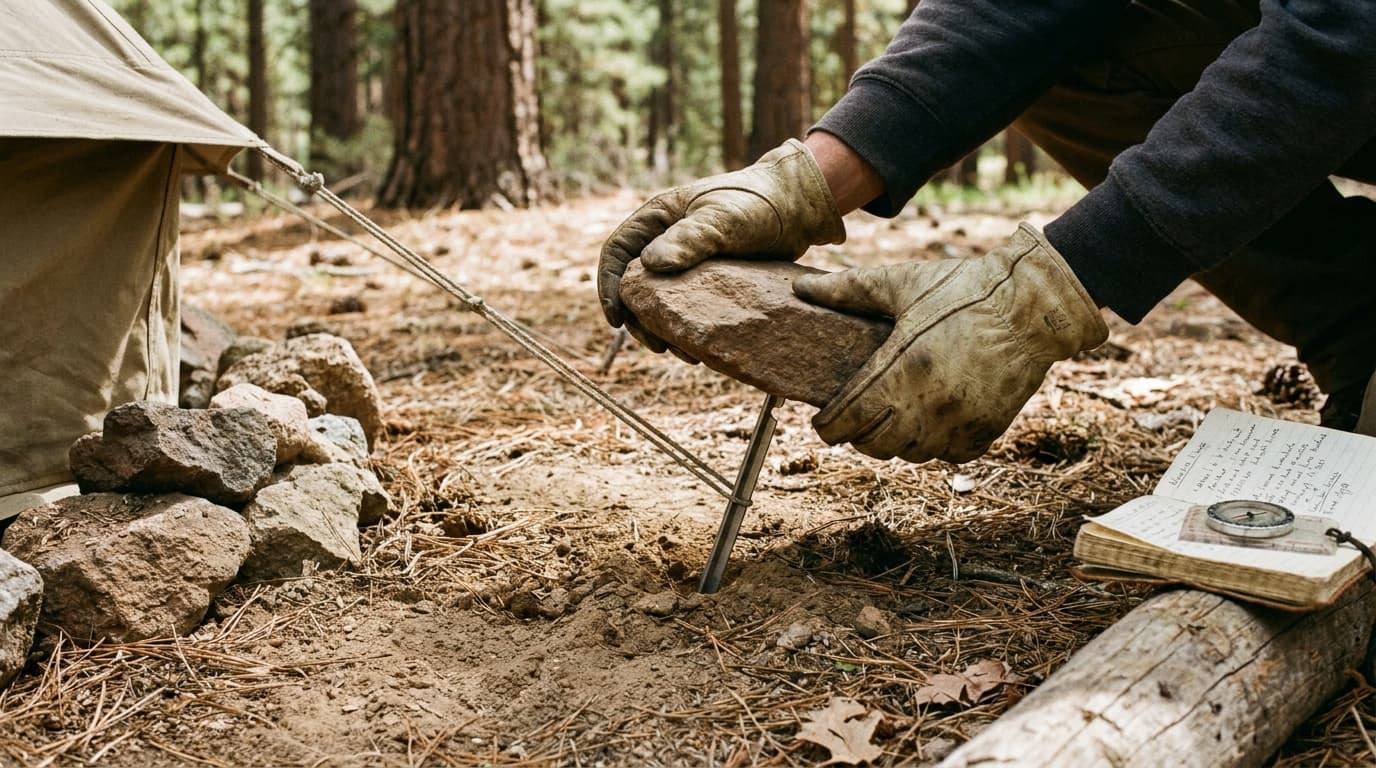
Before you even pull the blanket out of your pack, look at where you are standing. Site selection is half the battle when it comes to staying warm. Try to find a spot that blocks the wind naturally, like behind a cluster of trees or a small hill. If you need extra help, you can pile up natural debris like dry leaves or pine needles against the outside base of your tent. This acts as a secondary insulation layer. Since these blankets are windproof and waterproof, they work perfectly as a final shield between you and the harsh winter elements.
Key insights:
One layer of insulation underneath your body is as effective as five layers on top for maintaining warmth.
Mylar reflects up to 95% of radiated heat, making it a powerful tool for winter tent insulation.
Always leave a small gap for airflow when lining a tent to prevent moisture buildup and condensation.
Site selection and using natural debris can significantly boost the effectiveness of your emergency shelter.
Hacking Your Tent Walls with Space Blankets
Ever wonder why your tent feels like an icebox the moment the sun goes down? It is because standard nylon does nothing to stop radiant heat from escaping. You can fix this by lining your ceiling with a space blanket. Using duct tape or clips to secure the sheet creates a reflective shield. Since Mylar was originally designed by NASA for spacecraft, it is incredibly effective at bouncing up to 95% of your body heat back down to you.
When setting this up, do not seal yourself in like a burrito. You must leave a small gap for airflow to prevent condensation from soaking your gear. While it feels weird to let cold air in, that ventilation keeps you dry. Think of it this way: you are building a radiant barrier, not an airtight box. This simple hack turns a thin tent into a much warmer shelter for just a few bucks. It is the kind of survival logic that keeps you comfortable when the temperature drops.
The Emergency Shelter Warmth Checklist
You only have about three hours to find shelter in extreme cold before things get dangerous. This is the reality of the survival Rule of 3s. When you are setting up your emergency spot, your first job is to pick a site that blocks the wind. Even the best blanket cannot do its job if a freezing gale is constantly stripping away your warmth.
The real secret to staying warm is focusing on what is beneath you because the ground steals heat much faster than the air. Survival experts often say that one layer of insulation under your body is worth five layers on top. Use your space blanket as a base layer to reflect up to 95 percent of your heat back to you instead of letting the cold dirt soak it up.
You can boost your setup by using dry leaves or pine needles as a secondary insulation layer. Standard mylar is only 12 microns thick but it is totally windproof and waterproof. By layering this material with natural debris, you create a pocket of warm air that keeps you safe until help arrives.
Key insights:
Ground insulation is more critical for warmth than top covering when camping.
Mylar reflects up to 95% of radiated heat back to the source.
Standard mylar is 12 microns thick but provides a complete wind and water barrier.
5 Clever Survival Blanket Uses You Probably Haven't Tried
Most people keep an emergency blanket tucked away for a worst-case scenario that never happens. But if you only see it as a last resort, you are missing out on some of the best camping hacks available. These thin sheets, originally designed by NASA for spacecraft, are much more than just shiny foil. Because they reflect up to 95% of radiated heat, they can solve everyday outdoor problems you probably didn't realize you had. Think of it as a multi-tool in sheet form that works just as well for gear protection as it does for personal warmth.
Keeping Your Phone Alive in the Deep Freeze. Have you ever reached for your phone during a winter hike only to find it has died from the cold? Smartphone batteries hate the freeze. You can fix this by using Mylar scraps to line your phone case or a small storage pouch. It acts as a tiny radiant barrier, keeping the battery's own heat trapped inside. This simple trick prevents that annoying cold-death and ensures you have a working device when you actually need to check your map or call for help. It is a small move that saves your tech when temperatures drop.
From Blanket to Rope: The Braiding Trick. It sounds impossible that a material only 12 microns thick could hold any weight, but Mylar has a secret. While it tears easily as a flat sheet, it becomes surprisingly strong when you change its physical state. By cutting the blanket into strips and braiding or twisting them tightly together, you can create functional cordage. Whether you need to lash a branch for a quick shelter or replace a broken shoelace, this braiding trick turns a flimsy blanket into a tool that helps you respect the survival Rule of 3s by keeping your shelter and gear together in an emergency.
The reality is that these blankets are windproof and waterproof, making them perfect for more than just a wrap. Beyond cordage and tech protection, remember that one layer of insulation beneath your body is actually worth five layers on top when you are trying to stay warm while sleeping. Using your space blanket as a base layer under your sleeping pad can be the difference between a shivering night and a restful one. It is all about using that reflective efficiency to your advantage.
Key insights:
Mylar's physical strength increases significantly when twisted or braided into cordage.
A small scrap of Mylar can act as a thermal sleeve to prevent smartphone battery failure in sub-zero temps.
Ground insulation is more critical for warmth than top covering due to how heat is lost to the earth.
Keeping Your Phone Alive in the Deep Freeze
Imagine you are miles into a winter hike and reach for your phone to check the trail, only to see the screen go black. It is a frustrating 'cold-death' that happens because lithium batteries hate the freeze. Here is a simple trick: do not toss those leftover scraps from your emergency blanket. Because Mylar was originally designed by NASA for thermal control on spacecraft, it is incredibly efficient at reflecting up to 95% of radiated heat back to its source.
By wrapping your smartphone in a small piece of this material, you create a tiny, high-tech sleeping bag for your gear. It acts as a radiant barrier that keeps the battery's own warmth from escaping into the air. It works like magic. Since standard Mylar is only 12 microns thick, it adds no bulk to your pocket but makes a massive difference for your tech. Why let the frost kill your connection when a tiny scrap can keep it humming?
Key insights:
Repurposing Mylar scraps creates a lightweight radiant barrier for sensitive electronics.
Reflecting 95% of heat back to the device prevents rapid battery discharge in freezing weather.
From Blanket to Rope: The Braiding Trick
That same thin material is actually a survival powerhouse. While a single 12-micron sheet feels like it might tear if you look at it wrong, everything changes once you start twisting. By tightly rolling and braiding strips of Mylar, you create a makeshift rope with surprising strength. It is a clever trick rooted in NASA-grade material science that turns a simple thermal barrier into a functional tool for your outdoor kit.
Why would you ever need this? Imagine you are out camping and your tent tie-down snaps. This DIY cordage can lash branches together or secure a tarp in a pinch. Since Mylar is waterproof and windproof, your handmade rope won't rot or stretch when the weather turns sour. It is all about being resourceful and making one lightweight item do the work of five.
Key insights:
Twisting Mylar into cordage dramatically increases its physical strength and utility.
This DIY rope stays functional in wet weather because the material is naturally waterproof.
Survival 101: Why the 'Rule of 3s' Dictates Your Gear
Have you ever heard of the Rule of 3s? It is a simple way to remember what kills you first in the woods. You can go weeks without food and days without water, but in harsh weather, you might only have three hours to find shelter before your body loses the battle against the cold. This is why experienced hikers focus on warmth first. If you cannot keep your core temperature up, nothing else matters.
This is where that crinkly silver sheet becomes a lifesaver. Originally designed by NASA to protect spacecraft, these mylar blankets are only 12 microns thick but reflect up to 95% of your body heat back to you. Since they are windproof and waterproof, they stop the elements from stealing your warmth through convection. For something that costs five dollars and weighs almost nothing, it provides a massive safety net.
Here is a pro tip: what is under you matters more than what is over you. In first aid training, they say one layer of insulation beneath you is worth five on top. If you are stuck outside, do not just wrap yourself like a burrito. Lay a blanket down or use it under your sleeping pad to stop the cold ground from sucking the heat out of your bones. You can even twist the material into a strong cord to tie a shelter together. It is cheap, light, and the most important item in your pack.
Key insights:
The Rule of 3s prioritizes shelter because you can only survive three hours in extreme cold without it.
Mylar reflects up to 95% of radiated heat, making it a highly efficient thermal barrier for its weight.
Insulating the ground is five times more effective for staying warm than adding layers on top of your body.
Common Questions About Staying Warm Outdoors
Have you ever heard of the survival Rule of 3s? It is a sobering reminder of how fast things can go wrong when you are out in the woods. While you can last weeks without food and days without water, you might only have three hours without shelter in extreme cold or wet conditions. This is why that tiny silver packet in your bag is so vital. It is not just a backup plan or a piece of foil. It is a high-tech shield against the elements that weighs almost nothing but could save your life when the temperature drops.
One of the biggest mistakes people make when trying to stay warm is focusing only on what covers their shoulders. But here is a tip often shared in first aid training: one layer of insulation beneath your body is actually worth five layers on top. If you are sleeping on the cold ground, the earth acts like a giant heat sink that pulls warmth right out of you. Using a space blanket as a base layer under your sleeping pad or foam mat can be the difference between a shivering night and actual rest. It stops that heat transfer before it starts.
You might wonder how something as thin as a strand of hair can do so much work. Standard Mylar is only about 12 microns thick, though specialized versions can be twice that thickness for extra durability. This material was originally built by NASA to help control temperatures on the outside of spacecraft. It works as a radiant barrier that reflects up to 95 percent of your body heat back to you. Because it is also windproof and waterproof, it stops the cold air from stripping away your warmth while keeping you dry. It essentially acts like a mirror for your own energy.
There is also a common myth that these blankets are only for winter survival. In reality, they are just as good at keeping things cool in the summer heat. Because they reflect heat so well, you can use them to line a cooler to preserve food or even create a shade barrier to block the sun from a tent. And while the sheets feel like they might tear easily, they are surprisingly tough. If you twist or braid the material into a rope, it becomes strong enough to use as emergency cordage for building a shelter or securing gear.
What does this mean for your next trip? It means you have a tool that can protect your phone battery from dying in the cold, keep your food fresh, and keep your body safe if the weather turns. For just a few dollars, you are carrying a piece of space-age technology that covers the most critical part of the survival rulebook. It is a simple and effective way to make sure you stay warm and safe no matter what the trail throws at you. It really is the best money you can spend on your outdoor kit.
Key insights:
One layer of insulation under your body provides as much warmth as five layers on top.
Mylar was originally developed by NASA for thermal control on spacecraft.
Space blankets reflect up to 95 percent of heat and work for both heating and cooling.
The Rule of 3s highlights that shelter is a priority that can become urgent in just three hours.
Wrapping Up: Why Preparation Beats Luck Every Time
Think about the last time you were truly cold. It's not just uncomfortable; it's a clock ticking. The survival Rule of 3s reminds us that while you can go weeks without food, you might only have three hours in extreme cold without shelter. That is why a simple mylar blanket is such a big deal. It is not just a shiny sheet. It is a NASA-developed tool that reflects up to 95% of your body heat back to you when things get rough.
But here is the real secret that most people miss: how you use it matters more than just having it in your pack. Remember the 1 under vs 5 on top rule. In first aid circles, experts say that one layer of insulation beneath you is worth five on top. If you are sleeping on the frozen ground, all those blankets over your chest will not stop the earth from sucking the heat right out of your body. Use your space blanket as a base layer first to stay warm.
Do not wait for a real emergency to figure this out. As the saying goes, the best classroom has no walls. Take these hacks to your backyard or a local park and see how the material feels when you twist it or tape it. Learning these skills now means you will not be relying on luck when the weather turns. Preparation is what keeps a cold night from becoming a dangerous one. After all, a little practice today is worth a lot of luck tomorrow.
Key insights:
The Rule of 3s shows that shelter is your most urgent priority in the cold.
One layer of insulation underneath your body provides as much warmth as five layers on top.
Testing survival gear in a safe environment is the only way to ensure it works when you need it.
Frequently Asked Questions
You definitely can, but it's a bit of a challenge. Standard Mylar blankets are only about 12 microns thick, which makes them incredibly thin and prone to crinkling. Once you've opened one up, you'll find it's almost impossible to fold it back into that tiny original pocket size.
If you're careful and don't tear it, you can use it again for a few trips. But if it does get a bit beat up, don't just toss it. You can actually twist or braid the material into surprisingly strong cordage. For those who want a truly reusable option, it's worth looking for specialized blankets that are about twice as thick and much more durable.
The best way to remember is to face the silver side toward whatever heat you want to keep. If you're trying to stay warm in the cold, face the silver side toward your body so it can reflect up to 95% of your radiated heat back to you. If you're trying to keep a tent cool in the summer, you'd do the opposite and face the silver side out toward the sun to bounce that heat away.
But here's the thing a lot of people overlook: where you put the blanket matters as much as which way it faces. In survival training, they often say one layer underneath you is worth five on top. Because the ground pulls heat away from you so fast, using the blanket as a base layer under your bedding or sleeping mat is actually one of the smartest ways to stay warm.
The main reason is that mylar is totally waterproof and windproof, so it acts as a vapor barrier. When you're sleeping, your breath and body heat create moisture that has nowhere to go, so it ends up sticking to the blanket as condensation.
To avoid waking up in a puddle, you can use the blanket as a base layer under your foam mat instead of a wrap. Here is the thing: experts say one layer of insulation beneath you is worth five on top, so using it on the floor actually keeps you warmer without the soggy mess.
It definitely is if you want something that lasts through more than one trip. While a standard 12-micron blanket is fine for a one-time emergency, the 24-micron versions are way more durable and won't tear as easily when you're setting up a shelter.
Even though it's thicker, it's still very light and reflects about 95% of your heat back to you. It also handles being twisted or braided better, which is a great trick if you need to make some quick emergency cordage in the woods.
Conclusion
That crinkly silver sheet is easily one of the smartest outdoor hacks and tricks you can carry. It is not just a backup for a bad day but a tool that uses NASA tech to keep you warm. We have seen how it reflects your body heat and why it is so useful for everything from protecting your phone to adding extra emergency shelter warmth. It turns out that five dollars really can buy you a lot of peace of mind.
The biggest takeaway is that the ground is usually your biggest enemy in the cold. Knowing how to insulate a tent by putting Mylar under your sleeping pad changes the game for any winter tent setup. These space blanket hacks prove that you do not need expensive gear to stay cozy when the sun goes down. It is all about working with physics instead of fighting against it.
Your next move is simple. Toss a few blankets in your pack and try them out on your next trip. Learning these survival blanket uses now makes you much more prepared for later. A little bit of crinkle goes a long way when you are out in the wild. Stay warm and have fun out there.
Every WilderReady guide is researched, written, and fact-checked in-house against trusted references such as the American Red Cross, the National Park Service, and the CDC before it goes live. We publish under this shared byline instead of invented personas, so you always know who stands behind the guidance you are reading.