Why Your Brain is Actually Your Best Survival Tool (And How to Use It)
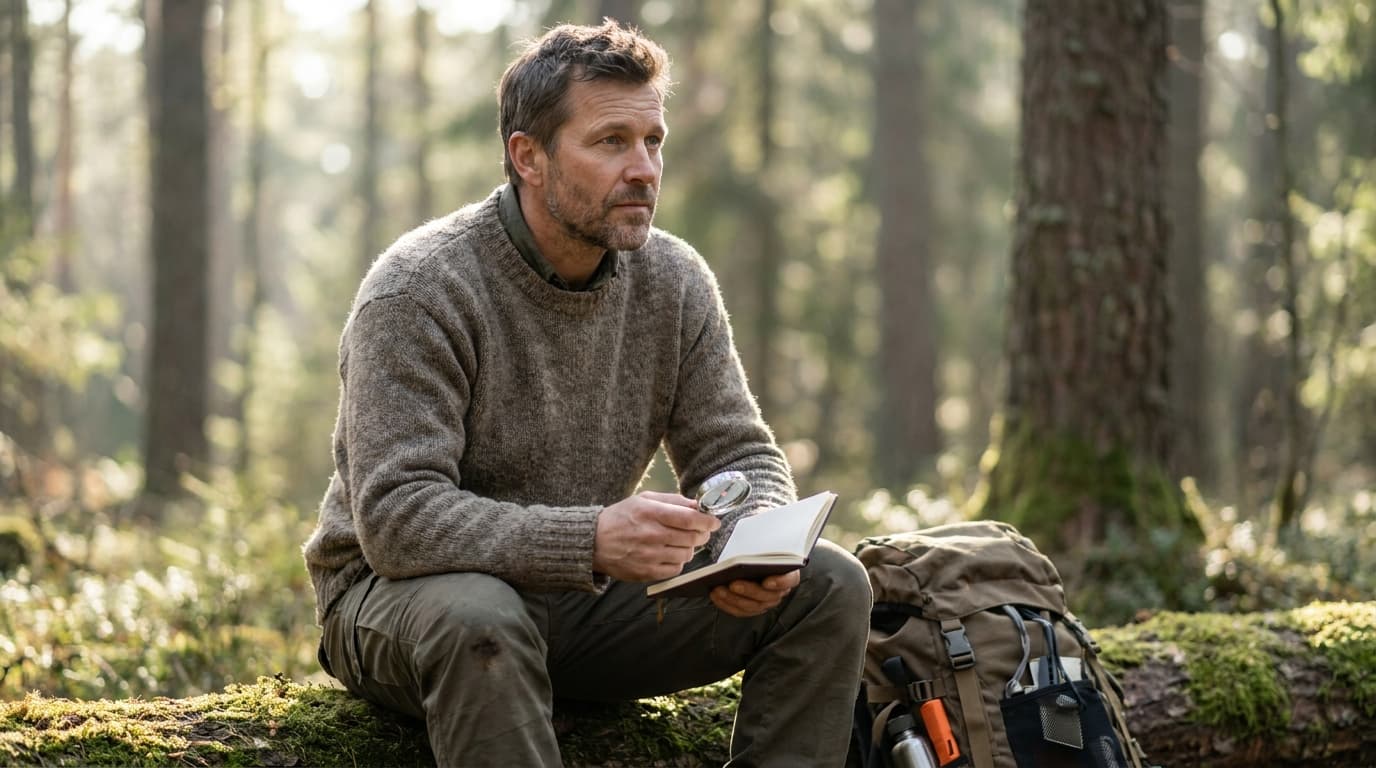
Imagine you are deep in the woods when the trail suddenly disappears and the sun starts to dip. Your heart races and your first instinct is to run, but that...
Why Your Brain is Actually Your Best Survival Tool (And How to Use It)
Imagine you are deep in the woods when the trail suddenly disappears and the sun starts to dip. Your heart races and your first instinct is to run, but that fancy survival knife on your belt won't save you if you are panicking. The real secret to making it home is realizing that survival is actually ninety percent mental and only ten percent gear.
To stay safe, you need a solid mental checklist for wilderness emergency decision making to keep your brain from shutting down. We will explore how to handle fear during extreme weather camping and how to stay calm when lost in the forest. You will also pick up simple bushcraft habits for better emergency preparedness that make your reactions automatic when things get tough.
Whether it is staying focused during night survival scenarios or using the S.T.O.P. method to reset your nerves, this guide shows you how to turn your mind into your greatest asset. Let's look at why your brain is the only tool you really cannot afford to lose.
Why Your Mindset Matters More Than Your Gear in the Wild
Imagine you are lost as the sun dips below the trees. You might have a fancy knife on your belt, but if panic sets in, that steel cannot save you. Survival is ninety percent mental. When fear takes over, it ruins your judgment and even your motor skills. This is why your brain is your most vital piece of equipment. Think of it as your internal compass that never runs out of batteries.
Instead of reaching for a gadget, try the S.T.O.P. method: Stop, Think, Observe, and Plan. This simple checklist keeps you grounded when things go sideways. Staying calm does more than just help you think; it actually strengthens your willpower and immune system. Gear is helpful, but your mindset is what truly keeps you alive.
Key insights:
Fear negatively impacts metabolic processes and physical coordination.
The S.T.O.P. acronym serves as a critical mental checklist for emergency decision making.
Willpower has a scientific connection to immune system strength during crises.
Why Your Brain Goes Haywire When You're Scared
Ever notice how your hands shake or your mind goes blank the moment things go wrong? It is not just you being nervous. Your brain is literally hijacking your body. When fear takes over, your judgment and motor skills take a massive hit. You might find yourself fumbling with a simple zipper or forgetting how to read a compass. This happens because your body shifts all its energy into a raw survival mode that makes modern problem solving much harder. Your brain does not care about your long-term plans when you are scared. It only cares about the next ten seconds. This biological hijack is why even experienced hikers make silly mistakes when they are stressed.
There is also a fascinating connection between your mind and your body that goes deeper than just nerves. Researchers like Wim Hof and Bruce Lipton have shown there is a scientific link between your willpower and your immune system. If you let stress run wild, you are not just losing your cool. You are actually draining your physical resilience. Staying calm keeps your internal systems running right, which is why your attitude often matters more than the gear in your bag. Think of it this way: your mind is the engine, and your gear is just the paint job. If the engine stalls because of panic, the best tools in the world will not help you.
To avoid the fear loop, you have to catch the panic before it peaks. If you wait until you are hyperventilating, it is too late to think clearly. Survival starts before you even leave the house by training your mind to recognize when your heart rate starts to climb. Recognizing physical symptoms like a tight chest or sweaty palms early gives you the chance to reset. This is where the S.T.O.P. method comes in. You stop, think, observe, and plan. It sounds simple, but it acts as a mental circuit breaker that stops the biological hijack in its tracks.
By practicing these habits now, you build muscle memory that keeps you steady when the weather turns or the sun goes down. Using the S.T.O.P. checklist allows you to assess risks and identify resources without the fog of panic. Whether you are using terrain association to find your way or just trying to stay warm, a calm mind is your most powerful asset. When you control your fear, you keep your motor skills sharp and your judgment clear, which is the real secret to staying safe in the woods.
Key insights:
Fear triggers a biological hijack that degrades motor skills and judgment during emergencies.
There is a proven scientific link between your mental willpower and your immune system health.
The S.T.O.P. method (Stop, Think, Observe, Plan) serves as a vital mental circuit breaker against panic.
Mental preparation and training act as a buffer, allowing you to recognize stress symptoms before they overwhelm you.
The Fear Loop: How to Spot the Signs Early
Have you ever felt that sudden cold rush when things go wrong? That’s the fear loop. Your heart races, your palms get sweaty, and suddenly, thinking clearly feels almost impossible. This isn't just a bad mood; fear actually messes with your metabolic processes and ruins your judgment. If you don't catch these signs early, you'll start making mistakes before you even realize you're panicked.
The thing is, survival starts at home long before you hit the trail. It’s about building the mental muscle to stay calm. When a panic spike hits, your motor skills and decision-making take a dive. That’s why the S.T.O.P. method - Stop, Think, Observe, and Plan - is so vital. It’s a simple mental checklist that forces you to breathe and collect yourself. Spotting these physical triggers early keeps your brain in charge when it matters most.
Key insights:
Fear physically impairs your motor skills and judgment during a crisis.
The S.T.O.P. method acts as a vital circuit breaker for the panic loop.
Mental preparation begins at home, not just when an emergency occurs.
S.T.O.P.: The Four-Step Plan to Get Your Brain Back Online
Imagine that sinking feeling when you realize the trail has vanished and the sun is dipping low. Your heart races, and your first instinct is to run. But running is exactly how people get into real trouble. This is where the S.T.O.P. method comes in. It is a simple mental checklist designed to get your brain back online before panic takes the wheel. When you are scared, your body actually starts working against you. Research shows that extreme fear can mess with your metabolism and your ability to move or think clearly. By forcing yourself to pause, you are not just waiting; you are taking control of your biology.
The first step is often the hardest: just stop. Sit down, take a drink of water, or focus on a few deep breaths. This five-minute pause acts as a circuit breaker for your nervous system. Instead of reacting to every shadow, you start to think. You can look at the actual risks without letting 'what-if' scenarios spiral out of control. It is about moving from a state of blind reaction to a state of active planning. Think of it as a software reboot for your survival mind. If you can break the cycle of panic early, you have already won half the battle.
Once you are calm, you need to use your eyes, not your anxiety. This means observing your surroundings for real resources, like a dry spot for shelter or a clear landmark. Wilderness awareness is all about situational awareness and identifying what you actually have on hand rather than what you wish you had. Once you see the reality of the situation, start setting small, winnable goals. Maybe your first goal is just to gather enough wood for one hour. These small wins build the confidence you need to stay focused during a night survival scenario.
The interesting part is that this mental resilience does more than just help you find your way home. There is a scientific connection between our willpower and our immune system, supported by researchers like Wim Hof. As Jason Marsteiner from The Survival University points out, the best tool you have is not in your bag; it is your mind. By using the S.T.O.P. plan, you turn a potential disaster into a series of manageable tasks. You stay calm, you stay focused, and most importantly, you keep your brain working for you instead of against you.
Key insights:
The S.T.O.P. acronym stands for Stop, Think, Observe, and Plan.
Panic causes disorganized behavior and ruins fine motor skills.
Setting small, achievable goals prevents the mind from becoming overwhelmed.
Mental resilience is more important for survival than physical gear.
Stop and Think: Breaking the Cycle of Panic
When your heart starts racing and the trees feel like they are closing in, your first instinct is usually to run. But that is exactly when you should do the opposite. Taking a short pause isn't just about catching your breath. It is about survival. Fear messes with your body on a biological level, ruining your judgment and making your motor skills fail when you need them most. This biological reaction can even impact your immune system and metabolic processes.
This is where the S.T.O.P. method comes in. It stands for Stop, Think, Observe, and Plan. By forcing yourself to sit down, you break the cycle of panic. You can assess real risks without letting scary what-if scenarios spiral. Think of it as a mental reset button that keeps your logic in charge instead of your fear. It gives you the space to remember that your mind is your best tool.
Key insights:
The S.T.O.P. acronym acts as a mental checklist to prevent disorganized behavior during a crisis.
Fear triggers physiological changes that negatively impact your judgment and ability to perform physical tasks.
Observe and Plan: Using Your Eyes, Not Your Anxiety
When fear kicks in, your brain can start to glitch. Your motor skills slip and your judgment gets fuzzy because your body is reacting to stress. This is where the 'Observe' and 'Plan' parts of the S.T.O.P. method come in. Instead of letting anxiety take the wheel, use your eyes to scan for what is actually around you. Look for immediate resources like a dry patch of ground or a sturdy branch.
Once you see what you have, start making a plan. Do not try to solve the whole crisis at once. Instead, set tiny, winnable goals. Maybe it is just finding a spot for a fire or checking your map. These small wins build your confidence and keep your willpower strong. This mental grit even helps your immune system stay resilient. Taking small steps keeps you sharp when you need it most.
Key insights:
Small goals prevent the brain from being overwhelmed by the total scale of an emergency.
Observation shifts your focus from internal panic to external resources you can actually use.
When the Sun Goes Down: Staying Focused During Night Survival
The forest changes the second the sun dips below the horizon. Shadows stretch, and every snap of a twig sounds like something much bigger than a squirrel. It is natural to feel a spike of dread, but that fear is more than just a feeling. It actually triggers physical changes that can hurt your chances, like slowing down your judgment and messing with your motor skills. But here is the thing: you have to stay in the driver seat of your own mind. Using the S.T.O.P. method - Stop, Think, Observe, and Plan - gives you a mental rail to hold onto when the dark starts feeling heavy. By taking a breath to observe your surroundings and plan your next move, you turn a scary situation into a series of small, solvable tasks.
There is a reason why a small fire feels like a miracle in the middle of a cold night. Beyond the physical warmth, it provides a massive psychological win that keeps you grounded. It acts as an anchor for your situational awareness, helping you focus on your immediate environment rather than the vast, unknown forest. It is about more than just comfort, too. There is a scientific connection between your willpower and your immune system, a link supported by researchers like Wim Hof. Jason Marsteiner from The Survival University often points out that the most crucial tool you carry isn't in a bag, it is the resilience of your mind. A fire helps you tap into that resilience by keeping your body and spirit strong enough to handle the stress of the elements.
Staring down eight hours of darkness can feel impossible. Instead of worrying about the whole night, try breaking it into tiny, manageable chunks. This is called compartmentalization, and it is a total lifesaver. Tell yourself you just need to make it through the next hour. Then the hour after that. Focusing on just the next hour keeps you sane because it prevents your brain from spiraling into scary what-ifs about the future. When you win these small battles against the clock, you build the momentum needed to see the sunrise. It is a simple, effective way to keep your focus sharp and your heart rate down when the world feels like it is closing in.
Key insights:
The S.T.O.P. methodology acts as a mental circuit breaker to prevent panic-driven decisions.
Fear has a tangible physiological impact, making it harder to use tools or think clearly.
A small fire serves as a psychological anchor, boosting both immune health and mental clarity.
Compartmentalization prevents mental burnout by focusing on the next immediate goal rather than the entire crisis.
Compartmentalization: Dealing with One Problem at a Time
Ever felt that wave of panic when things go wrong? When you are stuck in the woods at night, your brain can quickly become your enemy. Fear does not just feel bad. It actually messes with your metabolism and motor skills. To stay sane, you need to break the night into tiny, bite-sized pieces.
Don't worry about surviving until sunrise. Just focus on the next hour. This is called compartmentalization. By using a mental checklist like S.T.O.P. (Stop, Think, Observe, Plan), you give your mind a job to do. Solving one small problem at a time keeps you calm and moving forward. It turns a scary night into a series of manageable wins.
Key insights:
Focusing on 'just the next hour' prevents the brain from being overwhelmed by a long survival timeline.
Using the S.T.O.P. methodology engages logical thinking to override the physical symptoms of fear.
Daily Bushcraft Habits for Better Emergency Preparedness
Think about the last time you tried to solve a puzzle while you were really stressed. It is hard, right? In a real emergency, fear is more than just a bad feeling. It actually slows down your brain and makes your hands clumsy. This is why practicing bushcraft habits on sunny, easy days is so important. When you practice skills in good weather, you are not just learning a trick. You are building muscle memory. That way, when you are tired or cold, your hands know what to do even if your brain is struggling to keep up.
One of the best habits to start today is using the S.T.O.P. method. It stands for Stop, Think, Observe, and Plan. It sounds simple, but it is a literal lifesaver. By making this a regular part of your hikes, you turn a mental checklist into a reflex. It helps you stay calm and keeps your willpower strong. Some researchers even suggest that a strong mind can help your immune system stay resilient during a crisis. Your mind is your most important tool, so you need to keep it sharp.
You can also turn your walks into awareness games to train your eyes. Instead of just looking at the trail, try to read the landscape like a map. Look for ridgelines, valleys, or specific trees that stand out. This is called situational awareness, and it is a huge part of staying safe. By practicing this every time you step outside, you learn to see resources and potential hazards before they become a problem. It is about being present so you do not have to panic later. What do you see when you look at the woods? The more you look, the more you will find.
Key insights:
Consistent practice in calm conditions builds the muscle memory needed to overcome the physical effects of fear.
The S.T.O.P. acronym serves as a vital mental anchor to prevent panic and disorganized behavior.
Training your situational awareness helps you identify resources and navigation landmarks before an emergency starts.
Awareness Games: Training Your Eyes to See More
Ever notice how two people walk the same trail, but one sees a dozen birds while the other just sees trees? That isn't luck; it is situational awareness. You can turn every hike into a training session by learning to read the landscape like a map. Try focusing on four key areas: the environment, tracking, resources, and your own situation.
This matters because fear actually hurts your judgment and motor skills. By gamifying your awareness, you keep your brain engaged. Use terrain association, like spotting ridgelines, to stay oriented. If things feel off, use the S.T.O.P. method: Stop, Think, Observe, and Plan. It helps you see the world as useful data instead of a reason to panic.
Key insights:
Wilderness awareness involves tracking four key areas: environment, tracking, resources, and your own situation.
The S.T.O.P. method (Stop, Think, Observe, Plan) acts as a mental buffer to keep fear from affecting your judgment.
Handling the Elements: Staying Calm During Extreme Weather
Imagine you are out in the woods and the sky suddenly turns a nasty shade of bruised purple. The wind picks up, and your heart starts racing. This is where many people panic. But here is the thing: your gear cannot save you if your head is not in the right place. Fear is not just a feeling. It actually messes with your body chemistry, slowing down your judgment and making your motor skills shaky right when you need them most. To handle fear during extreme weather camping, you have to start by doing nothing at all for a second.
Use the S.T.O.P. method: Stop, Think, Observe, and Plan. It is a mental checklist that keeps you from making impulsive mistakes. When the rain starts dumping, stop and breathe. Think about your immediate risks. Observe the woods for a natural windbreak or higher ground. Then, make a plan. This matters because you have to prioritize shelter. According to the Rule of Threes, you only have about three hours in harsh elements before things get dangerous. Focusing on your immediate surroundings keeps you from being overwhelmed by the big picture.
Staying dry is also about keeping your morale high. There is a fascinating scientific link between your willpower and your immune system. If you give up mentally, your body often follows. Think of it as keeping your internal pilot light lit. By breaking big, scary problems into small, manageable chunks - like finding one dry spot for a fire - you stay focused. Your mind is the most important tool you own, so keep it calm and use it well. What does this mean for you? It means the difference between a scary story and a survival story.
Key insights:
The S.T.O.P. acronym serves as a vital mental anchor to prevent panic-driven decisions.
Fear physically degrades motor skills and judgment, making mental composure a biological necessity.
Prioritizing shelter follows the 'Rule of Threes,' focusing energy on the most immediate threat to life.
Maintaining willpower actually supports your immune system and physical resilience during a crisis.
Finding Your Way: Navigation Without the Stress
Your GPS just flickered and died. Now what? It is easy to feel that cold spike of panic when the screen goes dark and the trees all look the same. But here is the thing: your phone was never your best tool. Your brain is. Before you take another step, use the S.T.O.P. method. It stands for Stop, Think, Observe, and Plan. It sounds basic, but it is a mental checklist that keeps you from making bad choices. When fear takes over, it actually hurts your judgment and even your motor skills. By sitting down for a few minutes, you give your mind a chance to lead again.
Once you have calmed down, start looking at the land. You do not need a signal to find your way if you use terrain association. This is just a way of looking at the big features around you - like ridgelines, peaks, or valleys - to figure out where you are. You can also try dead reckoning, which involves tracking your distance and direction from your last known spot. Also, keep an eye on the sky. The sun and stars are constant guides. Finding the North Star or watching the sun's path gives you a sense of direction that batteries simply cannot provide.
The real goal here is situational awareness. It is about understanding the resources around you and staying focused on the task at hand. Some researchers even suggest that having a strong will to survive can boost your immune system. That is how connected our minds and bodies are. While gear is nice, your ability to stay calm and use simple tricks is what actually gets you home. What does this mean for you? It means the next time you head out, practice these skills until they feel like second nature.
Key insights:
The S.T.O.P. acronym (Stop, Think, Observe, Plan) is a vital mental tool to prevent panic-driven mistakes.
Terrain association and dead reckoning allow for effective movement without electronic aids.
Celestial cues like the North Star provide a reliable, permanent backup for finding your way.
Mental resilience and situational awareness are more critical to survival than physical gear.
The Wrap-Up: Building a Mind That Won't Quit
Survival isn't just about what's in your pack. It’s a choice you make every single minute when things go sideways. Think of your resilience like a muscle. You can train your brain to handle fear so it doesn't mess with your judgment or your body's chemistry. There is even a scientific link between your willpower and your immune system, which shows how much control you really have.
As you head out on your next adventure, remember your gear is just backup. Your real strength comes from staying calm and knowing how to handle fear during extreme weather camping or long nights. The forest is unpredictable, but your mind is built to adapt. Keep practicing those bushcraft habits and trust yourself.
Key insights:
Resilience functions like a physical muscle that requires consistent training.
Willpower has a direct, scientific connection to immune system health and survival.
The brain is a more effective survival tool than any piece of physical gear.
Frequently Asked Questions
The very first thing you need to do is just stop. Sit down and stay right where you are. It sounds simple, but when you realize you are lost, your brain usually wants to go into overdrive and start running. That is how people end up deeper in the woods and in more trouble.
By staying still, you give yourself a chance to calm down. Fear is a real physical thing that can mess with your judgment and even your motor skills. If you keep moving while you are panicked, you will likely make mistakes you normally would not make. Remember that your mind is your best survival tool, so you have to give it a minute to catch up and get back in control.
Think of the S.T.O.P. method as a mental reset button. When you are in a scary situation, your body releases stress hormones that can cloud your thinking. By going through the steps of Stop, Think, Observe, and Plan, you are forcing your brain to switch from a state of panic back to a state of logic.
Here is the thing about fear. It negatively affects everything from your metabolism to how well you can use your hands. When you use this checklist, you are breaking down a giant, overwhelming problem into small, bite sized pieces. This keeps you focused on the task at hand instead of letting your imagination run wild with everything that could go wrong. It is basically a way to keep your willpower strong and your head clear when you need it most.
Yes, you actually can. It sounds a bit like a superpower, but there is a real scientific link between your mind and your body's defenses. Researchers like Wim Hof and Bruce Lipton have shown that your mental state can influence your biological readiness.
Here is the thing: when you use your willpower to stay calm, you prevent the physiological shutdown that fear often causes. It is part of a newer, holistic way of looking at preparedness where your internal health is just as vital as the tools in your bag. So, keeping your head on straight does more than just help you think clearly, it keeps your body in the fight too.
The best way is to turn survival steps into everyday habits. You do not need to be lost in a forest to practice the S.T.O.P. method. Try using it the next time you feel a little overwhelmed, like when you are stuck in a massive traffic jam or dealing with a surprise at work. Just stop, take a breath, think, observe your surroundings, and make a plan.
By practicing these mental checklists during small daily stresses, you build the muscle memory you will need if a real emergency ever happens. Also, things like meditation or martial arts are great for learning how to stay focused under pressure. It is all about training your brain to stay cool and collected as its default setting.
Conclusion
At the end of the day, your pack might be full of high-end gear, but your survival depends on what happens between your ears. We have looked at how fear can take over and why a simple mental checklist for wilderness emergency decision making is your best defense. When you combine those bushcraft habits for better emergency preparedness with a calm head, you turn a potential disaster into a manageable situation.
Real preparedness is about more than just knowing how to light a fire. It is about knowing how to handle fear during extreme weather camping or staying focused during night survival scenarios when your imagination starts to run wild. These are skills you can practice every time you step outside, even on a sunny afternoon hike.
So next time you head out, try practicing the S.T.O.P. method just for fun. Learning how to stay calm when lost in the forest is a muscle you build before you actually need it. Your brain is your most powerful tool, so make sure you keep it sharp. Stay safe and enjoy the trail.
Every WilderReady guide is researched, written, and fact-checked in-house against trusted references such as the American Red Cross, the National Park Service, and the CDC before it goes live. We publish under this shared byline instead of invented personas, so you always know who stands behind the guidance you are reading.