Wet Wood and Cold Nights: Survival Gear That Actually Works When Things Get Messy
Have you ever tried to light a fire when the sky is dumping rain and every stick in sight is dripping wet? It is a frustrating, bone-chilling experience that can...
Wet Wood and Cold Nights: Survival Gear That Actually Works When Things Get Messy
Have you ever tried to light a fire when the sky is dumping rain and every stick in sight is dripping wet? It is a frustrating, bone-chilling experience that can turn a fun weekend into a dangerous situation fast. Most people think they are ready until the gear they bought at a big-box store fails them right when they need it most.
Being truly prepared means having the best emergency fire starters for wet wood and a surviving cold weather gear checklist for beginners that you can actually trust. We are diving into high-lumen flashlight reviews for night survival and off-grid water purification methods for backcountry camping to help you build a setup that works.
This article breaks down why custom kits beat generic buckets and looks at survival fishing kit essentials for beginners. You will learn how to stay warm, find clean water, and keep your lights on when things get messy. Let's look at the gear that keeps you safe when nature stops playing nice.
Imagine you’re miles from the nearest road, the sun is dropping, and your matches are soaked. It’s a nightmare scenario, but it’s exactly where cheap, store-bought kits fail you. Gear failure in the wild isn't just a bummer; it's a safety risk. You need tools that don't quit when the weather turns and things get messy. What does this mean for you? It means choosing gear that actually works when you're cold and tired.
Instead of grabbing a generic box, build your own. A Ferrocerium rod can handle 20,000 strikes even after a dunk in a lake. Pair that with fire plugs that have a 30-year shelf life, and you’re set for decades. As Jonathan McNamara from the Red Cross says, you should feel free to customize for your family. Think about what you really need to stay warm, whether that's extra blankets or specialized tinder.
Also, consider the weight of survival. FEMA suggests one gallon of water per person daily, but a full 20L bottle weighs 40 pounds. That’s a lot to carry in one hand! True preparedness is about picking reliable, durable gear that keeps you safe and hydrated without breaking your back. After all, being ready is about having the right tools and the right plan to use them.
Key insights:
Customizing your own emergency kit ensures higher quality than buying pre-made, one-size-fits-all versions.
Ferrocerium rods are essential because they remain reliable even in soaking wet conditions.
Water storage planning must account for weight, as a three-day supply for one person is surprisingly heavy.
Making Fire When Everything is Soaking Wet
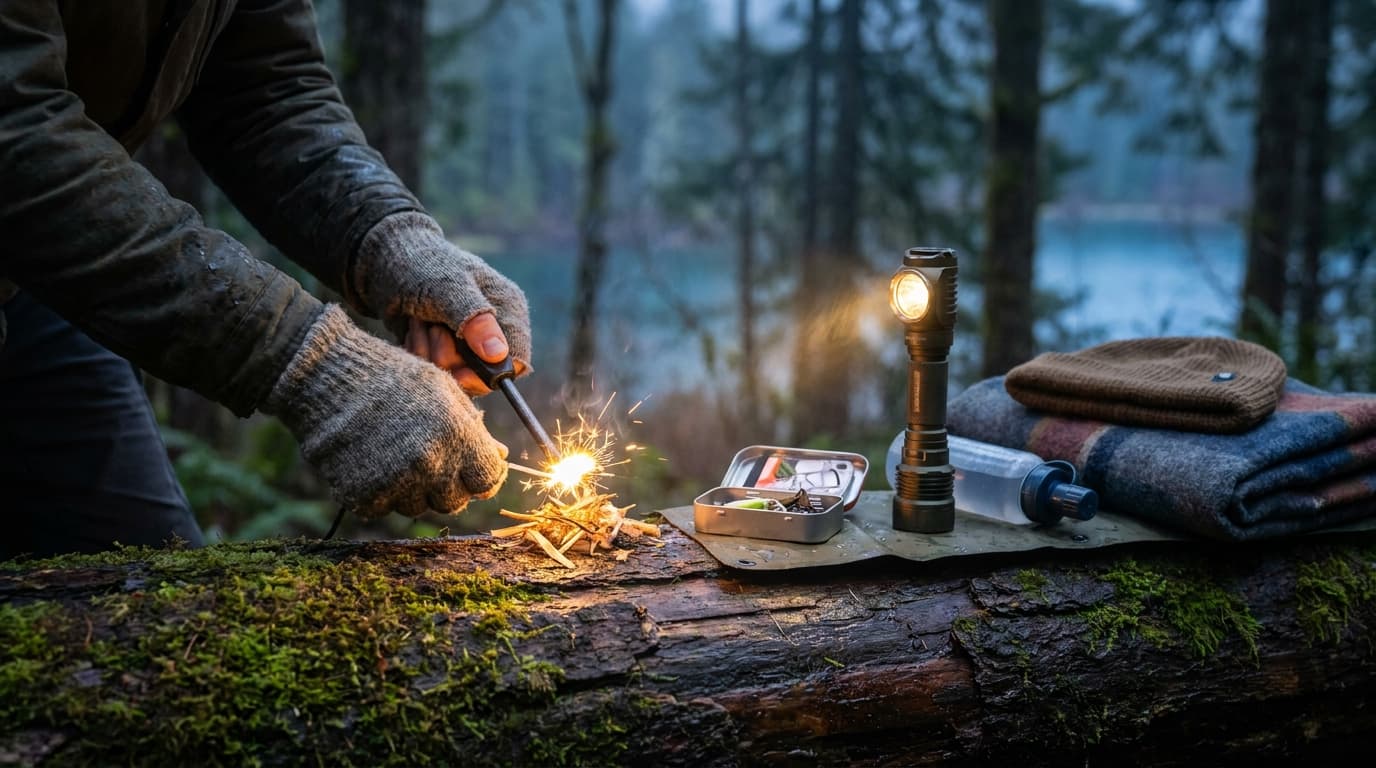
Imagine you are deep in the woods, the rain is pouring down, and every stick you touch feels like a soaked sponge. This is the moment where your survival gear is actually tested. Trying to light wet wood without the right tools is not just a chore, it is a safety risk when the temperature starts to drop. Chris Carter, a senior editor at GearJunkie, points out that while a fire can save your life in these cold, wet conditions, we also have to be responsible outdoors people. It is about finding that balance between staying warm and respecting the environment. For most seasoned survivalists, the answer to this challenge is not a cheap gas lighter that might fail when it gets damp or cold. Instead, they rely on ferrocerium rods. These tools are the gold standard because they do not rely on liquid fuel or fragile parts that can break at the worst time. When everything is soaking wet, you need a tool that works every single time, regardless of the humidity or how hard the wind blows. What does this mean for your pack? It means moving away from gadgets and back to basics that are built to last. You might wonder why anyone would struggle with a rod when a lighter is so easy, but once you have seen a lighter fail in a storm, the choice becomes very clear. Having that backup is not just about fire, it is about the confidence to handle whatever the trail throws at you.
So why do hikers choose Ferro rods over everything else? It comes down to technical reliability that you just cannot find in a plastic lighter. Consider the Wolf and Grizzly firestarter, which is rated for approximately 20,000 strikes. That is a massive number compared to a standard lighter that might run out of fuel or stop working if the mechanism gets a bit of grit in it. These rods, usually made with magnesium, produce sparks at extremely high temperatures that can catch even stubborn tinder. The real magic happens when things get wet. You can literally dunk a Ferro rod in a stream, pull it out, give it a quick wipe, and it will still throw hot sparks immediately. This level of durability is why they are a staple in any serious kit. When you are miles from the nearest road, you want a tool that ignores the rain and works on the first strike.
Then there are the set and forget fire starters, which act like a safety net for your emergency kit. Products like Black Beard Fire Plugs are famous for having a 30-year shelf life, meaning you can pack them away and forget about them until you really need them. These starters use waterproof wax and jute cores to resist moisture, which is vital when you are dealing with high humidity or damp gear. While some might call it cheating, keeping a few of these in your pocket is just smart planning. If your hands are cold and you are struggling to find dry material, these plugs can light over 50 fires and stay lit long enough to catch larger pieces of wood. It is about having a redundant system that ensures you stay warm no matter what the weather does. Think of it as a small bit of insurance that weighs almost nothing but pays off when the environment turns against you. It is the survival equivalent of having a stash of favorite treats ready for a rainy day, providing comfort and utility when you need it most.
Key insights:
Ferro rods are the preferred choice for wet conditions because they function perfectly even after being submerged in water.
The Wolf and Grizzly firestarter provides up to 20,000 strikes, offering significantly more longevity than traditional lighters.
Black Beard Fire Plugs offer a 30-year shelf life, making them an ideal set and forget component for long-term emergency preparedness.
Reliable fire starting is as much about having the right tools as it is about the skill to use them responsibly in the wild.
Why Ferro Rods are a Hiker's Best Friend
Imagine you are miles from the trailhead and the sky opens up. Your lighter is soaked, and that 'reliable' flame is gone. This is where a ferro rod becomes your best friend. Unlike a lighter that runs out of fuel or has parts that snap, a quality rod like the Wolf & Grizzly is rated for about 20,000 strikes. That is a massive amount of fire-starting power sitting in your pocket, ready for when you actually need it.
These tools are basically chunks of metal that do not care if they get dunked in a stream. You can pull one out of the water, wipe it off, and get sparks flying immediately. Most rods are 4 to 6 inches long, making them easy to grip even when your hands are shaking from the cold. Many also use magnesium to create high-temperature sparks that help you catch damp tinder. It is simple, rugged, and works when things get messy.
Key insights:
Ferro rods work perfectly even after being submerged in water.
Magnesium components allow for higher temperature sparks to light wet wood.
A single ferro rod can last for 20,000 strikes, outliving hundreds of disposable lighters.
The Set and Forget Fire Starters
Ever tried starting a fire when your matches are damp and the wood is soaking? It is a total nightmare. This is why you should keep a few "cheats" in your pocket for those messy situations.
Black Beard Fire Plugs are a great choice because they have a 30-year shelf life. You can just toss them in your bag and forget about them until things go south. These plugs use waterproof wax and jute cores to beat the humidity, and they can light over 50 fires.
Why struggle with wet sticks when you can have a guaranteed flame? It is not about being lazy. It is about staying warm when it counts. The best survival skill is simply having the right gear ready to go.
Key insights:
Fire plugs offer a 30-year shelf life for true "set and forget" preparedness.
Waterproof wax and jute cores ensure reliability in high humidity and wet conditions.
Clean Water Without Breaking Your Back
Have you ever tried carrying a full 20-liter water container? It weighs about 40 pounds. For most people, that is the absolute limit for what you can lug around with one hand before your back starts screaming. FEMA suggests keeping at least a three-day supply on hand, specifically one gallon per person every day just for drinking. While that sounds simple on paper, storing and moving sixty or eighty pounds of water during an emergency is a physical challenge many people overlook until the power goes out.
This is why we are seeing a major shift toward collapsible, UV-resistant storage. Instead of those rigid, clunky plastic jugs that take up half your trunk, double-layered bags are becoming the go-to for backcountry camping and home kits alike. These high-end containers use two layers of plastic to stop leaks and block sun damage, which is vital because light can degrade the container over time. Plus, they fold down to nothing when they are empty, saving you precious space in your gear bag.
Staying safe is not just about the container, though. You need to rotate your stored water at least every six months to keep it fresh and safe to drink. If you are worried about the chemistry degree side of things, do not be. Modern off-grid water purification methods are much simpler now, focusing on easy filters or drops rather than complex lab work. Think of it as a set and forget system that you check twice a year. It is about making sure that when things get messy, your water supply is the one thing you do not have to stress about.
Key insights:
A full 20L container hits the 40-pound limit for one-handed carrying for most people.
Double-layered collapsible bags offer better durability and UV protection than standard rigid jugs.
Water safety requires a simple rotation every six months to prevent contamination and maintain freshness.
Ditching the Heavy Plastic Jugs
Lugging around rigid blue plastic jugs is a workout nobody actually wants. A full 20-liter container weighs about 40 pounds, which is the limit for most people to carry in one hand. It is heavy, awkward, and takes up too much room in your gear bag when you are headed out.
Swapping to double-layered collapsible bags makes life much easier. These use two layers of UV-resistant plastic to prevent leaks and stop the sun from breaking down the material. They are tough enough for the backcountry but fold flat when empty. This saves space and frustration when you are packing.
Just remember that water safety is a habit. You should rotate your stored water every six months to keep it fresh for your family. Also, skip the complicated chemistry. Simple squeeze filters or UV pens make purification easy for anyone. It is about having a system that works when you are tired.
Key insights:
Rotate your water supply every six months to ensure it stays safe for drinking.
Collapsible containers with UV protection are more durable and portable than rigid plastic jugs.
Modern purification tools like UV pens provide safety without the need for complex chemical treatments.
Why You Should Build Your Own Survival Kit
Walking into a store and grabbing a pre-made emergency bucket feels like checking a box, but it is often a trap. These kits are usually one-size-fits-all, which means they probably do not fit your family needs at all. Jonathan McNamara from the Red Cross points out that we focus too much on finding one right way to prepare. In reality, you should feel free to customize things. A generic kit might have a cheap flashlight that fails when you need it most or food your kids will not actually eat.
Building your own kit gives you total quality control over every piece of gear. Think about it this way: would you rather rely on a mystery fire starter or a Wolf and Grizzly rod rated for 20,000 strikes? When you pick the parts yourself, you can include reliable items like Black Beard Fire Plugs that stay good for 30 years. You know exactly how your gear works because you chose it. This is not just about buying stuff. It is about knowing your fire starter works in the rain and your gear is actually durable.
Water is another big reason to go custom. FEMA suggests one gallon per person every day for drinking. If you buy a pre-packed kit, you are usually getting tiny pouches that will not last. But if you build your own, you might use a Wolverine Tuff Bottle. Just remember that a full 20L bottle weighs about 40 pounds, which is the maximum most people can carry in one hand. Plus, you will know to swap that water out every six months to keep it safe. Customizing means you are actually ready instead of just owning a plastic bucket.
Key insights:
Custom kits allow for better quality control of individual components compared to store-bought buckets.
Personalization ensures the gear meets the specific physical abilities and dietary needs of your family.
Reliable fire starters like Ferro rods are essential because they function even in wet conditions.
Water storage requires regular maintenance, including rotating supplies every six months.
Seeing in the Dark: More Than Just a Bright Light
Imagine the sun dips below the trees faster than you expected. Suddenly, the trail is a maze of shadows. A high-lumen flashlight is a total game changer here. It is not just about seeing your feet. It is about feeling safe enough to make smart choices when the world goes dark. A bright beam is often the difference between finding your way back and spending a very long night in the cold.
When looking at reviews, you will see two main terms: throw and flood. Think of throw as a long-range scout that pushes a tight beam way out to see what is moving in the distance. Flood is more like a lantern that fills your immediate space with light so you can set up camp or check your gear without fumbling. Most people find that a balance of both works best. You need to see the big picture and the small details at once.
But here is the real test: can it survive a drop? If you fumble your light onto a pile of rocks, it must keep shining. Survival gear has to be as tough as the environment it lives in. As Chris Carter from GearJunkie notes, we must be responsible outdoors, and that means having tools that do not quit when things get messy. A light that breaks on the first drop is just a heavy paperweight in your pack.
Key insights:
Lumens provide more than just light. They offer the psychological confidence needed to make better survival decisions.
A throw beam is essential for distance scouting, while a flood beam is better for close-up tasks like cooking.
Impact resistance is a non-negotiable feature for any light intended for rugged, rocky terrain.
Surviving the Chill: A Quick Cold Weather Checklist
Ever felt that bone-deep shiver when the sun goes down? It is not just uncomfortable. It is a signal that your body is losing the heat battle. To stop this before it starts, you need to think about layering. Start with a moisture-wicking base, add an insulating middle, and finish with a windproof shell. But gear is not just about clothes. Think about tools that pull double duty. Take something like the Firebiner. It is a carabiner that actually helps you start a fire. This matters because every ounce in your pack counts when you are moving through the cold.
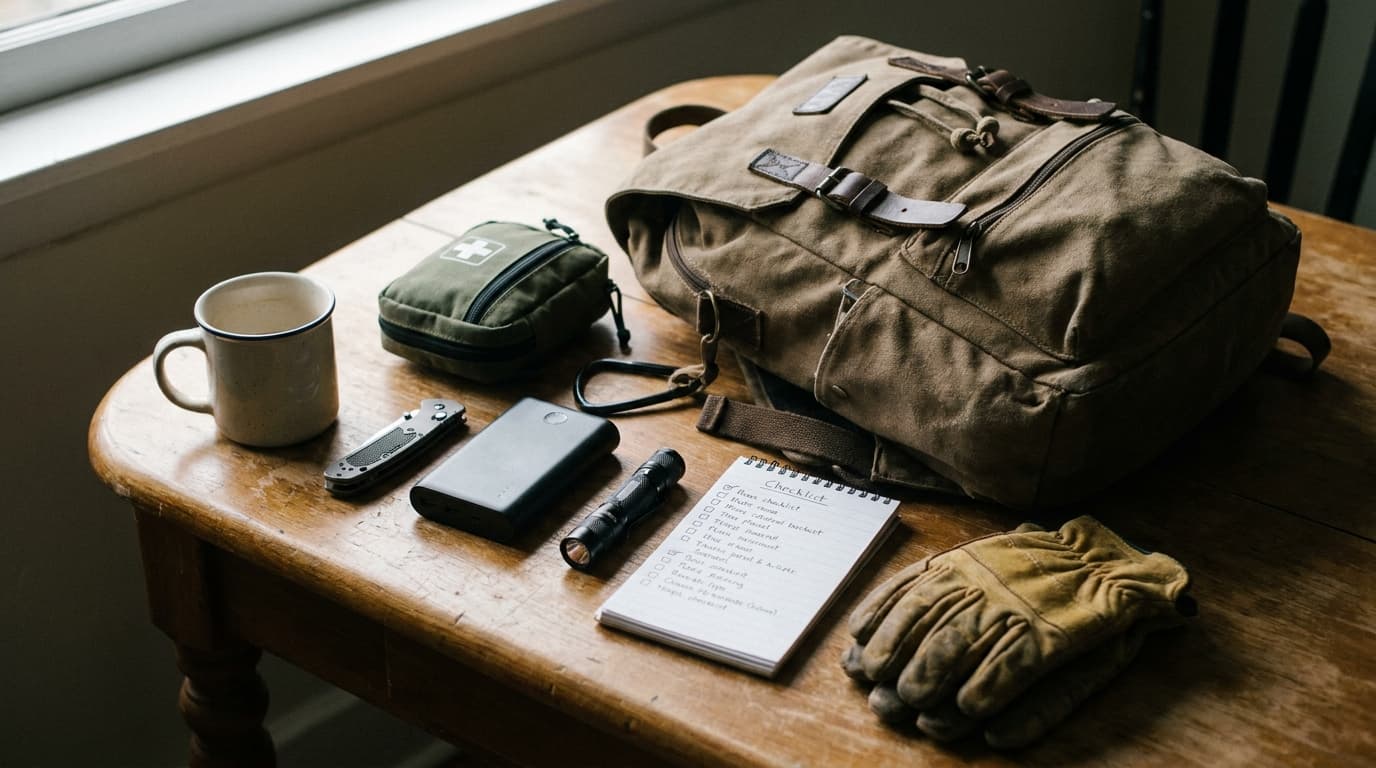
Reliability is everything when the temperature drops. While cheap lighters fail in the wind, a Wolf and Grizzly firestarter is rated for about 20,000 strikes. That is a lot of warmth in a tiny package. You also want to think about shelf life. Black Beard Fire Plugs are great because they have a 30-year shelf life. The reality is that building a custom kit is better than buying a ready-made one. Jonathan McNamara from the Red Cross says there is no single right way to prepare, so feel free to customize for your specific needs.
When you are out there, hunger is a real distraction. But you do not need a massive tackle box to stay fed. A beginner fishing kit should be lightweight and packable. Think of a small tin with some high-strength line, a few hooks, and basic weights. Here is the thing: skills matter way more than having fifty different lures. If you know where the fish hide, a simple worm or a shiny bit of metal will do the job.
Keeping it light means you can actually carry it without getting tired. Consider this: a full 20L water bottle already weighs about 40 pounds. That is a lot for one hand to carry. You do not want to add more bulk than necessary with heavy gear. Focus on the basics, practice your knots, and keep your kit small enough to fit in a jacket pocket. It is about being smart, not just having the most tools.
Key insights:
Customizing your kit is better than buying pre-made sets to ensure quality control.
Ferro rods are the preferred fire starter because they work even after being dunked in water.
Multifunctional tools like the Firebiner help reduce pack weight for beginners.
Fishing success in survival situations depends more on skill and location than fancy lures.
Simple Fishing for Food
What happens if you get hungry and your snacks are gone? If you are near water, a simple fishing kit is a lifesaver. You do not need a fancy rod or a heavy tackle box to catch a meal. A few hooks, weights, and a spool of line are the only essentials. Picking your own gear is better than buying a cheap kit because you can trust it to work when you are tired and hungry.
Many people waste money on shiny lures that just take up space. The truth is that skills matter more than gear. Knowing where fish hide in a cold stream is more valuable than owning fifty plastic worms. Keep your setup small enough to fit in a pocket tin. If it is lightweight and easy to pack, you will actually carry it when things get messy.
Key insights:
Prioritize basic hooks and line over heavy tackle boxes.
Understanding fish behavior is more useful than carrying multiple lures.
A pocket-sized kit is more likely to be with you in an emergency.
Common Survival Questions Answered
When things go sideways, most people start panicking about the same few things. How much water do I actually need? FEMA suggests having at least a three-day supply, aiming for one gallon per person every day. But here is the catch: you can't just stash it in the garage forever. You should change out stored water every six months to keep it safe. If you're eyeing those 20-liter Wolverine Tuff Bottles, keep in mind they weigh around 40 pounds when full. That is about the maximum most people can carry comfortably in one hand.
Then there is the fire myth. Many people think a few matches are enough, but if you're dealing with wet wood or damp weather, you'll want something more reliable. Ferrocerium rods are the gold standard for gear and essentials here because they work even after a soaking. A solid striker like the Wolf & Grizzly is good for about 20,000 strikes. For a real 'set and forget' option, Black Beard Fire Plugs have a 30-year shelf life and can get 50 fires going. As Chris Carter from GearJunkie puts it, a fire is a lifesaver in the cold, but being responsible is part of the job.
You might wonder if it's easier to just buy a pre-made emergency kit. While it sounds simple, building your own is usually the smarter move. Jonathan McNamara of the Red Cross points out that there is no single right way to prepare, so you should feel free to customize things for your family. Ready-made kits often lack the specific items you need and can be surprisingly intimidating. Besides, gear only gets you so far. True preparedness is about skills - like knowing first aid or having a solid communication plan - long before you start buying the best emergency fire starters for wet wood.
We're also seeing a shift in how people shop for gear. Instead of bulky plastic jugs, many are moving toward collapsible, UV-resistant bags that save space. There is a huge demand for multi-functional tools and items with massive shelf lives. The goal is to build a kit that fits your life, not a one-size-fits-all box. Think of it this way: the best gear is the stuff you’ve actually practiced with before the lights go out.
Key insights:
Customizing your own emergency kit is better for quality control and family-specific needs than buying pre-made versions.
Water storage requires maintenance; rotating your supply every six months is necessary for safety.
Ferrocerium rods are the most reliable fire starters for wet conditions because they function even when completely soaked.
Physical gear is only half the battle; developing a communication plan and learning first aid are just as vital.
Final Thoughts: Gear is Great, but Skills are Better
You could buy a firestarter rated for 20,000 strikes, but it won't help much if you cannot find dry tinder in a storm. Here is the reality: your most vital gear isn't in your backpack. It is the knowledge in your head. Taking a first aid or CERT class is a better investment than any fancy gadget. Tools can break or get lost, but your ability to stay calm and assess a crisis stays with you forever.
Jonathan McNamara from the Red Cross notes there is no single 'right way' to prepare, so you should customize your kit for your specific family needs. It is great to own a 20L Tuff Bottle, but you also need the physical strength to handle that 40-pound weight and the discipline to rotate your water every six months to keep it safe. Think of it this way: the gear is your support system, but you are the engine.
What is your next move? This weekend, take your kit outside for a test run. Practice striking your Ferro rod until the motion feels like second nature. Combining quality tools with hands-on practice turns a pile of supplies into a real survival plan. Start small, practice often, and remember that being truly prepared is a mindset, not just a shopping list.
Key insights:
Skill acquisition, like taking a CERT class, provides more value than purchasing high-end gear alone.
Customizing your emergency kit for your family is superior to buying ready-made, generic survival packs.
Regular practice with tools like Ferro rods and water storage maintenance is essential for real-world readiness.
Frequently Asked Questions
Yes, you absolutely can. In fact, Ferro rods are the preferred tool for survivalists specifically because they don't care about the rain. Unlike a lighter that might get jammed or matches that turn to mush, a high-quality Ferro rod works even after it's been dunked in a lake.
The secret is that the rod is a solid metal alloy, so it doesn't absorb moisture. When you strike it with a steel scraper, you're shaving off tiny bits of material that ignite at incredibly high temperatures. Just keep in mind that while the sparks will fly in a downpour, you still need dry or waterproof tinder, like wax-infused plugs, to actually catch that spark and build a flame.
You should plan to change your stored water every six months. It might seem like a hassle, but it's the standard recommendation to make sure your supply stays safe and doesn't end up tasting like the plastic container it's sitting in.
While water itself doesn't technically expire, bacteria can eventually grow and chemicals from the storage jugs can leach into the water over time. To make things easier, you might look into UV-resistant containers or collapsible bags that help prevent sun damage. Just remember that a full 20L bottle weighs about 40 pounds, so store them somewhere easy to reach when it's time for that twice-a-year swap.
It really depends on what you are doing, but for most casual campers, 1000 lumens is actually more power than you will usually need for basic tasks around the tent.
Most people find that 100 to 300 lumens is plenty for walking around a campsite or cooking. A 1000-lumen light can be blindingly bright if you are just looking for your shoes in a small space, and it often drains your batteries much faster than a lower setting would.
But here is the thing: having that extra power is great for seeing far into the woods if you hear a strange noise at night. If you decide to go with a high-lumen light, just make sure it has adjustable settings so you do not accidentally blind your campmates during dinner.
Forget the fancy rods and reels. For a beginner in a tough spot, passive fishing like using a trotline or a simple handline is usually your best bet because it saves you a lot of energy.
A trotline is basically a long cord with several hooks attached that you leave in the water while you do other important chores like building a fire or setting up your shelter. It basically works for you while you are busy elsewhere.
Also, remember that your gear is only half the battle. Focus on finding the right spot, like near fallen logs or overhanging banks where fish naturally hide. If you are building a starter kit, keep it simple with basic hooks and high-strength line rather than overcomplicating things.
Conclusion
So what is the big takeaway here? Being ready for the wild is about more than just buying a pre-made bucket and hoping for the best. When you are out there in the rain, you need a ferro rod that actually sparks and a way to get clean water that does not weigh forty pounds. It is about picking the best emergency fire starters for wet wood and high-lumen flashlights that will not quit on you when the sun goes down.
Real preparedness comes from knowing your gear inside and out. Whether you are building a survival fishing kit for beginners or checking off your cold weather gear checklist, the goal is to make sure your kit fits your specific needs. That includes your pets too. A custom kit is always better than a generic one because you are the one who has to carry it and use it.
Your next move is simple. Pick one piece of gear, like a new water purification method, and try it out in your backyard before you actually need it. Gear is great but the confidence you get from practicing is even better. Stay warm, stay dry, and keep learning.
Every WilderReady guide is researched, written, and fact-checked in-house against trusted references such as the American Red Cross, the National Park Service, and the CDC before it goes live. We publish under this shared byline instead of invented personas, so you always know who stands behind the guidance you are reading.