Why a Compass Isn't Enough: Survival Gear That Actually Works When It Pours
Imagine you're deep in the woods when the sky opens up and your phone screen goes black. It's a sinking feeling, right? This is the moment you realize survival isn't...
Why a Compass Isn't Enough: Survival Gear That Actually Works When It Pours
Imagine you're deep in the woods when the sky opens up and your phone screen goes black. It's a sinking feeling, right? This is the moment you realize survival isn't about fancy apps. Having the right Gear & Essentials is what keeps a rainy hike from turning into a disaster. A compass is a great start, but it won't help much if you can't start a fire in a downpour.
Nature doesn't care if you're a pro or a newbie. You need wilderness navigation tools that don't need batteries and a way to stay warm when everything is soaked. We're looking at minimalist bushcraft gear where simple tools and practice matter most. Knowing how to use your kit before you actually need it is the real secret.
We'll cover how to find the best ferro rod for wet weather and why heavy duty cordage is a must for building a dry shelter. We'll also look at emergency water purification for flood scenarios. Let's get you ready for your next rainy adventure.
Lost? Why Your Phone Is a Terrible Backup Plan
Picture this. You are deep in the woods and the sky just opened up. You pull out your phone to check the map, but the screen is a mess of water droplets that will not register your touch. Then, the cold kills your battery. It happens faster than you think. This is the big danger of relying on bars and batteries in the wild. When things go wrong, electronics are often the first thing to fail. Nature is indifferent to our presence and it operates on its own rules regardless of how expensive your smartphone was.
This is why physical maps and compasses are still the gold standard. They never die and they do not need a signal to work. But even a compass has limits if you do not know how to use it well. As the experts say, the best survival gear is the stuff you have actually practiced with before you really need it. Real wilderness navigation tools beyond a standard compass give you a way to stay found when the weather turns ugly. You want tools that work when it pours, not just when it is sunny.
One of the smartest ways to step up your game is using ranger beads. These are simple pace beads that help you track distance without guessing. You slide a bead down for every hundred meters you walk. It keeps you from overestimating how far you have traveled, which is a common mistake when you are tired or stressed. Pair these with an all-weather notebook. Logging your coordinates and drawing small sketches of terrain features keeps you from walking in circles. If you can see a specific ridge or a bend in the creek, write it down.
Think of it this way. Moving through the woods is about building a story of where you have been so you know where you are going. Using an all-weather notebook means your notes will not turn into a soggy mess of blue ink when the rain starts. It is about redundancy. Just like you might carry a ferrocerium rod because it starts fires even when wet, you carry analog tools because they are reliable. Gear proficiency is just as important as the gear itself, so take these tools out on a local trail before you head into the deep woods.
The reality is that staying safe comes down to being prepared for the worst case scenario. While a phone is great for a quick check in the city, it is a terrible backup plan in the wilderness. By moving toward minimalist bushcraft gear like pace beads and physical logs, you take control back from the battery icons. You stop guessing and start knowing exactly where you stand.
Key insights:
Analog tools like maps and compasses are superior to electronics because they do not rely on batteries or signals.
Proficiency with your gear is just as vital as the gear itself so you should practice before you are in a survival situation.
Redundancy like carrying an all-weather notebook and pace beads prevents common errors like walking in circles.
Ranger Beads and All-Weather Notes
Have you ever tried to walk a straight line in a thick forest during a downpour? It's surprisingly hard. Without a clear view of the sun, your body naturally pulls to one side, which often leads you in circles. This is where Ranger beads come in. These are great wilderness navigation tools beyond a standard compass because they track exactly how far you've traveled. By sliding a bead every hundred meters, you turn a vague guess into a measured distance.
Knowing your distance is only half the battle. You also need a place to log that info where the rain won't ruin the paper. An all-weather notebook lets you write down coordinates and terrain features even when it's pouring. Think of it as your backup memory. If you note a specific bend in a creek or a rocky ridge, you're building a map that keeps you on track. It's much better than trying to remember every turn when you're cold and tired.
Electronics are great until the battery dies or the signal drops in the woods. Analog tools don't rely on satellites or charging cables. They just work. But remember, the best gear is only useful if you've practiced with it first. Nature follows its own rules regardless of our plans, so getting comfortable with your tools now is what keeps you safe later.
Key insights:
Ranger beads remove the guesswork from distance tracking by providing a physical tally.
All-weather notebooks preserve vital coordinates and terrain logs even in heavy rain.
Analog tools provide a reliable backup because they don't require batteries or signals.
Gear proficiency is essential; practice using your tools before an emergency happens.
Making Fire in a Downpour: The Magic of Ferro Rods
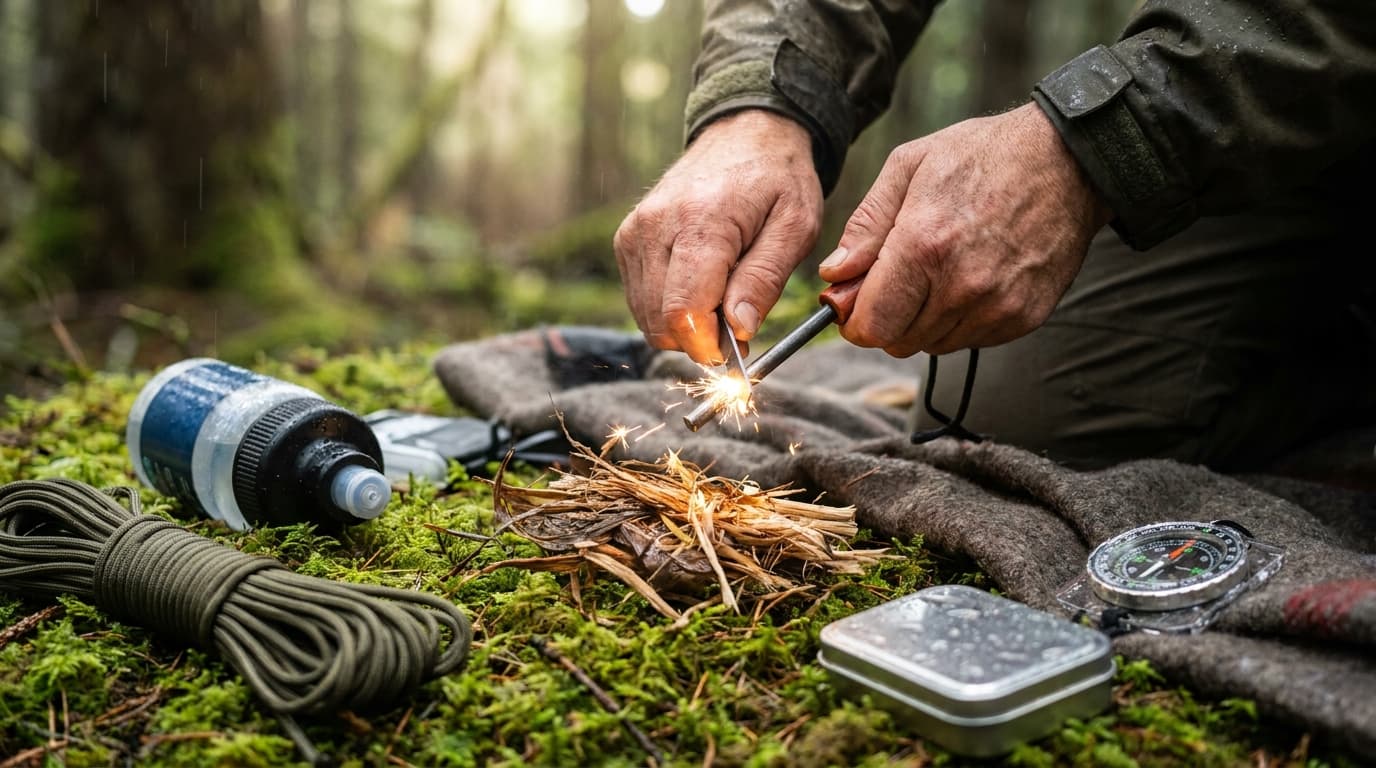
Imagine you are stuck in the woods during a heavy storm. The sky is grey and every stick on the ground is soaking wet. You reach for your matches, but the box has turned into a soggy mess. You try your lighter, but the flint is too damp to strike. This is exactly where most people start to panic. But if you have a ferrocerium rod in your pack, you have a reliable way to stay warm. These tools are basically metal sticks that create a shower of fire no matter how much rain is falling. They do not rely on chemicals or fuel that can leak, making them a staple for any serious kit.
The secret to their success is in the chemistry. When you scrape a ferro rod, you are shaving off tiny bits of metal that burn instantly as they hit the air. These sparks reach temperatures over 3,000 degrees Celsius. That is incredibly hot, and it is enough to dry out damp tinder and get a flame going even when the humidity is through the roof. But you should not rely on just one tool. Redundancy is your best friend when you are outside. A smart setup includes a ferro rod alongside waterproof matches as a backup. This ensures that if one method fails, you still have a way to survive.
Picking the right rod makes a huge difference when your hands are cold and stiff. You want a high quality ferrocerium rod that feels solid and offers a good grip. In wet weather, your technique matters much more than how hard you can strike. Instead of pushing your striker down into the wood, try pulling the rod back toward your body. This keeps your hand from knocking over your small pile of tinder and focuses the sparks exactly where they need to go. It is a simple change in movement, but it makes fire starting much more effective in high moisture environments.
The reality is that nature does not care about your gear or how much you paid for it. As the team at CampingMaestro points out, the best survival gear is the stuff you have practiced with before an emergency happens. Do not wait for a real downpour to test your skills for the first time. Go out in your backyard on a rainy afternoon and see if you can get a fire started. Learning how to handle the rod and find dry material under the bark of trees is a skill that stays with you. Once you have the proficiency, the gear becomes a true lifesaver.
Key insights:
Ferro rods produce sparks at 3,000 degrees Celsius, which is hot enough to ignite tinder even in damp conditions.
Pulling the rod back instead of pushing the striker prevents you from accidentally crushing your fire base.
True survival safety comes from redundancy, such as carrying both a ferro rod and waterproof matches.
Gear proficiency is just as vital as the tool itself, so practicing in wet weather is essential for success.
Picking the Best Ferro Rod for Wet Weather
Ever tried to light a fire while it is pouring? It is a mess. Most people reach for matches or a lighter, but those often fail the second they get soaked. This is why a high-quality ferrocerium rod is a total game-changer for your kit. These tools produce sparks at temperatures exceeding 3,000 degrees Celsius. That is hot enough to ignite tinder even when the air is thick with moisture and your gear is damp. It is one of those rare tools that works better than electronics when the weather turns ugly.
Picking a solid rod is only half the battle. Your skill actually matters more than the tool itself. As the experts say, the best survival gear is gear you have practiced with before you need it. You do not need massive strength to throw a good spark. Even if your hands are freezing and stiff, it is all about the technique of the scrape rather than raw power. A high-quality rod gives you enough surface area to work with even when your coordination starts to slip in the cold.
The reality of starting fires in high-moisture areas is that you need redundancy. Matches can get wet and lighters eventually run out of fuel. Because nature is indifferent to our presence, having a tool that works regardless of the rain is a critical safety measure. This is why many people are moving toward minimalist bushcraft gear. It is about choosing analog tools that do not rely on batteries or signals. When it is pouring, a simple rod and a bit of practice are often the only things standing between you and a cold night.
Key insights:
Ferro rods produce sparks at 3,000 degrees Celsius, making them effective in damp conditions.
Gear proficiency is just as important as the quality of the tool you carry.
Analog tools provide necessary redundancy when lighters or electronics fail in the wilderness.
Clean Water in Dirty Situations
You might have heard of the Rule of Three. It is a simple way to remember that while you can go weeks without a snack, your body only has a few days before it absolutely needs water. In a survival spot, water is the big one. But here is the catch: when things get messy, like in a flood, the water you find isn't just dirty. It is often a thick soup of mud and grit that can ruin your gear in seconds.
Most people grab a high-tech filter and think they are set. But if you try to use a Sawyer or Grayl filter on silty flood water, it is going to clog almost instantly. Think of it like trying to use a coffee filter to strain wet cement. It just won't work. This is why a multi-stage approach is so important. You need to get the chunkies out first so your expensive gear can do its actual job of killing bacteria.
This is where a Millbank bag comes in handy. It is a tough canvas bag that acts as your first line of defense. You fill it up, let the water seep through the fabric, and it catches all that heavy sediment. It is an old-school tool, but it is a lifesaver for your gear. By doing this pre-filtration step, you are making sure your main filter lasts through the whole emergency instead of dying on day one.
At the end of the day, gear proficiency matters just as much as the gear itself. You do not want to be reading the instructions for the first time while it is pouring rain. Practice using your bag and filter together before you actually need them. It is all about having a system that works when the situation gets ugly. After all, nature does its own thing regardless of how much we spent on our kits.
Key insights:
Water is the most urgent priority because the body only lasts a few days without it.
Standard filters clog quickly in flood scenarios due to high sediment and silt.
Using a Millbank bag for pre-filtration protects and extends the life of expensive filters.
Practicing with your gear before an emergency is just as vital as the gear itself.
Millbank Bags and Pre-Filtration
Imagine standing in a flood zone where the water looks more like chocolate milk than something you can drink. If you try to push that muck directly through a high-end filter like a Grayl or Sawyer, you will probably clog it before you finish your first liter. This is why a Millbank bag is a crucial tool. It acts as the first stage in a smart water purification hierarchy by straining out the heavy silt and debris. You use the canvas bag to remove the chunkies so your expensive equipment stays clear and functional.
The reality is that your body can only survive for a few days without water, so keeping your gear in working order is a life-or-death priority. Using a Millbank bag for pre-filtration is a simple way to extend the life of your primary filters. It is a rugged, analog tool that does not need batteries or complicated parts to work. Think of it as a sacrificial layer. The bag takes the beating from the mud so your biological filter can focus on the invisible bacteria that actually make you sick.
In high-sediment areas or flood scenarios, skipping this step is a recipe for gear failure. But remember that gear proficiency matters just as much as the gear itself. You should practice soaking the canvas and managing the flow long before a storm hits. This minimalist approach is a growing trend because it combines old-school reliability with modern safety. It makes your entire water system much more resilient when nature decides to get messy.
Key insights:
Pre-filtration protects expensive filters from clogging in high-sediment flood water.
The Millbank bag is a reliable analog tool that requires no power or chemicals.
Practicing with your gear is essential to ensure you can use it effectively during an emergency.
Minimalist Bushcraft: Less Stuff, More Skill
You have probably seen those survivalists with packs so big they look like they are moving house. It is a common trap to think more stuff equals more safety, but the growing trend in minimalist bushcraft is actually about stripping things back. By focusing on multi-purpose Pathfinder style tools, you are not just lightening your load; you are making yourself more capable. A heavy pack slows you down, causes fatigue, and makes you prone to mistakes. When you carry less, you move faster, stay sharper, and rely on your brain instead of your bag. This shift toward skill over gear is what keeps you safe when things get messy.
The reality is that gear proficiency matters way more than the gear itself. As the experts at REI often point out, the best survival gear is the stuff you have practiced with before you actually need it. Think about fire starting as a perfect example. A lighter is handy, but it can run out of fuel or break. A ferrocerium rod, however, is a total game changer because it throws sparks at over 3,000 degrees Celsius even in damp or wet conditions. Having that kind of redundancy - like carrying both waterproof matches and a ferro rod - is a smart safety move that adds almost zero weight to your kit.
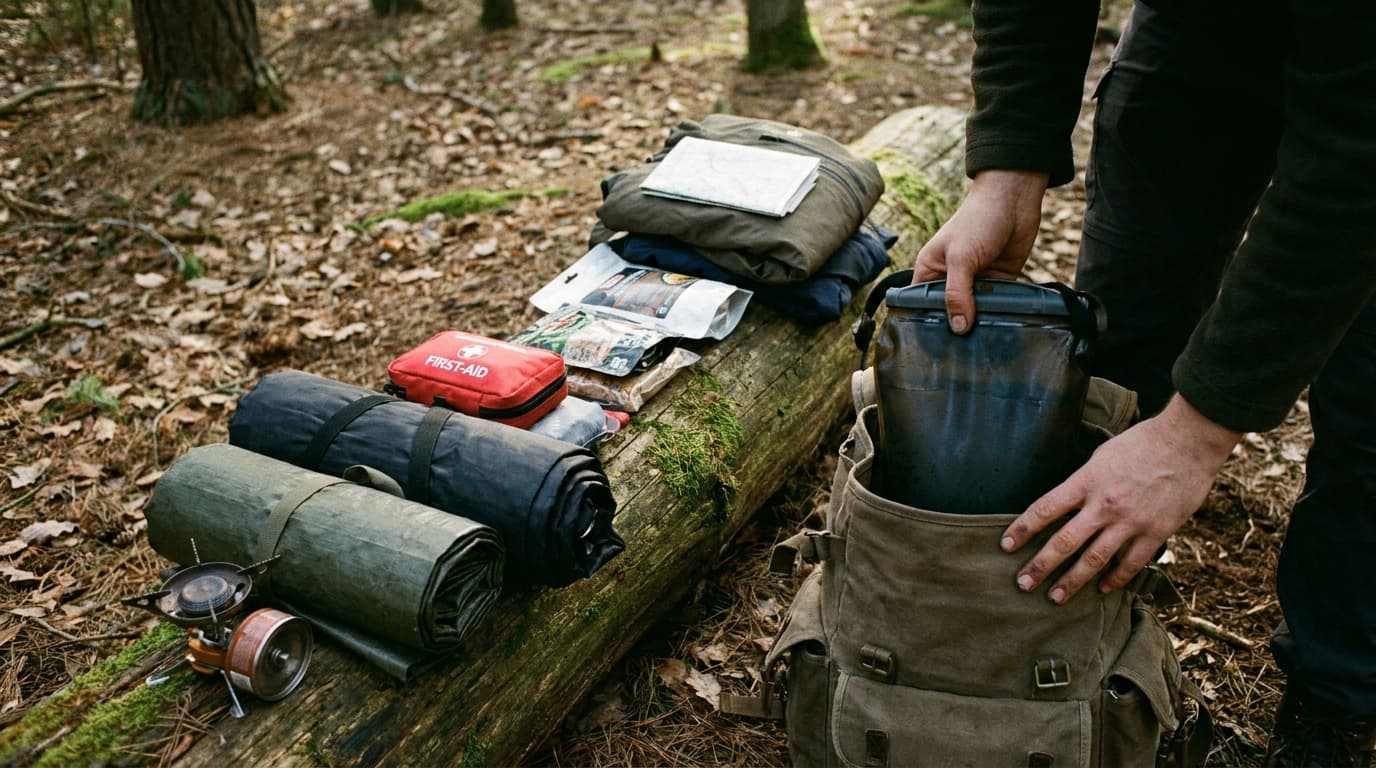
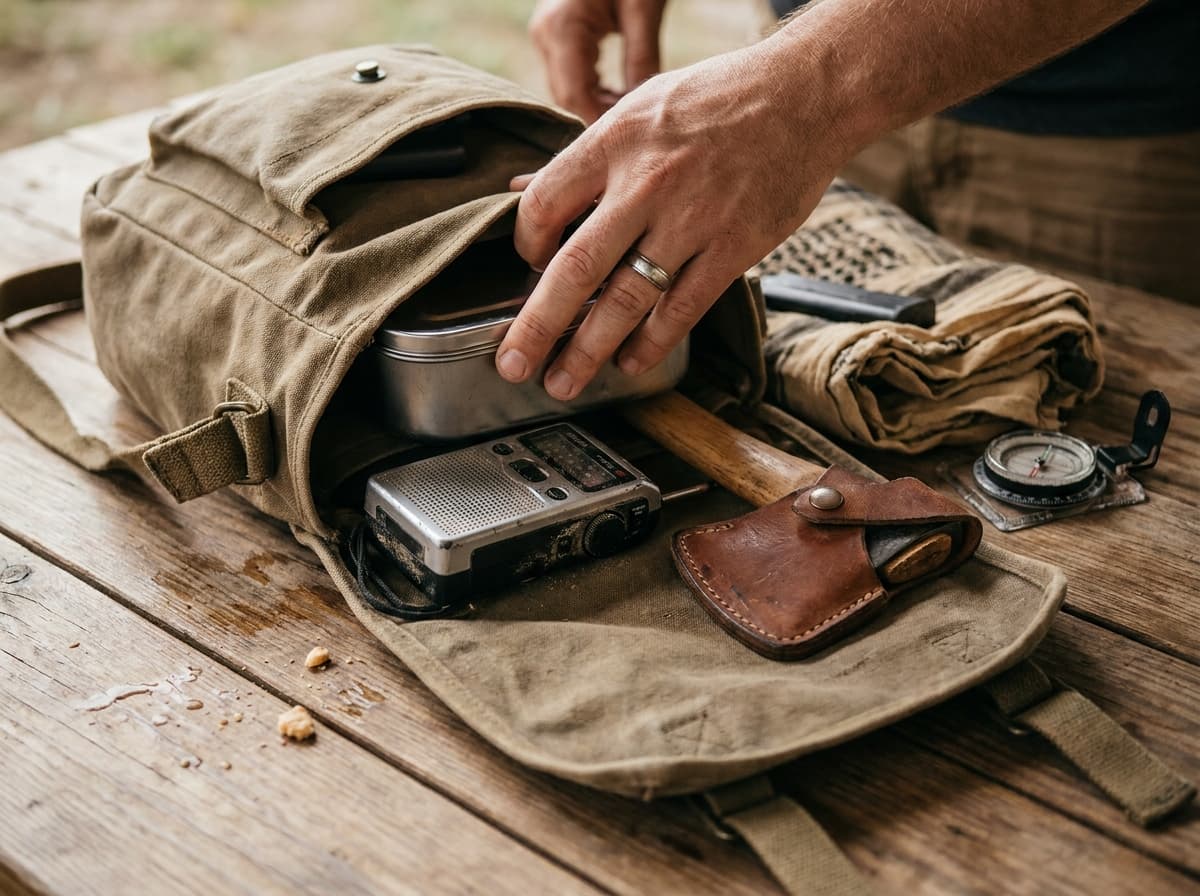
If you are a beginner who hates clutter, your essential list should be small but mighty. You need a high-quality knife, a ferro rod, and a reliable way to clean water. Since the human body can only survive a few days without hydration, this is not the place to skimp. In flood scenarios, you might even use a Millbank bag to strain out dirt and sediment before using a filter to catch biological bits. Throw in a space blanket to reflect your body heat and prevent hypothermia, and you have a kit that fits in a small satchel. This approach proves that skill is the one thing that never runs out of batteries or gets too heavy to carry.
When it comes to tying things together, most people grab a bundle of paracord and call it a day. But not all rope is created equal, and choosing the wrong one can make shelter building a nightmare. While paracord is a classic, many minimalist woodsmen are switching to bank line. This tarred twine is much thinner and lighter, meaning you can carry hundreds of feet in your pocket. More importantly, it has excellent knot retention. Unlike the slippery nylon in paracord, bank line bites into itself and stays tight even when the wind starts howling through the trees.
For those building heavy-duty shelters meant to last more than a night, Mule Tape is the real secret weapon. It is a flat polyester webbing that offers an incredible strength-to-weight ratio. It does not stretch like standard rope, which is vital when you are trying to keep a tarp taut during a downpour. Understanding these differences helps you pack smarter rather than heavier. You do not need a dozen types of cordage; you just need the right one for the job. After all, nature is indifferent to our presence, so your gear needs to work the first time, every time.
Key insights:
Gear proficiency is far more valuable than the price tag of the tools you carry.
Analog tools like physical maps and compasses are superior for long-term survival because they never run out of battery.
Multi-purpose tools reduce pack weight, which decreases physical fatigue and improves decision-making in the field.
Redundancy in fire starting, such as carrying a ferro rod alongside matches, is a non-negotiable safety standard.
Not All Rope Is Created Equal
Think about the last time you tried to untie a wet knot in the dark. It is a total nightmare, especially with cold fingers. While many reach for 550 paracord because it is famous, it is not always the best choice for a rainy camp. Paracord stretches when it gets wet, which can cause your shelter to sag right when you need cover. This is why experienced folks prefer tarred bank line. It is thin, light, and the tar coating helps knots stay tight even when the wind starts howling.
For the heavy lifting, you should look into Mule Tape. This flat polyester webbing is a total game changer for building sturdy shelters. It has a much better strength-to-weight ratio than standard rope and it won't stretch out under pressure. But here is the thing. The best survival gear is gear you have practiced with before you need it. If you cannot tie a solid hitch in the rain, even the fanciest rope in the world won't keep you dry.
Choosing the right rope is about matching the tool to the task. Use your bank line for small gear fixes and save the Mule Tape for the main structural supports. This keeps your pack light and your camp solid. After all, a minimalist kit only works if the pieces you bring are actually up for the challenge.
Key insights:
Tarred bank line offers superior knot retention and grip in wet or windy weather compared to nylon paracord.
Mule Tape provides a high strength-to-weight ratio and does not stretch, making it ideal for structural shelter components.
Staying Warm When Everything Is Cold
When the temperature drops and your clothes get damp, the cold stops being an annoyance and starts being a threat. Most people reach for a space blanket thinking it will warm them up like a thick wool quilt, but that is not how they work. These thin metallic sheets do not actually provide insulation. Instead, they function by reflecting your own body heat back at you. Think of it like a mirror for your temperature. If you wrap yourself tightly, you are trapping the heat your body is already losing. It is a simple process, but it only works if you use it before your core temperature hits the danger zone.
Preventing hypothermia is all about staying ahead of the curve. Once you start shivering uncontrollably, your body is already losing the battle. Nature is indifferent to your presence, so you have to be proactive. This means building a heavy duty emergency shelter the moment you realize you are stuck. You will need more than just a basic tarp. For a structure that actually holds up in a storm, look for specialized cordage like tarred bank line or mule tape. These options offer much better knot retention and strength than standard paracord when you are lashing branches together in the wind.
A solid shelter is useless if you cannot get a fire going to dry out. Even in a downpour, tools like ferrocerium rods are lifesavers because they throw sparks at over 3,000 degrees Celsius. They work even when they are soaking wet, which is something a standard lighter just cannot do. But remember, the best gear is the stuff you have actually practiced with. Having a fancy survival kit does not matter if you are trying to read the instructions while your hands are too cold to move. Build your kit, learn the knots, and test your fire starter in the backyard before you ever need it for real.
Key insights:
Space blankets reflect heat rather than creating it, so use them early before you lose too much body warmth.
Bank line and mule tape are superior to paracord for heavy duty shelter lashing due to better grip and strength.
Practice with your ferro rod in wet conditions before an actual emergency occurs to ensure you can use it when it counts.
Final Thoughts: Practice Before the Panic
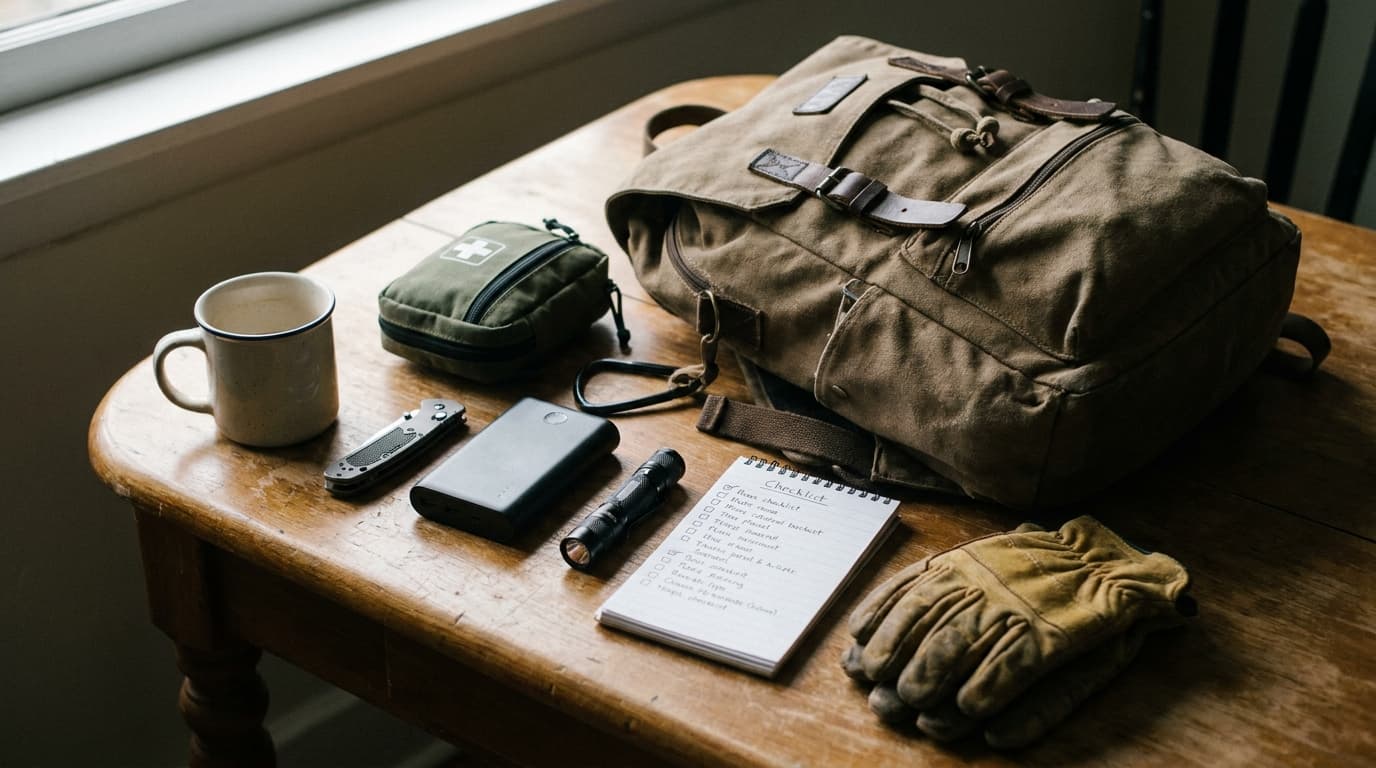
You might have a solid minimalist bushcraft gear list, but it means nothing if you are fumbling with it during a storm. Think of it this way: the best survival tools are the ones you have already used in your own backyard. It is one thing to know a ferrocerium rod sparks at over 3,000 degrees Celsius, but it is another to actually light a fire when your hands are cold and the tinder is damp. Practice makes the difference between a life-saving tool and a heavy paperweight.
Nature operates on its own rules regardless of our skill, so building confidence through repetition is your real safety net. Whether you are testing emergency water purification methods for flood scenarios or practicing with heavy duty cordage for shelters, doing it now prevents panic later. The reality is that your body can only survive a few days without water, and a space blanket only works if you know how to wrap it to reflect your heat back to you. Reading about it is a start, but doing it is what keeps you alive.
What is your next step for a safer adventure? Take those wilderness navigation tools out for a test run this weekend. Do not wait for the GPS signal to vanish or the clouds to break before you learn to use them. Start small and make your mistakes while the stakes are low. That way, when it actually pours, you will stay calm because you have already done the work. The gear is just the beginning; your experience is what actually gets you home.
Key insights:
Gear proficiency is just as vital as the quality of the gear itself.
Redundancy in fire starting, such as carrying a ferro rod for wet weather, is a critical safety measure.
Analog tools like physical maps and compasses are more reliable than electronics for long-term survival.
Frequently Asked Questions
Ferro rods don't expire like a pack of batteries or food would, but they do eventually wear out after enough use. Every time you strike the rod, you're scraping off a tiny bit of the material to create those hot sparks that reach over 3,000 degrees Celsius. Depending on the size of your rod, you can usually get thousands of strikes before it becomes too thin to use safely.
The great thing about these tools is that they stay effective even if they get wet or sit in a drawer for years. Just keep in mind that as the rod gets thinner, it can become more prone to snapping if you're too aggressive with it. It's a good habit to check your gear regularly and make sure you still have plenty of material left before you head out into the woods.
Paracord is popular because it's strong, but bank line is often the better choice for building a heavy duty shelter because it doesn't stretch nearly as much. When paracord gets wet, it tends to expand and sag, which can make your shelter go limp in the middle of a storm. Bank line is typically treated with a tar coating that helps it grip onto itself, so your knots stay tight and secure even under tension.
Also, bank line is much thinner and lighter than paracord. This means you can carry a lot more of it in your kit without taking up extra space. Since it's resistant to rot and UV damage, it's perfect for semi-permanent setups where you need the cordage to survive the elements for more than just a night or two.
You can, but it is not quite like tucking into a thick comforter at home. These blankets work by reflecting your own body heat back at you to stop hypothermia. They are amazing for emergencies because they are so light, but they do not actually create any warmth on their own.
Here is the thing most people forget: the frozen ground is your biggest enemy. Even with a space blanket, the snow will pull heat right out of your body if you are lying on it. You also need to put something like dry branches or a foam pad between you and the ground to stay truly safe.
To be honest, the beads will not do much for you until you figure out that count. Ranger beads are a simple tool to track distance, but they rely on you knowing exactly how many steps you take to cover 100 meters. Without that number, you are just sliding beads around without a plan.
But do not worry because it is easy to fix. Just find a flat stretch of trail, measure out 100 meters, and walk it at your normal speed while counting every time your left foot hits the ground. Once you have that number, the beads become a super reliable way to track your progress across the map. It is much better than a GPS that might run out of batteries when you need it most.
Conclusion
So where does this leave us? Survival is not about carrying a bag of gadgets that need a battery. It is about picking Gear & Essentials that stay reliable when the weather turns. Whether you are using a ferro rod in a downpour or relying on bank line for a sturdy shelter, the best tools are the ones that do not quit when they get wet. It is that mix of analog tools and simple gear that keeps you safe.
Your next move should be taking that gear out for a test run. Try starting a fire on a rainy day or practice using your Ranger beads on a local trail. Getting comfortable with your kit now makes it much easier to stay calm when things get messy. It is better to learn these lessons in your backyard than in the middle of a storm.
Real confidence comes from knowing your tools as well as you know your favorite boots. Pack smart, keep it simple, and head out with a plan. Nature is unpredictable, but with the right skills, you will be ready for whatever the sky drops on you.
Every WilderReady guide is researched, written, and fact-checked in-house against trusted references such as the American Red Cross, the National Park Service, and the CDC before it goes live. We publish under this shared byline instead of invented personas, so you always know who stands behind the guidance you are reading.