Survival Skills 101: How to Get Home Safely When Things Go Wrong
Imagine you're out for a hike when the trail suddenly vanishes and your phone battery hits zero. It's a scary moment, but your best tool isn't in your pack; it's...
Survival Skills 101: How to Get Home Safely When Things Go Wrong
Imagine you're out for a hike when the trail suddenly vanishes and your phone battery hits zero. It's a scary moment, but your best tool isn't in your pack; it's right between your ears. In most Survival Scenarios, your mental state determines if you make it home or spend a long, cold night wondering what went wrong. Knowing how to stay calm and use the STOP acronym can be the difference between a quick fix and a real emergency.
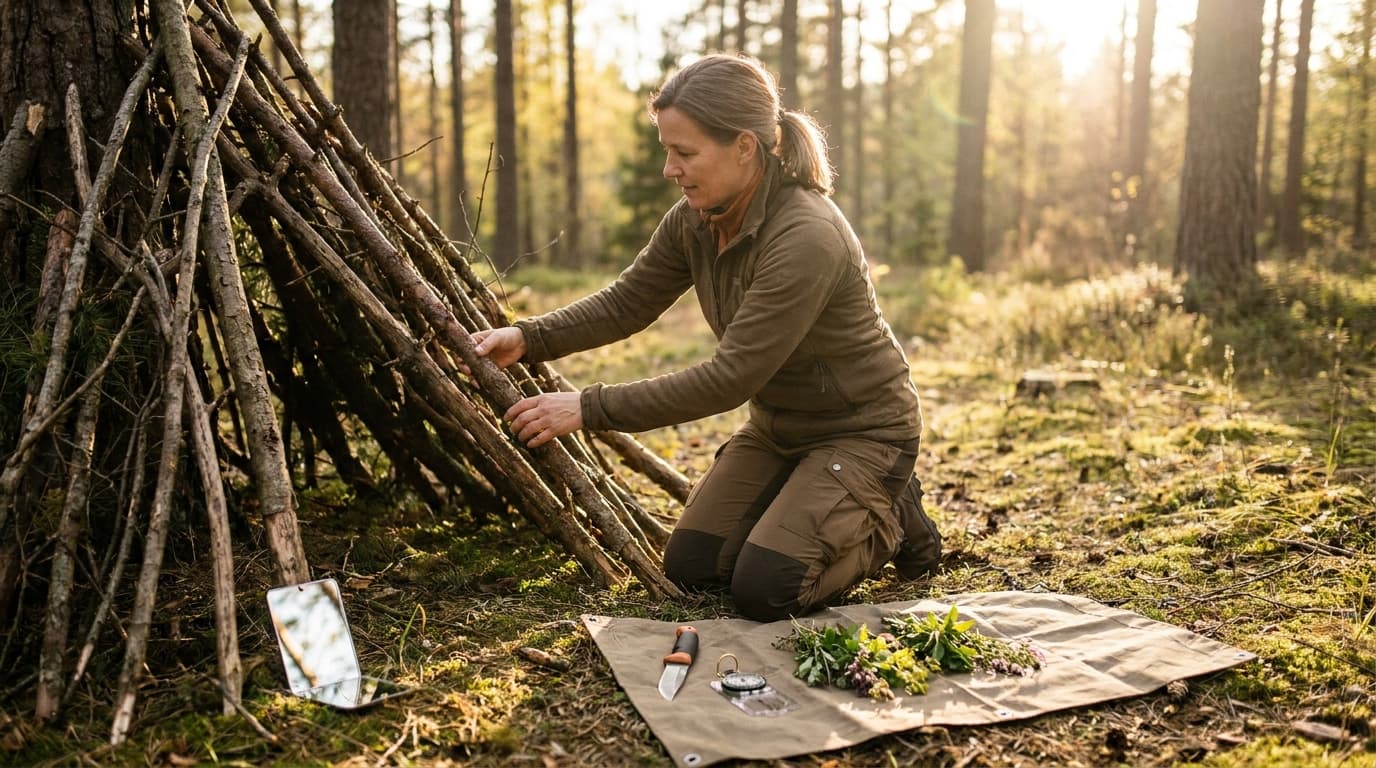
This guide covers the essential skills you need to handle the unexpected. You will learn how to use pace counting for wilderness navigation so you don't walk in circles, and how to build an emergency debris hut for night survival if you can't make it back before dark. We'll also look at how to use a signal mirror for long distance rescue and share survival knife techniques for carving a bow drill to get a fire going.
From wilderness survival foraging basics for beginners to the rule of three for water and heat, we have you covered. We'll walk through exactly how to prioritize your needs so you can stay warm, hydrated, and visible to rescuers. Let's look at the practical steps that will help you get back to the trailhead safely.
The Most Important Tool You Already Own (Your Brain)
You can pack the best gear in the world, but it won't help if you lose your cool. The real secret to staying alive is tucked right between your ears. As experts at the Wilderness Awareness School say, the most important element of survival is your brain. When the trail disappears and panic starts to set in, your first job isn't to run. It's to stay still.
Think of the STOP acronym as your internal reset button. It stands for Sit, Think, Observe, and Plan. By sitting down, you force your heart rate to drop and your mind to clear. This simple act keeps you from making a bad situation worse by wandering deeper into the woods. Survival is less about what you have in your bag and more about how you manage your thoughts when things go sideways.
Key insights:
The STOP acronym stands for Sit, Think, Observe, and Plan.
Your mental state is the most critical factor in a survival situation.
Sitting down helps lower your heart rate and prevents panic-driven mistakes.
Finding Your Way Back: Pace Counting and Smart Navigation
Imagine you are out in the wild and your phone screen suddenly goes black. It is a gut-sinking feeling, right? While tech is great, relying on it alone is a big risk because batteries fail and signals drop when you need them most. Real navigation is really about looking at the world around you. The sun rises in the east and sets in the west, which gives you a basic line of travel to follow. At night, the North Star stays put in the northern sky to guide you home. You can also use terrain association. This just means using big landmarks like valleys or ridges to keep your bearings. By reading the land, you stay on track even when your gadgets give up.
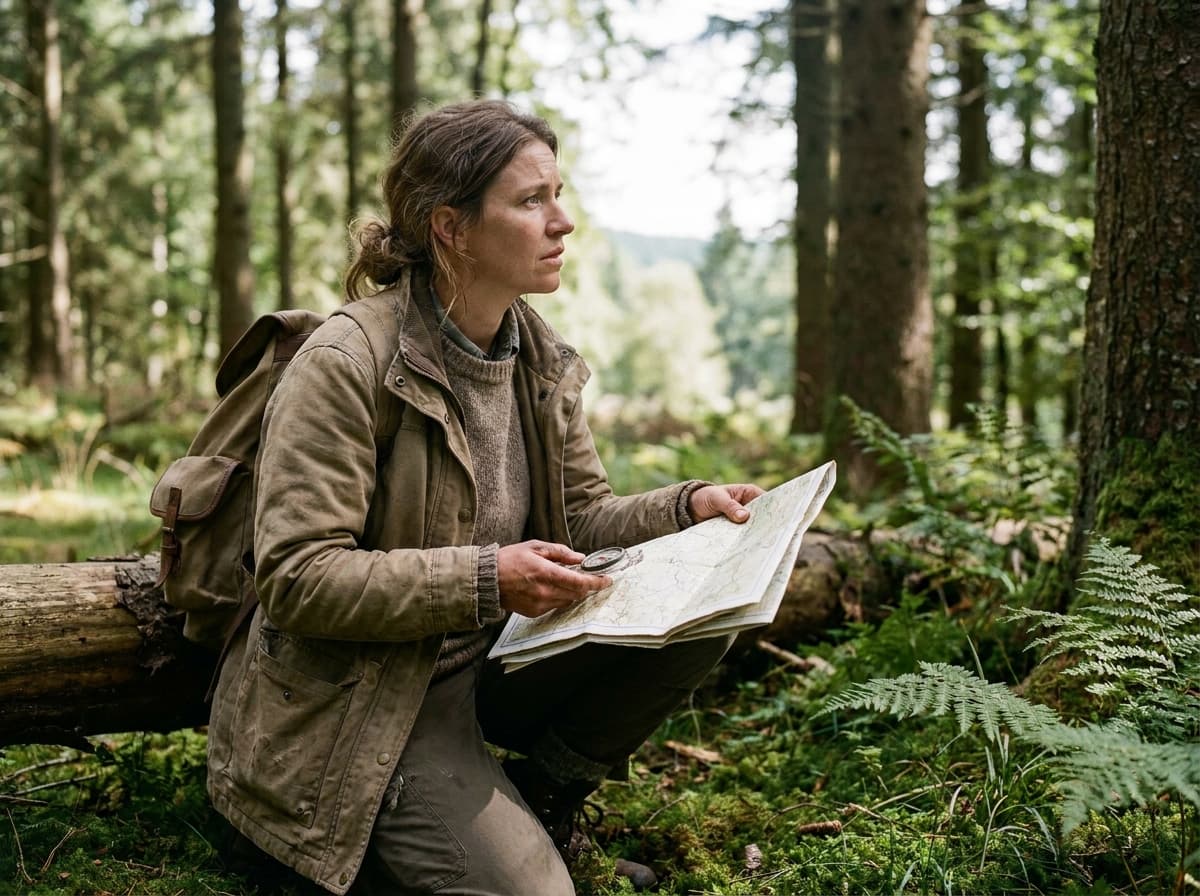
Knowing your direction is only half the job, though. You also need to know how far you have actually traveled. This is where pace counting comes in handy. You start by measuring your natural stride, usually by counting every time your left foot hits the ground over a set distance. To keep track without getting confused, you can use ranger beads or even just move small pebbles from one pocket to another. It sounds a bit old-school, but it keeps you from losing count during a long trek. Keeping an accurate pace count is the secret to making your journey a success rather than a guessing game.
When you combine your pace count with a compass, you are using a technique called dead reckoning. This is a simple way to estimate your current spot based on where you started. One of the biggest mistakes we make is assuming we can walk in a straight line without any help. In reality, most people tend to drift or even walk in circles without realizing it. If you ever feel turned around, just remember to STOP. That stands for Sit, Think, Observe, and Plan. Your brain is your most important survival tool. By staying calm and matching your compass to the landmarks you see, you will find your way back just fine.
Key insights:
Your psychological state is the most critical factor in a survival situation, so staying calm is a priority.
The STOP acronym (Sit, Think, Observe, Plan) is a proven way to regain your focus when lost.
The international signal for distress is always based on patterns of three, such as three whistle blasts or three fires.
Keeping Track of Your Steps: The Art of Pace Counting
Ever wonder how far you have actually walked when the trail disappears? It is easy to lose track of distance when every tree starts looking the same. This is where pace counting saves the day. To start, you need to know your natural stride. Count how many double steps, which is every time your left foot hits the ground, it takes to cover one hundred meters.
Once you have that number, use ranger beads or even a few pebbles in your pocket to stay on track. Every time you hit your target number of steps, move one bead or drop one stone. It helps you stay focused on the path instead of just guessing how far you have traveled since your last stop.
This simple trick is the secret to dead reckoning. This involves estimating your current position based on your last known spot and the distance you have moved. It keeps you from wandering in circles when the sun goes down or the fog rolls in, making sure you get home safely.
Key insights:
Knowing your double step count for 100 meters is the foundation of accurate distance tracking.
Ranger beads provide a physical way to track progress without relying on memory or electronics.
Dead reckoning helps you map your path by combining your known starting point with your travel distance.
Dead Reckoning: Navigating Without a Map
Imagine your map blows away. You can still get home using dead reckoning. This is a way to figure out where you are based on where you started and how far you have traveled.
To do this, pair a compass with your pace count. The compass keeps you pointed the right way, while your steps tell you the distance. Counting every time your left foot hits the ground is a simple way to track your progress without any fancy electronics.
The hard part is that humans are bad at walking straight. Without a landmark, we naturally drift in circles. If you feel lost, use the STOP method: Sit, Think, Observe, and Plan. Your brain is your best tool, so use it before taking another step.
Key insights:
Dead reckoning relies on a known starting point and consistent tracking.
A pace count helps you measure distance when you do not have a map.
The STOP method is a vital mental tool for staying calm and finding your way.
Building a Bed for the Night: The Emergency Debris Hut
When the sun starts to dip below the treeline, your brain might scream at you to find food or water. But here is a reality check: while you can survive three days without water, you might only last a few hours if your core temperature drops too low in the cold. This is why staying warm is your absolute first priority. Before you do anything else, remember the STOP acronym: Sit, Think, Observe, and Plan. Your most important survival tool is sitting right between your ears, and keeping it calm starts with a solid plan for the night. This is not just about comfort. It is about keeping your body from shutting down when the environment turns hostile.
The emergency debris hut is your best bet for a quick, effective shelter. It works because of simple physics. A small, tight space is much easier for your body to heat up than a cavernous one. If you build a giant fort, you will spend the whole night shivering as your heat escapes into the empty air. Keep it snug, like a personal cocoon. Choosing the right spot is also half the battle. You want to avoid damp ground because moisture steals heat faster than cold air. Also, look up. You need to steer clear of widow-makers, which are those dead, hanging branches just waiting for a breeze to knock them onto your head. Think of your shelter as a battery charger for your body. If it is built right, you will wake up with the energy to find your way home.
Think of insulation as your best friend in the woods. To stay warm, you need to create a barrier between you and the frozen elements. Start with a mattress made of brush. Do not just lay on the dirt because the cold earth will suck the warmth right out of your bones. Pile up a thick layer of springy brush or pine boughs to lift yourself up. For the walls, follow the two-foot rule. You want at least twenty-four inches of dry leaves, pine needles, and bark packed onto your stick frame. This thick layer traps tiny pockets of air, acting just like the fluff in a high-end sleeping bag. It might look like a messy pile of yard waste, but that debris is what keeps your body heat where it belongs.
If you have a space blanket in your pack, do not just wrap it around your shoulders like a cape. Instead, try using it as a heat reflector. By tucking it into the back wall of your shelter, you can bounce the warmth from a small fire directly onto your back. This technique is a big help for staying toasty through a long night. You can also use the star fire method to save energy. By arranging logs so only the tips touch the center, you can keep a steady, manageable flame going by just pushing the logs inward as they burn. Just be careful with your fire placement. You want the fire close enough to feel, but not so close that a stray spark turns your leaf-covered home into a bonfire. It is all about finding that sweet spot between staying warm and staying safe.
Key insights:
Prioritizing shelter and warmth is more critical for immediate survival than finding food.
Small shelters are more efficient because they trap and hold your body heat more effectively than large spaces.
Ground insulation is just as important as a roof to prevent the earth from absorbing your body heat.
A space blanket works best as a heat reflector on a shelter wall rather than a simple body wrap.
Insulation: Your Best Friend in the Cold
When the sun drops, the ground acts like a giant sponge that pulls warmth straight out of your body. This is why building an emergency debris hut for night survival starts from the bottom up. Before you even think about a roof, you need to create a thick mattress of brush and sturdy branches to keep yourself off the frozen earth. Think of it as your foundation for staying alive.
For the walls and floor, follow the two-foot rule. Pile up dry leaves, pine needles, or bark until the layer is at least two feet thick. It might seem like a lot of work, but you need those tiny air pockets to trap your body heat. Think of it as a natural down jacket. If you skimp on the debris, you will feel the chill within minutes. It is a simple move, but it is often the difference between a rough night and a dangerous one.
Key insights:
The ground pulls heat away much faster than the air, making a brush mattress essential for survival.
Debris must be at least two feet thick to provide enough air pockets for effective insulation.
Using Heat Reflection to Stay Toasty
Ever notice how a fire warms your face while your back stays freezing? To fix this, use heat reflection. If you hang a space blanket on the back wall of your shelter, it catches the heat and bounces it right back onto your spine. It is a simple trick that makes a huge difference when the temperature drops at night.
Positioning is also key. Place your fire close enough to feel the glow but far enough that a spark won't start a bonfire. Since fire is the king of survival techniques, treat it with respect. Watch the wind and keep your bedding away from the flames. Your brain is your best tool, so stay alert and stay warm.
Key insights:
The space blanket acts as a thermal mirror to prevent heat loss from behind.
Mental awareness is your best safety tool when managing a fire near a shelter.
Getting Noticed: How to Use a Signal Mirror for Long-Distance Rescue
Imagine you hear the distant hum of a search plane. In that moment, your most powerful tool isn't your legs or your voice. It is your ability to catch the sun. Visual signals are the gold standard for aircraft rescue because they can be seen from miles away, even when you are just a tiny speck on the ground. This is where your signal mirror comes into play.
To get noticed, you need to understand the international language of distress which is the Rule of Three. Any signal repeated three times tells a rescuer that this is not an accident of nature. It is a clear cry for help. But just flashing a mirror randomly into the sky rarely works. You have to aim it properly to be effective.
Hold the mirror near your eye and extend your other arm. Form a V with your fingers or use your thumb as a sight, placing the plane between them. Reflect the light onto your hand first so you know where the beam is hitting. Then, tilt the mirror to move that flash across your hand and onto the target. It takes a little practice, but it is the best way to flag down help from the horizon. Stay calm while you do this. Your brain is your best survival tool, so use it to stay focused and steady.
The power of the number three does not stop with light. If the sun goes down or clouds roll in, you can use three whistle blasts or even three smoky fires arranged in a triangle. Nature does not often work in perfect triplets, so these patterns stand out to anyone looking for you. It is a simple way to say you are here and need assistance.
Smart survivors always carry backup. Having a mirror is great, but having a whistle and a way to make smoke gives you more chances to be found. Redundancy in your signaling gear is a literal lifesaver. If one method fails, you have another ready to go. This kind of planning keeps you in control when things get tough and ensures you can communicate regardless of the weather.
Key insights:
The Rule of Three is the universal signal for distress that rescuers look for first.
Using your hand as a sight allows you to accurately aim mirror flashes at distant aircraft.
Redundancy in signaling gear like mirrors and whistles is essential for survival in changing conditions.
The Power of Three Flashes
Nature is messy, but survival is precise. If you are ever stuck, remember that the wilderness rarely creates perfect patterns. That is why the international distress signal relies on the magic number three. Whether it is three quick flashes from a signal mirror, three loud whistle blasts, or three smoky fires arranged in a triangle, this specific repetition screams "human" to a rescue pilot. It is the easiest way to stand out when everything else looks like trees and rocks.
You can also use ground markings or whistles to cover all your bases. But what happens if your primary tool breaks? This is where redundancy becomes a lifesaver. It is always smart to carry at least two ways to signal or start a fire. Think of it this way: your brain is your best tool, but having a solid backup plan is what actually keeps you calm when things go wrong.
Key insights:
The international signal for distress is always based on patterns of three.
Visual signals are the most effective way to grab the attention of passing aircraft.
Always carry at least two different tools for critical tasks like signaling and fire starting.
Making Fire from Scratch: Carving a Bow Drill with Your Knife
Fire is often called the king of survival techniques because it handles so many jobs at once. It keeps you warm, purifies water, and signals for help. But before you start carving, remember that your brain is your best survival tool. Keeping your head clear helps you avoid panic. Experts recommend carrying at least two ways to start a fire, but knowing how to carve a bow drill is a great backup plan. If you feel stuck, use the STOP method: Sit, Think, Observe, and Plan.
When you use survival knife techniques for carving a bow drill, your safety is the top priority. One slip of the blade can cause a serious injury when you are far from a hospital. Always keep your fingers behind the sharp edge and carve away from your body. Look for dead, dry softwoods like cedar or willow. These woods create the friction needed for a coal. If the wood is too hard or wet, you will just get tired without making any fire.
Managing a fire alone all night is hard work. You do not want to spend your time chopping wood when you should be resting. The Star Fire technique is a great way to save energy. You take long logs and arrange them like a star so only the ends meet in the middle. This lets you burn big pieces of wood slowly without needing to cut them down into small chunks.
As the logs burn, you just push them further into the fire. This keeps the flames going with very little effort. It also helps you follow the rule to ration your sweat, not your water. By staying calm and moving slowly, you keep your clothes dry and save your strength. This simple method makes it much easier to keep a fire going through a long night while you wait for morning.
Key insights:
Fire is a multi-purpose tool used for heat, signaling, and water safety.
Mental clarity and physical safety are more important than any specific piece of gear.
The Star Fire method allows for fuel conservation and better sleep during solo survival nights.
The Star Fire Technique for Lazy Nights
Ever find yourself exhausted after a long day, staring at heavy logs you really do not want to chop? You are not alone. In survival situations, fire is the king of techniques, but when you are solo, you have to work smarter. The star fire technique is your best friend for a low-effort night when you just need to rest.
Instead of a massive bonfire that eats wood fast, arrange long logs like the spokes of a wheel so only the tips meet in the center. As the ends burn down, you just push the logs inward. It is a genius way to keep the heat going through the night without ever picking up an axe or leaving your sleeping spot.
This method saves your wood supply and your physical energy. Since you are not burning the whole log at once, your fuel lasts much longer. Experts often say to ration your sweat rather than your water, and avoiding heavy labor at 2 AM is the best way to do exactly that.
Key insights:
The star fire technique uses the ends of logs to create a slow, controlled burn that lasts all night.
Pushing logs inward as they consume eliminates the need for constant, exhausting wood chopping.
Conserving energy by using simple fire layouts helps you stay calm and focused on getting home.
Munching in the Wild: Foraging Basics for Beginners
Your brain is your most powerful survival tool when you are out in the woods. Before you even think about picking anything to eat, you must follow the golden rule of the wild. If you are not 100% sure what a plant is, do not eat it. Even a tiny bit of doubt means you should walk away. It is always better to be a little hungry than to deal with a toxic reaction when you are miles away from help.
The reality is that finding food is rarely your first priority. A person can usually live for about three days without any water, so staying hydrated matters much more than finding calories in the short term. Think of foraging as a bonus rather than a necessity. When you do start, stick to wilderness survival foraging basics for beginners by looking for easy wins like dandelions or pine needles. Dandelions are simple to spot and entirely edible, while pine needles can be soaked in water for a quick boost. Just remember the common advice to ration your sweat instead of your water while you search.
If you feel yourself getting anxious, use the STOP method to sit, think, observe, and plan your next move. Foraging requires a clear head because your psychological state is what truly keeps you safe. By staying calm and focusing only on plants you recognize for certain, you keep your energy up without taking unnecessary risks. What matters most is getting home safely, not finding a five-course meal in the brush.
Key insights:
Hydration is a much higher priority than food since you can only last three days without water.
The STOP acronym helps prevent panic and ensures you make logical choices about resources.
Stick to unmistakable plants like dandelions to avoid the high risk of misidentification.
Water: The 3-3-3 Rule and How to Stay Hydrated
Survival experts use the 3-3-3 rule to set priorities. You can go weeks without food, but a person can usually only live about three days without water. This tight window is why finding a clean source is so urgent when things go wrong.
Once you find water, you have to purify it. Boiling is the safest way, but you need to do the math. Start with 10 minutes, then add one minute for every 1,000 feet you are above sea level. This ensures the heat actually kills off any hidden bugs that could make you sick.
You might feel the urge to save your supply by sipping it slowly, but the pros say to ration your sweat, not your water. If you are thirsty, drink. To keep that moisture inside, stay in the shade and move slowly. If you get stuck, remember the STOP acronym: Sit, Think, Observe, and Plan. This keeps you calm and helps you make better choices for your safety.
Key insights:
Use the international distress signal of three fires or whistle blasts to get noticed.
Your brain is your best survival tool, so stay calm to avoid making mistakes.
Boiling time must increase as you go higher into the mountains.
Final Thoughts: Your Brain Is Your Best Gear
You can carry a great knife, but it isn't worth much if you lose your cool. The best gear you have is actually between your ears. When things go wrong, remember to STOP - sit, think, observe, and plan. Staying calm helps you connect the dots between finding shelter and signaling for help using patterns of three, like three whistle blasts or fires in a triangle.
Survival is a mental game. A positive attitude keeps you moving when you are tired. It helps you remember to ration your sweat instead of your water. This mindset is often the difference between giving up and making it home safely. It is your most critical tool, even more than fire or a compass.
Start practicing these skills at home today. Try orienting yourself using the sun or a nearby ridgeline instead of your phone. Getting comfortable with the basics now means you will keep a clear head when it actually counts. What is your first move going to be?
Key insights:
Your psychological state is your most critical survival tool.
Practice navigation and fire-starting in a safe environment before heading out.
Always use the pattern of three for emergency signals to be recognized by rescuers.
Frequently Asked Questions
The very first thing you should do is stop moving immediately. Use the STOP acronym, which stands for Sit, Think, Observe, and Plan. It sounds simple, but sitting down keeps you from wandering further into the unknown and gives you a chance to calm your nerves.
Remember that your brain is your most important survival tool. Before you try to find your way back, take a look at your surroundings for landmarks like ridgelines or rivers. If you can't find a clear path, it is better to stay put and prepare a signal than to keep walking and waste your energy.
You need to boil water for a full 10 minutes to be sure it is purified. Also, remember to add one extra minute of boiling for every 1,000 feet you are above sea level.
This is important because water boils at a lower temperature at high altitudes, so it takes longer to kill off anything that could make you sick. Since you can only live for about three days without water, taking the extra time to get this right is a huge deal for your safety.
You can definitely use a makeup mirror in a pinch, but it won't be nearly as easy to aim as a dedicated survival mirror. Real survival mirrors have a special sighting hole that lets you see exactly where you're pointing the light. Without that, you're basically just guessing where the flash is going, which isn't great when you're trying to catch the eye of a pilot miles away.
If it's all you have, try holding the mirror near your eye and extending your other hand toward the target. Flash the light across your fingers to help guide the beam. Also, keep in mind that three flashes is the international signal for help. If a rescue crew sees three distinct flashes, they'll know it's a person in trouble and not just a random glint of sun hitting a rock.
When you're building a debris hut, you're looking for trees that provide plenty of insulation, like pines, cedars, or any sturdy evergreens. These are perfect because their needles and branches create tiny air pockets that trap your body heat. If you're in a spot with only deciduous trees, you can use thick piles of dry leaves, but evergreens are usually the best choice for staying warm and dry.
Don't forget that the goal is to stay insulated from the ground and the air. You might also want to look for a spot near a natural windbreak. To make things even warmer, you can use a space blanket on the back wall of your shelter to reflect your heat back onto you. It's a simple trick that makes a massive difference when you're trying to get through a cold night.
Conclusion
So what does all this mean for your next trip outdoors? It means that getting home safely is less about having a fancy bag of gear and more about how you handle the pressure. When you combine a calm mind with skills like pace counting for wilderness navigation or building an emergency debris hut, you stop being a victim of the woods and start being a part of them. Every technique, from using a signal mirror for long distance rescue to practicing survival knife techniques, works together to keep you warm, found, and safe.
The best way to make sure these skills work when you really need them is to try them out before a crisis happens. You do not need to get lost to practice your wilderness foraging basics for beginners or to see if you can carve a bow drill. Next time you go for a hike, try counting your steps or spotting a good place for a shelter just for fun. It is better to learn these lessons on a sunny afternoon than on a cold night.
Survival is really about staying smart and staying patient. With a little practice and the right attitude, the woods become a place to enjoy instead of a place to fear. You have the tools now, so go out and use them.
Every WilderReady guide is researched, written, and fact-checked in-house against trusted references such as the American Red Cross, the National Park Service, and the CDC before it goes live. We publish under this shared byline instead of invented personas, so you always know who stands behind the guidance you are reading.