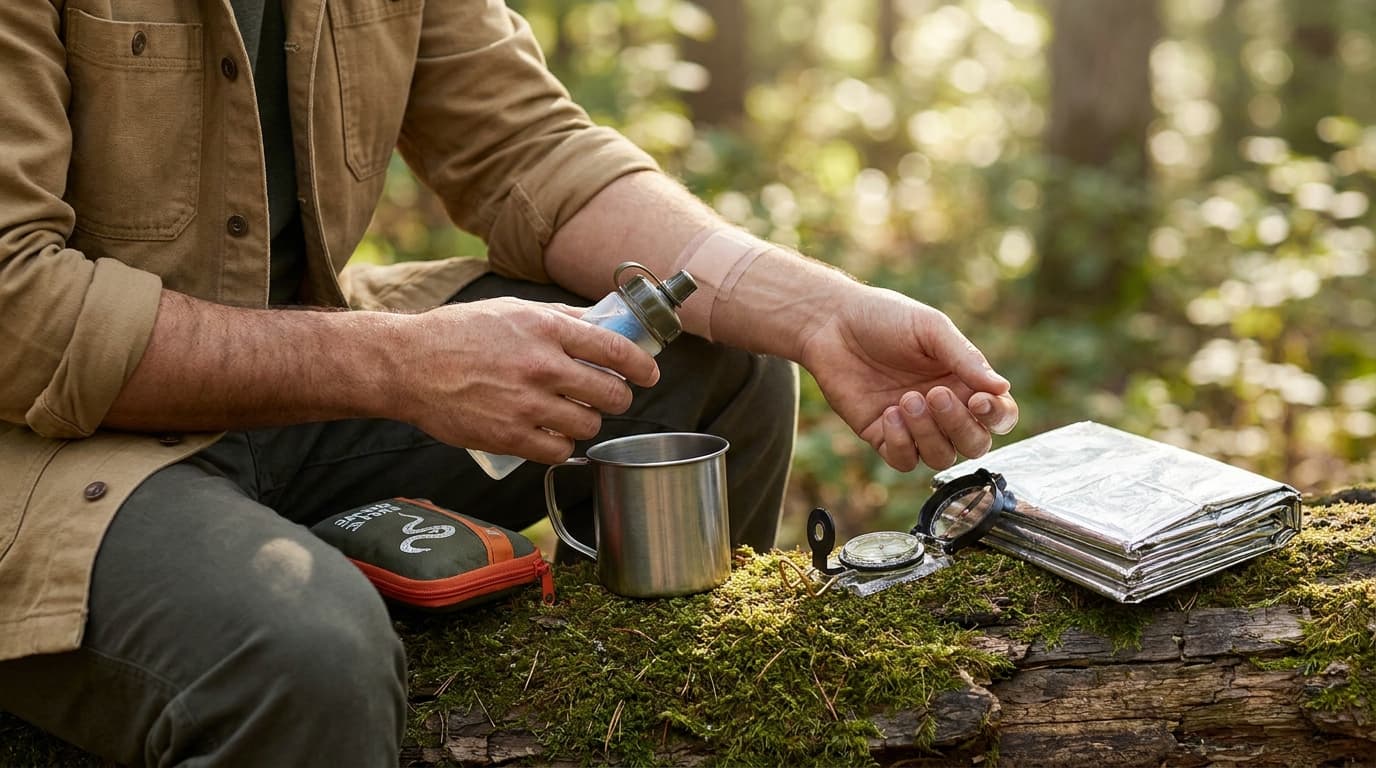
Survival Scenarios: How to Treat Wounds, Purify Water, and Handle Snake Bites in the Wild
Survival Scenarios: treating an infected wound in nature, off grid water purification for beginners, how to treat snake bites in wild, emergency shelter without tools guide, wilderness navigation without a...
Survival Scenarios: How to Treat Wounds, Purify Water, and Handle Snake Bites in the Wild
Survival Scenarios: treating an infected wound in nature, off grid water purification for beginners, how to treat snake bites in wild, emergency shelter without tools guide, wilderness navigation without a compass are the vital skills you need when help is far away.
When you're deep in the woods, help is often hours or days away. Doing the wrong thing like using a suction kit on a bite doesn't help and can cause more damage than the venom itself.
You'll learn how to handle medical emergencies, find clean water, build shelter, and find your way home using only what nature provides.
How to Treat Snake Bites in the Wild Without Making It Worse
If a snake bites you in the wild, your biggest enemy isn't just the venom. It is also the bad advice you might have heard in old movies. Most traditional tricks like cutting the skin or using suction devices do more harm than good. Your focus should be on slowing the venom down and getting to a hospital as fast as possible. This matters because antivenom is the only way to actually stop the reaction.
Imagine you are trekking through a rocky canyon when a rattlesnake strikes your calf. You feel a sharp sting and see the puncture marks. Instead of panicking or reaching for a tourniquet, you sit down and stay still. You know that keeping your heart rate low is the best way to keep the venom from rushing through your body. You pull a marker from your pack to track the swelling instead of trying to suck out the poison.
There is a common myth that you should wrap a snake bite tightly. But using a pressure-immobilization bandage on a viper bite can lead to localized tissue death and even limb loss. When you trap that specific type of venom in one spot, it concentrates the damage. Experts from the Snakebite Foundation warn that you should never use these tight wraps for rattlesnakes. It is better to keep the wound clean and keep the patient calm.
Monitoring the bite is your most important job during the hike out. Doctors need to know how fast the venom is moving to treat you correctly. If you are close to a road, walking out yourself is often faster than waiting hours for a rescue team to find you. Every minute counts when it comes to saving your tissue and muscle.
Key insights:
Take off any jewelry or tight shoes before the area starts to swell up.
Keep the bitten limb level with your heart to help manage the spread.
Use a marker to circle the bite and write down the exact time it happened.
Mark the edge of the swelling every half hour to show the doctor how it is moving.
Avoid using any suction kits, tourniquets, or ice on the wound.
The Danger of Pressure-Immobilization Bandages
Using a tight bandage on a viper bite is a mistake that can cost you a limb. People often think they should trap the venom, but doing this with a rattlesnake bite concentrates the toxins. This leads to rapid tissue death and severe internal damage that can happen in just a few hours.
Imagine you are on a remote trail when a rattlesnake strikes your ankle. In a panic, you wrap a shirt tight around the wound to stop the venom from moving. Because you trapped the toxins in your lower leg, the tissue starts to die. What could have been a treatable bite now requires surgery or even amputation.
Key insights:
Keep the wound clean and stay as calm as possible.
Mark the edge of the swelling with a pen every thirty minutes to track its progress.
Walk yourself out if rescue is hours away because time is tissue.
Avoid using tourniquets or suction kits entirely.
Treating an Infected Wound in Nature When Help Is Miles Away
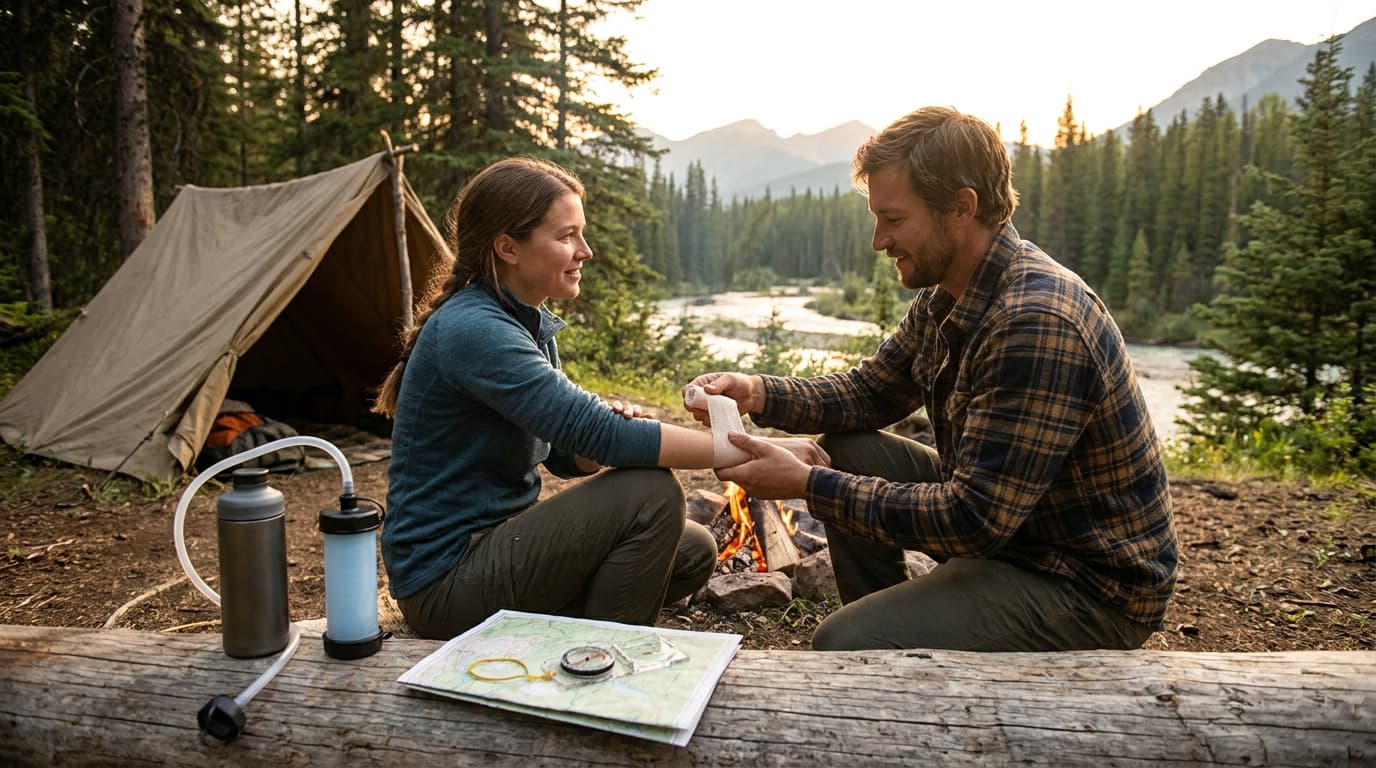
When you are miles from a hospital, a small cut can turn into a major problem overnight. Wilderness wounds like deep lacerations or punctures need aggressive cleaning because you might be waiting days for a rescue team. Because puncture wounds trap bacteria deep where it is hard to reach, they often lead to nasty infections much faster than simple scrapes.
You have to act the moment you see signs of trouble. If the area around the wound feels hot, looks bright red, or starts throbbing, the infection is already taking hold. Staying calm is your first step so you can assess how bad the damage really is and decide if you need to start moving toward help immediately.
Imagine you are hiking through dense brush and a jagged branch catches your calf. It seems like a minor scratch at first, so you just wipe it off and keep walking toward your campsite. By the next morning, your leg is swollen and every step feels like a sharp pulse of heat. Without a doctor nearby, you have to become your own medic to stop that infection from reaching your bloodstream.
Sometimes walking out is your best bet for survival. If you can still move, heading toward a trailhead is often faster than waiting for a helicopter that might be hours or even days away. In the woods, time is tissue, so you should prioritize getting to a real clinic while you still have the strength to travel.
Key insights:
Irrigate the wound using the cleanest water you have available to flush out any hidden debris.
Monitor the skin for red streaks moving away from the wound because this signals a spreading infection.
Use the open treatment method by leaving the wound uncovered if it is already infected so it can drain properly.
Mark the edges of any redness or swelling with a pen to track if the area is getting larger over time.
Avoid using tourniquets or tight bandages unless you are dealing with life-threatening bleeding that will not stop.
Off-Grid Water Purification for Beginners: Keeping Your Gut Safe
Clean water is your most important resource when you're off the grid. If your filter breaks or you leave it behind, you're forced to rely on primitive methods to keep parasites out of your gut. This is a high-stakes move because professional medical help may be hours or even days away in remote areas. Getting a waterborne illness while you're isolated can turn a fun trip into a life-threatening emergency in a hurry.
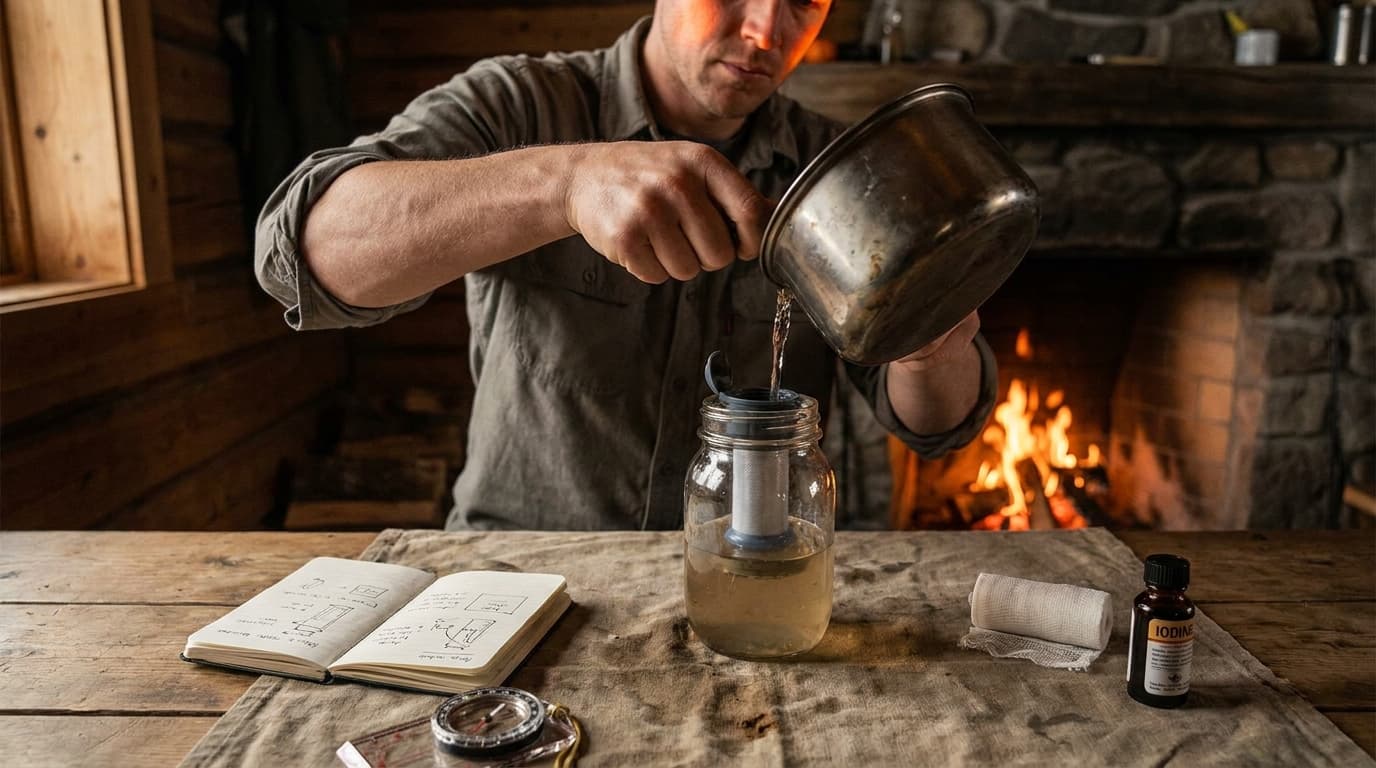
Imagine you've been trekking through the brush and finally spot a slow-moving stream. Your throat is dry, but you realize your pack is missing its Sawyer filter and iodine tablets. The water looks a bit murky and still. Instead of taking a risky gulp, you look around and see sand, some old charcoal from a fire pit, and long grass. You have the tools to survive, you just have to put them together instead of gambling with your health.
You don't need high-tech gadgets to stay hydrated. While a store-bought filter is the gold standard, knowing how to improvise with fire and dirt can save your life. The goal is simple: get the big chunks out first, then kill the tiny things that cause the real damage. It takes a little extra time, but it's much better than the alternative of spending your trip doubled over in pain.
Key insights:
Bring your water to a rolling boil for at least one full minute to effectively kill off pathogens and bacteria.
Build a tripod filter by layering sand, charcoal, and grass to strain out sediment and improve the water's taste.
Let murky water sit in a container for an hour so the heavy dirt settles at the bottom before you start the filtering process.
Use a clean bandana or t-shirt as a first-stage filter to catch large debris and bugs before boiling.
Avoid taking water from stagnant pools where scum is visible on the surface whenever a moving source is available.
Emergency Shelter Without Tools Guide: Staying Warm and Dry
When you are stuck in the woods without a tent or a tarp, your body heat is the only heater you have. Since the ground and the air will steal that warmth fast, you need a debris hut to act as a natural insulator. It works by trapping a pocket of air around you, much like a thick sleeping bag made of forest floor scraps.
The goal is to stay dry and off the cold earth. As the sun dips and temperatures crash, a massive pile of dry leaves or pine needles becomes your best friend. Without tools, you have to rely on gravity and whatever materials are within reach to build a structure that keeps you alive until morning. Since professional medical help can be hours or even days away in remote areas, staying warm and uninjured is your top priority.
Imagine you took a wrong turn on a day hike and realized too late that you will not make it back to the trailhead before dark. The wind is picking up, and you can feel the dampness of the ground through your clothes. Instead of panicking or trying to hike through the pitch-black woods, where a simple trip could lead to a deep laceration or a puncture wound, you find a fallen log to act as a ridgepole. You start leaning smaller sticks against it, creating a rib-like frame that looks like a tiny A-frame house just big enough for your body. You spend the last hour of light gathering every dry leaf in sight, knowing that a thin layer will not be enough to stop the shivering once the frost hits.
Key insights:
Create a sturdy ridgepole by propping a long, strong branch against a stump or low tree fork.
Lean thick branches against both sides of the ridgepole to form a solid rib structure.
Pile at least two feet of dry leaves, ferns, or pine needles over the entire frame for insulation.
Stuff the interior with a thick mattress of dry debris to separate your body from the freezing ground.
Keep the entrance small and plug it with more leaves once you are inside to trap every bit of warmth.
Wilderness Navigation Without a Compass: Finding Your Way
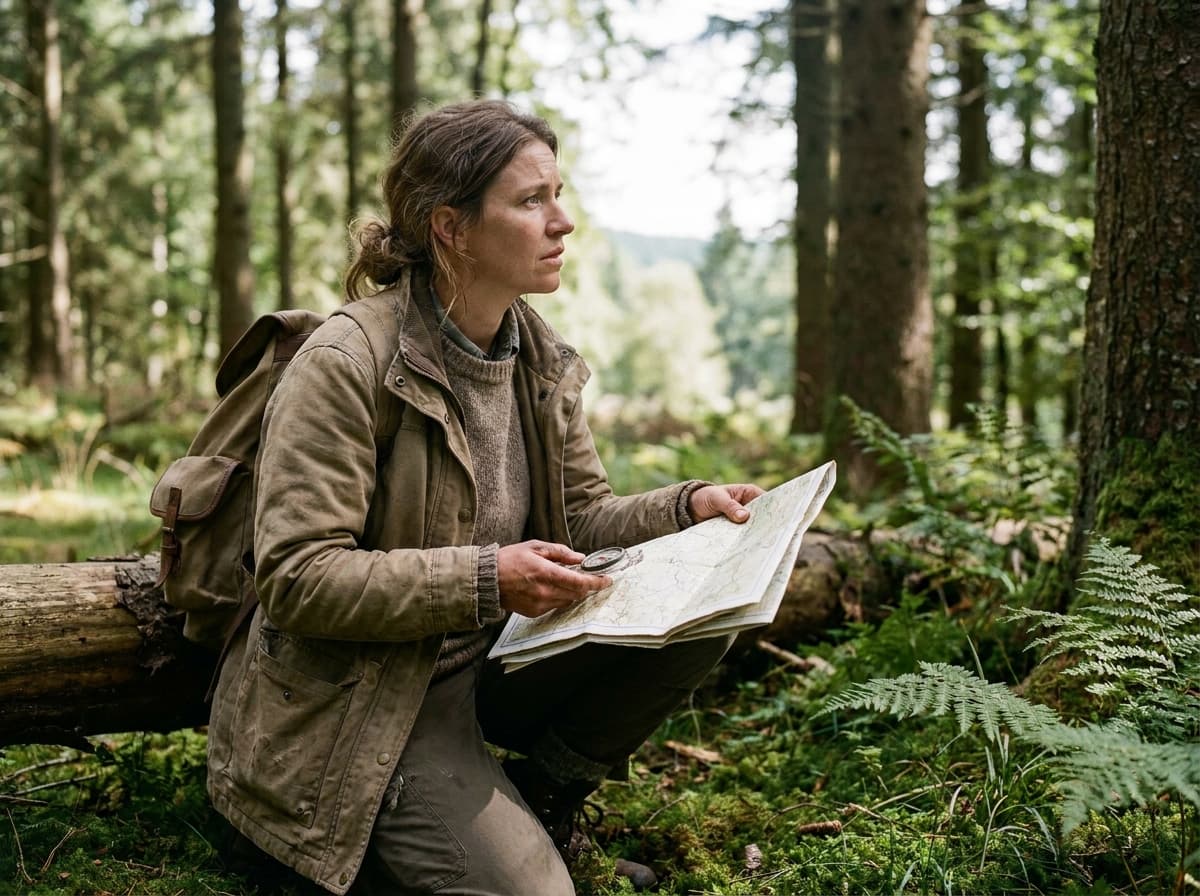
Getting lost in the woods is a gut-wrenching feeling, but the environment around you is actually a massive, living map. You just need to know how to read the signs. Nature provides constant directional cues through the sun, the stars, and even the way trees grow. Most people start pacing in circles when they lose the trail, but the smartest move is to stop and look at the shadows.
Imagine you have wandered off the path to find a better view and suddenly realize your phone is dead. The sun is out, but the trees all look the same and you are completely turned around. Instead of guessing, you find a clear patch of dirt and a straight stick. By marking the shadow, you turn a simple piece of wood into a survival tool that tells you exactly where east and west are.
This matters because staying put is not always the best option. Sometimes you need to move toward a road or a river to find help. Since professional rescue can be hours or even days away, being able to find your way back to civilization on your own is a critical skill. It is about trusting the physics of the earth over your own panicked instincts.
Key insights:
Use the shadow-tip method by marking a shadow's end twice over 15 minutes to find an East-West line.
Locate the North Star (Polaris) using the Big Dipper to find your way if you are traveling after dark.
Observe tree growth patterns because branches are often thicker and more developed on the side facing the sun.
Pick a distant, stationary landmark like a mountain peak to maintain a straight line once you have determined your direction.
Summary: Your Survival Mindset
Survival is all about making the best decisions when you're short on supplies. You should always follow the "Rule of Threes" and focus on finding shelter or water before anything else. It is also vital to know that bad medical advice is often more dangerous than doing nothing at all.
Imagine you are hiking and get a deep puncture wound far from any road. You cannot just cover it up; you have to clean it thoroughly because deep tissue damage is a magnet for infection. Staying calm and moving toward help yourself is usually better than waiting hours for a rescue team to find you.
Key insights:
Practice these survival skills at home before you actually need them.
Avoid using tourniquets or suction kits on any snakebite.
Mark the edge of your swelling every 30 minutes to track progress.
Start walking toward help if professional medical aid is hours away.
Frequently Asked Questions
The most critical step you can take is getting to a hospital as fast as possible. While there are plenty of old myths about what to do, antivenom is the only definitive treatment for a venomous bite. Your goal should be to get medical help before the venom has a chance to do serious damage.
Here is the thing: you might actually need to walk yourself out. If you are an hour away from your car, it is often better to hike out than to wait around for hours for a rescue team to find you. While you are moving, use a marker to circle the bite site and mark the edge of the swelling every 30 minutes. This helps doctors see exactly how fast the venom is working when you finally reach them.
You should look for spreading redness, increased swelling, and a feeling of heat around the injury. It is also important to remember that puncture wounds carry a higher risk of infection because they are so hard to clean in the field. If you notice the pain getting worse instead of better after a day or two, that is a bad sign.
Sometimes a wound will also start to throb or you might see red streaks moving away from the site. If you see those streaks or start feeling a fever, the infection is becoming a serious problem. Since you are off the grid, your best move is to keep the wound as clean as you can and start heading toward professional medical care before it gets out of hand.
It might look tempting, but drinking untreated mountain water is a big gamble. Even the clearest streams can carry microscopic parasites like Giardia from animal waste further up the trail. If you get hit with a stomach bug out there, you will get dehydrated fast, which is the last thing you want when you are miles from home.
Always play it safe by boiling your water or using a reliable filter before taking a sip. It is one of those situations where being a little extra cautious saves you from a lot of misery later on.
Yes, you can, but you have to plan ahead. Most modern smartphones have a built-in GPS chip that works independently of your cell service, so it knows where you are even in the middle of nowhere. The catch is that your map app needs data to show the actual map under that little blue dot.
To make it work, you need to download offline maps while you still have Wi-Fi. Just keep an eye on your battery because searching for a signal and running GPS will drain your phone in no time. It is always smart to carry a backup power bank just in case.
The most important thing to remember is that antivenom is the only definitive treatment for a venomous bite. You might have heard old advice about using a tourniquet or a special kit to suck out the venom, but those are actually dangerous and can lead to losing a limb.
Here is the thing: you should never use a pressure-immobilization bandage for a viper bite. Instead, stay calm and get to a hospital as fast as possible. Experts often say that time is tissue, so walking yourself out quickly is usually better than waiting hours for a helicopter.
Wounds in the wild generally fall into three categories: abrasions, lacerations, and puncture wounds. Puncture wounds are especially risky because they drive bacteria deep into your tissue where it is very hard to clean.
If you are out there without a kit, your first priority is cleaning the area with the cleanest water you have to stop an infection before it starts. Keep an eye out for redness spreading away from the cut or a fever, because those are clear signs that you need to find professional medical help right away.
It depends on the injury, but self-evacuation is often a better strategy than waiting. In some remote spots, professional help might be hours or even days away. If you can still walk, getting to a road or a trailhead is usually faster than sitting tight.
For example, if you are dealing with a snakebite, it is often better to walk for an hour to get help than to wait five hours for a rescue team to find you. Moving carefully is better than letting time slip away when you need a doctor.
Conclusion
Survival skills are less about having the expensive gear and more about how you think when things go wrong. Knowing how to handle a snake bite without panic or keep a wound clean when you are miles from a doctor changes your whole relationship with the outdoors. It is about connecting the dots between your surroundings and your safety, from the shadow on the ground to the debris pile that keeps you warm at night.
When you understand off grid water purification for beginners or how to build a shelter without tools, the woods feel less like a threat and more like a place where you belong. These methods are not just for emergencies; they are part of being a responsible hiker who respects the environment and knows their own limits. You now have the basic toolkit to stay calm and make smart choices when the trail gets tough.
A good next step is to try these out on your next weekend trip while you still have a safety net. Practice finding north or filtering water when the sun is still up and you are not in a rush. The best time to learn how to treat an infected wound in nature or handle a crisis is long before you actually need to. Nature is a great teacher, but it is much kinder when you have done your homework.
Every WilderReady guide is researched, written, and fact-checked in-house against trusted references such as the American Red Cross, the National Park Service, and the CDC before it goes live. We publish under this shared byline instead of invented personas, so you always know who stands behind the guidance you are reading.