Why Your Store-Bought First Aid Kit Isn't Enough for the Trail
Imagine you are five miles into a steep ridge hike when a sudden slip leads to a deep, jagged gash on your leg. You reach for that bright red store-bought...
Why Your Store-Bought First Aid Kit Isn't Enough for the Trail
Imagine you are five miles into a steep ridge hike when a sudden slip leads to a deep, jagged gash on your leg. You reach for that bright red store-bought kit, only to find a few tiny bandages and a single alcohol wipe that won't even cover the wound.
It is a scary realization, but most off-the-shelf options are not actually the best wilderness first aid kit for real emergencies. While a first aid kit is one of the Ten Essentials, these prepackaged boxes often miss the trauma kit essentials and specialized tools you need when help is hours away.
You do not need to be a doctor to stay safe, but you do need a DIY survival medical kit that is built for the terrain you are actually hiking. We are going to look at why standard kits fail and how to assemble an IFAK for hikers that handles everything from nasty blisters to serious bleeding.
We will cover the emergency medical supplies list you actually need, including some clever multi-purpose gear that saves weight without sacrificing safety. Let's get your pack ready for the real world.
You pack your bag and check your Ten Essentials. You have the map, the light, and that red first aid kit you bought at the store. It feels like you are ready for anything, but here is the truth. Most off-the-shelf kits are just fancy boxes of Band-Aids. They work fine for small scrapes but often fail in real wilderness scenarios. You need a functional medical system, not just a retail package.
Consider a deep wound from a jagged rock. A standard butterfly bandage rarely holds well enough, but 4-inch closure strips actually do the job. To clean that wound properly, a 35 cc irrigation syringe is the best tool for flushing out debris with a high-pressure stream. If you do not have these specific items, you are mostly just carrying extra weight without the ability to treat a serious injury.
The best kit is one you build yourself. It should change based on your group and your destination. Adding items like trauma shears or a flexible foam splint turns a basic box into a lifesaver. It is about being prepared for the trail you are actually hiking, not just buying what is convenient.
Key insights:
Retail kits often lack critical tools like irrigation syringes and effective wound closures.
Customizing your kit based on trip duration and group medical needs is essential for safety.
A true medical system focuses on stabilization and cleaning rather than just minor comfort.
The Myth of the 'Complete' Prepackaged Kit
You walk into a gear shop, grab a shiny red pouch labeled 'Complete First Aid,' and feel a sense of relief. You are prepared, right? Not exactly. While a first aid kit is officially one of the Ten Essentials for any hike, relying solely on a prepackaged retail kit is a bit like wearing a 'one size fits all' suit. It might cover the basic scrapes, but it will not fit your specific needs when things get messy on the trail. These retail kits are a great foundation, but they are rarely a standalone solution for the unpredictable nature of the wilderness.
Think about your next trip. Is it a solo afternoon jog or a week-long group trek through rocky terrain? The Washington Trails Association points out that your kit should vary based on the hikers in your party, the duration of the trip, and the specific area you are exploring. For example, if you are dealing with a deep gash, those tiny butterfly closures found in most boxes often fail to hold. In reality, 4-inch closure strips are documented as much more effective at keeping a large wound closed while you hike out for help. It is these small technical upgrades that turn a basic kit into a life-saving one.
Then there is the stuff the factory simply cannot pack for you. Personal medications, specific allergy treatments like epinephrine, and regional tools are all manual additions you have to make yourself. A store-bought kit does not know you have a bee allergy or that your hiking partner takes prescription heart medication. It is on you to bridge the gap between a generic box of bandages and a kit that can actually handle the medical conditions of your specific group. Customizing your gear based on the terrain and the length of your stay is not just a good idea; it is a necessity for staying safe.
So, what is usually missing when you crack open that plastic seal? Most retail kits are heavy on small bandages but light on actual trauma gear. You will rarely find a 35 cc irrigation syringe, which is the recommended size for flushing dirt out of a wound with high pressure. Simple alcohol wipes just move the bacteria around on the surface; you need a focused, high-pressure stream to truly clean a trail injury and prevent infection. If you are caught without one, even a safety pin and a plastic bag can be used to improvise a sprayer, which shows why versatile tools matter more than specialized gadgets.
You also will not find bulky but essential items like flexible, foam-covered aluminum splints in standard boxes. These are lightweight and can be molded to stabilize almost any limb, yet they are often left out to keep the package small and sellable. Beyond wound care, consider the high-stakes scenarios: a 65 cc suction syringe for clearing a patient's mouth of fluids during CPR is a professional-grade addition that commercial kits almost always ignore. Building a real kit means looking past the 'complete' label and packing for the actual risks you will face in the backcountry.
Key insights:
Retail kits are a base layer and require manual supplementation to be truly effective.
High-pressure irrigation using a 35 cc syringe is far superior to surface wipes for cleaning wounds.
Standard butterfly bandages should be replaced with 4-inch closure strips for better wound security.
Customization must account for personal prescriptions, epinephrine, and the specific terrain of the hike.
What’s Usually Missing from the Box
Ever opened a store-bought first aid kit and felt like it was mostly just a box of shiny Band-Aids? It is a bit of a letdown. While a kit is officially one of the Ten Essentials for any hike, those off-the-shelf versions often skip the heavy hitters you actually need when things get messy on the trail.
Most kits totally ignore proper wound cleaning. A simple alcohol wipe won't do much for a deep gash full of trail dirt. You actually need a 35 cc irrigation syringe to create a high-pressure stream that flushes out the grit. Also, if you are closing a larger wound, forget the tiny butterfly bandages. Real-world experience shows that 4-inch closure strips are way more effective at keeping things together while you move.
Then there is the gear that is usually missing, like flexible SAM splints or trauma scissors. These are vital for stabilizing a twisted ankle or cutting through thick hiking pants without hurting the patient. Don't forget to pack your own real-world items too, like epinephrine or specific prescription meds. Customizing your kit ensures you are actually prepared for a real emergency, not just carrying a box of stickers.
Key insights:
High-pressure irrigation with a 35 cc syringe is better than simple wipes for cleaning trail wounds.
Standard kits often lack critical hardware like SAM splints and trauma scissors.
Personalized items like prescription medications are essential additions for group safety.
Wound Care: Beyond the Plastic Bandage
Imagine you are miles from the nearest road and a slip on a wet rock leaves you with a jagged gash on your leg. In the woods, a simple cut can turn into a major problem because infection is your biggest enemy. A first aid kit is officially one of the Ten Essentials you should always carry, but most store-bought versions are not up to the task. They usually offer tiny bandages that barely cover a papercut. Real trail medicine is about cleaning the mess and keeping the wound closed until you reach help. This matters because out there, you are the first responder.
Cleaning a wound is the most important step in the backcountry. You need high pressure to blast out dirt and debris before infection sets in. This is where the 35 cc syringe comes in. It is often called the Goldilocks size for field irrigation because it provides exactly enough pressure to be effective without being too bulky for a backpack. If you do not have a dedicated syringe, you can use a safety pin to poke holes in a plastic bag to create an improvised irrigation device. While you are at it, consider adding a 65 cc suction syringe to your pack. It is not for cleaning cuts. Instead, it is a critical tool for clearing a patient's mouth of fluids if you ever have to perform CPR in the field.
Once the wound is clean, you have to keep it shut. Many people rely on standard butterfly bandages, but those often fail when skin gets sweaty or dirty. Professional trail medics prefer 4-inch closure strips because they are documented as more effective for closing large gaps when stitches are not an option. They stay put and offer much more surface area to grip the skin, which is vital when you are miles from a hospital. For serious bleeding, skip the small stuff and go straight for 4x4 sterile pads and non-adherent dressings that will not stick to the injury. If you are dealing with blisters or burns instead of deep cuts, a product like Second Skin is a lifesaver that acts like a temporary layer of protection.
The reality is that prepackaged medical kits are rarely sufficient as standalone solutions for wilderness travel. You might wonder why companies sell them if they are incomplete. The truth is they are a starting point, not a finish line. You should supplement your retail kit with personal medications and tools like trauma scissors with blunt ends to safely cut clothing away from an injury. Think of your kit as a living thing that needs regular checks. Items like aspirin and bandages expire or get used up, so you should check your inventory before every big trip. Being prepared means knowing your gear works when you actually need it.
Key insights:
A 35 cc syringe provides the ideal pressure for flushing debris from a wound without damaging tissue.
Professional 4-inch closure strips stay attached to sweaty skin much better than retail butterfly bandages.
Store-bought kits should be treated as a base to be supplemented with specific tools like irrigation syringes and trauma shears.
Safety pins and duct tape are essential multi-purpose items that can improvise medical solutions in a pinch.
The Magic of the 35 cc Syringe
Ever wonder why your store-bought kit feels light? Most retail kits skip the bulky stuff, but a 35 cc syringe is a game changer for cleaning trail wounds. It is the Goldilocks size because it provides just enough pressure to blast away grit without damaging skin.
Here is a clever trick to save weight. You can use a safety pin to poke a hole in a plastic bag filled with water, but nothing beats the precision of a syringe. It is simple and keeps you from wasting precious drinking water. Safety pins are handy for more than gear repairs, as they help create these improvised tools or remove stubborn splinters. This kind of multi-purpose thinking is what keeps your pack light but your capability high.
Then there is the 65 cc suction syringe. It might look like overkill, but it is critical for clearing a patient's mouth of fluids during CPR. Keeping an airway clear is the first priority when someone is unconscious in the backcountry. You hope to never use it, but you will be glad you packed it if things get serious. Being this prepared helps you stay nimble and ready for whatever comes.
Key insights:
A 35 cc syringe provides the ideal pressure for flushing debris from wilderness wounds.
Safety pins serve as versatile tools for both gear repair and creating improvised irrigation devices.
The 65 cc syringe is an essential trauma tool for maintaining clear airways during emergency CPR.
Strips vs. Butterflies
Think about the last time you tried to keep a tiny bandage on a sweaty knee mid-hike. It probably didn't last a mile. Most prepackaged kits rely on standard butterfly closures, but they just don't have the surface area to stay put when things get messy. For closing large wounds in the backcountry, 4-inch closure strips are significantly more effective. They provide the grip and tension needed to actually keep a wound shut while you're moving toward help.
It isn't just about the closure, though. If you're dealing with a serious bleed, you need 4x4 sterile pads to apply real pressure. Pair these with non-adherent dressings so the bandage doesn't get stuck in the wound as it heals. For those inevitable blisters or trail burns, 'Second Skin' is a total lifesaver. It mimics your natural skin barrier and stays flexible, unlike a stiff bandage that just bunches up in your boot.
The reality is that your first aid kit is one of the Ten Essentials for a reason. You can't just grab a box off the shelf and assume you're ready for a wilderness emergency. Adding these professional-grade supplies - along with a 35 cc irrigation syringe for high-pressure cleaning - turns a basic kit into a tool that might actually save your hike. Why settle for a kit that only handles paper cuts when the trail demands more?
Key insights:
4-inch closure strips offer much better adhesion and tension than standard butterfly bandages.
Non-adherent dressings and 4x4 pads are vital for managing heavy bleeding without damaging the wound later.
A 35 cc syringe is the ideal size for high-pressure wound cleaning in the field.
Trauma Kit Essentials: Preparing for the Worst
Here is the thing about store-bought kits. They are usually built for comfort rather than survival. There is a massive difference between a standard first aid kit and an Individual First Aid Kit, or IFAK. While a basic kit handles small blisters and scratches, an IFAK is meant for life-threatening situations like heavy bleeding or broken bones. The Washington Trails Association lists a first aid kit as one of the Ten Essentials for any hike, but that does not mean any old kit will do. You need gear that stops the clock on an emergency instead of just covering a scrape.
One tool that belongs in every trauma kit is a pair of trauma scissors. You might think your pocket knife is enough, but trying to cut away a bloody pant leg with a sharp blade in a panic is a recipe for a second injury. Trauma scissors have blunt ends so you can work fast without nicking the skin. Another must-have is a 35 cc irrigation syringe. It gives you the high-pressure stream needed to actually flush dirt out of a wound. If things get really serious and you are performing CPR, a 65 cc suction syringe is the specific tool used for clearing a patient's mouth of fluids.
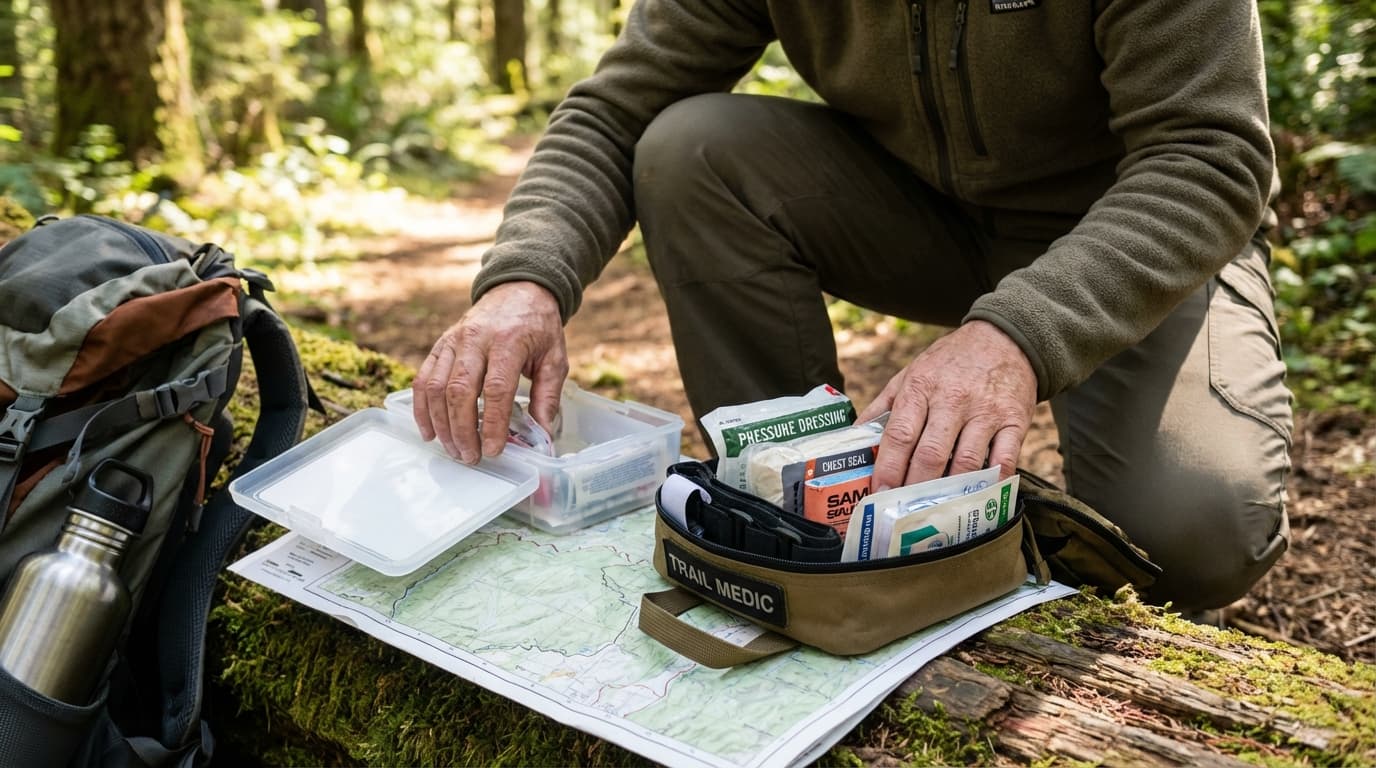
When a bone breaks miles from the trailhead, stabilization is your first priority. Malleable foam-covered aluminum splints, often called SAM splints, are a lifesaver here. They are basically weightless and can be molded to support almost any limb. This is much better than trying to find the perfect stick in the woods. You want to keep your pack light, and these splints let you do that while still being ready for a fracture. Think of it as a custom cast you can carry in a side pocket that adds no real bulk to your gear.
The final piece of the puzzle is how you close a wound. Research shows that 4-inch closure strips are much more effective than those tiny butterfly bandages for keeping a large cut shut. If you run out of supplies, remember that simple things like safety pins can be used to turn a plastic bag into a backup irrigation tool. It is all about being resourceful and prepared. A good trauma kit is not just about what you buy. It is about having the specific tools that allow you to act quickly when every second counts.
Key insights:
Standard kits are for minor issues while IFAKs are designed for major trauma and life-saving interventions.
Trauma scissors are significantly safer and more efficient than knives for removing clothing in an emergency.
Specific syringe sizes like 35 cc and 65 cc are required for proper wound irrigation and airway clearance.
Malleable aluminum splints provide professional-grade stabilization without adding significant weight to a hiker's pack.
Splinting and Stabilization
Imagine you are miles from the road and someone takes a hard fall. Most store-bought kits offer plenty of bandages but nothing for a broken bone. This is why a malleable foam-covered aluminum splint, or SAM splint, is a must-have. These are incredibly light and can be molded to fit almost any limb. Since a first aid kit is one of the Ten Essentials, leaving out a tool to stabilize a fracture is a major oversight.
You do not need a bulky kit to stay safe. The best approach is using multi-purpose items you already carry. Your trekking poles or even a sturdy branch can provide structure, while duct tape or extra clothing adds the necessary padding. By tucking one flexible splint into your pack, you can manage serious injuries without adding much weight. It is a simple way to customize your gear for the actual risks of the trail.
Key insights:
SAM splints provide hospital-grade stabilization while weighing only a few ounces.
Improvising with trekking poles and duct tape saves space without sacrificing safety.
Customizing your kit is better than relying on standard retail medical boxes.
The 'MacGyver' Approach: Multi-Purpose Gear
Let’s be honest: nobody wants to carry a twenty-pound medical chest on a casual hike. The goal is to stay safe without feeling like you’re hauling a lead brick. This is where the MacGyver mindset comes in. You need gear that earns its keep by doing two or three jobs at once. Since a first aid kit is officially one of the Ten Essentials you should always have on you, making it lean and mean is a survival skill in itself.
Take duct tape, for example. It is the undisputed king of the trail. You can use it to patch a ripped rain shell, but it is also a lifesaver for your skin. If you feel a hot spot forming on your heel, a bit of tape can prevent a blister from ruining your trip. Need to secure a heavy bandage? Duct tape holds better than that flimsy medical tape found in most store-bought kits. It is about being resourceful. Even a simple safety pin can transition from fixing a broken strap to digging out a stubborn splinter or pinning a sleeve to create an improvised sling.
But what about the serious stuff? While prepackaged kits are a good start, they usually lack the tools for real-world wound care. Experts recommend a 35 cc irrigation syringe for cleaning out dirt because it provides the right pressure to remove debris. If you do not have one, you can use a safety pin to poke a hole in a clean plastic bag to create a high-pressure stream. The reality is that your kit should be as unique as your hike. Whether you are adding 4-inch closure strips for deep cuts or extra meds for your group, customization beats a generic box every single time.
Key insights:
Multi-purpose items like duct tape and safety pins reduce pack weight while providing medical utility.
Standard store-bought kits often lack critical irrigation tools like a 35 cc syringe.
Customizing your kit based on your specific group and destination is safer than relying on a generic prepackaged solution.
Maintenance: Your Kit is a Living Thing
Think of your first aid kit as a living thing rather than a static box tucked in your pack. It is one of the Ten Essentials for a reason, but it only works if the items inside are actually functional. Have you ever reached for a sterile wipe only to find a dry, useless piece of paper? Or tried to stop a headache with aspirin that expired three years ago? These small failures can turn a minor trail annoyance into a real problem. You need to treat your gear like a pre-flight checklist.
Maintenance means more than just looking at the box. Every season, you should test digital tools like thermometers to ensure the batteries still have a charge. Cold weather and long storage periods are notorious for draining power. While you are at it, check your consumables. If you used moleskin or bandages on your last trip, replace them immediately. It is easy to forget what you used once you are back home and showering off the trail dust.
The reality is that a basic store-bought kit often lacks the specific tools you need for serious trail work. For instance, you might need to add a 35 cc irrigation syringe for cleaning deep wounds or 4 inch closure strips which are much better than standard butterfly bandages for large cuts. Even things like safety pins and duct tape need a quick inspection to make sure they are not rusted or losing their stick. A kit that stays updated is a kit that actually saves the day when things go wrong.
Key insights:
Check batteries in digital thermometers every season because cold weather drains them fast.
Replace consumables like moleskin and aspirin immediately after every trip so you never start a hike empty handed.
Upgrade your kit with 4 inch closure strips and an irrigation syringe since standard retail kits usually skip these vital items.
Frequently Asked Questions
The main difference is the type of injury they handle. A first aid kit is for the small stuff you deal with often, like blisters, small cuts, or a headache. A trauma kit is built for life-threatening emergencies like heavy bleeding or a blocked airway. You will notice trauma kits have heavy duty tools like tourniquets and blunt ended scissors to cut through thick clothing quickly.
Think of it this way: the first aid kit keeps you moving on the trail, but the trauma kit keeps you alive until help arrives. Most hikers carry a mix of both. For example, you might have standard bandages for a scrape but also keep 4 inch closure strips because they work much better than butterfly bandages for closing up larger wounds in the woods.
You could, but you probably should not. Home kits are usually full of tiny bandages and ointments that do not help much when you are miles from a road. Hiking kits need to be tougher and more specific. For instance, you need a 35 cc irrigation syringe to spray dirt out of a cut, which is something you would just do at the sink if you were home.
Also, most store bought kits are just a starting point. You really need to customize yours based on where you are going and who is with you. You will want to add things like moleskin for blisters, personal medications, and maybe a lightweight splint. Remember that things like aspirin and bandages run out fast, so you have to check your pack and refill it before every big trip.
It might look intimidating, but a syringe in a hiking kit isn't for giving shots. It is actually one of your best tools for cleaning out a dirty wound. A 35 cc irrigation syringe lets you spray a high pressure stream of water to flush out dirt and grit that could cause an infection later on.
You might also find a larger 65 cc version in some professional kits. That one is specifically for clearing fluids out of a person's mouth if you ever have to perform CPR. It is all about keeping things clean and clear when you are far from a clinic.
You should really give your kit a good look at least once a year or right before you head out on a long trip. Items like bandages and moleskin can lose their stickiness over time, and medications like aspirin or ibuprofen definitely have expiration dates that you need to watch.
Also, remember to check anything that uses power. If you have a digital thermometer or a small light in your kit, make sure the batteries still work. It is much better to find a dead battery at your kitchen table than when you are miles into the backcountry.
Conclusion
So where does this leave us? It means the best wilderness first aid kit is not just something you buy and toss in your pack. It is a smart system that you build yourself and know inside out. Moving from a basic box of bandages to a functional DIY survival medical kit takes some extra effort, but it gives you the confidence to handle everything from a small scrape to a serious trauma kit essentials situation.
Your next move is to dump out that store-bought kit and see what is actually in there. Check for those 35 cc syringes and SAM splints, and do not be afraid to customize it for your own specific needs. Also, remember that gear is only half the battle. Think about getting some basic training so your brain is as sharp as your trauma scissors if things ever get messy on the trail.
Stay safe out there, keep your kit stocked, and enjoy the peace of mind that comes with being truly ready for your next big adventure. You have got this.
Every WilderReady guide is researched, written, and fact-checked in-house against trusted references such as the American Red Cross, the National Park Service, and the CDC before it goes live. We publish under this shared byline instead of invented personas, so you always know who stands behind the guidance you are reading.