Why Your Brain Lies to You About Solo Hiking Safety
Have you ever been alone on a trail and felt your heart jump just because a dry leaf skittered by? It is wild how our minds play tricks on us when there is no one else around to ground us. Developing a solid solo hiking mindset is about more than just packing a map and a snack. It is about learning to spot when your brain is lying to you about what is actually a threat.
Solo hiking is more popular than ever, but many people miss out because they worry about the wrong things. We tend to stress over rare animal encounters while ignoring real risks like a sudden chill or a twisted ankle. This happens because of availability bias, where we focus on scary stories instead of facts. Building your self-reliance in the wild starts with understanding these mental traps so you can stay safe and calm.
We are going to look at how to handle the weight of making every decision yourself and how to build your mental prep for solo adventures. We will also talk about why being alone helps you see more of the landscape and makes you a sharper thinker. By the end, you will have the tools to trust your own two feet and enjoy the quiet rewards of the trail.
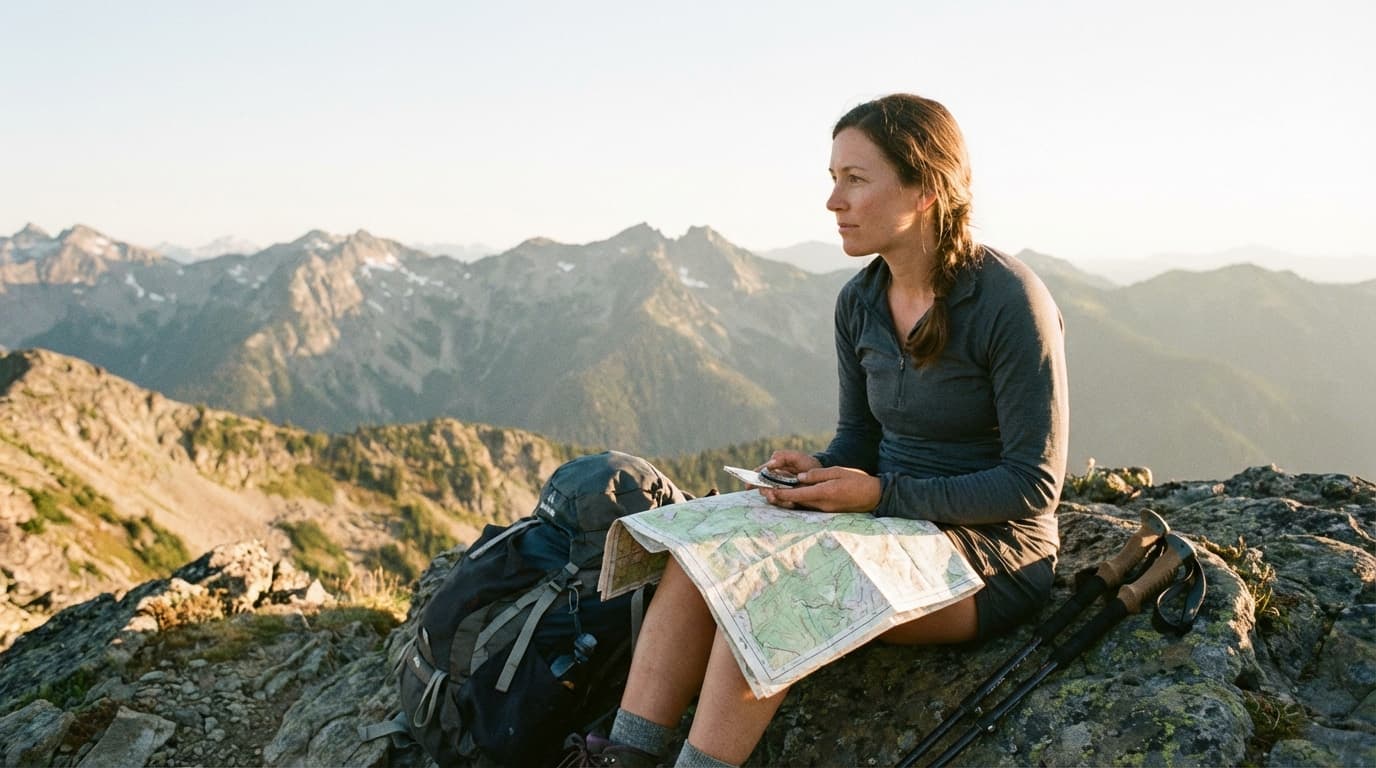
You have probably seen the photos: a lone hiker on a misty peak, looking totally at peace. Solo hiking is having a huge moment, driven by social media and a push for independence. But for many, the thought of going alone triggers instant worry. Why does your brain scream "danger" when you think about a solo trip, even if you are an experienced hiker?
It turns out your brain often focuses on the wrong risks. Availability bias makes us fixate on rare, scary stories like wildlife attacks while we ignore the mundane things that actually cause problems, like a simple slip or getting too cold. Jason Marsteiner from The Survival University says solo adventuring "concentrates the responsibility." You are not just hiking; you are the navigator, the medic, and the sole decision-maker.
That shift feels heavy, but it is also where real confidence starts. Instead of leaning on a group, you learn to trust your own gut. You already have what you need to solve problems and handle tough spots. This guide helps you move past those loud, irrational fears so you can build the self-reliance needed to enjoy the wilderness on your own terms.
Key insights:
Availability bias causes hikers to fear rare predators while ignoring common risks like hypothermia.
Solo hiking concentrates responsibility, forcing a shift from group-think to individual decision-making.
Building self-reliance involves trusting your internal capacity to problem-solve in uncomfortable situations.
The Bear in the Room: Why We Fear the Wrong Risks
You are deep in the woods, and every snapping twig sounds like a mountain lion. Your heart races because you have seen the headlines about wildlife attacks, yet you probably didn't think twice about your damp socks. This is availability bias in action. Our brains fixate on the scary, cinematic stories while ignoring the boring stuff that actually gets us into trouble. The reality is that dramatic wildlife encounters are rare, but hypothermia and simple slips are common. To stay safe, you have to retrain your internal alarm to focus on the statistical reality of the wilderness rather than the myths.
Solo adventuring concentrates the responsibility, according to Jason Marsteiner of The Survival University. When you are alone, there is no one else to check your map or remind you to drink water. Every choice is yours. While that weight can feel heavy, it actually leads to clearer thinking once you accept it. Instead of asking what if a wolf finds me, start asking if your gear is dry or if you know your exit route. This mindset shift moves you from a state of panic to a state of active preparation.
Then there is the myth of stranger danger. Media narratives often paint solo travel as a reckless gamble, but this creates a false choice between staying home or being in peril. You can actually gauge safety by looking at the local culture. In places like the UK, where hiking is a national pastime, the presence of gear shops is a great indicator of how safe and accessible the activity is. If the local infrastructure supports hikers, you are likely in a community that understands and respects the trail.
For women, BIPOC, and LGBTQ+ hikers, managing fear often involves learning specific strategies like Outdoor Defense. As Treeline Review notes, you already have everything you need on your body to protect yourself and solve problems. It is about trusting your capacity to manage uncomfortable situations rather than letting outside narratives dictate your limits. As Jenni from A Woman Walks puts it, life is too short to wait for others to join you. If you want to see the view, you shouldn't let a misplaced fear of the unknown stop you from getting there.
Key insights:
Availability bias makes us overestimate rare threats like animal attacks while ignoring common risks like dehydration.
Solo hiking popularity is surging, driven by digital nomad culture and a desire for self-reliance.
Local gear shop density can serve as a real-world gauge for the safety and accessibility of a hiking region.
Concentrated responsibility forces solo hikers to make more deliberate, clearer decisions.
Outdoor Defense skills empower marginalized groups to manage fear through practical self-reliance.
The Myth of Stranger Danger
We have all seen the movies where a solo hiker meets a sinister stranger. It is a classic trope, but it creates a false picture of reality. Because these stories are so vivid, our brains trick us into thinking they are common. This is called availability bias. We end up worrying about rare, dramatic threats while ignoring the mundane things that actually cause trouble, like slipping on a wet rock or getting too cold.
If you want to know if an area is safe, look at the local culture instead of the news. In the UK, hiking is a national pastime. You can judge the safety of a region just by how many gear shops are around. A high density of outdoor stores means there is a solid infrastructure and a community that looks out for each other. It is a practical way to gauge your environment that has nothing to do with scary headlines.
Solo adventuring concentrates all the responsibility on your shoulders. This can feel heavy, but it also means you are the only one making decisions, which often leads to clearer thinking. For women and marginalized groups, learning Outdoor Defense skills helps manage fear. You realize you already have what you need to solve problems. Life is too short to wait for a partner to join you before you head outside.
Key insights:
Availability bias causes hikers to focus on dramatic, rare risks while ignoring frequent dangers like hypothermia.
Local infrastructure, such as the density of hiking gear shops, serves as a reliable indicator of regional safety.
Concentrated responsibility in solo travel leads to sharper decision making and more honest self-reflection.
The Weight of One: Dealing With Total Responsibility
When you step onto a trail alone, the air feels different. Jason Marsteiner, a survival expert, calls this concentrated responsibility. In a group, you share the load of deciding where to camp or when to turn back. But when you are solo, every single choice sits on your shoulders. It feels heavy at first, like an extra few pounds in your pack. But here is the secret. That pressure actually sharpens your mind. Over time, you start thinking faster and clearer because there is no one else to consult. You learn to trust your own gut, which is a pretty great feeling. You are in charge of your own safety and you like the view.
This constant decision making can lead to a specific kind of mental fatigue. You might find your brain fixating on a scary noise in the bushes while you completely ignore the fact that you are running low on water. Experts call this availability bias. We tend to worry about rare, dramatic things like animal attacks because they make for vivid stories. In reality, the boring stuff like slips or getting too cold is what usually causes trouble. Managing this fatigue means recognizing when your brain is trying to scare you with a movie plot and focusing back on the actual risks. What does this mean for you? It means you have to be your own voice of reason when things get quiet.
There is a real beauty in this solitude. Without an audience or a need to compromise, you see the landscape for what it really is. You notice the small details of the trail that conversation usually drowns out. You also get a much more honest look at yourself. It is just you and the woods, which is exactly why so many people are hitting the trails alone these days. Whether it is for the peace or the challenge, solo trekking offers a level of self-reliance you just cannot get in a group. It is about moving at your own pace and making your own rules.
So, how do you handle it when things actually go sideways? You need a mental go-bag. The most important tool in it is the stop and think rule. When you feel panic starting to rise, you sit down. You take a breath. You remind yourself that you already have everything you need on your body to protect yourself and solve problems. This is especially true for women and people from marginalized groups who might feel more pressure to stay home. Learning simple outdoor defense strategies can turn that fear into a quiet, steady confidence that stays with you long after the hike is over.
Trusting your body is a skill you can practice just like any other. You have an incredible capacity to problem solve when you are not distracted by what others think. Life is way too short to wait for someone else to join you before you go explore the world. Think of it this way. Every solo trip is a chance to prove to yourself that you are your own best partner. You might start out feeling a bit nervous, but you will come back knowing exactly what you are capable of doing. You are stronger and smarter than your brain likes to admit when you are sitting on the couch.
Key insights:
Solo hiking concentrates responsibility, which actually leads to faster and clearer decision making over time.
Availability bias causes us to fear rare events like wildlife attacks while ignoring common risks like dehydration.
The stop and think rule is the most vital tool in a mental go-bag for managing stress in the wild.
Solitude allows for more honest self-reflection and a deeper connection to the landscape without social compromise.
Building Your Mental 'Go-Bag'
Think of your mindset as a mental go-bag. Most hikers worry about rare threats like wildlife because of availability bias, but the real risks are usually more mundane like slips or getting cold. When things go wrong, the most important tool you have is the stop and think rule. Taking a moment to breathe prevents panic from making your decisions for you. This simple pause is often the difference between a quick fix and a rescue call.
Solo adventuring concentrates all the responsibility on your shoulders, which can feel heavy at first. But you already have everything you need on your body to protect yourself and solve problems. This is especially vital for women and marginalized hikers who might feel extra pressure from societal fears. Practicing mental drills before you even leave the house helps you move past the scary stories you see online and focus on the reality of the trail.
It really comes down to trusting your own capacity to handle uncomfortable situations. When you are alone, your decisions are simpler because there is no social compromise or group distraction. You become more observant and more capable than you realize. Your brain might try to lie to you about the dangers, but your ability to problem solve is your greatest asset in the wild.
Key insights:
The stop and think rule is the best way to combat the panic that leads to poor decision making.
Availability bias makes us fear dramatic events while ignoring more frequent risks like hypothermia.
Solo hiking removes social pressure, allowing for clearer and more direct problem solving.
Safety for Everyone: Empowerment on the Trail
Why do we often feel more afraid of a rare mountain lion encounter than a simple rainstorm? It comes down to something called availability bias. We tend to focus on dramatic, scary stories we have heard in the news rather than the mundane risks that actually cause trouble, like hypothermia or a bad slip on a wet rock. When you head out alone, your brain might try to convince you that the wilderness is a place of constant danger, but the reality is often much more manageable. In places like the UK, the sheer number of gear shops serves as a cultural signpost that hiking is a normal, safe part of life. Once you recognize that your fear is often misplaced, you can start focusing on the real work of getting ready.
For many women, BIPOC, and LGBTQ+ hikers, the trail has historically felt like a place where they have to be on high alert. But a new movement called Outdoor Defense is changing that narrative. It moves away from the idea that certain people are naturally vulnerable and instead focuses on building a toolkit of preparedness. It is about realizing that you already have what you need on your body to handle uncomfortable situations and solve problems. This shift in mindset is powerful because it turns fear into a series of practical steps. You are not just out there hoping for the best. You are an active participant in your own safety.
Solo adventuring does something unique because it concentrates the responsibility. As Jason Marsteiner from The Survival University points out, every single decision rests on your shoulders. While that might sound heavy, it actually leads to much clearer thinking. There is no social pressure or group compromise to cloud your judgment. You notice the way the light hits the trees or the sound of a distant stream because you are not distracted by conversation. As Jenni from A Woman Walks says, life is simply too short to miss out on these experiences just because nobody else is available to go with you. Trusting yourself is the first step toward true empowerment.
Key insights:
Availability bias makes us fear rare events while ignoring common risks like weather or terrain.
Outdoor Defense shifts the focus from being a victim to being a prepared problem solver.
Solo hiking removes social distractions, leading to better focus and more honest self-reflection.
The Quiet Reward: What Happens When You Stop Talking
Think about the last time you went for a walk and didn't have to explain your pace or point out every interesting tree to a friend. When you're solo, the 'audience effect' simply vanishes. You aren't performing for a group or compromising on where to stop for lunch. This lack of social pressure lets you make decisions that are purely for you, which is a rare freedom in our hyper-connected lives. As Jenni from A Woman Walks says, life is too short to wait around for other people to join you just to experience the world.
Without the constant hum of conversation, your senses actually start to do their job. You will notice the tiny rustle of a ground squirrel or the specific way the light hits a granite ridge - details that usually get drowned out by chatter. It is also where you finally confront your own brain's tricks. We often suffer from availability bias, where we obsess over rare, dramatic threats like wildlife attacks because they make for vivid stories, while ignoring the real, mundane risks like getting a bit too cold or slipping on a wet root. In the silence, you can see these risks for what they actually are.
This solitude is about what expert Jason Marsteiner calls 'concentrated responsibility.' When you are alone, every choice from navigation to gear management is yours. While that might feel heavy at first, it leads to a much deeper level of self-reflection and confidence. You start to trust your own problem-solving skills because you have to. You realize you have everything you need on your body to manage uncomfortable situations, and that realization is far more rewarding than any group summit photo could ever be.
Key insights:
The absence of a social audience allows for more honest, individual decision-making.
Silence heightens sensory awareness, making landscape and wildlife details more visible.
Solo trips concentrate responsibility, forcing a healthy shift from imagined fears to actual risk management.
Practical Logistics for the Solo Mindset
When you head out alone, the weight of every decision sits squarely on your shoulders. Jason Marsteiner from The Survival University puts it clearly: solo adventuring concentrates the responsibility. You are the guide, the medic, and the morale booster all at once. This shift can feel heavy at first, but it actually leads to much clearer thinking because you are not compromising with a group. You might worry about a mountain lion around the next bend, but your brain is likely falling for availability bias. We tend to obsess over rare, dramatic threats while ignoring the mundane stuff like a slippery rock or getting too cold.
Your itinerary is not just a plan. It is your most vital safety tool. While digital nomad culture makes solo travel look like a breeze on social media, the wilderness requires a different kind of respect. It is about balancing that desire for exploration with hard logistics. If you are transitioning from group hikes to solo trips, you might feel like you are missing out on the social fun. But think of it this way. Solitude lets you see the landscape without the filter of conversation. You will notice the small details and wildlife that a chatty group usually scares away.
For women and LGBTQ+ hikers, building Outdoor Defense skills is a game changer for managing fear. The Treeline Review reminds us that you already have what you need to protect yourself and solve problems. You do not need to wait for a partner to start living. As Jenni from A Woman Walks says, life is too short to skip what you love just because no one else is coming along. Trust your prep, respect the risks, and lean into that self-reliance. It is not about being reckless. It is about being ready.
Key insights:
Availability bias makes us fear rare animal attacks while we ignore the real danger of slips and cold weather.
Solo trips force a concentration of responsibility that leads to faster and clearer decision-making.
The lack of a social audience allows for more honest self-reflection and deeper observation of nature.
Frequently Asked Questions
It is not necessarily more dangerous, but it is definitely different. When you are on your own, you carry the full weight of every decision. Experts like Jason Marsteiner note that solo adventuring concentrates your responsibility because there is nobody else to help you make a call or spot a trail marker you missed.
The safety of a solo trip depends mostly on your mental preparation and how you handle risks. While a group can help in an emergency, being alone often makes you more observant and careful. You tend to notice small details in the landscape that a chatty group might walk right past. So, as long as you have the right mindset and gear, you can manage the risks just fine.
Availability bias is a trick our brains play on us where we overestimate rare, dramatic events because they are easy to remember. For hikers, this usually means worrying about things like wildlife attacks or strangers while ignoring much more common risks like getting too cold or slipping on a trail.
This bias can hurt your safety because it messes with your planning. If you spend all your time worrying about a one in a million event, you might forget to pack the extra socks or water that you actually need. Understanding this helps you stay grounded and focus on the real basics of wilderness safety instead of just the scary stories you see on social media.
The best way to handle that spooky feeling is to realize your brain is likely focusing on the wrong things. We tend to worry about rare, dramatic events like wildlife encounters because they stick in our minds, but the real risks are usually much more mundane, like a sudden drop in temperature or a simple trip on a root.
Here is the thing: solo hiking concentrates all the responsibility on you, which can feel heavy at first. But you can manage that fear by learning specific Outdoor Defense skills. It is about trusting that you have the tools and the mindset to handle whatever comes your way, rather than letting your imagination run wild.
Also, look at the culture of the area where you are walking. If there are plenty of gear shops and locals out on the trails, it is a great indicator that the environment is safe and accessible. You are rarely as alone as your brain wants you to think you are.
A lot of people get caught up in what is called availability bias. They spend all their energy worrying about stranger danger but then forget to prepare for dehydration or losing their way. The most common mistake is underestimating the boring stuff that actually causes trouble in the wild.
Another big one is letting social media influence your expectations. It is easy to romanticize the solitude or, on the flip side, feel like you are being reckless just for going alone. Real safety comes from honest self-reflection and recognizing that every decision is entirely your call.
Remember that solo adventuring is designed to be a test of self-reliance. If you go into it without a clear plan for your mental and emotional state, you might find the quiet a bit overwhelming. Success is just as much about your mindset as it is about the gear in your pack.
Conclusion
So what is the big takeaway here? Solo hiking is usually less about the fancy gear you carry and more about the mindset you bring to the trail. Once you learn to spot the tricks your brain plays with fear, you can stop worrying about movie monsters and start focusing on the real stuff that keeps you safe. It is all about moving from a place of worry to a place of honest preparation.
If you are feeling a bit nervous, your next move does not have to be a huge mountain climb. Try a short, familiar path and practice being your own boss for an hour or two. This helps you build those self-reliance muscles without the stress. You might even find that the quiet is the best part of the whole trip because it gives you space to just be yourself.
The truth is that you are likely much stronger and smarter than your brain gives you credit for. When you prepare well and trust your own two feet, the woods feel less like a scary place and more like home. So go ahead and take that first step. You are ready for this.
Every WilderReady guide is researched, written, and fact-checked in-house against trusted references such as the American Red Cross, the National Park Service, and the CDC before it goes live. We publish under this shared byline instead of invented personas, so you always know who stands behind the guidance you are reading.