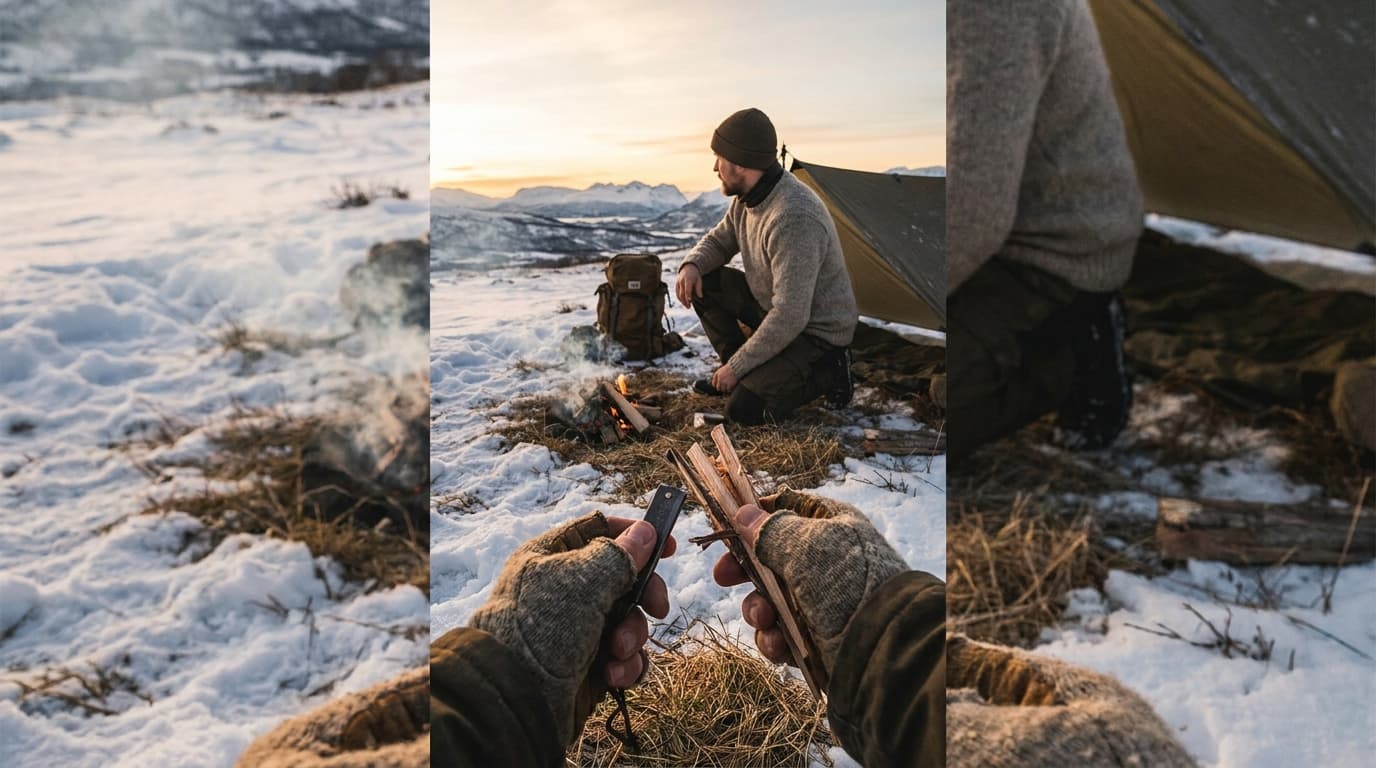
Why Your Brain is the Best Survival Tool You Own (And How to Keep It Running)
Imagine you are deep in the woods as the sun drops and you realize the trail is gone. Your heart starts thumping because your brain just hit the panic button....

Jonah Park
Gear Reviewer & Field Test Editor

Why Your Brain is the Best Survival Tool You Own (And How to Keep It Running)
Imagine you are deep in the woods as the sun drops and you realize the trail is gone. Your heart starts thumping because your brain just hit the panic button. Most people reach for their gear first, but your mindset & preparedness are what really decide if you make it home safely. Survival is mostly a mental game, so your brain is actually the most important tool you have.
When stress hits, your body can go into a freeze response that makes it hard to think. We will explore why your brain reacts this way and share psychological survival tips to help you stay grounded. You will learn how to keep your cool while building an emergency shelter or handling panic during first aid emergencies without losing your head.
This article walks through the S.T.O.P. rule and a mental checklist for navigation under pressure to keep you on track. We also look at grounding tricks like box breathing to keep you sharp. It is time to learn how to keep your internal engine running when the plan falls apart.
Why Your Brain is the Best Survival Tool You Own
Picture this: you have the fanciest fire-starter and a knife that could cut through a tank, but you are lost in the woods and your heart is hammering against your ribs like a trapped bird. Here is the truth that most gear catalogs won't tell you: survival is about 90% mental. Your brain is the most powerful tool in your kit, but if you do not know how to handle it, it can actually turn into your worst enemy the moment things go sideways.
When panic hits, your brain’s 'alarm system' - the amygdala - takes the wheel. It is trying to save you, but it often does so by shutting down your prefrontal cortex, which is the part of your brain that actually makes good decisions. Suddenly, your heart rate spikes, your breathing gets shallow, and you might even find yourself 'freezing' when you should be moving. It is a biological hiccup where your brain pauses to figure out the threat, but in a fast-moving emergency, that delay can be dangerous.
The good news is that you can hack this system. By using simple protocols like the S.T.O.P. method - Stop, Think, Observe, and Plan - you can force your rational brain back online. We are going to look at how to manage that stress, keep your breathing steady, and even how your own willpower can help your body stay healthy when the chips are down. Staying sharp is not just about what is in your backpack; it is about what is between your ears.
Key insights:
- Mental resilience is your most critical asset, often outweighing physical supplies.
- Panic causes a biological shutdown of the brain's decision-making center.
- The S.T.O.P. protocol helps re-engage logical thinking during a crisis.
The Science of Panic: What Happens When the Amygdala Takes Over
Ever felt your heart hammer against your ribs so hard you could barely hear yourself think? That is not just a feeling; it is a biological takeover. When you are scared, your brain undergoes a sudden shift in power. The amygdala, a tiny almond-shaped part of your brain meant for survival, basically pushes your rational side out of the driver's seat. It is often called an amygdala hijack, and it is the reason why even the smartest people can make questionable choices when things go sideways. Think of it like a cat seeing a vacuum for the first time; logic goes out the window, and raw instinct takes the wheel.
The interesting part is that this is not a flaw in your design. Recent findings show that during panic, the amygdala activates survival mode while the prefrontal cortex - the brain's decision-making center - momentarily shuts down. Think of your prefrontal cortex as the calm CEO of your brain. It handles logic, planning, and complex decisions. But when the amygdala senses danger, it sounds a massive alarm that shuts the CEO's office door. This shift is meant to save your life by making you act fast, but in modern emergencies, losing your ability to think clearly is often your biggest risk.
This vacation your smart brain takes has real-world consequences you can feel. As adrenaline spikes, your body prepares for a massive physical effort like running or fighting. Because of this, your fine motor skills - the kind you need to tie a knot, light a match, or handle a first aid kit - pretty much disappear. You might find your hands shaking or your fingers feeling clumsy. It is a trade-off: your body gives you raw strength but takes away the precision you might actually need to fix the problem. It is like trying to type a text message while wearing oven mitts.
You will also notice your vision narrowing. This tunnel vision happens because your brain wants you to focus solely on the threat, but it can make you miss important exits or tools right next to you. Then there is the freeze response. It is a natural biological reaction where the brain pauses to assess threats. While this helps a cat blend into the shadows, in a fast-moving crisis like a fire or a medical emergency, that pause can lead to dangerous delays. You are not being weak; your brain is just stuck in a loop trying to decide if it should move or hide.
The good news is that you can fight back and force your smart brain to return from its unannounced vacation. Staying calm is not about being fearless; it is about knowing how to re-engage that rational side. Simple tricks like the S.T.O.P. protocol - Stop, Think, Observe, and Plan - can pull you out of the spiral. Taking a second to breathe and assess the situation tells your amygdala that the CEO is back in the office. Your mindset is actually more valuable than any piece of gear in your bag because a calm mind can find solutions that a panicked mind will simply overlook.
Key insights:
- The amygdala hijack happens because the brain prioritizes survival instincts over logical thinking during high stress.
- Fine motor skills often vanish during a crisis because the body redirects energy to large muscle groups for fight or flight.
- The freeze response is a common biological instinct but can cause life-threatening delays in fast-moving situations.
- Mental resilience is your most critical asset, outweighing any physical stockpile or survival equipment.
- Simple grounding techniques like the S.T.O.P. method can effectively re-engage the prefrontal cortex.
Why Your 'Smart Brain' Goes on Vacation During Stress
Imagine you are trying to tie a basic knot or assemble a water filter while your heart is racing. Suddenly, your fingers feel like clumsy sausages. This happens because your brain is undergoing a biological hijack. When you feel a threat, the amygdala triggers survival mode and the prefrontal cortex, which is your center for logic and decision-making, momentarily shuts down. Your smart brain isn't just distracted. It is effectively offline.
This shift causes physiological reactions that can make a bad situation worse. Adrenaline spikes, leading to tunnel vision and a total loss of fine motor skills. You might also experience the freeze response, where your brain pauses to assess the danger. While this is a natural reaction, it often causes dangerous delays when you need to move fast. It is why people sometimes stand still during a first aid emergency instead of acting.
To fix this, you have to manually kickstart your rational mind. Using the S.T.O.P. protocol, which means Stop, Think, Observe, and Plan, is one of the best ways to do this. By forcing yourself to stop and breathe, you re-engage the prefrontal cortex and pull yourself out of that primitive fear loop. Staying calm is not about being fearless, but about knowing how to bring your brain back from its unwanted vacation.
Key insights:
- The amygdala can shut down your logical thinking center during high-stress moments.
- Fine motor skills disappear as adrenaline increases, making simple tasks difficult.
- The S.T.O.P. method is a practical tool to re-engage your rational brain.
The S.T.O.P. Rule: Your Mental Reset Button
Imagine you’re deep in the woods, the sun is dipping below the trees, and you suddenly realize you’ve lost the trail. Or maybe you are in the middle of a first aid emergency and your heart is hammering against your ribs. This is where the brain starts to glitch. Your amygdala takes over, putting you in survival mode, while your prefrontal cortex - the part that actually makes good decisions - basically flips the breaker and goes dark. You feel that sudden urge to run or the heavy weight of the freeze response. But before you take another step or make a frantic choice, you need to hit the reset button.
The S.T.O.P. rule is a simple mental checklist for navigation under pressure that keeps you from spiraling. It stands for Sit, Think, Observe, and Plan. Why sit? It sounds almost too easy, but the physical act is vital. When you sit down, you signal to your nervous system that you aren't currently being chased by a predator. It helps lower your heart rate and slows the rapid, shallow breathing that fuels panic. By forcing your body to stay still, you give your brain the space to re-engage its rational side. It is the first step in building a psychological survival mindset that matters more than any piece of gear in your pack.
Once you are settled, you start to Think. Ask yourself, "What is the immediate danger?" and "What do I actually need right now?" Maybe you are figuring out how to stay calm while building emergency shelter or dealing with a water purification failure. Next, you Observe. Look around. What resources do you have? What is the weather doing? This is a grounding technique. By focusing on the external environment - much like the 5-4-3-2-1 method where you identify things you see and hear - you pull your mind out of the fear loop and back into reality.
Finally, you Plan. This is where you prioritize your next moves to avoid making "the second mistake." In survival situations, the first mistake is often out of your control, but the second one is usually a choice made in haste. Whether you are handling panic during first aid emergencies or just trying to find your way back to camp, following this protocol ensures your actions are deliberate. Your greatest asset isn't a stockpile of supplies; it's this ability to stay calm and think clearly when everything feels like it's falling apart.
Think of this as rewiring your brain on the fly. While some people focus only on physical skills, current trends in survival training show that understanding how your brain works is just as important as knowing how to start a fire. Taking those four seconds to inhale and four to exhale can restore your mental clarity almost instantly. It turns a potential disaster into a series of manageable steps. What does this mean for you? It means you are never truly helpless as long as you can control your next breath.
Key insights:
- Sitting down physically signals the nervous system to exit survival mode and re-engage the prefrontal cortex.
- The 'second mistake' is often more dangerous than the initial crisis and is caused by reacting without a plan.
- Grounding techniques like S.T.O.P. shift focus from internal panic to external resources and facts.
- Mental resilience is the most critical survival asset, outweighing physical equipment and stockpiles.
Staying Sharp When the Plan Falls Apart
You are miles from the trailhead, the sun is dipping low, and suddenly, the trail just vanishes. Or maybe your water filter snaps in your hands right when you are parched. That instant cold spike in your chest? That is your amygdala taking the wheel. It is a biological survival switch that kicks in, but it often shuts down your prefrontal cortex, which is the part of your brain that actually knows how to solve problems. Staying sharp when things go sideways isn't about having a better gear bag. It is about keeping that rational brain online so you do not make a bad situation worse.
When the panic starts to rise, the best thing you can do is absolutely nothing for sixty seconds. Use the S.T.O.P. method. Stop, Think, Observe, and Plan. It sounds simple, but it is a circuit breaker for your stress response. If you are lost, do not keep walking. Sit down. If your shelter is leaking and you are getting soaked, do not just frantically pile on branches. Take a breath. This pause lets your heart rate drop and brings your fine motor skills back. As the team at American Reserves puts it, your greatest asset isn't your stockpile. It is your ability to remain calm and think clearly.
Think about that water filter failure. If you panic, you might be tempted to drink straight from a sketchy stream, risking a parasite that will make your situation ten times worse. By staying calm, you can weigh your options. Can you boil the water? Can you dig a seep well? The same goes for building a shelter in the rain. If you lose your cool, you will get sloppy, your knots will not hold, and you will waste energy. There is even a scientific connection between human willpower and the immune system. Staying focused actually helps your body stay strong enough to endure the cold and wet.
Now, things get even heavier when blood is involved. First aid emergencies are a true test of your mental grip. It is common to feel a freeze response where your brain just stalls while trying to process the threat. This can lead to dangerous delays when things are moving fast. To break that freeze, you have to narrow your world down to one single task. Do not think about the ambulance that is an hour away or the scary possibilities. Just focus on the very next step, like applying pressure to a wound. This prevents that feeling of being overwhelmed by the whole emergency.
If you feel your hands shaking or your vision tunneling, try the 4-7-8 breathing trick. Inhale for four seconds, hold for seven, and exhale for eight. This isn't just a way to relax. It is a physical hack that forces your nervous system to settle down. You can also use the 5-4-3-2-1 grounding method. Name five things you see and four things you can touch. By forcing your brain to process these sensory details, you pull power away from the panic and put it back into your conscious mind. One step at a time, you move from feeling stuck to taking action.
Key insights:
- Your brain's prefrontal cortex is your best tool, but panic can shut it down if you aren't careful.
- The S.T.O.P. protocol acts as a mental circuit breaker to stop a bad situation from spiraling.
- Grounding techniques like 4-7-8 breathing are physical hacks to force your nervous system back into a calm state.
- Focusing on a single immediate task is the best way to overcome the biological freeze response during a medical crisis.
Handling the Heat of a First Aid Emergency
Imagine you are faced with a sudden injury or a medical crisis. Your heart starts racing, your breath gets shallow, and suddenly your mind goes blank. This is not just you being nervous. It is a biological takeover. Your amygdala, the brain's alarm system, has flipped the switch to survival mode. While this happens, your prefrontal cortex, the part that actually makes smart decisions, basically clocks out for a break. This is why people often freeze up right when they need to act fast. It is a natural reaction, but in an emergency, it can be a dangerous delay.
To handle panic during first aid emergencies, you have to manually restart your rational brain. One of the best ways to do this is by using the S.T.O.P. method. It stands for Stop, Think, Observe, and Plan. Instead of trying to fix everything at once, you just focus on that first letter. Stop. Take a breath. By slowing down for even five seconds, you give your brain the chance to move past that initial freeze response and start looking at the actual problem. It turns a giant, scary event into a series of small, doable tasks.
Think of your mental state as your most important piece of gear. You can have the fanciest first aid kit in the world, but it is useless if you cannot remember how to use it. If you feel tunnel vision setting in, try a quick grounding trick like the 5-4-3-2-1 method. Notice five things you can see and four things you can touch. This tiny distraction pulls your focus away from the internal fear and back to the physical world where you can actually help. Taking it one step at a time keeps you from getting buried by the pressure of the situation.
Key insights:
- Panic is a physical reaction that shuts down your ability to think clearly, but it can be reversed with intentional breathing.
- The S.T.O.P. acronym helps you break a chaotic situation into manageable steps so you do not feel overwhelmed.
- Grounding techniques like identifying objects around you help re-engage the logic centers of your brain during a crisis.
Practical Tricks to Ground Yourself in Seconds
Imagine you are out in the woods trying to build an emergency shelter or fix a water filter that just quit on you. Suddenly, your heart starts thumping and your vision gets a bit blurry. This is your amygdala going into survival mode. It is trying to help keep you safe, but it actually turns off the part of your brain that makes smart choices. When this happens, you might just freeze up. It is a natural biological reaction where your brain pauses to figure out the danger, but in a fast-moving situation, that pause can be a real problem. You need a way to get your head back in the game before the panic takes over.
One of the best ways to get your brain back on track is the 5-4-3-2-1 method. It is super simple because when you are stressed, you need simple. You just name five things you see, four things you can touch, three things you hear, two things you smell, and one thing you can taste. This is not just a distraction. It forces your brain to look at the world around you instead of the fear inside you. Much like a cat always trying to land on its feet, this technique helps you find your footing. By focusing on your senses, you are telling your brain to wake up and start processing real information again. It breaks that cycle of tunnel vision and helps you reconnect with what is actually happening.
Then there is the box breathing trick that Navy SEALs use for instant clarity. When you are worried, your breath gets short and fast, which tells your body to stay in a state of panic. You can override this system by breathing in for four seconds, holding it for four, and breathing out for four. This specific rhythm helps clear your head by calming your nervous system. It is a physical way to fix a mental problem. Think of it as a quick reset button for your internal computer so you can focus on the task at hand, whether that is finding your way back to a trail or helping someone with a first aid emergency.
While you are breathing, check in on what you are saying to yourself. It might feel a little silly to say 'I have got this' out loud, but there is real science behind it. Simple phrases like 'I am in control' help the rational part of your brain stay engaged. There is even a cool link between your willpower and how well your body stays healthy and fights off illness. So, staying calm actually keeps your whole system stronger. If things feel like too much, just remember to S.T.O.P. That stands for Stop, Think, Observe, and Plan. Take a breath, look at what you have, and make a move. Your brain is your best tool for staying safe, as long as you keep it steady.
Key insights:
- Panic causes the brain to shut down its decision-making center, making grounding tricks a physical necessity for survival.
- The 5-4-3-2-1 method uses your senses to force the brain to stop focusing on fear and start looking at the environment.
- Box breathing is a manual override for your nervous system that can lower your heart rate and restore mental focus in seconds.
- Using the S.T.O.P. protocol provides a reliable mental checklist that prevents the dangerous freeze response during an emergency.
The Willpower-Immunity Connection
Have you ever wondered why some people walk away from impossible situations while others just give up? We often call it the 'will to live,' but it is more than just a movie trope. It is actual biology. There is a deep, scientific link between your willpower and how your immune system works. When you decide to keep going, your brain signals your body to start producing its own internal medicine to fight off exhaustion and illness. This connection is why a strong mindset can be the difference between staying healthy and getting sick when you are under pressure.
Think about what happens when you panic. Your amygdala, the tiny part of your brain responsible for survival, screams at you to run or freeze. Meanwhile, your prefrontal cortex, the part that actually makes good decisions, basically goes on a coffee break. This is not just bad for your decision-making. It is also hard on your body. Constant fear and anxiety during a crisis can wear down your physical defenses faster than the cold or hunger will. The reality is that your mindset is actually your most important piece of gear.
This matters because mental resilience is what fuels physical endurance. You can have the best emergency kit in the world, but if your mind quits, your body usually follows. During a crisis, like a pandemic or being lost in the woods, the people who stay calm are the ones whose bodies stay strong. It is about training your brain to default to procedures instead of fear. When you stay in control, you are not just thinking better. You are literally keeping your immune system in the fight so it can protect you from the elements.
So, what does this mean for you when things go wrong? It means that staying calm is a survival skill just like building a fire or finding water. By using simple tools like the S.T.O.P. method, which involves stopping to breathe and think before you act, you keep that rational part of your brain engaged. You are telling your body that you are still in the lead. It turns out that the strongest tool you own is not in your backpack. It is the grey matter between your ears. Keeping that tool sharp is your best bet for making it home safely.
Key insights:
- The brain produces its own medicine to fight illness when you maintain a strong will to survive.
- Panic causes the prefrontal cortex to shut down, which impairs both your judgment and your physical immune response.
- Mental resilience acts as the primary fuel for physical endurance during long-term emergencies.
How to Train for Calm Before the Storm
Ever wonder why some people stay cool while everyone else is losing their heads? It is not just luck. When panic hits, your brain basically gets into a fight with itself. Your amygdala, the tiny part of your brain handling survival mode, takes over. Meanwhile, your prefrontal cortex, the part that actually makes good choices, basically goes on a coffee break. Think of it like a cat that sees a cucumber and jumps three feet in the air without thinking. It is a biological reflex. But you can actually train your brain to stay online even when things get messy. Think of it as a workout for your sanity.
One of the best ways to prepare is by playing the 'What If' game. It sounds simple, but it is exactly what professional pilots and first responders do to stay sharp. You sit down and mentally walk through a disaster. What if the power goes out? What if the water filter fails? By rehearsing these scenarios, you are creating a mental map. When a real crisis happens, your brain does not have to start from scratch. It just follows the path you already built. Research shows this kind of mental practice helps you default to a procedure instead of just reacting to fear.
You also need to get comfortable with being uncomfortable. We often call this exposure training. If you have ever felt that 'freeze' response where you just cannot move, that is just your brain pausing to assess a threat. In a fast-moving situation, that biological delay is dangerous. You can shorten that pause by practicing small stressors in a safe environment. It is about teaching your body that a high heart rate or rapid breathing does not always mean the world is ending. Sometimes it is just a physical reaction you can work through with a little practice.
There is also the issue of what you are feeding your brain every day. If you are constantly glued to fear-based news, you are basically keeping your amygdala on high alert all the time. This 'information hygiene' is a real thing. When you limit the constant stream of scary headlines, you keep your decision-making muscles strong. You want to be informed, but not so overwhelmed that you cannot think. An overwhelmed brain cannot use the S.T.O.P. survival protocol (Stop, Think, Observe, and Plan) when it actually matters.
So, what does this look like in practice? Next time you feel a bit of stress, try a grounding technique like the 4-7-8 breath. You inhale for four seconds, hold for seven, and exhale for eight. This activates your nervous system and tells your body to chill out. There is even a scientific connection between your willpower and your immune system, so staying calm actually helps your body stay healthy. Even a nervous cat can learn to relax with the right environment, and your brain is the same way. Your greatest asset is not a stockpile of gear. It is the ability to keep your head on straight when things get tough.
Key insights:
- Mental rehearsal builds a default response that overrides the biological urge to panic.
- The freeze response is a natural biological pause that can be shortened through exposure training.
- High-quality information hygiene prevents the brain from staying in a permanent state of fear.
- Grounding techniques like the S.T.O.P. method help re-engage the rational brain during high-stress moments.
Frequently Asked Questions
Conclusion
So where does this leave us? It shows that survival is not just about having the right gear, but about having the right head on your shoulders. When you understand how your brain works under pressure, you can stop a panic attack before it starts. Using a mental checklist for navigation under pressure or the S.T.O.P. rule helps you stay in charge when the plan falls apart.
Consider trying one grounding technique today, like box breathing or the 5-4-3-2-1 method. You do not need to be lost in the woods to practice staying calm. Building these habits now means they will be ready for you if things ever get sideways during a real emergency or even just a stressful day at work.
Your brain is the only tool that goes everywhere with you and never needs new batteries. Keep it trained and keep it steady. It is the most powerful survival asset you will ever have, and it is much more reliable than a fancy knife or a lucky charm.
Send it to someone who should read it next.
About the author

Jonah Park
Gear Reviewer & Field Test Editor
Breaks down knives, packs, shelters, and camp tools with a bias toward durable gear that holds up when conditions get rough.
View all articles