Why This Simple String is the Secret to Better Outdoor Hacks and Tricks
Did you know that a simple piece of string originally designed for WWII parachutes can hold up to 550 pounds? It sounds like a bit of a stretch, but this...
Why This Simple String is the Secret to Better Outdoor Hacks and Tricks
Did you know that a simple piece of string originally designed for WWII parachutes can hold up to 550 pounds? It sounds like a bit of a stretch, but this skinny cord is actually a powerhouse that belongs in every hiker's pack. This military secret has turned into a civilian favorite for a very good reason.
Whether you are a seasoned camper or just starting out, knowing a few outdoor hacks and tricks can be the difference between a smooth trip and a total disaster. We are talking about paracord, which is way more than just a piece of rope. It is basically a multi-tool you can wear on your wrist or use to lace up your boots because it is so much stronger than typical leather laces.
In this guide, you will see how to use this cord for emergency escape techniques and even how to start a fire when your matches are soaked. We will go over the famous friction saw trick and show you how to keep your gear organized which is honestly easier than herding cats. Let's look at why this simple string is the secret to staying safe and prepared on your next adventure.
Ever wonder how a thin piece of string became the most trusted tool in a survivalist's kit? It started in the skies during World War II, where paratroopers relied on this nylon cord to keep their chutes open. Today, we call it 550 cord because it holds a staggering 550 pounds before snapping. That is a lot of power for something that fits in your pocket.
Think of it as a multi-tool you can tie in a knot. While leather boot laces might fail when things get rough, paracord is practically indestructible. You can even strip the outer sheath to find smaller inner strands for sewing gear or fishing. It is why experts like Tim MacWelch argue that traditional materials simply can't match its durability or knot strength.
The real magic lies in clever hacks. You can actually melt through a plastic zip tie using a friction saw technique. Just pedal your feet to rub the cord against the plastic until it breaks. Some versions even include a flammable strand inside to help you start a fire in a pinch. It isn't just string. It is a backup plan for almost any outdoor emergency.
Key insights:
Paracord was originally a military-grade material designed for WWII parachutes.
The 550 name refers to its 550-pound breaking strength, making it far tougher than standard laces.
Friction from the cord can be used as a mechanical tool to cut through plastic restraints.
The WWII Secret Hiding in Your Backpack
Did you know that the thin cord bundled in your survival kit actually saw action over the skies of Europe? Paracord started its life as suspension lines for parachutes during World War II. Soldiers quickly realized that once they hit the ground, this parachute cord was too valuable to leave behind. They cut it off and used it for everything from securing gear to fixing broken equipment. It transitioned from a military tool to a civilian staple because it simply does not fail when things get messy.
When you see it labeled as 550 cord, that isn't just a random model number. It means the string has a breaking test strength of 550 pounds. That is a massive amount of weight for something so thin. Most of the time, it's made from nylon or polyester, which is why it doesn't rot or mildew when it gets wet. Think about your old hiking boots. While cotton or leather laces will eventually snap or wear out, Tim MacWelch from Outdoor Life points out that they are simply no match for paracord’s breaking strength or durability. It is the kind of gear that stays ready even after years of being stuffed in the bottom of a pack.
But what really makes this stuff stand out is what is on the inside. If you strip away the outer sheath, you will find several smaller strands known as the guts. You can pull these out to use as fishing line, sewing thread, or even dental floss in a pinch. It is incredibly reliable. When you look at the weight-to-strength ratio, traditional rope just cannot compete. You get hundreds of pounds of hauling power in a package that weighs almost nothing.
The interesting part is how this cord has evolved lately. Some modern versions, like 550 FireCord, even include a flammable red strand in the core. This means your rope isn't just for tying knots, it is also a way to start a fire when the wood is damp and your hands are cold. You can even use the friction of the cord to melt through plastic restraints like zip ties. By moving your feet in a pedaling motion with the cord looped around them, the heat weakens the plastic until it breaks. It is a mechanical tool and a piece of rope all in one.
Key insights:
Paracord's 550-pound test strength makes it significantly more durable than traditional leather or cotton laces.
The internal guts can be removed for delicate tasks like sewing or fishing, making it a multi-purpose survival tool.
Modern variants like FireCord integrate tinder directly into the rope to save space in emergency kits.
The friction saw technique allows you to use the cord's heat resistance to escape plastic restraints in emergencies.
What Makes 550 Cord So Special?
Why is it called 550 cord? It is because this string can hold a 550-pound load before it snaps. Originally designed for WWII parachutes, it has a proven reliability record. While old-school leather or cotton laces often fail under pressure, paracord stays intact. It offers a strength-to-weight ratio that traditional ropes just can't touch, making it a heavy-hitter in a tiny package.
The real secret lies in the 'guts.' Inside the outer nylon shell, you will find internal strands that act like a hidden toolkit. You can pull these out for emergency sewing or fishing line. Some modern versions, like FireCord, even include a flammable red strand that works as tinder. You can even use the cord as a friction saw to melt through plastic zip ties.
Key insights:
Paracord provides a 550-pound breaking strength in a lightweight, portable form.
The internal strands offer secondary uses like fishing line, thread, or fire tinder.
Friction from the cord can be used as a mechanical tool to escape restraints.
The 'Friction Saw' Trick: How to Escape When You're Stuck
Ever found yourself in a situation where you felt completely stuck? The thought of being restrained by a plastic zip tie is enough to make anyone uneasy. This is where the friction saw trick comes in. It sounds like a magic trick, but it is actually just basic physics. By using a length of paracord, you can generate enough heat to melt through plastic restraints. It works because paracord is incredibly tough. Originally designed for WWII parachutes, this string is called 550 cord because it can handle 550 pounds of tension. That strength is why it is better than cotton laces, which would just snap under the pressure.
The secret lies in the heat. When you rub two things together fast enough, friction creates thermal energy. In this case, the paracord acts as the saw and the plastic tie is the target. Because paracord has such a high melting point, it stays intact while the plastic starts to soften. Think of it like a hot wire cutting through butter, only you are providing the power with your own body. This is a legitimate emergency skill that can help you get out of a survival mishap. Knowing how to use your gear as a mechanical tool is what separates a casual hiker from someone who is truly prepared. It is about understanding that your gear can do more than its original job.
To get this right, you need to set up a foot saw. Start by tying a loop on each end of a long piece of paracord to fit around your feet. Thread the cord through the zip tie that is holding your hands. Now, start moving your feet back and forth in a steady pedaling motion, like you are riding a bicycle. You want the cord to stay perpendicular to the plastic. If it is at an angle, you lose efficiency. Also, be careful about your own skin. The same friction that melts the plastic can easily give you a nasty burn if the cord rubs against your wrists. Keep the cord focused on the tie itself. As you pedal faster, you will feel the resistance drop as the plastic gives way and eventually breaks.
What does this mean for your gear? It means that swapping out your standard boot laces for paracord is not just about durability. It is about carrying a tool that does not take up any extra space. Some people even use FireCord, which has a flammable red strand inside for starting fires. But even the basic stuff is a powerhouse. The next time you lace up your boots, remember that those strings are more than just laces. They are a mechanical saw and a rescue line wrapped into one. It is a simple hack that could change everything in a tight spot.
Key insights:
Paracord's 550-pound breaking strength makes it a superior mechanical tool compared to standard cotton or leather laces.
The friction saw technique uses thermal energy to melt through plastic restraints by using a simple pedaling motion with the feet.
Safety is vital during an escape because the heat generated can cause friction burns on the skin if the cord is not kept perpendicular to the target.
Mastering the Pedaling Motion
If you are stuck in zip ties, your laces might save you. Paracord has a 550-pound breaking strength, so it handles much more stress than leather laces. Tie a loop on each end of a long strand to fit your feet. This stirrup setup provides the base for the mechanical work ahead.
Thread the cord through the ties and start a steady pedaling motion. Think of it like riding a bike. Keep the cord perpendicular to the plastic to focus the energy. This creates the friction needed to melt the restraint. Paracord is tough enough to generate this heat without snapping.
Watch out for your skin. Friction causes painful burns if the cord rubs your ankles. Keep your movements steady. It is not about speed, but consistent, rhythmic pressure. If you rush, you lose the heat. Steady pressure does the job best.
Key insights:
Paracord's 550-pound strength allows it to generate melting heat without snapping.
A perpendicular angle is required to focus friction directly on the zip tie.
Controlled movements protect your skin from friction burns during the process.
Better Than Leather: Why Your Boots Need a Paracord Upgrade
Think about the last time a boot lace snapped while you were miles from the trailhead. It usually happens at the worst possible moment. Most factory laces are made of cotton or thin leather, materials that simply cannot handle the constant friction and moisture of the wild. Survival expert Tim MacWelch points out that these traditional materials are no match for paracord when it comes to breaking strength and durability. While leather stretches and cotton eventually rots, paracord stays reliable through the worst conditions.
This material is often called 550 cord because it has a 550-pound breaking test strength. That is a massive amount of power for something so thin and light. It was originally designed for use in parachutes during World War II, so you know it is built to handle extreme tension. Usually made from tough nylon or polyester, these laces do more than just keep your boots tight. They also offer incredibly high knot strength, which means your boots stay secure even when you are trekking through thick mud or heavy brush.
The real magic happens when you realize your feet are carrying emergency gear. By swapping your laces for paracord, you effectively save space in your pack while keeping essential cordage within reach at all times. For example, you can use the friction saw trick to escape restraints if you ever find yourself in a survival bind. By looping the cord around your feet and using a pedaling motion, the heat from the friction can actually melt through plastic zip ties. It is a mechanical tool hidden in plain sight.
Then there is specialized gear like 550 FireCord. This version includes a small flammable red strand inside the core. If you need to start a fire in a pinch, you just pull out that strand and light it to use as tinder for your kindling. To get the perfect fit for your boots, just cut the cord to size and use a lighter to melt the tips. This prevents fraying and makes them easy to thread through your boot eyelets. It is a simple upgrade that turns a basic piece of clothing into a life-saving multi-tool.
Key insights:
Paracord offers a 550-pound breaking strength that leather and cotton laces cannot match.
Using paracord as laces saves pack space by moving essential survival cordage to your feet.
The friction saw technique allows you to melt through plastic restraints using only your laces and a pedaling motion.
Specialized FireCord laces include a built-in tinder strand to help start fires in emergency situations.
The Outdoor Life Advantage
Have you ever had a boot lace snap while trekking through deep mud? It’s a mess. Survival expert Tim MacWelch notes that cotton and leather laces can't compete with paracord's durability or its 550-pound breaking strength. This cord was first built for WWII parachutes, so it handles tension and wet conditions far better than anything you’ll find at a standard shoe store.
To make it work for your gear, just cut the length you need and melt the tips with a flame for a clean, permanent fit. Beyond boots, this material is tough enough for high-stakes tricks. For instance, the heat generated from a simple pedaling motion with the cord can actually melt through plastic zip ties in an emergency escape scenario.
For an extra edge, modern FireCord includes a hidden flammable strand for fire starting. It’s a simple swap that makes your kit more reliable. When things get wet and messy, having cordage that won't quit is a massive advantage.
Fire and Shelter: Making the Most of Your Cordage
Ever wonder why survivalists treat a simple roll of string like gold? It’s because 550 cord - originally designed for WWII parachutes - is a structural powerhouse. Since it’s tested to hold 550 pounds, it easily outperforms old-school leather or cotton laces that snap when things get tough. But today, cordage is evolving into something more. We’re seeing a shift where gear isn’t just one thing anymore; it’s a multi-tool. Instead of just tying things together, your rope can now help you build a home and start a fire. This matters because when you're in the wild, every ounce in your pack needs to earn its keep.
How to Use 550 FireCord If you’re out in the woods and your matches get damp, 550 FireCord can be a literal lifesaver. Inside the standard nylon sheath, you’ll find a distinct red strand. That’s not just for decoration; it’s a specialized tinder source designed to catch a spark quickly. To use it, you just cut a small section of cord, pull out that red strand, and fluff it up. It lights easily, helping you get a fire going with twigs and leaves. By embedding fire-starters directly into the core, you can ditch those bulky separate fire kits and save precious space in your pack. It’s a smart way to streamline your gear without losing any capability.
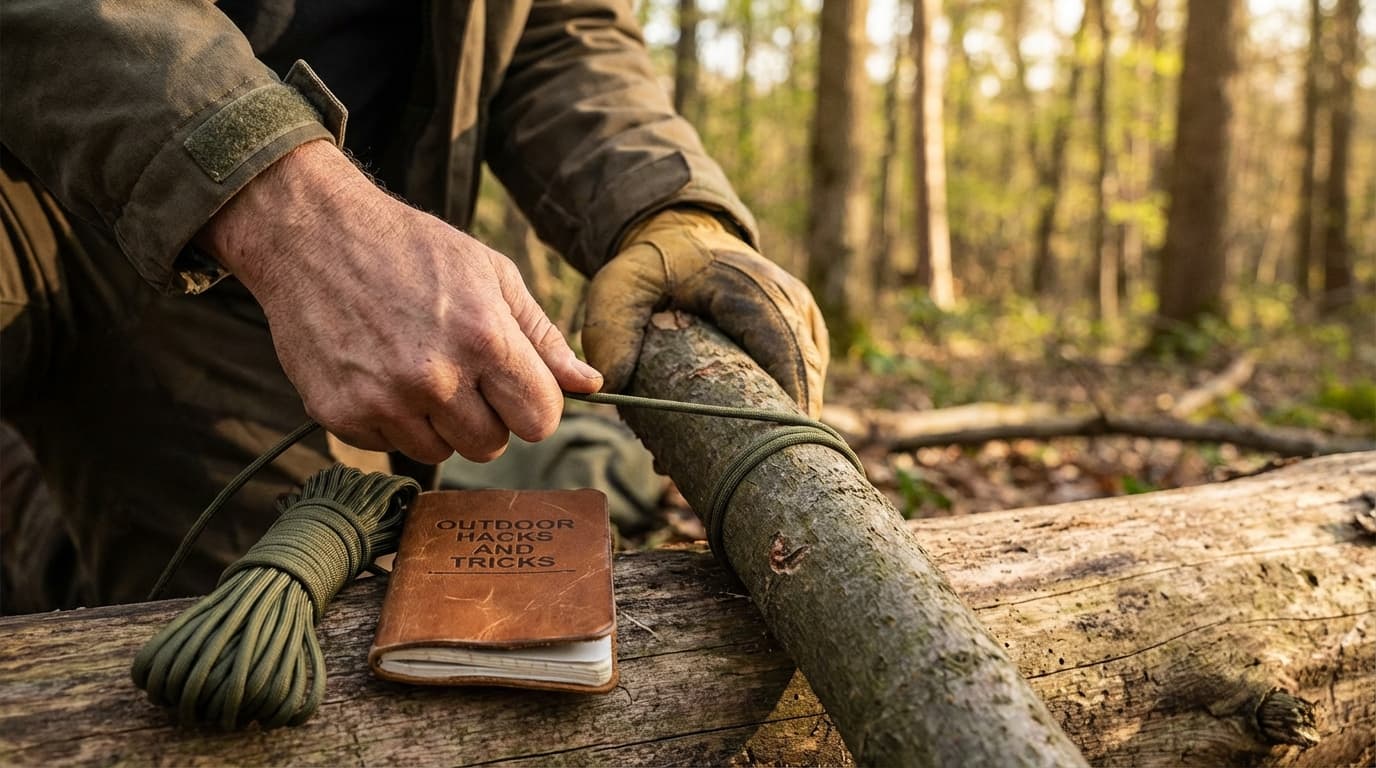
Lashing Like a Pro When it comes to building a sturdy lean-to, your knots are what stand between you and a cold, wet night. Using basic lashings with paracord allows you to secure waterproof tarps to a wooden frame with incredible tension. But here is a pro tip: if you need to do fine-tuned repairs or sew a tear in your pack, don't use the whole rope. You can strip the outer layer and use the thin inner strands for delicate work. This keeps your shelter tight and your gear dry, even when the wind starts picking up. It’s all about using every part of the cord to stay ahead of the elements and keeping your setup rock solid.
Key insights:
Modern cordage like FireCord eliminates the need for separate tinder, saving weight and space in emergency kits.
The internal strands of paracord provide a secondary resource for fine-tuned repairs or fishing when the main rope is too thick.
Paracord's WWII heritage and 550-pound test strength make it more durable than any traditional leather or cotton alternative.
How to Use 550 FireCord
Have you ever fumbled with a bulky fire kit while your hands were freezing? This is where 550 FireCord becomes a total game changer. While standard paracord was born for WWII parachutes and is famous for its 550-pound breaking strength, this specialized version adds a secret weapon inside the protective sheath.
If you look at the core, you will find a single, flammable red strand tucked among the usual nylon fibers. To get a fire going, just cut a small section of the cord and pull that red string out. It is designed to catch a spark or flame instantly, acting as reliable tinder even in rough conditions. You just fluff it up a bit and it is ready to go.
By integrating your fire starter directly into your gear lashings or boot laces, you can ditch those extra containers and save precious pack space. It is a simple way to make your survival setup more efficient without adding any extra weight. Why carry two items when one does the job better?
Key insights:
FireCord combines heavy-duty structural strength with an integrated emergency fire starter.
The internal red strand provides instant tinder that works even when traditional matches or lighters are hard to use.
Using FireCord for boot laces or gear wraps ensures you always have a fire-starting resource on your person.
Lashing Like a Pro
Why can a thin string hold a shelter together in a storm? Paracord was originally designed for WWII parachutes, and its 550-pound breaking strength makes it a beast for lashing frames. When you use it to secure a waterproof tarp, that tension ensures your gear stays tight and dry even when the weather turns. It is much more than just a rope; it is a structural tool.
The real magic is hidden inside the sheath. You can strip the outer layer to use the inner nylon strands for fine-tuned repairs. Expert Tim MacWelch notes that cotton or leather laces are no match for this durability. Some modern versions, like FireCord, even include a specialized flammable red strand inside the core to help you start a fire when your kindling is damp.
It even works as a mechanical tool for emergencies. By pedaling the cord back and forth against a plastic zip tie, the friction creates enough heat to melt right through the plastic. It is a simple, effective hack that proves why this cord is a survival essential. Whether you are fixing a boot or building a home in the woods, this string has you covered.
Key insights:
Paracord offers a 550-pound breaking strength, making it far more durable than traditional cotton or leather laces.
Internal strands can be harvested for delicate repairs or used as emergency tinder in specialized versions like FireCord.
The physical properties of the cord allow it to be used as a friction saw to melt through plastic restraints.
5 Survival Cordage Tricks You’ll Actually Use
Think back to World War II for a moment. Paratroopers relied on a specific nylon cord to get them safely to the ground. Today, we call it paracord or 550 cord because it can withstand 550 pounds of tension before it snaps. It is much tougher than your standard cotton or leather boot laces. In fact, experts like Tim MacWelch point out that those traditional materials are simply no match for the durability and knot strength of paracord. Whether you are building an emergency shelter or fixing a broken pack, this stuff is a massive upgrade over basic string.
One of the best things about paracord is what is hidden inside the sheath. If you strip away the outer layer, you will find several thin white strands. These are perfect for emergency fishing lines or even sewing thread if your gear rips in the middle of nowhere. You can also look for specialized versions like FireCord. This modern twist includes a red strand in the core that is highly flammable. You just pull it out and light it with a spark to get a fire going even when your other kindling is a bit damp.
Storing your cord is usually a nightmare. We have all dealt with that giant ball of knots that feels impossible to untangle when you actually need it. Using a tangle-free storage method or a quick-release bundle saves you time and frustration. It really is easier than herding cats. Once you have your cord ready, you can use it for a gear hoist. This keeps your food high in the trees and away from hungry bears. It is a simple trick that keeps your campsite safe and your breakfast where it belongs.
Did you know you can use string to cut through plastic? It sounds wild, but the friction saw trick is a real life-saver. If you are ever stuck in zip ties, you can loop the cord around your feet and use a pedaling motion. Tim MacWelch notes that aggressively working the cord back and forth weakens the plastic until it breaks. This works because the friction creates intense heat that melts the plastic. Beyond that, paracord works as a makeshift sling or even a tourniquet in a medical crisis. It is a mechanical tool that adapts to whatever problem you are facing.
So, why does this matter for your next trip? It is about carrying less while doing more. You might wonder if it is really worth replacing your regular laces with 550 cord. The answer is usually yes. Having several feet of high-strength line on your boots means you are always prepared. From securing a waterproof tarp to escaping a bind, this simple string proves that the best outdoor hacks are often the most basic ones. It is reliable, cheap, and surprisingly versatile.
Key insights:
Paracord's military history as parachute cord explains its extreme 550-pound breaking strength.
The internal white strands provide hidden utility for fine tasks like fishing or gear repair.
Mechanical friction allows paracord to melt through plastic zip ties in emergency escape scenarios.
Modern FireCord variants integrate flammable tinder directly into the rope core for easier fire starting.
Common Questions About Paracord Survival Hacks
Ever wondered why everyone obsesses over mil-spec paracord? It is not just a marketing gimmick! This stuff was originally designed for WWII parachutes, meant to be light but tough enough to hold a soldier. The debate between military grade and commercial usually comes down to those inner strands. True mil-spec cord has seven inner yarns made of three-ply nylon, while commercial versions are often thinner or use polyester. For basic camping, the cheap stuff is fine, but for heavy-duty survival, that 550-pound breaking strength is what you are really after.
How much should you actually carry? While 50 feet is standard, you can be much smarter about it. Think about your boots. Swapping out standard laces for paracord gives you instant access to high-strength string without taking up extra space. Tim MacWelch notes that cotton and leather laces simply cannot match paracord for durability or knot strength. If you upgrade to FireCord, you even get a specialized red strand in the core that acts as tinder for starting fires. It is a clever way to hide your gear in plain sight.
The most surprising hacks involve using the cord as a mechanical tool rather than just a tie-down. Take the friction saw trick for example. If you ever need to get through a plastic zip tie, you can actually melt it using nothing but cordage and a bit of leg work. By looping the cord around your feet and using a pedaling motion, you create enough heat through friction to saw right through the plastic. It is a bit of a workout, but it shows just how versatile a simple piece of nylon can be. Who knew a string could be so powerful?
Key insights:
Military grade paracord offers superior strength due to its specific three-ply nylon inner strand construction.
Using paracord for boot laces provides a high-strength survival tool that takes up zero extra pack space.
The friction saw technique allows you to escape plastic restraints by using the cord's heat resistance to melt through them.
Modern FireCord integrates flammable tinder directly into the rope core to simplify fire starting in damp conditions.
Frequently Asked Questions
Yes, they are essentially the same thing. People call it 550 cord because it has a 550 pound breaking strength, which is why it is so popular for survival gear. It was originally made for parachutes back in World War II, but these days you will see it used for everything from camping to emergency repairs.
One thing to keep in mind is that not all cordage is created equal. While standard paracord is great, some newer versions like FireCord actually have a flammable strand inside to help you start a fire. It is way tougher than regular string or even leather boot laces, so it is a solid upgrade for your gear.
It sounds like a movie trick, but you really can. By using a technique called a friction saw, you can use paracord to melt right through the plastic. You just loop the cord around your feet and move them in a pedaling motion so the string rubs hard against the zip tie.
The heat from that friction builds up fast and weakens the plastic until it breaks. It is a great example of how a simple bit of cord can be a life saving tool when you know the right tricks.
You'll find that the easiest way to keep your cord ready is to just wear it. Many people swap out their standard boot laces for paracord because it is much stronger than cotton or leather. It stays flat against your boots so you always have several feet of cordage on you without it ever getting knotted up in a pack.
If you do not want to use it as laces, try wrapping it around a water bottle or a knife sheath. This keeps the cord tight and organized. Here is the thing to remember: any time you just toss loose cord into a bag, you are asking for a mess. Keeping it under tension or woven into gear is the way to go so it's ready when you need it.
You definitely can. One of the reasons paracord is so popular is because of those inner strands. When you cut the outer shell, you can pull out the thin nylon strings inside. They are surprisingly strong and work great for small jobs like sewing a tear in your tent or even using as a makeshift fishing line.
It is also worth checking if you have a specialized version like FireCord. Some of these modern cords include a specific red strand designed to catch a spark easily. So while the white strands help you fix your gear, that extra strand can actually help you get a fire going. It is basically a survival kit hidden inside a piece of rope.
Conclusion
So, what does this all mean for your next trip? It shows that a single piece of 550 cord is much more than just a backup rope. Whether you are using the friction saw trick or pulling out inner strands for a quick fix, these outdoor hacks and tricks prove that being prepared is about how you use what you have. It is about taking a simple military invention and turning it into a toolkit that fits in your pocket or stays tied to your boots.
Your next move should be to grab a few feet of cord and try these methods in the backyard. Reading about survival cordage tricks is great, but feeling the heat of a friction saw or lashing a shelter frame is how you really build confidence. Swapping your standard laces for paracord might also be the easiest gear upgrade you ever make before heading into the woods.
The best survival tool is the one you actually have on you and know how to use. A bit of string might seem small, but in the right hands, it is the difference between a rough night and a successful adventure. Keep a strand close, keep practicing, and stay safe out there.
Every WilderReady guide is researched, written, and fact-checked in-house against trusted references such as the American Red Cross, the National Park Service, and the CDC before it goes live. We publish under this shared byline instead of invented personas, so you always know who stands behind the guidance you are reading.