Why Relying on One Fire Starter Is a Survival Mistake
If you have ever been stuck in the woods as the temperature drops and the rain starts to fall, you know that a single lighter is a pretty flimsy insurance...
Why Relying on One Fire Starter Is a Survival Mistake
If you have ever been stuck in the woods as the temperature drops and the rain starts to fall, you know that a single lighter is a pretty flimsy insurance policy. Fire is the one survival skill most people take for granted until they actually need it to stay warm or dry their gear. Relying on just one fire starter is a huge mistake that can turn a fun trip into a dangerous situation fast.
That is why getting comfortable with survival skills: how to start a fire without matches is so important for anyone heading into the wild. In this guide, we will break down the essentials of the fire triangle and show you how to use ferrocerium rod techniques when things get wet. We also cover friction fire basics and the best survival tinder to keep in your pack so you are never left in the cold.
By the end, you will know how to build a redundant fire kit that works every time. Let's look at how to move beyond the matchbox and become truly self-reliant in the wilderness.
Fire: The Skill You Take for Granted Until You Need It
Most of us only think about fire when we are flicking a lighter for a candle or turning a knob on the stove. It is easy to forget that for most of human history, making fire was a daily survival chore, not a convenience. In the wild, fire is your lifeline. Following the survivalist Rule of Three, fire is a top priority for keeping you warm and safe. If you cannot get a flame going, you cannot dry your clothes, cook food, or keep aggressive animals at a distance.
To get it right, you have to understand the fire triangle. It is a simple chemical balance of fuel, oxygen, and heat. But here is the catch: lighters run out of gas and matches get wet. While some modern gadgets claim they can start a fire in five seconds without matches, relying on just one tool is a big mistake. If you do not have several ways to make fire, you might struggle with the basic tasks needed to stay alive and comfortable.
We are going to look past the matchbox and the easy shortcuts. Whether it is using a ferrocerium rod or understanding how airflow keeps a tiny spark from dying out, having these skills in your back pocket changes how you handle the outdoors. It is about being ready for when things do not go perfectly and knowing you can handle the heat.
Key insights:
The fire triangle requires a perfect balance of fuel, oxygen, and heat to work.
Redundancy is king - never rely on a single lighter or a lone box of matches.
Fire is essential for more than just warmth; it is your primary tool for drying gear and keeping predators away.
The Science of the Spark: Understanding the Fire Triangle
Have you ever spent twenty minutes huffing and puffing at a pile of wood only for it to stay cold and dark? It is a common frustration, but fire is not magic. It is a chemical reaction that relies on three specific things: fuel, oxygen, and a heat source. This is what experts call the fire triangle. If your flame is dying, it is usually because one of those three sides has collapsed. Most of the time, we focus so much on the wood that we forget the fire needs to breathe. Troubleshooting a weak flame often comes down to airflow regulation. If your sticks are packed too tight, you smother the heat. If the wind is too strong, it steals the heat before it can catch. Finding that balance is the difference between a warm night and a cold one.
The reality is that fire building is critical for more than just warmth. It is how we dry clothes, cook food, and even keep aggressive animals at a distance. Recent guides from 2024 emphasize that relying on a single method is a major survival mistake. As the experts at Premier Body Armor point out, if you do not have multiple reliable ways to make fire, you might not be able to handle the simple tasks needed to stay comfortable or alive. While some modern commercial products claim to start a campfire in as little as five seconds without matches, you still need to understand the underlying science for when those tools are not within reach.
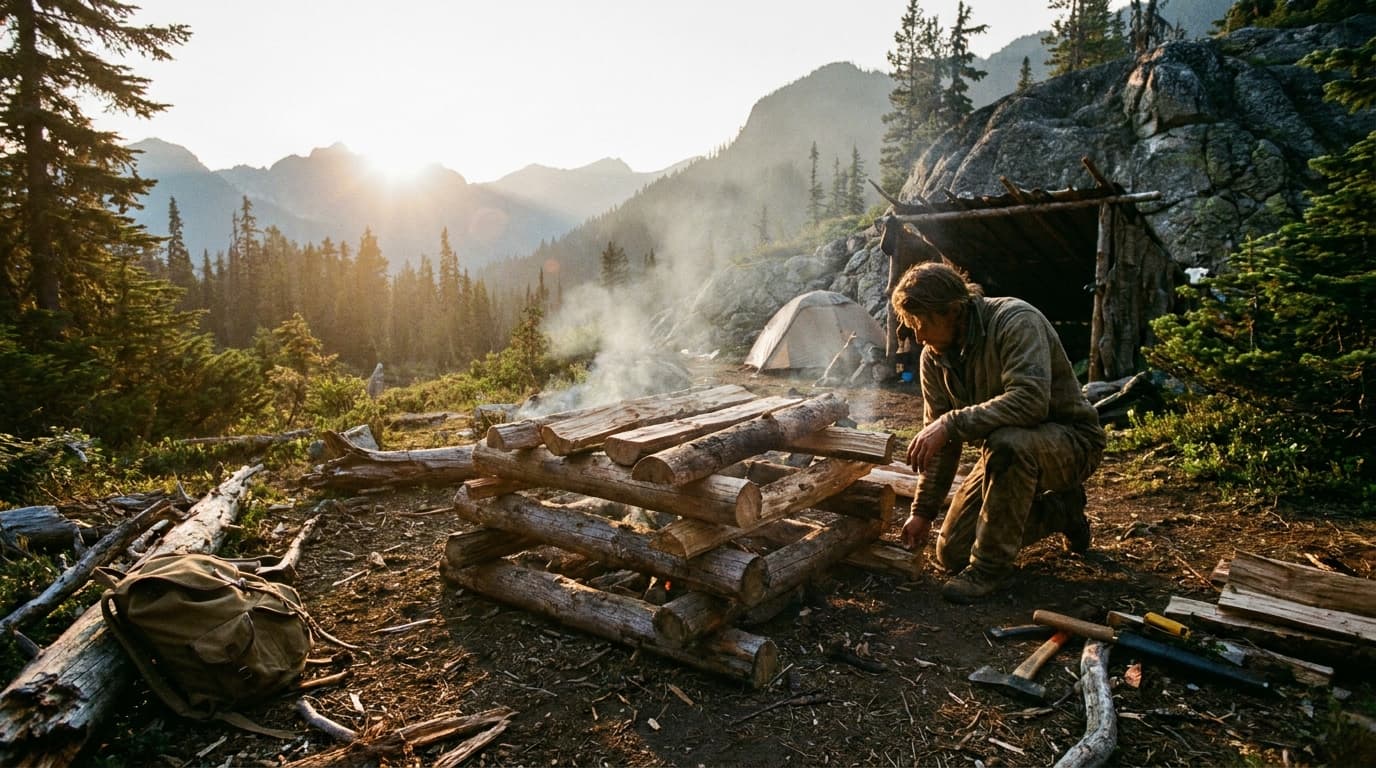
When it comes to the actual structure, you cannot just toss a heavy log onto a tiny spark and expect a blaze. You need a hierarchy. This starts with tinder, which is anything bone-dry and fibrous that catches instantly. Then you have kindling, the small twigs that bridge the gap to your main fuel logs. A common mistake is skipping the kindling and moving straight to the big stuff, which almost always kills the flame. Think of it this way: tinder starts the fire, kindling grows the fire, and fuel sustains the fire.
There is a rule of thumb that every survivalist learns the hard way: gather three times as much as you think you need before you even strike a match. Tinder disappears in seconds, and if you are scrambling for more sticks while your tiny flame is flickering out, you have already lost. The process requires patience and preparation. By ensuring you have a massive pile of graded materials ready to go, you avoid the panic of a dying spark and ensure your fire has the foundation it needs to thrive.
Key insights:
The fire triangle requires a perfect balance of fuel, oxygen, and heat to maintain combustion.
Airflow acts like a volume knob for your fire; too much or too little will extinguish the flame.
Never skip the kindling stage, as large fuel logs require more heat than a small spark can provide.
Redundancy is a survival necessity because lighters fail and matches get wet.
Fuel vs. Tinder: What's the Difference?
Have you ever tried to light a thick log with a single match? It is a common mistake because fire needs a clear path to grow. This process relies on the fire triangle, which is a simple mix of heat, oxygen, and fuel. If you ignore the small stuff, the combustion process never reaches the temperature needed to catch the heavy wood. You have to build a ladder from tiny fibers to thick branches or the flame will just flicker out before it even starts.
Think of tinder as the spark catcher. It is usually fluffy stuff like dry grass, pine needles, or shredded bark. Kindling acts as the bridge, consisting of small sticks about the size of a pencil. Finally, fuel logs are the heavy hitters that provide long-term heat for cooking or drying your clothes. A classic survival tip is to gather three times as much material as you think you need. It feels like overkill until you realize how fast a small flame eats through your initial pile.
This matters because fire handles everything from boiling water to keeping aggressive animals away. While some products claim to start fires in five seconds, relying on one trick is a major risk. As experts often say, if you do not have multiple ways to make fire, you might not be able to handle basic survival tasks. Understanding the difference between your fuel types ensures you are not left in the cold when a single method fails.
Key insights:
The fire triangle requires a perfect balance of heat, oxygen, and fuel to sustain combustion.
Always gather three times more tinder and kindling than you expect to use to avoid running out.
Skipping the kindling stage is the most common reason why campfires fail to catch on larger logs.
The Ferrocerium Rod: Your Best Friend in a Downpour
Imagine you are stuck in a sudden downpour and your matches are a soggy mess. It is a classic survival nightmare. This is where the ferrocerium rod earns its reputation as a bushcraft essential. While some commercial starters boast about five-second fires, those often rely on ideal conditions. A ferro rod is different because it works regardless of the wind or wet. It provides the intense heat needed to complete the fire triangle, which is just the chemical mix of fuel, oxygen, and a heat source. Without that spark, you cannot dry your clothes or cook a meal, making this tool a literal lifesaver.
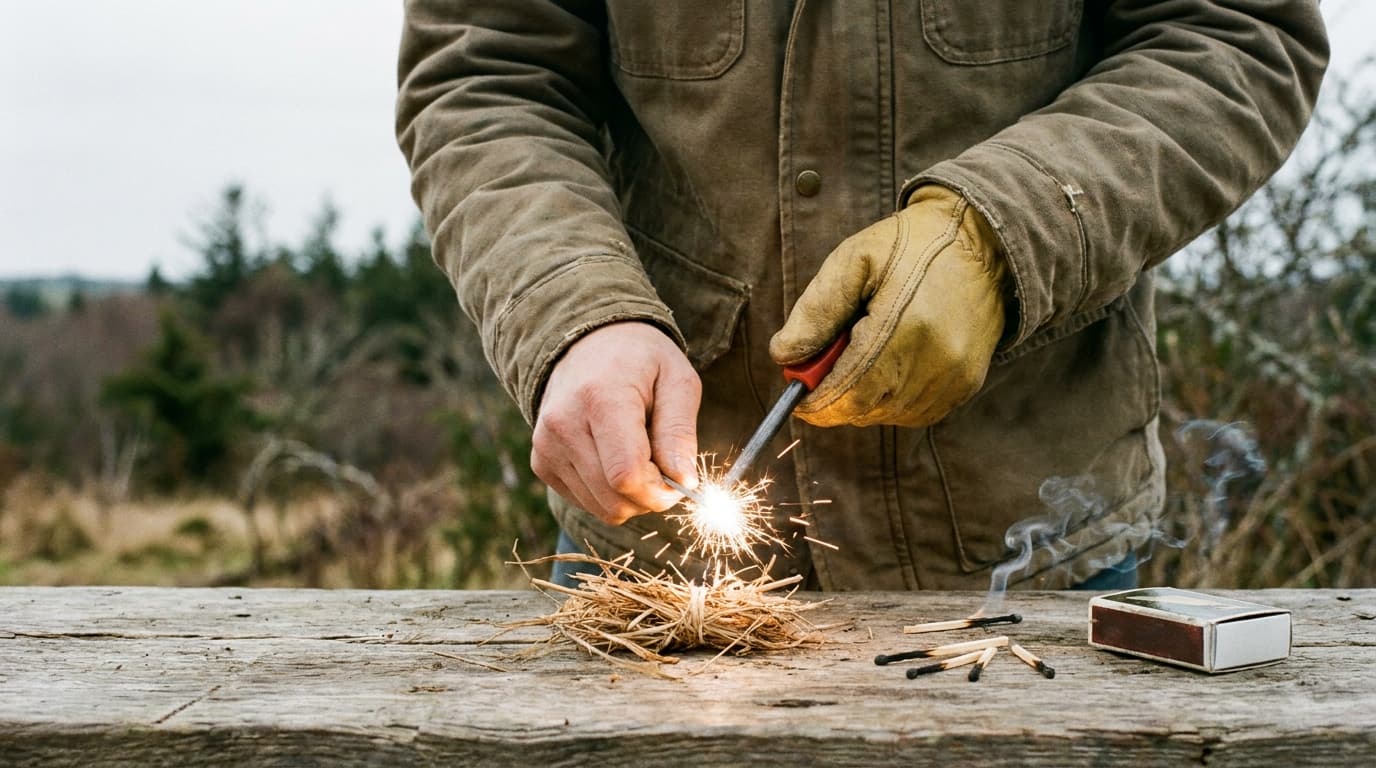
Getting a good spark is not about raw strength, it is about the scraper. Most people make the mistake of hacking at the rod like they are trying to chop wood. The secret is actually in the angle and the pressure. You want to hold your scraper at a steep angle and use a firm, slow stroke. This shaves off a bit of the rod and ignites it simultaneously. If you find yourself getting tired, you are likely working too hard and not smart enough. Think of it as a controlled shave rather than a strike. This approach saves your energy and ensures you get the most out of the tool.
There is a specific technique that separates the pros from the amateurs. Many people try to push the scraper down toward the wood, but that often leads to knocking over your tinder bundle right when it starts to smoke. Instead, try the pull-back method. Hold your scraper hand completely still against your tinder and pull the ferro rod toward your body. This keeps the sparks focused in one spot and prevents you from crushing your fire base. It is a small change that makes a massive difference in your success rate, especially when your hands are cold and shaky.
You also need to keep your gear in good shape. Ferro rods can oxidize, which creates a dull coating that stops them from sparking well. A quick scrape or wipe keeps the metal fresh. This matters because, as the experts at Premier Body Armor point out, if you do not have multiple reliable ways to make fire, you might not be able to stay comfortable or even alive. Redundancy is key. You should never rely on just one fire starter, but if you have to pick a backup that won't fail in a storm, the ferro rod is the clear winner. It is about being prepared for when the easy options disappear.
Key insights:
Redundancy is essential because matches and lighters are prone to failure in wet conditions.
The pull-back method offers better stability and protects your tinder bundle from being crushed during ignition.
Regular maintenance prevents oxidation and ensures the rod remains effective for emergency use.
Pro Techniques for Maximum Sparks
Ever tried to start a fire with a ferro rod only to knock over your tinder nest? It’s frustrating, to say the least. Instead of pushing the scraper down toward the pile, try the 'Pull Back' method. You hold the scraper steady and pull the rod toward your body. This keeps your hands away from the fuel and ensures those hot sparks land exactly where they belong without scattering your hard work.
Stability is key when you are balancing the fire triangle of fuel, oxygen, and heat. If you are shaky, you lose that heat source just as the ignition process starts to take hold. Also, keep an eye on your gear. Ferro rods can oxidize and develop a crusty coating if they are left in damp places. A quick wipe-down or a bit of oil keeps the metal fresh and ready for action whenever you need it.
Some products claim a fire in five seconds, but relying on just one tool is a survival mistake. Experts emphasize that having multiple reliable ways to make fire is essential for staying alive in the woods. Getting these techniques down ensures that even if your matches get wet, you still have the skills to dry your clothes and stay safe.
Key insights:
The 'Pull Back' method offers much better control and prevents you from accidentally crushing your tinder bundle.
Keeping your ferro rod dry and clean prevents oxidation that can make it harder to throw sparks.
Skill redundancy is your best safety net because even the best tools can fail in harsh conditions.
Friction Fire: The Hard Way That Actually Works
Ever tried rubbing two sticks together only to end up with sore shoulders and zero smoke? You are not alone. Most people think friction fire is about raw muscle, but it is actually a lesson in physics. To get a fire going, you have to satisfy the fire triangle: fuel, oxygen, and heat. Without all three working together, you are just making a mess. Expert guides from July 2024 remind us that we often take fire for granted because we can carry it in our pockets, but when those tools fail, the bow drill becomes your best friend. It is a machine you build from the woods, and understanding how it works is more important than how hard you can pull the bow.
Choosing your wood is the first real test of your survival skills. You want something that balances friction with heat retention. Generally, softwoods are your best bet for the spindle and hearth board because they ignite at lower temperatures than dense hardwoods. Think of it this way: you want the wood to grind into a fine, dark powder that holds heat rather than just polishing itself smooth. Once you see that first wisp of smoke, you will feel a massive psychological boost. Creating fire from scratch builds a level of confidence that a store-bought lighter just cannot provide. It is the difference between being a visitor in the woods and actually belonging there.
The real make or break moment happens at the hearth board notch. If you do not get the V-shaped cut just right, you are wasting your energy. This notch is the most critical part of the setup because it acts as a chimney and a collection point. As you drill, the charred wood dust falls into this notch and piles up. You need that dust to stay concentrated so the heat can build until it reaches the ignition point. If the notch is too wide, the heat escapes. If it is too narrow, the air cannot get to the dust. You are looking for that perfect balance where the dust can breathe while it cooks.
Once you see a glowing ember in your pile of dust, the real work begins. You have to carefully transfer that tiny coal into a tinder bundle and breathe it into a flame. It is a delicate art. You are regulating airflow, giving the fire enough oxygen to grow without blowing it out. This matters because fire is about more than just staying warm. It is how we dry our clothes, cook food, and stay safe from animals. While modern gear can start a fire in five seconds, those tools can break or run out. Learning the hard way ensures that as long as you have wood and a bit of string, you have a way to stay alive.
Key insights:
Friction fire is a mechanical process based on physics, not a test of physical strength.
Softwoods are generally preferred for bow drills because they have a lower ignition temperature.
The V-notch in the hearth board is essential for collecting the hot dust that forms a coal.
Redundancy in fire-making skills is vital for long-term wilderness survival.
Getting the Notch Right
The V notch is easily the most important part of your hearth board. If it is too shallow, the dust will not collect. If it is too wide, the heat escapes before it can do any work. You need that perfect wedge to gather the charred wood dust that eventually becomes your coal. This tiny pile of powder is the heart of the process. It is where the friction you have created finally meets enough concentrated fuel to sustain a glow.
Once you have a smoking ember, the real test begins. This is where you apply the fire triangle of heat, fuel, and oxygen. You have to gently transfer that coal into a tinder bundle and breathe it into a flame. It takes a soft, steady rhythm. Too much air can blow the spark apart, but too little air lets it choke out. Think of it as giving the fire room to grow so it can reach its ignition temperature.
This is why relying on just one lighter is a mistake. Lighters run out of fuel and matches get wet, but the ability to carve a notch stays with you. Whether you need to dry your clothes or cook a meal, knowing these friction basics means you are not stuck if your gear fails. It is all about having a backup plan that does not require a trip to the store. When you can make fire from nothing, you are truly prepared for the woods.
Key insights:
The notch acts as both a chimney and a container for the hot dust.
Oxygen regulation is the difference between a dead coal and a bright flame.
Primitive skills provide essential redundancy when modern tools fail.
What Makes the Best Survival Tinder?
Think about the last time you tried to light a fire in the wind. It is a frustrating experience. That happens because fire depends on a specific balance of three things: fuel, oxygen, and a heat source. This is known as the fire triangle. If you are missing just one of these, you are going to be cold and hungry. Finding the best tinder is all about finding the most willing fuel to start that chemical process. It is about more than just finding something that burns. You need something that wants to catch fire the moment a spark touches it.
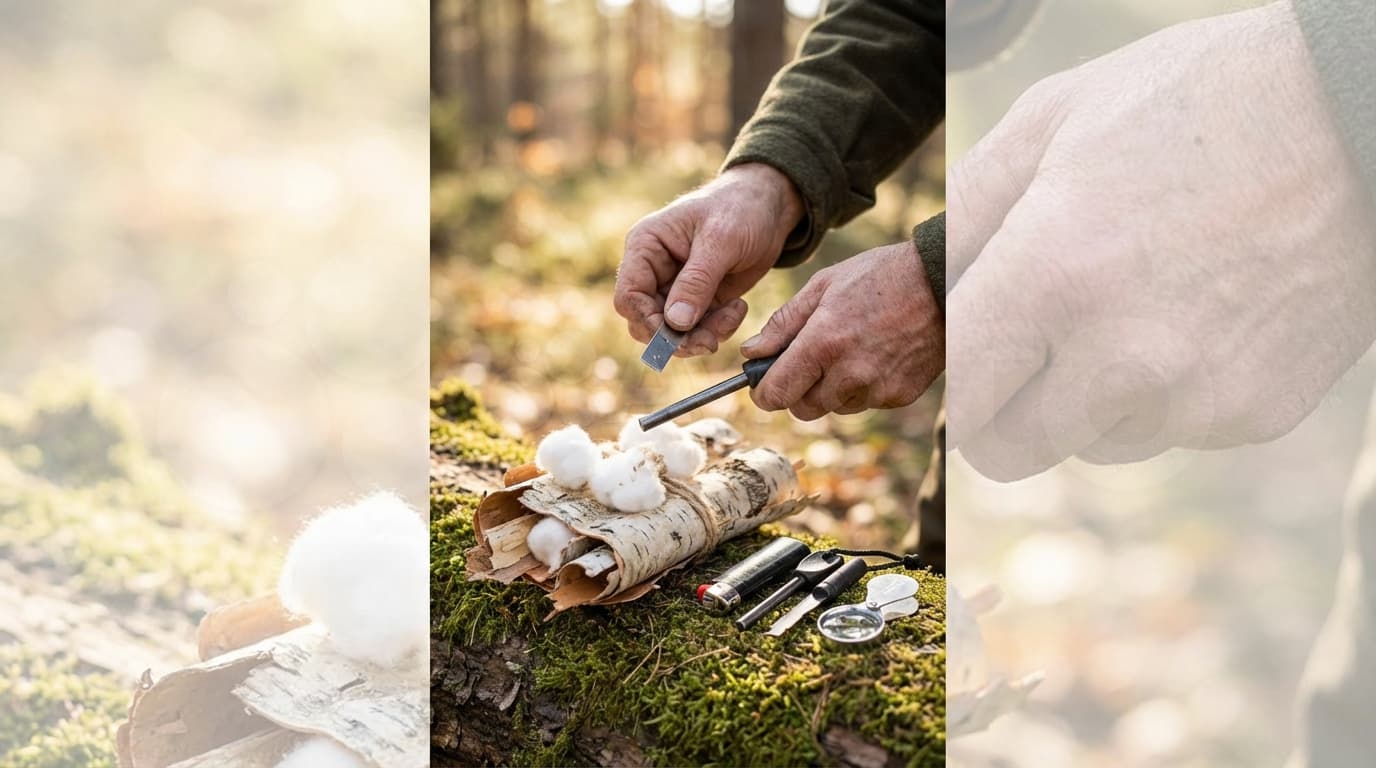
In the wild, nature provides a few clear winners. Fatwood is basically gold because it is wood soaked in natural resin. It catches fast and stays lit for a long time. Birch bark is another favorite because the oils in the bark let it burn even if it is a bit damp. You also have dry grass, which is easy to find but burns through very quickly. The trick to using these is the bird's nest technique. You bunch your finest materials into a loose ball that looks like a small nest. This shape is perfect because it holds the heat from a spark in a central spot while letting enough air flow through to feed the flames. Without that airflow, you will just choke out your fire before it starts.
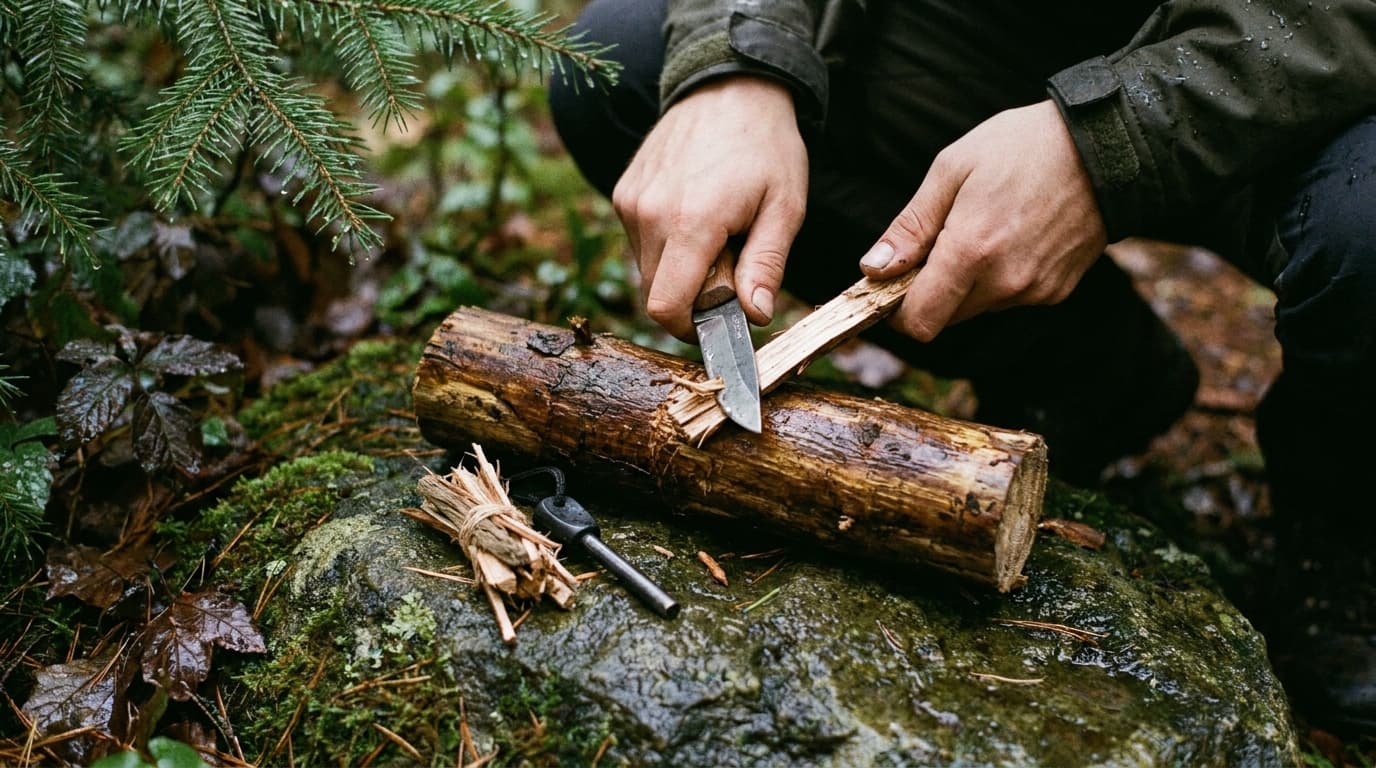
Fire building is not just for show. It is a critical skill for drying your clothes, cooking food, and even keeping aggressive animals away from your camp. But what happens if it just rained for three hours? You can still find dry tinder if you look under leaning dead trees or peel away the outer layer of bark on standing dead wood. The dry stuff is usually hiding right inside. Having these skills is part of a smart backup plan. Recent guides on bushcraft emphasize that you need multiple ways to get a flame going because lighters break and matches get soaked. If you do not have several ways to make fire, you might struggle with the simplest tasks needed to stay safe and comfortable.
Sometimes your best survival tools are actually sitting in your junk drawer or pantry. A classic backup is a cotton ball smeared with petroleum jelly. These are incredibly cheap and burn for several minutes, giving you plenty of time to add larger sticks. Many people try to use dryer lint, but that is a bit of a gamble. Since most clothes today have synthetic fibers, lint often melts into a plastic blob instead of catching a spark. If you want a sure thing, stick with char cloth. It is specifically designed to catch a tiny spark and turn it into a glowing ember that will not blow out in the wind.
You might even find a fire starter in your snack bag. Greasy chips like potato or corn chips make surprisingly good emergency fuel because of their high oil content. They burn slow and steady like a small candle. While some modern products claim they can start a campfire in five seconds, knowing these household tricks gives you a huge advantage. It proves that you do not always need fancy gear to stay safe. You just need to understand how to feed the fire triangle with whatever is within reach. Redundancy is the secret to survival, so keep a few of these items in your pack just in case.
Key insights:
Fatwood and birch bark are the most reliable natural tinders because of their high resin and oil content.
The bird's nest shape is essential for trapping heat while allowing the oxygen flow required by the fire triangle.
Household items like oily snack chips and petroleum-soaked cotton provide reliable alternatives when natural tinder is too wet.
Redundancy is critical because lighters and matches can fail, making alternative tinder skills a life-saving necessity.
Household Items That Double as Fire Starters
Imagine your only lighter quits while you are out in the woods. It is a stressful spot because fire is what keeps you warm and helps you cook. This is why having a backup is vital. A great tinder option is likely in your medicine cabinet right now. Cotton balls soaked in petroleum jelly are a classic choice. They provide a steady flame that helps the fire triangle of heat, fuel, and oxygen work together easily.
You might hear that dryer lint is a good starter, but that is usually a gamble. Since many clothes are synthetic, lint often melts instead of catching fire. Char cloth is a much more reliable bet. Some products promise a fire in five seconds, but don't let that speed make you skip the basics. Experts say that without multiple ways to make fire, you might struggle to stay safe and comfortable.
If you are really in a pinch, grab some snack chips. The oil in corn chips makes them amazing emergency fuel. They burn hot and fast, giving you time to get your kindling going. Just watch the airflow so the flame can breathe. These little hacks ensure that even if your gear fails, you can still get a fire going.
Key insights:
Redundancy is essential for wilderness survival.
Household oils can act as effective emergency fuel.
Proper airflow is just as important as the initial spark.
The Rule of Redundancy: Why One Method Isn't Enough
Imagine you are out in the woods and the sun starts to dip below the trees. You reach for that lighter you have carried for years, flick the wheel, and get nothing but a weak spark. Maybe the fuel leaked out or the mechanism just gave up. This is the danger of relying on a single point of failure. Fire is one of those classical elements that is easy to take for granted when you can carry it in your pocket, but that convenience can lead to a dangerous lack of preparation. Without a reliable heat source, you cannot complete the fire triangle of fuel, oxygen, and heat that is necessary for survival.
This is where the rule of redundancy comes in. Survival experts recommend carrying a fire kit with at least three different ignition sources. You might include a ferrocerium rod because it works even when soaked, a reliable lighter, and perhaps a specialized commercial starter. Some of these modern tools can get a blaze going in as little as five seconds without needing a single match. Having a variety of tools means you are prepared for any weather. If it is too windy for a lighter, you can switch to your rod. If you are exhausted, you can use a fast-acting starter to save your energy and stay focused.
Having these backups provides more than just physical warmth. It gives you the peace of mind to stay calm when things go wrong. Fire building is essential for tasks like drying out wet gear, cooking, and even keeping predators at a distance. As the team at Premier Body Armor notes, lacking multiple ways to make fire can leave you unable to finish the simple tasks needed to stay comfortable and alive. By preparing for the worst-case scenario, you ensure that a broken lighter is just a minor inconvenience rather than a life-threatening mistake. Think about how much better you will feel knowing your fire kit is ready for anything nature throws your way.
Key insights:
The fire triangle requires three elements: fuel, oxygen, and a heat source to start ignition.
Relying on a single lighter is risky because mechanical failure or fuel loss can happen anytime.
A proper fire kit should contain at least three different methods to ensure success in wet or windy weather.
Redundancy allows you to perform critical survival tasks like cooking and drying clothes without panic.
Frequently Asked Questions
Yes, you definitely can, but it is a lot harder than it looks in the movies. This is called friction fire, and it works by rubbing two pieces of wood together until you create enough heat to make a glowing coal. It is all about completing the fire triangle, which is the mix of fuel, oxygen, and a heat source.
The truth is that this takes a ton of practice and the right kind of dry wood. While it is a great skill to have, experts usually suggest having a backup plan. If you do not have a few reliable ways to make fire, you might get stuck when you really need to stay warm, cook food, or dry your clothes.
If you are moving away from matches and lighters, the easiest next step is usually a ferrocerium rod. It is not exactly rubbing sticks together, but it is a core survival skill that works even when it is wet or windy. You just scrape the rod to create a shower of very hot sparks that can start a fire fast.
The key to making this work is your tinder. You want something dry and fluffy that catches sparks easily. Also, remember that fire needs to breathe. If you pack your wood too tight, you will block the airflow and the fire will go out. It is all about finding that balance so the heat can actually do its job.
Yes, it sure will! That is one of the biggest reasons people who love the outdoors swear by them. While matches get soggy and lighters can be a bit grumpy in the rain, a ferrocerium rod is basically waterproof. If it gets a little dunking, just wipe it off on your sleeve and you are ready to go.
The sparks it throws are so hot that a little moisture on the rod itself will not stop it from working. It is all about having that reliability when things get messy. Like the folks at Premier Body Armor say, if you do not have multiple ways to make fire, you might not be able to stay comfortable or safe out there. Redundancy is your best friend in the woods.
It feels a bit like a magic trick when the whole forest looks like a giant sponge, but dry wood is still hiding if you know where to peek. Your best bet is looking for dead standing wood. These are trees that died but stayed upright. Since they are not touching the soggy ground, the inside stays much drier than anything you will find on the forest floor.
You can also check under thick evergreen branches which act like a little umbrella for the twigs underneath. Once you find that dry fuel, remember your fire triangle. You need that fuel, some oxygen, and your heat source to get things moving. It is a bit of a puzzle when it is pouring, but finding those dry spots makes all the difference between a cold night and a warm one.
Conclusion
So where does this leave us? Fire is a skill, not just a tool you buy at the store. When you understand the fire triangle and can find the best survival tinder in a downpour, you stop worrying about the what-if scenarios. Learning survival skills like how to start a fire without matches or practicing friction fire basics turns a scary night into a manageable one.
Your next move is easy: go play with some sticks. You do not need to be a pro to practice primitive fire making in your backyard. It is much better to fail near a warm house than to struggle for the first time when it is dark and freezing. Try building a fire kit with ferrocerium rod techniques so you are always ready for a change in the weather.
Knowing how to start a fire without matches gives you a quiet confidence that sticks with you. It is about being ready for anything and knowing you can take care of yourself. Once you see that first glow from a coal you made yourself, you will feel like a total boss. Stay warm and have fun out there.
Every WilderReady guide is researched, written, and fact-checked in-house against trusted references such as the American Red Cross, the National Park Service, and the CDC before it goes live. We publish under this shared byline instead of invented personas, so you always know who stands behind the guidance you are reading.