Staying Warm and Safe: Survival Skills That Actually Work When It's Cold
Have you ever felt that sudden, sharp chill when the sun disappears behind the trees and the wind starts to bite? It is a wake-up call that reminds us how...

Maya Bennett
Preparedness Coach & Survival Systems Editor
Staying Warm and Safe: Survival Skills That Actually Work When It's Cold
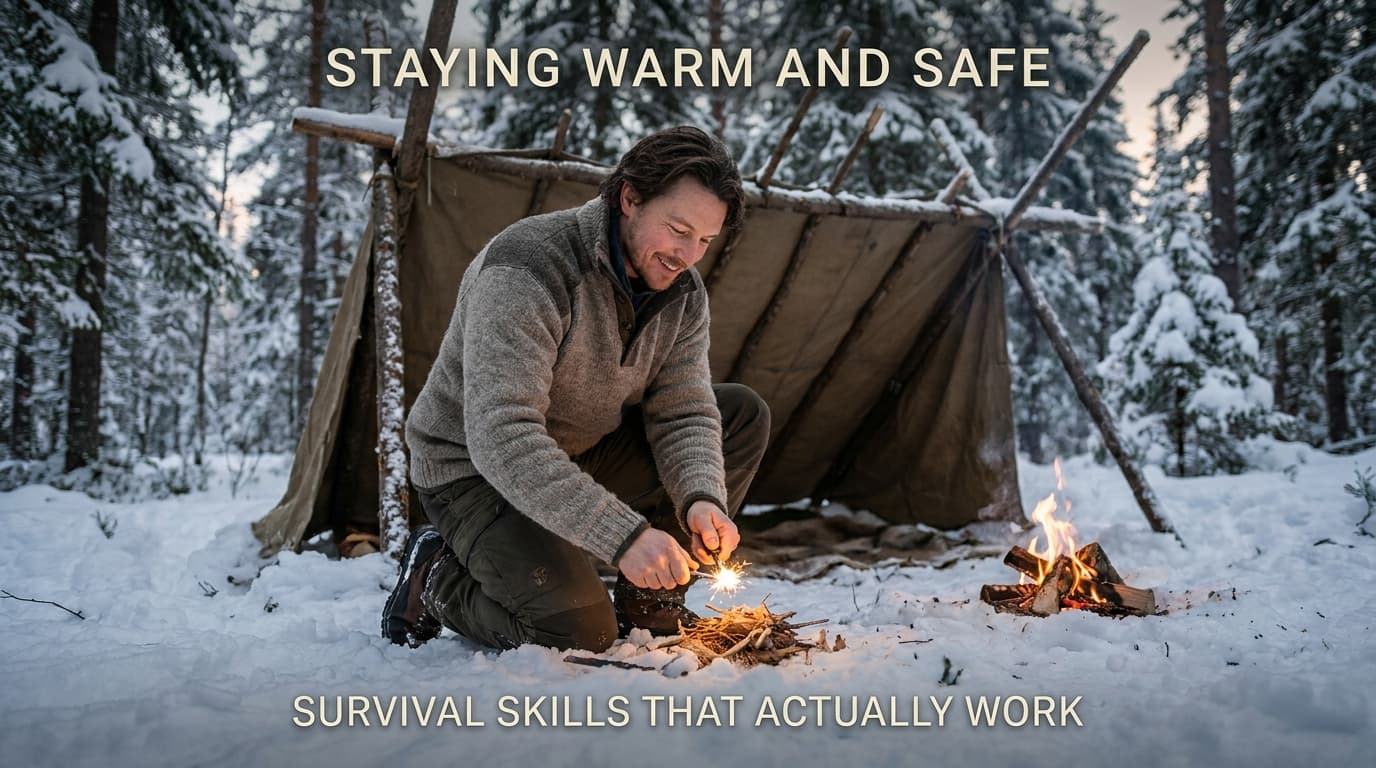
Have you ever felt that sudden, sharp chill when the sun disappears behind the trees and the wind starts to bite? It is a wake-up call that reminds us how quickly the wilderness can turn from beautiful to dangerous. Developing reliable Survival Skills is not just for hardcore explorers; it is about having the confidence to handle a cold night without panicking.
In this guide, we will break down the essentials of bushcraft and self-reliance. You will learn how to use a ferro rod for beginners to get a fire going even in damp weather, and why primitive shelter designs for extreme cold weather often rely more on leaves than logs. We will also look at how to set up a survival tarp lean-to and the essential bushcraft knots for securing a shelter so it stays put when the wind picks up.
We are also covering emergency first aid for deep cuts in the wild so you can stay calm if an accident happens far from help. By the end, you will have a clear roadmap for staying warm and safe on your next trip into the woods. Let's get started.
Welcome to the Wild: Why Bushcraft is Your New Best Friend
Ever wonder why some people look calm in the woods while others panic? It comes down to the difference between just surviving and actually living. Survival is usually a short-term sprint to stay alive during an emergency, but bushcraft is about dwelling sustainably using natural resources. It is the art of making the wilderness your home rather than your enemy.
Practicing these skills is like a workout for your brain and your soul. It lowers stress and helps you build a real bond with the outdoors. We are going to dive into the basics, from how to use a ferro rod for beginners to setting up a survival tarp lean-to. You will also learn how to handle everything from primitive shelter designs for extreme cold weather to the essential bushcraft knots for securing a shelter. This is about more than just gear; it is about self-reliance when it matters most.
Key insights:
- Bushcraft focuses on long-term sustainability and living with nature, while survival is for short-term emergencies.
- Learning primitive skills improves mental well-being and reduces stress levels.
- Simple tools like a ferro rod are beginner-friendly and work even in damp conditions.
Sparking Joy: How to Use a Ferro Rod Without Losing Your Cool
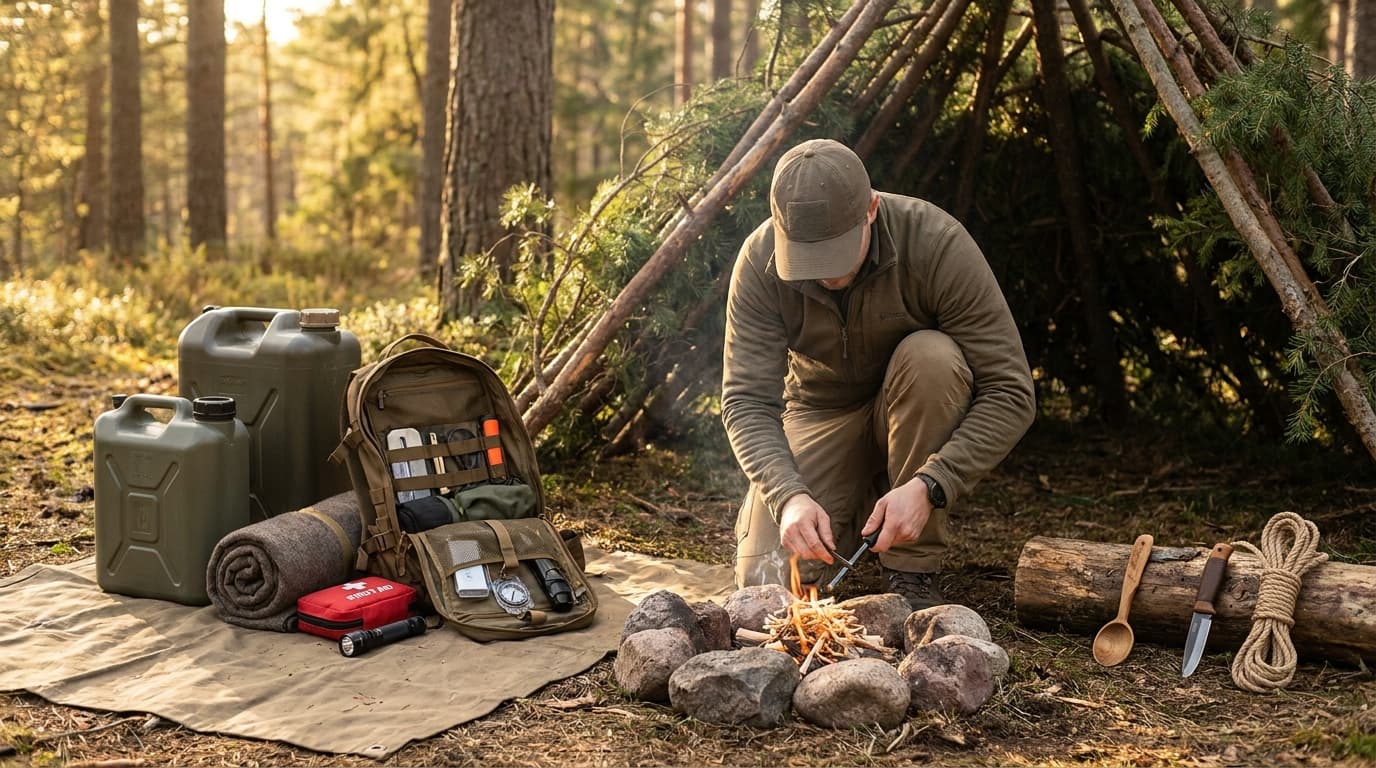
Picture this: the sky is gray, the wood is damp, and your hands are starting to feel stiff from the cold. In times like this, a lighter might fail or your matches might be too wet to strike. This is why a ferro rod is the perfect just-in-case tool to keep in your pocket. It is essentially a metal rod that creates a shower of hot sparks when you scrape it, and it works even in a downpour. While survival focuses on getting through a short-term emergency, bushcraft is about dwelling sustainably in the wild. Having a reliable way to start a fire makes that transition from surviving to living much easier.
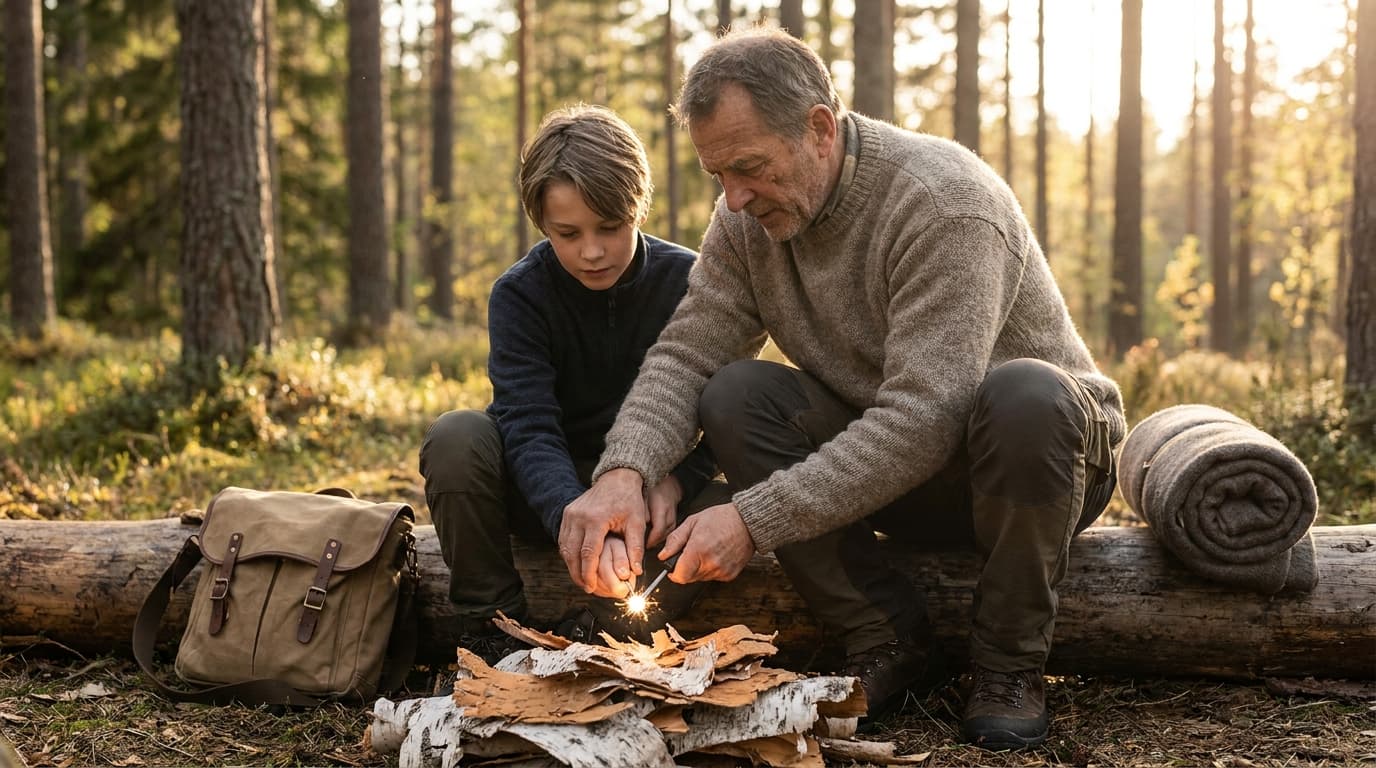
Most beginners struggle because they try to flick the striker toward the wood, which usually just knocks their tinder pile over. Here is the trick for getting big sparks every single time: hold your striker completely still against your tinder and pull the ferro rod backward. This keeps the sparks focused in one spot without disturbing your delicate setup. It is a simple change in technique that makes a massive difference when you are tired and shivering. You do not need the high technical skill of a bow drill to get results here; a ferro rod is much more beginner-friendly and dependable in damp weather.
But even the best sparks need a place to land. You have to build your fire in layers so it does not go out the moment it starts. Think of it like a ladder: start with tinder, move to kindling, and then add your fuel logs. If you skip a step, the fire will likely suffocate. When you need an ember fast, look for woods like cottonwood, cedar, or poplar. These are a fire's best friends because they are soft and catch heat quickly. Using cedar bark or dry cottonwood shavings gives those sparks a place to grow into a real flame.
The reality is that fire-making is a cornerstone of bushcraft because it provides warmth, purifies water, and even helps your mental well-being by reducing stress. If you are looking for a solid kit, sets like the Bushwhacker Knife Set include a fire starter and paracord for about 118.96 dollars. Whether you are using sycamore or aspen for your fireboard or just sticking to a simple ferro rod, the goal is self-reliance. Once you understand how to layer your fuel and pull your rod correctly, a cold night in the woods feels a lot less intimidating.
Key insights:
- Pull the ferro rod backward instead of pushing the striker forward to keep your tinder pile intact.
- Cottonwood and cedar are the most reliable natural materials for catching a spark quickly.
- Always build fires in three distinct layers: tinder for the spark, kindling for the flame, and logs for the heat.
- Bushcraft skills like fire-making serve a dual purpose by providing physical warmth and reducing psychological stress.
The Secret Sauce: Tinder, Kindling, and Fuel
Ever tried to light a big log with a single match? It usually ends in frustration. The trick is building your fire in layers so it doesn't go out. We use three stages: tinder, kindling, and fuel. Think of it like a ladder where each step helps the next one climb.
If you're using a ferro rod, which is great for beginners because it works in the rain, you need dry tinder. Choosing the right wood is also key. Cottonwood and cedar are a fire's best friends because they catch fast. These woods are also perfect for a bow drill fireboard.
Once your tinder is glowing, add kindling like small twigs. Only then move to big logs. This layered method is what keeps you warm when the temperature drops. For gear, a set like the Bushwhacker Knife Set includes a fire starter for 118.96 dollars to help.
Key insights:
- Layering fire materials ensures the heat builds gradually so the flame doesn't suffocate.
- Softwoods like cedar, cottonwood, and aspen are the most reliable choices for catching a spark quickly.
- A ferro rod is a beginner-friendly tool that produces sparks even in damp or cold conditions.
Building a Home Away From Home: Shelters That Keep the Cold Out
When the temperature drops, your shelter isn't just a roof over your head; it is a life-support system. Most people focus on the ceiling, but the ground is what actually steals your heat. Think of it this way: the earth is like a giant heat sink that wants to pull the warmth right out of your body. This is why your bed matters way more than your roof. In bushcraft, which is defined as dwelling sustainably in the wild rather than just surviving an emergency, we focus on building thick layers between us and the frozen dirt. It serves as a practical way to live outdoors, but it also helps your mental state by reducing stress and keeping you focused.
Before you even pick up a branch, you have to find the right spot. Look for natural windbreaks and stay away from low spots where cold air pools like water. Once you have found your site, it is time to gather natural insulation. Moss and dry leaves are your best friends here. You want to pack these materials tight to trap air pockets because that is the same science behind a warm down jacket. If you can get a few inches of loft under you, you are already winning half the battle against the cold. It is about creating a microclimate where you can actually rest, not just shiver through the night.
While you are setting up, remember that fire is your other half. Mastering the skill of fire making is a cornerstone of bushcraft because it provides warmth and purifies water. Whether you are using a ferro rod, which is a beginner-friendly tool that throws sparks even when it is damp, or a bow drill made from cedar or cottonwood, your shelter needs to work with your heat source. A well-placed wall of logs can reflect fire heat right back into your living space. Fire building should follow a layered approach with tinder, kindling, and larger logs to ensure it stays lit through the night.
If you have a tarp and some cordage, the lean-to is your quickest path to safety. You can set up a sturdy ridge line in under five minutes if you know a few essential bushcraft knots for securing a shelter. The trick is to angle the tarp so it blocks the prevailing wind while remaining open enough to catch the heat from your fire. Since the design is so simple, it is the go-to for quick emergency cover. You are basically building a giant reflector. Just make sure the back of the lean-to is facing the wind. It is fast and it is dry. If you have a kit like the Bushwhacker Knife Set handy, which runs about $118.96 and includes a fire starter, you can have your stakes carved and your line tight before the sun even goes down.
When you have zero gear, you turn to primitive shelter designs for extreme cold weather. The debris hut is essentially a heavy-duty sleeping bag made of sticks and leaves. You start by finding a strong ridge pole and propping it up, then building a rib structure with fallen branches along the sides. The real secret is the insulation. You need a lot of it. A good rule of thumb is the thick as your arm rule. If the layer of leaves on top is not as thick as your arm, it is not enough to keep the frost out. This kind of build takes time and calories, but it is incredibly effective for staying warm without a fire. It highlights the core of bushcraft, which is using natural resources to meet simple needs like shelter and food. It is not just about staying alive; it is about using the forest to stay warm enough to actually sleep and recover your strength.
Key insights:
- Insulation under your body is more important than the roof for heat retention in cold climates.
- A debris hut requires a layer of leaves as thick as your arm to provide adequate protection from freezing temperatures.
- Proper site selection involves avoiding low-lying areas where cold air naturally settles.
- Ferro rods are the preferred fire-starting tool for beginners because they function in damp conditions.
The Classic Tarp Lean-To: Fast, Easy, and Dry
You’re in the woods and the sky turns grey. You need cover, and you need it fast. The classic tarp lean-to is the go-to design for quick emergency cover because it’s incredibly simple. While survival focuses on short-term fixes, bushcraft is about dwelling sustainably in the wild. This shelter does both.
Start by setting up a ridge line in under five minutes. You can use a horizontal pole or paracord secured with essential bushcraft knots to keep everything tight. By angling your tarp to block the wind, you create a protected space that stays dry even in a heavy downpour. It is a reliable way to stay safe without much effort.
The real magic happens when you add heat. Since fire is the cornerstone of bushcraft, use a beginner-friendly ferro rod to start a small blaze just outside the opening. The slanted roof acts as a reflector, bouncing that warmth back onto you. It’s the fastest way to stay cozy when the temperature drops.
Key insights:
- Angle the tarp's back toward the wind to create a pocket of calm, dry air.
- A tight ridge line prevents water from pooling and collapsing your shelter.
- The lean-to design doubles as a heat reflector, making your fire much more efficient.
The Debris Hut: Nature's Heavy-Duty Sleeping Bag
Ever tried sleeping outside when it’s freezing? Without a tent, it sounds like a nightmare, but a debris hut changes the game. This primitive shelter works like a natural sleeping bag, trapping body heat in extreme cold. It’s a core bushcraft skill - dwelling sustainably with the land using only what the forest provides.
Building it starts with a sturdy ridgepole and ribs made from fallen branches. The real secret to staying warm is the insulation. You need to pile on leaves and moss until the walls are thick as your arm. If you can see light through the roof, you need more layers.
This works because the debris creates tiny air pockets that hold heat. While tools like a ferro rod help start a fire, a good hut keeps you warm all night. It takes some work, but once you’re inside that cozy space, you’ll see why it’s a survival classic.
Key insights:
- The debris hut relies on dead air space for insulation, much like a modern down jacket.
- Bushcraft focuses on long-term comfort through natural resources, whereas survival is often just a short-term fix.
Don't Get Tied Up in Knots: The Only Loops You Really Need
Ever feel like you need a degree in seamanship just to set up a tarp? Most people think they need to learn dozens of complex loops to stay safe, but that is a recipe for frustration when your fingers are freezing. In reality, sticking to three reliable knots is much better than fumbling with twenty you barely remember. Bushcraft is all about living sustainably in the woods, so you want techniques that work every time without a struggle. Whether you are using the paracord from a kit like the Bushwhacker set or some old rope you found, keeping it simple is the real secret to a shelter that won't budge.
When the wind picks up and the temperature drops, you need a knot that holds fast under pressure but releases in seconds when you are ready to pack up. Think about it this way: a knot that you have to cut off with a knife is a bit of a mistake. You want a quick-release mindset. This approach helps you stay focused on the bigger picture. It lets you spend more time getting your fire layers right, starting with tinder and moving to larger logs, instead of fighting with a tangled mess of string. Practical skills like this are not just for emergencies. They actually improve your mental well-being by reducing stress when things get tough.
If there is one specific loop that deserves a permanent spot in your brain, it is the Taut-Line Hitch. This is the knot that actually lets you adjust the tension of your shelter without untying the whole thing. Imagine you are in a lean-to and the wind starts shifting. Instead of crawling out and restarting everything from scratch, you just slide the hitch to tighten your tarp. It is a total lifesaver when the weather gets unpredictable. It creates a solid grip on the line that stays put when pulled tight, yet slides easily when you want to make a change.
Why does this matter so much for beginners? Because survival is often about managing your own head space. If your tarp is sagging and letting in the cold, being able to fix it in seconds keeps your head in the game. It is a small skill that provides a huge boost to your confidence while you are out there. You do not need to be a pro to get this right. You just need to practice this one hitch until it feels like second nature. It is much more effective than trying to memorize a whole book of rope tricks.
Key insights:
- Focus on three versatile knots rather than memorizing dozens of complex ones to avoid confusion.
- The Taut-Line Hitch allows for easy shelter adjustments during shifting winds without untying lines.
- Prioritize knots that stay secure under tension but release easily to save gear and time.
- Simple, repeatable skills help maintain mental well-being and reduce stress in the wild.
The Taut-Line Hitch: Your Tarp's Best Friend
Have you ever tried to tighten a sagging tarp in the middle of a freezing night? It is a cold, frustrating mess if you have to untie every frozen knot with numb fingers. This is where the Taut-Line Hitch becomes your best friend. It is one of those essential bushcraft knots for securing a shelter because it stays adjustable even under tension. You can slide it to tighten your line and it grips tight once you let go.
When you are setting up a survival tarp lean-to, the wind rarely stays still. Shifting gusts can turn a tight shelter into a flapping kite. Instead of a full teardown, you just slide the knot to take up the slack. This is the heart of bushcraft. While survival is about getting through an emergency, bushcraft is about dwelling sustainably. Simple skills like this keep your spirits high when the weather turns ugly.
Ouch! Handling Deep Cuts When Help is Far Away
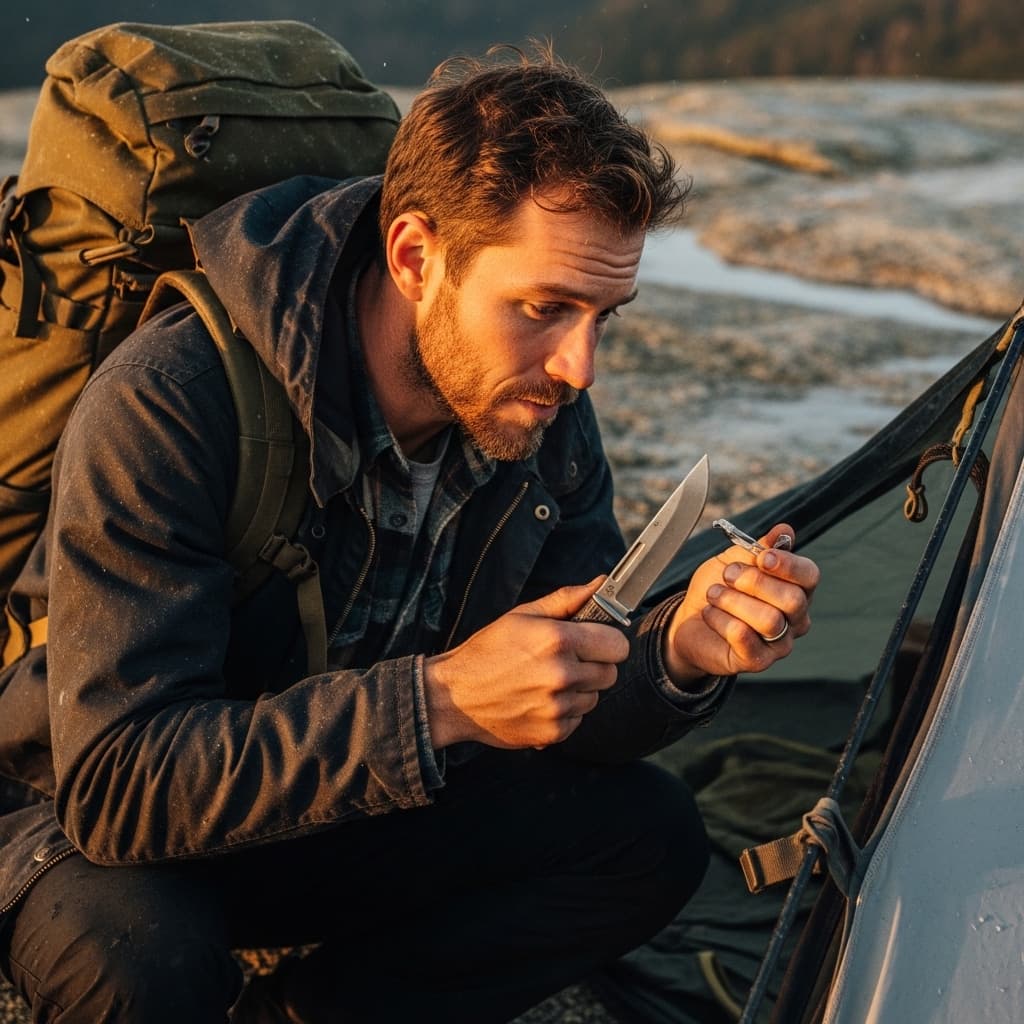
You’re deep in the woods, maybe trying to carve a spindle for a bow drill fireboard, and the knife slips. The sight of bright red blood against the green forest floor is a total gut-punch. Your first instinct might be to panic, but you have exactly three things to do right now: stop the bleeding, keep your head, and find your gear. Reach for the cleanest cloth you have and press down hard. Don't just dab at it - lean into it with your full weight. You need to be your own first responder before the shock sets in.
If you’ve got a solid kit like the Bushwhacker Knife Set, which runs about $118, you might have paracord or a clean bandana tucked away. Use these to create a pressure dressing. The reality is that survival situations don't wait for you to be ready. You have to use what’s in your pack. If you don't have gauze, a clean t-shirt or even a spare sock can help. The goal is to create enough pressure to let the blood clot while you figure out your next move.
Keeping a wound clean when you’re covered in trail dust feels impossible, but it is non-negotiable. Use your drinking water to flush the cut thoroughly. It might hurt, but getting the grit out now prevents a nasty infection later. Think of it this way: every bit of dirt left in that wound is an invitation for trouble. Once it's as clean as you can get it, wrap it tight. If you have antiseptic wipes, use them on the skin around the cut to create a barrier against the environment.
Now you face a tough choice: do you try to hike out or stay put? This is where your assessment skills matter. If you’re feeling dizzy or the bleeding won't stay stopped when you move, you need to stay right where you are. Pushing yourself could lead to a collapse, and that is much harder to fix. Use your ferro rod to get a fire going immediately. It is considered beginner-friendly for a reason - it works even when things are damp and you are shaking.
If you decide to stay, focus on signaling and shelter. While bushcraft is often about dwelling sustainably in the wild, this is a short-term survival emergency. Use a tarp to build a quick lean-to so you stay dry and warm. Keeping your body temperature up helps your blood clot and keeps you thinking clearly. Whether you're using a basic survival kit or improvised tools, the priority is staying visible until help arrives. It's about being smart and realistic about what your body can handle.
Key insights:
- Direct pressure is the most critical first step to stop heavy bleeding in the wild.
- Distinguish between long-term bushcraft skills and immediate survival needs during an injury.
- Use clean drinking water for wound irrigation to prevent infection when medical supplies are limited.
- A ferro rod is an essential tool for signaling and maintaining body heat during a medical emergency.
- Assess physical stability honestly before deciding to hike out with a serious injury.
When to Move and When to Stay Put
You are deep in the woods and the cold is biting. If you take a hard fall, you have to decide fast. Can you actually walk out or will moving make things worse? If your injury is serious, staying put is often the smartest move. It is better to be found in one spot than to get lost or hurt worse while wandering.
Use your survival kit to stabilize yourself right away. While bushcraft is about living in the wild for a long time, survival is about the immediate crisis. Use paracord to tie a splint or a ferro rod to start a fire in damp conditions. A simple fire built with layers of tinder and kindling keeps you warm and makes you easier for rescuers to spot.
Your gear buys you time. Whether you use a basic kit or a set like the Bushwhacker, the goal is to stay dry and visible until help arrives.
Key insights:
- Staying put prevents further injury and makes you a stationary target for rescue teams.
- A ferro rod is a reliable tool for beginners because it sparks even when the weather is damp.
- Survival focuses on short-term emergencies while bushcraft is about sustainable long-term living.
The Mental Game: Why We Love Playing in the Dirt
Ever wonder why sitting in the dirt feels better than a week in an office? It is because bushcraft is about dwelling sustainably, not just surviving an emergency. While survival is a short-term sprint to stay alive, bushcraft is the art of living long-term in the wild. This connection to nature does more than keep you warm; it lowers stress and makes you feel more capable. When you focus on finding the right cedar or cottonwood for a fireboard, your brain gets a break from the constant buzz of phone notifications.
You have likely seen those 30-day survival challenges on social media. They are fun to watch, but they often focus on drama instead of the peace that comes from being prepared. True confidence comes from knowing how to use a ferro rod for beginners because it works even when things are damp. It is about the simple satisfaction of building a fire with tinder and kindling. This is why parents are now teaching these skills to their kids. It turns a scary situation into a manageable task.
So what does this mean for you? It means every time you practice a knot or set up a lean-to, you are building mental resilience. You start to see the woods as a partner rather than an enemy. Whether you are using a basic tarp or a specialized knife set, the real value is the quiet calm that comes from self-reliance. This mental shift is the most important tool in your kit and something that stays with you long after you leave the woods.
Key insights:
- Bushcraft focuses on long-term dwelling, while survival is for short-term emergencies.
- Practicing primitive skills is a proven way to reduce stress and improve mental clarity.
- Tools like ferro rods are beginner-friendly because they work in wet conditions.
- Teaching survival skills to children helps them handle outdoor emergencies with confidence.
Final Thoughts: Your Journey Into the Wild Starts Today
So, where do you go from here? You now have the basics of fire, shelter, and safety under your belt. But remember, there is a big difference between just surviving an emergency and practicing bushcraft. While survival is about getting home fast, bushcraft is about living sustainably in the wild using what nature provides. It is a slower, more intentional way to connect with the outdoors.
Before you head into the deep woods, try these skills at home. Grab a ferro rod. They are great for beginners because they spark even when it is damp. See if you can get a fire going in your backyard using the layered approach of tinder and kindling. You do not need to spend a fortune right away. A solid tool like the Bushwhacker Knife Set is nice, but your best piece of gear is sitting right between your ears. Your brain, paired with a bit of patience, will keep you warmer and safer than any expensive gadget. Go get some dirt on your hands.
Key insights:
- Bushcraft is about long-term sustainable living, not just short-term survival.
- The brain is the most important survival tool you own.
- Practice fire-starting with a ferro rod in a safe environment like a backyard first.
Frequently Asked Questions
Conclusion
So what does all this dirt and cold really mean for your next trip? It means that staying safe in the woods is less about having a bag full of expensive gadgets and more about knowing how to use the basics. Whether you are sparking a fire with a ferro rod or tying a knot for your tarp lean-to, these survival skills give you a sense of control when the weather gets rough. It is about being ready for the what-ifs so you can actually enjoy the quiet moments in the wild.
Your next move is simple: go play outside. You do not need to hike twenty miles away to start learning. Try building a debris hut in your backyard or seeing if you can get a fire going on a damp afternoon. The more you work with these tools now, the more they feel like second nature later. It is much better to learn these lessons while your warm house is still in sight rather than when you are miles from help.
Just remember that the most important tool you carry is your own brain. Stay calm, keep practicing, and trust that you have what it takes to handle the trail. Now grab your gear and go have some fun out there.
Send it to someone who should read it next.
About the author

Maya Bennett
Preparedness Coach & Survival Systems Editor
Builds practical checklists, kits, and preparedness routines that help beginners turn emergency planning into repeatable action.
View all articles