Have you ever wondered how you would handle the wild without your creature comforts? It is easy to feel lost and unsure when the sun goes down and you...
Have you ever wondered how you would handle the wild without your creature comforts? It is easy to feel lost and unsure when the sun goes down and you realize the trail is long gone, but being prepared is always better than just being lucky.
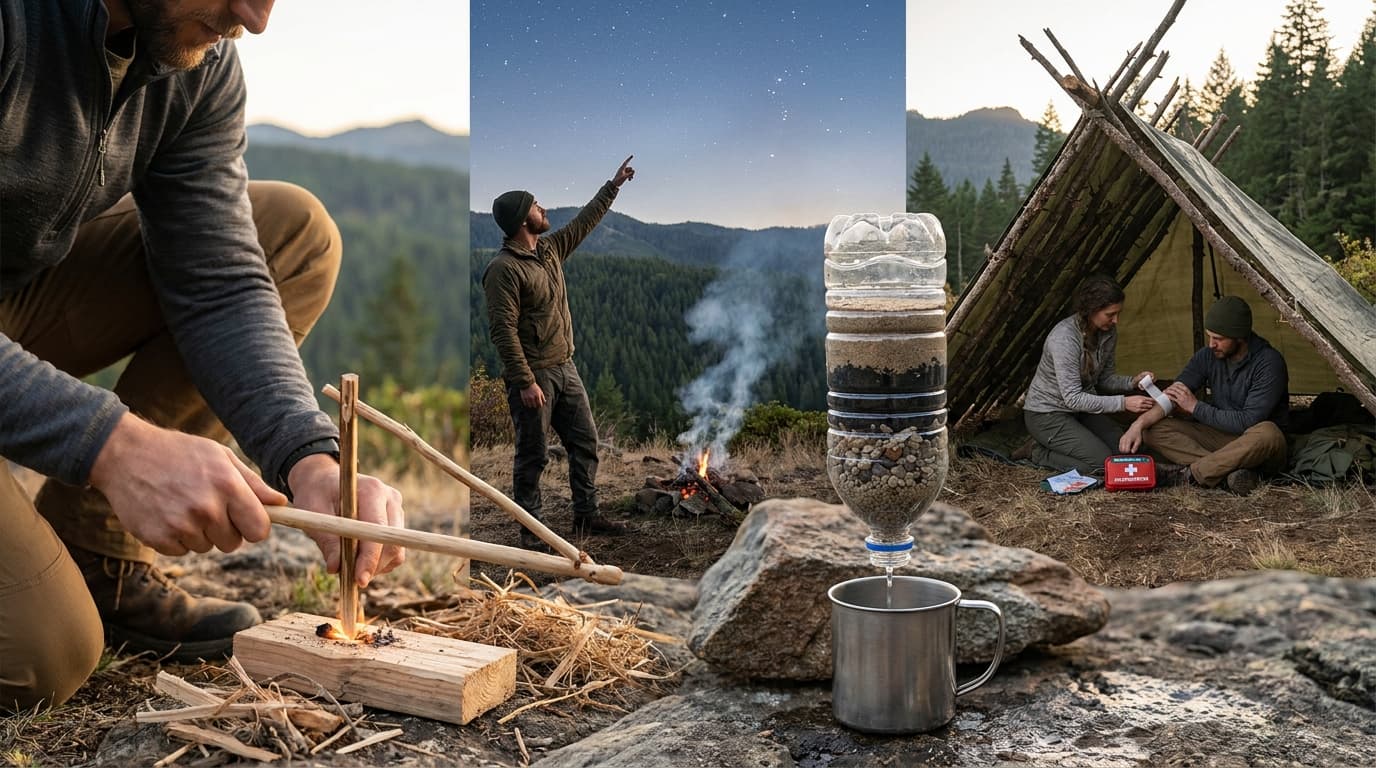
Having a few solid survival skills in your back pocket can turn a scary situation into a manageable one. We are talking about the survival essentials every explorer should know, like primitive fire making techniques and emergency water filtration using things you might already have. These skills matter because nature does not always play nice, and knowing what to do helps you stay calm and focused.
This guide walks you through finding direction at night, signaling for rescue, and basic wilderness first aid for those unexpected ouchies. By the time you finish reading, you will have a roadmap for staying safe when you are out exploring and ready for your next adventure.
Ever wonder if you’re actually ready for a wild weekend or just relying on luck? It is tempting to rely on luck, but in the great outdoors, being prepared beats being lucky every time. It’s about making sure you always land on your feet, even when things get a little hairy. Survival isn't just about gear; it's about the roadmap of skills that turns a scary situation into a manageable one.
Most seasoned explorers live by the '10 C’s of Survival.' These are the essentials that keep you safe when things go sideways. Fire is a big one. It’s not just for cozy vibes; it’s how you boil water and cook food to stay healthy. But matches are useless in a downpour. Knowing you can spark a flame with a simple 9-volt battery and some steel wool is a total game-changer when you're stuck in the elements.
Friction fire is tough and definitely not for the faint of heart. Instead of struggling with a bow drill, look into the fire piston. This clever tool dates back to 100 AD and uses air compression to start a flame. Having these extra tricks up your sleeve ensures you aren't left shivering in the cold when your main gear fails. After all, why settle for one way to stay warm when you can have several?
Key insights:
Fire acts as a critical secondary tool for water purification and food safety.
Environmental conditions like high wind or wetness make alternative fire skills a necessity.
The 10 C's framework provides a reliable roadmap for survival preparedness.
Making Fire Without a Lighter (It’s Harder Than Chasing a Red Dot)
Making fire without a lighter is a lot tougher than it looks on TV. It is definitely harder than chasing a laser pointer around the room. Fire is your best friend out there because it gives you warmth, a way to signal for help, and clean water. But starting one from scratch using friction is a huge challenge that requires a lot of patience. One of the best secrets is using char cloth. This is just cotton fabric that has been charred until it is black in a container without oxygen. It catches a spark almost instantly and can be the difference between a cold night and a warm one. You might wonder why fire matters so much, but it really is the key to staying safe when things go wrong.
If you want to try the bow drill, get ready for a real workout for your hands. You need to build a setup with a spindle, a hearth board, and an arched bow. By wrapping a string around the spindle and sawing the bow back and forth, you create heat through friction. The goal is to get a tiny, glowing ember that you can blow into a flame. You have to be very picky about the materials you find in the undergrowth. If the wood is damp or the wrong type, you will just end up tired. It is a slow process, but seeing that first wisp of smoke is a great feeling. This method represents the most difficult of the non-match techniques, so do not get discouraged if it takes a few tries.
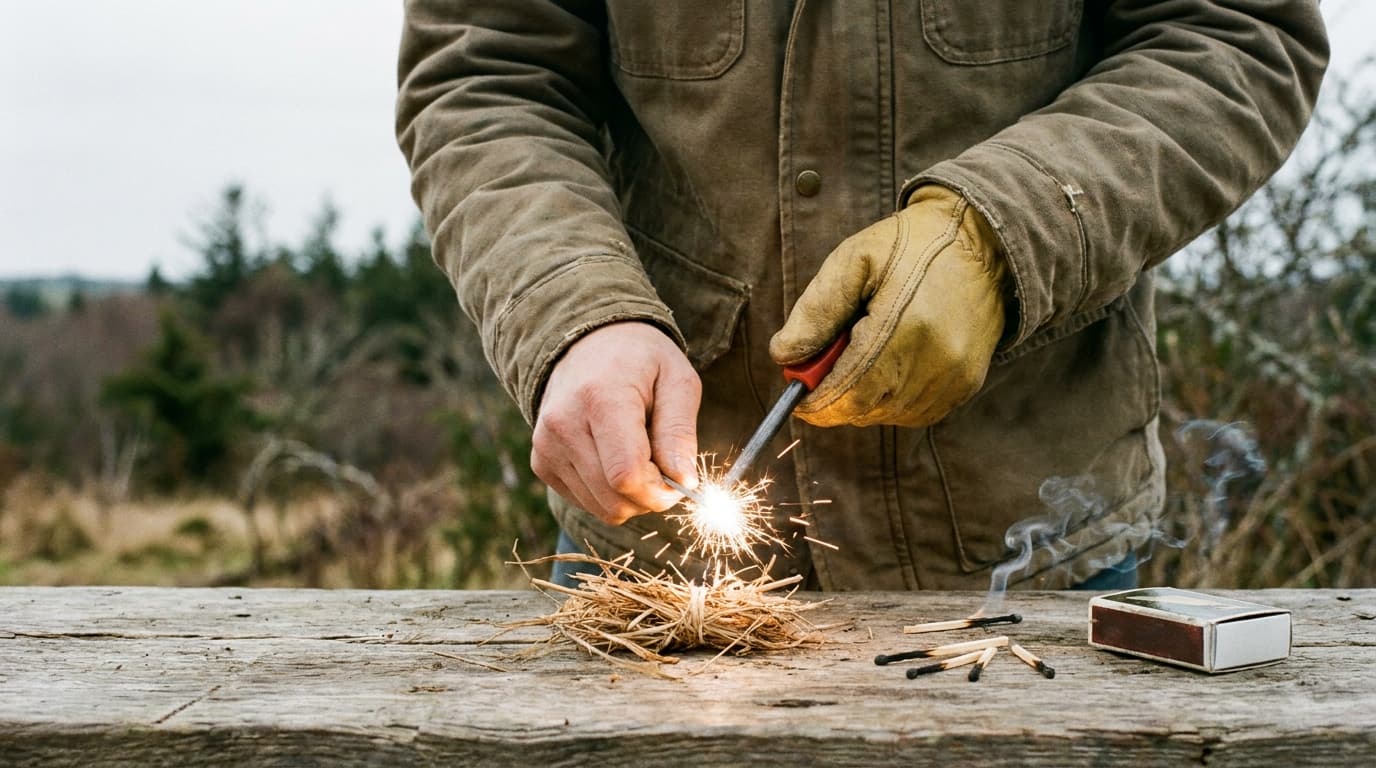
Sometimes you can use a few modern items to get things moving if you have them in your pack. A 9-volt battery and some fine-grade steel wool can start a fire in seconds. You just touch the battery terminals to the wool and it starts to glow. Another clever tool is the fire piston. This tool was invented in Southeast Asia between 100 and 500 AD and uses rapid air compression to create heat. If you do not have a battery or a piston, you can go back to the basics with flint and steel. You strike a piece of flint against steel to send sparks onto your char cloth. It is always smart to have more than one way to get a flame going because you never know what will happen.
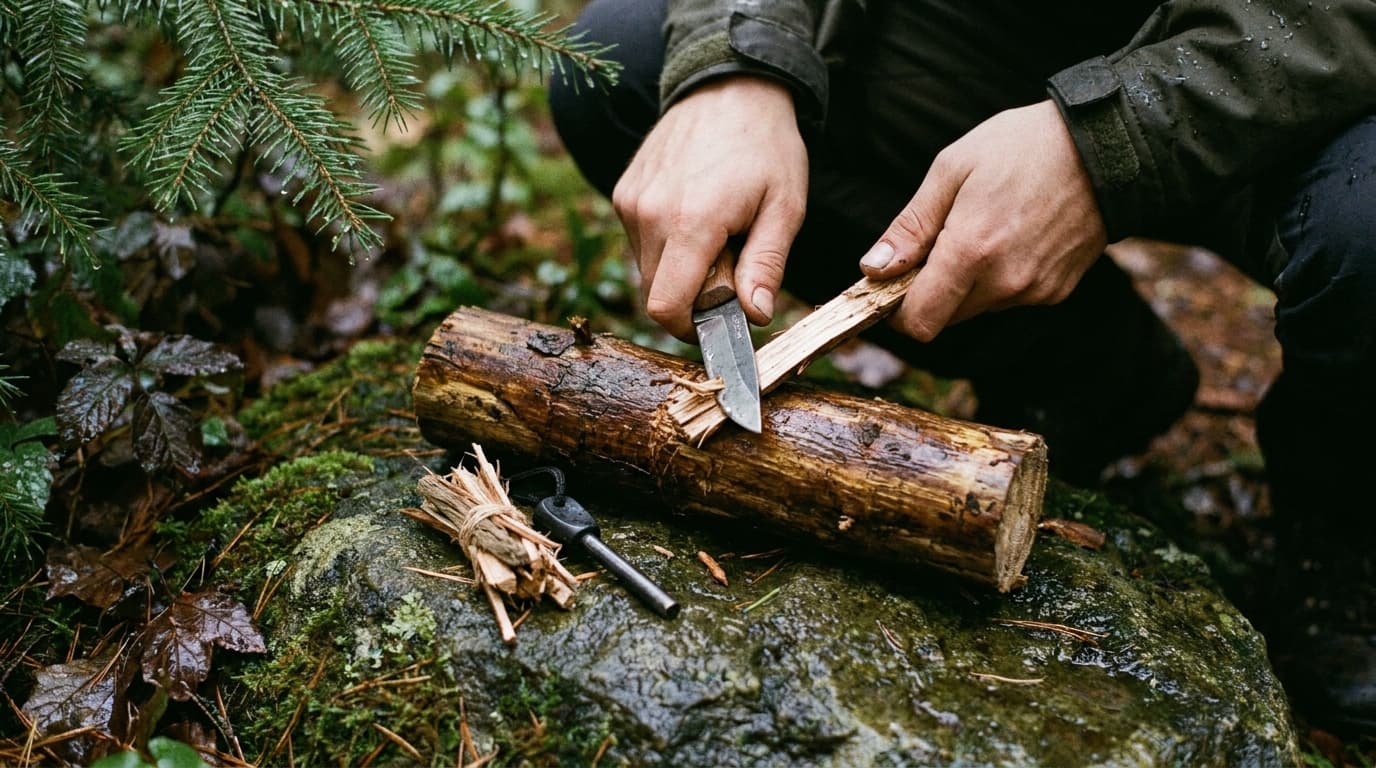
The reality is that fire is a tool that helps you with other survival needs. For example, you can use it to boil water and make it safe to drink. You can also use it to cook any food you manage to find, like caught animals or even bugs. In really windy or wet weather, matches are basically useless anyway. Even wet birch bark can sometimes be used to help start a fire if you know the right tricks. Survival is really about being prepared with both the tools in your pack and the knowledge in your head. This follows the 10 C’s of Survival framework, where having a few different fire-making methods ready to go is the best way to stay safe.
Key insights:
Fire is a critical secondary tool that allows for water purification and food safety.
Friction-based methods like the bow drill are the most difficult and require specific dry materials.
Environmental conditions such as wind or rain often make traditional matches useless, requiring alternative skills.
The fire piston is an ancient Southeast Asian invention that uses air compression to ignite tinder.
Preparation relies on carrying multiple fire-making tools and knowing how to use natural materials.
The Bow Drill: A Real Workout for Your Hands
Let’s be honest: friction fire is the hardest way to get a flame going. It is a total grind. Think of the bow drill as the real-deal test of your primitive fire making techniques without matches or lighter. You aren't just rubbing sticks together; you are building a heat engine from the forest floor. It is tough work, but when you are out there, fire is your best friend for staying warm and signaling for rescue. This matters because fire is a survival essential that changes everything about your situation.
You will need to scavenge for an arched bow, a sturdy spindle, and a flat hearth board from the dry undergrowth. The trick is using the bow to spin that spindle against the board until the friction creates a tiny, glowing ember. It sounds simple, but it really isn't for the faint of heart. Look for the driest wood you can find, because even a little dampness can stall your progress. If you can find cedar or basswood, you are already halfway to a successful coal.
Why bother with all this effort? Because fire is a secret weapon for survival. It lets you boil water to make it safe and cook whatever you have caught. When the wind is howling or your gear gets soaked, knowing how to use natural materials can make all the difference. It is about being ready for anything. The interesting part is that once you master that steady rhythm and see that first puff of smoke, you will realize that survival is about what is in your head, not just your pack.
Key insights:
Friction fire techniques are physically demanding and require practice to master.
Fire serves as a secondary tool for essential tasks like water purification and food safety.
Using natural materials found in the undergrowth is a vital backup when modern tools fail.
The 9-Volt Battery Trick and Other High-Tech Sparking
Imagine you're stuck in a storm and your matches are soaked. If you happen to have a 9-volt battery and some fine-grade steel wool in your pack, you're actually in luck. By simply touching the battery terminals to the wool, you create an instant, glowing heat source that can ignite tinder in seconds. It feels like a magic trick, but it's a reliable way to get a flame when traditional methods fail.
But what if you want something a bit more historical? The fire piston is a fascinating piece of tech from Southeast Asia, dating back as far as 100 AD. It uses rapid air compression in a small cylinder to generate enough heat to light a piece of char cloth. While friction-based fire making is notoriously difficult and can wear you out, the piston relies on physics to do the heavy lifting. It’s a clever alternative for anyone who wants a more consistent spark.
Of course, batteries eventually die and pistons can break. That’s why keeping flint and steel as a backup is a smart move. Striking the two together creates sparks you can direct onto your kindling. Since fire is your main tool for boiling water and staying warm, having these high-tech and mechanical options ensures you aren't left in the cold when the weather turns nasty.
Key insights:
Fire pistons use air compression to ignite char cloth, a method used for nearly two thousand years.
A 9-volt battery and steel wool provide a low-effort alternative to the physical strain of friction-based fire making.
Fire is a secondary tool for safety, allowing you to purify water and cook food in the wild.
Finding Fresh Water When the Bowl Is Empty
What happens when the water stops flowing and the bowl is dry? Your first instinct might be to grab any liquid you see, like a backyard puddle or a nearby pond. Don't do it. Drinking untreated water is a gamble you’ll likely lose, as those sources are often packed with parasites and bacteria that can dehydrate you faster than the thirst itself. Finding water is only half the battle; making it drinkable is how you protect your survival odds. Think of it this way: clear water isn't always clean water.
This is where fire becomes more than just a way to stay warm. It’s actually a critical secondary tool for water safety. If you can’t find matches, you might have to get creative with what you have laying around. For example, you can touch a 9-volt battery to fine-grade steel wool to create an instant spark. Once you have a fire going, use it to bring your water to a rolling boil. It’s the most reliable way to kill off the invisible stuff that makes people sick. Fire handles the microscopic threats that your eyes can't see.
If the water you found is full of gunk and dirt, you’ll want to build a DIY filter using a plastic bottle. Cut the bottom off, turn it upside down, and start layering materials. Put a piece of cloth at the neck, followed by crushed charcoal, then sand, and maybe some small pebbles. As the water drains through, these layers trap the debris and sediment. It’s a classic survival move that turns cloudy, muddy water into something that looks much more appetizing, though it's still not quite ready to drink.
Here is the thing to remember: filtration is not the same as purification. Your layered bottle might remove the mud and the crunchy bits, but it won’t touch the viruses or bacteria. You always need to boil the water after it looks clear. It’s a two-step process that ensures you’re not just drinking clear germs. Even ancient tools like the fire piston, invented in Southeast Asia centuries ago, remind us that humans have always prioritized heat as a way to process resources and stay safe in the wild.
What does this mean for you? It means being ready to scavenge and use your head. Household items like coffee filters, paper towels, or even a clean cotton sock can work in a pinch if you don't have sand or charcoal nearby. Survival preparedness is really just a combination of having the right tools and the knowledge to use natural materials. When the tap goes dry, your ability to think on your feet is what keeps you going.
Key insights:
Filtering removes visible dirt, but only boiling or chemical treatment makes water safe from bacteria.
Fire is a multi-purpose survival essential that facilitates water purification and food safety.
Common household items like batteries and steel wool can be used to start fires when matches are missing.
Layered filtration using charcoal and sand is an effective way to clear sediment from found water sources.
DIY Filtration: The Layered Bottle Method
Ever looked at a muddy puddle and thought, 'I am thirsty enough to try it'? Don't just dive in. If you are stuck, you can build a DIY filter using a plastic bottle. Cut the bottom off, flip it over, and start layering materials. It is like a survival sandwich: put a cloth over the neck, then add crushed charcoal, sand, and pebbles. This setup traps the visible gunk like hair and dirt that you definitely do not want to swallow.
But here is the thing: clear water is not always safe water. While your bottle layers remove the debris, they won't stop the tiny microbes that make you sick. This is where your fire-making skills become life-saving. Fire is a survival essential partly because it lets you boil that filtered water. You need that heat to kill the invisible nasties your sand filter missed. Think of the filtration as the grooming and the boiling as the actual bath.
Why does this matter for you? Because even if you have scavenged a battery or used a fire piston to get a flame going, that heat is best used to finish the purification process. Once the water looks clean, it still needs a rolling boil to be truly safe. It is a simple two-step dance that keeps you hydrated and ready for whatever comes next. After all, your safety matters, so do not risk it on a bad drink.
Key insights:
Filtration removes the dirt you can see, but boiling kills the germs you can't.
Charcoal is a powerhouse for trapping impurities in a DIY setup.
Fire acts as a critical secondary tool for making water safe to drink.
Navigating the Night Without a Compass
Getting lost after the sun goes down can make even the bravest soul feel uneasy. When your phone dies and the trail vanishes, you need a plan to get back to your favorite rug. While fire is a survival essential for warmth and signaling, staying put isn't always the goal. Knowing how to use a 9-volt battery and steel wool to start a fire is a great trick, but sometimes you need to move. Finding your way home in the dark is about reading the world around you instead of a screen.
Your best guide in the night sky is Polaris, the North Star. Think of it as a celestial anchor point that stays put while everything else spins. It is almost perfectly aligned with the North Pole, so it is a reliable anchor for your journey. If you find yourself lost during the day, try the stick and shadow method. Plant a stick in the ground and mark the tip of its shadow. Wait fifteen minutes and mark the new spot. The line between them runs east to west, giving you a clear sense of direction before the stars even come out.
To find Polaris like a pro, you first need to locate the Big Dipper. It looks like a giant ladle in the sky. If you follow the two stars on the outer edge of the ladle bowl, they point directly toward the North Star. The moon can also give you a hand. Depending on its phase and when it rises, it can give you a rough idea of east and west. Just remember to use natural landmarks, like a distinctive ridge or a specific cluster of trees, to keep yourself walking in a straight line. This prevents the common mistake of walking in circles when you lose your bearings.
Survival is really about a mix of tools and knowledge. While having multiple fire-making methods on hand is vital for staying warm, knowing how to read the stars ensures you actually get to where you are going. Whether you are using a fire piston, which is an ancient tool from Southeast Asia, or the stars to find your path, the key is staying calm. Friction-based fire making is the hardest method to learn, so having a backup plan for both heat and direction is just smart. Think of it this way: nature provides the map and the sparks, you just have to know how to use them.
Key insights:
Polaris remains a fixed point in the sky, making it the most reliable tool for night navigation.
Daytime direction can be found by tracking the movement of shadows with a simple stick.
Combining navigation skills with fire-making knowledge increases survival chances in the wild.
Natural landmarks are essential for maintaining a straight path and avoiding walking in circles.
Reading the Stars Like a Pro
Have you ever looked up at a clear night sky and felt completely lost? Those glowing dots are actually a giant map. To figure out how to find direction at night without a compass, start by finding the Big Dipper. Follow the two stars at the edge of its cup straight out to the North Star. This star stays put while the others seem to spin, giving you a fixed point to guide your steps so you do not end up wandering in circles.
The moon offers clues too. If it rises before the sun sets, the bright side faces west. If it rises after midnight, that side points east. It is a simple trick that keeps you moving straight. While walking, pick a distant landmark like a jagged peak or a specific tall tree to stay on track. This helps you avoid the common mistake of walking in circles when your eyes are glued to the horizon.
Staying on course is vital, because once you stop for the night, you will need to focus on other essentials like warmth. Fire serves as a critical secondary tool here, allowing you to boil water for safety. As the experts at Camping Survival suggest, knowing how to start a fire with what you find in nature can be the difference between life and death. Navigating well ensures you have the energy left to handle these high-stakes tasks.
Key insights:
Celestial navigation is a reliable backup when digital tools fail, but it requires practice to spot patterns quickly.
Pairing star-gazing with physical landmarks prevents 'drift,' which is the natural tendency to lean one way while walking.
Getting Noticed: Signaling for a Rescue
Getting lost in the woods can make you feel invisible, but you have ways to stand out. The first thing to keep in mind is the Rule of Three. In the outdoors, three of anything - like three fires or three mirror flashes - is the universal signal for help. It tells search teams that you are there on purpose and need a hand. What does this mean for you? It means consistency is your best tool for being found by a rescue crew.
Fire is a survival essential for warmth, but it is also your loudest visual signal. If you find yourself without matches, starting one is a challenge. Friction-based fire making is often the most difficult method to pull off, so try to have backups. For instance, a 9-volt battery and fine steel wool can create a spark in seconds. You can also use char cloth, which is cotton fabric charred without oxygen, to catch a spark easily. Once the fire is going, adding green leaves creates thick smoke that pilots can spot from miles away.
If the sun is shining, a small mirror is your best bet for long-distance signaling. By catching the sun's rays and aiming them toward a plane or a distant ridge, you can send a flash that cuts through the landscape. It is a simple way to say help without burning through your physical energy. Think of it as a silent shout that reaches much further than your voice ever could. Even a shiny piece of metal or a plastic card can work in a pinch.
While you wait, your surroundings need to speak for you. Shouting for help is a natural instinct, but a whistle is actually a better choice. It saves your voice and the sharp sound travels much further through the trees. Also, try to break up the natural colors of the forest. Since the woods are mostly green and brown, hanging a bright jacket or a colorful tarp makes it much easier for a rescue crew to pick you out from the brush. The goal is to look like something that does not belong in nature.
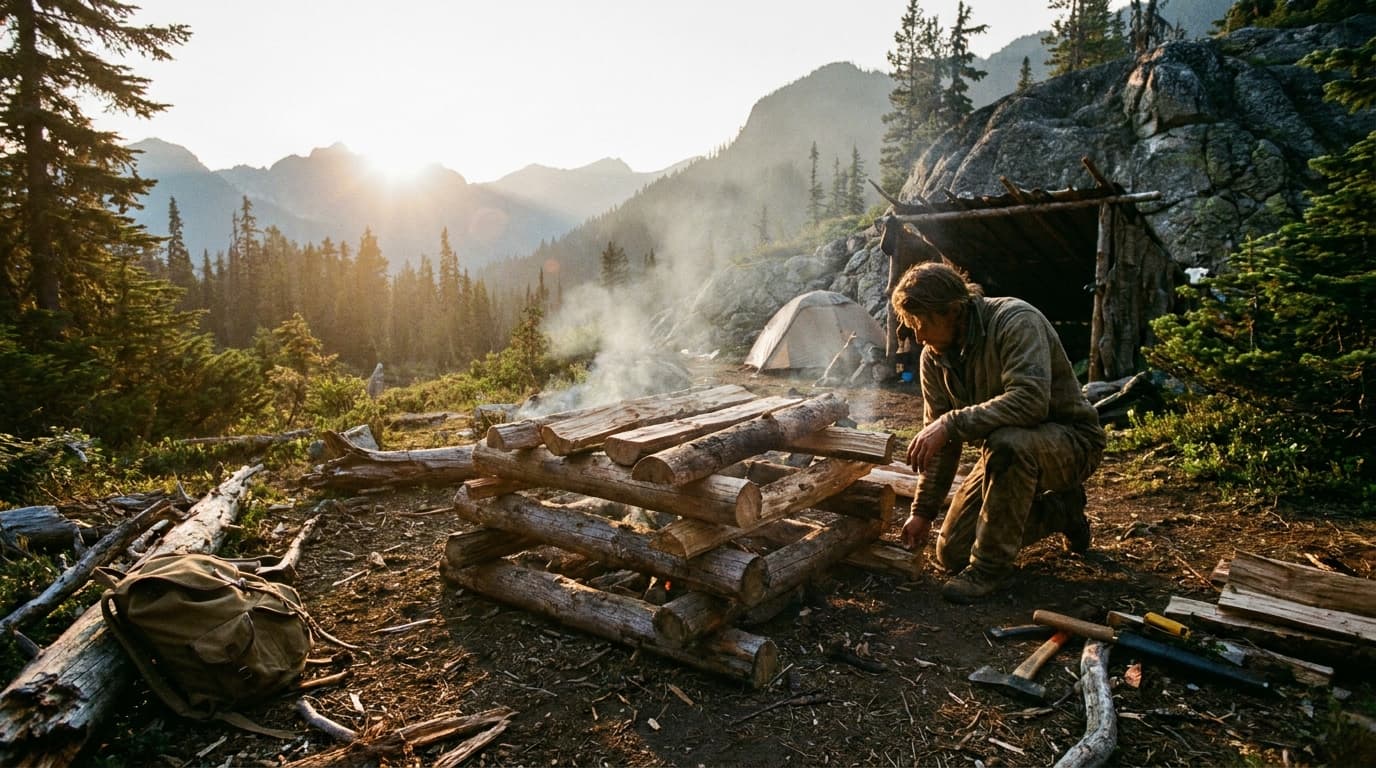
On the ground, size matters. You can build large SOS markers using heavy logs or dark rocks against light sand. These shapes should be big and bold so they look out of place from the air. The reality is that searchers are looking for patterns that do not occur naturally. By combining sound, smoke, and ground signals, you give yourself the best chance of being seen and getting home safely. It is all about making it as easy as possible for someone to find you.
Key insights:
The Rule of Three turns a random occurrence into a clear, recognizable call for help.
Fire serves a dual purpose as both a life-saving heat source and a high-visibility beacon.
Contrast is your best friend: use bright gear and large geometric shapes to break up natural forest patterns.
Sound and Ground Signals
Ever tried shouting for help for more than ten minutes? Your voice gives out fast. That is why a whistle is a lifesaver. It is louder, carries further, and uses way less energy than screaming. In a pinch, saving your breath is just as vital as staying warm.
If you are stuck, make yourself impossible to miss. Use heavy rocks or logs to build a massive SOS in a clearing. You want to break up the natural greens and browns of the woods. Tossing a bright orange shirt or gear over a bush helps too. Nature rarely does neon, so anything that looks out of place will catch a pilot’s eye.
Fire is also a survival essential for signaling. While friction-based methods are the toughest to pull off, keeping a 9-volt battery and steel wool in your kit lets you start a signal fire fast. Whether it is a plume of smoke or a whistle blast, your job is to stand out. After all, you want to use that energy wisely.
Key insights:
Whistles are more effective than shouting because they save energy and carry further in wind.
Contrast is key for ground signals; use materials that break up natural colors and patterns.
Fire serves as a primary signal, but alternative ignition tools like batteries make it more reliable.
Fixing Ouchies: Wilderness First Aid
Imagine you are miles from the nearest trailhead and you take a nasty spill. Suddenly, a simple hike turns into a medical situation. When your first aid kit is thin or missing, you have to get creative with what you have on hand. The biggest mistake people make is worrying about how the scar will look instead of focusing on the bacteria. You need to keep things clean. If you can get a fire going, which is a survival essential for more than just warmth, use it to boil some water for washing out the dirt. A clean wound is the goal because preventing a nasty infection is your top priority when professional help is many hours away.
If you do not have sterile gauze, look at your clothes for a solution. A clean cotton shirt or a bandana can be torn into strips to make a solid bandage. It is not a perfect medical fix, but it works in a pinch. Try to avoid fuzzy fabrics like wool because those fibers can get stuck in the wound as it tries to heal. Think of it like this: your job is to build a wall between the cut and the outside world. You should check the area often to make sure it is not getting red, swollen, or hot. Those are signs that a small scrape is turning into a bigger problem.
Before you worry about the bandage, you have to stop the bleeding. Direct pressure is the most important step and it is usually all you need to get the job done. Grab a cloth, press down hard, and do not peek at the cut. If you keep lifting the cloth to check if it stopped, you will break the clot that is trying to form. Just hold steady and be patient. You might have heard about tourniquets, but those are for real emergencies where a limb is at risk. Use one only if the bleeding is life-threatening and pressure is not working at all. If you do use one, do not take it off. Leave that for the doctors. For most cuts, just keep the area covered and dry until you can get back to civilization.
Key insights:
Fire is a secondary survival tool that helps with medical needs like boiling water for cleaning wounds.
Direct pressure must be constant because checking the wound too early breaks the healing clot.
Improvised bandages should avoid wool or fuzzy materials to prevent fibers from getting stuck in the injury.
Stopping the Bleed with What You Have
When things go sideways in the wild, a nasty cut becomes a serious problem fast. While fire is a survival essential for warmth and signaling, stopping a bleed is your immediate priority. The first move is simple: apply direct pressure. Grab a bandana or even your shirt and press down hard right on the wound. Do not peek to check if it has stopped. You need that steady force so your body can start the clotting process naturally. This simple action changes everything when you are far from help.
Sometimes pressure is not enough for a deep injury. That is when you might consider a tourniquet, but only as a last resort for limb injuries where the bleeding will not quit. If you make one from a belt or a strip of fabric, place it high and tight above the wound. Remember that once a tourniquet is on, it stays on until you reach a doctor. Using one the wrong way can cause more harm, so stick to heavy pressure unless it is a true emergency.
After the bleeding slows, your job is to keep the wound covered and dry. Dirt is the enemy here. Wrap it with the cleanest fabric you have and keep it away from mud or water. It is all about buying time until search and rescue arrives. What is your plan if you get a scrape far from home?
Key insights:
Direct pressure is the most important step and should be maintained without peeking.
Tourniquets are a last resort for limb injuries and must stay in place once applied.
Keeping a wound covered and dry is critical for preventing infection in the wilderness.
Final Thoughts for the Adventurous Explorer
Think about your pack for a second. You can cram it with gadgets, but the one tool that won't ever weigh you down is what you keep between your ears. Knowing how to start a fire with what you find around you can be the difference between a cold night and a safe one. Fire isn't just for warmth. It is also how you make water safe to drink. If you know the 10 C’s of survival, you’re already ahead of the game.
Don't wait for a real emergency to try out a bow drill or a fire piston. These skills take practice. Friction fire is notoriously hard and not for the faint of heart. It’s much better to struggle with a 9-volt battery and steel wool in your backyard than to realize you can't get a spark when it's pouring rain. Ancient tools like the fire piston were used in Southeast Asia centuries ago, and they still work today if you put in the time to learn.
Here’s the real secret. Your brain is your best asset, but only if you keep it cool. When things go wrong, panic is your biggest enemy. Staying calm lets you remember that even if your matches are wet, you can still find ways to survive. Take a breath, trust what you've practiced, and you'll find you are more than ready.
Key insights:
Knowledge is the only survival gear that is completely weightless.
Practice difficult skills like friction fire in a safe environment before you actually need them.
A calm mind is more effective than any physical tool in a crisis.
Frequently Asked Questions
The easiest way is usually using a 9 volt battery and some fine steel wool. While people often think of rubbing sticks together, friction based fire making is actually the hardest method to learn. It takes a lot of practice and the right wood to get it right.
If you have a magnifying glass and the sun is out, that is also a solid choice. But for most people, the battery and steel wool combo is the most reliable because it creates a spark almost instantly without needing much physical strength.
You can, but it is about using the battery to start a fire rather than the battery itself providing heat. If you touch the terminals of a 9 volt battery to a piece of fine grade steel wool, it will start to glow and spark right away.
You then use those sparks to light your kindling or a bit of char cloth. It is a great backup plan because matches can fail if they get wet or if it is too windy. Having this skill helps you get a fire going for warmth and for making your water safe to drink.
Even when water looks clear after you filter it, you can't always be certain it's safe from tiny bugs like bacteria or viruses. Filtering is great for getting rid of the dirt and grit, but it's really only the first half of the job.
The truth is, the only way to be totally sure is to boil that water. Fire is a huge part of water safety because the heat kills off the stuff a filter might miss. If you have a way to make fire, let the water reach a rolling boil for at least a minute. This turns your fire into a life-saving tool for more than just warmth.
The first thing to do is stop moving. It's tempting to keep walking, but you'll likely get more lost or trip and hurt yourself in the dark. Your main goal changes from finding your way to staying warm and being easy to find.
Since you don't have gear, you'll need to focus on fire and shelter. Fire is your best friend here because it provides warmth and acts as a signal for rescuers. You might have to try friction methods or look for dry materials to build a small nest to keep your body heat in. Remember that staying put makes it much easier for search teams to track you down once the sun comes up.
Conclusion
So what does all this mean for your next trip into the wild? Survival skills are not just about being lucky. They are about turning a scary situation into a manageable one. Whether you are using a bow drill for fire or filtering water through a sock, these tools give you a real edge when things go wrong. It is about having the right mindset so you can handle whatever the woods throw at you.
The best part is that knowledge does not weigh down your pack. You can carry every one of these techniques in your head without feeling a bit of extra weight. Consider trying out a few of these methods in your own backyard before you head out on the trail. Practicing a fire piston or finding the North Star while you are safe at home makes it much easier to do when it actually counts.
The bottom line is that staying calm is your most important asset. If you keep your head and use what you have learned, you can turn a potential disaster into just another story to tell. Be prepared, stay sharp, and you will always find your way back to the food bowl.
Every WilderReady guide is researched, written, and fact-checked in-house against trusted references such as the American Red Cross, the National Park Service, and the CDC before it goes live. We publish under this shared byline instead of invented personas, so you always know who stands behind the guidance you are reading.