Staying Alive Outside: The Survival Skills That Actually Matter When Things Go Wrong
Did you know panic actually kills more people in the woods than the cold or hunger? It sounds wild, but your brain is your most important tool when a fun...
Staying Alive Outside: The Survival Skills That Actually Matter When Things Go Wrong
Did you know panic actually kills more people in the woods than the cold or hunger? It sounds wild, but your brain is your most important tool when a fun hike turns into a scary situation. Most people think they need a massive pack of gear, but staying alive is really about keeping your cool and knowing exactly what to do first.
Learning basic survival skills isn't just for TV experts or military pros anymore. Whether you're looking for a wilderness survival kit checklist for beginners or need to know how to find water in the wilderness, these fundamentals are for anyone who steps off the pavement. It's about being ready so you can actually enjoy the outdoors without that nagging worry in the back of your mind.
This guide walks you through the essentials, from how to use a ferro rod for beginners to the essential bushcraft knots for emergency shelters. We'll also cover primitive survival skills like building a debris hut and using the S.T.O.P. method to stay grounded. You'll walk away with a clear plan to handle the wild with confidence.
Think survival skills are only for extreme outdoorsmen? Not anymore. Today, these are just practical life skills for any hiker or family camper. But here is the real truth: your brain is your most important tool, not your backpack. While high-tech gear is nice, it cannot replace a calm head when the weather turns or you lose the trail.
Craig Riddle from Traditional Ways warns that panic kills more people than cold or hunger. That is why the S.T.O.P. method - Stop, Think, Observe, and Plan - is vital. It keeps you grounded so you can follow the Rule of Threes and prioritize what really matters: mindset, shelter, water, and fire. Learning these basics turns a scary situation into one you can actually handle.
Key insights:
Psychological state is more critical than physical gear.
The S.T.O.P. method helps prevent the dangerous effects of panic.
Survival priorities follow the Rule of Threes: shelter and water come long before food.
Why Keeping Your Cool is Better Than Any Gadget
Think about the last time you lost your keys. Your heart races, your hands shake, and suddenly you can't even see them sitting right in front of you. Now, imagine that same feeling in the middle of a forest as the sun starts to dip below the trees. Most people think survival is about having the right knife or a fancy fire starter, but the truth is much simpler. Your brain is your most important tool. Craig Riddle from Traditional Ways often points out that panic actually kills more people than cold, hunger, or thirst. When you let fear take over, you stop making smart choices and start wasting energy you just don't have.
This is where the Rule of Threes comes into play. You can survive three weeks without food, but you might only have three hours if you're stuck in freezing rain without a roof over your head. If you're panicking, you'll likely spend your time looking for berries instead of building a lean-to or starting a fire. Keeping a positive attitude isn't just about being cheerful; it's a practical strategy. It helps you see the wilderness as a place with resources rather than a list of threats. When you stay calm, a scary situation turns into a series of small, manageable tasks that you can actually handle.
If you feel that wave of dread hitting you, you need a mental anchor to pull you back to reality. That’s why survival experts teach the S.T.O.P. method. It stands for Stop, Think, Observe, and Plan. The very first thing you should do is literally stop moving and take a deep breath. This simple act tells your nervous system that you aren't currently being chased by a predator. It clears the mental fog so you can actually look at your surroundings with clear eyes.
Once your heart rate slows down, you can start to think and observe. Are you hurt? Is there a storm coming? What tools do you have in your pack? By breaking the situation down into these four steps, you move away from the paralyzing thought of being lost and toward a concrete plan. You might realize you have enough daylight to build a debris hut or that you should stay put and signal for help. It’s all about taking control of your thoughts before they take control of you. In the end, the person with a calm mind and a trash bag for a poncho will always outlast the person with a thousand dollars of gear and a racing heart.
Key insights:
Mindset is more critical than gear; panic leads to poor decisions and wasted energy.
The Rule of Threes helps you prioritize immediate needs like shelter over long-term needs like food.
The S.T.O.P. method provides a repeatable process to regain mental clarity during a crisis.
A single deep breath is a physiological reset that helps stop the cycle of panic.
Using the S.T.O.P. Method to Reset Your Brain
Have you ever felt that cold spike of panic when you realize you're lost? It's often more dangerous than the wind or hunger. Experts say panic kills more people than thirst ever will. That's why your first move isn't building a fire or a shelter. It's just stopping. Think of it as a quick timeout for your brain so you don't make a mistake.
The S.T.O.P. method stands for Stop, Think, Observe, and Plan. Before you do anything, take a deep breath. Since you only have three minutes without air, make that breath your first priority. This pause resets your system. Once you're calm, look at your surroundings and decide your next move based on what's actually happening. It's about being smart and staying safe.
Key insights:
Your psychological state is more critical than any physical gear in your pack.
Panic is a leading cause of death because it leads to poor decision-making and wasted energy.
The 3-3-3-3 Rule: How to Prioritize Your Problems
When things go sideways in the woods, your brain often wants to do everything at once. You might start looking for berries while you are actually shivering from the rain. This is where people get into trouble because panic often kills faster than the cold or hunger. Think of the Rule of Threes as your mental reset button. It tells you exactly what to worry about first so you do not waste energy on things that do not matter yet.
The rule is a survival cheat sheet: you can go three minutes without air, three hours without shelter in bad weather, three days without water, and three weeks without food. This is why a dry place to stay is more important than a snack. If it is pouring freezing rain, shelter is your life support. But if it is a hot summer day, finding shade and water moves up the list. You have to look at your surroundings and ask what is the biggest threat to your life right now.
Before you even start counting those hours, check yourself for injuries. The Rule of Threes starts after you have handled immediate medical needs like heavy bleeding. Basic self-care means staying calm and moving slowly. Once you are stable, use the S.T.O.P. method: stop moving, think, observe, and plan. It keeps you from making mistakes that gear alone cannot fix. Remember that your mindset is a much better tool than anything you carry in your backpack.
Key insights:
Panic is often more dangerous than environmental factors like cold or thirst.
Shelter is a higher priority than food or water in harsh weather conditions.
Always address immediate physical injuries before following the standard survival priority list.
The S.T.O.P. method helps prevent the poor decision-making caused by survival stress.
Addressing Immediate Medical Needs First
Before you start counting the Rule of Threes, check for injuries. Survival priorities only matter if you are physically able to act on them. While we often talk about three minutes without air or three hours without shelter, those clocks do not matter much if you are bleeding. If you are hurt, your first job is to stabilize yourself.
Think of this as a quick body scan. Basic self-care keeps your machine running so you can find water or build a debris hut later. Since panic kills faster than the cold, fixing a wound helps ground you. It lets you use the S.T.O.P. method - Stop, Think, Observe, and Plan - before the woods get the better of you.
Key insights:
Immediate medical needs always override the standard survival priority list.
Self-care acts as a mental anchor to prevent panic and improve decision-making.
Staying Dry and Warm: Building a Debris Hut That Works
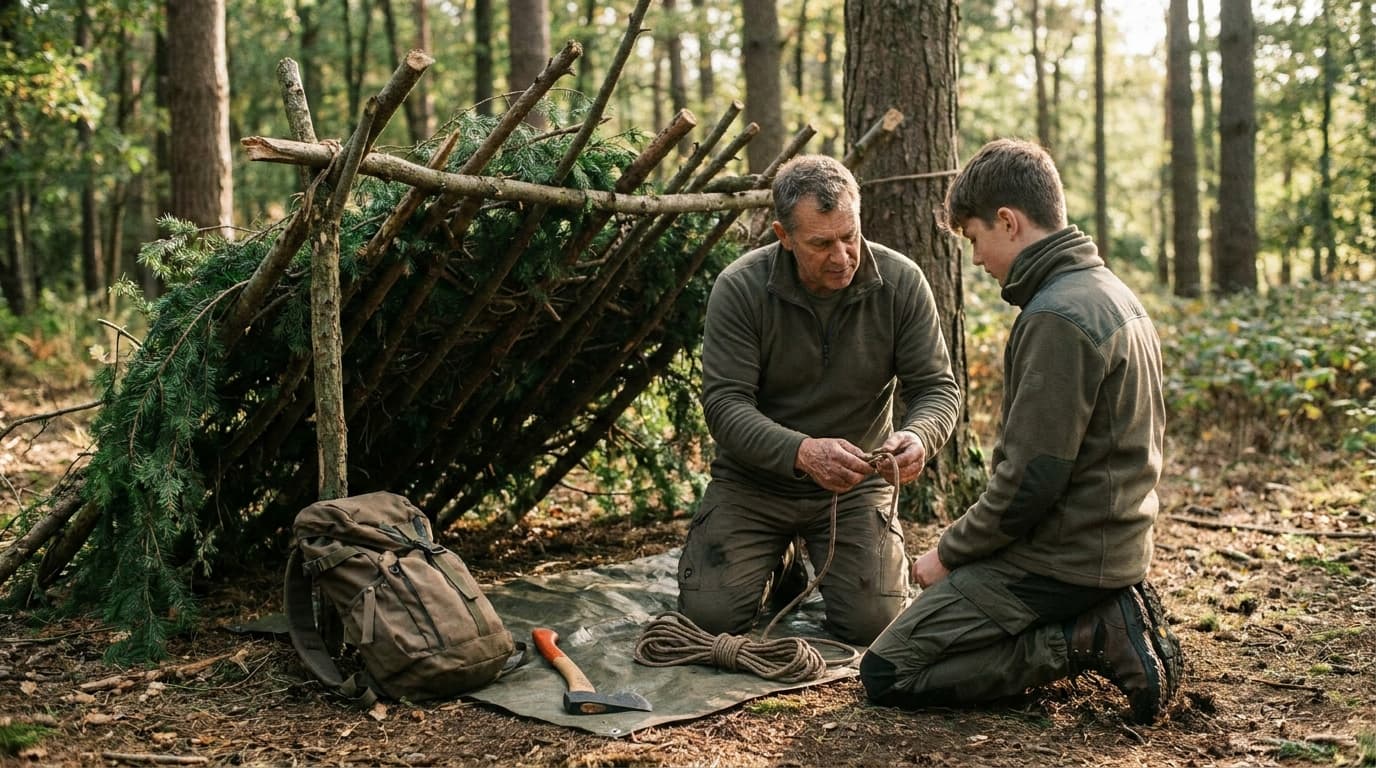
If you find yourself stuck outside as the sun dips below the horizon, your priorities shift instantly. Forget food and water for a moment. The Rule of Threes tells us that in harsh weather, you might only have three hours before your body temperature drops to a dangerous level. This is where the debris hut comes in. Think of it as nature’s most effective sleeping bag. It isn’t just a pile of sticks; it’s a life-saving cocoon designed to trap your body heat and keep you alive when things go south.
Most people focus on building a fancy roof to keep the rain off, but the ground is actually your biggest enemy. It’ll soak the warmth right out of you faster than the air will. That’s why thick insulation underneath you is more important than the branches overhead. Before you even start piling leaves, you need to pick the right spot. Avoid low areas where cold air and water settle, and stay away from lone trees that might drop branches. Craig Riddle from Traditional Ways often says that panic kills more people than the cold, so use the S.T.O.P. method: Stop, Think, Observe, and Plan before you start grabbing branches.
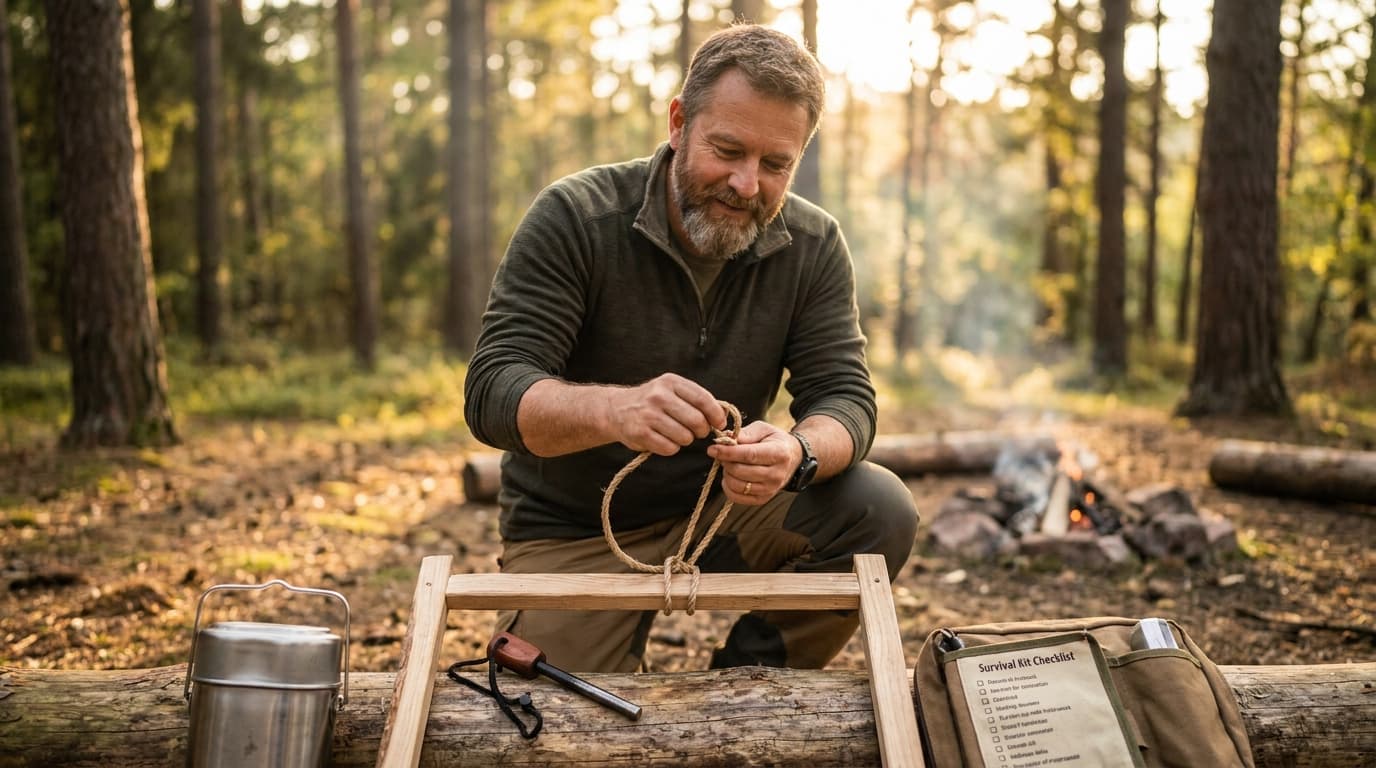
Once you have your site, you’ll need a few reliable ways to hold everything together. You don’t need fifty different ties; just three essential bushcraft knots will do the heavy lifting for your emergency shelter. Start with the Bowline, often called the king of knots. It creates a secure loop that won’t slip, making it perfect for the main points of your frame. If you’re running a ridge line between two trees, the Taut-Line Hitch is your best friend because it lets you adjust the tension without untying everything. Finally, use a Clove Hitch to quickly fasten your structure to a tree trunk.
Building a shelter like this does more than just keep you dry. It changes how you feel about being outside. When you know how to turn raw materials into a warm bed, the woods stop feeling like a scary place and start feeling like a resource. This psychological shift is huge. We’re seeing a big trend where these primitive survival skills are becoming practical life skills for regular families, not just military experts. Having a good knife or saw helps, but as the experts say, your mindset and knowledge make the wilderness feel inviting rather than frightening.
Key insights:
Psychological state is more critical than physical gear because panic leads to poor decisions.
Insulation from the ground is more vital for heat retention than a waterproof roof.
The Bowline and Taut-Line Hitch are the most versatile knots for structural stability.
Survival training transforms the wilderness from a threat into a welcoming environment.
Three Essential Bushcraft Knots for Shelter Building
You have roughly three hours to find shelter before the Rule of Threes catches up with you. Since panic causes more trouble than the cold, having a plan for your tarp is important. Think of these three knots as your primary tools for staying dry and safe when the weather turns.
First, the Taut-Line Hitch is your go-to for an adjustable ridge line. It stays tight but slides easily when you need to tweak the setup. Next, the Bowline creates a secure, non-slipping loop for anchor points. Finally, use the Clove Hitch to bind your frame to trees quickly without any fuss.
Learning these skills changes the woods from a scary place into a welcoming home. It is all about self-reliance. When you can tie a solid knot, you stop worrying about the wind and start enjoying the peace of the outdoors instead.
Key insights:
Shelter is a priority because you only have a three-hour window in harsh weather.
Rope skills build the confidence needed to avoid panic in emergency situations.
Simple knots are often more effective than carrying heavy mechanical gear.
Sparking Up: How to Use a Ferro Rod Without Losing Your Mind
You have probably seen survival shows where someone strikes a metal rod and a fire magically appears. In reality, a ferrocerium rod is the gold standard for emergency fire because it works even when soaking wet or freezing cold. But here is the catch: it takes more than just a quick flick of the wrist. Most people get frustrated because they focus on the spark rather than the setup. Think of it this way: fire starting is mostly about what you do before you even touch your gear. This is vital because the Rule of Threes tells us you might only have three hours to find warmth in harsh weather before things get dangerous.
Preparation is about ninety percent of the battle. You need to gather your tinder first and have it ready to go. If you start throwing sparks at a pile of damp leaves, you are going to have a bad time. The secret to getting those hot, molten globs of metal to actually catch is all in the pressure and the angle. You want a steady, firm scrape that peels off a layer of the rod. It is not a race. A slow, heavy stroke creates much better results than ten fast, weak ones. This kind of focus helps you follow the S.T.O.P. method by forcing you to stop, think, and plan your movements instead of rushing in a panic.
When it comes to the actual striking technique, most beginners make the same mistake. They try to push the scraper forward toward their tinder. This usually ends with them smashing their hand into their carefully built tinder nest and scattering it everywhere. Instead, try holding the scraper steady and pulling the ferro rod back toward your body. This keeps the sparks concentrated in one spot without disturbing your fire lay. It also keeps your hands away from the delicate pile you just spent time building.
Common mistakes like holding the rod too far away or not applying enough downward pressure lead to sore thumbs and zero fire. Remember that panic is often more dangerous than the cold itself. If you can stay calm and focus on your technique, you will get that flame. It is a skill that builds real confidence. Once you can start a fire with a rod, the wilderness feels a lot less scary and a lot more like home. This matters because knowing you can provide your own heat changes your whole perspective on being outdoors.
Key insights:
Pull the rod back instead of pushing the scraper to avoid knocking over your tinder pile.
Slow, heavy pressure creates hotter sparks that last longer than fast, light strikes.
Preparation of fine tinder is more important than the actual act of striking the rod.
A Beginner's Guide to Striking Technique
Ever tried to start a fire with a ferro rod only to end up with a sore thumb and scattered tinder? It happens because beginners usually try to shave the rod by pushing the scraper forward. This often knocks over your fire prep and sends sparks flying the wrong way.
Instead, try holding the scraper still and pulling the rod back toward you. This keeps your hands steady and focuses the heat exactly where it needs to go. It is a small shift, but it builds the confidence needed to keep panic at bay. As survival experts say, panic kills much faster than the cold.
When you stop fighting your tools, the woods feel less like a threat and more like a place you belong. Getting this strike right is your first real step toward staying safe and self-reliant outside.
Key insights:
Pulling the rod back prevents you from accidentally crushing your tinder bundle.
Steady, controlled movements are more effective than using brute force.
Small technical wins help maintain a positive mental attitude in the wild.
Finding Water When Your Canteen Runs Dry
You can survive weeks without a snack, but when it comes to water, the clock ticks much faster. The Rule of Threes reminds us that three days is typically the limit before things get dire. If your canteen hits empty, do not let panic take over. Craig Riddle from Traditional Ways notes that panic kills more people than thirst ever will. Instead, use the S.T.O.P. method. Sit down, take a breath, and look at the land. Are there birds circling a specific spot? Is there a patch of bright green grass in a sea of brown? Water follows gravity, so head for the low points and rocky crevices where it might be hiding.
Even if you find a crystal-clear stream, do not just dive in. That pristine mountain water can be packed with invisible nasties that will leave you sick and dehydrated. If you cannot find a flowing source, look to the plants. You can tie a plastic bag over a leafy branch to catch the moisture the tree breathes out, or use a cloth to soak up morning dew from the grass. It takes a bit of patience, but it is a reliable way to stay hydrated when you are in a pinch. The wilderness becomes much less frightening once you know how to read these small signs.
Once you have found a source, you have to make it safe to drink. Boiling is the most reliable way to kill everything, but if you are traveling light, filtration straws or chemical tablets are great backups. But what if you do not have a metal pot? You can actually boil water in a sturdy plastic bottle if you keep it full and away from direct flames, or even use a hollowed-out log and drop in red-hot rocks from your fire. It sounds like a big project, but these basic skills turn the scary woods into a place where you can actually thrive. It is all about being prepared for whatever comes your way.
Key insights:
The Rule of Threes highlights water as a top priority after immediate shelter.
Clear water is often a trap; always treat it to avoid parasites.
Plants and dew are slow but steady sources of moisture in dry areas.
Improvised boiling methods like hot rocks can save you if you lose your gear.
Making Water Safe to Drink
You can go weeks without food, but the Rule of Threes warns that you only have three days without water. In a hot summer, finding water in the wilderness survival is your top priority right after finding shade. Finding a stream is great, but drinking straight from it is a gamble. Boiling is the most reliable way to kill bacteria, but it requires a fire and a container. If you have them, filtration straws or tablets are much faster for people on the move.
If you lack a metal pot, do not lose hope. You can use a plastic bottle over low heat or drop hot rocks into a hollowed-out log. Remember the S.T.O.P. method here. Stop and think before you gulp down untreated water. Panic kills faster than thirst because it leads to bad choices. Taking ten minutes to treat your water properly prevents the kind of illness that makes a survival situation much worse.
Key insights:
Water treatment is a core pillar of Level 1 survival training.
Boiling remains the gold standard for safety if you have the tools.
Improvising with hot stones can work when you lack a metal container.
The Beginner's Checklist: What Actually Needs to Be in Your Pack
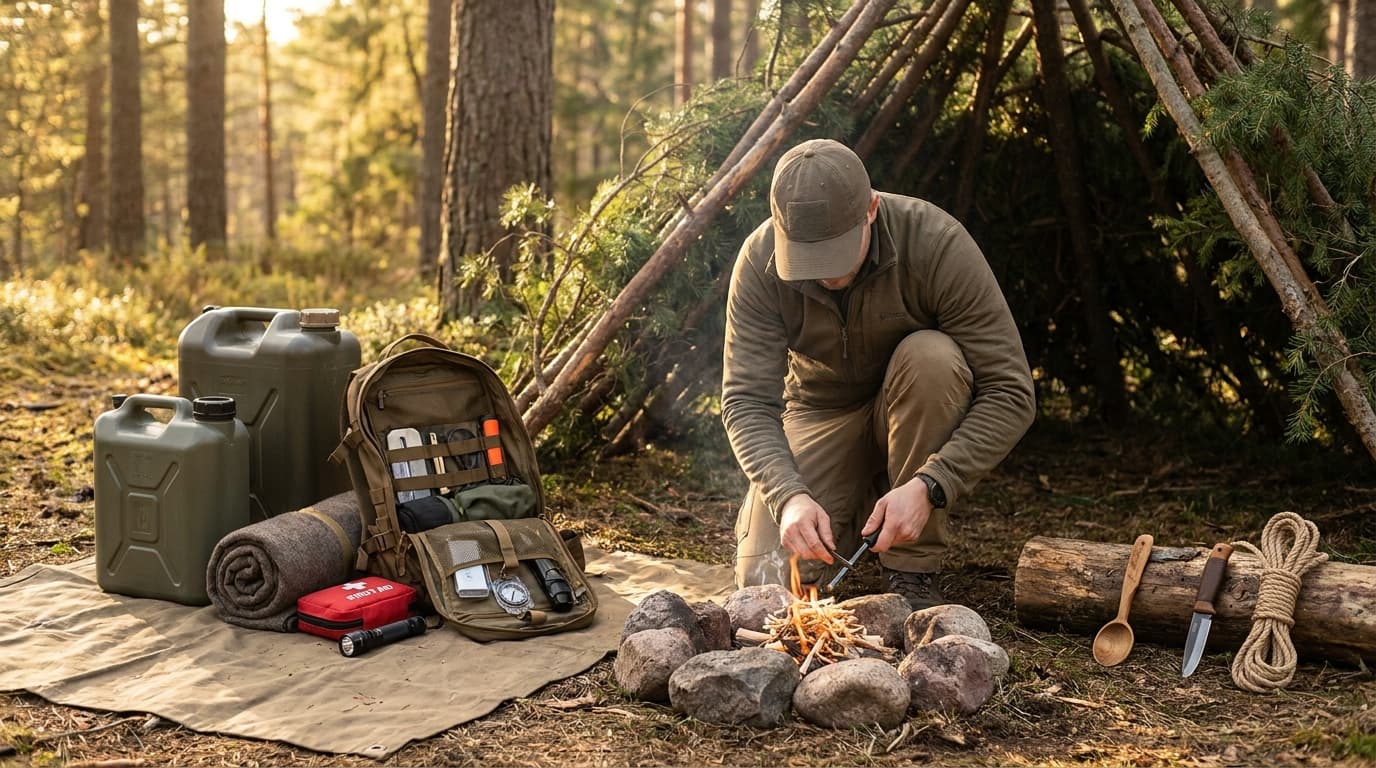
Walk into any outdoor store and you will see 'survival' kits packed with shiny gadgets that look cool but usually fail when you actually need them. Real bushcraft is not about the latest gimmick; it is about having a few tools that work every single time. Think about the Rule of Threes: you can survive three minutes without air, three hours without shelter in harsh weather, and three days without water. This reality should dictate exactly what goes in your bag. We focus on the 'Big Five' essentials because they are the things that keep you warm, dry, and hydrated when the sun goes down.
While a fancy multi-tool is nice for small tasks, a sturdy fixed-blade knife is your real best friend in the bush. It has no moving parts to break and can handle everything from splitting wood for a fire to making emergency repairs. Remember, your gear is just a backup for your brain. Panic often kills more people than the cold or hunger because it leads to poor decisions and wasted energy. If you start to feel lost, use the S.T.O.P. method: Stop, think, observe, and plan. Having the right pack gives you the confidence to stay calm, and staying calm is what keeps you alive.
When you are picking your first tools, keep things simple. You really only need three core items to start: a fixed-blade knife, a folding saw, and a multi-tool for tiny adjustments. A saw is often much safer and more efficient for a beginner than an axe when you need to process firewood for a quick shelter. It is less about looking like a pro and more about what helps you get the job done without getting hurt. Focus on quality over quantity for these three items and they will last for years.
Here is a pro tip that most beginners overlook: buy gear in bright colors. A black knife handle looks sleek and tactical, but if you drop it in the leaves at dusk, it is gone forever. Orange or bright blue handles might not look as 'traditional,' but they are much harder to lose when your hands are cold and you are tired. Tools are only useful if you can actually find them when you need them most. Think of it as a small insurance policy for your most important gear.
Key insights:
The Rule of Threes helps you prioritize shelter and fire over food in an emergency situation.
A fixed-blade knife is more reliable than a folding knife for heavy-duty tasks like splitting wood.
Brightly colored gear handles prevent accidental loss in thick brush or low light conditions.
The S.T.O.P. method is a mental anchor that prevents panic and helps you plan your next move.
Choosing Your First Bushcraft Tools
When building a wilderness survival kit checklist for beginners, don't get distracted by fancy gadgets. Stick to the basics. You really only need a few pieces of essential hardware: a solid fixed blade knife, a folding saw, and a multi-tool. These are your workhorses for processing wood and building shelters. Without them, even simple tasks become exhausting struggles.
Also, choose gear in bright colors like orange. It might not look "tactical," but you will be glad you did if you drop your knife in the leaves at dusk. Since panic is often more dangerous than the cold, losing your only tool can cause unnecessary stress. High-visibility gear keeps you organized and focused on your plan instead of a frantic search.
Key insights:
Prioritize a fixed blade knife and folding saw over complex gadgets.
Brightly colored gear is harder to lose and helps maintain a calm mindset.
Common Survival Questions
Forget the movies where the hero starts eating bugs or chasing moss to find north. You can survive three weeks without food, so snacks aren't the priority. Focus on the Rule of Threes instead. You only have three hours to find shelter in harsh weather and three days to find water. Staying dry matters much more than finding a snack.
If you feel scared, use the S.T.O.P. method: Stop, Think, Observe, and Plan. Panic is often more dangerous than the cold, so taking a moment to breathe keeps you from making risky moves. Your mindset is your most important tool, even more than the gear in your pack.
For signaling, stay put and make yourself visible with mirrors or three smoky fires. Learning basics like fire and shelter turns the woods from a threat into a place you can handle. It is all about building real confidence for when things go wrong.
Key insights:
Psychological state is more critical than physical gear.
The Rule of Threes dictates your immediate survival priorities.
Panic is often a greater threat than the environment.
Confidence is Your Best Resource
Your brain is actually your best piece of gear. Experts like Craig Riddle often point out that panic kills more people than cold or hunger, so staying calm is your first priority. Using the S.T.O.P. method to Stop, Think, Observe, and Plan keeps you from making snap decisions that lead to trouble. This is the mental shift that turns a vulnerable visitor into a truly capable person.
Practicing skills like tying knots or building a debris hut in your own backyard makes the wilderness feel like home. You do not need to be a pro today. Just pick one skill, like fire starting or learning the Rule of Threes, and try it this weekend. Once you handle the basics, the woods become a lot less frightening and a lot more inviting.
Key insights:
Psychological state is more critical than physical gear.
The S.T.O.P. method acts as a mental anchor during stress.
Home practice bridges the gap between vulnerability and capability.
Frequently Asked Questions
The very first thing you should do is stop exactly where you are. It sounds simple, but your brain's natural reaction is often to move faster or panic, which is how people get into real trouble. Just sit down, take a deep breath, and let your heart rate settle. This is what experts call the S.T.O.P. method, which stands for Stop, Think, Observe, and Plan.
Here is the thing: panic actually kills more people in the woods than the cold or hunger does. By staying put, you keep yourself from wandering further away from your last known point and give yourself a chance to look at your surroundings with a clear head. Once you are calm, you can start thinking about your next steps like shelter or signaling for help.
Yes, you definitely can. Even if the water looks crystal clear and is flowing fast over rocks, it can still carry tiny parasites or bacteria that will make you very sick. Getting a stomach bug in the middle of the woods is dangerous because it leads to dehydration, which makes a bad situation much worse.
While the Rule of Threes says you can go about three days without water, you should never just gulp down untreated stream water unless it is a life or death emergency. It is much better to use a filter or boil it first. Learning how to treat water is one of the main things people learn in basic survival training because it keeps a small problem from becoming a big crisis.
It is totally normal to struggle with a ferro rod when you are shivering or stressed. The first thing you should do is use the S.T.O.P. method. Stop moving, take a breath, and plan your next move. Panic makes your fine motor skills disappear, so getting your head right is actually more important than the tool itself.
To make it easier physically, do not try to flick the striker in the air. Instead, pin the end of the ferro rod right into your tinder bundle on the ground. Hold the striker steady and pull the rod back toward you. This uses your larger arm muscles rather than your shaky fingers, which gives you a much better spark every time.
It really can be, but you have to build it right. The Rule of Threes tells us that shelter is a top priority because you can only last about three hours in harsh weather without it. A good debris hut works like a giant pile of insulation that traps your body heat inside a small space.
You need a lot more leaves and branches than you probably think. We are talking about two or three feet of debris on all sides. If it is thick enough, it feels like sleeping inside a warm cocoon. Just remember that the ground sucks away your heat too, so you need a thick layer of soft material to sleep on as well. It is all about staying cozy.
Conclusion
Survival is less about the gadgets in your pack and more about how your brain and hands work together. When you combine a solid mindset with skills like building a debris hut or finding water, the woods stop being scary and start being a place where you belong. It is about knowing that even if things go wrong, you have a plan to get back home.
The best part is that you do not need to be an expert to start feeling more capable. Practicing a few bushcraft knots or learning to use a ferro rod in your backyard builds the kind of confidence that stays with you on every trail. That shift from feeling lucky to feeling prepared is the real goal here.
So, grab some cord and try a bowline today, or double-check your survival kit before your next hike. You do not have to do everything at once to make a big difference in your safety. Just keep learning, stay curious.
Every WilderReady guide is researched, written, and fact-checked in-house against trusted references such as the American Red Cross, the National Park Service, and the CDC before it goes live. We publish under this shared byline instead of invented personas, so you always know who stands behind the guidance you are reading.