Why Most 'Survival' Fire Hacks Fail (And What to Use Instead)
Have you ever spent twenty minutes shivering in the woods while a viral survival hack fizzled out in the dirt? It is frustrating to realize that the trick you saw...
Why Most 'Survival' Fire Hacks Fail (And What to Use Instead)
Have you ever spent twenty minutes shivering in the woods while a viral survival hack fizzled out in the dirt? It is frustrating to realize that the trick you saw online doesn't work when it is cold and wet. If you want to use outdoor hacks and tricks effectively, you have to separate internet myths from tools that actually work. There is a dark, cosmic beauty in turning household trash into something meant to burn, but only if it catches fire when you need it most.
We tested common household items to find the DIY fire starters that really hold up in a storm. From the truth about the alcoholic cork to the surprising power of a greasy potato chip, we are looking at what keeps the flames going. You will learn why some survival fire hacks are a waste of time and how to build a seven minute fire starter using just dryer lint and wax.
This guide covers how to waterproof your gear and how to start a fire with chips using everyday items. We will also explain why a simple tampon belongs in your pack. Let's get into the emergency tinder hacks that actually earn their spot in your survival kit.
The Dark Beauty of Crafting Something Just to Burn It
There is a strange, almost dark beauty in spending an afternoon crafting something you fully intend to set on fire. It feels like a small rebellion against the usual rules of creating. But when you are stuck in a wet, windy forest with no dry wood in sight, these little projects made from household trash become your best friends.
Not every viral hack works when things get ugly. You might see people soaking corks in rubbing alcohol, but those usually fizzle out in about five seconds because the alcohol burns off too fast. Compare that to a simple dryer lint egg. Because it uses wax as a slow-burning binder, it can burn for seven minutes. That is the difference between a warm meal and a cold night.
The secret lies in the balance between high-surface-area fuel and a steady binder. Even clever-sounding ideas like danger toothpaste often fail because the ratios are off. Success is not about how cool the hack looks on camera. It is about having a tool that actually survives the wind and keeps you safe.
Key insights:
Effective fire starters need a slow-burning binder like wax to last longer than a few seconds.
Viral hacks like alcoholic corks often fail because the fuel burns off before the core catches.
Repurposing household waste like egg cartons and lint provides a cheap way to prep for emergencies.
Why Your 'Life Hack' Might Leave You Shivering in the Dark
You have probably seen those flashy videos where common household items are turned into survival tools. But here is the reality: many popular internet recipes for DIY fire starters fail when they are actually put to the test. Take the 'Danger Toothpaste' method. This involves mixing sawdust and Vaseline inside an old tube. It sounds like a great way to upcycle, but it often fails to light because the ratio of fuel to binder is off.
The 'Alcoholic Cork' is another common disappointment. The idea is to soak wine corks in rubbing alcohol, but the physics just do not hold up. Because alcohol is so volatile, it burns off in about five seconds, which is rarely enough time for the cork itself to catch. As Corey Buhay noted, you are better off using something that stays lit. Without a wick or a slow-burning binder, you are just wasting time.
The difference between a viral hack and a real survival tool comes down to burn time. A wax-covered dryer lint egg can burn for seven minutes, giving you plenty of time to catch larger wood. Even a wood shavings bon-bon, weighing just 0.1 oz, stays lit for two and a half minutes. These work because they use a slow-burning binder to keep the flame alive. Reliability matters more than a clever look when you are actually out in the wild, shivering and wishing you had brought something that actually worked.
Key insights:
Viral survival hacks often fail because they lack a proper fuel-to-binder ratio.
Rubbing alcohol burns off too quickly to ignite solid cork, lasting only five seconds.
Successful DIY starters like wax-covered lint eggs provide a reliable seven-minute burn.
The Truth About the 'Alcoholic Cork' Myth
You have probably seen the 'Alcoholic Cork' hack floating around the internet. The idea is simple: soak a wine cork in rubbing alcohol and you have an instant fire starter. It sounds like a clever way to recycle, but in the woods, it is a total flop. Recent tests show these corks usually stay lit for only about five seconds. The alcohol flashes off so fast that the cork itself never even reaches its ignition point. You are left standing in the dark with a damp piece of wood and no way to stay warm.
This happens because high-volatility fuels burn way too quickly without a wick to slow them down. In a survival situation, you need a steady, long-lasting flame, not a five-second flash. Relying on viral tricks is risky because they ignore the basic science of how fire works. If your fuel disappears before your kindling is even warm, your fire kit is basically useless. It is much better to stick with materials that offer a slow, controlled burn that can actually handle a bit of wind or rain.
Key insights:
Alcohol evaporates and burns away before the cork can reach its ignition temperature.
High-volatility fuels without a binding agent or wick lack the burn time needed for damp conditions.
The Simple Science: Why Some Things Burn and Others Just Smolder
Ever wonder why some fire hacks look great on video but leave you shivering in the woods? It usually comes down to the battle between surface area and staying power. Take dryer lint, for example. It is the classic flash in the pan material. Because it is so fluffy, it catches a spark instantly, but it burns out just as fast. Without a binder to slow it down, you are basically just making a tiny, useless explosion. As writer Corey Buhay notes, sometimes you have to get unconventional to find what works, even suggesting that you might need a tampon to get the job done.
The secret to a real torch is pairing that high-surface-area fuel with a slow-burning binder like wax. Consider the Alcoholic Cork hack. It sounds smart to soak a cork in rubbing alcohol, but it is a total dud in the real world. Testing shows the alcohol burns off in about five seconds, leaving the cork barely singed. Contrast that with a Dryer Lint Egg. By adding wax to the lint, you create a fuel source that lasts seven minutes and weighs only an ounce. That is the difference between a failed campfire and a warm night.
But even with the right ingredients, the ratio is everything. There is a failed method often called Danger Toothpaste where you mix sawdust and Vaseline in a tube. It sounds foolproof, but if you pack in too much Vaseline, you smother the fire before it starts. You need that sweet spot where the binder feeds the flame without drowning the fuel. While wax acts as a steady fuel source, your sawdust-to-Vaseline ratio matters more than you think. If you get it wrong, the mixture simply won't light, no matter how much you struggle with your lighter.
Choosing your gear is always a trade-off between weight and reliability. If you are a gram-counter, the Wood Shavings Bon-Bon is a miracle at just 0.1 ounces, giving you a solid two and a half minutes of fire. It is the lightest effective option out there. However, remember that these are not naturally waterproof. In wet or windy weather, you will want the heavier, wax-covered lint egg to ensure success. There is a dark, cosmic beauty in spending your afternoon crafting something just to set it on fire later, but that beauty fades quickly if your fire starter fails when you actually need it.
Key insights:
High surface area materials like lint catch fire fast but need a binder like wax to stay lit.
Popular hacks like the Alcoholic Cork fail because the fuel burns off before the wick catches.
The Dryer Lint Egg offers the best balance of burn time at seven minutes per ounce.
Proper ratios of fuel to binder are critical; too much Vaseline can actually prevent sawdust from igniting.
Finding the Sweet Spot Between Fuel and Binder
Ever tried the 'Danger Toothpaste' trick? It sounds clever to mix sawdust and Vaseline in a tube, but testing shows it often fails to light. The problem usually comes down to a bad ratio. You need a high-surface-area fuel like lint or shavings paired with a slow-burning binder like wax to keep things going.
Think of wax as the steady engine of your fire. While an alcoholic cork flashes out in five seconds, a 'Dryer Lint Egg' uses wax to sustain a flame for seven minutes. Even the 'Wood Shavings Bon-Bon' gets its burn from the wax paper acting as a wick. Without that balance, you are just making a mess.
Key insights:
Successful fire starters require a balance between high-surface-area fuel and a slow-burning binder.
Wax acts as a stabilizer that prevents fuel from flashing off too quickly in wet or windy conditions.
3 DIY Fire Starters That Actually Earn Their Keep
"Spoiler alert: You're going to need a tampon." Corey Buhay from Backpacker Magazine wasn't joking when she pointed out that sometimes the best survival gear comes from the bathroom cabinet. While the internet is full of "life hacks" that fail when things get wet or windy - like the "Alcoholic Cork" that fizzles out in five seconds or the "Danger Toothpaste" that rarely lights at all - a few DIY options actually stand up to the real-world test. These methods bridge the gap between household trash and life-saving tools by balancing high-surface-area fuel with a steady, slow-burning binder.
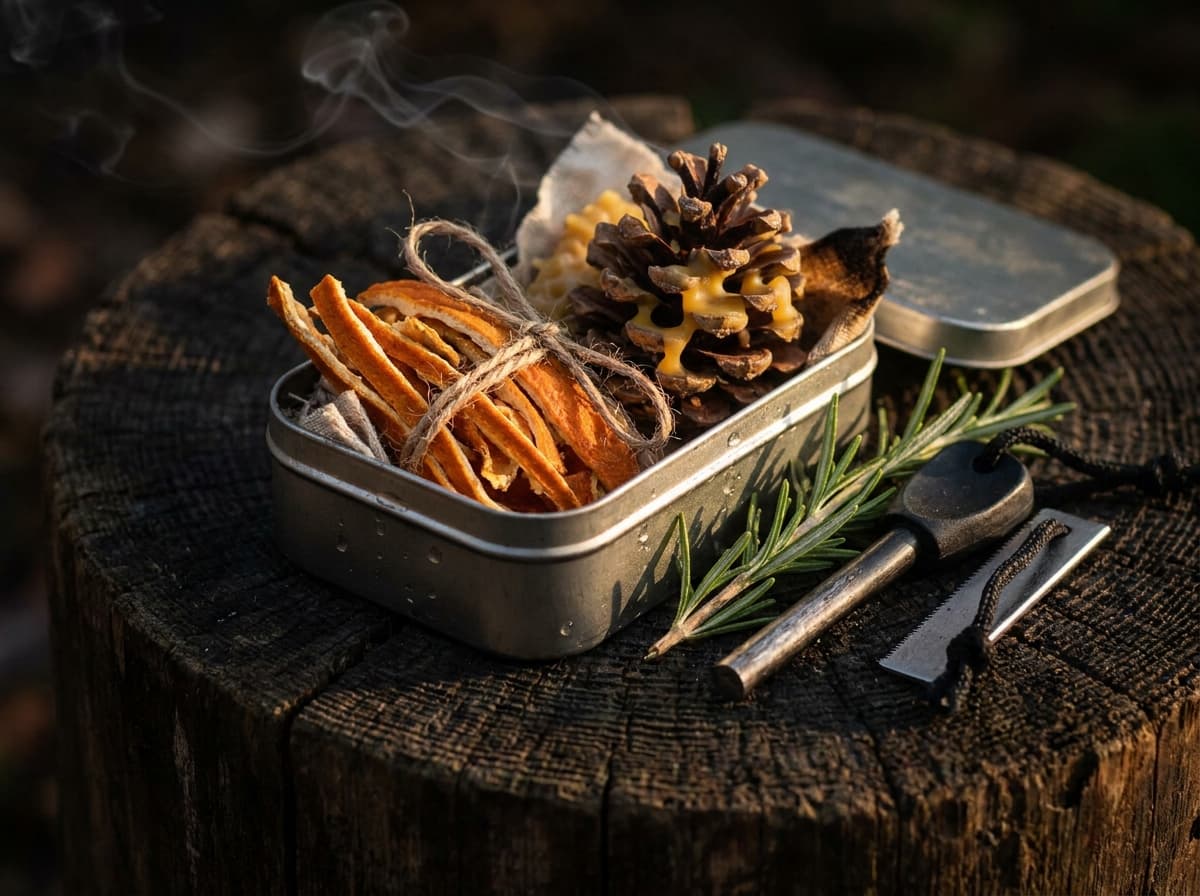
There is a kind of dark, cosmic beauty in spending your Sunday afternoon making something just so you can set it on fire later. To build a "Dryer Lint Egg," you just cut a single cup from a paper egg carton, stuff it with dryer lint, and pour melted beeswax or candle wax over the top. It is simple, but the science is solid. You are combining fluffy fuel with a binder that prevents it from vanishing in a flash. At about one ounce, this little pod gives you a massive seven-minute burn time. That is more than enough time to get stubborn kindling to catch, even if the wood is a bit damp. Just remember that while the wax offers some protection, these aren't fully waterproof, so keep them tucked away in a dry bag.
If you are counting every gram in your pack, the "Wood Shavings Bon-Bon" is your best friend. Weighing in at a tiny 0.1 ounces, it is the lightest fire starter that actually works in the field. You just take a handful of wood shavings, put them on a square of wax paper, and twist the ends like a piece of candy. The genius here is the wax paper; it acts as a built-in wick that stays lit long enough for the shavings to catch. In testing, these little wonders burned for two and a half minutes. They might not have the raw power of the lint egg, but for a fast fire in under three minutes without the bulk, they are hard to beat.
Key insights:
DIY fire starters succeed when they balance high-surface-area fuel (lint) with a slow-burning binder (wax).
Weight matters for backpackers; the 0.1 oz Bon-Bon provides a 2.5-minute burn without the bulk of traditional starters.
Many viral hacks like the Alcoholic Cork fail because the fuel burns off before the main material can catch fire.
Building the Perfect 'Dryer Lint Egg'
Many viral survival hacks fail when you actually need them. Think about the alcoholic cork which often burns out in five seconds before the wood even catches. For a fire starter that actually works in wet or windy woods, the Dryer Lint Egg is your best bet. It weighs only one ounce but stays lit for about seven minutes, giving you plenty of time to get a real blaze going.
To make one, cut a cup from a paper egg carton and stuff it with dryer lint. Pour melted beeswax or old candle wax over the top to bind everything together. This works because the lint provides a lot of surface area to catch a spark, while the wax acts as a slow-burning fuel. It is a simple way to upcycle household waste into a reliable tool that outperforms fancy store-bought gear.
Key insights:
The seven minute burn time is specifically designed to handle damp or difficult conditions.
Effective DIY starters require a balance between quick-lighting lint and a slow-burning wax binder.
The 0.1 oz Wonder: Wood Shavings Bon-Bons
If you like to keep your gear light, this tiny trick is a total win. The Wood Shavings Bon-Bon is a lightweight champ at only 0.1 ounces. It looks like a little piece of candy, but it is actually a survival powerhouse. You just wrap some wood shavings in wax paper and twist the ends shut like a candy wrapper. It is simple, fast to make, and uses stuff you already have in your kitchen.
The wax paper is the secret because it acts as a built-in wick. While some viral hacks like soaking corks in alcohol burn out in five seconds, this little guy gives you a solid two and a half minutes of heat. That is plenty of time to get your fire roaring in under three minutes. It is proof that you do not need fancy gear to get the job done when you are out in the woods.
Key insights:
Wax paper serves as a built-in wick, providing a more consistent burn than alcohol-based starters.
At just 0.1 ounces, this method is the most weight-efficient option for backpackers.
The 2.5-minute burn time is specifically designed to ignite kindling in under three minutes.
Kitchen Cabinet Survival: From Potato Chips to Crayon Wax
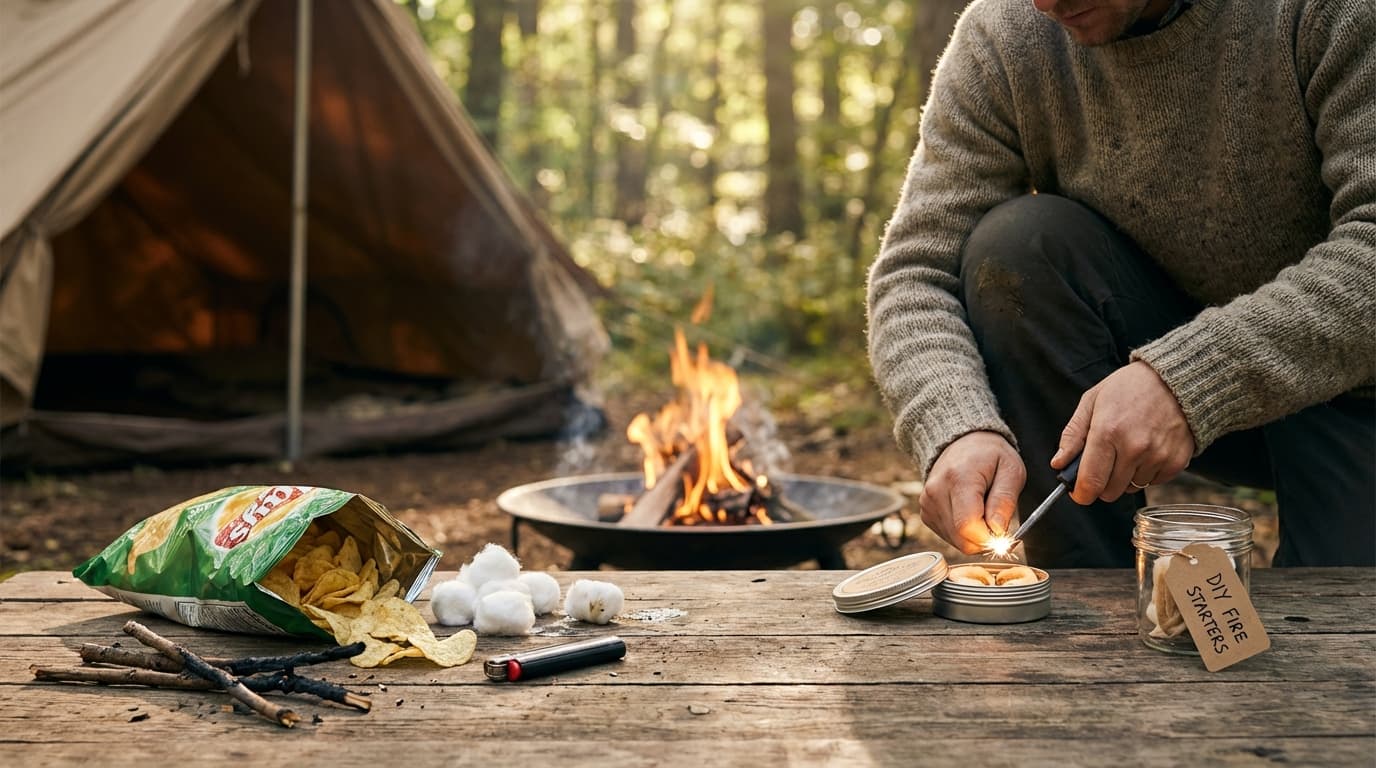
Imagine you are shivering in the woods with nothing but a damp backpack and a bag of snacks. It turns out those greasy potato chips are more than just comfort food. Because they are fried in oil, they act like tiny, edible candles. If you are wondering how to start a fire with chips, just pile a handful together and light one. They catch quickly and burn with a steady, hot flame that can dry out small twigs even when the ground is soaked. It is a simple trick that turns a pantry staple into a literal lifesaver.
But your kitchen cabinets hold more than just snacks; they contain the ingredients for high-performance gear. Take the 'Dryer Lint Egg.' By stuffing lint into a paper egg carton and sealing it with melted crayon wax, you create a starter that burns for a solid seven minutes. Compare that to the viral 'Alcoholic Cork' method, which usually peters out in five seconds because the alcohol evaporates before the cork can even catch. As Corey Buhay from Backpacker Magazine says, there is a kind of dark beauty in doing a craft project just to set it on fire later.
If you are counting every ounce in your pack, the 'Wood Shavings Bon-Bon' is the way to go. You just wrap shavings in wax paper and twist the ends like candy. It weighs almost nothing - just 0.1 ounces - but gives you a reliable two-minute window to build your flame. This beats out messy 'Danger Toothpaste' hacks that often fail because the sawdust-to-Vaseline ratio is too hard to get right. Sometimes the best survival fire hacks are the ones that use simple household items to solve big problems without the extra weight.
The real secret is finding the right balance between a fast-catching fuel and a slow-burning binder. While many internet recipes look cool in a video, they often fail in wet or windy conditions where you need them most. Sticking to proven methods like lint and wax ensures you aren't left in the cold. After all, when the sun goes down and the temperature drops, you want a fire starter that actually works, not one that just looks good on a social media feed.
Key insights:
High oil content makes snacks like potato chips an effective emergency tinder for damp conditions.
The Dryer Lint Egg is a top-tier DIY starter, offering a 7-minute burn time compared to the 5-second failure of alcohol-soaked corks.
Successful DIY fire starters require a high-surface-area fuel like lint paired with a slow-burning binder like wax.
The Wood Shavings Bon-Bon is the best ultralight option, providing a 2.5-minute burn at only 0.1 ounces.
The One Thing Most DIYers Forget: Waterproofing
You spend an hour crafting the perfect fire starters, but a night of heavy dew turns them into soggy mush. This mistake ruins many camping trips. Even a Wood Shavings Bon-Bon, which is great because it weighs only 0.1 ounces, becomes useless once it absorbs moisture. If your tinder isn't waterproof, your prep work is just a waste of time.
Reliable gear needs a balance between fuel and a protective binder. A Dryer Lint Egg can burn for seven minutes, but it only works if you seal it with melted wax. This wax acts as both fuel and a waterproof shield. Avoid hacks like the Alcoholic Cork, which often fails in five seconds because the alcohol burns off too fast to light the wood.
For storage, use airtight containers or thick plastic bags. If you wouldn't trust your phone in that pocket during a storm, don't put your fire starters there. Keeping your gear bone-dry ensures you can start a fire even when natural wood is soaked. What does this mean for you? It means testing your seals before you head into the woods.
Key insights:
Wax is the best way to seal lint or wood shavings from moisture.
The Wood Shavings Bon-Bon is the lightest option but needs extra protection.
Storage in airtight bags is just as important as the construction itself.
Common Questions About Starting Fires in the Wild
You are out in the woods, the rain is coming down, and your matches are damp. This is exactly when those viral survival hacks you saw online either save your life or leave you shivering. The truth is that many popular DIY fire starters look great in a video but fail when it actually matters. For instance, the alcoholic cork method sounds clever, but recent tests show the alcohol burns off in just five seconds before the cork even catches. Even the danger toothpaste trick, which uses a mix of Vaseline and sawdust, often fails to light because the ratio is just slightly off.
So, what actually works when things get messy? You need a balance between something that catches a spark fast and something that keeps burning. Think of the dryer lint egg. By filling a paper egg carton cup with lint and sealing it with wax, you get a starter that burns for about seven minutes. If you are counting every ounce in your pack, the wood shavings bon-bon is even better. It weighs only 0.1 ounces but gives you a solid two and a half minutes of flame. That is the difference between a warm meal and a long, cold night.
Making these tools is about more than just being cheap; it is about upcycling what we usually throw away. There is a certain dark, cosmic beauty in spending an afternoon crafting something just to set it on fire later. But remember, most of these household hacks are not waterproof by default. While a bon-bon is light, it will not help if it gets soaked. You have to think ahead. Sometimes the best survival gear is not a fancy store-bought tool, but a handful of lint and a bit of wax you prepped at your kitchen table.
Key insights:
Reliable fire starters require a high-surface-area fuel like lint paired with a slow-burning binder like wax.
Weight matters for hikers; wood shavings wrapped in wax paper provide a light but effective flame.
Many viral survival tricks fail in real-world testing because they lack the proper fuel-to-binder ratio.
Upcycling household waste into gear is sustainable but requires extra steps to ensure it stays dry in the wild.
Your Next Adventure Starts With a Better Spark
Corey Buhay once noted a dark, cosmic beauty in crafting things just to set them on fire later. But that beauty vanishes quickly if you are stuck in a wet, windy forest with a fire starter that refuses to light. Testing your gear at home is non-negotiable because many viral hacks fail when they meet the real world. For instance, the alcoholic cork trick might sound clever, but it usually burns out in five seconds because the alcohol vanishes before the cork even catches. You do not want to discover that limitation during a storm.
Real success depends on balancing high-surface-area fuel with a slow-burning binder like wax. The Dryer Lint Egg is a prime example, using simple household waste to provide a solid seven-minute burn. Compare that to the Danger Toothpaste method, which often fails because the sawdust-to-Vaseline ratio is too finicky to get right. Upcycling trash into survival gear is not just a sustainable trend; it is about building a kit you can actually trust when the temperature drops.
Using what you already have turns everyday waste into a literal lifeline. Whether it is a tiny Wood Shavings Bon-Bon or a wax-filled egg carton, these tools ensure you are not guessing when the matches come out. Your next adventure starts with a better spark, built on the simple, proven science of being prepared. When you finally strike that light in the backcountry, you will know exactly what to expect.
Key insights:
Home testing prevents reliance on viral hacks that fail in wet or windy conditions.
Effective DIY starters require a specific balance of fast-lighting fuel and slow-burning binders.
Upcycling household items like lint and egg cartons provides a sustainable, low-cost way to ensure fire safety.
Frequently Asked Questions
You actually can, and it is one of those survival tricks that feels like magic until you see it work. Since potato chips are essentially thin starch soaked in oil, they act like tiny pieces of greasy kindling. The oil is the real hero here because it burns hot and slow enough to help your larger wood catch fire.
Just remember that this is a backup plan. While it is a fun hack to know, you are usually better off eating the chips for energy and using something like a dryer lint egg for your actual fire. It is also worth noting that flavored chips work too, though you might smell like a snack bar while you are trying to stay warm.
This is a classic case of a survival hack looking better on a screen than it does in the woods. The most likely reason it failed is the ratio of ingredients. If you add too much Vaseline, it ends up smothering the sawdust instead of helping it burn. You need enough exposed wood fiber to catch the spark, or the whole thing just sits there like a cold blob of goop.
Here is the thing: many DIY recipes, like the one people call 'Danger Toothpaste,' struggle because they lack oxygen. If the mixture is packed too tightly into a tube, air cannot get in to feed the flame. You will probably have better luck with something like a Wood Shavings Bon-Bon, which uses wax paper as a wick to get the fire moving much faster.
If you are dealing with rain or wind, the 'Dryer Lint Egg' is usually your best bet. It is made by filling a paper egg carton cup with lint and pouring melted wax over it. In testing, these little guys can burn for about seven minutes, which is plenty of time to dry out damp twigs and get a real blaze going.
The wax is what makes it work so well because it acts as a waterproof binder and a slow-burning fuel. Just keep in mind that they are a bit heavier than other options, weighing in at about an ounce, but that extra weight is worth it when you really need the heat.
If you want something that stays lit while you are wrestling with damp wood, the Dryer Lint Egg is your best bet. It usually burns for about seven minutes, which is a huge amount of time compared to other methods that fizzle out in seconds.
To make one, you just cut a cup from a paper egg carton, fill it with lint from your dryer, and pour melted candle wax or beeswax over the top. The wax acts as a slow-burning fuel while the lint gives the fire plenty of surface area to catch. It is a great way to turn household trash into something that could actually save your tail in the woods.
Waterproofing is one of those things people often forget until they are stuck in a downpour. The easiest way to handle this is by using wax as a protective shell. When you make a lint egg and cover it in wax, you are already creating a partial moisture barrier that helps it stay dry.
But here is the thing: not all DIY designs are naturally waterproof. For instance, the Wood Shavings Bon-Bon is great because it is light, but the paper wrapper will soak up water fast. You should always store your starters in a sealed container or a small plastic bag to be safe. Some people even go the extra mile and dip their entire finished starter in melted wax to seal it completely.
Conclusion
So what is the real lesson behind all these outdoor hacks and tricks? Most viral survival fire hacks fail because they forget the basic science of how things burn. You need more than just a quick flash of heat to get through a cold night. You need a steady fuel source and a binder that keeps the flame going long enough to catch your wood. Whether you use greasy potato chips or a wax soaked egg carton, the goal is always reliability over internet myths.
Your next move should be to head into the backyard for some low stakes practice. Instead of waiting for a rainy night in the woods to see if your emergency tinder hacks work, test them now while you are warm and dry. You might find that a simple tampon or dryer lint mixed with wax is all you really need to feel prepared. It is much better to learn what works on a sunny afternoon than during a storm.
There is a real beauty in taking household trash and turning it into something that could save your life. When you stop chasing myths and start trusting the tools you have tested yourself, you are truly ready for your next adventure. Keep your gear dry and your spark steady.
Every WilderReady guide is researched, written, and fact-checked in-house against trusted references such as the American Red Cross, the National Park Service, and the CDC before it goes live. We publish under this shared byline instead of invented personas, so you always know who stands behind the guidance you are reading.