Why Burning Herbs Changes Everything About Your Next Camping Trip
Did you know that mosquitoes are technically the deadliest animals on Earth? It is a wild fact that makes most of us want to zip up the tent and never...
Why Burning Herbs Changes Everything About Your Next Camping Trip
Did you know that mosquitoes are technically the deadliest animals on Earth? It is a wild fact that makes most of us want to zip up the tent and never come out. But getting outside should lower your stress, not raise it while you swat at the air. If you are tired of smelling like a chemical factory, a few clever outdoor hacks and tricks can change your whole trip.
We are going to look at how burning common herbs like sage and rosemary creates a natural mosquito repellent right at your campsite. It is all about the science of how smoke masks the signals that lead bugs to you. You will discover why your skin is a dinner bell for pests and how a simple campfire bug hack can give you a quiet night under the stars.
We also cover how to pick the best spot for your tent and why a little breeze is your best friend. From organic insect repellent for camping to the right way to use smoke cleansing, we have everything you need to stay bite-free and happy on your next adventure.
Ever wonder why a tiny buzzing sound can ruin a perfectly good sunset? It is because mosquitoes are actually the deadliest animals on the planet. But we should not let them keep us inside. Getting outdoors is vital for lowering blood pressure and cutting stress. The problem is that most of us rely on heavy chemicals to survive the woods.
Here is a better way. Instead of soaking in DEET, try tossing some rosemary or sage into your campfire. While human skin emits about 300 different chemicals that signal dinner to a bug, aromatic smoke creates a barrier that scrambles those signals. Since mosquitoes only fly about one mile per hour, even a light breeze of herbal smoke makes your site a no-fly zone.
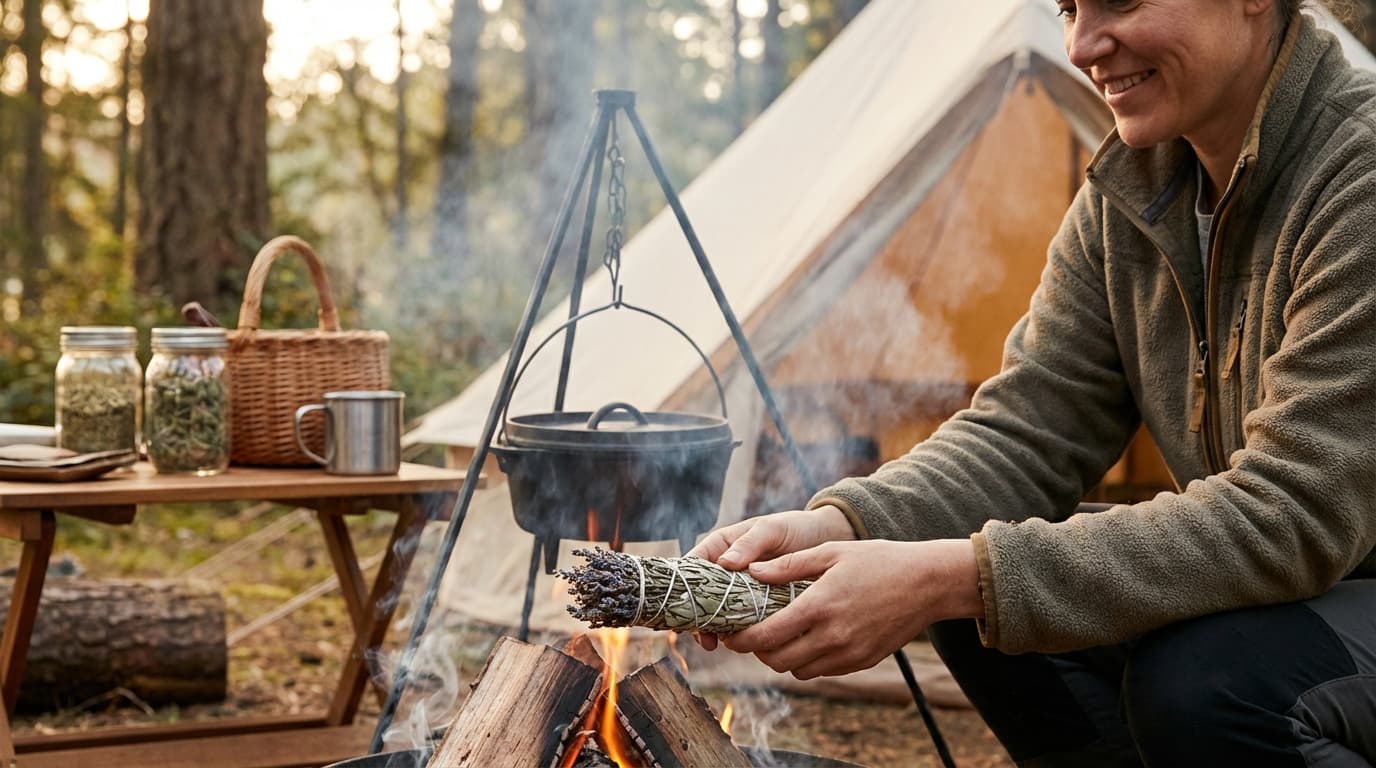
Just remember to place your herb bundles near the edge of the wood-burning fire rather than right in the center. This keeps them from vanishing in a flash of heat. Also, keep in mind that using herbs for bugs is a practical trick, not a spiritual ritual. It is a simple, respectful way to enjoy nature without the itch.
Key insights:
Mosquitoes are the deadliest animals on Earth, making protection a health priority.
Herbal smoke works by masking the 300 chemicals human skin naturally produces.
Place herbs on the edge of the fire for a slow, sustained release of repellent smoke.
The Science of 'Repelling': It’s Not What You Think
Have you ever wondered why bug spray feels like a losing battle? Most of us imagine repellents as a sort of invisible wall that bugs hate to touch. In reality, it is much weirder than that. Mosquitoes are actually the deadliest animals on the planet, and they find us because our skin is basically a chemical factory. Researchers at the University of Florida found that we produce around 300 different chemicals that act like a dinner bell for pests.
When you apply repellent, you are not actually pushing them away. You are creating what experts call a vapor barrier. This layer sits on your skin and scrambles the signals you are sending out. Think of it like a jammer for their radar. Instead of smelling a tasty snack, they just get a face full of static. As the folks at REI point out, these products mask our attraction signals so the bugs can not find the target in the first place.
This is why staying bite-free is more about strategy than just soaking yourself in chemicals. Since we know they are hunting for specific scents, we can use that against them. But there is another secret weapon in your camping kit that has nothing to do with sprays or lotions. It is all about simple physics.
Let us talk about why mosquitoes are actually terrible pilots. These insects are surprisingly weak flyers, usually topping out at about one mile per hour. That is slower than a casual walk. Because they are so light and slow, you can easily exploit their lack of coordination. This is where a basic electric fan becomes your best friend at a picnic table.
By setting up a fan, you create a no-fly zone that no mosquito can cross. They simply do not have the engine power to fly against even a light breeze. It is a clean, chemical-free way to keep the area clear while you eat. Plus, it helps blow away the carbon dioxide we exhale, which is the primary signal they use to track us down from a distance. Choosing physics over chemical warfare is often the smartest move for a peaceful night outdoors.
Beyond just being annoying, getting away from these pests lets you actually enjoy the benefits of being outside. Spending time in nature is known to lower your stress and blood pressure, and even reduce risks for things like type II diabetes. So, by understanding how these bugs actually work, you are not just avoiding an itch. You are protecting your health and your peace of mind.
Key insights:
Repellents do not push bugs away but instead create a vapor barrier that masks human attraction signals.
Human skin produces roughly 300 chemicals that act as a signal for mosquitoes to find their next meal.
Mosquitoes are weak flyers that can be stopped by the simple airflow of an electric fan.
Using environmental controls like fans is a highly effective, chemical-free way to prevent bites.
Why Mosquitoes Are Such Terrible Pilots
Did you know that mosquitoes are technically the deadliest animals on earth? It sounds intense, but they have a hilarious weakness: they are terrible pilots. Most mosquitoes only fly about one mile per hour. That is slower than a casual stroll. While they are busy tracking the 300 different chemicals your skin produces, they are also struggling to stay on course in even the slightest breeze.
You can use this lack of coordination to your advantage by creating a no-fly zone with a simple electric fan. Because they are such weak flyers, the air from a fan acts like a physical wall they can't penetrate. It is a clever shift from chemical warfare to basic physics. Instead of just masking your scent with a vapor barrier, you are making it physically impossible for them to land on you.
This matters because spending time outdoors is one of the best ways to lower your blood pressure and stress. Why let a tiny, slow bug keep you inside? By placing a fan near your picnic table, you solve the problem without the sticky sprays. It is an easy, organic hack that works because it respects the science of how these pests actually move.
Key insights:
Mosquitoes fly at only 1 mph, making them vulnerable to simple wind.
Fans create a physical barrier that is often more effective than chemical masks.
Using environmental physics avoids the need for sticky repellent sprays.
The Campfire Herb Hack: Sage, Rosemary, and Lavender
Ever wonder why a relaxing weekend in the woods can feel like a battle for your life? It sounds dramatic, but mosquitoes are actually the deadliest animals on the planet. Even so, we keep heading out because being in nature lowers our blood pressure and cuts down on stress. To keep the peace without dousing yourself in chemicals, you might want to look in your spice rack. Burning sage, rosemary, or lavender in your campfire creates a scented shield that changes the game. It is a simple trick that turns your fire into a functional tool.
Here is how it works. Mosquitoes aren't just annoying; they are tiny hunters tracking the 300 different chemicals our skin produces. They also follow the carbon dioxide we exhale. When you burn these aromatic herbs, the heavy, scented smoke acts like a scramble signal. It does not necessarily chase them away like a physical wall, but it creates a vapor barrier that masks your human scent. Since mosquitoes only fly about one mile per hour, even a light breeze of herbal smoke makes it nearly impossible for them to lock onto you.
But do not just throw a handful of rosemary into the center of the flames. High heat is actually the enemy here because it incinerates the repellent oils before they can do any real work. The goal is a slow, steady release. Try tying your herbs into small bundles and placing them on the cooler stones or logs at the very edge of the fire. You want them to smolder and release thick smoke, not vanish in a flash of orange light. This way, you get a perimeter of protection that lasts through dinner instead of just a few seconds of nice smells.
A quick word of caution for the gear lovers: keep the herbs away from your propane fire pits. Unlike wood fires, propane systems have delicate burners that can get gummed up with charred residue, making them a nightmare to clean later. Also, it is worth noting that using herbs this way is a practical smoke cleansing hack for bugs, which is different from the sacred smudging rituals used in Indigenous cultures. It is about being effective and respectful at the same time. What does this mean for your next trip? It means you can finally ditch the sticky sprays and let your campfire do the heavy lifting.
Key insights:
Herbal smoke masks the carbon dioxide and skin chemicals that attract mosquitoes.
Place herb bundles at the fire's edge to ensure a slow, effective smolder.
Avoid using this hack with propane firepits to prevent equipment damage.
Distinguish between practical pest control and culturally significant smudging rituals.
Don't Just Toss Them In: The Right Way to Burn Herbs
Did you know mosquitoes are actually the deadliest animals on the planet? When you're camping, they are easily the biggest mood killers, tracking the 300 different chemicals your skin naturally produces. Burning aromatic herbs is a great way to create a natural no-fly zone, but there is a specific trick to it. You can’t just chuck a bundle of sage into the center of the fire and expect it to last through the night.
If herbs hit the hottest coals, they flash-fry and the repellent properties vanish instantly. Instead, tuck your rosemary or lavender bundles at the very edge of the fire where it is cooler. You want them to smolder rather than ignite. This creates a steady vapor barrier that scrambles your scent signals. Since these pests only fly about one mile per hour, a gentle, herb-scented smoke screen is all you need to stay bite-free.
A quick warning for the glampers out there: keep the herbs away from propane firepits. This hack is strictly for wood fires. Charred residue and oily soot will clog gas burners and ruin your expensive gear. Also, remember that using plants this way is about pest control, not spiritual smudging. It is just a simple, natural way to enjoy the woods without becoming a mosquito's dinner.
Key insights:
Place herbs on the edge of the fire to ensure a slow, effective release of oils.
High heat destroys the aromatic compounds that actually keep bugs away.
Never use herb bundles in propane firepits as the residue causes permanent damage.
Herbal smoke creates a vapor barrier that masks human chemical signals.
A Note on Respect: Smoke Cleansing vs. Smudging
Before you start tossing sage into your campfire to keep the bugs away, we need to talk about the words we use. It might seem like a small thing, but the language around burning herbs carries a lot of weight. You have probably heard people call this trick smudging, but that term specifically belongs to Indigenous spiritual and ceremonial rituals. For those of us just trying to avoid itchy bites while we enjoy the fresh air, the correct term is smoke cleansing. It is a simple shift in vocabulary that makes a big difference in how we respect other cultures.
Why does this distinction matter so much? Smudging is a sacred practice with deep roots in specific communities. On the other hand, smoke cleansing is the broader, more practical act of using herbal smoke to clear a space - in this case, clearing it of mosquitoes. As Garden Therapy points out, burning herbs for their physical properties is a respectfully different practice from using smudge sticks for religious purposes. By using the right name, you acknowledge that your goal is pest control, not spiritual ceremony.
The science behind this hack is actually pretty cool. Most people think repellents physically push bugs away, but they actually work by creating a vapor barrier. This barrier masks the roughly 300 chemicals your skin produces that tell a mosquito dinner is served. When you burn aromatic herbs like rosemary or sage, the smoke carries those scents to scramble the signals mosquitoes use to find you. Since mosquitoes are notoriously weak flyers - only moving at about one mile per hour - a little bit of fragrant smoke is often all you need to keep them at bay.
Spending time in the woods is one of the best things you can do for your health, with studies linking outdoor time to lower stress and reduced risks of heart disease. You want to soak up those benefits without the constant swatting. By choosing to call it smoke cleansing, you get to enjoy a bug-free evening while staying culturally sensitive. It is about finding that balance between using natural hacks and being a thoughtful guest in the great outdoors. This way, you can focus on the fire and the stars without any regrets.
Key insights:
Smudging refers to specific Indigenous spiritual ceremonies and should be used with care.
Smoke cleansing is the accurate term for using herbal smoke to repel insects.
Herbal smoke works by creating a vapor barrier that masks human chemical signals.
Being culturally sensitive allows you to enjoy natural camping hacks respectfully.
Picking the Right Spot Before You Pitch the Tent
You might not think of a tiny mosquito as a predator, but they are technically the deadliest animals on the planet. When you are scouting for a place to sleep, your first instinct might be to tuck your tent under a thick canopy of trees for shade. But here is the thing: those damp, dark spots are exactly where bugs thrive. Instead, look for a clearing that catches a steady breeze. Mosquitoes are surprisingly weak flyers, usually topping out at only one mile per hour. Even a light wind makes it nearly impossible for them to land on you. It is a simple mechanical fix that works better than almost any spray.
The sun is also a massive ally you should use to your advantage. Most people avoid high-heat areas, but mosquitoes hate them even more because they dry out easily in direct light. By pitching your tent in a sunny spot, you are using the environment to create a natural barrier. You also need to be smart about where you cook. Researchers at the University of Florida found that our skin produces about 300 different chemicals that attract bugs, but the carbon dioxide from a grill is even more powerful. Keep your cooking station far away from your sleeping area so you are not literally baiting the bugs toward your bed.
When it comes to protection, many campers do not realize there is a huge difference between skin repellent and gear treatment. Most sprays you put on your body do not actually repel in the way we think. They create a vapor barrier that masks or scrambles the signals we emit, making us invisible to their sensors. However, for your boots, bags, and outer layers, you want something tougher like Permethrin. This is not meant for your skin, but it is incredible for stopping hitchhiking ticks and bugs from catching a ride into your tent. It is about creating layers of defense before you even step into the woods.
The smartest camping hacks always involve items that serve a dual purpose. Think about your cooking herbs. A bundle of rosemary or sage can season your steak and then act as a bug deterrent later. When you are done cooking, placing these herbs near the edge of the fire lets them release aromatic smoke that bugs cannot stand. It is a simple, chemical-free way to reclaim your campsite. Just make sure you are not tossing them into a propane pit, as the charred bits can ruin the system. Stick to the wood fire, let the scent do the heavy lifting, and enjoy a bite-free evening.
Key insights:
Wind is a natural barrier because mosquitoes only fly at about one mile per hour.
Repellents work by creating a vapor barrier to mask human signals rather than physically pushing bugs away.
Permethrin should be used only on gear and clothing to stop ticks from hitchhiking into your tent.
Cooking grills should be placed far from tents because carbon dioxide is a major attractant for pests.
Gear Treatment Secrets
Have you ever noticed that even after dousing yourself in spray, bugs still find a way to hitch a ride? That usually happens because we forget our gear. While skin repellents mask the chemicals our bodies produce, gear treatment is a different beast. You should never put Permethrin on your skin. Instead, spray it on your boots and bags. It stops ticks from crawling onto your clothes in the first place. This is a big deal because mosquitoes are actually the deadliest animals on earth, even if they only fly about one mile per hour.
Think about the items you already pack. The best camping tricks involve things that do double duty. Herbs like rosemary or sage are great for seasoning dinner, but they also act as a natural shield when tossed near the fire. Just keep them out of propane firepits to avoid a charred mess. Since being outdoors reduces risks like high blood pressure, keeping the bugs away naturally helps you actually enjoy those health benefits. It is a simple way to stay protected without overcomplicating your setup.
Key insights:
Permethrin is for fabrics and gear only, never for direct skin application.
Repellents create a vapor barrier to mask human signals rather than physically pushing bugs away.
Fresh herbs serve as both food seasoning and natural pest deterrents when burned in wood fires.
Making the Most of Your Bug-Free Haven
Spending time outdoors reduces stress, but it is hard to relax when the deadliest animal on earth is hunting you. Mosquitoes are dangerous, yet they only fly about one mile per hour. That slow speed is their weakness. Combine smart campsite selection with the campfire bug hack of burning sage to create a zone where you can actually breathe.
Think of these tricks as a layered defense. While repellents create a vapor barrier to scramble the 300 chemicals your skin emits, burning herbs adds a perimeter of protection. Try tossing lavender or rosemary to the side of your wood fire. Skip this if you use a propane pit because charred bits can ruin the system. Also, keep your grill far away since carbon dioxide attracts them.
It is about reclaiming your space. By using these natural mosquito repellent methods, you aren't just avoiding bites. You are staying present. Nature is better when you aren't the main course. So grab your herbs, check the wind, and enjoy the fresh air.
Key insights:
Mosquitoes fly at just one mile per hour, making them easy to deter with simple fans or breezy locations.
Burning herbs is for wood fires only because propane systems can be damaged by the leftover residue.
Repellents work by masking the 300 different chemicals human skin produces to confuse insect sensors.
Frequently Asked Questions
Yes, it really works. When you burn sage, the smoke carries a scent that hides the signals your body naturally gives off. Since mosquitoes use those signals to find you, the smoke makes it much harder for them to land a bite.
It is also a nice way to stay healthy while you are outside. Spending time in nature is great for your blood pressure and stress levels, so using a natural trick like this lets you stay out longer without the annoyance of itchy bites. Just remember that this is different from spiritual rituals, it is just a simple way to use plants to help you enjoy the woods.
You definitely can. Dried rosemary or lavender from your kitchen works just as well as fresh branches. Since these herbs have strong oils, they create a great scent that bugs tend to avoid. It is a smart way to use up what you already have in the cupboard.
One thing to watch out for is your fire type. This hack is perfect for a wood campfire, but you should never try it with a propane firepit. The herbs will leave behind a charred mess that can ruin your burner. Also, try to place the herbs on the edge of the fire so they smolder slowly instead of just going up in flames right away.
You really want to avoid tossing herbs into a propane fire pit because of the mess they leave behind. Unlike a wood fire where everything turns to ash, herbs in a propane unit leave a sticky, charred residue on the burner components.
This gunk is a nightmare to clean and can eventually clog the small holes where the gas comes out or stain your decorative stones. It is much better to save this trick for a traditional wood-burning fire where the smoke can actually carry the scent without ruining your expensive gear.
It is definitely true. Some people are just mosquito magnets because of their unique body chemistry. Scientists have found that human skin produces around 300 different chemicals, and the specific mix you have can make you much more attractive to a hungry mosquito than the person sitting next to you.
They also track things like the carbon dioxide you breathe out and your body heat. Since you cannot really change your skin chemistry, your best bet is using a repellent that masks these signals so the bugs cannot find you in the first place.
Conclusion
So what does this all mean for your next trip into the woods? It means that staying bite-free is more about strategy than just spraying yourself with chemicals. By combining a smart campsite choice with the campfire bug hack of burning sage or rosemary, you create a space where mosquitoes simply cannot find you. You are essentially hiding in plain sight by masking your own chemistry with the power of aromatic smoke.
If you want to try these outdoor hacks and tricks, start small by grabbing some extra herbs from your kitchen before you head out. It is a simple way to test what works for your specific area without spending a fortune on gear. You might find that a little bit of lavender or sage is all you need to keep the evening peaceful.
Nature is much better when you can actually focus on the stars instead of slapping at your ankles. Grab a bundle of herbs, find a breezy spot, and enjoy a chemical-free camping experience that smells as good as it feels. Happy trails and stay bite-free out there.
Every WilderReady guide is researched, written, and fact-checked in-house against trusted references such as the American Red Cross, the National Park Service, and the CDC before it goes live. We publish under this shared byline instead of invented personas, so you always know who stands behind the guidance you are reading.