Why a Roll of Duct Tape is More Useful Than Your Fancy Gear
Imagine you're miles from civilization when your tent rips or your boot sole peels away like a banana. That pricey, high-tech gear you bought might look cool, but it can't...
Why a Roll of Duct Tape is More Useful Than Your Fancy Gear
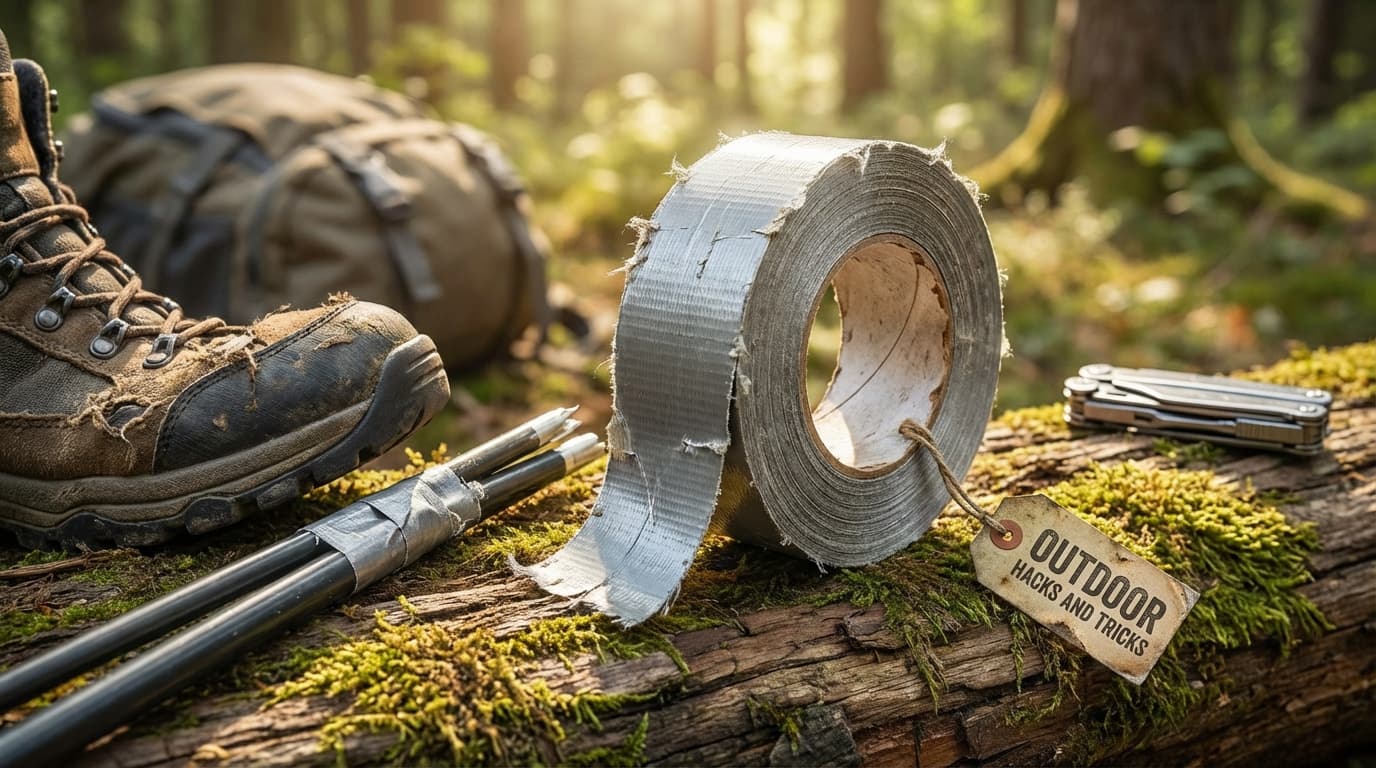
Imagine you're miles from civilization when your tent rips or your boot sole peels away like a banana. That pricey, high-tech gear you bought might look cool, but it can't fix itself when things go wrong. This is where simple Outdoor Hacks And Tricks become your best friend. A single roll of duct tape often does more to save a trip than a bag full of fancy gadgets.
Survival's all about solving problems with what you have instead of carrying a fifty pound pack. Even if you're usually more worried about everyday annoyances than an actual storm, these tips will keep you prepared. From duct tape survival hacks like starting fires to using dental floss as a fishing line, these small items are the real stars of a minimalist survival kit.
We'll show you how to handle an emergency gear fix and perform gear repair in the wild without needing a whole toolbox. We're going to explore why duct tape is the most essential tool in your bag and how everyday items can handle everything from first aid to fixing your shelter. By the end, you'll know how to stay safe and dry using tools that cost less than your morning coffee.
The 'Oh No' Moment: Why Field Repairs Matter
Imagine you are miles from the trailhead when a sudden gust catches a tiny snag in your tent. Within seconds, that small tear starts to unzip, threatening to leave you exposed to the elements all night. This is the oh no moment where field repairs become a survival necessity. Mending a rip immediately prevents the wind from turning a minor nuisance into a total equipment failure that could end your trip early.
You do not need a 50-pound pack to be ready for these disasters. Smart survivalists focus on items that do more than one job. A simple roll of duct tape is often the most essential tool because it solves so many problems through pure improvisation. It can patch a backpack, create a makeshift splint for an injury, or even act as a fire starter because it burns well even when your kindling is damp.
Being prepared is about having the right gear, not the most gear. Some people carry heavy kits, but you can get by with a minimalist approach using multi-use tools like dental floss for fishing or gear repair. The goal is to keep your equipment functional so you stay safe. The best repair is the one you do right there on the trail before a small problem ruins your entire experience.
Key insights:
Immediate field repairs prevent minor gear damage from escalating into total equipment failure.
Multipurpose items like duct tape and dental floss reduce pack weight while increasing preparedness.
Duct tape is a survival powerhouse that works for gear repair, first aid, and starting fires in wet conditions.
Duct Tape: The Survival Tool You Didn't Know You Had
You have probably seen those 7-in-1 survival cards with the wire saws and compasses. They look cool in a pocket, but ask any seasoned survivalist what they actually reach for when things go sideways, and they will point to a roll of duct tape. It is not just for fixing a leaky pipe under the sink. In the woods, this stuff is a literal lifesaver. While some see it as a temporary patch, a proper field fix with the right tape can keep your gear going for weeks. For those trying to keep their packs light, a 1-inch roll of Gorilla Tape is the gold standard. It is tough, sticky, and takes up almost no space compared to a full-sized roll.
Starting a fire is easy when it is sunny, but what happens when the sky opens up and everything is soaked? This is where your tape shines. Duct tape works as a high-burn tinder that lasts much longer than wood shavings or dry grass. Because of its adhesive and backing, it catches a spark and holds a flame even when your kindling is damp. Just shred a few strips, ball them up, and light them. One safety trick to remember: do not inhale the fumes. Keep your face back and let the tape do the heavy lifting of drying out your smaller twigs so the fire can actually catch.
A torn tarp in a rainstorm is a recipe for a miserable night. You cannot just slap a piece of tape on and hope for the best. To make it work, you need to follow the inside-outside rule. This means patching both sides of the tear to create a waterproof sandwich. If you lost a corner loop, you can even fold tape over the edge and puncture it to create an improvised grommet. The secret to making it stick? You have to dry the surface first. Even a quick wipe with a shirt makes a huge difference. Without that prep, the adhesive will not bite, and your repair will fail right when the wind picks up.
Beyond gear, this tape is a Swiss Army knife for your body. If you are hiking and feel a hot spot on your heel, a bit of tape can prevent a blister before it starts. In a real pinch, you can pair it with sticks to make a makeshift splint or use it to hold a cotton pad over a cut. It is all about improvising and solving problems with what you have. Whether you are resealing a food bag to keep it fresh or fixing a broken boot lace, the versatility is unmatched. It is the most basic tool you can carry, but it is often the one that actually gets you home safely.
Key insights:
Duct tape serves as high-burn tinder that stays lit even when your kindling is moist.
The inside-outside rule for patching ensures a waterproof seal on gear like tents and tarps.
A 1-inch roll of Gorilla Tape provides maximum utility for minimalist kits without the bulk of a standard roll.
Surface preparation is the most critical step for a field repair that actually lasts through a storm.
Starting a Fire When Everything is Wet
Have you ever tried to start a fire in the middle of a downpour? It is a total nightmare. Everything is soaked, your hands are shaking, and that pile of damp kindling just refuses to catch. This is exactly where your roll of duct tape saves the day. While most people only think of it for patching a tent, it actually works as a high-burn tinder that stays lit much longer than wood shavings or dry grass.
The secret lies in the adhesive and the fabric backing. They burn slow and hot, giving you enough time to dry out your smaller twigs and get a real flame going even when the ground is damp. If you are worried about pack space, a one-inch roll of Gorilla Tape is a great choice for a minimalist survival kit. It is small but carries enough fire-starting power to get you through a rough night.
To get the best results, do not just toss a flat piece of tape on the ground. Instead, tear it into thin strips and fray the edges to catch a spark, or roll it into tiny tubes to create a steady candle effect. Just be careful with your hands because that adhesive burns intensely. It is basically a survival cheat code for staying warm when nature is working against you.
Key insights:
Duct tape burns longer than natural tinder, making it ideal for igniting damp wood.
Fraying the edges of the tape increases surface area for easier ignition.
A 1-inch roll of Gorilla Tape provides the same fire-starting benefits while saving space in small kits.
Fixing Your Shelter Before the Rain Starts
Imagine sitting in your tent as the sky turns gray and spotting a jagged tear in the rainfly. If you wait for the downpour, you are already too late. This is where a minimalist roll of 1-inch Gorilla Tape becomes your best friend. It is not just a temporary patch; it is a structural fix for when things get messy. Think of it as the one tool that keeps the elements outside where they belong.
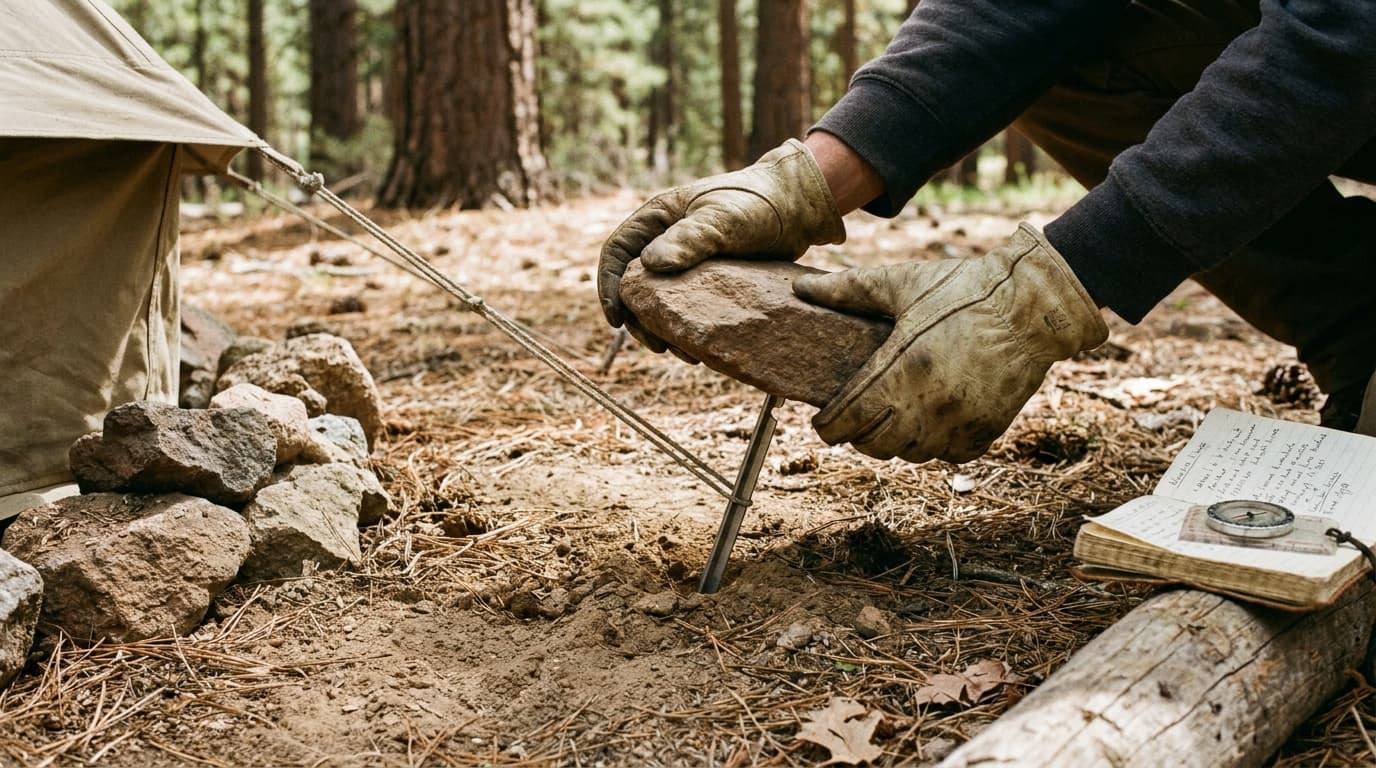
To make a repair that actually lasts, use the inside-outside rule. By applying tape to both sides of the fabric, you create a reinforced sandwich that wind will not easily peel away. Just remember that surface preparation is everything. Tape will not stick to trail grime or morning dew, so you must dry the area first. A clean surface is the difference between a peaceful night and a soaked sleeping bag.
If a corner grommet rips out, do not panic. You can create an improvised anchor by folding tape over the tarp edge and puncturing a new hole through the layers. This handles tension much better than a basic knot. Also, if the rain makes your kindling too damp to light, remember that duct tape burns long and hot as an emergency fire starter. It fixes your shelter and your warmth in one go.
Key insights:
Surface preparation is the most critical step for a lasting field repair.
The inside-outside rule prevents wind from peeling back gear patches.
Duct tape can function as emergency tinder when natural kindling is too wet.
Is That 7-in-1 Pocket Tool Actually a Life-Saver?
You see them everywhere lately. Those sleek 7-in-1 pocket tools promise to handle every crisis you might face in the woods. Most standard survival card kits pack in a stainless steel tool card, a fire starter, a compass, a wire saw, an emergency whistle, pliers, and a carabiner. It is a tempting offer for anyone following the ultra-lightweight gear trend. Carrying something that weighs less than a pound feels much better than lugging around seven separate, bulky items. But does this tiny gadget actually live up to the hype?
The shift toward minimalist kits is popular for a reason. Multi-use tools are objectively better for saving pack space, provided they do not fail when you need them most. Think about the last time you tried to use a cheap wire saw. Was it reliable? Often, these tools are more about the idea of survival than the actual practice of it. But if you know what to look for, some pieces in that kit are genuine lifesavers. The goal is to find tools that solve diverse problems through improvisation rather than just filling up a pocket.
Let us talk about the tools that actually matter in these kits. The fire starter and wire saw are the most debated parts. While a wire saw can be finicky, a magnesium fire starter is a solid backup if your matches get wet. Then there is the tool card. Most people use it to open a bottle and then forget about it, but it can do so much more. You can use the edge as a scraper for tinder or use the integrated wrenches to tighten loose gear in the field. It is all about looking past the basic label of the tool.
Even the carabiner has hidden depth. It is not just for clipping your keys to your pack. In a survival situation, a carabiner can become a mechanical advantage tool to help you lift or tension heavy loads for a shelter. This kind of versatility is exactly why survivalists also look at everyday items like dental floss or duct tape. For instance, dental floss is strong enough to serve as a makeshift fishing line, and duct tape can even act as an effective fire starter because it burns so well even when your kindling is moist.
Field repairs are critical because they stop small problems from becoming disasters. Mending a tiny rip in your tent prevents the wind from destroying the whole shelter later that night. The real value of a 7-in-1 tool or a roll of tape is not just the physical item itself. It is the ability to improvise and solve problems on the fly. While a sewing kit is better for permanent repairs on expensive technical clothes to avoid sticky residue, a multi-tool and some tape will keep you moving when it counts.
Key insights:
Field repairs prevent minor gear damage from escalating into total equipment failure.
A 7-in-1 tool card is most effective when used for unconventional tasks like scraping tinder or mechanical repairs.
Duct tape and dental floss are often more versatile than specialized survival gadgets for first aid and gear fixes.
High-end technical fabrics are better served by sewing kits to avoid the sticky residue left by survival tapes.
The Tools That Actually Matter
Most survival kits brag about being a 7-in-1 solution with stainless tool cards and whistles. But how often do you use that tiny saw? A tool card is great for more than opening bottles. Think of it as a scraper or backup blade. The real value lies in tools that do not fail. A fire starter is only useful if you have practiced.
Sometimes the best tools are the ones you repurpose. A simple carabiner is not just for clipping gear. It becomes a mechanical advantage tool for hauling loads. Even dental floss can pull double duty as a fishing line. It is about looking at your gear and asking what else it can do.
A minimalist kit must actually work. Using a one inch roll of tape saves space while providing a way to start fires. If your gear breaks, it is just dead weight. Survival is about knowing which pieces of steel and string will hold up.
Key insights:
Tool cards are more effective as scrapers or backup blades than as saws.
A standard carabiner can be used to create mechanical advantage for hauling heavy items.
Dental floss serves as a high-strength, lightweight alternative to traditional fishing line.
Minimalist kits benefit from one-inch wide tape for fire starting and emergency repairs.
Fixing Yourself: Improvised First Aid
Imagine you are miles from the nearest trailhead and you take a hard fall. Your store-bought first aid kit is thin on supplies, and you have already used your last sterile pad. This is exactly when your roll of duct tape becomes more than just a gear fix. It is about making do with what you have to stay safe. Experts at BushLife point out that duct tape is the most basic of useful survival tools because it is built for these exact moments of improvisation.
If you suspect a sprain or a break, you can build a sturdy makeshift splint by finding two straight sticks and wrapping them securely with tape. This setup keeps the limb still and protected while you move toward help. When your bandages run out, you can also use a bit of clean cotton or a scrap of fabric held in place with tape. The tape acts as a secondary skin, keeping the dressing tight and the dirt out. The reality is that these field repairs are critical because they prevent further damage that could make your situation much worse.
But here is one hidden danger you need to watch out for. Never put the tape directly on a wound or sensitive skin if you can help it. The adhesive is incredibly strong, and pulling it off can cause more damage than the original injury. It can even tear delicate skin or cause painful irritation. Always use a buffer of cloth or gauze first. If you want to keep your pack light, a 1-inch wide roll of Gorilla Tape is a great choice for a minimalist survival kit. It gives you all the strength you need without the bulk of a full-sized roll.
Sometimes the fix needs to be even more precise. While duct tape is great for a quick fix, a sewing kit is actually better for permanent repairs on high-end technical clothes because tape leaves a sticky residue on expensive fabrics. Also, do not forget about your dental floss. It is versatile enough to be used as a high-strength thread for mechanical repairs or even as a makeshift fishing line if you are stuck near a stream and need to find food.
Key insights:
Always place a layer of fabric between duct tape and your skin to avoid painful removal or skin damage.
A 1-inch wide roll of Gorilla Tape provides professional-grade strength while saving significant space in a minimalist survival kit.
Improvised splints using sticks and tape are effective for stabilizing injuries until you can reach professional medical help.
The Secret Survival Powers of Dental Floss
Ever wonder why seasoned survivalists carry dental floss even if they are not worried about their gums? It is because that tiny plastic container holds some of the most versatile cordage available. While a standard 7-in-1 survival kit usually includes things like a wire saw or a fire starter, dental floss is the unsung hero that fits in the gaps. It is thin, incredibly strong, and designed to resist snapping under tension. Think of it as a high-strength rope that shrunk in the wash. This matters because when you are miles from a store, having a spool of multi-use thread can solve problems that bulky gear cannot.
Consider this: if you are stuck near a stream without a meal, that waxed floss is a ready-to-use fishing line. Because it is designed to resist fraying, it handles the weight of a fish surprisingly well. It is a classic example of the current trend of repurposing everyday items to reduce pack weight. You are not just carrying a hygiene product; you are carrying a lightweight tool that can literally help put food on the table. It is about being smart with the space in your pack and realizing that the best tools are often the ones you already have in your bathroom cabinet.
But wait, there is more to it than just fishing. Floss is essentially high-strength cordage in disguise. You can use it to lash together a makeshift shelter or secure gear that has shaken loose on the trail. The interesting part is that it provides a level of precision that thicker ropes lack. It allows you to tie tight, secure knots in small spaces, making it perfect for mechanical repairs where every millimeter counts. Whether you are fixing a broken zipper or securing a loose strap, it provides a level of durability that belies its small size.
However, there comes a time when even the best duct tape reaches its limit. While duct tape is often called the most essential tool for improvisation, it has a major weakness: expensive technical clothing. High-end shells and ultralight tents often end up with permanent, sticky residue if you use tape for a patch. This residue can actually degrade the fabric over time. This is why carrying a small sewing needle for permanent fixes is a smarter move for your pricey gear. A needle and floss allow for a structural fix that tape simply cannot match.
Think about a ripped backpack strap or a torn boot sole. Tape might hold for a mile, but stitching provides the mechanical strength needed to get you all the way home. In the most extreme cases, this combination can even be used for emergency wound stitching. It is a last resort, of course, but having that high-strength thread could be the difference between a wound staying closed or getting much worse in the wild. It is a gritty reality of survival where field repairs are not just about convenience, but about preventing a small problem from becoming a total equipment or health failure.
Key insights:
Dental floss serves as a lightweight, high-strength alternative to traditional cordage in minimalist kits.
A sewing needle and floss are superior to duct tape for repairing technical fabrics to avoid sticky residue damage.
Stitching provides structural integrity for high-tension repairs like boot soles and backpack straps that tape cannot support.
In life-or-death scenarios, dental floss can be used for emergency wound closure when medical supplies are unavailable.
When Tape Isn't Enough
Think about your favorite technical jacket for a second. While duct tape is usually a hero for gear repair in the wild, slapping it onto expensive breathable fabric is often a recipe for disaster. The sticky residue is a nightmare to clean and can permanently ruin the performance of high-end gear. It might stop the wind for an hour, but you will almost certainly regret the mess later.
This is why a tiny sewing needle is a must for any minimalist survival kit. It takes up zero space but provides a structural fix that tape simply cannot match. When you pair that needle with dental floss, you have a heavy duty repair setup. Floss is incredibly strong and doubles as a makeshift fishing line or even emergency wound stitching if you are truly in a bind.
The real goal here is preventing total gear failure. Mending a small tear early stops the wind from catching it and turning a tiny hole into a shredded mess. Tape is great for quick fixes and starting fires, but sometimes a bit of old-school needle and thread is what actually saves your trip and your expensive equipment.
Key insights:
Duct tape adhesive can permanently damage technical fabrics and breathable membranes.
Dental floss serves as a high-strength alternative to traditional thread for heavy-duty gear repairs.
Early field repairs are critical for stopping minor damage from escalating into total equipment failure.
Building Your 'Just in Case' Kit Without the Bulk
Most of us pack our bags like we are moving into the woods forever, but the heaviest thing you carry is often your own anxiety about being unprepared. You do not need a massive rucksack filled with single-use gadgets to stay safe. Instead, consider the 1-inch tape trick. By carrying a slim roll of 1-inch wide Gorilla Tape, you get all the utility of a standard roll without the bulky cardboard core taking up precious space. This small change signals a bigger mental shift: moving away from carrying every possible tool to learning how to improvise with just a few essentials.
The reality is that a tiny roll of tape is a survival powerhouse. You probably know it fixes ripped tents, but it is also a secret weapon for camp hygiene. You can use a strip to reseal food bags or cans, which keeps your snacks fresh and prevents critters from smelling your dinner. If the weather turns and your wood is damp, duct tape works as an effective fire starter because it burns long and hot. It even steps in for your medical kit, helping you create makeshift splints with a few sturdy sticks or securing bandages when you run out of medical supplies.
The goal is a minimalist setup that works harder. While a standard 7-in-1 survival kit with its wire saws and multi-tools is handy, items like dental floss can be just as vital for a light pack. Floss is strong enough to act as a makeshift fishing line or heavy-duty thread for gear repair. When you stop looking for the perfect piece of gear and start seeing the potential in a roll of tape, your pack gets lighter and your skills get sharper. Think of it this way: the best tool in your kit is the one that solves three problems at once.
Key insights:
Downsizing to 1-inch wide tape provides full repair utility while significantly reducing pack volume.
Duct tape serves as a reliable fire starter in wet conditions due to its high flammability and burn time.
Resealing food containers with tape is a simple way to prevent wildlife encounters at your campsite.
True minimalism comes from the ability to improvise tools, such as using dental floss for emergency fishing.
Wrapping It Up: Your New Wilderness Mindset
At the end of the day, survival isn't about how much you spent at the gear shop. It’s about how you look at what’s in your pack. Think about that roll of duct tape. It isn't just for fixing a tear in your tent. It is a fire starter that burns through damp kindling, a makeshift bandage, and even a way to seal your food bags. When you start seeing your gear as a collection of solutions rather than just items, you have truly leveled up your wilderness skills.
Before you head out, ask yourself: can I use this in three different ways? If your dental floss can also be a fishing line, or your 7-in-1 tool card can handle everything from opening cans to turning screws, you are on the right track. This minimalist approach keeps your pack light and your options open. It is also why many survivalists are moving toward repurposing everyday household items instead of carrying heavy, single-use gadgets.
So, here is your final checklist. Grab the 1-inch Gorilla Tape to save space, pack some dental floss for more than just your teeth, and remember that problem-solving is your most important skill. Real survival is about being resourceful when things go sideways. What will you pack for your next trip?
Key insights:
Survival is a mindset of improvisation, not just a collection of expensive gadgets.
Every item in a minimalist kit should ideally serve at least three distinct purposes.
Simple household items like duct tape and dental floss often outperform specialized gear in emergencies.
Frequently Asked Questions
Yes, you totally can. It is actually one of the best tricks for getting a fire going when the weather is working against you. Because of the way it is made, duct tape burns really well and stays lit for a good while.
This is a lifesaver when your kindling is damp. The tape acts like a long-burning candle, giving the wood enough time to dry out and catch fire. Just tear off a few strips and bundle them up to create a steady flame.
Here is the thing: many survivalists carry the one-inch wide Gorilla Tape version. It saves a lot of space in your pack while still giving you plenty of material to use as tinder.
It definitely is. Most dental floss is surprisingly strong and can easily double as a makeshift fishing line if you find yourself without your regular gear.
Since it is designed to be thin but very tough, it handles the tension of a small or medium fish quite well. It is also handy because it takes up almost no room in your pocket or survival kit.
You can also use it for more than just fishing. It works as a high-strength thread for sewing up a ripped backpack or even for emergency gear repairs when you are far from home.
Duct tape is basically the Swiss Army knife of adhesives. Besides mending tents, you can use it for first aid to create splints or secure bandages when you are out of medical tape.
You can even use it to keep your food fresh by resealing bags or cans. Some people even use it to create improvised anchors for their tarps by reinforcing the corners before poking a hole through.
It really comes down to improvising. Whether you need to fix a leaking boot or build a shelter, having a bit of tape on hand usually solves the problem.
When you are out in the woods, every ounce in your pack starts to feel heavy after a few miles. Carrying a massive, full-sized roll of duct tape just takes up way too much space and adds unnecessary weight to a minimalist survival kit.
That is why 1-inch wide tape, like the smaller rolls of Gorilla Tape, is such a smart move. It gives you all the sticking power you need to fix a broken tent pole or patch a bag, but it fits easily in a pocket or a small emergency pouch. You get the same utility without the bulk, which is exactly what you want when you are trying to keep your gear light.
It might save your trip in an emergency, but you should know that duct tape can be pretty hard on technical fabrics. The main issue is the adhesive. It often leaves behind a thick, gummy residue that is a total pain to clean off once you peel the tape away. In some cases, pulling the tape off can even damage the waterproof coating on high-end shells.
Here is the thing: if you have a hole in your jacket and it is pouring rain, definitely use the tape to stay dry. But for a permanent fix that keeps your jacket in good shape, a sewing kit or a specialized gear patch is a much better call. Use the tape for the quick fix, but try to move to a real repair as soon as you get home.
Conclusion
So what does all this mean for your next trip? It shows that a simple roll of tape and some dental floss are often more reliable than the most expensive gadgets in your pack. When you are out in the wild, survival is less about having a specialized tool for every tiny problem and more about seeing the potential in the basics. These duct tape survival hacks prove that staying safe and comfortable does not require a heavy, high-tech loadout.
The real win is the shift in your mindset. Once you realize that a bit of tape can start a fire, patch a shelter, or even help with a first aid emergency, you stop worrying about gear failure. You start looking at your minimalist survival kit as a collection of possibilities rather than just a pile of stuff. It is about being resourceful enough to handle an emergency gear fix without needing a manual.
Before your next hike, try wrapping a few feet of tape around your water bottle or a lighter to save space. It is a small move that makes a huge difference when things get messy. After all, the best piece of gear is not the one with the biggest price tag, it is the one that actually keeps you moving when the 'oh no' moment hits.
Every WilderReady guide is researched, written, and fact-checked in-house against trusted references such as the American Red Cross, the National Park Service, and the CDC before it goes live. We publish under this shared byline instead of invented personas, so you always know who stands behind the guidance you are reading.