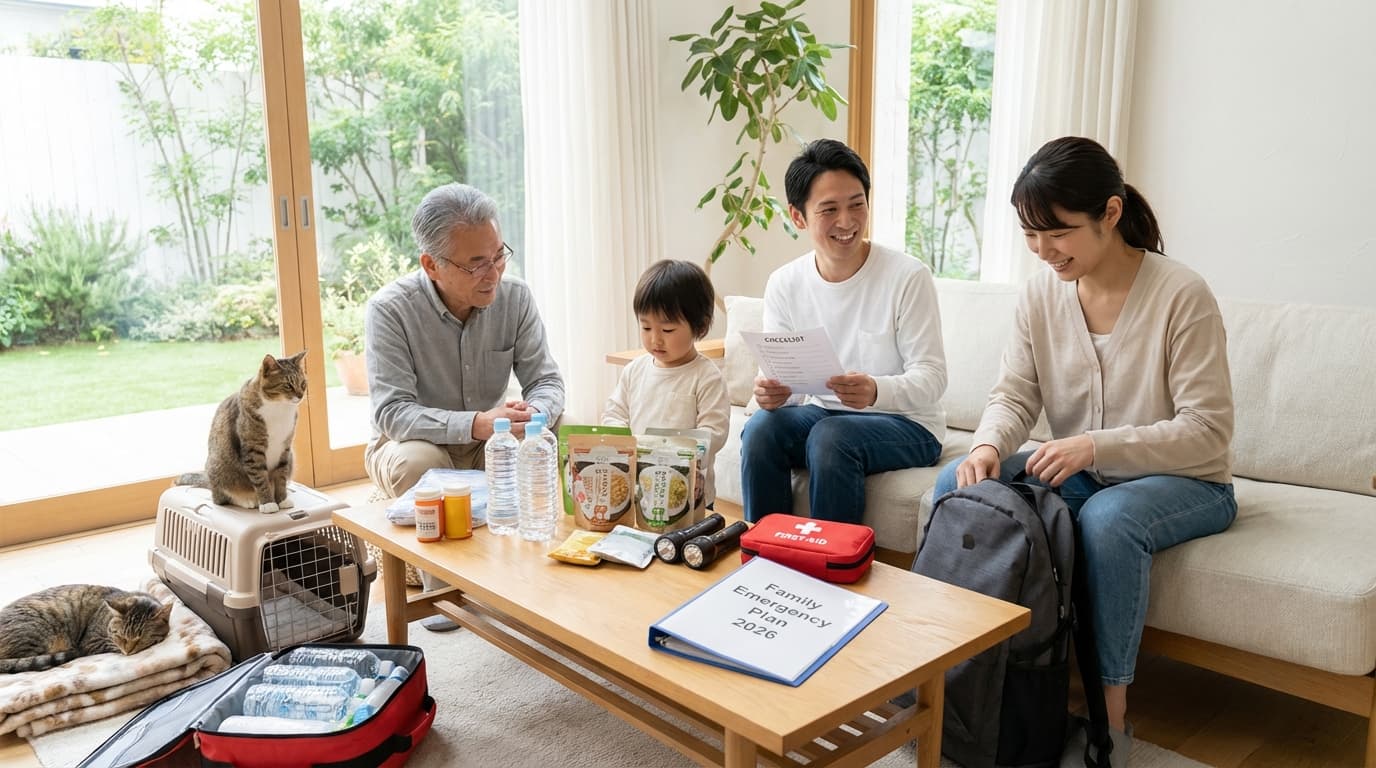
The 3-Day Survival Baseline: Keeping Your Family Safe When Things Get Weird
If a big storm hits or the power cuts out, do you know how long it takes for help to arrive? Most people don't realize that emergency responders can take...
The 3-Day Survival Baseline: Keeping Your Family Safe When Things Get Weird
If a big storm hits or the power cuts out, do you know how long it takes for help to arrive? Most people don't realize that emergency responders can take up to 72 hours to reach you during a major event. That three day window is entirely on you. Building the right mindset and preparedness doesn't mean you need a backyard bunker. It just means having a solid 3-day survival baseline so you aren't left scrambling when things get weird.
This short-term survival guide is built for real life. We are looking at household preparedness tips that actually work for busy families. You will learn how to calculate your water needs and how to pack a 72-hour emergency kit that fits in a regular backpack. We also cover the essentials for your whole household because being caught unprepared is the last thing you want in a crisis.
This article gives you a clear family emergency plan 2026 to keep everyone safe. We will walk through everything from tech backups to comfort items for the whole family. Let's get started on building your peace of mind one simple step at a time.
The 72-Hour Window: Why the First Three Days Are Up to You
Ever wonder why everyone talks about a 72-hour emergency kit? It is not just a random number. The reality is that during a major event, emergency responders might take up to three days to reach your door. Think of this window as your family’s solo mission phase. It is a shift away from extreme survivalism toward smart household readiness. By prepping now, you are essentially buying peace of mind for 2026.
What does this 3-day survival baseline look like for you and your family? You need one gallon of water per person daily. For a family of four, that is 12 gallons total. Since half of us use daily prescriptions, backups are vital. Toss a NOAA Weather Radio into your kit to stay informed when the Wi-Fi cuts out. Self-sufficiency is the goal. When your gear is packed, you can finally breathe easier.
Hydration Math: Why One Gallon Isn't Just for Drinking
Think about the last time the tap ran dry for just an hour. It is annoying, right? Now imagine that lasting for three days because emergency crews are busy elsewhere. The reality is that responders can take up to 72 hours to reach you during a big disaster. That is why the One Gallon Rule is the gold standard for your 72-hour emergency kit. You need one gallon per person every single day, and it is not just to keep you hydrated.
This water also covers basic sanitation, like washing your hands or cleaning a scrape. If you are a family of four, 12 gallons is your magic number for a three-day baseline. It sounds like a lot, but it is the bare minimum to keep everyone comfortable and clean. Since you cannot always carry heavy jugs if you have to leave quickly, think of purification tablets or portable filters as the backup dancers to your water supply. They are small but mighty when your primary stash runs out. What does this mean for you? It means you have a safety net even if you have to grab your bag and go.
Finding room for a dozen gallons in a small apartment feels like a high-stakes puzzle. Here is the thing: you do not need a dedicated pantry to be prepared. You can tuck jugs into the dead space under your bed, at the back of a deep closet, or even behind the sofa. Just make sure they are in a cool, dark spot to keep the plastic from breaking down over time. Think of it as a hidden insurance policy that stays out of your way until you actually need it.
While it is tempting to reuse old milk jugs or soda bottles, please stick to store-bought water or sturdy food-grade containers. DIY options are risky because they can leak or harbor bacteria from whatever was in them before. They need their own share of that 12-gallon stash, so maybe add an extra jug just to be safe for those furry roommates. It is better to have a few extra gallons than to realize you are short when the stores are closed and the taps are dry.
Key insights:
Self-sufficiency is the primary goal because emergency help can take up to three days to arrive.
The 12-gallon requirement for a family of four covers both drinking and basic hygiene needs.
Avoid DIY storage like old milk jugs which are prone to leaks and bacterial growth.
Purification tablets provide a lightweight and essential backup for mobile emergency situations.
Water Storage Hacks for Small Spaces
Where do you put twelve gallons of water when storage space is already tight? It sounds like a lot. For a family of four, that is the minimum needed to survive a three-day gap. Since emergency responders can take up to 72 hours to reach you, those gallons are your lifeline.
Forget those flimsy milk jugs you’re tempted to reuse. They degrade and leak, turning your closet into a swamp. Instead, buy BPA-free, stackable containers. You can slide them under the bed or tuck them behind the sofa. Think of it as a game of Tetris where the prize is staying hydrated.
If space is really tight, grab some purification tablets as a backup. This helps you stay self-sufficient without tripping over bottles every time you walk to the kitchen.
Key insights:
Safety first: avoid old milk jugs which can harbor bacteria and break easily.
Self-sufficiency is the goal while waiting for responders during those first 72 hours.
Building the 'Grab-and-Go' Bag: Essentials That Actually Fit in a Backpack
If you are still keeping your emergency supplies in a massive, heavy plastic bin tucked away in the back of the garage, it is time for a rethink. By 2026, the focus is shifting entirely toward mobility. A heavy bin is great if you are staying put, but if you need to leave in a hurry, it is a liability. Duffel bags and sturdy backpacks are the new standard because they actually let you move. Think of it as your grab-and-go layer. It is the kit that buys you time and options when things get weird and you cannot stay home. You want something you can toss in the car or carry on your back without thinking twice.
What goes inside? Start with a NOAA Weather Radio. When the cell towers are down and the internet is a memory, this little device becomes your primary connection to the world. It is not just tech for tech sake; it is about knowing what is happening. Pair that with a basic wrench or pliers. It sounds like a random addition, but it is actually a vital safety device. If you need to shut off the gas or water to your home during a disaster, you cannot do it with your bare hands. This simple tool prevents a bad situation from turning into a catastrophe while you wait for help to arrive.
When we look at medical prep, the generic kits you find at the grocery store usually do not cut it. They are fine for a scraped knee, but they will not help much in a real crisis. Consider this: roughly half of all Americans rely on at least one prescription medication daily. If you are part of that 50 percent, you need a plan for your meds that lasts at least 72 hours. Emergency responders often take that long to reach people after a major event, so you have to be your own first responder for those first three days. A generic kit is just a starting point; the real value comes from personalizing it for your specific health needs.
Do not forget the basics of hydration while you are at it. A family of four needs a minimum of 12 gallons of water just to get through a three-day window. That is one gallon per person per day for drinking and basic cleaning. If you have other family members with special needs, you will need to factor them into that math too. Self-sufficiency is the goal here. It is about building a kit that is personalized to your life, your health, and your family’s specific needs, rather than just buying a one-size-fits-all bag and hoping for the best. What does this mean for you? It means taking an hour today to check those expiration dates and bag up your essentials.
Key insights:
Mobility is the priority for 2026 preparedness, favoring backpacks over stationary bins.
A NOAA Weather Radio acts as a vital communication lifeline when digital networks fail.
Personalizing medical kits with a 72-hour supply of prescriptions is essential for the 50% of Americans on daily medication.
A family of four requires at least 12 gallons of water for a three-day survival baseline.
Medical Prep: More Than Just Band-Aids
Think about your medicine cabinet for a second. Most people grab a box of bandages and call it a day, but that won't help if you can't get to a pharmacy. Emergency teams often take up to 72 hours to reach everyone after a disaster, so you really are on your own for a bit. Since half of all Americans take daily prescriptions, running out is a major health risk.
You need to look past generic kits. They miss the things that keep your family running, like extra meds you rely on daily. Don't forget backup glasses or a wrench to turn off the gas. Personalization is the real secret.
Your kit should reflect your actual life. The goal is staying self-sufficient until help arrives. So, check those expiration dates and make sure your medical bag is as unique as your household.
Key insights:
Standard kits lack the daily prescriptions that 50% of people rely on.
Self-sufficiency is vital because responders may take 72 hours to arrive.
Personalization for pets and family members is more important than bulk supplies.
Of course, the crew often includes more than just pets. If you have infants or seniors at home, a generic kit just will not cut it. For the little ones, you are looking at a stash of diapers and enough formula to last through that 72 hour window. For seniors, consider that about half of all Americans take at least one prescription daily. You cannot rely on a local pharmacy being open during a major disaster, so having a backup supply of meds and specialized mobility aids is essential.
Remember the water rule too. A family of four needs at least 12 gallons for a three day period. When you add infants and pets to that mix, your storage needs to grow accordingly to keep everyone hydrated and clean. The best way to handle this is a buddy system. In the heat of the moment, everyone should have a designated job. Who is responsible for the diaper bag? Who ensures Grandma has her walker and her heart medication? Assigning these roles now means you will not be second guessing yourself when the clock is ticking. It is all about making sure the whole family gets out safely together.
Key insights:
Familiar household scents can significantly reduce pet anxiety during evacuations.
Digital records of your pets are just as important as physical supplies for recovery.
A pre-assigned buddy system ensures high-needs family members are never overlooked in a rush.
Water storage must account for both sanitation and the unique needs of infants and pets.
Infants and Seniors: Customizing for the Whole Crew
Preparing for a disaster is one thing when you're solo, but it's a whole different game when you have a baby crying for formula or a grandparent who needs their heart medication. The reality is that emergency responders might take up to 72 hours to reach you. That's three long days of being your own hero. Since about half of us take at least one prescription daily, you can't just wing it.
You will need a steady supply of meds and a solid gallon of water for every person, every single day. For the little ones, pack extra diapers and formula, and don't forget mobility aids for the seniors. Here is a tip: set up a buddy system. Pair a capable adult with someone who needs extra help to ensure nobody gets left behind when things get weird. It is about looking out for the whole crew, including those who cannot pack their own bags.
Key insights:
Self-sufficiency for 72 hours is the primary goal while waiting for emergency responders.
A buddy system ensures vulnerable family members are never overlooked during a crisis.
Water and prescription needs must be calculated per person to avoid dangerous shortages.
The Tech Side of Survival: Power Banks and Digital Paperwork
Imagine the power goes out and suddenly your digital wallet is just a glowing brick. It happens faster than you think. While we usually rely on tapping a phone to pay for everything, a 72-hour emergency kit needs a low-tech backup. This is why keeping cash in small bills is a total game changer. If the grid is down, stores cannot process cards, and nobody is going to have change for a hundred-dollar bill. Having a stash of fives and tens ensures you can actually buy what you need without the headache. It is a simple step that makes a huge difference when the registers are offline.
But preparedness in 2026 isn't just about physical gear. It is also about your data. Think about the last time you needed your insurance info or a birth certificate. Now imagine trying to find those while your house is dark or you have had to leave quickly. Keeping your life on a secure, encrypted thumb drive is one of those household preparedness tips that people often skip until it is too late. It is small, it is portable, and it keeps your vital info ready to go when you are. You might even want to include photos of your pets and home for insurance purposes later. This matters because digital and financial preparedness are just as critical as physical supplies.
Then there is the battery struggle. We have all felt that low-battery anxiety on a normal Tuesday, so imagine it during a real crisis. This is where the tech-ready trend really matters. A solid power bank or a portable solar charger keeps your communication lines open. Since emergency responders might take up to 72 hours to reach you, staying connected to weather updates or family is vital. It is about buying yourself time and options. After all, your short-term survival guide is only as good as your ability to stay informed and powered up. When things get weird, having a full charge is more than a convenience - it is a lifeline.
Key insights:
Small denominations of cash are essential because electronic payment systems often fail during power outages.
Digital document storage on an encrypted drive provides a portable backup for vital life records.
Solar chargers and high-capacity power banks ensure communication devices remain functional during the 72-hour self-sufficiency window.
Getting the Whole House on Board: Your 2026 Family Game Plan
When things get weird, does your family have a plan, or is it just every person for themselves? In 2026, preparedness isn't about hiding in a bunker; it’s about a quick 10-minute huddle to set check-in spots and protocols. Here’s the reality: emergency responders can take up to 72 hours to reach you during a major disaster. That means your household needs to be a self-sufficient team for those first three days. It’s not just about the humans, either. If half of Americans are on daily meds, you can bet your furry roommates have their own specific needs too.
Think of your home as your base. If you need to shelter in place, you’ll want those rolls of duct tape and plastic sheeting ready to block out contaminated air. It sounds like a movie plot, but it’s a basic technical skill that keeps everyone safe. Also, don't skimp on the water. A family of four needs at least 12 gallons for a three-day stretch - one gallon per person per day for drinking and staying clean. Having a NOAA weather radio with a tone alert is also a game-changer for staying in the loop when the Wi-Fi cuts out.
The most important tool you own isn't in a bag, though - it’s your head. Staying calm is what actually saves lives. When you treat preparedness as a normal part of household life rather than a scary survivalist chore, the whole vibe changes. Whether you're grabbing a go-bag or huddling in the living room, a clear mind helps you make the right calls. So, keep it simple, keep your documents digital, and make sure you have enough non-perishable snacks packed. You’ve got this.
Key insights:
Self-sufficiency for 72 hours is the goal because responders may be delayed.
Water math is simple: one gallon per person, per day, for at least three days.
Mindset matters more than gear; staying calm keeps the whole house safe.
Frequently Asked Questions
You should aim to rotate your supplies about every six months. A simple way to remember is to check your stash whenever you change the batteries in your smoke detectors or when the seasons shift. It is much better to spend ten minutes twice a year than to open a kit in a crisis and find expired food.
Take a look at the expiration dates on your water and canned goods. If things are getting close to their date, just use them for a regular meal and buy fresh replacements for the bag. This keeps your household preparedness tips practical because you are not wasting money or ending up with stale crackers when you really need a win.
The secret is making the carrier a happy place long before you ever need it. If they already like being in there, getting them ready to go takes seconds instead of a frantic chase under the bed.
If you have to move fast, grab a few familiar items from home and tuck them into your bag. Also, keep a small bag of familiar snacks in your 72 hour emergency kit to help keep younger family members calm during the chaos of a quick exit.
You definitely do. While your phone is great for daily life, it relies on cell towers and a charged battery to function. In a major emergency, towers often go down or get overloaded, and power can stay out for days. A hand-crank or battery-powered NOAA Weather Radio is your only guaranteed way to get official updates when the internet fails.
It is all about having a backup plan. These radios are designed to pick up emergency signals that phones just can't reach. Also, many modern crank radios have USB ports, so you can actually use that manual power to give your phone a tiny boost if you really need to send a quick text.
A solid target is between $100 and $300 per person in your household. This should be enough to cover three days of basic needs like gas, food, or a cheap place to stay if you have to leave your home quickly.
Here is the most important part: keep that money in small bills like ones, fives, and tens. When the power is out, credit card machines and ATMs stop working. If you try to buy a gallon of water with a fifty-dollar bill, the shop owner might not have any change to give you. Keeping it in a waterproof bag inside your kit is also a smart move to keep the paper from getting ruined.
Conclusion
So where does this leave your family? It shows that the right mindset and preparedness are not about fearing the worst. It is about being the person who knows exactly where the flashlights and the extra supplies are when the lights flicker. When you combine your hydration math with a solid family emergency plan for 2026, you are not just hoarding supplies. You are creating a buffer of time and safety for the people and pets you love most.
Your next move does not have to be a giant shopping spree. Maybe you just grab an extra gallon of water today or finally back up your important documents to a secure thumb drive. These small household preparedness tips add up quickly. Once you have that 72-hour emergency kit tucked away, that nagging feeling of being unready starts to fade away.
Being ready is not about being a survivalist. It is about being a hero for your family when it counts. Start small, stay prepared, and remember that a little bit of planning today makes for a much better story tomorrow.
Every WilderReady guide is researched, written, and fact-checked in-house against trusted references such as the American Red Cross, the National Park Service, and the CDC before it goes live. We publish under this shared byline instead of invented personas, so you always know who stands behind the guidance you are reading.