Survival Skills: How to Find Water, Navigate, and Build Shelter
Learning Survival Skills: how to find water in the desert, survival mistakes when lost in woods, best water filtration systems for wilderness survival, best survival compass for wilderness navigation, emergency...
Survival Skills: How to Find Water, Navigate, and Build Shelter
Learning Survival Skills: how to find water in the desert, survival mistakes when lost in woods, best water filtration systems for wilderness survival, best survival compass for wilderness navigation, emergency shelter building tips for cold weather is vital for adventurers. You must focus on water and shelter first because your body only lasts three days without hydration.
Small errors like eating snow or following a creek can be deadly. Knowing these simple techniques keeps you calm and helps you stay alive when things get tough.
We'll show you how to find water, use a compass, and build a warm shelter.
Survival Skills: How to Find Water, Navigate, and Survive the Woods
Your body survives only three days without water, making hydration your top priority. Survival is a mental game of saving what you already have. Simple habits like breathing through your nose and staying still during the heat can keep you alive longer.
Imagine following a stream in the Kentucky woods, thinking it leads to a town, only for the water to vanish into an underground cave. Blindly following old survival rules without knowing the local terrain can lead you into a dangerous trap.
Key insights:
Stop eating if water is scarce because digestion drains your body's internal fluids.
Use the North Star to find your way if your GPS or phone dies.
Collect morning dew by walking through tall grass with absorbent cloths tied to your ankles.
Avoid eating snow directly since it lowers your core temperature and causes calorie drain.
How to Find Water in the Desert When Every Drop Counts
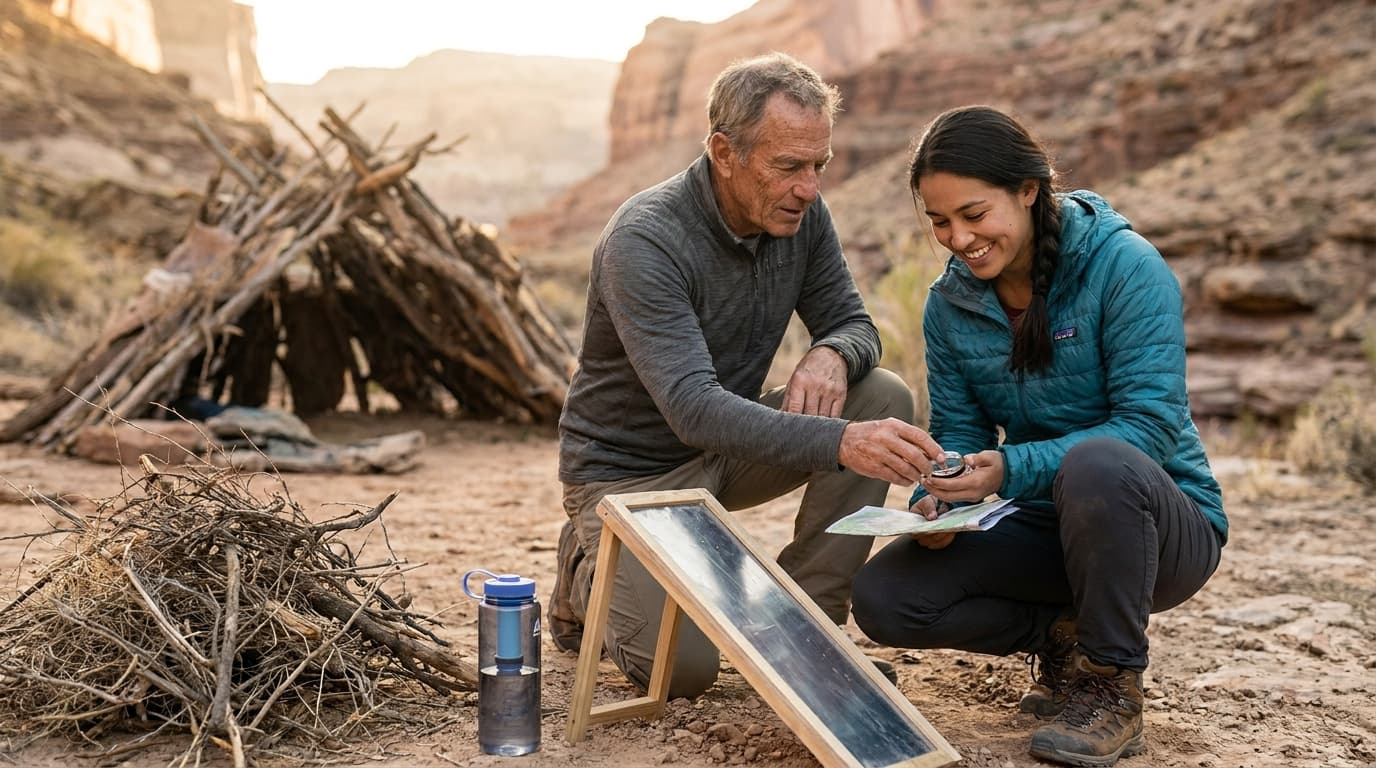
Finding water in an arid environment starts with looking for signs of life. You probably won't stumble upon a bubbling spring, so you have to look for green clumps of grass or birds hovering near the ground. Moisture often collects at the base of canyon walls or in the outer bends of dry riverbeds where the soil stays damp long after the rain stops.
Imagine walking through a dusty wash and spotting a patch of bright green shrubs against the brown sand. Digging just a few inches down in that spot might reveal the water those plants are drinking. You can also tie absorbent rags to your ankles and walk through brush at dawn to soak up dew, which is a survival technique that can provide those first vital sips.
The science of survival proves that behavioral changes are just as vital as finding a stream. Since you need at least 350 ml of water daily just to keep your organs functioning, you have to be stingy with your sweat. Most moisture is lost through heavy breathing and skin evaporation, so moving during the heat of the day is a major mistake that drains your reserves.
Take a survivor who realizes they are lost and immediately finds a deep shadow to sit in. They keep their mouth shut to breathe through their nose and resist the urge to snack on their trail mix. Because digesting protein and fat uses up so much internal hydration, eating without drinking can actually dehydrate you faster than fasting. This approach keeps your core temperature stable and your blood volume up.
Key insights:
Bag a leafy branch with plastic to capture moisture through leaf transpiration.
Breathe only through your nose to keep your throat and lungs from drying out.
Switch to a nocturnal schedule to move only when the air is cooler.
Avoid eating protein or fat because your body needs extra water to process them.
Look for birds circling low as a sign of a hidden water source nearby.
The Science of Conserving What You Have
Survival isn't just about finding a stream; it is about keeping every drop of moisture inside your body. Since humans generally only last about three days without water, your behavior matters as much as your sourcing skills. Simple shifts like breathing through your nose and staying still during the heat of the day stop sweat and breath from draining your vital reserves.
Imagine you are stuck in a dry canyon with only a few sips of water left in your bottle. You might feel a sharp hunger, but reaching for a high-protein snack like beef jerky is a dangerous mistake. Your body uses a massive amount of water to process fats and proteins, so eating while dehydrated actually speeds up your body's water loss.
Key insights:
Breathe through your nose to minimize moisture loss from your lungs.
Adopt a nocturnal schedule to avoid sweating in the midday sun.
Avoid eating if water is scarce to prevent metabolic dehydration.
Keep your skin covered to protect yourself from drying winds.
3 Survival Mistakes When Lost in the Woods That Can Be Fatal
Getting lost triggers a panic that often leads to mistakes you can't take back. The biggest error is moving without a plan, which wastes your energy and precious water. Since we can only last about three days without hydration, every drop counts. It's a bit like getting stuck in quicksand; the more you scramble without thinking, the worse it gets.
Imagine a hiker in Kentucky who follows a creek downstream, expecting it to lead toward a road. Instead of a clear path, the water suddenly vanishes into an underground cave system, leaving them stranded in the deep woods. This is why following water can be deadly in specific regions where the land is full of hidden traps.
Another common trap is trying to hydrate with snow. It seems like a quick fix, but eating frozen water drains your core temperature and forces your body to burn calories just to stay warm. This mistake can lead to hypothermia faster than you’d think. So, before you do anything, take a breath and remember these steps.
Key insights:
Follow the S.T.O.P. rule by sitting down and planning your next move before taking another step.
Melt snow before drinking it to avoid dropping your body temperature.
Breathe through your nose to reduce the amount of water you lose through respiration.
Skip the snacks if water is scarce because your body needs extra hydration to digest proteins and fats.
Choosing the Best Water Filtration Systems for Wilderness Survival
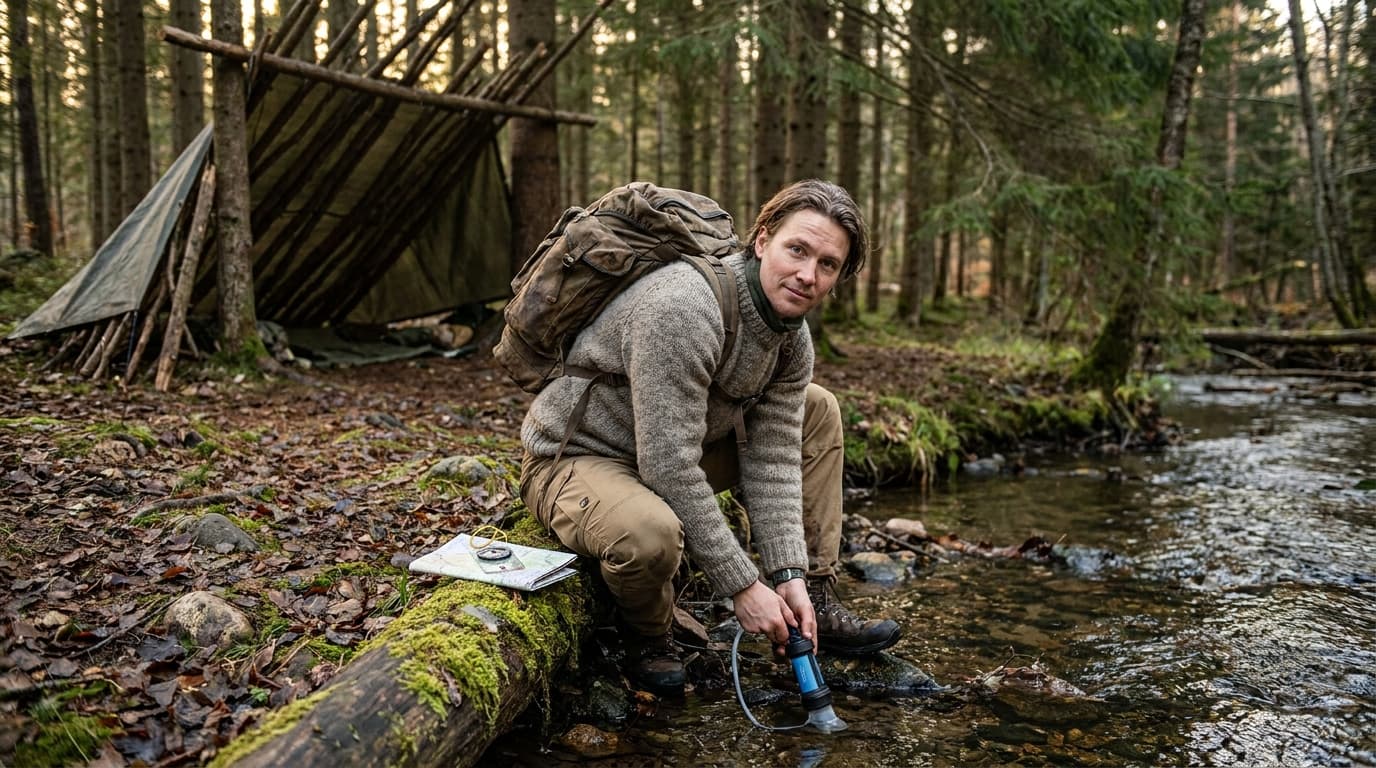
Making found water safe is a survival priority because the human body only lasts about three days without hydration. To stay safe, you have to treat every source as if it is contaminated. This means clearing out the visible dirt first and then attacking the invisible pathogens that cause illness. You generally need at least 350 ml of water daily just to keep your systems running, and more if you are in a hot environment.
The most effective approach is to stick to the ABCs: boil, filter, and disinfect. Boiling is the most reliable way to kill germs, while filters handle the grit and cloudiness. Adding a purification tablet serves as your final safety net. It is also smart to watch what you eat when you are thirsty; digesting fats and proteins uses up significantly more of your body's water than simple carbohydrates do.
Imagine you find a murky pond deep in the woods after hours of hiking. It is full of sediment and looks dangerous to drink. Instead of rushing, you use a piece of clothing to strain the big particles before using your main filter. Even if the water looks clear afterward, you still take the time to boil it over a small fire. This extra effort prevents a stomach bug that would otherwise drain your remaining energy and leave you more dehydrated than before.
Key insights:
Boil every drop of found water for at least one minute to ensure it is free of live bacteria.
Filter through a fine mesh or commercial device to remove silt and clear the water's appearance.
Carry backup purification tablets for situations where building a fire or using a filter is not possible.
Limit protein intake if your water supply is low to save your body's internal moisture for vital functions.
Collect morning dew by walking through tall grass with absorbent cloths tied to your legs and wringing them out.
Finding Your Way: The Best Survival Compass for Wilderness Navigation
A solid compass is a lifesaver when your phone screen goes dark, but the real secret is knowing how to read the world around you. If you lose your digital map, you can stay on track by using dead reckoning. This basically means guessing your current spot based on where you last were and how long you have been walking. It is a simple way to keep from wandering in giant loops.
Picture this: the sun is dipping low, your GPS is out of juice, and the trail you were on has disappeared under a thick layer of crunchy leaves. It is easy to panic when the woods start looking identical. But if you look up, the North Star (Polaris) can show you north in the northern hemisphere. Having that one fixed point in the sky makes it much easier to pick a direction and stick to it.
Staying in a straight line is actually pretty tough because humans tend to lean one way or the other without realizing it. If you do not have a clear landmark to walk toward, you could easily walk in circles for hours. This is why experts suggest terrain association. This is just a way of saying you should match the hills and valleys you see to the shapes on a paper map.
Key insights:
Try dead reckoning by keeping track of your pace and direction from your last known location.
Look for the North Star (Polaris) to find north at night if you get turned around.
Pick a distant object like a specific peak or tall tree to walk toward so you do not veer off.
Avoid following water downstream in places like Kentucky where it might suddenly drop into a cave.
Use a topographic map to spot elevation changes and stay aware of your surroundings.
Emergency Shelter Building Tips for Cold Weather
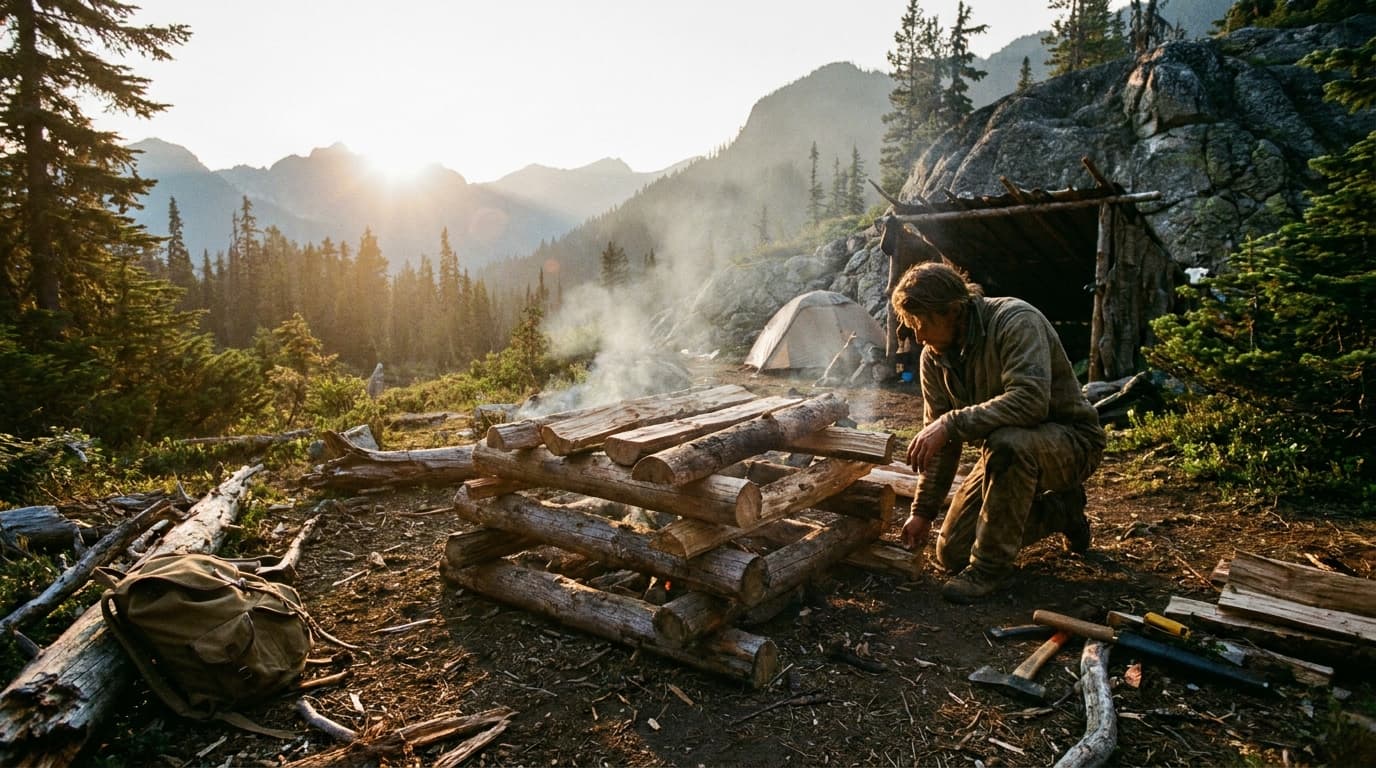
Staying warm when the temperature drops is all about keeping your body heat where it belongs - with you. When you are stuck outside, the cold ground and the wind are basically trying to steal your warmth. A good emergency shelter works like a giant, leafy sleeping bag. You want to create a small, snug pocket that traps the air your body warms up, keeping you safe from hypothermia even when the weather gets dicey.
Imagine you are out for a hike and a sudden storm rolls in, turning the woods gray and freezing. You do not have a tent, so you find a sturdy fallen log to use as a base. You lean smaller branches against it to make a rib-like frame, then pile on every dry leaf and pine needle you can find. It might look like a messy pile of yard waste from the outside, but once you crawl in, it feels like a cozy fort that blocks the biting wind and keeps you dry.
Survival is really a game of managing your energy and body temperature. While it is true that you can only survive for about three days without water, in the freezing cold, you might only have a few hours if you are not protected. Do not make the mistake of building a huge, roomy shelter. A small space is much easier for your body to keep warm. As expert JD Alewine says, awareness is the first step in safety, so always look up for dead branches before you start building your home for the night.
Key insights:
Try to pile up at least six inches of dry leaves or grass to make a thick bed so the cold ground does not sap your heat.
Look for thick evergreen boughs or large pieces of bark to layer on the roof so rain and snow slide off.
Avoid eating snow to stay hydrated because it drops your core temperature and drains your energy.
Keep the interior space just big enough to crawl into so your body does not have to waste heat on empty air.
When building your walls, aim for at least two feet of debris thickness to ensure the wind cannot whistle through.
Frequently Asked Questions
You're generally looking at about three days before things get really dangerous. It's a very tight window, and it can shrink even faster if you are stuck in a harsh environment or working hard to find your way out.
According to survival statistics, you need at least 350 ml of water every day just to keep your body functioning, and that number jumps to 600 ml if you're in a tropical area. Here is the thing most people miss: eating can actually make you more dehydrated. Digesting fats takes nine times more water than carbs, so if you are low on fluids, it is often better to skip the meal and focus entirely on hydration.
It might seem like a quick fix, but eating snow is actually counterproductive when you're trying to survive. The big problem is that your body has to use a massive amount of internal energy to melt that snow once it is inside you. This drops your core temperature fast and puts you at a much higher risk for hypothermia.
If you can, always melt the snow first before you drink it. You can use a fire or even put some in a dark container and let the sun do the work. It is much better to drink liquid water than to force your body to waste calories and heat doing the melting for you.
It sounds like common sense to follow a creek to find civilization, but it is actually a dangerous survival myth that can lead you into a trap. In some regions, water does not always stay on the surface. For example, in places like Kentucky, streams can suddenly disappear into underground caves, leaving you stuck in the middle of nowhere with no clear path to follow.
The Nature Reliance School warns that this advice can get you into serious trouble because downstream often leads to thick swamps, heavy brush, or steep terrain that is impossible to cross. It is usually much safer to stay where you are or use a map and compass to find a real path out.
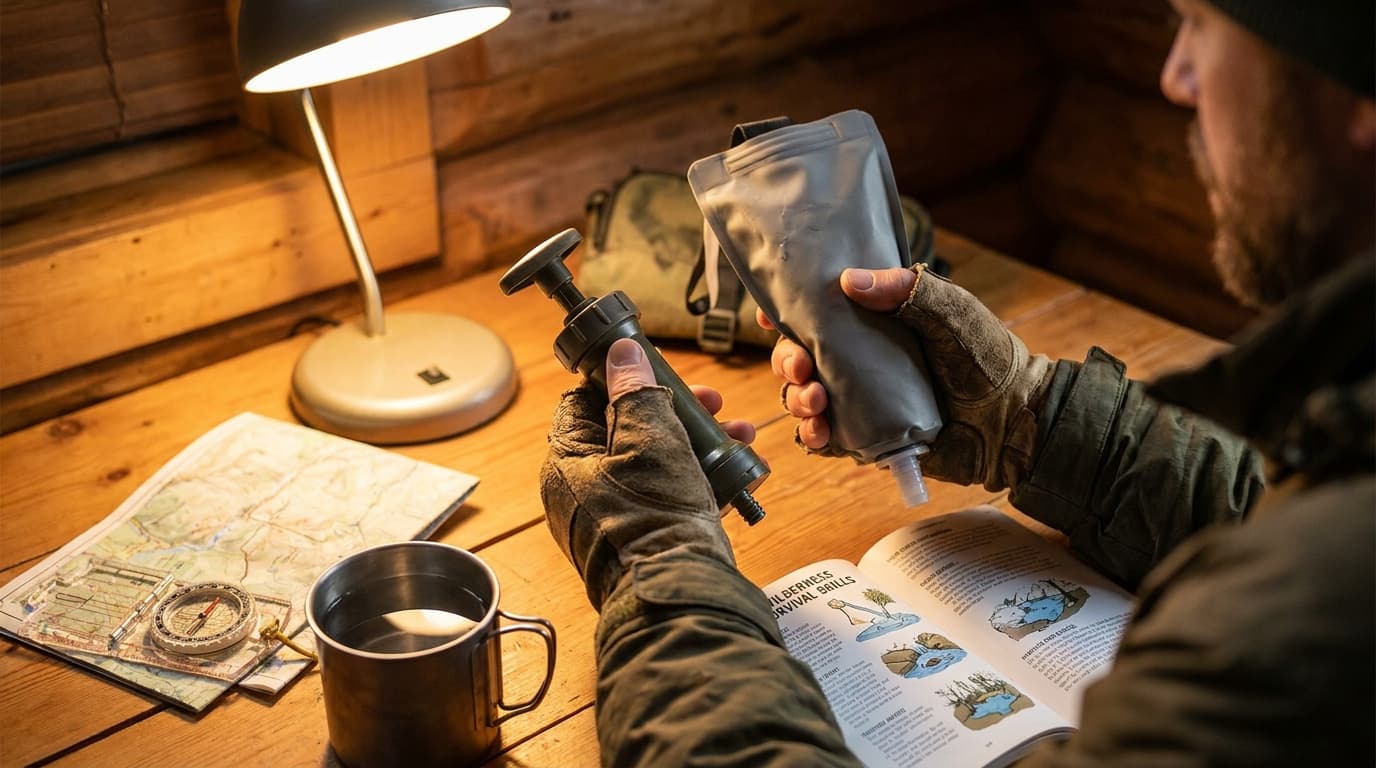
The most vital item in your kit is not a fancy knife, it is actually a reliable way to get clean water. Since the human body can only go about three days without water, having a filtration system or a container to boil water is your top priority. You will need at least 350 ml a day just to keep going, and that number jumps way up in hot weather.
Beyond gear, your best tool is your own awareness. Knowing how to find the North Star or how to collect dew with a cloth can save you when your equipment fails. Remember that survival is as much about your skills and mindset as it is about what is in your pack.
Conclusion
So where does this leave us? Staying safe is not just about carrying the best water filtration systems for wilderness survival or the best survival compass for wilderness navigation. It is about your mindset. Whether you are practicing survival skills: how to find water in the desert or avoiding common survival mistakes when lost in woods, the goal is keeping your head clear. When you know how to find moisture and use emergency shelter building tips for cold weather, you stop feeling like a victim and start feeling prepared.
You do not have to wait for a crisis to see if these skills work. Consider trying a new navigation trick or a water-sourcing technique during your next hike. Getting familiar with these basics now means they will feel like second nature later. It is always better to learn while you are having fun than when you are in a real pinch.
Survival is less about fighting nature and more about knowing how to live within it. Once you have that confidence, the woods stop being a place to fear and start being a place to explore. Stay smart, stay prepared, and remember that every great explorer started with these same simple steps.
Every WilderReady guide is researched, written, and fact-checked in-house against trusted references such as the American Red Cross, the National Park Service, and the CDC before it goes live. We publish under this shared byline instead of invented personas, so you always know who stands behind the guidance you are reading.