Survival Gear That Actually Keeps You Warm: Why Most Ratings Are Wrong
Have you ever woken up shivering in the middle of the woods despite your gear promising to keep you warm? It's a harsh lesson many outdoor fans learn too late...
Survival Gear That Actually Keeps You Warm: Why Most Ratings Are Wrong
Have you ever woken up shivering in the middle of the woods despite your gear promising to keep you warm? It's a harsh lesson many outdoor fans learn too late because they trust a label that was never meant for comfort. Most hikers don't realize that a cold weather survival sleeping bag rating guide usually shows the temperature where you stay alive rather than where you sleep soundly.
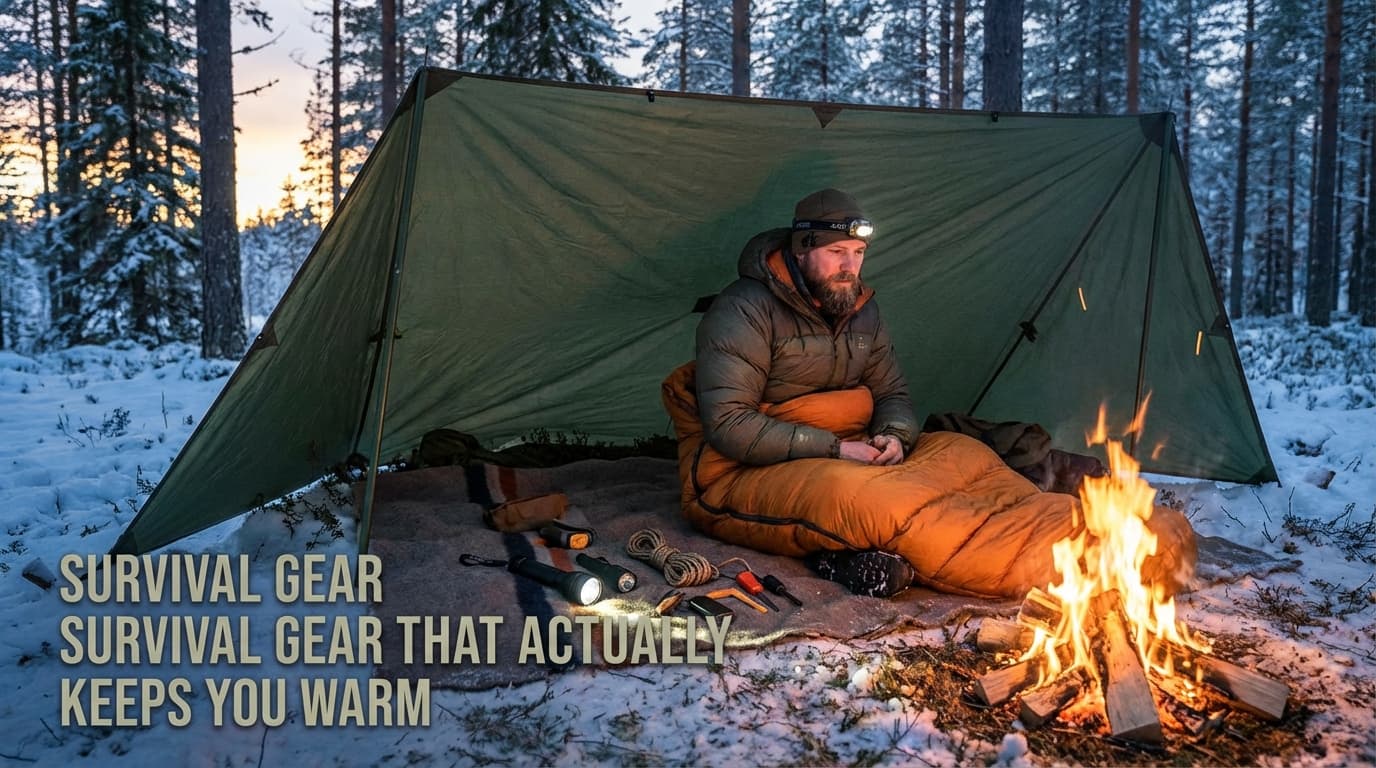
Staying warm in the wild is about more than just a thick blanket. You also need to think about the best tarp for emergency shelter building and how to handle a freezing night with a proper emergency fire starter comparison for wet wood. Whether you're a seasoned pro or just starting out, understanding how heat leaves your body is the first step to staying safe when the sun goes down.
This guide breaks down why those ratings are often misleading and which specific tools actually perform in the field. We'll cover everything from essential bushcraft rope for knot tying to the best survival flashlight for night navigation so you can head out with confidence. Let's look at the gear that keeps you cozy when the mercury starts to drop.
Ever wonder why you're shivering in a bag rated for 30 degrees when it's only 40 outside? Here is the cold truth: most temperature ratings are for survival, not a good night's sleep. Expert Boone Thatcher says those numbers tell you how to stay alive, not how to stay comfortable. If you’re heading into the woods, you generally need a bag rated 10 to 15 degrees lower than the actual forecast. Anything less, and you’re just counting minutes until sunrise.
It isn't just about the air, either. Cold seeps up from the ground faster than you’d think, which is why ground insulation is a total game changer. Using an insulated tarp like the Arcturus can save your night because its Mylar coating reflects body heat back at you instead of letting it vanish into the dirt. Without that barrier, even a high-end bag can fail when the mercury drops. Gear failure in the woods is a lesson nobody wants to learn the hard way.
Key insights:
Comfort requires a sleeping bag rated 10 to 15 degrees colder than the lowest expected temperature.
Ground insulation is just as vital as your sleeping bag for maintaining body heat.
Thermal tarps with Mylar coating provide a dual-purpose barrier for heat retention and moisture protection.
Why Your Sleeping Bag Rating Is Probably Lying to You
Ever woken up shivering in a bag that was supposedly rated for the temperature outside? It is a miserable rite of passage for many campers. The problem is that most ratings you see on the tag are actually survivability ratings rather than comfort ratings. As expert Boone Thatcher points out, these numbers are meant to keep you alive but not necessarily happy. To stay actually cozy, you should follow the 10-degree rule. This means you should always pick a bag rated at least ten degrees colder than the lowest temperature you expect to face during your trip.
Manufacturers often use the lower limit as their headline number. This is the temperature where a person can survive the night, but they will likely be shivering and awake. If you are out in the mountains and the mercury hits that limit, you are going to have a rough time. Take the OneTigris Light Patrol bag, for instance. It is a solid middle-ground choice rated for 32°F to 68°F and weighs about 3.15 lbs. While it is a great piece of gear, if the air hits exactly 32°F, you are at the very edge of your comfort zone. Real-world failures happen because we treat these limits as suggestions for a good night's sleep rather than emergency boundaries.
When you want to stay warm without carrying a heavy pack, 800-fill down is usually the king of ultralight bushcraft. It packs down small and traps heat better than almost anything else. However, down has a major weakness because it hates water. If your bag gets damp, that expensive down clumps up and stops working. This is why many people look for bags with a 300T ripstop pongee shell and water-repellent coatings. Some even add an Arcturus insulated tarp to their setup because its Mylar layer reflects heat back to the body, helping a synthetic bag perform much better in wet conditions.
What does this mean for your next trip? It means looking past the big numbers on the packaging. Whether you choose the lightweight efficiency of down or the damp-weather reliability of a synthetic bag, your goal is to create a buffer. Ground insulation matters just as much as your bag. Without a solid pad or a heat-reflective layer beneath you, even the best 800-fill down will lose the battle against the cold ground. Choosing gear is about understanding these trade-offs so you do not end up as another cautionary tale in the woods.
Key insights:
A bag's lower limit is for survival, so always aim for a bag rated 10 to 15 degrees colder than expected weather.
800-fill down offers the best warmth-to-weight ratio but requires careful moisture management to stay effective.
Pairing a sleeping bag with a heat-reflective tarp or quality ground pad is essential for preventing heat loss to the earth.
The 'Lower Limit' Trap
Ever wonder why you are shivering in a bag meant for freezing weather? Here is the truth. Most temperature ratings refer to the survivability rating instead of a comfort level. As Boone Thatcher points out, these numbers are about keeping you alive, not cozy. If you see a bag like the OneTigris Light Patrol rated for 32 degrees, do not expect a great sleep when the frost hits.
Real life in the mountains is harsher than a lab. In the Blue Ridge Mountains, a bag rated for 30 degrees often fails when the mercury hits 19 degrees. You end up cold because the rating ignores real conditions. This is why you need a buffer. To stay warm, choose a bag rated 10 to 15 degrees lower than the expected forecast.
Key insights:
Manufacturer ratings reflect survival limits rather than actual sleeping comfort.
Always select a sleeping bag rated at least 10 to 15 degrees colder than the lowest predicted temperature.
Synthetic vs Down: The Weight and Water Debate
Why do serious bushcrafters obsess over 800-fill down? It is the king of ultralight gear because it offers massive warmth without the bulk. But here is the catch: down hates water. If your insulation gets soaked, it stops working entirely. This is why modern bags use 300T ripstop shells with water-repellent coatings to handle damp nights. These coatings are a lifesaver when the humidity rises or a small leak develops in your shelter.
But weight isn't everything. You have to remember that a bag's rating is usually for survival, not a cozy night's sleep. If you expect forty degrees, you want gear rated much lower to stay comfortable. Also, do not forget the ground. Cold seeps in from below faster than the air. Using an insulated tarp or a heavy-duty nylon shelter like the AquaQuest Defender helps keep that moisture away from your down. It is a balancing act between staying light and staying dry.
Key insights:
800-fill down provides the best warmth-to-weight ratio for ultralight trekking.
Water-repellent coatings on ripstop shells are essential to protect down from clumping in damp weather.
Temperature ratings on bags often indicate the limit for survival rather than actual comfort.
The Magic of the Insulated Tarp
Most people grab a cheap blue plastic sheet from the hardware store and think they are set for an emergency. It is a classic mistake. While those sheets keep the rain off, they do almost nothing to stop you from freezing when the sun goes down. Plastic is a terrible insulator. It just sits there, letting your body heat escape into the night air while the cold ground pulls the rest of your warmth away from below. If you are relying on a basic sheet of plastic, you are basically sleeping under a leaky umbrella that offers no thermal protection.
The Arcturus insulated tarp changes this by using a layer of Mylar to handle thermal regulation. This is the same material used in space blankets, but here it is backed by heavy duty polytarp material with a 10 mil thickness. It works by bouncing your radiant heat back toward your body. Without that reflection, you are trying to heat up the entire woods with your own skin. As Sean Gold notes, the best survival tarp does more than the rest because it uses that coating to both trap and repel heat depending on how you pitch it.
When you compare this to the AquaQuest Defender, the trade-off becomes clear. The Defender is a 7 by 10 foot nylon tarp that is famous for being nearly indestructible. It weighs about 2.4 pounds and is a favorite for people who do a lot of heavy bushcrafting. However, it lacks a heat-reflective coating. If you are using a sleeping bag like the OneTigris Light Patrol, which is rated for 32 to 68 degrees, you might find yourself shivering if the temperature drops toward that lower limit. In those cases, having a tarp that actively reflects heat can make up for a sleeping bag that is not quite warm enough for the conditions.
Building a shelter that actually holds heat is about more than just throwing a cover over your head. You have to think about the wind and the angle of the tarp. If you pitch it too high, all your warmth just floats away. You want to create a small pocket of air. By angling the tarp low and toward the wind, you create a shield that keeps the cold air out and the warm air in. Think of it like building a small room rather than just a roof.
That 10 mil thickness is not just for show. It acts as a literal wall against the wind. Most cheap tarps are much thinner, which allows the wind to sap your warmth through convection. A thicker material creates a more stable barrier. This matters because wind chill can strip heat away much faster than still air. When you combine a well angled tarp with a decent ground setup, you are creating a microclimate. Ground insulation is just as critical as air insulation because the earth will pull heat out of you faster than the air will.
Just remember that gear ratings can be tricky. Like Boone Thatcher says, temperature ratings are usually survivability ratings rather than comfort ratings. The same applies to your shelter. A tarp might keep you dry, but the way you set it up and the materials you choose are what keep you warm. Do not just look at the specs on the box. Think about how the gear actually interacts with your body heat in the real world.
Key insights:
Mylar linings reflect radiant body heat back to the user, providing a thermal advantage that standard nylon or plastic tarps lack.
The 10 mil thickness of an insulated tarp provides a superior wind barrier compared to thinner emergency blankets or standard hardware store tarps.
Shelter geometry is as important as material because angling a tarp low traps a pocket of warm air that prevents heat loss through convection.
Ground insulation must be paired with overhead shelter because the earth conducts heat away from the body more efficiently than air.
Building a Shelter That Actually Holds Heat
Ever wonder why you're still shivering under a tarp even when you're dry? It is usually because your shelter is acting like a chimney rather than a thermal blanket. To actually stay warm, you need to angle your tarp low to the ground to trap your body heat. Think of it like creating a small, tight pocket of air that you can actually warm up with your own breath and skin. If the roof is too high, all that precious warmth just floats away into the night sky.
The material you choose matters just as much as the angle. While a lightweight nylon tarp is fine for summer rain, the Arcturus Insulated Tarp is a better bet for cold weather. It's 10 mil thick, which is the sweet spot for blocking biting winds that would otherwise cut right through thinner fabrics. As Sean Gold notes, this specific tarp uses a Mylar coating to reflect heat. It does more than just keep you dry; it actively bounces your own body heat back at you instead of letting it escape.
But here is the thing many people miss: even the best tarp won't save you if you're losing heat to the frozen dirt. Ground insulation is just as critical as your overhead cover. When you combine a thick, 10 mil reflective tarp with a solid ground pad, you're building a complete system. This setup creates a protected microclimate that can keep you safe even when the temperature ratings on your gear start to feel like wishful thinking.
Key insights:
Angle tarps low to the ground to minimize the volume of air your body needs to heat.
A 10 mil thickness provides the necessary durability and wind-blocking power for winter survival.
Mylar-lined tarps act as heat reflectors, significantly increasing the internal temperature of a shelter.
Shelter systems must include ground insulation to prevent conductive heat loss to the earth.
Don't Forget the Ground: The Secret to Staying Warm
Think about the last time you laid down on the cold ground. Even with a thick jacket, the chill seems to soak right into your bones within minutes. This happens because the earth acts like a giant heat-sink. It does not just sit there; it actively pulls warmth away from your body through conduction. While many people obsess over finding the best survival tarp for emergency shelter building, they often forget that the cold air isn't their only enemy. The ground is actually far more efficient at stealing your life-sustaining heat than the wind is.
To fight this, a quality sleeping pad is just as critical as your sleeping bag. Here is a reality check: most temperature ratings on gear are actually survivability ratings rather than comfort levels. As expert Boone Thatcher points out, these numbers tell you how to stay alive, not how to stay cozy. If you are using something like the OneTigris Light Patrol bag, which is rated down to 32°F, you will still feel the bite of the frost if there is nothing between you and the dirt. You want a barrier that creates a dead-air space. Some modern gear, like the Arcturus Insulated Tarp, helps by using a 10 mil thickness and Mylar coating to reflect heat back to you, but even that works best when paired with a dedicated pad.
What if you are caught without a pad? You have to get creative with what the woods provide. Think of it this way: you need to build a mattress out of air and debris. Piling up a thick layer of dry pine boughs, ferns, or even a deep mound of crunchy leaves can save your life. You want at least six to eight inches of compressed natural material to keep your body from touching the frozen earth. It might not feel like a luxury hotel, but it breaks the connection to the heat-sink below. This simple step can be the difference between a night of shivering and a night of actual rest.
Key insights:
Ground conduction steals body heat faster than cold air does.
Sleeping bag ratings usually indicate the limit for survival, not a guarantee of a warm night.
Natural debris like pine boughs can act as an emergency thermal barrier if you lack a sleeping pad.
Flashlights and Fire: Tools for the Darkest Nights
You are out in the woods, the sun has dipped below the horizon, and suddenly that cheap plastic flashlight you tossed in your bag feels like a toy. Night navigation is a different beast entirely. It demands gear that can handle a drop or a downpour without flickering out. Interestingly, the top-selling survival kit on Amazon packs in 262 pieces, including everything from a tent to a shovel. But here is the catch: is that massive pile of gear actually worth the weight on your back? Most of the time, a few high-quality tools outperform a bag full of gadgets that might break the moment you actually need them.
When choosing a survival flashlight, stop looking only at the highest lumen count and start looking at the battery life. You need a light that offers an SOS LED mode, a feature that has become a staple in modern EDC gear. These lights are often built into tactical tools like glass breakers, meaning you get utility without the extra ounces. What does this mean for you? It means having a light that can signal for help for forty-eight hours is much better than a blinding beam that quits after two. You want a tool that balances brightness with longevity so you are not left fumbling in the dark.
Then there is the fire. Trying to start a flame in a monsoon is a real test of patience. The wet wood challenge is where you see the difference between traditional flint and steel and modern scrapers. While the old-school way has charm, a modern scraper produces a hotter spark with less effort when your hands are cold. If everything is soaked, look for dry tinder inside rotting logs or use the inner strands of a paracord bracelet. These bracelets are not just for show; they often hold the materials that keep your fire-starting efforts from fizzling out. It is about finding the dry spots the rain missed and having a reliable spark to catch them.
Key insights:
Quality over quantity: A 262-piece kit sounds great but often includes lower-quality tools that add unnecessary weight.
Battery management: Prioritize flashlights with SOS modes and long runtimes over raw brightness for night navigation.
The wet wood secret: Use the inner core of paracord or the heartwood of fallen logs to find dry tinder in a storm.
Modern scrapers: These tools provide a more consistent spark than traditional flint when conditions are damp and difficult.
Lighting the Way Without Draining Batteries
Imagine the sun has set and your phone is nearly dead. Suddenly, the trail feels like a maze. A solid survival flashlight isn't just a luxury; it’s your primary tool for staying on track. When picking one for navigation, you need a beam that lets you see the ground clearly while still reaching far enough to catch distant markers.
The rise of SOS LED lights in modern gear has changed things. You will find these integrated into everything from paracord bracelets to those massive 262-piece kits found on Amazon. These lights are designed to pulse for hours, ensuring you stay visible to rescue teams without draining your main light.
It’s a smart move to keep your navigation light separate from your emergency signal. That way, you aren't left in the dark when you need help most. Think of it as a simple backup plan that fits right on your wrist.
Key insights:
Navigation lights should balance flood and throw to see both immediate obstacles and distant trail markers.
Modern survival kits now integrate SOS LED lights into wearable gear like paracord bracelets to save space.
Separating your signaling light from your navigation light prevents total darkness if one battery fails.
Making Fire in a Monsoon
Imagine standing in a downpour where every branch feels like a soaked sponge. In a monsoon, finding dry tinder is a game of hide and seek. You have to look for standing deadwood, which means branches that haven't touched the mud, and shave down to the bone-dry center. It is the only way an emergency fire starter for wet wood will actually catch.
This is where your gear needs to work double duty. Think about those paracord bracelets. They are not just trendy accessories because they often hide flint steel scrapers and SOS lights. When your matches are soggy and your lighter fails, that bit of metal on your wrist might be the only thing creating a spark hot enough to defy the rain.
Once you get a flame, you must protect it. Using the best tarp for emergency shelter building, like the 10 mil Arcturus model, helps create a dry pocket for your fire. These tarps use mylar to reflect heat back at you. This ensures your hard-won fire actually keeps you warm instead of just fighting the wind.
Key insights:
Standing deadwood is your best bet for finding dry wood in a storm.
Multi-functional tools like paracord bracelets provide critical backup ignition sources.
Reflective tarps are essential for maintaining fire heat when the ground is saturated.
Rope and Knots: The Unsung Heroes of Bushcraft
You might spend hours picking the best tarp for emergency shelter building, maybe eyeing that Arcturus model with the 10 mil thickness and heat-reflective Mylar. But here is the catch: even the toughest tarp is useless if your rope snaps or your knots slip the moment the wind picks up. Think of rope as the skeleton of your camp. Without high-quality cordage, your shelter is just a heavy, expensive blanket laying on the ground. It is the literal thread that holds your survival strategy together.
The reality is there is a massive gap between the flimsy twine found in junk drawers and real bushcraft cordage like 550 paracord or tarred bank line. While those 262-piece survival kits are popular on Amazon, the included string often lacks the tensile strength to handle a 2.4-pound AquaQuest Defender tarp under tension. Real rope needs to resist stretching and survive the friction of tight knots. If you cannot trust your line to hold a ridge line overnight, you are not just looking at a collapsed tent. You are looking at a long, cold night in the dirt.
So, what does this mean for you? You need to know three knots by heart: the bowline for a fixed loop, the taut-line hitch for adjustable tension, and the clove hitch for securing poles. These are not just fancy tricks. They allow you to adjust your setup as the weather shifts without starting from scratch. Remember, essential bushcraft rope for knot tying is not about having the most gear. It is about having the right gear that actually works when your hands are cold and the rain is starting to pour.
Key insights:
High-quality cordage is essential to support heavy-duty tarps like the 10 mil Arcturus under wind load.
Standard survival kits often include low-grade twine that fails under the tension required for a stable ridge line.
Mastering the bowline and taut-line hitch is more important than owning expensive hardware for shelter tensioning.
Frequently Asked Questions
Honestly, probably not if you want to actually sleep. While a 32°F bag might keep you safe at freezing temperatures, it won't keep you comfortable. Most manufacturers use these numbers as a 'survivability rating,' which is a fancy way of saying you'll stay alive but you'll be miserable and shivering.
If you're expecting the weather to hit 32°F, you should grab a bag rated for 15°F or 20°F instead. You'll also want to make sure you have a solid sleeping pad under you. The ground pulls heat away from your body much faster than the air does, so that extra layer of insulation is just as important as the bag itself.
The best way to handle this is to keep it simple and skip the washing machine. Since tarps like the Arcturus have a thin Mylar coating to reflect heat, a rough wash cycle can ruin that shiny layer. Just spread the tarp out on a flat surface and use a soft sponge with some mild dish soap and warm water to wipe away the dirt.
Make sure you rinse it well and let it air dry completely before you pack it away. If you fold it up while it's still even a little bit damp, you're asking for mold and funky smells. It only takes a few minutes of care to keep that heat-reflective coating working like it should for your next trip.
It usually comes down to more than just a high lumen count. For most trails, you want a light that puts out at least 200 to 300 lumens so you can see the path and any tripping hazards. If you are heading into thick woods or rocky areas, you might want something even stronger.
But here is the thing that people often forget. You need to check the beam distance and how long the battery lasts. A super bright light is great, but it is not much help if it runs out of juice halfway through your hike. Always carry extra batteries or a backup light just in case.
You can, but it takes a lot of work and some patience. You cannot just throw a spark onto a wet log and expect it to catch. The secret is getting to the dry wood hidden inside the wet exterior. You will need to split the wood open to find the dry parts.
Once you have those dry shavings, your flint scraper can do its job. It is also a good idea to keep some dry tinder in your survival kit. Having a small bit of dry material to start with makes the whole process much easier when everything around you is soaked.
The biggest thing to remember is that those temperature ratings are usually for survival and not for comfort. If a bag says it is rated for 30 degrees, that means you will survive at that temperature, but you will probably be shivering all night. It is a good rule to pick a bag rated about 10 to 15 degrees colder than what you actually expect.
You also need to think about ground insulation. Even a high quality bag won't keep you warm if the cold ground is pulling heat away from your body. Pairing your bag with a solid sleeping pad is just as important as the bag itself.
If you are dealing with cold or extreme weather, then yes, it is definitely worth it. A regular nylon tarp keeps the rain off, but an insulated one like the Arcturus uses Mylar to reflect your body heat back to you. This can make a huge difference in staying warm during an emergency.
These tarps are also built much tougher than your average hardware store tarp. With a 10 mil thickness and reinforced corners, they can handle heavy wind and rough use without falling apart. They might be a bit heavier, but the warmth and durability you get in return are hard to beat.
Conclusion
So, what is the bottom line when the temperature drops? It is that survival gear is only as good as your understanding of its limits. A sleeping bag rating is just a number on a tag, and it won't mean much if the earth is sucking the heat out of your body or your shelter isn't built to block the wind. Staying warm is about a system - combining your gear with a solid ground pad and an insulated tarp to keep your own body heat where it belongs.
Your next move should be to get hands-on with your kit before you are actually stuck in a storm. Try out that emergency fire starter comparison for wet wood in your backyard on a rainy afternoon, or practice your knots with some essential bushcraft rope. Realizing your flashlight isn't bright enough for night navigation is a lesson much better learned in your driveway than on a mountain trail.
Nature does not care about the brand name on your jacket, but it does reward preparation. Pack gear you trust, test it often, and stay safe out there.
Every WilderReady guide is researched, written, and fact-checked in-house against trusted references such as the American Red Cross, the National Park Service, and the CDC before it goes live. We publish under this shared byline instead of invented personas, so you always know who stands behind the guidance you are reading.