Survival Gear Just Got Smarter: What Actually Belongs in Your Bag
If you're still packing your bug-out bag like it's 1999, you're already behind. It's a bold claim from the experts, but it makes a lot of sense because survival isn't...
Survival Gear Just Got Smarter: What Actually Belongs in Your Bag
If you're still packing your bug-out bag like it's 1999, you're already behind. It's a bold claim from the experts, but it makes a lot of sense because survival isn't just about sharp knives and heavy wool blankets anymore. The world has changed, and the tools we use to stay safe have to keep up if we want to stay prepared.
Today, being truly ready for anything means looking at smart survival gear that blends traditional skills with new technology. Whether it's a solar powered survival kit or high-tech camping gadgets, the focus has shifted from brute force to intelligent systems. We're living in a time where energy resilience is just as vital as food and water, so knowing which modern bushcraft gear actually works is a total game changer for your peace of mind.
In this guide, we'll settle the plasma lighter vs matches debate and check out the portable power stations that keep your essential electronics running. You'll get a clear look at how to build a kit that's both high-tech and reliable for any situation that comes your way.
Is Your Survival Kit Stuck in the Past?
Ever feel like your emergency bag belongs in a museum? Survival is not just about sharp knives and heavy canvas anymore. We are seeing a massive shift from brute force tools to intelligent systems that do the heavy lifting for you. It is no longer just about hacking through brush. It is about how well you can manage your energy and data when the grid goes dark.
Think about the Golden Rule for 2026. If you can't power it, you can't use it. This makes energy resilience just as vital as food and water. A portable station like the Goal Zero Yeti 500X packs 497Wh of capacity into a 12-pound frame. It keeps medical devices or high-power radios like the 8W Baofeng UV-5R Pro running without the noise of a gas generator. That silent operation is a huge win for keeping your home peaceful and secure for everyone, including your pets.
We are moving into a hybrid world where old-school bushcraft meets modern battery chemistry. Instead of manual water pumps that tire you out, new systems use solar-rechargeable UV-C light to kill bacteria automatically. This is not about being lazy. It is about being smart. You still need basic skills, but combining them with smart survival gear gives you a massive edge. It is time to trade some dead weight for tools that actually work for you.
Key insights:
Energy is now a primary survival resource alongside food and water.
Modern gear favors silent, solar-rechargeable systems over loud, fuel-dependent tools.
Survival has become a hybrid discipline blending traditional skills with advanced technology.
The New Golden Rule: If You Can't Power It, You Can't Use It
If you are still packing your bug out bag like it is 1999, you are already behind. That is a blunt wake up call from the tactical pros, but it is the reality of our current world. We used to think survival was just about calories and clean water. While those still matter, there is a new priority on the list. Experts now call it the Golden Rule of 2026: if you can not power it, you can not use it. Think about your flashlight, your radio, or even your modern water purifier. Without a way to recharge them, those high tech tools become expensive paperweights the moment the battery dies.
The shift toward energy resilience has changed how we look at gear. In the past, people relied on loud gas generators that could be heard from miles away. Now, the move is toward silent lithium power. This is not just about convenience. It is a tactical choice. When the grid goes down, you want to maintain a silent overwatch rather than announcing your location to the whole neighborhood with a noisy engine. This is where the modern solar powered survival kit comes into play. It gives you long term independence because you are harvesting energy from the sun instead of hunting for fuel that might not be available.
Survival has become a hybrid discipline. It is where traditional bushcraft meets modern battery chemistry and satellite technology. You might know how to build a shelter, but having the power to run a communication device or a medical tool gives you a massive advantage. True self sufficiency is about moving away from disposable products and toward systems you can maintain yourself. Being prepared is not about paranoia. As survival expert Craig Caudill says, it is about practical foresight. The divide between those who thrive and those who merely survive is often drawn by the quality and intelligence of their equipment.
One of the most reliable tools for this job is the Goal Zero Yeti 500X. It is a portable powerhouse that packs a 497Wh capacity into a relatively small frame. With a 300W continuous output and the ability to handle a 1200W surge, it can run most of your essential electronics during a blackout. It includes plenty of ports like USB-C and 12V outlets, so you can charge everything from your phone to your laptop at the same time. It is designed to be the heart of a mobile power setup.
Why does the technical side matter so much? The Yeti 500X uses pure sine wave output. This is a big deal because many cheaper power stations use modified waves that can actually damage sensitive electronics or medical equipment. If you are relying on a device to keep you safe or informed, you want the cleanest power possible. It is the difference between a tool that works and one that fails when you need it most. Think of it as high quality fuel for your most important gadgets.
At 12.86 lbs, this unit is light enough to carry if you have to leave your home quickly. But let us be real, you will definitely feel that weight in a bug out scenario. It is a bit like carrying a heavy bowling ball in your pack. However, the trade off for having nearly 500 watt hours of energy on tap is usually worth the extra effort. When you pair it with a solar panel, you create a closed loop system that keeps your gear running long after the local gas stations have run dry. It is about having confidence in the silence when the lights go out.
Key insights:
Energy resilience is now considered a primary survival resource alongside food and water.
Silent lithium power stations offer a tactical advantage over loud gas generators by maintaining security.
Pure sine wave output is essential for protecting sensitive survival electronics and medical devices.
The Goal Zero Yeti 500X balances a 497Wh capacity with a portable 12.86 lbs weight for mobile emergency use.
The Goal Zero Yeti 500X: A Portable Powerhouse
The golden rule for modern preparedness is simple: if you can't power it, you can't use it. It does not matter how many high-tech gadgets you have if they all go dark when the grid fails. This is why the Goal Zero Yeti 500X has become a staple for anyone serious about energy resilience. It provides a 497Wh capacity, which is enough to keep your phones, lights, and radios running through a long-term outage without breaking your back.
But the real magic is in the 300W continuous output and the use of pure sine wave technology. Why does that matter? Think of it as clean energy. Cheap power stations can sometimes damage sensitive electronics, but a pure sine wave ensures your laptop or medical devices stay safe. Whether you are charging a Baofeng radio or running a small cooler, this unit handles the load with a 1200W surge capacity for those initial power spikes.
Now, let's be real about the weight. At 12.86 lbs, it is a bit heavy for a light hiking trip, but for a bug-out scenario or a base camp, it is a portable powerhouse. You are trading a few extra pounds for the ability to stay connected and informed when everything else goes silent. It is a smart trade-off when you consider that reliable power is often the bridge between just surviving and actually thriving.
Key insights:
Pure sine wave output is non-negotiable for protecting sensitive communication and medical gear.
A 497Wh capacity offers a solid balance between long-term energy storage and manageable carry weight.
Energy resilience is now considered as vital as food and water in modern survival planning.
High-Tech Hydration: Water Safety Without the Workout
Think about the last time you had to filter water manually. It usually involves crouching by a muddy bank and pumping a handle until your arms ache. If you are still packing your bug-out bag like it is 1999, you are already behind. Modern gear has moved past brute force. We are seeing a shift toward automatic sensors and solar-powered systems that take the physical labor out of staying hydrated. This matters because survival has become a hybrid discipline where traditional skills meet modern battery chemistry.
In a high-stress situation, speed and ease of use are not just luxuries. They are critical. When you are tired or in a hurry, you do not want to fiddle with complex valves. The beauty of these newer systems is that they have fewer mechanical parts that can break or jam in the field. If a manual pump handle snaps, you are in trouble. But a sensor-driven system is often more durable because it relies on solid-state tech rather than moving plastic parts. It gives you one less thing to worry about when things go wrong.
Now consider the magic of UV-C light systems. Instead of just straining out dirt, these devices use specific light frequencies to neutralize threats automatically. It is a huge leap forward from the mesh filters we used to rely on. These systems are solar-rechargeable, which fits perfectly with the modern rule that if you cannot power it, you cannot use it. You can charge your purifier using a portable power station like a Goal Zero Yeti 500X, which provides the pure sine wave output needed for sensitive electronics. This ensures you never run out of clean water even when the grid is down.
But when should you trust the tech versus sticking to a physical filter? The reality is that a hybrid approach is best. Use a basic mesh to get the visible grit and sediment out of the water first. Then, let the UV-C light handle the bacteria and viruses you cannot see. This gives you the best of both worlds. It is faster than old-school pumping and much more reliable for long-term use. Also, these systems operate silently, which is a tactical necessity if you need to keep a low profile while you gather resources.
What does this mean for your bag? It means you can carry less weight and spend less energy on basic survival tasks. By embracing these smarter tools, you free up your focus for bigger decisions. Staying hydrated no longer has to be a workout. It can be as simple as pressing a button and letting the light do the work for you. This is how you stay ahead in a world where the quality and intelligence of your equipment draw the line between those who thrive and those who merely survive.
Key insights:
Automatic sensors reduce physical fatigue and minimize the risk of mechanical failure in the field.
UV-C technology provides a faster and more thorough way to neutralize biological threats compared to manual straining.
Energy resilience is now a core part of water safety because modern purifiers require reliable power sources.
A hybrid approach using both mesh and light ensures the cleanest water with the least amount of effort.
The Magic of UV-C Light Systems
Think about the last time you spent twenty minutes pumping a manual filter just to get a single liter of water. It is exhausting work. Modern gear has moved past that old brute force approach. We now have solar-rechargeable UV-C systems that handle the heavy lifting for you. These tools use light to neutralize invisible threats like bacteria and viruses automatically. It feels like magic, but it is really just smart science sitting in your pack.
This shift to light-based purification fits into the new Golden Rule of survival: if you cannot power it, you cannot use it. Your UV-C system is only as good as your energy resilience. This is why pairing your kit with a reliable power station is so vital. While these systems are fast and easy, they do rely on a charge. If your battery hits zero, that high-tech purifier will not help you much.
So, do you still need a physical mesh filter? Yes. UV-C light kills germs, but it will not remove sand or dirt from your drink. The best setup is a hybrid one. Use a simple mesh to get the visible gunk out, then let the UV-C sensors finish the job. It is about using the best of both worlds to stay safe and hydrated without wasting energy.
Key insights:
UV-C systems replace manual pumping with automatic light-based neutralization.
Energy resilience is a requirement because tech-based tools rely on a consistent power source.
A hybrid approach using both mesh filters and UV-C light provides the most reliable protection.
Plasma Lighter vs Matches: Which One Actually Wins?
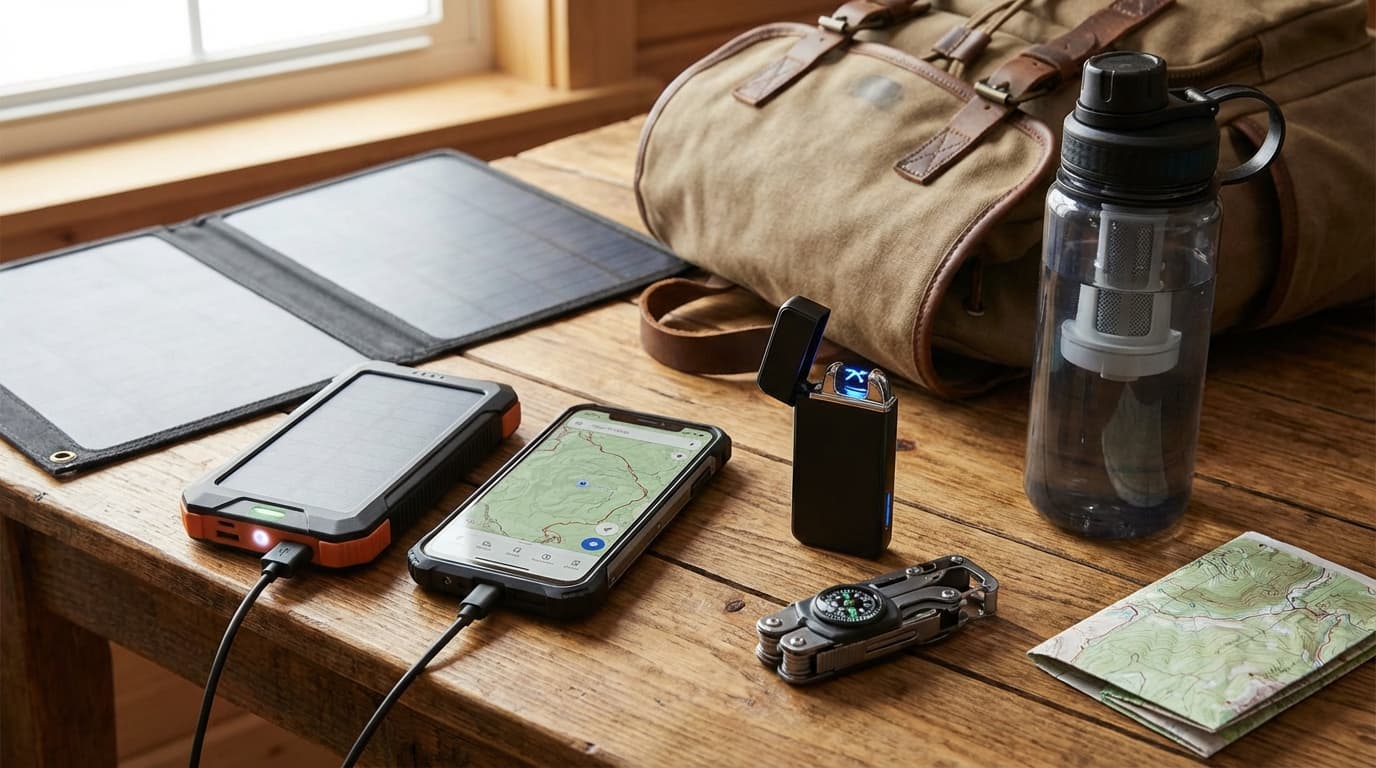
You need a fire for warmth, but every match you strike is dead before it even gets close to the wood. This is where a plasma lighter feels like a total game changer. It uses a high-voltage electrical arc that stays lit even in a gale. It is a big part of the new hybrid survival style where modern tech meets the old trail. But there is a catch. You have to keep it charged. Following the 2026 survival rule - if you can not power it, you can not use it - means you will want a backup like the Goal Zero Yeti 500X. It weighs about 12.86 lbs and gives you a steady 300W output. That is more than enough to keep your lighter and your emergency radio ready for action.
Now, consider the humble match. It is the simple ancestor that still holds its ground. You do not need a solar panel or a USB-C cable to make a match work. You just need a dry surface and a quick flick. In a world where we see AI-integrated gear and automatic sensors in water filters, the match is a reminder that sometimes the simplest tool is the safest. It is a chemical reaction that does not care about grid failures or battery life. If you are still packing your bag like it is 1999, you are missing out on the cool tech. But if you rely only on things that plug in, you might find yourself in the dark when the power goes out.
The real secret to a smart gear bag is balance. You want tools that are quiet, efficient, and reliable. Using a plasma lighter is great for being eco-friendly because it stops you from buying disposable lighters that end up in the trash. It is a big part of modern self-sufficiency. But you should always have a plan B. While the plasma arc is your go-to for daily tasks, matches are your insurance policy. This is not about being worried. It is about having the foresight to know that even the best battery can occasionally fail you.
So, who actually wins? The winner is the person who has both. You get the infinite recharges of the plasma arc for your morning coffee and the chemical certainty of a match for an unexpected midnight chill. Survival has evolved from brute force to making intelligent choices. Whether you are using a Baofeng UV-5R Pro for emergency calls or just trying to get a campfire going for a cozy night under the stars, your gear should be just as adaptable. Mixing modern energy resilience with old-school reliability is the only way to make sure you truly thrive.
Key insights:
Plasma lighters provide a windproof electric arc that works in harsh weather where matches fail.
Matches offer a reliable chemical reaction that does not require a battery or charging station.
A hybrid approach combining high-tech tools with traditional gear ensures you are prepared for any scenario.
Energy resilience is now a primary survival resource, making portable power stations like the Yeti 500X essential.
Staying Connected When the Grid Goes Dark
Imagine the power goes out and your cell phone becomes a useless glass brick. Most people reach for those cheap walkie-talkies from the toy aisle, but those usually fail when things get real. They simply do not have the muscle to push a signal through buildings or thick woods. In a real emergency, wattage is everything. While a basic radio might struggle to reach a mile, an 8-watt system can clear terrain and keep you in touch with the outside world. It is the difference between shouting into a void and actually being heard.
The reality is that communication has changed. It is no longer just about voice; it is about information. Modern tools now use advanced sensors to give you a better look at your surroundings, from weather shifts to local interference. But there is a catch. As the experts say, if you can't power it, you can't use it. This makes energy resilience just as important as the radio itself. A portable station like the Goal Zero Yeti 500X, which packs 497Wh of power, allows for a silent overwatch. Unlike a loud gas generator that tells everyone where you are, these lithium stations keep your gear running in total silence. This is where bushcraft meets battery chemistry.
The Baofeng UV-5R Pro 8W has become the go-to choice for survivalists heading into 2026. It is small, tough, and offers the kind of range you usually only find in much more expensive gear. But here is the thing: you can't wait for a crisis to learn how it works. There is a learning curve to these devices that requires actual practice. You need to know how to find the right frequencies and how to listen to emergency bands before the grid actually goes dark.
Think of tactical communication as a way to stay one step ahead. By monitoring local traffic and weather updates, you get a head start on everyone else. The divide between those who thrive and those who merely survive is often down to the intelligence of their equipment. If you are still packing your bag with tech from twenty years ago, you are already behind. Using a modern radio correctly gives you a window into a world that most people lose the second the lights go out.
Key insights:
Standard consumer radios lack the wattage needed to push through urban or dense terrain during real emergencies.
The Goal Zero Yeti 500X provides a silent 497Wh power source that is essential for maintaining communication without attracting attention.
Survival has evolved into a hybrid discipline where traditional skills must be paired with modern battery chemistry and sensors.
The Baofeng UV-5R Pro 8W is a powerful tool but requires hands-on practice before a disaster occurs to be effective.
The Baofeng Advantage for Emergency Comms
Imagine the power goes out and your phone is suddenly just a glass brick. What now? This is why the Baofeng UV-5R Pro 8W has become the go-to choice for survivalists heading into 2026. It is a beast of a radio, packing 8W of power to punch through interference when standard walkie-talkies fail. But here is the catch: you cannot just toss it in a bag and hope for the best.
The reality is that these radios have a steep learning curve. If you wait for a grid failure to figure out frequencies and offsets, you are already too late. You need to practice now. Think of it as a perishable skill. Also, remember the 2026 survival rule: if you cannot power it, you cannot use it. Since this radio needs juice, pairing it with a portable power station like the Yeti 500X - which offers a 300W output - ensures your lifeline stays open. Tactical communication is about staying ahead of the weather, not just reacting to it.
Key insights:
The UV-5R Pro 8W is a top-tier choice because it offers higher power than standard consumer models.
Energy resilience is non-negotiable; your radio is only as good as your ability to recharge it.
Effective emergency communication requires hands-on practice before a crisis actually occurs.
Bushcraft 2.0: Mixing Old Skills with New Science
Think about your grandfather's old survival kit. It was likely all heavy canvas, rusted steel, and boxes of matches. But today, survival has turned into a hybrid discipline where traditional woodcraft meets modern battery chemistry. If you are still packing your bug-out bag like it is the nineties, you are already behind. The new reality is that energy resilience is just as vital as your food supply. Experts now say if you can't power a tool, you can't really count on using it when things get tough.
This change isn't just about having gadgets. It is about a tactical necessity called silent operation. In a real emergency, a loud gas generator is basically a beacon that announces your location to everyone for miles. That is why people are switching to lithium power stations like the Goal Zero Yeti 500X. It offers 497Wh of capacity and weighs less than 13 pounds. You get enough power for sensitive electronics or medical devices without making a single sound. It gives you a silent overwatch that keeps you secure and hidden.
We are also seeing a massive leap in how we handle basic needs like water. We have moved past the days of exhausting manual pump filters. Now, we have solar-rechargeable UV-C systems with sensors that kill bacteria automatically. It is the same for communication. Carrying a high-power radio like the Baofeng UV-5R Pro ensures you can reach help when cell towers fail. This is the heart of modern bushcraft. It is not about ditching nature, but using science to stay lighter, faster, and more adaptable to whatever environment you face.
Think of it this way: the difference between someone who struggles and someone who thrives often comes down to the quality of their gear. Being prepared is not about paranoia. It is about having the practical foresight to choose tools that work when the grid goes dark. When you move toward modular, lightweight gear, you are not just carrying a bag. You are carrying a survival system designed for the future.
Key insights:
Modern survival requires balancing old-school woodcraft with high-tech energy resilience.
Silent operation using lithium power is now a critical security requirement to avoid detection.
Water filtration has evolved from manual labor to automated UV-C sensor technology.
The 2026 Golden Rule: Your ability to use a tool is now tied directly to your ability to power it.
Common Questions About Modern Survival Gear
The BattlBox Tactical Team once said that if you are still packing your bug-out bag like it is 1999, you are already behind. It is a blunt way of saying that the world has changed. Many people worry that high-tech gadgets will just fail when the rain starts or the grid goes down. But survival today is not about choosing between a flint striker and a satellite phone. It is a hybrid discipline where traditional bushcraft meets modern battery chemistry. Think of it as using the best of both worlds to stay safe and ready.
One of the biggest questions people ask is about power. There is a new rule for 2026: if you cannot power it, you cannot use it. This makes energy resilience just as vital as food and water. For example, a portable station like the Goal Zero Yeti 500X gives you 497Wh of capacity in a 12.8 pound package. That is enough to keep medical devices or phones running through a storm or a long trip. Unlike those loud gas generators that tell everyone exactly where you are, these lithium stations offer a silent overwatch. Staying quiet is a tactical choice that keeps you secure when things get unpredictable.
What about the cost? It is easy to look at a solar-rechargeable UV-C water filter and wonder if your old manual pump is still good enough. While manual filters work, modern systems use sensors to automatically neutralize threats without you breaking a sweat. It is about practical foresight rather than just buying toys. The same goes for communication. The Baofeng UV-5R Pro 8W is often called the best radio for these situations because it gives you more power to reach out when cell towers fail. You are paying for the intelligence and quality of the gear, which often makes the difference between thriving and just getting by.
If you are just starting, do not feel like you need to buy everything at once. Start with the essentials that offer the most flexibility. Look for tools that are modular and lightweight so you can move fast if you need to evacuate. Focus on gear that is eco-sustainable too. True self-sufficiency means you are not relying on disposable batteries or one-time use products. Instead, look for items that can be recharged by the sun. This shift toward renewable energy is not just a trend. It is the core of staying prepared for the long haul.
Key insights:
Modern survival is a mix of traditional skills and advanced battery technology.
Silent operation in power sources provides a tactical advantage by not drawing attention.
Energy resilience is now considered a primary survival resource alongside food and water.
Self-sufficiency is built on gear that can be recharged rather than replaced.
The Future of Preparedness is Intelligent
If you are still packing a bug-out bag like it is 1999, you are already behind. Modern survival has moved beyond just sharp blades and matches into a hybrid world where bushcraft meets battery chemistry. It is a shift from brute force to intelligent tools. The new rule is simple. If you cannot power it, you cannot use it. This makes energy resilience the foundation of any serious kit because the fragility of the power grid is now a primary survival concern.
Consider the Goal Zero Yeti 500X. It weighs about 12.8 pounds and offers a 497Wh capacity. This is plenty for keeping medical devices or radios like the 8W Baofeng UV-5R Pro running when communication is vital. The real benefit here is silence. While gas generators announce your location to everyone nearby, lithium stations provide a quiet overwatch. We are also seeing this intelligence in water safety. Manual pumps are being replaced by solar-rechargeable UV-C sensors that neutralize threats automatically.
Choosing high-tech gear like a solar powered survival kit or plasma lighters over matches is not about paranoia. It is about practical foresight. Building a kit that is eco-sustainable ensures you are not reliant on disposable batteries or fuel that will eventually run out. The divide between those who thrive and those who merely survive is often drawn by the quality of their equipment. Being prepared today means being smart enough to let technology work for you instead of fighting against it.
Key insights:
Survival is now a hybrid discipline where traditional bushcraft skills are enhanced by battery chemistry and satellite technology.
Silent operation is a tactical necessity in modern preparedness to maintain security during grid failures.
True self-sufficiency requires a move away from disposable products toward modular, solar-rechargeable energy systems.
Frequently Asked Questions
Honestly, if the battery dies, your smart gear is just extra weight. That's why the big rule for 2026 survival is that if you can't power it, you can't use it. You'll find that the most prepared people don't just rely on gadgets. They use a hybrid approach where modern tech meets old-school skills.
For example, while a high-tech radio like the Baofeng UV-5R Pro is great for communication, you still need to know how to signal for help without it. Think of tech as your first choice and traditional bushcraft as your backup. It's about having the intelligence of modern gear without losing the grit of traditional survival methods. If you're still packing like it's 1999, you're already behind, but you shouldn't forget the basics either.
Charging in the clouds is tough, but it's not impossible. You'll want to use larger solar panels than you think you need to catch that diffused light. The key is having a solid place to store that energy once you get it. A portable station like the Goal Zero Yeti 500X has enough capacity to keep your essentials running even when the sun is hiding for a day or two.
Also, try to prioritize what you charge. You might skip charging a phone to make sure your UV-C water purification system has enough power to keep your water safe. It's all about managing your resources and being patient when the weather doesn't cooperate. Sometimes you just have to wait for the sun, so having a high-capacity battery is your best defense against a cloudy week.
The big win with a plasma lighter is that it does not need fuel. While a standard butane lighter eventually runs dry and becomes trash, a plasma version uses electricity to create a high-heat arc. You can just plug it into a solar charger or a power bank and you are back in business.
It also works way better in the wind. Since there is no actual flame to blow out, you can start a fire in messy weather that would leave you fumbling with matches. It fits perfectly into the modern idea of being self-sufficient without relying on disposable products that you have to keep buying.
If you want to be ready for the next few years, having a solid radio is a must. The Baofeng UV-5R Pro is often called the best choice for survival because it packs 8W of power. That extra boost helps your signal reach further during an emergency compared to the weaker radios you usually find at big box stores.
But remember the golden rule for survival these days: if you can not power it, you can not use it. You should pair a high-power radio with a good battery station like the Yeti 500X so you are not left with a paperweight when the lights go out. It is all about making sure your gear stays functional when you need it most.
Conclusion
So where does this leave your bug-out bag? We are moving past the days when survival just meant a sharp knife and a wool blanket. Today, smart survival gear like solar powered survival kits and UV-C purifiers are not just fancy extras; they are the new backbone of a truly resilient setup. The real trick is blending those timeless bushcraft skills with modern tech that does the heavy lifting for you.
If you are looking to update your gear, start with your power source. Moving from loud gas generators to silent lithium stations changes everything about how you handle a crisis. From there, you can weigh the pros of a plasma lighter vs matches or look into high-power radios for better reach. Your next move should be testing these high-tech camping gadgets in the backyard or on a weekend trip before you ever need them in a real emergency.
Real preparedness is about staying adaptable and making sure your tools work as hard as you do. Don't just pack for the past when you are living in the future. Build a kit that is smart, sustainable, and ready for whatever happens next.
Every WilderReady guide is researched, written, and fact-checked in-house against trusted references such as the American Red Cross, the National Park Service, and the CDC before it goes live. We publish under this shared byline instead of invented personas, so you always know who stands behind the guidance you are reading.