Stay Connected Anywhere: Finding the Best Satellite Messenger for Your 2026 Adventures
There is a specific kind of silence that happens when your phone signal drops to zero. It is a great feeling until you realize you are miles from the nearest...
Stay Connected Anywhere: Finding the Best Satellite Messenger for Your 2026 Adventures
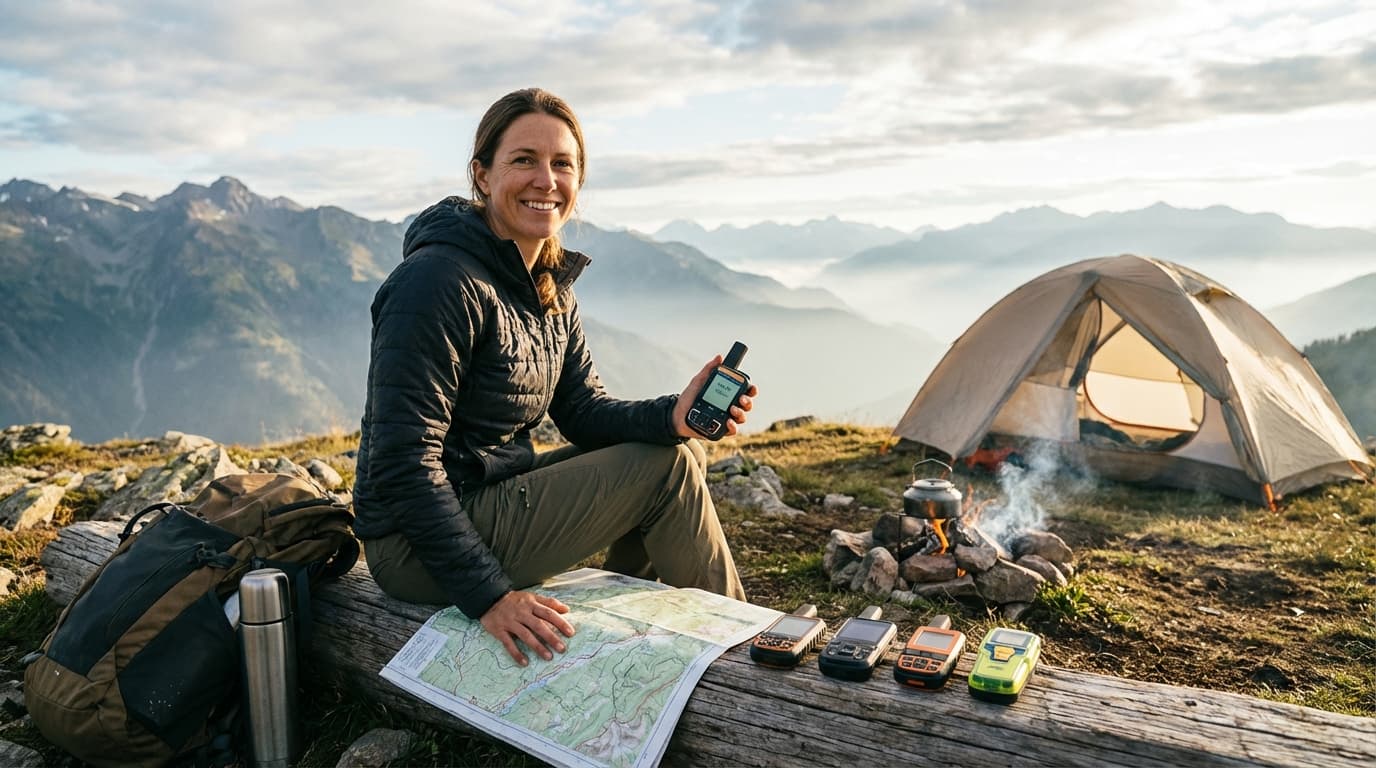
There is a specific kind of silence that happens when your phone signal drops to zero. Finding the best satellite messenger 2026 has to offer is about more than just safety. It is about keeping you connected to the world while you enjoy the beautiful middle of nowhere.
This year is a massive turning point for backcountry safety because of new multimedia features. We are moving past simple text alerts and into a world where you can send photos of trail markers or voice memos when your hands are too cold to type. Whether you are weighing a PLB vs satellite messenger or looking for reliable emergency communication for hikers, the choices have never been more capable.
We will help you pick the right backcountry SOS device for your specific style. This guide includes a detailed Garmin inReach review and a look at budget-friendly smartphone options that are popping up everywhere.
The New Era: Why Satellite Messaging is Getting Way Better
Remember when satellite pings were limited to a simple 'I am okay' or a basic GPS coordinate? Those days are gone. We are moving into a time where your backcountry device acts more like the phone in your pocket, supporting full photos and voice notes. This change matters because it turns a basic check-in into a real conversation. Being able to send a clear picture of a trail marker or a specific injury makes rescues much faster because it removes the guesswork for first responders who need to know exactly what they are walking into.
The real magic happens because of the Iridium Messaging Transport (IMT) module. This bit of hardware is a total game changer, allowing for file transfers roughly 300 times larger than what we used just a few years ago. It is the reason you can now share more than just a few lines of text. When you are deep in the woods, having that extra data capacity can be the difference between a stressful night out and a coordinated, efficient pickup. It is like upgrading from a dial-up connection to high-speed internet while standing on a remote ridge.
One of the best examples of this shift is the Garmin inReach Messenger Plus. It offers a massive 1,600-character capacity, which is a huge step up from the cramped limits of older models. You can actually explain the situation instead of using weird abbreviations. But the real star is the voice memo feature. If your hands are too cold to type or you are in a rush, you can record a 30-second message instead. It is simple, fast, and much more personal than a typed note. Just talk, hit send, and keep moving.
There is also a huge mental boost to these new features. Think about reaching a remote summit after a grueling climb. Being able to send a 'wish you were here' photo to your family back home provides a level of connection that used to be impossible. It brings peace of mind to everyone involved. Plus, at only 4.1 ounces, the Messenger Plus adds almost no weight to your pack while providing a battery that can last up to 28 days. You get all that power without feeling like you are carrying a brick.
What about the cost? While a high-end device like the Mini 3 Plus might run you $500, the Messenger Plus is often $100 cheaper while offering better battery life. Garmin has also made the service side more flexible for seasonal explorers. You can now suspend your plan for up to 12 months at no cost. This makes it a lot easier to keep a dedicated SOS device for your big trips without feeling like you are wasting money during the months you are staying closer to home.
Key insights:
The new IMT module allows for files 300 times larger than previous generations, enabling photo and voice support.
Garmin Messenger Plus provides a 1,600-character limit and 30-second voice memos for easier communication in tough conditions.
Sending photos of injuries or terrain significantly improves rescue coordination and speed.
New subscription terms allow users to pause Garmin plans for a full year for free, making the tech more affordable for seasonal hikers.
Sending More Than Just Words
Ever stood on a freezing ridge, trying to type a text with numb fingers? It is a struggle. This is why the Garmin inReach Messenger Plus feels like a massive leap. Instead of fighting with a screen, you can record a 30-second voice memo. It is simple and fast. The device uses a new module that handles files much larger than before, meaning you can finally send a photo from the summit.
The Messenger Plus supports 1,600-character messages, so you never have to trim your thoughts. At 4.1 ounces, it won't weigh you down, and the battery lasts up to 28 days. Compare that to the Mini 3 Plus, which costs $100 more and runs out of juice faster. You get global coverage through the Iridium network and a rugged IPX7 waterproof rating.
It is about more than just safety. It is about sharing the experience. Why just tell them you made it when you can show them? This device bridges the gap between adventure and home. It gives you the peace of mind to explore further while staying close to the people who matter most.
Key insights:
New hardware allows for voice memos and photos, making it easier to communicate when conditions are harsh.
The Messenger Plus provides better battery life and a lower price point than the more expensive Mini 3 Plus.
The Garmin Showdown: Messenger Plus vs. Mini 3 Plus
Garmin still leads the pack when it comes to backcountry safety, but they have given us a lot of choices lately. It can feel a bit overwhelming trying to pick the right one for your pack. When you look at the current lineup, the real debate usually lands on two devices: the Messenger Plus and the Mini 3 Plus. There is a $100 price difference between them, which might seem like a lot for tools that both send SOS signals. But when you look closer, that extra cash buys a very different experience. It really comes down to whether you want a device that lives in your pocket and talks to your phone, or a rugged tool that can stand completely on its own when things go sideways.
For most of us, the Messenger Plus is the clear winner. It is light - weighing only 4.1 ounces - and the battery life is honestly incredible. You get up to 28 days on a single charge, which is enough to outlast almost any trip without needing a bulky power bank. One of the smartest features is reverse charging. If your phone dies, you can plug it into the Messenger to give it a quick safety charge. It is also a game-changer for staying in touch because it supports 1,600-character messages, photos, and 30-second voice memos. This makes sharing a mountain top view or a quick status update feel much more personal than a standard text.
So, when should you actually spring for the Mini 3 Plus? The $500 price tag is steep, but you are paying for the screen. While the Messenger relies heavily on your smartphone for typing and maps, the Mini 3 Plus is a dedicated GPS unit. If your phone breaks or the battery freezes in the cold, the Mini still gives you a rugged interface to navigate and send signals directly from the device. Scott Yorko from Backpacker Magazine points out that while the Mini 3 Plus is an excellent device, it does have a significantly shorter battery life. Think of it this way: the Messenger is for the person who always has their phone handy, while the Mini is for the person who wants a completely independent backup plan.
Regardless of which hardware you choose, the way we use these devices is changing. Garmin now allows subscribers to suspend their plans for up to 12 months at no cost, which is a huge win for seasonal hikers. We are also seeing a shift where satellite messaging is moving from basic text to full multimedia. This matters because first responders can now see photos of an injury or the terrain before they even leave the base. Whether you want the 28-day battery of the Messenger or the standalone screen of the Mini, the goal is the same: making sure you can always call for help, even when the bars on your phone disappear.
Key insights:
The Messenger Plus offers a 28-day battery life and reverse charging, making it the most practical choice for long-distance backpackers.
The Mini 3 Plus justifies its $500 price with a dedicated screen that works independently of a smartphone.
Newer models now support photo and voice memo transmission, significantly improving how rescue teams assess emergencies.
Garmin's new flexible subscription terms allow for free plan suspension, making satellite safety more affordable for seasonal users.
Why the Messenger Plus is Our Top Pick
Imagine you are deep in the backcountry, weeks into a trip, and your phone screen stays black. That is where the Messenger Plus earns its keep. With a battery that lasts up to 28 days, it is built for the long haul. But here is the real lifesaver. If your phone dies, you can use the messenger to give it a safety charge via USB-C. It is a backup power source that also keeps you connected to the world when things go sideways.
What really sets this device apart is how it handles communication. We are moving past simple text because of the new hardware inside. You can now send photos of a trail junction or a 30-second voice memo so your family can hear your voice. While the Garmin Mini 3 Plus is an excellent unit, it costs 100 dollars more and has a much shorter battery life. For most hikers, saving that cash while getting more power is a simple choice.
At just 4.1 ounces, this little device will not weigh down your pack. Garmin has also made the subscription side more friendly by letting you suspend your plan for up to a year at no cost. You get high-end safety and the ability to send 1,600-character messages without the constant monthly fee when you are off the trail. It is the perfect balance of weight, price, and peace of mind.
Key insights:
The 28-day battery life and reverse charging feature make it a reliable power backup for your phone.
Multimedia capabilities now allow for photo and voice memo sharing via the Iridium satellite network.
Choosing the Messenger Plus saves 100 dollars compared to the Mini 3 Plus while offering superior battery performance.
When Should You Spring for the Mini 3 Plus?
Wondering if you should drop an extra $100 on the Mini 3 Plus? You're not alone. It feels backwards to pay more for a device that needs charging sooner. But the Mini 3 Plus is a total loner in the best way. While the Messenger Plus loves your phone, this one is happy on its own.
For hikers, that independence is huge. If you like to keep your phone safe in your pack, the Mini 3 Plus gives you a real screen for finding your way. You don't have to fumble with an app just to see if you took a wrong turn. It provides freedom screenless devices can't match, even when the weather is bad.
So, is it worth the splurge? If you are heading into wild where gear needs to be tough, those physical buttons are a dream. You are paying for a device that doesn't need a sidekick. For many, that extra $100 is a small price for total confidence on the trail. It is all about being ready for anything you might face.
Key insights:
The Mini 3 Plus offers standalone GPS tracking, reducing reliance on a smartphone app.
A $100 premium provides a more rugged interface with physical buttons for extreme environments.
While the Messenger Plus has superior battery life, the Mini 3 Plus offers greater device autonomy.
The Big Question: PLB or Satellite Messenger?
Imagine you are deep in the backcountry and things go wrong. For years, the choice was simple: carry a Personal Locator Beacon (PLB). These devices are a reliable safety net. You press a button, a high-powered signal hits a government satellite, and help comes. There are no monthly fees and the battery lasts for years on a shelf. But here is the catch: once you hit that button, you are left in total silence. You do not know if the signal went through, how far away the rescuers are, or if they even know what kind of help you need.
This is why most hikers are moving toward satellite messengers like the Garmin inReach series. The big difference is two-way communication. Instead of just sending a distress signal, you can have a full conversation. New tech like the Iridium Messaging Transport module means you are not just sending tiny texts anymore. The Garmin inReach Messenger Plus, for example, lets you send 1,600-character messages, photos of an injury, and even 30-second voice memos. It weighs only 4.1 ounces, so it will not bulk up your pack, and the 28-day battery life means it stays awake for your whole trip.
Choosing between them usually comes down to how much you value peace of mind versus simplicity. A PLB is great if you want to 'set it and forget it' without worrying about a subscription. But messengers offer flexibility that is hard to ignore. For example, the Garmin inReach Messenger Plus is $100 cheaper than the Mini 3 Plus and has a much better battery. Garmin also now lets you suspend your plan for up to a year at no cost, which makes the monthly fee much easier to handle. Even smartphone services like T-Satellite are popping up for about $10, showing that we are moving toward being constantly connected. If you have the budget, having a device that can tell rescuers exactly what is wrong is almost always the better move.
Key insights:
PLBs offer a one-time cost for emergency-only use, while messengers require a subscription but allow for two-way dialogue.
The shift toward multimedia, like sending photos of injuries, is significantly improving how search and rescue teams respond.
Subscription flexibility is improving, with major brands now allowing users to pause plans during the off-season for free.
Is Your Smartphone Enough? The Rise of T-Satellite and iPhone SOS
You probably already have a powerful survival tool sitting in your pocket. For many hikers, the iPhone’s satellite SOS or the new $10 T-Satellite service feels like plenty of protection. It is hard to argue with the convenience of using a device you already carry every single day. Why add more weight to your pack when your phone can technically text from the trail? This shift is changing how we think about backcountry safety, making emergency help accessible to casual explorers who might never have considered buying a specialized device.
But even the pros draw a line between convenience and true reliability. Gear expert Chris McNamara notes that while he now relies on his iPhone for simple day trips, he still grabs a dedicated messenger for anything involving the deep woods or multiple days away from a charger. That $10 T-Satellite service is a fantastic, budget-friendly bridge for those just-in-case moments, but it is not quite a replacement for a tool designed specifically for the rigors of survival.
When you look at the hardware, the limits of your phone become obvious. Your smartphone antenna is tiny and shielded by a glass and metal body. When a phone struggles to find a signal in thick tree cover or deep canyons, it burns through battery life at an alarming rate. While a dedicated device like the Garmin Messenger can last up to 28 days, a phone constantly searching for satellites might die before the sun goes down. If you are miles from the trailhead, a dead phone is just a glass paperweight.
Then there is the durability factor. We have all seen how easily a phone screen cracks on a sidewalk, let alone a granite slab. In the backcountry, you need something that can survive a drop or a dunk in a stream. Most dedicated messengers come with an IPX7 rating, meaning they can handle being underwater for half an hour. More importantly, they feature a physical SOS button. In a high-stress crisis where your hands might be cold, wet, or shaking, a real button you can feel is much more reliable than fumbling with a touchscreen.
Even the way we communicate is evolving beyond the basic emergency text. New hardware like the Iridium Messaging Transport module means dedicated devices are moving toward multimedia. The Garmin Messenger Plus, for example, now supports 1,600-character messages and even 30-second voice memos. While your phone is getting better at basic help, these rugged tools are becoming full-on communication hubs. For now, think of your phone as a great safety net for the local park, but keep the dedicated messenger as your lifeline for the real wilderness.
Key insights:
Smartphones are excellent for day trips, but their battery drain during satellite searches makes them risky for multi-day treks.
The $10 T-Satellite service offers an affordable entry point for casual hikers who do not need a $500 dedicated device.
Physical SOS buttons on rugged devices provide a level of reliability in high-stress situations that touchscreens cannot match.
Newer satellite communicators are shifting toward multimedia, allowing users to send voice memos and photos to rescue teams.
The Limits of Your Phone's Antenna
Think about the last time you saw your phone battery plummet while searching for a signal. In the backcountry, that constant searching kills your battery fast. While your phone struggles to find a connection, a dedicated device like the Garmin inReach Messenger can last up to 28 days. It is built for the long haul, not just a quick check-in.
Durability is another hurdle. Your phone is essentially a fragile glass sandwich. One drop on a granite slab could shatter your only connection to help. Rugged messengers carry IPX7 ratings and can survive a literal soak in a stream. Most importantly, they have a dedicated SOS button. When things go wrong, you need a physical trigger, not a touchscreen that fails when it gets wet or cold.
There is also the matter of reliability. Some specialized devices even offer reverse charging to give your dead phone a safety charge. In a crisis, a dedicated tool remains the gold standard because it does one thing perfectly: it keeps you alive.
Key insights:
Smartphones drain battery quickly when searching for weak satellite signals compared to 28-day dedicated battery lives.
Physical SOS buttons on rugged devices are more reliable in emergencies than touchscreen interfaces.
Dedicated messengers offer IPX7 water resistance and better impact durability than consumer smartphones.
Managing the Cost: Subscriptions and 'Hidden' Savings
Let's talk about the subscription tax. It is that annoying feeling of paying for a satellite plan in January when you are stuck on the couch instead of a mountain. Most of us only need these devices for a few months out of the year. In the past, you either paid for a full year or dealt with messy activation fees every time you wanted to head out. It often felt like a lose-lose situation for seasonal hikers who just wanted to stay safe without a monthly drain on their bank account.
Garmin finally addressed this with a huge win for your wallet. They now allow you to suspend your inReach plan for up to 12 consecutive months at no cost. This is a big deal because it changes the math on buying high-end gear. If you pick up a Garmin inReach Messenger Plus for example, you get those fancy 1,600-character messages and voice memos when you are actually on the trail. But you can turn the bill off completely during the winter. This flexibility makes the $500 price tag on some devices easier to swallow because you are not bleeding cash in the off-season.
How does this stack up against other options? If you are just doing simple day trips, you might not even need a dedicated device anymore. Services like T-Satellite for smartphones cost around $10 and work well for basic needs. But for serious backcountry trips, a dedicated tool is still the gold standard. While a Mini 3 Plus costs $100 more than the Messenger Plus and has a shorter battery life, the real savings come from picking the plan that fits your rhythm. Whether you choose Zoleo or Garmin, the goal is to look for those suspension windows so you only pay when you are actually under the sky.
The reality is that satellite communication is shifting from a luxury to a flexible tool. You can now send photos of a trail washout or a 30-second voice memo to let family know you are safe. These features used to be expensive extras, but with the right plan management, they are now part of a smart safety setup. Just remember to check your settings before you leave the house so you do not get hit with a surprise bill for a month you spent mostly indoors.
Key insights:
Garmin's new 12-month free suspension makes high-end devices more affordable for seasonal users.
The T-Satellite service offers a $10 alternative for casual hikers who do not need a dedicated device.
Choosing the Messenger Plus over the Mini 3 Plus saves $100 upfront and offers better battery life.
Frequently Asked Questions
It really comes down to how far off the grid you're going. For a quick afternoon hike on a well-marked trail, your iPhone 16 is actually a great backup since it has built-in satellite SOS features. But if you are planning a multi-day trek or heading into truly remote spots, a dedicated device is still a must-have.
Think of it this way: your phone is a battery hog and a bit fragile. A device like the Garmin Messenger has a battery that lasts up to 28 days and can survive a messy drop in a creek. Plus, it can even give your phone a 'safety charge' if it dies, which is a total lifesaver when you need your maps.
Not quite yet. While things are changing fast, sending photos requires specific hardware like the new Iridium Messaging Transport module. Right now, the Garmin inReach Messenger Plus is the leader here, letting you send 1,600-character messages, voice memos, and actual photos of your surroundings.
This isn't just for showing off your view, though. Being able to send a photo of a trail injury or a washed-out path to search and rescue teams is a huge deal. It helps them know exactly what they are walking into, which makes rescues much faster and safer for everyone involved.
It’s getting a lot more flexible than it used to be. For example, Garmin now lets you suspend your plan for up to a year without charging you a dime. This is great because you only pay for the months you are actually out exploring.
If you just want basic smartphone integration, services like T-Satellite are popping up for around $10. It is all about finding that middle ground between having a safety net and not paying for service while your gear is just sitting in your closet during the winter.
It really depends on how often you're out in the woods, but the good news is that it's getting more affordable for casual hikers.
Garmin now lets you suspend your plan for up to twelve months for free, which is a huge deal. If you only go on one big trip a year, you only pay for that month. For people who want something even cheaper, smartphone services like T-Satellite are popping up for around ten dollars.
It usually works, but you'll need some patience because the signal needs a clear path to the sky.
If you're stuck in a deep canyon or under a thick roof of trees, the device has to work much harder to find a satellite. Your message might take ten minutes to send instead of ten seconds. Most of these tools use the Iridium network which has great coverage from pole to pole, but it still can't pass through solid rock or heavy branches very easily.
Conclusion
So what is the bottom line for your next big trip? Safety in the backcountry has changed for the better, making it easier than ever to send a quick check-in or even a photo from the summit. Choosing between a dedicated backcountry SOS device and a smartphone comes down to how far you are going and how much you trust your battery. While the Garmin inReach Messenger Plus is a powerhouse for long treks, even a basic satellite plan on your phone is a huge step up from having no service at all.
Your next move is to look at your calendar and see what kind of adventures you have planned for the year. Pick the device that matches your longest trip and make sure you understand how the subscription works before you hit the trail. The best tool is always the one you actually have with you and know how to use when it counts.
Getting off the grid is about finding peace, not worrying about what-ifs. With the right gear in your pack, you can focus on the trail ahead and the views waiting for you. Stay safe, keep your gear charged, and enjoy every mile of the journey.
Every WilderReady guide is researched, written, and fact-checked in-house against trusted references such as the American Red Cross, the National Park Service, and the CDC before it goes live. We publish under this shared byline instead of invented personas, so you always know who stands behind the guidance you are reading.