Don't Drink the Puddle: A Friendly Guide to Finding Clean Water Outside
You can survive for weeks without a snack, but you only get about three days before your body starts to quit without water. It is a harsh reality that makes...
Don't Drink the Puddle: A Friendly Guide to Finding Clean Water Outside
You can survive for weeks without a snack, but you only get about three days before your body starts to quit without water. It is a harsh reality that makes finding a safe drink your number one priority when things go sideways in the great outdoors. Most people see a clear stream and think it is totally fine, but drinking the wrong puddle can lead to a world of trouble and a very unhappy stomach.
This guide covers essential survival skills: how to purify water in the wild so you do not end up with a nasty bug like giardia. We will talk about using a survival water filter, the science of solar water disinfection, and how to manage hydration safety when you have zero gear. Whether you are a weekend hiker or an aspiring woodsman, these tips help you stay hydrated and healthy no matter where you wander.
From boiling basics to building a primitive filtration setup with sand and charcoal, you will get the tools to handle almost any water source. We are also going to look at when rain or snow is actually safe to drink and how to avoid the mistakes that send even experienced hikers home early. Let's get to work so you can keep your canteen full and your body moving.
Imagine walking through the woods and realizing your water bottle is empty. It feels like a minor annoyance, but survival experts live by the Rule of Three. You might last weeks without a snack, but your body usually hits a wall after just three days without a drink. Water is your top priority when you are off the grid.
We are going to explore how to turn sketchy stream water into something safe. We will look at modern gear, like filters with 0.22-micron pores that block tiny pathogens, and primitive hacks for when you have nothing but a campfire. There are plenty of ways to avoid the fate of Sarah Spelsberg, a medical professional who spent two miserable weeks with Giardia after one bad sip.
Staying safe is about being both curious and careful. Think of it as a three-step process where you clear the gunk, kill the germs, and fix the taste. While fresh rain is often a safe bet, most wild water needs work. Let's get into the details so you never have to eye a puddle with desperation.
Key insights:
The human body can only survive about three days without water, making hydration more urgent than food.
Filters must have a pore size of 0.22 microns or smaller to effectively remove viruses and bacteria.
Boiling remains the most reliable method for killing biological pathogens in the wild.
The 72-Hour Clock: Why Your Body Needs Water Now
Imagine you're out on a trail and your canteen runs dry. It’s easy to think you can push through, but your body has a very strict deadline. Most of us only have about three days before things get critical without water. This isn't just about a dry mouth; it's about survival. By the time you feel truly thirsty, dehydration is already messing with your head, making it harder to think clearly just when you need your wits the most. This matters because a clouded mind leads to poor decisions in the wild.
There is a massive difference between finding a stream and actually having something safe to drink. You might see a clear puddle or a running creek and think you’re set, but looks are incredibly deceiving. Just ask Sarah Spelsberg, an emergency medicine physician assistant who spent two weeks battling giardia because of improperly purified water. She learned the hard way that even 'clean' looking water can be a trap. Finding water is only the first step; the real skill lies in making it drinkable.
To stay safe, you need to understand what you're up against. If you're using a portable filter, it needs a pore size of 0.22 microns or smaller to effectively catch bacteria and viruses. If you're without gear, boiling is the most reliable way to kill pathogens. While some experts suggest longer, boiling for at least one minute is usually enough to make water safe, even if you're high up in the mountains. It's about removing the invisible threats so your 72-hour clock doesn't run out even faster.
Remember that not all water is created equal. While fresh rain or new snow are usually safe to drink right away, anything on the ground needs work. You might use purification tablets with iodine or chlorine, or even try stone boiling if you're feeling primitive. The goal is always the same: don't let a simple drink turn into a medical emergency. What does this mean for you? It means always having a backup plan for purification before you take that first sip.
Key insights:
The 72-hour survival window is a hard limit for most humans without hydration.
Visual clarity in water does not equal safety; microscopic pathogens are the real threat.
Effective filtration requires a 0.22 micron specification to handle viruses and bacteria.
Boiling remains the gold standard for biological sterilization in survival scenarios.
The Gold Standard: Why Boiling is Still Your Best Friend
Imagine you are out in the woods and your water bottle runs dry. You know you can only last about three days without a drink, so finding a source is urgent. But drinking straight from a stream is a gamble that could leave you sick for weeks. That is where boiling comes in. Survival expert Tim MacWelch calls it the most reliable method because heat is a universal killer for biological threats. While a filter might miss tiny viruses if its pores are too large, the sterilization process of boiling simply destroys the pathogens that make you ill.
There is a lot of back and forth about how long you actually need to boil your water. Some experts say you need five to ten minutes to be absolutely sure, while others argue that one minute is plenty, even at high altitudes. The reality is that once the water reaches a rolling boil, most of the dangerous stuff is already gone. If you are worried or the water looks particularly gross, let it go a bit longer, but do not feel like you need to waste all your fuel on a twenty minute simmer.
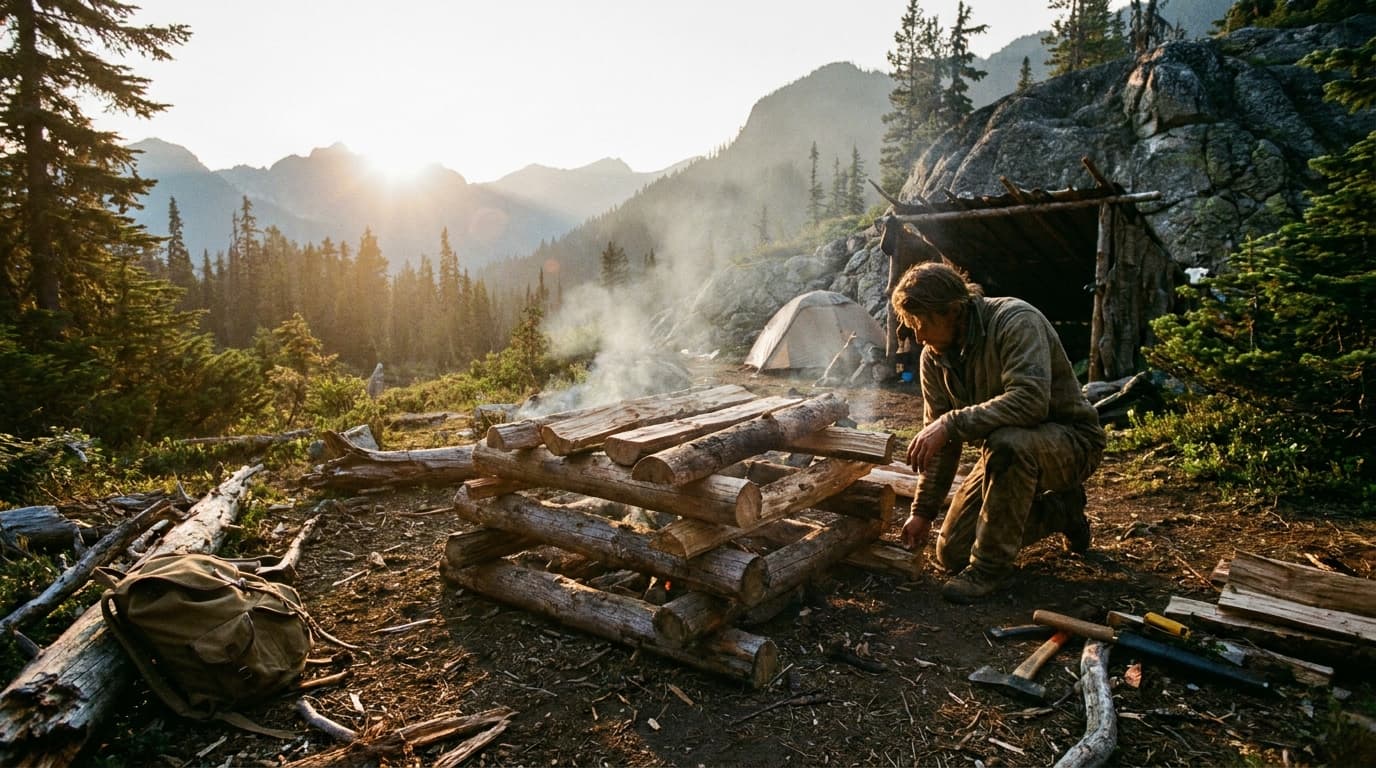
If you find yourself without a metal pot, do not panic. You can use the ancient technique of stone boiling. You just need a container that can hold water, like a wooden bowl or even a sturdy animal skin. You heat up dry rocks in a fire for about thirty minutes and then carefully drop them into the water. This moves the heat from the coals directly into your drink. It is a bit of a process, but it works when you have nothing else and need to get that water up to a safe temperature.
A big word of warning here: be very picky about your rocks. Never use quartz or stones you found underwater or in a damp riverbed. These rocks often have tiny pockets of moisture trapped inside. When that water turns to steam, it has nowhere to go and can cause the rock to explode like a grenade. Stick to dry rocks from higher ground and use some green branches as improvised tongs to move them safely. It is a primitive skill, but knowing how to handle the heat can be the difference between staying hydrated and getting a face full of hot stone shards.
Key insights:
Boiling is the most reliable way to kill biological pathogens like bacteria and viruses.
Most experts agree that a rolling boil for one minute is sufficient even at high altitudes.
Stone boiling allows you to purify water using wooden or organic containers.
Avoid river stones or quartz for stone boiling because they can explode when heated.
Stone Boiling: For When You Don't Have a Pot
Imagine you’re stuck in the woods with water nearby but no metal pot to your name. Since the human body only lasts about three days without a drink, you need a solution fast. If you have a wooden bowl, a hollowed log, or even a clean animal skin, you can still treat your water using the stone boiling method. It is a classic survival trick that turns a container that would normally melt or burn into a functional kettle.
The process is simple but requires caution. You need to heat several dry stones in a fire for about thirty minutes until they are glowing. When they are ready, you move that heat directly into your water. But here is the catch: you must be extremely picky about your rocks. Never use river stones or quartz. These often have trapped moisture inside that turns to steam, causing the rock to explode like a grenade. Stick to dry, solid rocks from high ground to avoid a face full of shrapnel.
Use a pair of green sticks as improvised tongs to drop the hot stones into your container one by one. As survival expert Tim MacWelch points out, boiling is the most reliable way to kill off the pathogens that make you sick. You’ll see the water hiss and bubble almost instantly as the stones hit. It might look a little gray or earthy when you’re done, but once it reaches that rolling boil, you have successfully turned a risky find into safe, life-saving hydration.
Key insights:
Stone boiling allows you to use non-fireproof containers like wood or hide.
Avoid river rocks and quartz because they can explode when heated.
Heat stones for at least thirty minutes to ensure they carry enough thermal energy.
Boiling remains the gold standard for neutralizing biological threats in wild water.
Filters vs. Purifiers: Buying the Right Gear
The human body can only survive about three days without water, so finding a source is your top priority in the wild. But here is the catch: drinking the first puddle you see can be just as dangerous as the thirst itself. Many hikers have learned this the hard way, spending weeks sick because they skipped proper treatment. To stay safe, you need to know the difference between a filter and a purifier. A filter is great for catching bacteria, but it might not be enough if viruses are lurking in the water.
The secret is in the size of the holes. To stop a virus, you need a device with a pore size of 0.22 microns or less. Most basic filters are built to handle larger threats like giardia, but tiny viruses can slip right through those gaps. This is why experts often suggest that filtration alone is not enough for complete safety. If you are in an area where the water is stagnant or heavily used by animals, you should follow up your filtering with a sterilization step like boiling or using purification tablets containing iodine or chlorine.
Think of water safety as a three-step process: decontamination, sterilization, and beautification. Decontamination removes heavy metals and toxins, while sterilization kills off the invisible bugs that make you sick. Then there is beautification, which is just a fancy way of saying you make the water look and taste good. While it sounds like a luxury, removing algae and grit is a huge boost for your morale when you are tired and thirsty.
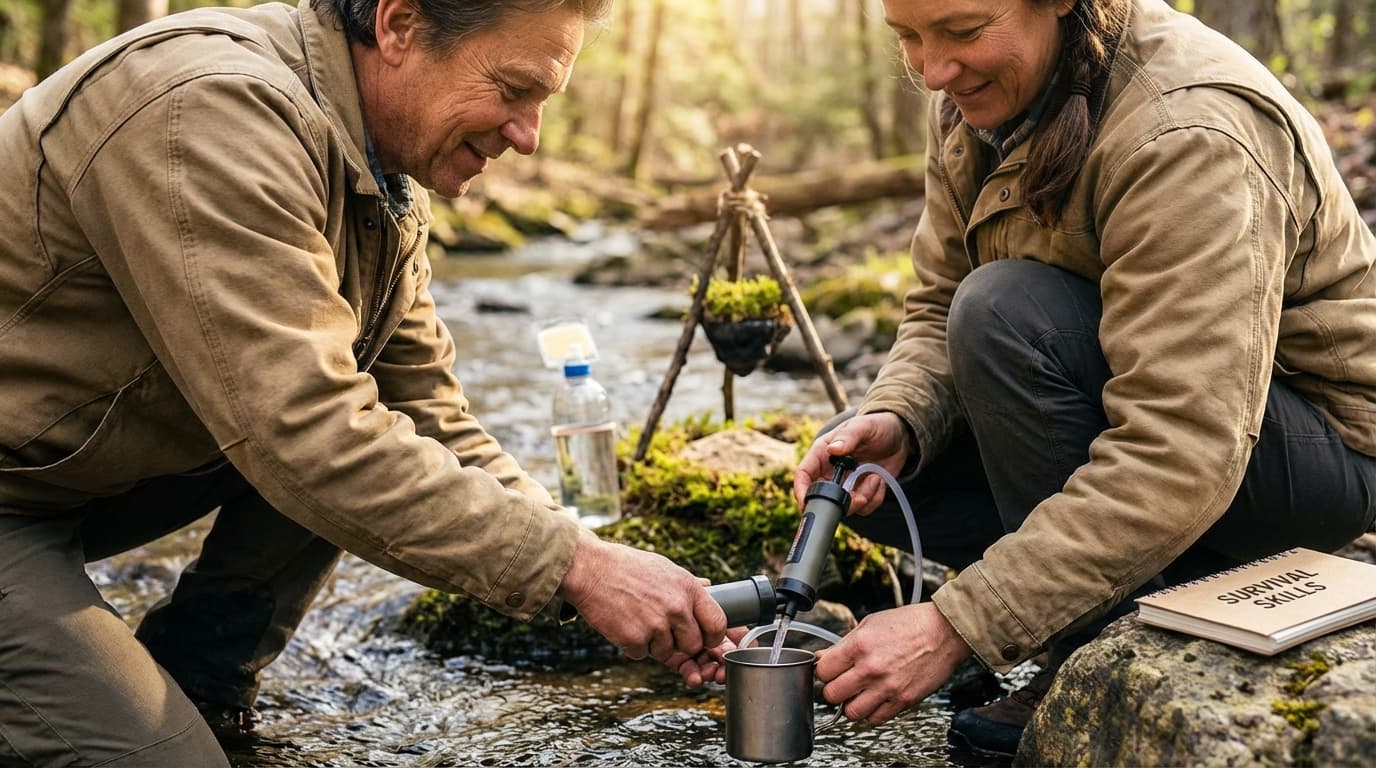
Gravity filters are a great choice if you want to save your energy. Instead of spending twenty minutes pumping a handle by hand, you let nature do the heavy lifting. With a system like the Sawyer Mini, you simply fill a pouch with dirty water, hang it from a tree, and let gravity pull it through the filter into your clean bottle. It is a simple way to get clean water while you focus on setting up your tent or starting a fire.
Modern tools like the LifeStraw have made clean water more accessible than ever, but they work best when you understand their limits. Even the best gear can fail if the water is full of chemicals or salt. In those cases, distillation is the only reliable way to get rid of things like lead or radiation. For most trips, a solid gravity filter and a backup method like boiling will keep you hydrated and healthy without the extra work.
Key insights:
A filter must have a pore size of 0.22 microns or smaller to remove viruses effectively.
Boiling water is the most reliable way to kill biological pathogens in any environment.
Water safety involves three stages: decontamination, sterilization, and beautification.
Gravity systems save physical effort by using a hanging pouch and a filter line.
Distillation is required to remove heavy metals, salt, and radiation from water.
Gravity Filters: Let Nature Do the Heavy Lifting
Ever spent twenty minutes crouched over a muddy stream, pumping a manual filter until your forearms burned? It is exhausting. Gravity systems like the Sawyer Mini change the game by letting physics do the work. You fill a bag with creek water, hang it from a branch, and let it drip through the filter into your bottle. It saves your energy for the hike while protecting you from nasty pathogens.
Think of water safety as a three-part journey: decontamination, sterilization, and beautification. A filter with a pore size of 0.22 microns is the standard for catching bacteria and giardia. However, filtration alone is not always enough for complete safety. If you are worried about viruses, following up with a quick boil or a purification tablet ensures the water is truly sterile and safe to gulp down.
Do not overlook beautification. Making your water look and taste clear is a massive morale booster when you are tired and dirty. Drinking brown, swampy liquid is tough on the spirit, even if it is technically safe. Removing algae and sediment makes you actually want to drink. Since your body only lasts about three days without water, staying hydrated should be a treat, not a chore.
Key insights:
Gravity systems use physics to save physical exertion during water collection.
A 0.22 micron filter is the technical requirement for removing bacteria and giardia.
Beautification is a critical psychological step that encourages consistent hydration.
When You're in a Pinch: Solar and Chemical Hacks
You can only survive for about three days without water, so when your survival water filter breaks or gets lost, panic starts to set in. But do not give up just yet. If you have a clear plastic bottle and some sunshine, you actually have a solution. This is called solar water disinfection. By leaving a bottle of clear water in direct sunlight for at least six hours, the UV rays work to scramble the DNA of bacteria and pathogens. It is a slow process and requires clear skies, but it works when you have no other choice.
If the sun is hiding, you might have to dig into your bag for a little chemistry. Most water purification tablets use iodine, chlorine, or even potassium permanganate to kill off the invisible stuff that makes you sick. While a filter is great for getting the grit out, remember that many viruses are smaller than 0.22 microns. That is incredibly tiny. Even some high end filters cannot catch everything, which is why a chemical backup is so important. It might make your drink taste a bit like a swimming pool, but that is a small price to pay to avoid a two week nightmare of giardia.
But what if the water is contaminated with something worse than bugs? If you are dealing with salt, lead, or even radiation, standard filters and chemicals will not help you. This is where distillation becomes your best friend. By boiling the water and catching the steam in a separate container, you leave the heavy metals and toxins behind. It is the only reliable way to handle high stakes contaminants in the wild. Think of water safety as a three step dance where you decontaminate the heavy stuff, sterilize the biological threats, and then beautify the liquid to make it drinkable. It sounds like a lot of work, but staying hydrated is the only way to keep moving forward.
Key insights:
UV rays from the sun can effectively disinfect water if left in clear containers for several hours.
Chemical treatments like iodine or chlorine are essential for killing viruses that are too small for standard 0.22 micron filters.
Distillation is the only method that removes heavy metals, salt, and radiation from a water source.
True water safety involves a process of decontamination, sterilization, and beautification.
Building a Primitive Filter from Scratch
Ever found yourself staring at a muddy puddle while your throat feels like sandpaper? It is a scary spot to be in because your body can only last about three days without water. If you do not have a fancy store-bought filter, you have to build one from what is around you. Think of it as making a survival funnel. We call this the cone method. You take a container, like a piece of bark or a plastic bottle with the bottom cut off, and stack layers of natural materials to catch the grit.
The order of your layers matters for this to work. You want rocks at the top to catch the big sticks and debris, then sand to grab the smaller dirt, and finally, a thick layer of charcoal. Charcoal is the secret ingredient here. It acts like a magnet for heavy metals and certain toxins, cleaning up the taste and the chemical side of things. Just make sure you have a bit of moss or a scrap of cloth at the very bottom to keep all your filtering materials from falling into your clean cup.
But here is the hard truth: this filter is not a magic wand. It might make the water look crystal clear, but it will not stop the tiny monsters that actually make you sick. To catch viruses, you need a filter with pores smaller than 0.22 microns, which sand and rocks just cannot do. Just ask Sarah Spelsberg, an emergency physician assistant who spent two weeks battling Giardia after drinking bad water. She learned the hard way that clearing out the dirt is only half the battle. You still need to boil that water to kill the bacteria and pathogens hiding inside.
Key insights:
Filtration removes physical debris and some toxins but does not sterilize water.
Charcoal is essential for removing chemical contaminants and improving taste.
Boiling remains the most reliable way to kill biological pathogens after filtering.
Is It Ever Safe to Just Drink It?
Can you ever just lean over and take a gulp from a wild stream? Most of the time, the answer is a hard no. But there is one small exception often called sky water. Fresh rain and newly fallen snow are generally safe to drink without any processing. This is because they have not touched the ground where most bacteria live. If you are caught in a storm without a filter, catching rain in a clean container is your best bet for staying hydrated.
But wait before you start licking leaves. You should definitely avoid rain that has filtered through a forest canopy. As water drips off leaves and branches, it picks up bird droppings, rot, and insects. That fresh rain becomes a cocktail of forest debris before it even hits your cup. Also, even though a mountain stream looks crystal clear, it can hide nasty surprises. Most pathogens like Giardia are invisible to the naked eye, and they do not care how pretty the scenery is.
The human body can only last about three days without water, so the temptation to drink from a pristine spring is high. But one bad sip can lead to weeks of misery. Consider the experience of Sarah Spelsberg, a medical professional who spent two weeks sick with Giardia after drinking water she thought was safe. It is a harsh reminder that looks are deceiving. Unless it is falling directly from the clouds into your bottle, you really need to boil it or use a filter with a pore size of 0.22 microns or less.
Key insights:
Rain caught directly from the sky is usually safe, but avoid anything dripping off trees.
Visual clarity does not equal safety, as parasites like Giardia thrive in clear mountain water.
Filters must have a pore size of 0.22 microns or less to catch the smallest biological threats.
Learning the Hard Way: What Happens When It Goes Wrong
Imagine being a medical professional like Sarah Spelsberg and still spending two weeks fighting a brutal giardia infection. It happened because of one tiny slip-up in her water treatment routine. This is the reality of the wild. You might think a quick sip from a clear mountain stream is safe, but that one small mistake can end an expedition and land you in a hospital. Since your body can only last about three days without water, you have to get your hydration strategy right every single time.
Why do things go wrong? Often, it is because we trust gear that is not actually up to the task. A basic survival filter might catch dirt and grit, but you need a pore size of 0.22 microns or smaller to stop virus particles. If you are not sure about your equipment, boiling is your best bet. Survival experts like Tim MacWelch argue that boiling is the most reliable way to kill off pathogens. Whether you boil for one minute or ten, that heat ensures you are not inviting dangerous parasites into your gut.
It helps to think of water safety as a three-step process involving decontamination, sterilization, and beautification. It is not just about getting the cloudy bits out with a charcoal or sand filter. You also have to handle the invisible threats. Using tablets with iodine or chlorine helps, but they are just one part of the puzzle. When you are miles from civilization, clean water is a non-negotiable skill. It is the difference between a successful hike and a life-threatening medical emergency.
Key insights:
Filtration alone often misses viruses unless the pore size is 0.22 microns or less.
Boiling remains the gold standard for killing biological pathogens in stagnant or wild water.
True water safety involves removing physical debris, killing microbes, and improving taste.
The Final Word on Staying Hydrated
You only have about three days without water before your body starts to shut down, so getting this right isn't just a skill - it's a necessity. While we've covered several ways to find and clean water, the best approach is usually a combination. A filter with a pore size of 0.22 microns is great for bacteria, but it might not catch every virus. This is why many experts suggest a two-step process: filter out the visible debris first, then use boiling or chemicals to handle the microscopic threats. It's about layers of protection.
The time to learn how to use these tools isn't when you're already dehydrated and tired. Think of Sarah Spelsberg, an emergency medicine professional who spent two weeks battling giardia because of a purification mistake. You don't want to learn that lesson the hard way. Grab your kit and practice in your backyard or on a local trail. Whether you are testing out iodine tablets or trying to build an improvised filter, doing it now makes you faster and more confident when the stakes are higher.
Before you head out, keep a simple safety checklist in mind. Unless you are catching fresh rain straight from the sky, assume the water needs help. Boiling remains the most reliable way to kill pathogens, and one minute of rolling bubbles is usually enough even at high altitudes. If the water looks cloudy, filter it through a cloth or sand first to 'beautify' it before sterilization. Remember, staying hydrated only helps if the water you're drinking doesn't make you sick. Stay safe, stay prepared, and always keep your filter handy.
Key insights:
Always treat water unless it is fresh rain or new snow that hasn't touched the ground or trees.
Combine filtration with boiling or chemical treatment to ensure viruses are fully eliminated.
Boiling for at least one minute is the most dependable method for killing biological pathogens.
Practice your purification skills during low-stress trips so you can perform them perfectly in an emergency.
Frequently Asked Questions
No, it is really not a good idea. While you might see it happen in movies, drinking urine can actually make you dehydrate faster because it is full of salt and metabolic waste that your kidneys are trying to get rid of. Putting those toxins back into your system forces your body to use up even more precious water just to process them.
Instead of going that route, you are much better off looking for fresh rain or new snow, which are generally safe to drink without any extra steps. If you are truly stuck, remember that distillation is the only reliable way to pull clean water out of contaminated sources, but drinking urine directly is almost always going to do more harm than good.
In most cases, you will need to wait about 30 minutes after the tablet dissolves before the water is safe to drink. This gives active ingredients like iodine or chlorine enough time to seek out and kill the bacteria and viruses that could make you sick.
But here is something to keep in mind: if the water is extremely cold or looks really cloudy, the chemicals work much slower. You might need to wait an hour or more in those conditions to be totally sure. Also, since tablets do not remove physical dirt or heavy metals, it is always a smart move to strain the water through a cloth or a coffee filter before you drop the tablet in.
The short answer is no, not on its own. While a coffee filter is handy for straining out dirt, twigs, and bits of moss, it isn't nearly fine enough to catch the tiny pathogens like giardia or viruses that can make you really sick. You'll find that it mostly just helps with the look and taste of the water rather than making it truly safe.
Think of the coffee filter as just the first step in a three-step process. Use it to clear up the water first, but you still need to boil it or use purification tablets to kill the invisible stuff. It also helps protect your more expensive survival filters from getting clogged up with mud or debris.
Distillation is really the only reliable way to get salt out of water when you are in the wild. Standard filters and even boiling alone won't do the trick because the salt stays behind in the liquid. If you drink salt water as it is, you'll actually get dehydrated faster because your body has to work so hard to process all that extra salt.
To make it work, you have to turn the saltwater into steam and then catch that steam as it cools back down into fresh water. This process also happens to be the best way to remove things like lead or heavy metals, so it is a great skill to have in your survival toolkit.
Conclusion
So what does all this mean for your next trip into the woods? It means that while water is your most urgent need, rushing to drink from the first stream you see is a gamble you do not want to take. Staying safe is about connecting the dots between finding a source and making it truly drinkable. Whether you rely on the heat of a fire, a pocket sized filter, or the power of the sun, the goal is to keep your energy up without inviting a stomach bug along for the ride.
The best survival skills: how to purify water in the wild are the ones you have actually practiced before you are thirsty and tired. Consider trying out a gravity filter on your next day hike or testing a solar disinfection bottle in your backyard. Getting familiar with your gear now makes it much easier to stay calm and hydrated when things do not go exactly as planned.
Nature is a lot more fun when you are not worried about giardia or dehydration. Treat every water source with respect, keep your tools handy, and remember that a little bit of preparation goes a long way. Stay smart out there and please leave that puddle alone.
Every WilderReady guide is researched, written, and fact-checked in-house against trusted references such as the American Red Cross, the National Park Service, and the CDC before it goes live. We publish under this shared byline instead of invented personas, so you always know who stands behind the guidance you are reading.