Desert Survival Tips: How to Stay Alive When Everything Goes Wrong
Imagine the sun beating down so hard you can feel your skin tightening, and your car just died miles from the nearest paved road. It sounds like a movie scene,...
Desert Survival Tips: How to Stay Alive When Everything Goes Wrong
Imagine the sun beating down so hard you can feel your skin tightening, and your car just died miles from the nearest paved road. It sounds like a movie scene, but in places like the Mojave or the Sonoran, the environment can turn lethal in just a few hours. Knowing a few practical desert survival tips can be the difference between a scary story and a tragedy.
Staying safe isn't about being a tough guy. It's about knowing the specific rules of the sand and sun. Whether you're dealing with a car breakdown in the desert or you just got turned around on a trail, your survival depends on how you manage your water and when you choose to move. Most people don't realize how fast things change when the temperature hits triple digits and the shade disappears.
This guide explains how to survive extreme heat and why your favorite gym clothes might actually be a bad idea out there. We'll also cover smart desert hydration strategies and how to handle the freezing nights that catch most people off guard. Here is how to respect the dry and get back home in one piece.
How to Survive the Desert Heat When Everything Goes Wrong
The desert is beautiful, but it doesn't care about your plans. It feels great until it is way too much. If things go sideways, the heat can become deadly in just a few hours. Survival isn't about grit. It is about following the rules of a dry world. You lose most of your water through sweat, so carry at least a gallon for every person every day.
Your clothes matter as much as your water supply. While we usually love moisture-wicking gear, cotton is actually better here because it traps sweat against your skin to slow down evaporation. Wear white clothing with a UPF of 30 or higher to block UV rays. Also, remember that the desert has a split personality. It might be 100 degrees at noon and 55 degrees by midnight.
If you're stranded, do not move during the day. Rest in the shade and wait for dawn to travel. Expert Doug Flinders says that staying sheltered is your top priority. You have to play by the rules of this environment or your chances of getting home to your furry friends are slim.
Key insights:
Cotton is often better than technical fabrics because it slows water loss.
Desert temperatures can drop 45 degrees between day and night.
Movement should be restricted to dusk and dawn to avoid peak heat.
The Water Math: Why One Gallon is Your Absolute Baseline
If you find yourself stranded in the desert, your most important job is managing your water. It sounds simple, but the math is unforgiving. You need at least one gallon of water every single day just to keep your body functioning when the heat hits. The environment here is brutal and can kill a person in just a few hours if they are not careful. The tricky part is that you might not even feel sweaty because the air is so dry that perspiration evaporates instantly. This means you are losing vital fluids without even realizing it.
There is a common survival myth that you should ration your water to make it last longer. But wait, that is actually a dangerous mistake. If you stop drinking when you are thirsty, your brain starts to fog up and you will make bad decisions. It is better to drink what you have when you need it so you stay sharp enough to find your way out or build a shelter. Think of it this way: there is no point in having a half-full bottle if you are too dehydrated to function.
When you do drink, try to take small sips rather than gulping everything at once. This helps your body absorb the moisture more effectively. If you come across a natural water source, never assume it is safe to drink just because it looks clear. You should use tools like a Lifestraw or Aquatabs to treat any water you find. These are essential because a stomach bug will dehydrate you even faster than the sun will. Also, try to stay in the shade during the peak heat of the day to keep your body temperature down.
You can also get creative with the environment around you. If you have plastic bags and some rope, you can tie the bags over the leafy branches of non-poisonous plants. As the sun beats down, the plant releases moisture that collects inside the bag. It will not be much, but every drop counts when the daytime temperature is pushing 100 degrees. Just remember that the desert changes fast, and that same heat can drop to 55 degrees once the sun goes down, so keep your water close and your head clear.
Key insights:
A gallon of water is the bare minimum for survival in high heat.
Rationing water can lead to cognitive decline and poor survival choices.
Perspiration in dry air is often invisible but still causes rapid dehydration.
Always treat natural water sources with purification tools to avoid illness.
Vegetation can be used to collect small amounts of drinkable condensation.
Smart Hydration Strategies for Arid Climates
In a desert where temperatures swing from 100 degrees at noon to 55 at night, your life depends on managing every drop of fluid. You need at least a gallon of water daily, but how you drink it matters just as much as having it. Instead of gulping when you feel parched, take small, consistent sips. This helps your body actually absorb the hydration rather than letting it go to waste.
Since most water loss happens through sweat, try wearing a light cotton layer to trap moisture against your skin and slow down evaporation. If you find a natural water source, don't take chances - use a Lifestraw or Aquatabs to make it drinkable. You can even tie plastic bags over desert plants to collect condensation overnight. It might feel like a slow process, but when this environment can kill in hours, these small strategies are exactly what keep you alive.
Key insights:
Sipping slowly is more effective than gulping for long-term hydration.
Cotton clothing helps slow down water loss by trapping sweat against the skin.
Simple tools like plastic bags can harvest water from environment condensation in a pinch.
Why Your Gym Clothes Might Actually Be a Bad Idea
You probably spent a lot of money on high-tech, moisture-wicking gym clothes. In a standard workout, they are great. But in the desert, those same fabrics can actually put your life at risk. Most body water loss in the desert occurs through perspiration. If your clothes pull that sweat away and let it evaporate too quickly, you are essentially draining your body's water tank faster than you can refill it. This matters because the environment can become lethal within hours if you do not manage your hydration correctly.
Here is a trick that goes against everything you have learned at the gym: wear a cotton undershirt. It sounds heavy, but cotton traps that sweat against your skin. This creates a tiny, humid microclimate that slows down evaporation and keeps you cooler for longer. While you are at it, swap the dark colors for white clothing. Look for a UPF 30+ rating to block the intense UV rays. It is not just about comfort; it is about survival in a place where you need at least a gallon of water every single day just to stay functional.
When you are out there, the Desert Uniform is your best friend. It might feel wrong to stay covered when it is 100 degrees out, but exposing your skin is a fast track to heatstroke and rapid dehydration. You want loose, light-colored, long-sleeved layers that allow air to circulate without letting the sun bake your skin. A wide-brimmed hat and polarized sunglasses are also non-negotiable for protecting your eyes and face from the constant glare.
Do not forget about the wind. A light windbreaker can help you control how fast your sweat disappears, acting like a lid on a pot. This is especially important because desert weather is notoriously unpredictable. You might be baking in triple-digit heat during the afternoon, but once the sun drops, temperatures can plummet to 55 degrees. Staying covered keeps you prepared for both extremes, ensuring you do not lose too much water while the sun is up or catch a chill when it goes down.
Key insights:
Cotton undershirts are actually better than moisture-wicking fabrics in the desert because they trap sweat to slow down water loss.
White clothing with a UPF 30+ rating provides the most effective shield against dangerous UV radiation.
Covering your skin with loose, long layers is essential to prevent heatstroke, even when the temperature exceeds 100 degrees.
Light windbreakers help regulate evaporation and protect against the 45-degree temperature swings common between day and night.
The Desert Uniform: Loose, Light, and Long
When the sun hits 100 degrees, stripping off your shirt feels like the right move. But bare skin is a liability in the heat. Most water loss happens through sweat, so staying covered is really about keeping moisture inside. Think of your clothes as a shield against the dry air.
Choose loose, long-sleeved white clothing with a UPF 30 rating. Cotton undershirts are actually great here because they trap sweat to slow down evaporation. Add a wide-brimmed hat and polarized sunglasses to block the blinding glare and protect your skin from the intense UV light.
A light windbreaker also helps control water loss by blocking the breeze. It is also a vital layer for when the temperature plunges to 55 degrees at night. In the desert, you have to be ready for both extremes within a single day.
Key insights:
Cotton is often better than moisture-wicking fabric in the desert because it traps sweat to slow evaporation.
White clothing with a UPF 30+ rating offers the best balance of heat reflection and UV protection.
Car Breakdown in the Desert: Why Your Vehicle is Your Best Friend
If your engine dies in the middle of a sun-baked wasteland, your first instinct might be to start walking for help. Don't do it. Survival experts like Doug Flinders point out that staying sheltered is your top priority. Your car is a massive, shiny object that rescuers can see from miles away, and it's also your primary shield against the sun. While the environment can kill you within hours, your vehicle buys you time. The reality is that most water loss happens through sweat, so staying still in the shade of your car is much smarter than hiking through 100-degree heat.
Think about the math of the desert. You need at least one gallon of water every single day just to keep your body functioning. If you start walking, you will burn through that supply in no time. Also, remember that deserts are masters of the double-cross. You might be boiling at noon, but the temperature can drop to 55 degrees once the sun goes down. Your car is the only tool you have that can handle both extremes. It keeps you out of the UV rays during the day and offers a windbreak when the air turns chilly.
You can actually turn your car into a pretty decent survival shelter with a little creativity. If you have floor mats or seat covers, pull them out. They make great insulation if you need to lie on the ground or wrap up for warmth at night. You can also create a shade wing by opening the trunk or doors and draping a blanket over them. This creates a pocket of cooler air outside the cabin, which often gets too hot during the day.
Always keep the trunk stocked with the basics before you head into arid territory. Think about packing wool blankets, extra water, and maybe even a few cotton shirts. While we usually love moisture-wicking gear, cotton is actually better here because it traps a bit of sweat against your skin. This slows down evaporation and keeps you hydrated longer. As the team at My Medic Journal says, these environments are tricky, but playing by the rules of the dry heat gives you a real shot at making it out okay.
Key insights:
Staying with your vehicle increases your visibility to rescue teams and provides immediate protection from UV rays.
Desert temperatures can swing by 45 degrees in a single day, making insulation like car mats vital for night survival.
Cotton clothing is often superior to synthetic fabrics in the desert because it slows sweat evaporation and preserves body water.
Turning Your Car into a Survival Shelter
If your car breaks down, stop seeing it as just a broken machine. It is actually your best survival tool. Desert heat can hit 100 degrees before dropping to 55 at night, so you need a shelter for both. Try making a shade wing by propping open the trunk. This gives you a break from the sun while letting air move.
Inside, get creative. Use floor mats as extra insulation to keep your body heat from soaking into the cold metal at night. Since sweating is how you lose water, staying still is vital. Always keep wool blankets and a gallon of water per person in the back. These basics matter because this environment can become deadly in just a few hours.
Key insights:
Car floor mats provide essential insulation against cold metal surfaces at night.
Creating a shade wing with car doors allows for airflow while blocking direct UV rays.
Keep at least one gallon of water per person to combat rapid dehydration.
Move Like a Nomad: Timing is Everything
If you find yourself stranded in the desert, your biggest enemy isn't just the distance. It is the clock. Experts agree that timing is the primary factor in preventing heatstroke. The midday sun is a relentless energy thief that drains your body faster than you can imagine. Most water loss in these arid zones happens through perspiration as your system fights to stay cool. In an environment where temperatures hit 100 degrees Fahrenheit, you simply cannot win that battle during the day. This is why staying put is often the best choice for survival.
The smart move is to act like a nomad. This means you should restrict all travel to the hours of dusk, dawn, or night. When the sun is high, your only job is to stay still and find a way to block the light. Look for natural shade in rock depressions or under overhanging ledges to hide from direct solar radiation. Think of it this way: every hour spent moving under the sun is an hour you trade your life for a few miles. Wait for the evening because those 100-degree peaks often drop to 55 degrees at night. This shift makes movement safer and helps you keep your limited water supply for as long as possible.
But what happens if you push too hard? You have to know the red flags before it is too late. There is a huge difference between heat exhaustion and heatstroke. While exhaustion makes you feel weak and sick, heatstroke is a life-threatening emergency. The environment here is so harsh that it can kill within hours if you miss the warning signs. Watch for confusion, a rapid pulse, or a sudden lack of sweat. If someone stops sweating but feels hot to the touch, their internal cooling system has failed.
If you or a partner start to overheat, stop everything right away. Move to the deepest shade available and use any water you have to dampen skin or clothing. You might even need to dig into the ground to find cooler soil. Immediate cooling is the only way to reverse the damage before it becomes fatal. Remember that your chances of outlasting the situation are slim if you do not play by the rules of this dry environment.
Key insights:
Night travel reduces water loss by avoiding peak perspiration hours.
Rock depressions and overhangs are essential for blocking direct solar radiation.
A lack of sweat during extreme heat is a critical red flag for heatstroke.
The desert environment can become lethal in just a few hours without proper timing.
Spotting the Signs of Heatstroke Before It’s Too Late
Deserts can kill within hours if you ignore the rules. Heat exhaustion usually makes you feel weak and heavy, but heatstroke is a life-threatening emergency where your body stops regulating temperature. The biggest red flags are sudden confusion, a rapid pulse, and the most dangerous one: you stop sweating. If your skin feels hot but dry, your internal cooling system has failed.
If you or a partner start to overheat, find shade immediately under a rock or in a depression. Use any available water to soak your clothes to trap moisture against the skin. This mimics sweat and drops your temperature fast. Don't wait for things to get worse. In this environment, your chances of outlasting the heat are slim if you don't act the moment you feel off.
Key insights:
Heatstroke is marked by a total lack of sweat and mental confusion.
Wet clothing acts as a secondary cooling system to slow down water loss.
Natural shade like rock overhangs is the best immediate defense against solar radiation.
The 10-Hour Flip: Surviving the Nightly Deep Freeze
Imagine standing in a place so hot the air feels heavy. You spent all day fighting heatstroke and hunting for any bit of shade you could find. But as the sun dips below the horizon, the rules change fast. In many deserts, temperatures plummet from a blistering 100 degrees Fahrenheit to a shivering 55 degrees in one evening. This is the 10-hour flip. It is the moment your biggest threat shifts from burning up to freezing out.
It feels weird to pack wool layers for a wasteland, but you need them. Survival experts at My Medic Journal note that these environments can become lethal within hours because of these swings. While you spent the day trapping sweat against your skin to stay cool, the night requires you to hold onto every bit of body heat. If you are not ready for both ends of the thermometer, your chances of lasting are slim.
So, what does this mean for you? Survival requires preparing for two different worlds at once. You cannot just focus on the sun. Think about how your body will react when the heat vanishes and hypothermia becomes the real danger. It is about playing by the rules of a dry environment that does not offer second chances.
Key insights:
Desert temperatures can drop 45 degrees in a single evening, making hypothermia a primary risk.
Wool and fleece are essential gear even in arid climates to survive the nightly deep freeze.
Effective survival requires a dual-climate strategy that addresses both extreme heat and extreme cold.
Why You Can’t Always Trust Your Phone’s GPS
Imagine looking at your screen and seeing a blue dot pulsing in a gray void. You have a GPS signal, but without cell service to download map data, you are staring at a digital paperweight. This is the 'floating dot' syndrome. In the desert, where temperatures swing from 100 degrees to a chilly 55, relying on a device that can overheat or run out of juice is a huge risk.
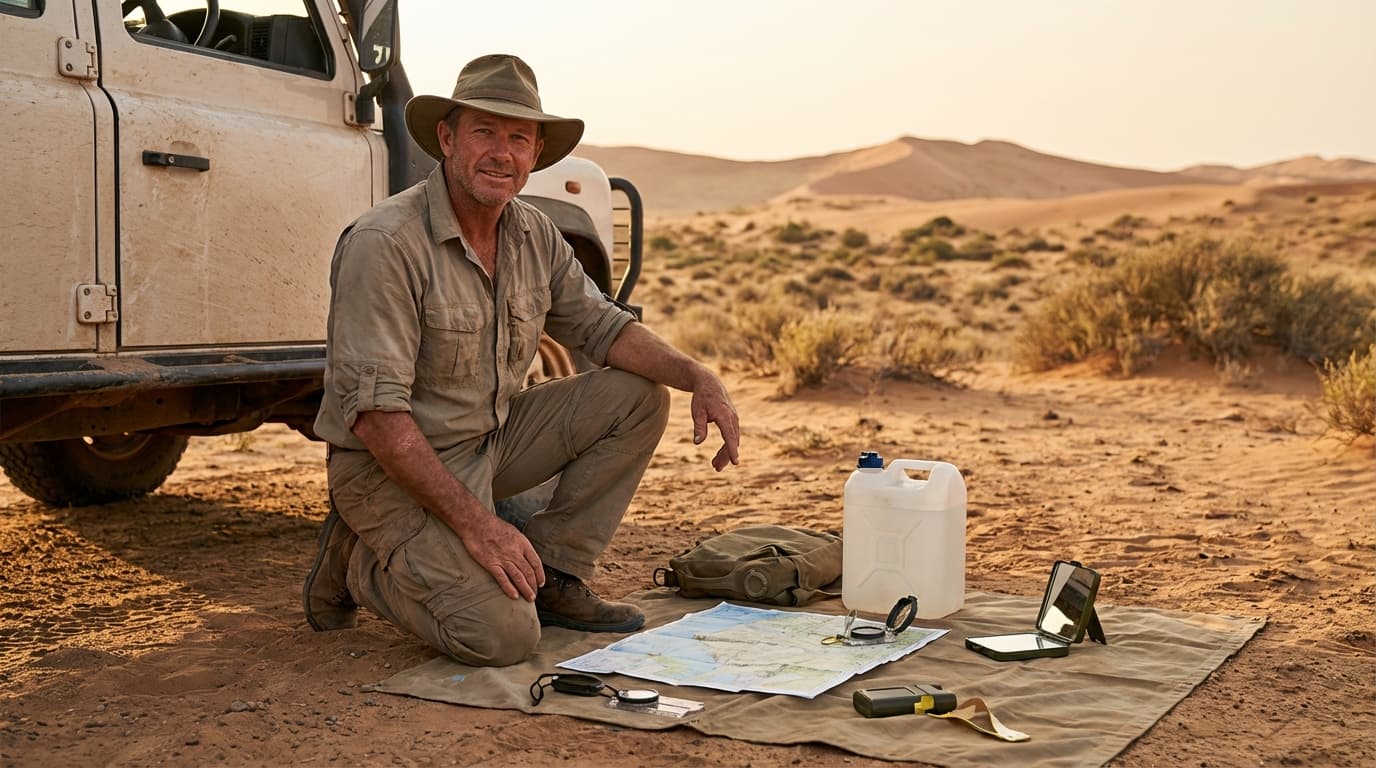
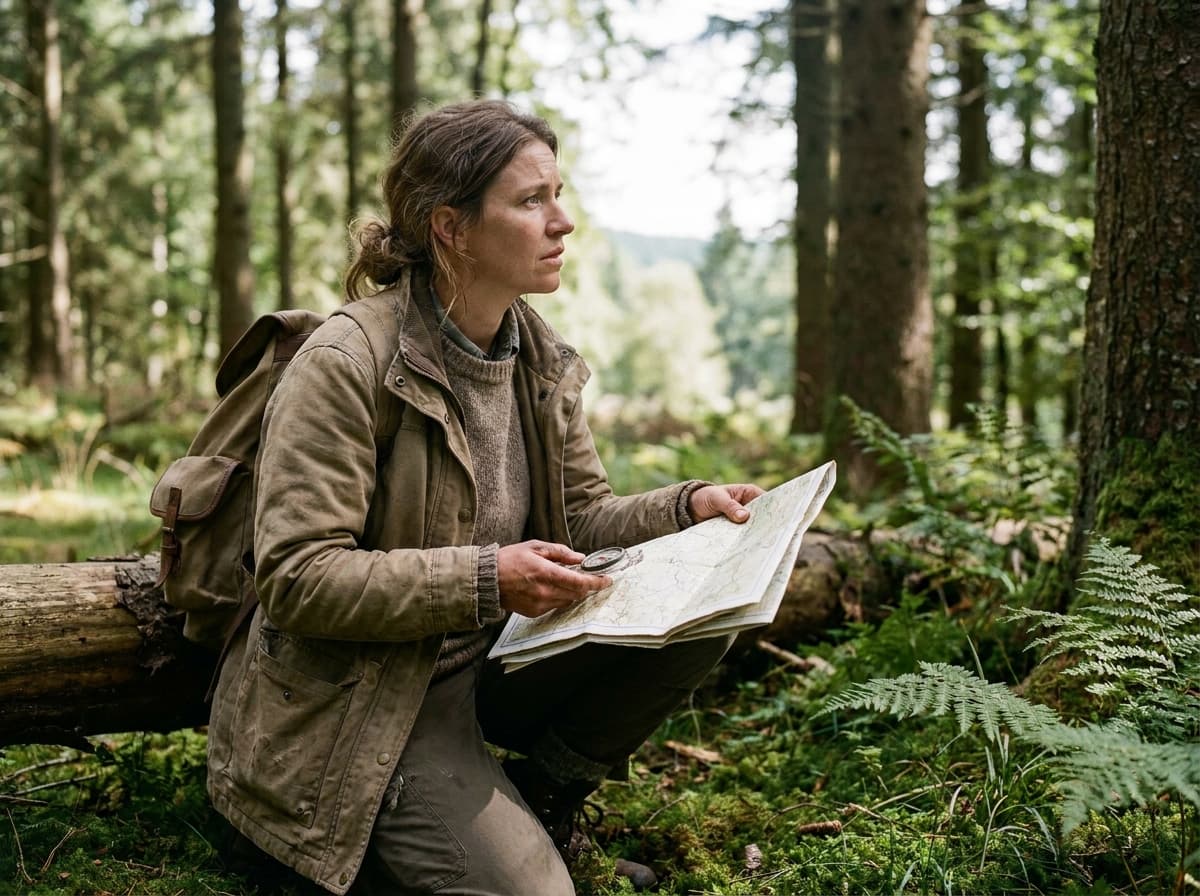
Deserts are tricky because the environment can kill you within hours. Most water loss happens through sweat, so you need at least a gallon of water daily to survive. If your tech fails, a physical map and a compass become your best friends. They don't need a signal and won't die in the sun. If you are stuck, use a mirror to flash at planes or wear bright clothing to stay visible.
What does this mean for you? Your survival kit needs more than just a phone. We often forget that old-school tools saved lives for decades before smartphones existed. When the screen goes dark, physical backups keep you moving in the right direction. Sometimes, the best survival strategy is simply going back to basics and trusting your own eyes instead of a battery.
Key insights:
Digital tools are prone to failure in extreme heat and remote areas.
Physical maps and compasses provide reliable navigation without battery needs.
Visual signaling with mirrors or clothing is essential when communication tech fails.
Final Thoughts: Respect the Dry
The desert does not care about your plans. If you do not play by its rules, your chances of making it through are slim. It is a place where the heat can turn lethal in just a few hours. Survival is about humility and following the environment's lead rather than your own.
Preparation separates a scary story from a tragedy. You need a gallon of water daily to replace what you lose through sweat. Also, remember that the desert is a land of extremes. You might face 100-degree heat at noon, but it can drop to 55 degrees by midnight. This shift from heat stroke risk to freezing can happen in less than ten hours.
Before you head out, tell someone your route. Digital maps fail, and you do not want to be a lost dot on a dead screen. Respect the dry, or it will break you.
Key insights:
Pack cotton undershirts to trap sweat against your skin and slow down water loss.
Limit your movement to dusk and dawn to avoid peak daytime heat.
Frequently Asked Questions
Actually, it is usually a bad idea. While you might see people in movies cut open a cactus for a drink, most of them are full of acids and chemicals that can make you sick. If you end up vomiting or getting diarrhea, you will lose water much faster than you gained it.
Here is the thing: only a few specific types are even somewhat safe, and even then, the taste is terrible. You are much better off focusing on gathering moisture from the environment using plastic bags or treating murky water with tools like a Lifestraw.
You should plan on carrying at least one gallon of water for every day you are out there, even if you think the hike is short. Desert heat is intense and you lose most of your body water through sweat before you even realize it. Since temperatures can hit 100 degrees during the day, your body works overtime to stay cool.
Also, remember that desert survival is about slowing down your water loss. A tip most people miss is wearing a cotton undershirt. While we usually avoid cotton for hiking, in the desert it helps trap sweat against your skin. This slows down evaporation and keeps you hydrated just a little bit longer.
First things first, don't panic or try to be a hero. If you spot a rattlesnake or a scorpion, just give it plenty of space. These critters aren't out to hunt you, but they will defend themselves if they feel crowded or scared. Back away slowly and let them go about their business.
Here is the thing most people forget: these animals love the same shade you do. Before you sit down under a rocky ledge or reach into a depression in the ground, poke the area with a long stick first. It is way better to find a new resting spot than to deal with a venomous sting when you are already struggling with the heat.
Staying in the shade is a huge help, but it is only one piece of the puzzle. While it keeps your body from overheating quite as fast, you are still losing water through your skin every minute you are out there. You actually need at least a gallon of water every day just to keep your body functioning in a dry environment.
Think of shade as a way to buy yourself time. You should definitely hunker down during the hottest parts of the day, but you also need to prepare for the night. Temperatures can crash from 100 degrees down to 55 in a matter of hours. So, while you are hiding from the sun, make sure you have a plan for staying warm once the stars come out.
The biggest trick is to stop sweating so much. Most of your body's water escapes through perspiration, so you want to keep your skin covered. It sounds counterintuitive, but wearing loose cotton clothes actually helps trap a bit of moisture against your skin, which slows down evaporation and keeps you hydrated longer.
Also, try to move only at night, dusk, or dawn. If you are active when the sun is high, you are basically burning through your water reserves at double speed. Stick to the 'rest in the day, move in the cool' rule to make every drop of water count.
Conclusion
So what is the bottom line for your next trip out into the heat? Staying safe in the desert is less about being a survival expert and more about respecting the basic rules of the land. When you combine smart hydration strategies with the right clothing and the discipline to stay with your car, you take the power back from the environment. It is about realizing that while the desert is tough, being prepared is much tougher.
Thinking about it this way changes the stakes. You now know that the water math is non-negotiable and that your car is your best shelter, not just a way to get around. These insights help you see the wild differently - not as something to conquer, but as a place to visit with the right tools and timing. Understanding the shift from scorching days to freezing nights ensures you are ready for the full cycle of the environment.
Your next move is simple: take five minutes to pack that extra gallon of water and always tell a friend your specific route before you leave. Getting home safely is the only goal that truly matters. The desert is a beautiful and vast place to explore, and as long as you play by its rules, you can enjoy the adventure with confidence.
Every WilderReady guide is researched, written, and fact-checked in-house against trusted references such as the American Red Cross, the National Park Service, and the CDC before it goes live. We publish under this shared byline instead of invented personas, so you always know who stands behind the guidance you are reading.