Caught in a Storm? What Every Hiker Needs to Know About Lightning Safety
Did you know that around 300 people in the U.S. get struck by lightning every single year? It's a scary thought when you're miles from the trailhead and the sky...
Caught in a Storm? What Every Hiker Needs to Know About Lightning Safety
Did you know that around 300 people in the U.S. get struck by lightning every single year? It's a scary thought when you're miles from the trailhead and the sky starts to look like a bruised plum. Understanding lightning safety for hikers is about more than just checking a forecast because mountain weather safety can change in a heartbeat.
If you can hear thunder, you're already close enough to be in danger, even if the sun is still peeking through. Knowing where to go during a storm in the woods is a critical skill that every backpacker needs before they head out. This isn't about being afraid of the outdoors but about being prepared for surviving a thunderstorm outdoors when there's no roof in sight.
We're going to walk through how to read the clouds, why you should ditch your trekking poles, and how to use the lightning crouch position as a last resort. By the time you're finished reading, you'll know exactly how to handle the next big storm that rolls over the ridge.
Lightning Safety for Hikers: Staying Safe When the Clouds Turn Dark
Roughly 300 people in the U.S. are struck by lightning every year. It is a sobering reality that reminds us nature does not care about our weekend hiking plans. When we talk about "mountain weather," we are not just making small talk. It is a survival factor that can change your life in seconds.
If you hear thunder, you are already in the strike zone, even if the sky is still blue. Most mountain storms brew in the early afternoon, so the goal is always to be off the summit and heading down by noon. Keep an eye on the clouds. If they start looking like tall, dark cauliflower, the storm is already developing and it is time to find cover.
You might think lying flat makes you a smaller target, but it actually increases your risk from ground currents. Instead, you need to use the lightning crouch. You are about to learn exactly where to hide and how to position your body to stay safe when the clouds turn dark.
Key insights:
Audible thunder means you are already within striking distance.
Mountain storms typically peak in the early afternoon; plan to be down by noon.
Lying flat is dangerous because it increases surface contact with ground currents.
Why Hearing Thunder Is Your First Real Warning Bell
Picture this: you are halfway up a ridge, the sun is shining, and the air feels warm. Then you hear it, a low, distant rumble. It is tempting to think you have time to reach the top, but that sound is your first real warning bell. The phrase 'When thunder roars, go indoors' is not just a catchy rhyme; it is a life-saving rule of thumb. If thunder is audible, you are already standing in the strike zone. Lightning can travel miles from the center of a storm, meaning a bolt from the blue is a very real threat even under clear skies.
Here is the thing about the numbers: they tell an encouraging story about how we have changed our habits. In the United States, roughly 300 people are struck by lightning every year. Back in 1959, we saw an average of 82 deaths annually, but today, that number has dropped to fewer than 50. This decline is not because lightning has become less dangerous, but because we are getting better at recognizing the signs. We now understand that the moment you hear that first growl from the clouds, the clock has already run out on your safety.
Now consider this: it is a common mistake to think you are perfectly safe the moment you step inside. About one-third of lightning injuries actually happen indoors, often through contact with plumbing or electrical systems. For hikers, this means that even if you make it to a trailhead bathroom or a cabin, you still need to be cautious. But in the backcountry, where indoors does not exist, your best bet is spotting the danger before the first strike happens.
Being proactive means becoming a bit of a cloud watcher. Before the first bolt ever fires, the sky gives you clues. Look for cumulus clouds that start to tower vertically, looking like massive, 30,000-foot heads of cauliflower. This vertical growth is a clear sign that a thunderstorm is developing. If you wait until the top of the cloud flattens out into that classic anvil shape, you have waited too long. At that point, the storm is mature and the risk of a strike is at its peak.
Timing is everything in the mountains. Because thunderstorms often follow a predictable cycle, building up as the day warms, most experienced hikers follow the noon rule. The goal is to be off the summit and well below the tree line by midday. Think of it this way: the mountain will still be there tomorrow, but you might not be if you are the highest point on a peak at 2:00 PM. Early starts are not just about beating the crowds; they are about beating the weather.
Key insights:
Audible thunder indicates you are already within the lightning strike zone, regardless of local sky conditions.
Cloud morphology, specifically the growth of 30,000-foot 'cauliflower' shapes into 'anvils,' provides a visual timeline for storm development.
The 'noon rule' is the most effective preventative strategy for mountain hikers to avoid peak afternoon storm activity.
Advancements in public awareness have reduced annual lightning fatalities by over 40 percent since the late 1950s.
Reading the Clouds Before the First Bolt
Have you ever noticed those fluffy, white clouds that look like giant heads of cauliflower? On a mountain, these aren't just pretty shapes. When cumulus clouds reach about 30,000 feet, a storm is likely brewing. It is a clear signal from nature to seek shelter. If you hear thunder at all, you are already in range of a strike, even if the sky above you still looks blue.
Timing is everything. Most mountain storms build in the early afternoon, so try to be off the summit by noon. If you see the top of a cloud flatten out into an anvil shape, you have waited too long. Since about 300 people are struck by lightning in the U.S. each year, watching the sky is your best survival tool.
While lightning deaths have dropped to under 50 a year lately, it is because hikers are getting smarter about these signs. Don't wait for the first bolt to react. Stay alert, keep your eyes on the horizon, and get down early to stay safe.
Key insights:
Cauliflower clouds indicate a storm is currently developing.
The anvil shape is a final warning that a storm is mature.
Being off the summit by noon avoids the peak time for mountain lightning.
Finding a Safe Spot When There’s No Roof in Sight
So you are miles from the trailhead and the sky turns that heavy, bruised shade of purple. If you can hear thunder, you are already in the strike zone. It is a scary realization, especially since about 300 people are struck by lightning in the U.S. every year. Your first instinct is probably to run for the nearest roof, but here is the catch: not all roofs are created equal. A truly safe building needs plumbing and wiring to ground the strike. That small wooden shed or shack you see on the trail? It is often a lightning trap. Without a grounding system, these structures can actually increase your risk.
If you cannot find a real building, your next move is about choosing the least dangerous spot. Most people head straight for the trees to stay dry, but standing under a lone, tall tree is one of the worst things you can do. Lightning looks for the tallest object, and you do not want to be anywhere near it when it hits. Instead, look for low ground. But be careful here. You want a depression or a valley that is not a dry creek bed or a drainage area. The last thing you want is to escape a lightning strike only to be swept away because your safe spot turned into a flash flood zone in minutes.
Now, think about your gear. Many hikers think their tent is a safe haven, but it is actually the opposite. Those metal tent poles are basically lightning magnets sitting right above your head. Even if your poles are carbon fiber, a tent offers zero protection from a strike or the ground current that follows. The same goes for picnic overhangs or shallow caves. These partial shelters can actually jump-start a side flash, where the bolt leaps from the structure right onto you. It is a terrifying thought, but knowing this helps you make better choices when the clouds start to tower.
If you are stuck in the woods, your best bet is to find a thick stand of smaller, shorter trees rather than one giant one. This is called uniform cover. Once you are there, get rid of your metal-frame pack and trekking poles. Drop them at least 100 feet away. Then, get into the lightning crouch. Ball up on your feet with your heels touching and your head down. If you have a foam sleeping pad, stand on it. It will not stop a direct hit, but it might just save you from the ground current that radiates out from a nearby strike. It sounds intense because it is, but these small choices are why lightning deaths have dropped from 82 a year down to fewer than 50 lately.
What does this mean for your next trip? Timing is everything. Most mountain storms build in the early afternoon, so aim to be off the high peaks by noon. If you see clouds starting to look like giant heads of cauliflower reaching up to 30,000 feet, the storm is already brewing. Do not wait for the first drop of rain to start heading down. Being proactive is the only way to stay out of the path of a strike that can happen even when the sky above you still looks blue.
Key insights:
A safe shelter must be fully enclosed with plumbing or electricity to properly ground a strike.
Metal tent poles and trekking poles act as lightning rods and should be moved 100 feet away during a storm.
The lightning crouch on a foam pad is the best way to minimize the danger from ground currents.
Avoid lone trees and high peaks by noon to stay ahead of typical mountain storm patterns.
The Truth About Tents and Shelters
When the sky turns charcoal and thunder echoes, your first instinct is to dive into your tent. But here is the reality: your backcountry home is a lightning trap. Those metal poles are essentially lightning rods. It is a common mistake, but standard camping gear often increases your risk. If a storm hits, leave the tent immediately. Move away and place metal-frame packs and trekking poles at least 100 feet from your position.
You might see a picnic overhang or a shallow cave and think you have found safety. Think again. These partial shelters are dangerous because of side flashes, where the current jumps from the structure to you. In the woods, look for a thick stand of uniform, shorter trees rather than open ground. Most importantly, never stand near a lone, tall giant tree. It is a prime target for a strike and puts you directly in the path of danger.
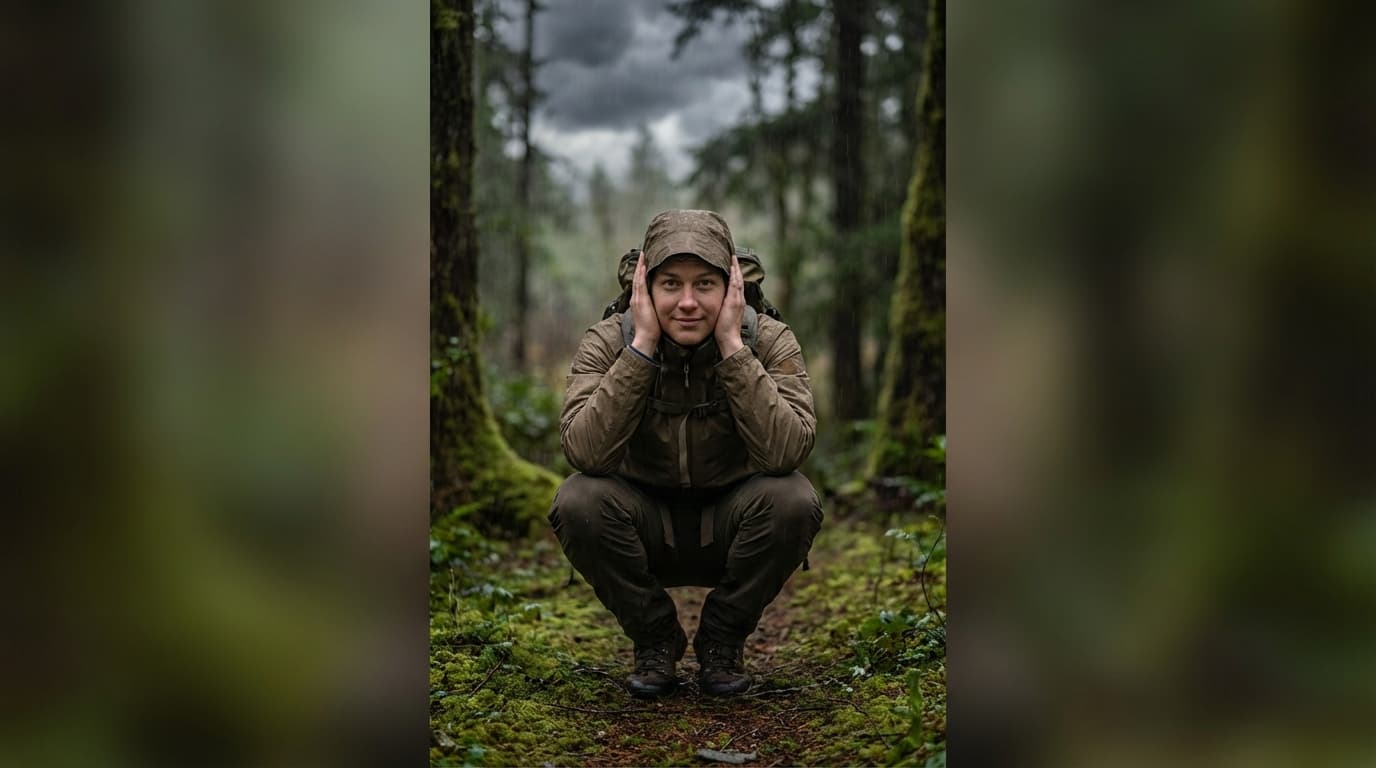
If you are stuck in the open with no cover, use the lightning crouch. Balance on the balls of your feet with your heels touching and your head tucked. This minimizes ground contact, which is vital since ground current causes many of the 300 strikes reported in the U.S. annually. It is about being a small target and protecting your heart from current traveling through the earth. Does it feel awkward? Yes, but it could save your life.
Key insights:
Tents with metal poles act as conductors and offer zero protection from strikes.
Avoid lone trees and partial shelters like caves which can facilitate side flashes.
The lightning crouch on the balls of your feet reduces the risk from ground current.
The Lightning Crouch: Your Last Resort Strategy
If you find yourself stuck on a ridge with thunder booming, your instincts might tell you to get as low as possible by lying flat. Stop right there. This is actually one of the most dangerous things you can do in a storm. When lightning hits the ground nearby, the electricity spreads out like ripples in a pond. If you are lying flat, that current has a massive path to travel through your body, which can easily stop your heart. By staying in a crouch, you give that electricity a much smaller doorway to enter.
The lightning crouch is not a magic shield, but it is your best bet when a safe building or car is miles away. Think of it as damage control. You want to minimize your contact with the earth because ground current causes the majority of lightning injuries. While we have seen lightning deaths drop from about 82 a year to fewer than 50 lately, people still get caught off guard. If you see those cauliflower-shaped cumulus clouds stretching up to 30,000 feet, the storm is already building. If you hear thunder, the danger is already there, even if the sky above you still looks blue.
So, how do you actually do the crouch? First, get your weight onto the balls of your feet. This creates the smallest possible surface area for ground current to find you. Next, tuck your head down and cover your ears with your hands. This protects your hearing from the deafening crack of a nearby strike and offers some protection to your head. But here is the most important part: keep your feet together. Touching your heels or keeping your feet side-by-side ensures that if current does enter one foot, it goes right back out the other rather than traveling up through your torso and vital organs.
You might have heard that sitting on your backpack helps. The truth is a bit messy. Metal-frame packs and trekking poles are actually hazards and should be tossed at least 100 feet away from you. However, if you have a foam sleeping pad, standing on that can help dampen the ground current. Just remember that this position is a last resort. Your real goal should always be getting off the summit by noon, before those afternoon mountain storms really start to cook. It is always better to be down in the trees than trying to balance on your toes while the sky explodes around you.
Key insights:
Lying flat increases the risk of ground current passing through your heart.
The balls of your feet should be the only part of you touching the ground.
Keep your feet together to prevent current from traveling through your body.
Toss metal-frame packs and trekking poles 100 feet away during the storm.
How to Position Your Body for Maximum Safety
If thunder is booming and you're stuck in the open, your first instinct might be to lie flat on the ground. Don't do it. Lying down actually makes you a larger target for ground current, which is how most people get hurt. Instead, you need to use the lightning crouch. Squat down low and keep your weight on the balls of your feet. This tiny contact point helps minimize the path for electricity to enter your body.
The most critical part of this position is keeping your feet pressed tightly together. It sounds simple, but it's a lifesaver. If your feet are apart, ground current can travel up one leg and down the other, passing right through your heart. By keeping them touching, you create a closed circuit that keeps the current away from your vital organs. It's all about reducing the risk of a dangerous internal path.
While you're down there, tuck your head and cover your ears with your hands. This helps protect your hearing from the incredible noise of a nearby strike. If you happen to have a foam sleeping pad, stand on it for a bit of extra insulation. It won't stop a direct hit, but it adds a helpful layer of protection against the ground current that causes about a third of lightning injuries.
Key insights:
Lying flat is more dangerous than standing because it increases your exposure to ground current.
Keeping your feet together is the best way to prevent electricity from traveling through your heart.
A foam sleeping pad can act as a DIY insulator against ground electricity during a storm.
Why Your Gear Might Be Putting You at Risk
Think about the items you carry on every trek. Your metal-frame pack and trekking poles are lifesavers on a steep climb, but they quickly become lightning rods when a storm rolls in. If you hear thunder, you are already in the strike zone even if the sky above you still looks blue. The smartest thing you can do in this scenario is ditch the metal. Experts recommend placing your pack and poles at least 100 feet away from where you are hunkering down. It feels wrong to leave your expensive gear behind in the rain, but keeping that distance is a simple way to lower your profile and stay safe.
You might have heard that a foam sleeping pad can protect you from a strike. While it won't do anything to stop a direct hit, it actually helps with ground current protection. This matters because lying flat on the ground is one of the most dangerous things you can do during a storm. It makes you a much larger target for electricity traveling through the earth. Instead, use the lightning crouch. Balance on the balls of your feet with your heels touching and your head tucked low. If you have a foam pad, stand or crouch on it to add a thin layer of insulation between your body and the soil.
When you are hiking with a group, the natural instinct is to huddle together for comfort and warmth. But wait, that is actually a dangerous move in a thunderstorm. Spreading out is much safer because it prevents a single strike from hitting everyone at once. If one person does get injured, the others will be in a position to provide first aid and call for help. Since about 300 people are struck by lightning in the United States every year, taking these small steps makes a huge difference. By keeping space between group members and staying off the summits by noon, you turn a scary situation into a manageable one.
Key insights:
Place metal gear at least 100 feet away to avoid attracting strikes to your immediate location.
Never lie flat on the ground because it increases your exposure to dangerous ground currents.
Maintain distance between group members to ensure someone can help if a strike occurs.
A foam sleeping pad is a useful tool for insulation against ground electricity but not direct hits.
Surviving the Aftermath: What to Do If the Worst Happens
Imagine the unthinkable happens and someone in your group is struck. Your first instinct might be to hesitate, fearing a lingering electrical charge. But here is the truth: it is perfectly safe to touch a lightning victim. They do not hold a charge, and every second you wait is a second they lose. With lightning deaths dropping to fewer than 50 a year in the U.S., survival is more likely than ever if you act fast. This is why knowing what to do in the first few minutes is so vital.
Check for a pulse and breathing immediately. If they have stopped breathing, start CPR right away. Lightning often short-circuits the heart, and your quick response can literally bring them back. While you work, keep an eye on the sky. The danger rarely ends with one flash. Secondary storms are common, and if you can still hear thunder, you are still in the strike zone even if the sky looks blue nearby. About one-third of lightning injuries actually happen indoors or as people think a storm is passing.
The ground itself stays dangerous too. You might have heard that lying flat is best, but that actually makes you a larger target for ground currents. Instead, keep the victim and yourself in a crouch on the balls of your feet to minimize contact. If you have a foam sleeping pad, use it as a barrier against the ground current. It is also a good reminder for next time: most mountain storms build in the early afternoon. Aiming to be off the peaks by noon is the smartest way to avoid this scenario entirely.
Key insights:
Lightning victims do not carry an electrical charge and require immediate medical attention.
Ground current is a major risk, so avoid lying flat even when helping others.
Wait at least 30 minutes after the last sound of thunder before leaving a safe area.
Frequently Asked Questions
It's a common worry, but using your phone won't actually attract lightning. The real danger is your surroundings and the other gear you might be carrying. If you're out in the woods, you're already in a risky spot because of the trees and elevation, and the phone itself isn't the lightning rod people often think it is.
The best thing to do is focus on your environment. Put down any metal gear, like trekking poles or packs with metal frames, and move about 100 feet away from them. Your phone is fine for checking weather updates or calling for help, but don't let it distract you from finding a safer area. Remember, if you can hear thunder, you're already close enough to be at risk.
It's not a myth, but it's definitely a last resort. If you're stuck in the open and can't find a real shelter, the lightning crouch is your best bet to stay safe. You want to squat down on the balls of your feet with your heels touching and your head tucked low. This helps because it minimizes how much of your body touches the ground.
Some people think lying flat is safer, but that's actually a big mistake. Lying down gives the electricity a much larger path to follow through your body if there's a ground strike. While the crouch isn't as safe as being inside a building with plumbing and wiring, it's the smartest move when you're caught in the backcountry. Just try to get off the peaks and ridges long before you need to use it.
You should put your trekking poles and any metal frame packs at least 100 feet away from you. Because these items are made of metal, they can act like lightning rods and you do not want them anywhere near your body when a storm is overhead.
Here is the thing that many hikers forget. It is not just about the poles. You want to ditch any conductive gear and move to a safer spot. Just make sure you can still see where you left your gear so you can find it again once the clouds clear out and it is safe to keep moving.
It might seem like a smart move to stay dry, but hiding in a shallow cave is actually really risky. Lightning can travel through the rock or even jump across the entrance of the cave. If you are standing in there, you could easily become the path for that electricity.
While it is not fun to get soaked, you are much safer finding a low spot in the open and away from tall trees. Use the lightning crouch on the balls of your feet to stay safe. It is one of those times where being wet is a lot better than being in a spot that lightning might choose to travel through.
Conclusion
So what does this all mean when you are miles from the trailhead and the clouds turn dark? Improving lightning safety for hikers is mostly about timing and paying attention to those early warning signs. Whether you are watching for those big puffy clouds or listening for a low rumble, your goal is to get ahead of the storm before it catches up to you. It is about making smart choices long before the first bolt hits the ground.
Next time you head out, check the mountain weather safety forecast one last time. Getting an early start usually keeps you off the high ridges when the afternoon storms roll in. If you do get caught, remember to spread your group out and keep your feet together. These small habits make a huge difference for anyone surviving a thunderstorm outdoors.
The mountains are amazing, but they do not care about your hiking schedule. Keep your eyes on the sky, trust your gut when the air starts to feel heavy, and you will have many more great days on the trail. Happy hiking.
Every WilderReady guide is researched, written, and fact-checked in-house against trusted references such as the American Red Cross, the National Park Service, and the CDC before it goes live. We publish under this shared byline instead of invented personas, so you always know who stands behind the guidance you are reading.