5 Survival Essentials You Actually Need (and Why Gear Isn't Everything)
Imagine being deep in the woods when the sun starts to dip and your fancy GPS suddenly dies. You don't need luck to stay safe, but you do need to know the rules. Real survival skills aren't just about what you buy. They're about how you think and what you can do with the basics to make it home in one piece.
In this guide, we're looking at the 5 Cs of survival. This classic framework covers cutting tools, combustion, cover, containers, and cordage. These are the essential survival gear items that are hardest to find in nature, but we're also going beyond the usual bushcraft kit list. We'll even look at multipurpose tools and why your brain is your most important tool.
We'll break down how to use these tools to save energy, why signaling for help is often more important than building a fancy shelter, and how to choose the right survival cordage. We also look at finding resources in nature if you lose your pack. By the end, you'll have a solid plan for your next trip into the wild.
The Core Framework: Getting to Know the 5 Cs
When you look at survival gear, it’s easy to get overwhelmed by gadgets. But the 5 Cs framework, originally championed by bushcraft legend Mors Kochanski and later popularized by Dave Canterbury, isn't just a random list. It focuses on the five things that are hardest to find or make in the wild. Think about it: you can find a stick for a walking pole, but you can't easily 'find' a high-carbon steel blade or a way to boil water without a container. It’s a delicate balance between what you carry on your back and how much energy you want to spend struggling against nature.
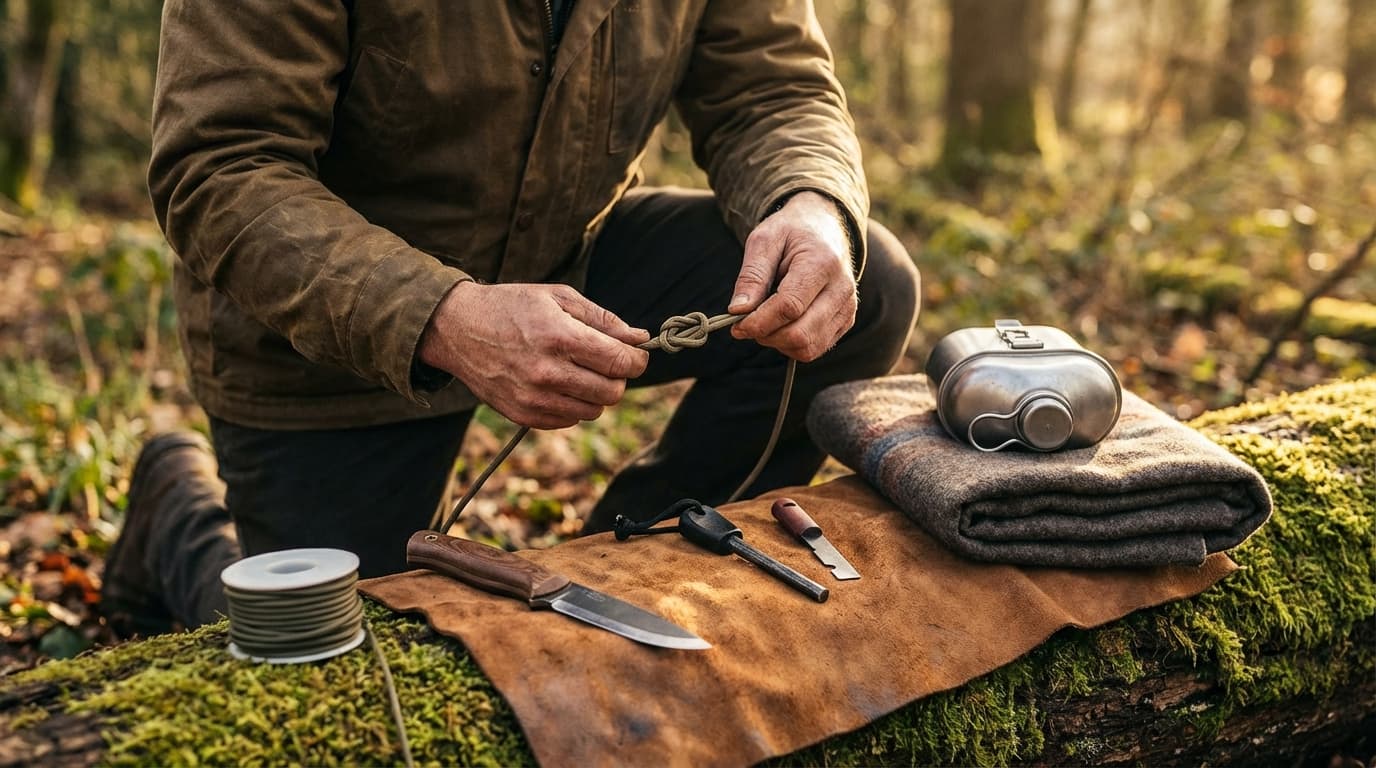
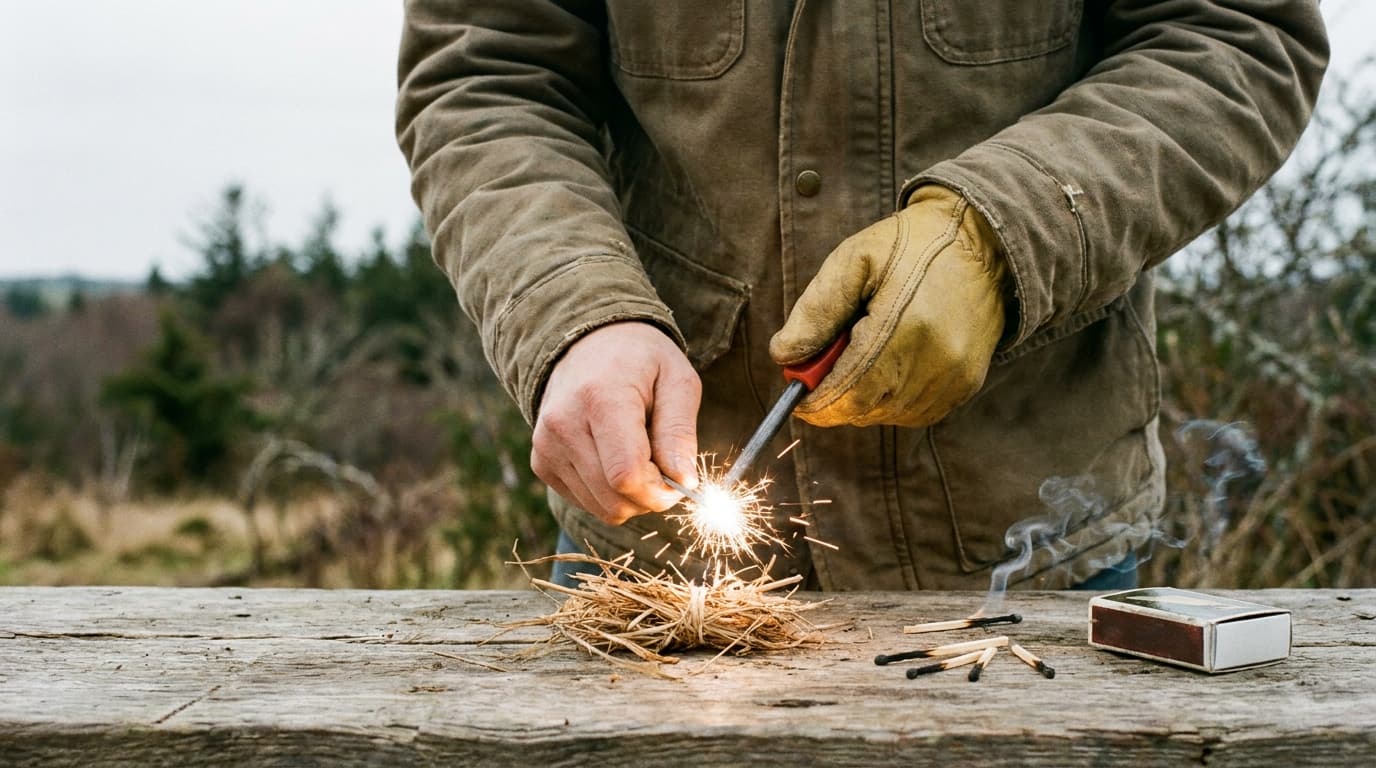
The lineup is simple: Cutting, Combustion, Cover, Container, and Cordage. Your knife is your primary partner here because it helps you create everything else. Then there’s combustion - because starting a fire with two sticks is a lot harder than using a ferro rod when you’re cold and shivering. Cover keeps you dry, and a container lets you carry and purify water. Lastly, cordage like SurvivorCord XT, which even includes integrated fishing line and fire-starter, saves you from the tedious task of splitting spruce roots. Without these, you’re spending hours on primitive labor that could be spent resting or finding a way home.
Why do these specific items matter so much? It comes down to one thing: energy conservation. Survival is a game of calories. If you have to spend all day weaving natural cordage or building a thatched roof from scratch, you’re burning fuel you might not be able to replace. These tools act as a shortcut, saving you hours of grueling work. While gear is never a substitute for a solid mindset, having this baseline kit means you aren't starting from zero. It’s about giving yourself the best possible head start when things go sideways.
Key insights:
The 5 Cs focus on items that are nearly impossible to replicate perfectly in the wild.
Using modern gear like multi-strand paracord saves critical time and physical energy.
A survival kit is a tool for energy conservation, not just a collection of objects.
The Big Five: Cutting, Combustion, Cover, Container, and Cordage
If you find yourself lost in the woods, you do not need a heavy backpack full of gadgets. You need the five C's. This framework, originally developed by bushcraft legend Mors Kochanski and popularized by experts like Dave Canterbury, focuses on the items hardest to recreate from scratch in nature. Think of it this way: if you cannot easily make it from a stick or a stone, you should probably have it in your kit.
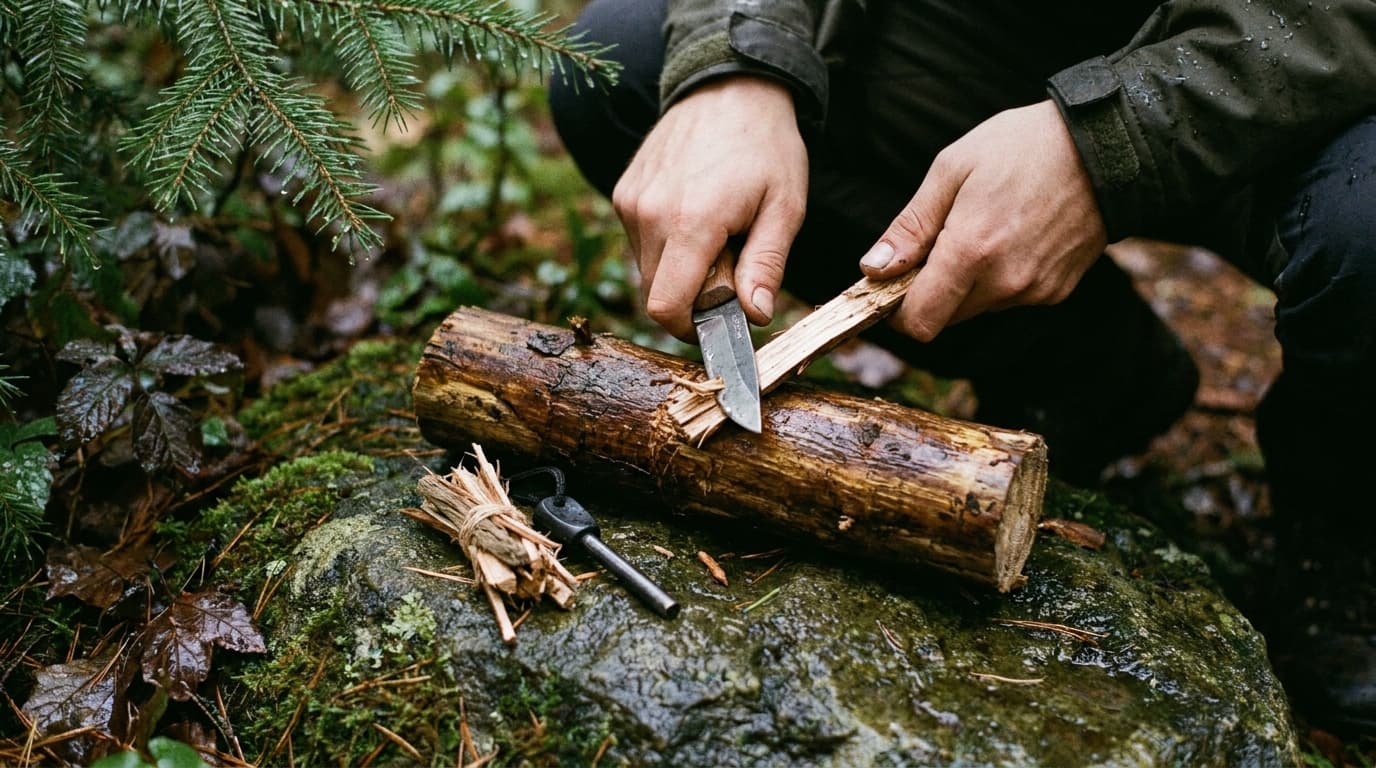
A sturdy knife is your best friend because it helps you craft almost everything else you might need. Then there is combustion. Starting a fire is about more than just heat; it is about staying dry and keeping your spirits up. Proper cover, like a lightweight tarp or even shingled spruce boughs, protects you from losing body heat to the wind and rain. Staying warm is often the simple difference between a long night and a dangerous one.
The final pieces are a container to boil water and cordage to tie your world together. While you can split spruce roots for natural rope, modern gear like SurvivorCord XT makes things simpler by tucking fishing line and utility wire right inside the paracord. But here is the thing: gear is just a backup for your brain. Even the best kit will not save you if you cannot think clearly or find a way to call for help when things go wrong.
Key insights:
The 5 C's focus on essential items that are difficult or impossible to manufacture using only natural resources.
Mindset and critical thinking are more important for survival than the actual gear in your pack.
Modern survival cordage often integrates extra utility like 25 lb. fishing line and brass wire inside a standard sheath.
Environmental knowledge, such as using spruce boughs for insulation, is a necessary supplement to any gear list.
Why These Items Are Your Baseline
Think about the last time you tried to snap a thick branch by hand or start a fire by rubbing sticks together. It is exhausting. This is exactly why experts like Mors Kochanski and Dave Canterbury focus on the 5 C’s: cutting tools, combustion devices, cover, containers, and cordage. These items are not just a random gear list. They are a calculated strategy for energy conservation.
Every tool in your bag is there to save you from hours of backbreaking primitive labor. If you have a knife and a lighter, you have already won back time you would have spent struggling against nature. But here is the thing: gear is just a baseline. Even with a high-end kit, your mindset is what actually keeps you alive. These tools simply buy you the time and energy you need to think clearly and make the right moves.
Key insights:
The 5 C's prioritize items that are difficult to replicate using natural resources alone.
Carrying these essentials is primarily about preventing physical exhaustion during a crisis.
Mindset remains more important than gear, as tools only support your ability to stay calm and solve problems.
The 6th C: Why Communication Is Your Real Lifeline
You have your knife, your fire starter, and your cordage. You feel ready. But here is the hard truth: if you cannot call for help, you are in serious trouble. The traditional 5 C’s of Survivability - Cutting, Combustion, Cover, Container, and Cordage - are great for staying alive, but they do not always get you home. Modern survival is moving toward a rescue-focused approach because, while knowing how to split spruce roots for rope is a great skill, a simple whistle can save your life much faster. As expert Jason Marsteiner puts it, "If you cannot call for help, nothing else matters."
Signaling for help is about more than just making noise; it is about the psychology of being found. When you know you have a way to reach the outside world, your mindset shifts from panic to proactive waiting. This matters because gear is always secondary to your mental state. Think about it this way: would you rather spend hours trying to tie a complex knot or a few seconds flashing a signal mirror at a pilot? Simple tools like mirrors and whistles make a massive difference in visibility. They turn you from a hidden figure in the brush into a beacon that rescuers can actually find.
We often get caught up in the romantic idea of bushcrafting and living off the land. But real-world survival is usually about getting back to safety as quickly as possible. This is why many experts now call communication the 6th C. Even if you have advanced gear like SurvivorCord XT, which integrates fishing line and fire-starter into the rope, that cordage cannot tell a search party where you are. Your real lifeline is not just the stuff in your bag; it is your ability to make sure someone hears your call for help.
Key insights:
Communication is the 6th C that bridges the gap between surviving and being rescued.
Signaling tools like whistles and mirrors are often more vital than traditional bushcraft skills in modern emergencies.
A rescue-focused mindset reduces panic by giving the survivor a proactive way to participate in their own recovery.
Signaling for Help When It Matters Most
Think about it: you can build the best shelter in the world, but if nobody knows where you are, you are just living in the woods indefinitely. Jason Marsteiner, a survival expert, puts it bluntly: if you cannot call for help, nothing else matters. This mindset shift is huge. We often get caught up in the craft of bushcraft, but real-world survival is about getting back home. The psychology of being found starts with accepting that you need help and making yourself as loud and bright as possible to the outside world.
While traditional kits focus on tools like cordage or fire starters, there is a growing trend toward rescue-focused gear. This means prioritizing simple items that create high visibility. A small signal mirror or a high-decibel whistle weighs almost nothing but does more for your rescue than a hundred feet of paracord ever could. Even specialized gear like SurvivorCord now includes extras for food and fire, but your primary goal should always be communication. Survival isn't just about sticking it out; it is about making sure you actually get found.
Key insights:
Mindset is the most important survival tool; you must prioritize being rescued over just staying comfortable.
Simple signaling tools like whistles and mirrors are often more critical for survival than primitive bushcraft skills.
Gear Spotlight: Multipurpose Tools and High-Tech Cordage
Why do we carry so much stuff? In survival, weight is the enemy, which is why tools that do more than one job are such a big deal. The original 5 C's of Survivability - Cutting, Combustion, Cover, Container, and Cordage - were popularized by experts like Dave Canterbury and Mors Kochanski to keep things simple. But today, the line between these categories is blurring. Instead of just carrying a rope, we are seeing gear that tackles three or four jobs at once. It is about being smart with your pack space without losing that old-school reliability.
Take SurvivorCord XT as a prime example of this evolution. On the outside, it looks like standard paracord, but it is actually a tiny survival kit in disguise. Inside the sheath, you will find a 25-pound mono-filament fishing line and a 30 AWG brass utility wire. There is even a waterproof fire-starter strand tucked in there. While traditionalists might prefer harvesting spruce roots in the spring - which involves splitting them and removing bark - having a rope that can also catch dinner or start a fire saves precious time when you are cold and tired.
But here is the catch: gear is only as good as the person using it. You can have the strongest cordage in the world, but if you do not know how to tie a proper knot or set a snare, it is just expensive string. Modern tools like elastic shockcord, which can stretch to double its length, offer amazing convenience for building shelters quickly. However, as Jason Marsteiner from The Survival University points out, survival is really about understanding what keeps people alive when things go wrong. High-tech gear is a massive help, but it is your mindset and ability to adapt that actually gets you home.
Key insights:
Multipurpose gear reduces pack weight while covering the essential 5 C's of survival.
SurvivorCord XT integrates fishing line, utility wire, and fire-starter into a single strand of rope.
Modern tools like shockcord provide 100% stretch for quick shelter building.
Mindset and critical thinking remain more important than any specific piece of equipment.
SurvivorCord: More Than Just a Rope
Think about your standard rope. Now, imagine if that rope was actually a survival kit hidden in plain sight. That is the idea behind SurvivorCord XT. It takes the traditional Cordage pillar of the 5 Cs - a concept popularized by experts like Dave Canterbury - and turns it into a multi-tool. Inside the sheath, you will find more than just nylon. There is a 25 lb. mono-filament fishing line and a 30 AWG brass utility wire ready for action.
Why does this matter? While common elastic shock cord stretches 100 percent, it often lacks the tensile strength needed for serious tasks. SurvivorCord XT is built for much heavier lifting while staying versatile. You can easily pull out the internal brass wire to craft a snare or use the integrated fishing line to gather food when your supplies run low. It is about having smart options when things go sideways.
Here is the thing: gear is just an extension of your mindset. Having integrated fire-starter and wire in your rope is a huge advantage, but you still need the skills to use them. This cordage bridges the gap between basic gear and real-world results, helping you adapt when nature gets tough and every resource counts.
Key insights:
Integrated 25 lb. fishing line and brass wire turn simple cordage into a food-gathering tool.
High tensile strength provides a significant advantage over standard elastic cords.
Multi-strand design allows you to break down the rope for specific survival tasks like snaring or fire-starting.
Mother Nature's Toolbox: Finding Resources in the Wild
Imagine you are hiking deep in the woods and your pack slips down a steep ravine. Suddenly, those high-tech tools you spent weeks researching are gone. This is where your brain becomes the most important tool you own. Experts like Mors Kochanski always reminded us that gear is just a backup for what you actually know. While Dave Canterbury helped spread the modern 5 C’s framework of cutting, combustion, cover, container, and cordage, the real secret is knowing how to find these things in the trees around you. It is about being ready when the gear fails. This changes everything.
Survival is not just about checking off a gear list. It is about understanding what keeps you alive when everything goes wrong. If you are in a Boreal forest, the environment is basically a hardware store. Birch bark works as a natural container or a fire starter, while spruce roots can tie a shelter together just as well as nylon rope. This shift in mindset is huge. As Jason Marsteiner from The Survival University points out, survival is about understanding the situation rather than just memorizing acronyms. If you cannot adapt, even the best kit won't help much because gear is secondary to critical thinking.
Let’s look at making your own rope. If it is spring and the sap is running, you can pull spruce roots from the ground, peel the bark, and split them into strong strands. It takes some effort, but it gives you the cordage needed to build a sturdy camp. When you start building, think like a roofer. You have to shingle spruce boughs from the bottom up so the rain slides off instead of soaking you. Also, do not forget the ground. Most people lose their body heat to the cold earth. You need a thick layer of insulation under you to stay warm. Whether you have fancy SurvivorCord with integrated wire or just a pile of branches, the goal is the same. Stay dry, stay warm, and keep your head on straight. Knowledge is the only gear you cannot lose.
Key insights:
Mindset and critical thinking are more important than any physical tool in your pack.
Spruce roots are a top-tier natural cordage option but are easiest to harvest and split in the spring.
Effective natural shelters require shingling boughs to shed water and heavy ground insulation to prevent heat loss.
Natural Cordage and Shelter Hacks
What happens when your paracord runs out? This is where harvesting spruce roots becomes a lifesaver. In the spring, when the sap flows, you can pull these roots, peel the bark, and split them into tough, natural ties. While high-tech SurvivorCord XT is great for your kit, knowing how to make your own cordage means you're never truly stuck. This changes everything.
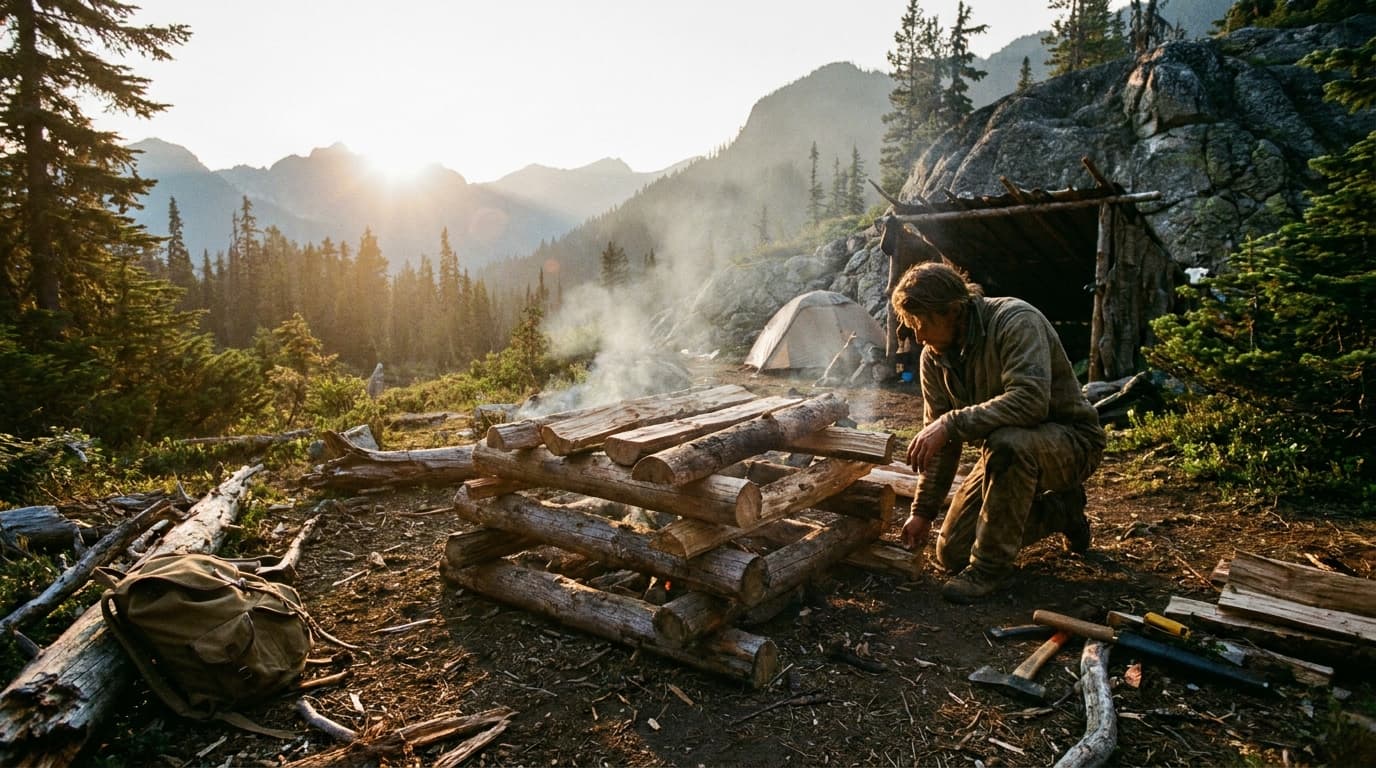
Shelter is about more than just a roof. To stay dry, you have to shingle spruce boughs from the bottom up so they shed water like a real house. But the real secret is the floor. You’ll lose heat fast to the cold ground, so a thick layer of insulation is non-negotiable for staying warm. It’s all about working with the environment.
Here's the thing: gear is secondary to your mindset. You can carry the best tools from the 5 C's, but survival is really about adapting. Using what's in the woods shows you've moved past just buying gear and started actually thinking. It’s the difference between a gear-head and a true survivor.
Key insights:
Spruce roots are best harvested in spring when sap is running for maximum flexibility.
Shingling boughs bottom-to-top is the only way to ensure a waterproof roof.
Ground insulation is often more critical for heat retention than the overhead cover.
The Most Important Tool: Your Survival Mindset
You have seen the gear lists. You might even have the best SurvivorCord XT or a fancy custom blade in your pack. But here is a reality check: people with the most expensive kits still get into trouble in the woods every year. Why? Because gear is just a collection of objects. It does not make decisions for you. If you do not have the right mindset, that kit is just extra weight on your back. Think of it like this: having a map is great, but it does not mean anything if you are too panicked to read it.
Jason Marsteiner from The Survival University puts it bluntly. He says survival is not about acronyms or gear lists. It is about understanding what actually keeps you alive when everything goes wrong. Survival is really an act of adaptation, not a test of memorization. While experts like Mors Kochanski and Dave Canterbury gave us the 5 C’s: Cutting, Combustion, Cover, Container, and Cordage. These are helpful tools, but they do not replace your brain. You have to be smarter than your equipment.
There is also a shift happening in how we look at staying alive outdoors. We are moving away from just primitive bushcraft and toward rescue-focused survival. For instance, if you cannot call for help, your ability to split spruce roots for natural cordage will not get you home any faster. Marsteiner often says that if you cannot call for help, nothing else matters. The most important tool you have is your ability to stay calm and solve problems with what is around you. That might be high-tech paracord or just a pile of pine boughs.
Key insights:
Gear is secondary to your ability to think clearly and make good decisions under pressure.
Survival is an act of adaptation and problem-solving, not just memorizing a kit list.
Modern survival priorities are shifting toward communication and rescue rather than just primitive skills.
Frequently Asked Questions
You will often hear Dave Canterbury's name linked to the 5 Cs because he is a huge part of why the framework is so popular today. However, the original set of essential items was actually developed by Mors Kochanski. He was a legendary bushcraft instructor who spent his life teaching people how to stay alive in the wilderness with very little gear.
It is worth noting that while these experts focus on the tools, they both agree that your mindset matters more than what is in your bag. Gear is just there to help your brain solve problems when things go wrong.
It might seem like overkill for a short walk, but the reality is that most survival situations start as simple day hikes that go wrong. These five items which include a cutting tool, a way to make fire, cover, a container, and some rope are lightweight and can fit in a small pouch. If you get lost or hurt, having a way to stay warm and dry makes a massive difference.
Also, keep in mind that many modern experts think the traditional list is missing one big thing: communication. If you cannot call for help with a whistle or a mirror, you might be stuck out there longer than you want to be. So while the 5 Cs are a great start, adding a way to signal for rescue is a very smart move.
For most beginners, you really can't go wrong with a high-quality survival cord like SurvivorCord XT. It's basically a supercharged version of standard paracord that has a fishing line, a waterproof fire-starter, and utility wire tucked inside. Since cordage is one of the essential 5 C's of survival, having one tool that handles multiple jobs is a smart move for your first kit.
You might also see things like elastic shock cord, but that usually only has a 100-pound strength and is way too stretchy for most camp tasks. Stick with a multi-strand paracord because it's reliable and gives you plenty of options if you need to take it apart for smaller jobs like fishing or fixing gear.
You certainly can, but it's a lot harder than it looks. In a Boreal forest, for example, you might be able to craft something from birch bark or use spruce roots for binding. But here's the thing: the container is one of the 5 C's for a reason. It's incredibly difficult to boil water or cook food safely using only what you find on the ground when you're tired or cold.
While practicing these primitive skills is a great way to learn, carrying a metal container is much more reliable for a real emergency. As survival expert Jason Marsteiner points out, survival is about what keeps you alive when things go wrong. Most of the time, that means having a sturdy pot ready to go so you can focus on signaling for help and staying warm.
Conclusion
So what does all this mean for your next trip into the wild? It means that while a solid bushcraft kit list is important, the 5 Cs of survival only work if you know how to use them. Whether you are flicking a lighter or finding natural cordage, your gear is just an extension of your own survival skills. The real magic happens when you stop worrying about having the perfect pack and start focusing on how to solve problems with what you have.
Your next move is simple: take that high-tech survival cordage or your favorite multipurpose tools out to the backyard. Practice making a shelter or starting a small fire before you actually need to do it in the rain. It is much better to find out your gear's limits while you are close to home than when you are deep in the brush.
Survival is not about having the most expensive toys; it is about being ready for whatever the trail throws at you. So pack your essentials, keep your head on straight, and get out there. The woods are a lot more fun when you know you can handle yourself.
Every WilderReady guide is researched, written, and fact-checked in-house against trusted references such as the American Red Cross, the National Park Service, and the CDC before it goes live. We publish under this shared byline instead of invented personas, so you always know who stands behind the guidance you are reading.